REVIEW · PRAGUE
WWII and Communism History in Prague’s Old Town Private Tour
Book on GetYourGuide →Operated by Rosotravel - Czech · Bookable on GetYourGuide
Prague’s dark history feels close up. This private walk links WWII occupation to the Communist era, then lands at Wenceslas Square where the 1989 Velvet Revolution played out. I like that the tour doesn’t treat history like a textbook—it connects people, places, and turning points.
Two things I really value: you start in Josefov, one of Europe’s best-preserved Jewish quarters, and you learn what Nazi plans meant for real lives. Second, your guide brings the story into the open at places like the Old Town Hall and Petschek Palace, where fear, resistance, and propaganda all show up in stone and street corners. You’ll also have the option to extend into the Museum of Communism, which is a rare chance to understand everyday life under the regime, not just the headlines.
One possible drawback: the subject matter is heavy. If you prefer light, scenic sightseeing only, this may feel like a mental workout. Also, the 2-hour version focuses on Old Town stops, while the museum visit only comes with the 4-hour option.
In This Review
- Key things to know before you go
- WWII and Communism in Prague’s Old Town: the real reason this walk works
- Josefov Jewish Quarter: synagogues, the ghetto, and the road to Theresienstadt
- Old Town Square and the Astronomical Clock: the 1945 Uprising and its scars
- Petschek Palace and the Gestapo headquarters: resistance under pressure
- Wenceslas Square and the Velvet Revolution: where crowds changed the script
- The Museum of Communism add-on: why the 4-hour option is worth considering
- Price, timing, and who this tour fits best
- How to make the most of your private guide
- Should you book this WWII and Communism history tour?
- FAQ
- How long is the tour?
- What’s included in the 2-hour option?
- What’s included in the 4-hour option?
- Where is the meeting point?
- What sites will the tour cover?
- What history topics does the guide cover?
- What languages are available?
- Is the tour wheelchair accessible?
- Can I pay later and cancel if plans change?
Key things to know before you go

- Josefov on foot: Maisel Synagogue and Spanish Synagogue help set the stage before the story turns brutal.
- WWII specifics, not vague themes: Operation Anthropoid, the 1945 Uprising, and the path toward the Velvet Revolution.
- Concrete places with meaning: Old Town Square, the Astronomical Clock, and Petschek Palace (Gestapo headquarters).
- Wenceslas Square as a timeline: Nazi mass demonstrations, then the 1989 Velvet Revolution.
- The 4-hour upgrade matters: regular tickets to the Museum of Communism aren’t included in the 2-hour option.
- Guides with range: in past groups, guides like Sofija and Markéta have been praised for mixing facts with memorable personal context.
WWII and Communism in Prague’s Old Town: the real reason this walk works
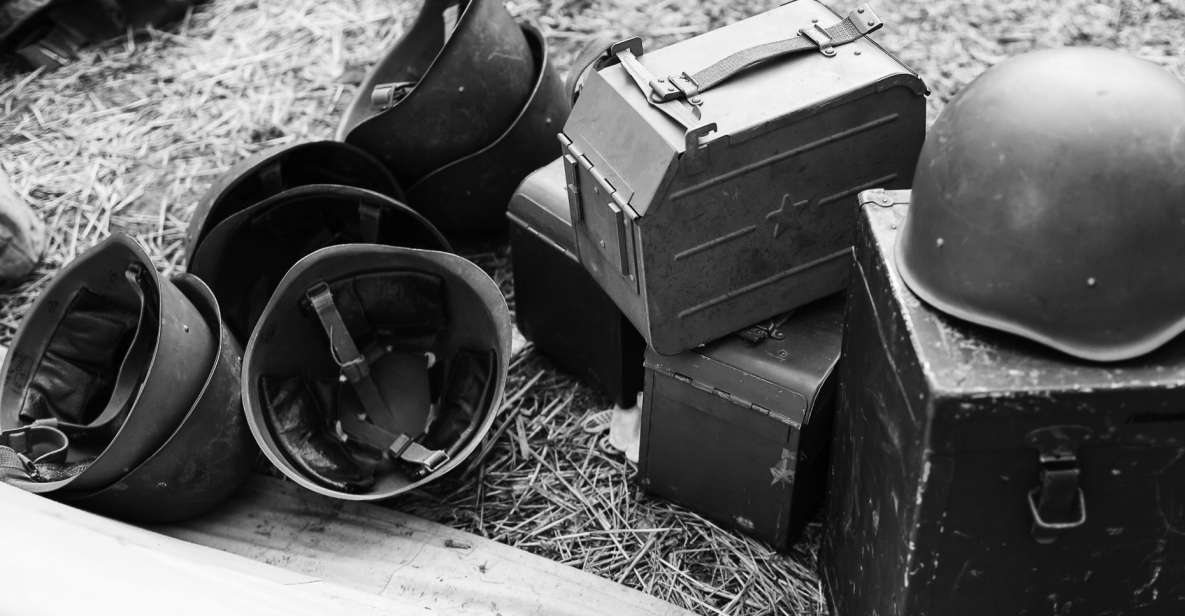
Prague’s Old Town is the perfect stage for a story like this, because so many key moments are still written into the city’s layout. You’re not just looking at monuments—you’re watching the timeline move across neighborhoods, from Josefov to the political heart of the city.
What makes this tour practical is the way it connects eras without skipping the hard parts. World War Two isn’t treated as a closed chapter. Instead, the tour looks at how liberation, Red Army involvement, and postwar politics were later used by the Communist Party to gain support. That thread helps you understand why the Communist era didn’t feel like a random new setting for Czechoslovakia. It felt like a continuation, with different uniforms and new rules.
Another reason this format works: you’re guided through major sites tied to occupation and resistance, then finished at Wenceslas Square, where public power was performed in massive gatherings. By the time you reach that final stop, you can see how propaganda turns squares into stages—and how citizens later turned the same stage against the system.
The group is private, so if you want to ask about a particular name or event—like Operation Anthropoid or the 1968 era topics from the museum—you’re not stuck waiting your turn.
You can also read our reviews of more private tours in Prague


Josefov Jewish Quarter: synagogues, the ghetto, and the road to Theresienstadt
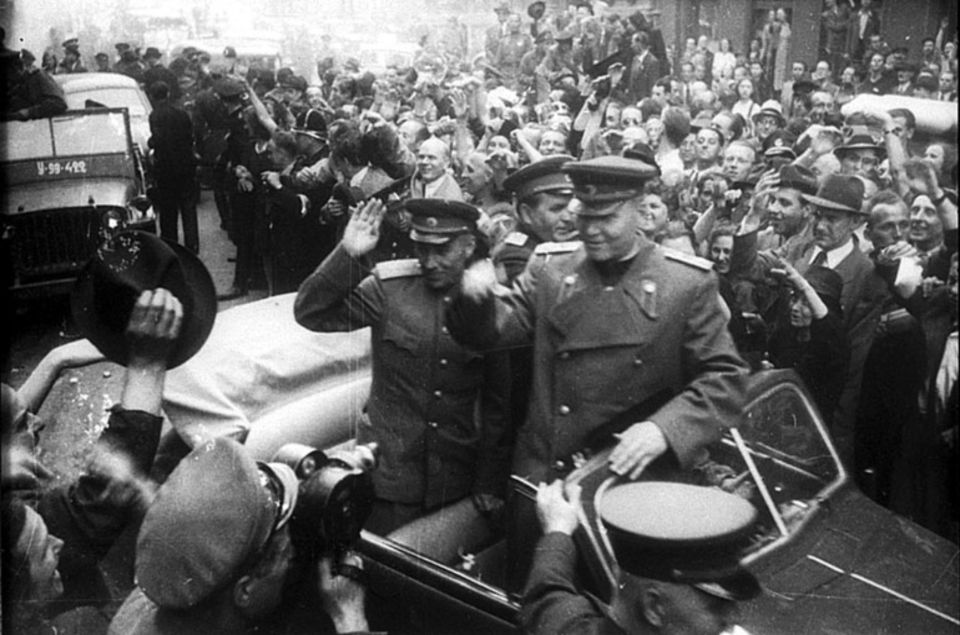
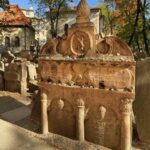
The tour starts by walking through Josefov, and that matters. Josefov is one of the best preserved Jewish ghettos in Europe, so the setting isn’t a generic historical backdrop. It’s a real neighborhood that still reads like a lived-in space, which makes the story hit harder—in a good, grounding way.
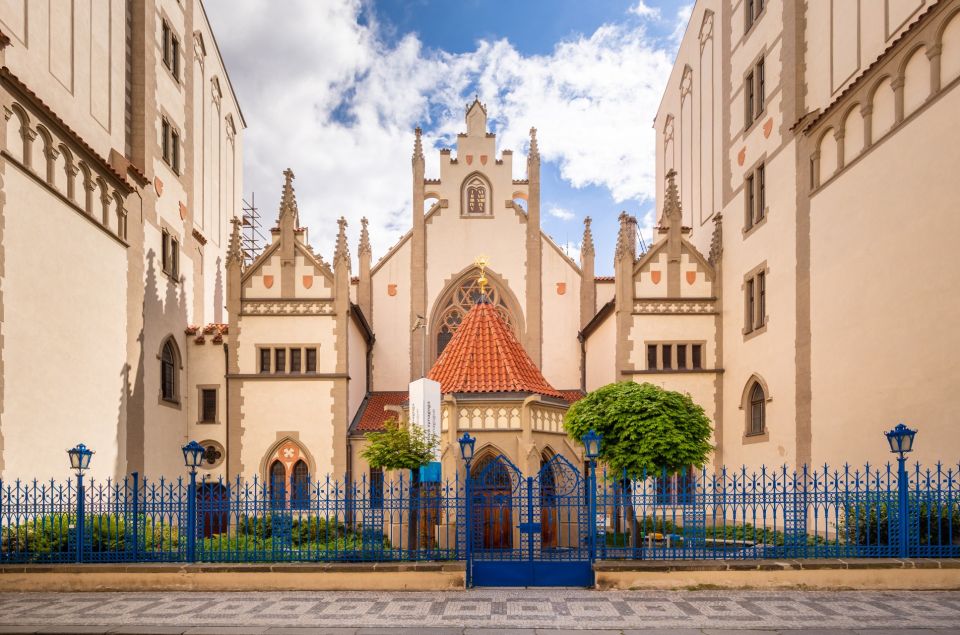
You’ll see the Maisel Synagogue and the Spanish Synagogue. Even if you don’t go inside (the tour description focuses on visits and storytelling), simply knowing what these synagogues represent helps you frame the early chapters of the narrative: community, identity, and religious life before persecution escalated.
From there, your guide connects the occupation to what happened to Czech Jews, including the horrors of transportation to the Theresienstadt concentration camp. This is where a lot of history tours get vague. Here, the emphasis is on Nazi intent and the reality of the system.
One of the most chilling details you’ll hear is Hitler’s plan for a museum of the extinct race. Your guide uses that idea to explain how the Nazi regime tried to turn genocide into something bureaucratic and performative—like cruelty could be curated into an exhibit. The tone stays educational, not sensational, but the point lands: this wasn’t only violence. It was also propaganda wearing a mask.
If you visit Prague mainly for architecture and coffee breaks, plan a slower mindset here. Let the places do the talking first, then let your guide translate the context. You’ll get more out of it.
Old Town Square and the Astronomical Clock: the 1945 Uprising and its scars
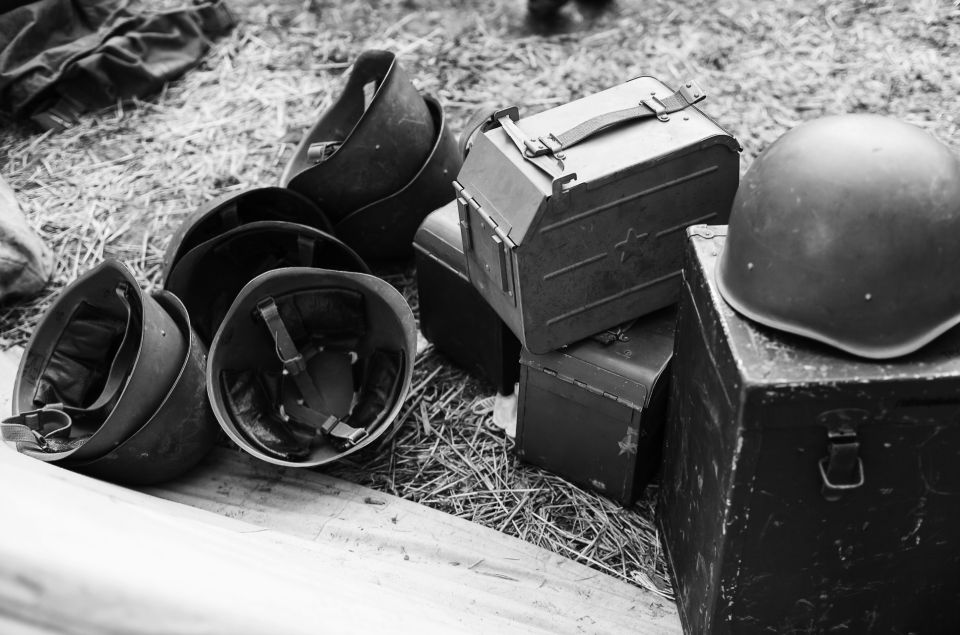
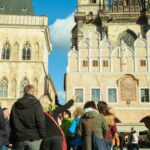
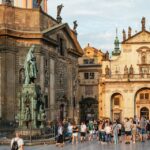
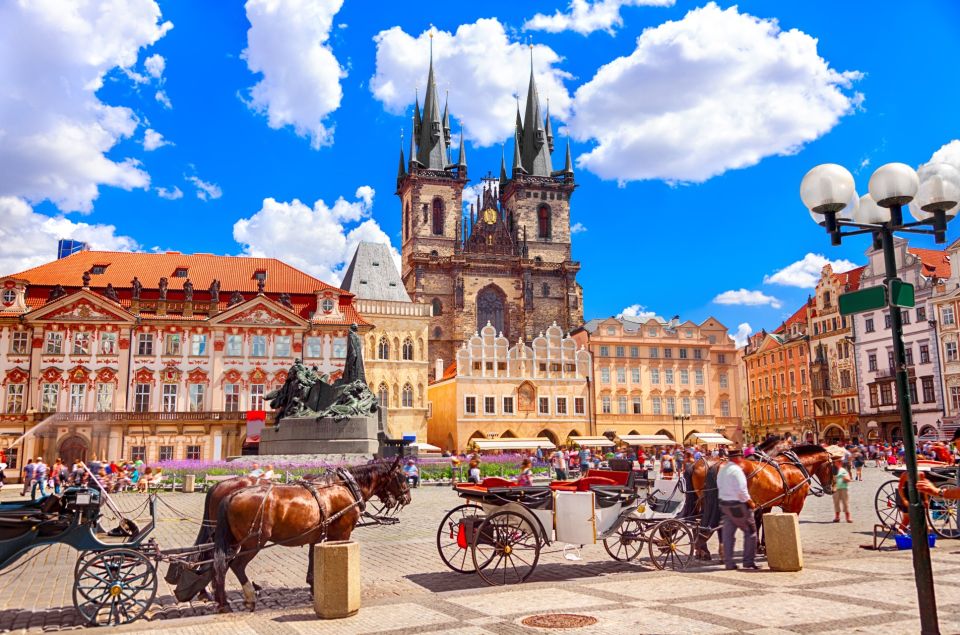
Next you move into the center of old Prague: Old Town Square and the area around the Old Town Hall. This is where the tour turns from the Jewish quarter to the city’s political and military stakes.
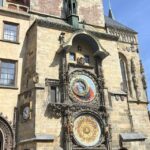
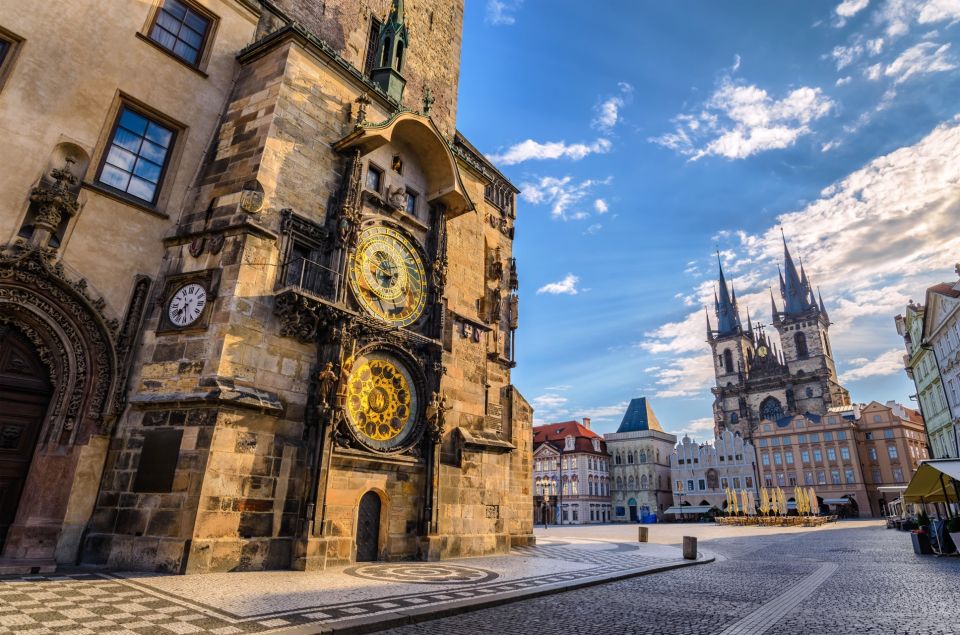
You’ll hear about the Prague Uprising at the Old Town Square. That’s not just a date on a sign; it’s tied to what the city suffered in May 1945, when the Astronomical Clock’s facade was heavily damaged during the bloody battles of May 5–9, 1945.
The clock is famous for a reason, but this tour pushes you to see it differently. You’re not just admiring a landmark. You’re seeing a landmark that survived, then carrying forward the cost of survival. It’s one of those moments where history isn’t behind glass. It’s built into a structure people still walk past every day.
Your guide also explains how the role of the Red Army in liberating the city was later used by the Czechoslovak Communist Party to increase support for communism. That’s an important nuance. Liberation doesn’t automatically mean freedom in the long run. When political narratives are rewritten, people pay the price later—through censorship, control, and fear.
If you’re the kind of person who likes cause-and-effect stories, you’ll probably feel this section click. It helps you connect WWII to what comes after, instead of treating them as separate chapters.
Petschek Palace and the Gestapo headquarters: resistance under pressure
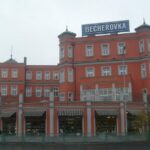
From the open square energy, the tour shifts to a darker kind of architecture: Petschek Palace, the former seat of the Gestapo headquarters. This stop works because it forces you to confront how close everyday life sits to systems of interrogation and control.
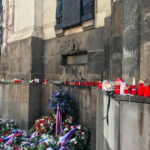
On the corner of the building, you’ll find a memorial plaque dedicated to the Czech resistance. Your guide uses it as a jumping-off point to explain resistance efforts—interrogations, tortures, and the risk ordinary people faced when they pushed back.
This is one of the hardest segments, but it’s also one of the most meaningful. A lot of WWII storytelling focuses on soldiers and battles. Here you get the human pressure: how resistance didn’t just happen on a battlefield. It happened in rooms where people were interrogated, where fear was a tool, and where survival often depended on secrecy and courage.
Practical tip: if you want to process quietly, you can linger for a moment after your guide finishes a point. You’ll notice how often these places include a plaque and then move on—like the city can’t afford to stop. That’s exactly why guided context matters.
The humor you can find on this tour is mostly the gentle kind—your guide’s delivery makes the facts easier to absorb. But the subject stays serious, and you should treat it that way.
Wenceslas Square and the Velvet Revolution: where crowds changed the script

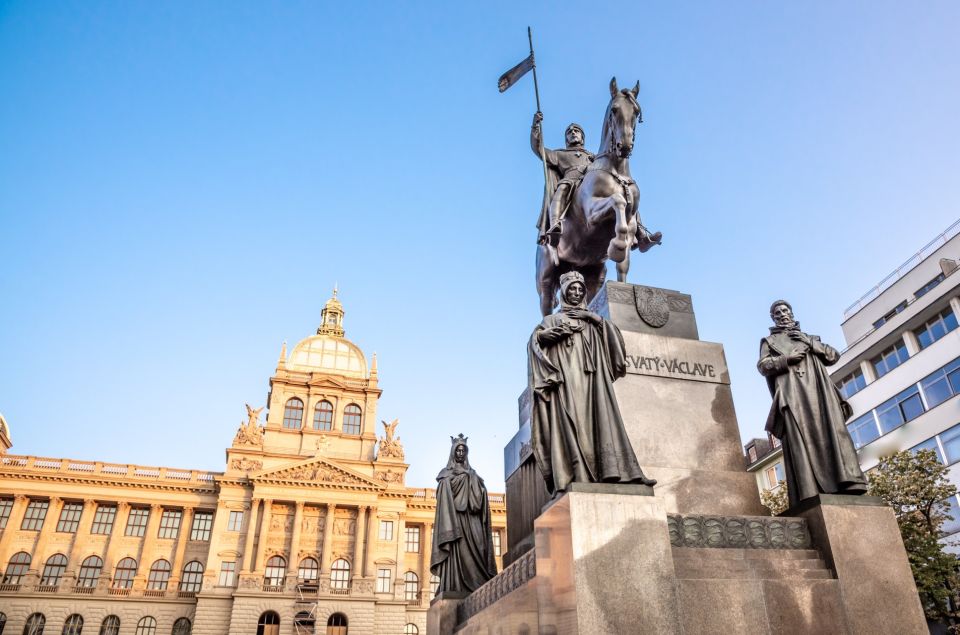
The final walk takes you to Wenceslas Square. It’s a major Prague landmark, but in this tour it becomes more than a sightseeing stop—it becomes a stage for political power.
Your guide explains how the Nazis used the square for mass demonstrations. Then you connect that history to the Velvet Revolution in 1989, when mass demonstrations took place there. Same setting. Opposite direction.
That contrast is the tour’s emotional payoff. You start with occupation and control, and you end at a place where citizens reclaimed public space. By the time you’re standing in the square, you can almost feel the shift from forced gatherings to chosen collective action.
This is where the story also becomes more hopeful, without pretending things were easy afterward. Your guide frames the Velvet Revolution as a turning point, but one built by years of pressure and resistance.
If you’re visiting during daylight, you’ll probably get clear views across the square and nearby buildings, which helps you imagine crowd energy. If you’re there later in the day, the atmosphere can feel colder, and that can make the lesson about propaganda and fear feel even more real. Either way, it’s a strong way to end because it gives you a specific location tied to both terror and change.
You can also read our reviews of more historical tours in Prague
The Museum of Communism add-on: why the 4-hour option is worth considering
If you choose the extended option, the tour includes a stop at the Museum of Communism, with regular tickets. This is only available in the 4-hour choice, not the 2-hour walk.
This museum segment is valuable because it covers the Communist era as lived experience. The museum covers events across roughly four decades, including the Cold War, the Prague Spring, the Soviet Invasion of 1968, and the suicide of student Jan Palach. It also returns to the Velvet Revolution, so you see how the system unraveled.
The tour description also highlights topics like propaganda, censorship, political trials, and executions. That’s exactly the difference between seeing communism as an ideology and understanding it as a daily operating system. You learn what people had to navigate—messages they were forced to hear, information they weren’t allowed to receive, and the consequences of speaking wrong.
One practical thought: if you’re sensitive to political repression themes, you may want the guide to set the tone before you enter. In past groups, guides have been praised for sharing personal moments alongside the facts. That approach helps you stay grounded when the museum content gets intense.
In terms of timing, the museum gives you more than a few photos and a glance. You’ll have time to connect the earlier Old Town stops to what followed after WWII—how the story you heard at synagogues, squares, and palaces turns into the everyday rules of a country.
If your goal is a fuller understanding of Prague’s 20th-century pivot points, the 4-hour option tends to make the whole experience feel more complete.
Price, timing, and who this tour fits best
The price is $104 per person for a private tour lasting about 2–4 hours, depending on the option. In this category, private pricing can vary a lot, so here’s the honest value lens: you’re paying for (1) a history expert guide fluent in multiple languages, and (2) a tightly connected route through major, meaningful sites.
You’re not only buying entry to a museum or seeing one monument. You’re getting guidance through a chain of events—German occupation, Operation Anthropoid, 1945 Uprising, the path toward the Velvet Revolution, then Communist-era topics like Prague Spring and Jan Palach. That kind of narrative glue is hard to assemble on your own without spending your entire day cross-referencing sources.
Duration is the key decision. The 2-hour option gives you the essentials of the Old Town story. The 4-hour option adds the Museum of Communism, which is where you learn about propaganda, censorship, trials, and daily life under the regime.
Who is it best for? If you enjoy history that has location markers—places you can stand in while you learn—you’ll like this. If you’re more into art or river views, you might find the heavy themes less fun. But if you want Prague to make sense as a city shaped by occupation and resistance, this tour delivers a clear arc.
How to make the most of your private guide
A private guide is only as good as the way they explain. The strong theme from earlier experiences is that guides can answer hard questions and keep the story engaging without turning it into trivia. Sofija, for example, has been described as very young yet with immense Czech history knowledge, and able to add small anecdotes to facts.
Another guide, Markéta, has been praised for being entertaining and highly skilled at bringing the political and historical events to life. That matters because WWII and communism aren’t just dates. They’re people under pressure, systems designed to control behavior, and places where fear and resistance leave traces.
You can help your guide by bringing one or two personal interests. Maybe you want to know more about Operation Anthropoid. Maybe you’re curious about the Prague Spring or Jan Palach. Or maybe you want the guide to connect the Velvet Revolution to how propaganda worked earlier.
Also, this is a walking tour. Wear comfortable shoes and give yourself a little buffer in your day. Even if the route isn’t described as long, you’ll spend time stopping, listening, and absorbing. Prague is a city where small streets can change your pace fast.
Finally, show up at the meeting point on time: in front of the World of Franz Kafka at Nám. Franze Kafky 16/1, 110 00 Staré Město. Checking your email the day before helps too, since you’ll receive important information.
Should you book this WWII and Communism history tour?
Book it if you want a direct, place-based story that links WWII occupation to Communist rule and ends where public change happened at Wenceslas Square. I’d especially steer you toward the 4-hour option if you want to understand daily life under communism, not just political milestones.
Skip or rethink it if you only want light sightseeing or you’re not up for heavy themes like deportation, interrogation, censorship, and executions. Also, if you’re short on time and hate museums, the 2-hour Old Town version will still give you the core WWII-and-resistance storyline, but you’ll miss the Communist Museum segment.
If you go in with comfortable shoes and a willingness to learn, this tour is one of the most efficient ways to make 20th-century Prague feel real.
FAQ
How long is the tour?
The tour duration is 2–4 hours, depending on the option you choose.
What’s included in the 2-hour option?
You’ll get the private WWII and Communism-themed tour of Prague’s Old Town and related visits. Museum of Communism tickets are not included in the 2-hour option.
What’s included in the 4-hour option?
You’ll do the Old Town tour plus a visit to the Museum of Communism, and regular museum tickets are included.
Where is the meeting point?
Meet your guide in front of the World of Franz Kafka, Nám. Franze Kafky 16/1, 110 00 Staré Město, Czechia.
What sites will the tour cover?
The tour covers Josefov and Jewish sites like the Maisel Synagogue and Spanish Synagogue, then Old Town Square and the Astronomical Clock, Petschek Palace (former Gestapo headquarters), and it ends at Wenceslas Square. The museum visit is added in the 4-hour option.
What history topics does the guide cover?
The tour covers German occupation during WWII, including Operation Anthropoid and the 1945 Uprising, and it also covers the Communist era topics that connect to events like the Velvet Revolution. The museum option includes Cold War themes, Prague Spring, the 1968 Soviet invasion, Jan Palach’s suicide, and more.
What languages are available?
The live guide is available in English, French, German, Italian, Polish, Russian, Spanish, and Czech.
Is the tour wheelchair accessible?
Yes, the tour is listed as wheelchair accessible.
Can I pay later and cancel if plans change?
Yes. The experience offers a reserve now & pay later option, and it also includes free cancellation up to 24 hours in advance for a full refund.