REVIEW · PRAGUE
Prague: Old Town and Jewish Quarter Small-Group Tour
Book on Viator →Operated by Heart of Europe · Bookable on Viator
Prague clicks into place fast on this walk. This is one of the easiest ways to get oriented, with a certified guide leading you through the big landmarks of Old Town and the Jewish Quarter’s past and presence. You’ll also come away with practical ideas for what to eat and drink, plus a few spots you’d be less likely to find alone.
I especially like the way the guide turns headline sights into real stories. The Astronomical Clock is the perfect example: it’s easy to see it and think it’s just old machinery, but the explanation makes it make sense. And the group stays small (up to 10), so you’re not just herded through.
One possible drawback: it’s a fast-moving, mostly standing-and-walking tour (about 2 hours 30 minutes to 3 hours), with cobblestones and short stop times. If you need lots of breaks or you hate moving quickly, plan extra time on your own later.
In This Review
- Key things to know before you go
- Meeting Prague at the pace that works
- Staroměstské náměstí: Old Town Square as your orientation
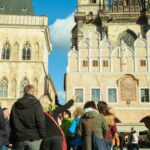
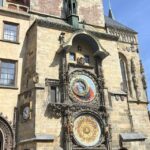
- The Old Town Hall and the Astronomical Clock (not as boring as it sounds)
- Theatre Des Etats: Mozart’s Prague connection, in plain sight
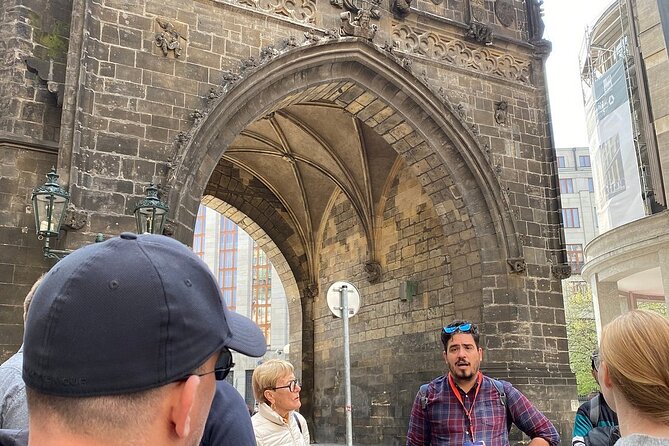
- Prasná brána: a gothic gate that tells you where the city ended
- Václavské náměstí: Prague’s big public square energy
- Josefov (Jewish Quarter): Kafka’s roots and layers of change
- Rudolfinum finish: where Prague Castle shows up in your final frame
- Price and value: what $103 buys you in Prague time
- Who should book this tour (and who should consider a slower plan)
- Should you book Prague: Old Town and Jewish Quarter?
- FAQ
- How long is the Prague Old Town and Jewish Quarter small-group tour?
- What group size should I expect?
- Does the tour include admission tickets?
- Where do I meet and where does the tour end?
- Is hotel pickup included?
- What happens if the weather is bad?
Key things to know before you go
- Small group size (max 10) keeps the walk more personal and easier to ask questions
- English-speaking certified guide means clear explanations, not just recited facts
- Short, efficient stops cover Old Town landmarks plus Josefov without eating your whole day
- No separate ticket fees at the listed sights on this tour
- Local food/beer/fun tips go beyond the monuments
- Finish by Rudolfinum so you end near a classic Prague music landmark and Castle views
Meeting Prague at the pace that works
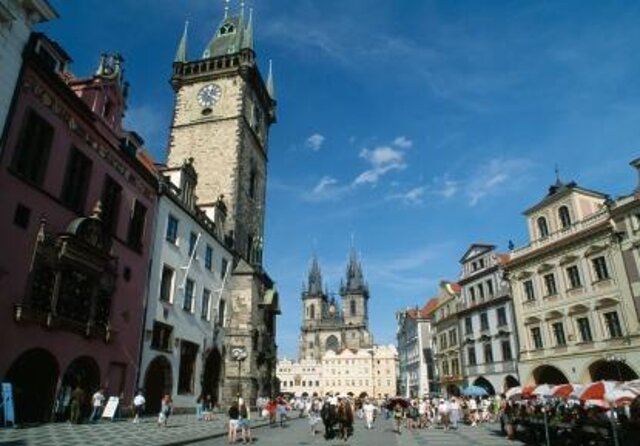
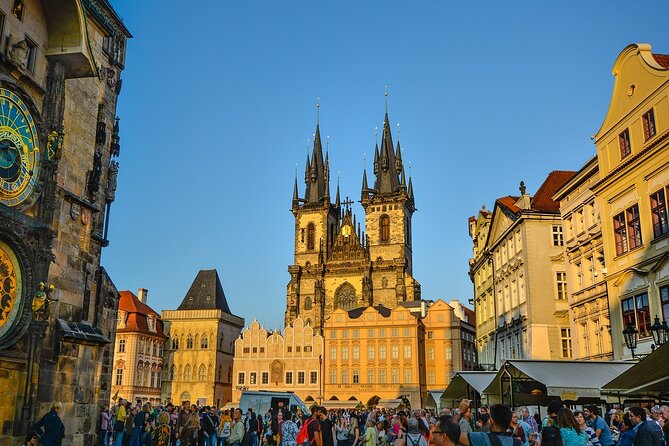
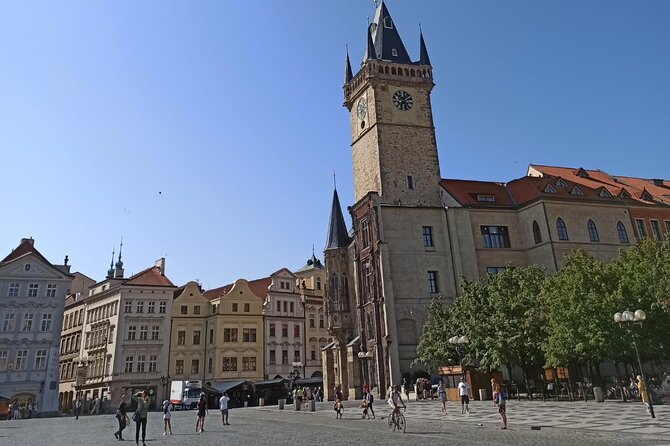
I like tours that help you start strong on day one, and this one does that. You begin right in Old Town Square, where Prague’s history is stacked in layers: grand civic buildings, religious landmarks, statues, and the kind of street life that makes you feel the city is still moving even if the stonework isn’t.
The walking style is simple: you’re outdoors for most of the experience, and the timing is designed so you see a lot without feeling like you’re trapped in one long lecture. That matters because Prague is made for wandering, but a first-timer can waste time bouncing between “must-sees” without understanding how they connect.
Another practical win: you get a mobile ticket, so you’re not hunting for paperwork. And there’s no hotel pickup, which actually helps you keep the schedule clean. You just meet at the designated spot near the center and go.
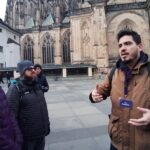
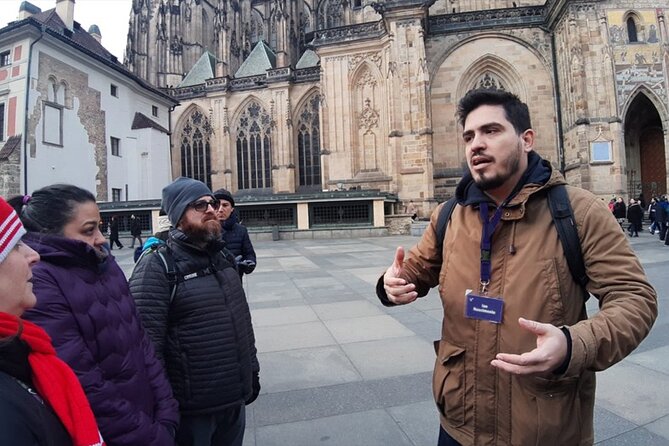
If you’re the kind of traveler who likes your sightseeing with context—why this exists, who built it, what changed over time—this tour fits. And if you’re lucky enough to get a guide like Ian, you’ll likely appreciate the delivery. His English is excellent, and his style is personable and humorous, with lots of facts backed up by stories you remember.
You can also read our reviews of more tours and experiences in Prague.


Staroměstské náměstí: Old Town Square as your orientation
Old Town Square can feel overwhelming. It’s huge, it’s packed with landmarks, and you can lose the thread quickly if you’re just looking down at your map. The guide’s job here is to give you that thread.
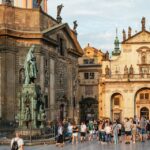
You’ll start with the core landmarks around the square, including the Týn Church, the Jan Hus monument, and the Marian Column. Those names matter because they’re not random tourist labels. They point to major moments in Prague’s religious and political identity, including the city’s long-running tensions and the way public monuments were used to shape meaning.
This is also where you learn a smart rhythm for Prague sightseeing: look first for the big reference points, then zoom in. When you know what you’re seeing in the square—who it celebrates, and why it’s positioned there—you’ll later notice similar storytelling cues all over town.
The stop itself is short, which is exactly right for the first “big stage.” You’re not meant to memorize everything at once. You’re meant to get grounded, so the next neighborhoods don’t feel like separate postcards.
Practical tip: Old Town Square and the surrounding streets are cobbled. Wear shoes that handle uneven stone without pain, and you’ll enjoy the walk a lot more.
The Old Town Hall and the Astronomical Clock (not as boring as it sounds)
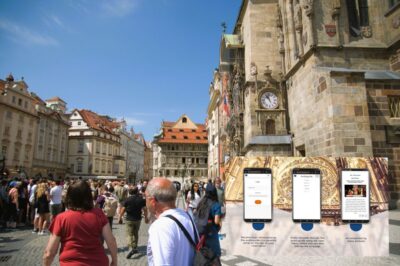
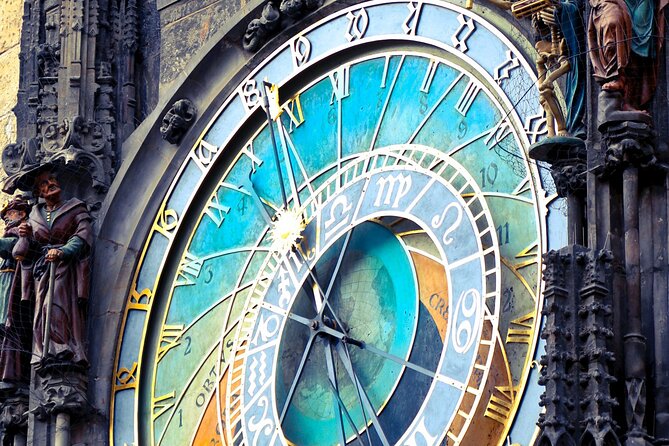
The famous astronomical clock is the sight many people already decided they won’t love. I get it. It can sound like a technical distraction while you’re hungry for something more dramatic and obvious.
Here’s the difference: the guide explains what you’re actually looking at and why it mattered. You don’t just hear that it’s old—you learn what the clock is doing and how it sits in Prague’s tradition of civic pride and scientific curiosity.
The tour time at the clock is brief, but it’s planned so you can understand the mechanism instead of just snapping a photo and moving on. And because the guide frames the clock in a story, it stops feeling like a static object.
Why this matters for your trip: when you understand one “icon” this well, you start recognizing patterns. You’ll walk through Prague later and spot how buildings and public symbols communicate power, belief, and identity—without needing a lecture for every street.
Theatre Des Etats: Mozart’s Prague connection, in plain sight
Prague has a lot of impressive architecture, but not all of it gets explained well. Theatre Des Etats is one of those places that rewards a guided look.
You’ll learn it’s the oldest still-active theatre in Prague and that Mozart’s favorite ties you to the city’s musical reputation. That’s the key word: ties. This is not only a building; it’s a cultural link. Even if you don’t catch a show, understanding the theatre’s role helps you see why Prague feels different from other Central European cities.
The stop is short, so don’t expect a deep performance history seminar. Instead, think of it as a “cultural bookmark.” It helps you carry one more layer of Prague in your head: not only the politics and architecture, but the arts life that keeps showing up in surprising places.
If you enjoy classical music, you’ll likely get a little extra from this tour’s pacing. It’s setting you up for the finish near Rudolfinum, where Prague’s concert scene becomes part of your walking route.
Prasná brána: a gothic gate that tells you where the city ended
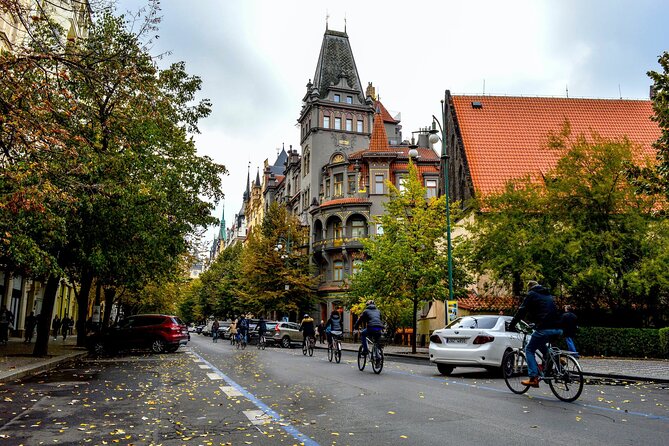
One of the most satisfying things about Prague is how it still lets you trace old boundaries. Prasná brána is one of only two still-standing gates into the Old Town. That means it’s not just pretty. It’s a physical reminder of how the city used to be organized and controlled.
You’ll get a quick guided look at the gate’s gothic character and what it represented in a walled city. That helps you read the street pattern later. When you understand that you’re not just walking through “pretty streets,” but through a space that used to have boundaries and checkpoints, everything feels more coherent.
This stop also has a good pacing advantage. It’s short and visual, so it works even if you’re not in museum mode. You get a clear object to look at, and the explanation gives it meaning.
If you’re taking Prague seriously as a history destination, I like adding at least a few minutes to gates and civic structures like this. They’re often less crowded than the “headline” churches, and you usually leave with a stronger sense of how the city’s movement worked.



Václavské náměstí: Prague’s big public square energy
Moving to Václavské náměstí (Wenceslas Square) is like changing volume. Old Town Square is compact and historic-forward. Wenceslas Square is wider, more monumental, and it has its own political and cultural weight.
You’ll get oriented on why it’s the largest square of Prague and how it was used for historical events. Even in a short stop, this is valuable because it teaches you not to treat “squares” as generic open space. Squares are where cities perform identity.
One small caution: Wenceslas Square is also a place where crowds and street activity can make it hard to hear. If the guide is speaking, stand where you can actually listen, not just where you can see.
This stop works best if you’re willing to shift your focus. Don’t only photograph buildings. Look at the square itself as a stage. That’s where your historical context suddenly clicks.
Josefov (Jewish Quarter): Kafka’s roots and layers of change
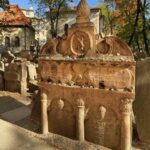
This is the emotional center of the tour, and it’s handled with a respectful, context-focused approach. You’ll spend time in Josefov, which was formerly a ghetto and is known as the birthplace of Kafka.
Those two facts anchor the area. They help you understand why this part of Prague isn’t just about old synagogues and picturesque streets. It’s also about survival, identity, and the way people reshaped their lives inside shifting laws and social pressures.
The guide is also likely to connect the Jewish Quarter’s story to broader Prague history, which gives you a better sense of what you’re seeing rather than turning the neighborhood into a checklist. Even if you already know Kafka as a writer, learning Josefov as a lived place changes the way you think about his work and the city atmosphere that shaped him.
A practical note: this is still a walking tour, so dress comfortably for standing and moving. And if you want to learn more afterward, Josefov is the neighborhood where your own follow-up reading will pay off the most. You’ll know what to look for.
Rudolfinum finish: where Prague Castle shows up in your final frame
The tour ends next to Rudolfinum, the concert hall where the Czech Philharmonic plays. That’s a smart finish for a couple reasons.
First, it gives you a cultural punctuation mark. After Old Town and Josefov, ending near a major music institution makes Prague feel like more than monuments. It becomes a living city with performances and audiences right where your walking route lands.
Second, you’re in a position for views—specifically, there’s a beautiful outlook that includes Prague Castle. This kind of final “view moment” is the best way to store the day in your head. You stop moving, you look up, and the city finally becomes a whole picture.
If you’re scheduling your afternoon, you’re also in a convenient area to continue exploring on your own afterward. Use the finish as your launchpad: grab a drink, find a viewpoint, or keep walking toward the Castle area without feeling totally lost.
Price and value: what $103 buys you in Prague time
At $103.03 per person for about 2 hours 30 minutes to 3 hours, you’re paying for more than a walk between landmarks. You’re paying for interpretation and flow.
Here’s where the value shows up:
- Certified English-speaking guide: clarity matters when you’re dealing with symbols like the Astronomical Clock and civic monuments that can be confusing if you’re reading alone.
- Small group (max 10): less time waiting, more chance to ask questions, and a tour pace that stays manageable.
- Multiple high-impact stops in the Old Town plus Josefov: this isn’t only one neighborhood cookie-cutter route.
- Admission ticket free for the included sights: you avoid extra line-item costs for each listed stop.
Is it the cheapest option in Prague? Probably not. But for a first trip day, paying for a guide can save you time you can’t easily buy back—especially if you’re there for a limited number of days.
Also, this tour tends to be booked about 22 days in advance on average. If your schedule is tight, it’s smart to reserve sooner rather than treating it like a last-minute add-on.
Who should book this tour (and who should consider a slower plan)
This is a strong fit if you:
- want a first-timer orientation that covers both Old Town icons and the Jewish Quarter
- like your history explained with stories and humor (Ian-style guides are a big plus)
- prefer small groups over big bus tours
- want practical tips for food, beer, fun, and hidden spots without feeling like you’re only doing sightseeing
You might rethink the tour if:
- you dislike walking for several hours with limited stop time at each landmark
- you prefer a slower pace with longer museum-style breaks
- you’re traveling with needs that make standing on cobblestones challenging
If you do book it, plan the rest of your day with buffers. I’d avoid stacking too many timed activities immediately after, because you’ll likely want a little time to wander where the guide pointed you.
Should you book Prague: Old Town and Jewish Quarter?
Yes, if you want the fastest path to understanding Prague beyond photos. This tour earns its place as a classic because it links major landmarks into a story you can actually remember: Old Town Square civic identity, the clock explained in human terms, a theatre with Mozart’s connection, old gate boundaries, the political weight of Wenceslas Square, and Josefov’s identity anchored in history and Kafka.
Book it if you’ll benefit from an expert guide who can make details click—and who keeps the mood friendly. If your goal is to fill your first hours with context and local pointers, this is a good use of your time.
FAQ
How long is the Prague Old Town and Jewish Quarter small-group tour?
It runs about 2 hours 30 minutes to 3 hours.
What group size should I expect?
The tour has a maximum of 10 travelers.
Does the tour include admission tickets?
The listed stops on this tour show admission ticket free.
Where do I meet and where does the tour end?
You meet at Kavárna Obecní dům 5, Obecní dům, Náměstí Republiky 1090, Staré Město, and you end at nám. J. Palacha 79/1, Staré Město.
Is hotel pickup included?
No. Hotel pickup is not included.
What happens if the weather is bad?
The tour requires good weather. If it’s canceled due to poor weather, you’ll be offered a different date or a full refund.