REVIEW · PRAGUE
World War II History Tour of Prague’s Old Town
Book on Viator →Operated by Rosotravel - Ostrava City Tours · Bookable on Viator
Prague’s WWII scars are easy to spot. This World War II History Tour of Prague’s Old Town strings together key Nazi-era sites in the center and explains them with strong, well-paced English, including guides like Hubert who keep the story moving. I like how the walk turns famous streets and buildings into cause-and-effect moments you can actually picture. The main drawback is simple: expect a fair amount of outdoor walking, so rain and chill can mess with your comfort.
You’ll meet in Staré Město at Nám. Franze Kafky 16/1 and spend about 2 to 4 hours on an Old Town-focused route that mixes visible landmarks with darker, less-famous places. Admission is listed as free for the stops, and the “basic” option may skip the longer Heydrich Terror Memorial visit depending on the length you choose.
In This Review
- Key highlights I’d circle first
- Why this WWII Old Town route works
- Starting at Nám. Franze Kafky: quick orientation before the heavy stuff
- Maisel and Spanish Synagogues: culture targeted, then repurposed
- Josefov walk: when a neighborhood was emptied
- Old Town Hall and the Astronomical Clock after May 1945
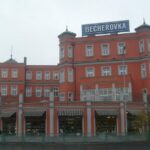
- Petschek Palace: from landmark exterior to Gestapo headquarters
- Wenceslas Square area: resistance under pressure
- The Heydrich Terror Memorial crypt: where the long stop earns its weight
- Old Town Square wrap-up: Prague’s famous churches with wartime awareness
- Price and value: what you’re paying for
- Weather and comfort: dress like you’ll walk, not like you’ll shop
- Who this tour fits best
- Should you book this WWII Old Town History Tour?
- FAQ
- Where does the tour start?
- How long is the tour?
- Is the Heydrich Terror Memorial included in every option?
- Is the tour offered in English?
- Is admission included?
- Is this a private tour?
- Is there a mobile ticket?
- Do I need to check anything the day before?
- Is the meeting point near public transportation?
- What is the cancellation policy?
Key highlights I’d circle first
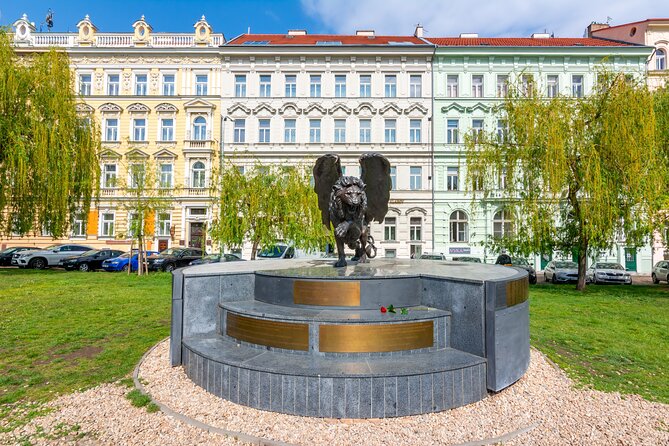
- Josefov Synagogues + Nazi “museum” plans: see how Nazi ideology tried to turn Jewish cultural objects into propaganda.
- Petschek Palace as Gestapo HQ: a major power center, now seen through a tour lens instead of rumor.
- Wenceslas Square + resistance memorial: learn how Czech resistance efforts collided with interrogation and torture.
- Heydrich Terror Memorial in the crypt: a long, focused visit (about 1 hour 20 minutes on the full option).
- Prague’s icons used as WWII evidence: the Old Town Hall facade damage after the May 1945 uprising is part of the story.
- Private group vibe: only your group participates, so the guide can tailor pacing to your pace.
Why this WWII Old Town route works
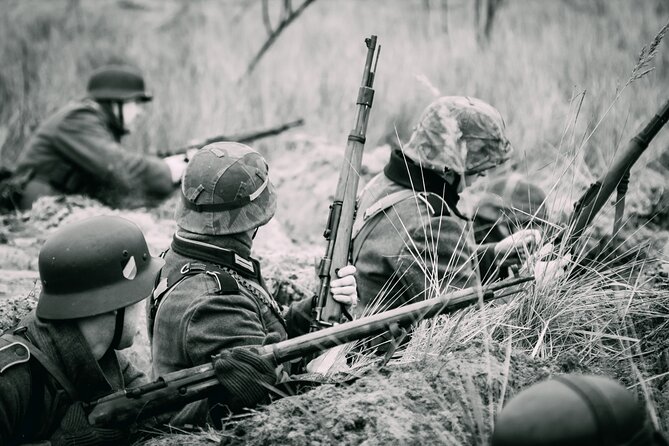
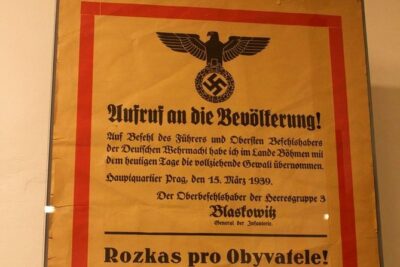
If you’ve ever looked at a Prague map and thought, Great, but where is the war story, this tour is built for that exact problem. It uses a classic Old Town walk pattern, but it doesn’t treat buildings like postcards. Instead, each stop points to a specific wartime theme: occupation pressure, forced transports, surveillance, resistance, and the aftermath.
The pricing also makes sense for what’s included. At about $93.36 per person for 2 to 4 hours, you’re paying for guided context and time, not for paid museum add-ons. The tour lists admission as free for the stops, which helps keep the total cost closer to the tour price than many sightseeing bundles.
The tone is serious, and that’s the point. You’re walking near places tied to the Nazi occupation and the Czech resistance, so expect uncomfortable topics—interrogations, torture, and deportation history—handled through a guided narrative rather than a self-paced lecture.
You can also read our reviews of more historical tours in Prague
Starting at Nám. Franze Kafky: quick orientation before the heavy stuff

You begin at the World of Franz Kafka area, at Nám. Franze Kafky 16/1 in Staré Město. This first stop is short and light on formalities, which is smart. Before you hit synagogues, deportation references, and Gestapo ties, you get your bearings in the neighborhood and a sense of how your guide will connect the dots.
From there, the itinerary pivots into Jewish history and Nazi occupation strategies. That transition matters. Prague’s Old Town can feel like one continuous museum, but this tour separates eras clearly so you don’t lose the thread.
Practical note: start times are typically fixed, so give yourself a little buffer to reach the meeting point smoothly. The meeting area is near public transportation, which helps if your hotel is outside the center.
Maisel and Spanish Synagogues: culture targeted, then repurposed
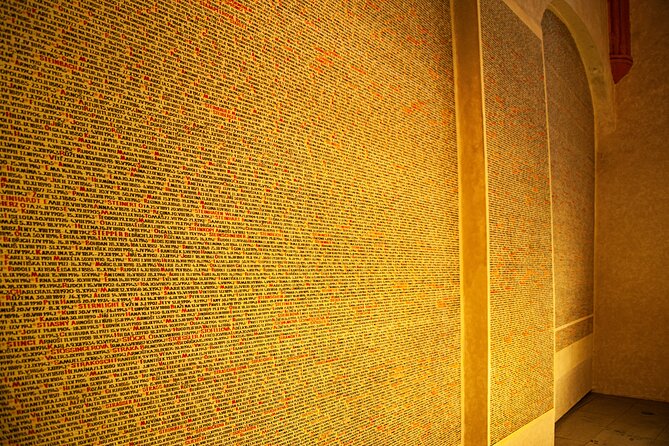
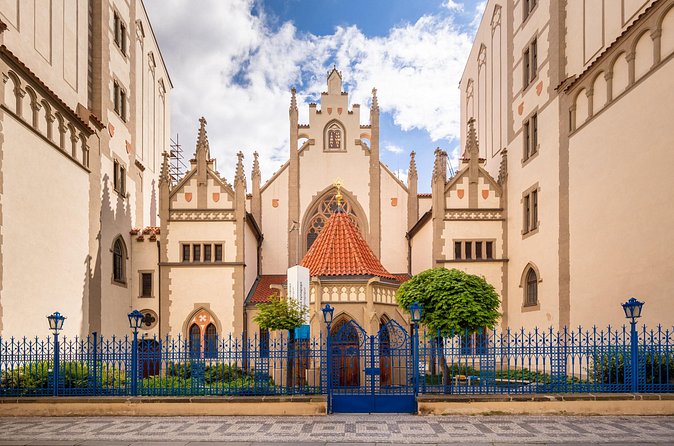
Next up is the Maisel Synagogue, along with the Spanish Synagogue area. You’ll also hear about the idea that Jewish objects were stored with the intention to install them in a Nazi “museum of the extinct race.”
This is one of those details that changes how you see the buildings. Synagogues are usually presented as architecture and religion. On this tour, you’re also shown how cultural property became part of Nazi messaging—taking what they despised and using it as a staged exhibit.
What I like here is the balance between place and explanation. You’re not just hearing a timeline. You’re connecting the physical location to a strategy: confiscation, storage, and ideological theater.
Possible drawback: depending on the day, access to certain venues can vary. One useful heads-up from real-world experience is that on a Saturday tour, some Jewish venues may be closed to the public. That doesn’t ruin the story, but it can change how much you get to see inside.
Josefov walk: when a neighborhood was emptied
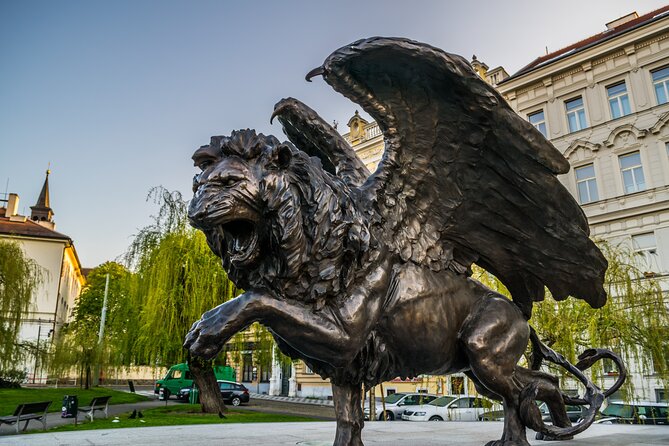
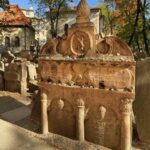
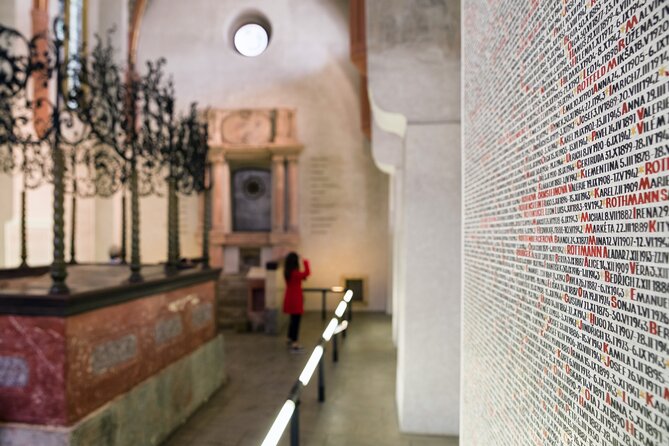
Then you shift into the Prague Jewish Quarter (Josefov) for a guided walk. The tour focuses on how the Nazi regime treated this area as a specific target, and it highlights that Josefov was deserted in 1941 as transport of Czech Jews to Theresienstadt began.
I like this stop because it turns “history of the Holocaust” into geography you can follow. You’re looking at streets and boundaries, then hearing how policy decisions were carried out in real space. That makes the story stick, even if you only have a few hours.
If you care about context, this part of the tour is where you’ll feel it most. It’s not only about what happened, but also about what it meant to be removed from daily life—home, routine, and community.
Old Town Hall and the Astronomical Clock after May 1945
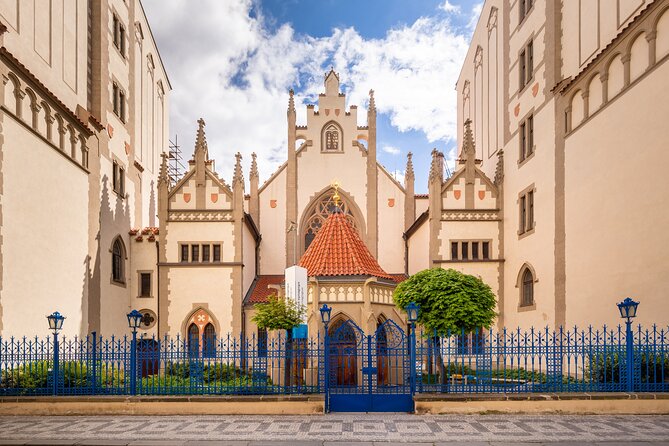
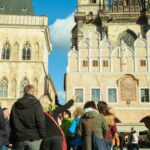
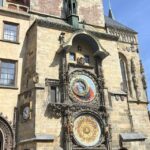
At Old Town Hall, you’ll spend time on the facade, which suffered heavy damage during the Prague uprising in May 1945, while the iconic Astronomical Clock survived. This is a clever stop because it offers a WWII moment without requiring you to stare at a single grim artifact.
It’s also a reminder that Prague wasn’t only occupied; it resisted, and the resistance left marks. The clock gives you a visual anchor, while the facade damage gives you the proof.
What to expect: a slower moment to look up at the architecture. Use that time to let your guide tie the uprising back to the earlier stops on occupation pressure and resistance.

Petschek Palace: from landmark exterior to Gestapo headquarters
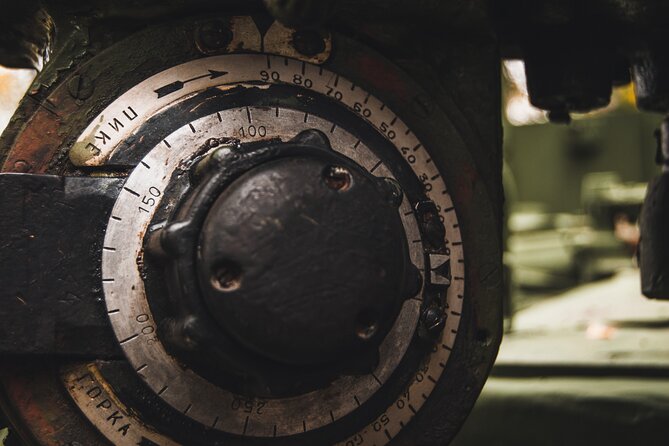
Petschek Palace is next, tied directly to the Gestapo headquarters. You’re looking at a former seat of power, but the tour approach makes it feel less abstract than reading about it later.
This stop works especially well if you like cause-and-effect history. Earlier you hear about targeting Jewish communities and Nazi control mechanisms. Here, you get one of the best-known labels for that control—Gestapo—and you see it as something housed in real buildings, not just a name.
A helpful practical tip from on-the-ground experience: Petschek Palace is now the US Ambassador’s residence, so you’ll often be taking photos from a distance. That’s not a problem; it’s just good to know so you don’t expect close-up angles.
If your guide is experienced with local transit, you may also be directed on quick ways to move between areas efficiently (for example, using the Metro to get to and from that neighborhood). That keeps a short tour from feeling like you’re constantly stuck in transit.
Wenceslas Square area: resistance under pressure
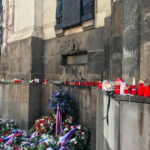
The tour then heads toward Vaclavské náměstí, where you’ll find a memorial plaque dedicated to the Czech resistance. The guide explains offensive efforts along with the brutal reality behind them: interrogations and tortures.
This is where the story becomes personal, even though you’re looking at public space. You’re connecting resistance actions to the consequences carried out by the occupation authorities. The guide’s framing matters a lot here, because it can shift the tone from “war trivia” to “how people lived with the risk.”
You’ll also hear how Wenceslas Square was used by the Nazis for mass demonstrations. That’s a chilling contrast: a famous avenue for public life and national visibility, used as a stage for intimidation.
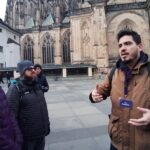
One more small real-world detail that’s worth knowing: if you’re trying to photograph or linger at the edges of restricted-looking areas, having a guide who knows how to communicate with local authorities can make the difference between smooth and stressful. An experienced guide named Hubert was noted for handling practical issues calmly while keeping the tour respectful.
The Heydrich Terror Memorial crypt: where the long stop earns its weight
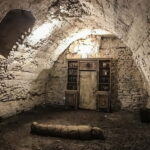
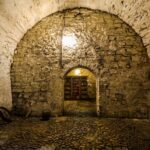
The biggest time block comes at the National Memorial to the Heroes of the Heydrich Terror. It’s located in the underground crypt of the Cathedral of Saints Cyril and Methodius, and it’s listed as about 1 hour 20 minutes with admission included.
Here’s what makes this stop powerful and specific: it’s described as the last hideout of seven SOE-trained Czechoslovak agents involved in the assassination of Reinhard Heydrich. The guide ties the location to the mission and then to what happened afterward, including the aftermath and the search for the agents and their fellow soldiers in hiding.
Why I think this stop is the heart of the tour: it’s not only about the assassination event. It’s about the consequences and the survival network that formed under pressure. A crypt setting also changes how you absorb information. You can’t speed through it like an outdoor landmark.
If you’re choosing between tour lengths, this matters. The basic 2-hour option may not include the Heydrich Terror Memorial, so don’t treat the itinerary durations as interchangeable. If Heydrich and the resistance story is a top reason you’re booking, pick the version that includes the crypt.
Old Town Square wrap-up: Prague’s famous churches with wartime awareness
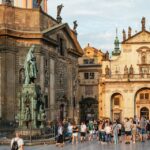
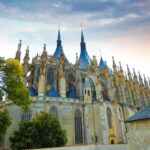
To finish, you return to the Old Town Square area and see key landmarks such as the Church of St Nicholas, Kinsky Palace, and the Church of Our Lady before Týn.
This ending is surprisingly useful. You’re not just done with the war story; you’re placed back into the same visual environment where the war shaped outcomes. It’s a way to bring your brain back from the grim details to the broader Prague you came for—without losing the WWII lens.
If you’re the type who likes photos, this is your better moment. The earlier stops are often about looking carefully and listening. Old Town Square is about both. Just keep your pace with the guide so the group doesn’t get stuck waiting.
Price and value: what you’re paying for
At $93.36 per person, the value comes from three places:
First, you’re paying for interpretation, not just access. Prague is full of plaques and monuments. A good guide helps you connect them into a coherent WWII story in a limited time window.
Second, the tour lists admission ticket free for the stops. That means you aren’t facing a stack of separate entry fees on top of the tour price.
Third, you get a mix of time lengths. On the fuller option, the Heydrich Terror Memorial crypt visit takes about 1 hour 20 minutes, so you’re not just doing short exterior stops. You’re spending real guided time at a meaningful location.
That said, price can feel different depending on your group size and what option you choose. If the longer memorial visit is important to you, verify that it’s included in your chosen duration before you assume it is.
Weather and comfort: dress like you’ll walk, not like you’ll shop
One repeated practical theme is weather. This tour is built around a walk through central Prague with multiple stops, and when conditions are wet or chilly, comfort matters.
Pack for outdoor time:
- A rain layer or umbrella you can manage on narrow sidewalks
- Warm layers even in mild seasons
- Shoes with decent grip for old streets and stone paths
Also, since you’ll be spending time at locations where looking up and standing still is part of the experience, bring something you can wear comfortably for that.
Who this tour fits best
This is a strong match if you want:
- A guided WWII focus in Prague’s Old Town rather than a general city tour
- Clear connections between Josefov, the Gestapo, the resistance, and the aftermath
- A tour in English with pacing designed to keep you from getting lost in names and dates
It also suits people who like walking tours but still want a structured route with specific stops.
If you only want light sightseeing, this won’t be your best fit. The tour centers on occupation and resistance, including harsh topics. But if you’re okay with that, the specificity of locations makes it much more than a lecture.
Should you book this WWII Old Town History Tour?
Book it if you want a short, organized way to understand how WWII unfolded in central Prague—especially if you care about Josefov, Gestapo ties at Petschek Palace, and the Heydrich Terror Memorial crypt.
Skip or reconsider if:
- You’re not prepared for a lot of walking in real weather.
- You’re only interested in bright, purely architectural Prague highlights.
- You pick the short option and later realize the crypt memorial visit is what you really wanted.
If you do book, choose the option length that matches your interests, and plan to dress for outdoor time. With an experienced guide—one example being Hubert, noted for excellent English and good pacing—you’ll come away with a Prague that makes sense, not just a Prague that looks good on a postcard.
FAQ
Where does the tour start?
The meeting point is outside World of Franz Kafka at Nám. Franze Kafky 16/1, 110 00 Staré Město, Czechia.
How long is the tour?
The duration is listed as about 2 to 4 hours, depending on the selected option.
Is the Heydrich Terror Memorial included in every option?
No. The Heydrich Terror Memorial visit is not included in the basic 2-hour option.
Is the tour offered in English?
Yes, the tour is offered in English.
Is admission included?
The stops list admission as free for each site mentioned in the itinerary.
Is this a private tour?
Yes. Only your group participates.
Is there a mobile ticket?
Yes, the tour uses a mobile ticket.
Do I need to check anything the day before?
Yes. You should check your email the day before the tour for important information.
Is the meeting point near public transportation?
Yes, the meeting point is near public transportation.
What is the cancellation policy?
Free cancellation is available up to 24 hours in advance for a full refund. Changes within 24 hours of the start time are not accepted.