REVIEW · PRAGUE
Prague: Castle Tour with Local Guide and Entry Ticket
Book on GetYourGuide →Operated by Fun in Prague · Bookable on GetYourGuide
Prague Castle can swallow a whole day. This 150-minute tour keeps you moving through the big sights with headphones so you can actually hear the story in the busiest areas.
I like two things a lot: the skip-the-ticket-line setup (plus the short security line) and the guided route that helps you find the right rooms without wasting time wandering. You’ll also get to see major highlights like St. Vitus stained glass and the Golden Lane without needing to piece it all together yourself.
One thing to plan around: parts of Prague Castle can close on rare occasions due to official regulations, so you may not get access to every building every day. Your guide will do their best, but you should stay flexible.
In This Review
- Key things to watch for on this tour
- Prague Castle in 150 Minutes: A route that actually makes sense
- Malostranská meet-up and the tram ride uphill
- St. Vitus Cathedral: stained glass, gargoyles, and royal tombs
- Old Royal Palace and Vladislav Hall: vaulted ceilings and political drama
- St. George’s Basilica: quieter stone, big contrast
- Golden Lane: from sharpshooters to goldsmiths to Kafka’s shadow
- Value for $61: what you’re really paying for
- Choosing small-group vs private: pace, comfort, and expectations
- Practical tips so you enjoy it (not just survive it)
- When Prague Castle access changes on the day
- Should you book this Prague Castle tour?
- FAQ
- How long is the Prague Castle tour?
- What parts of Prague Castle are included with the entry ticket?
- Where do I meet the guide near Malostranská metro?
- Do I get headphones and live commentary?
- Is this tour only a group tour?
- What languages are available for the live guide?
- What if some areas of Prague Castle are closed?
- Can I cancel, and do kids get in free?
Key things to watch for on this tour
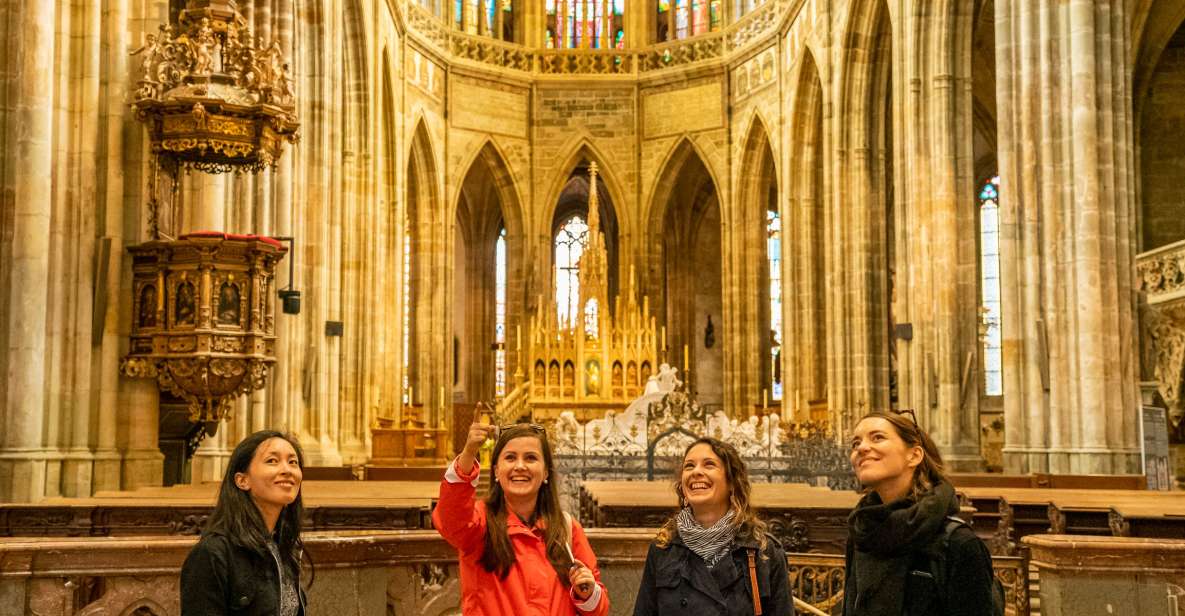
- Headphones for clear commentary in crowded spots
- Skip-the-line ticket handling and a short security line
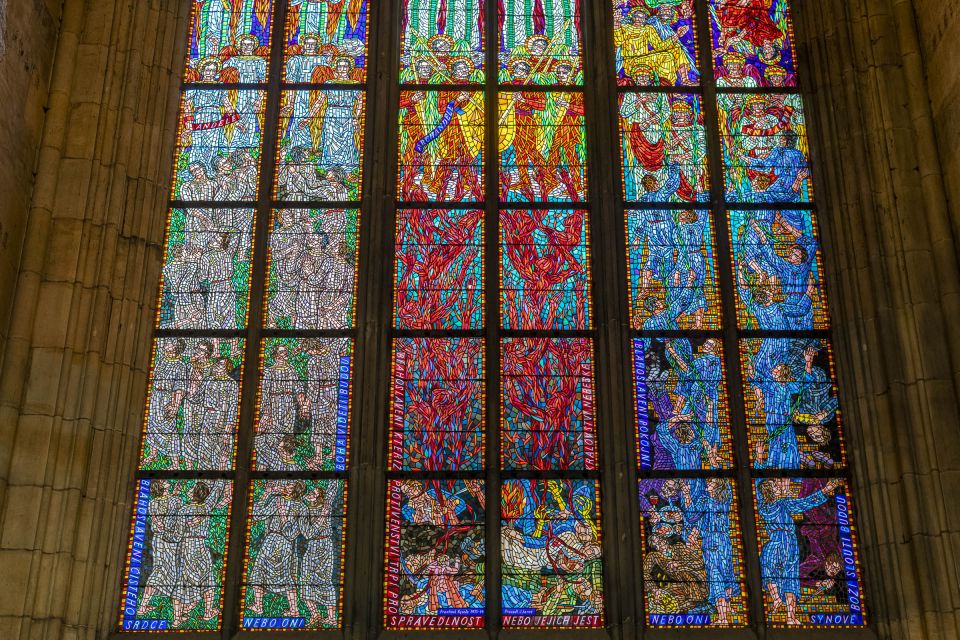
- St. Vitus Cathedral highlights including Mucha stained glass
- Vladislav Hall and royal power rooms in the Old Royal Palace
- The Defenestration of Prague moment in the palace area
- Golden Lane craft cottages and later artist connections like Kafka
Prague Castle in 150 Minutes: A route that actually makes sense
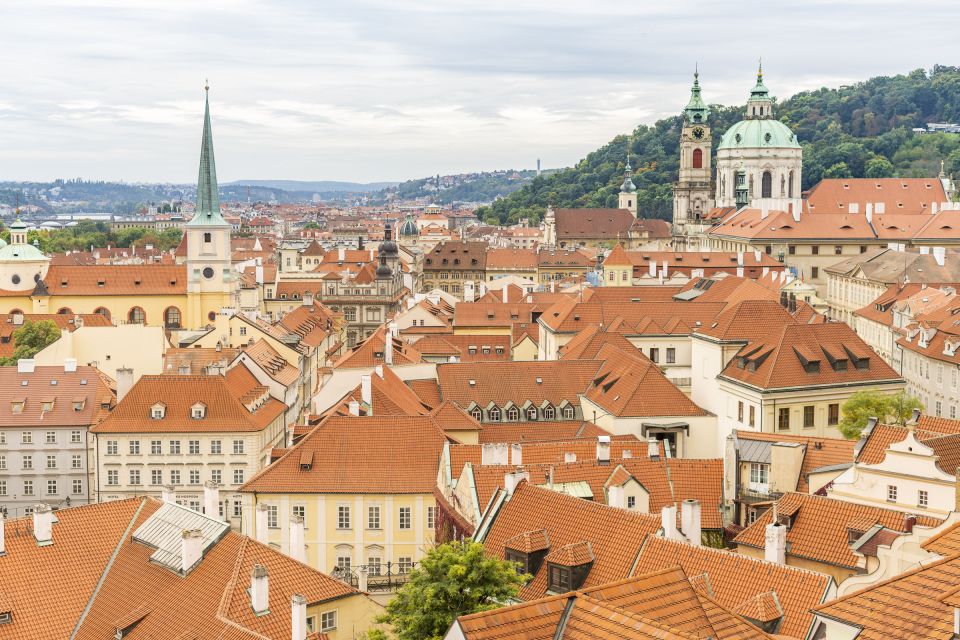
Prague Castle is huge, and left to your own devices it’s easy to spend more time “getting your bearings” than seeing the important stuff. I like this tour because it gives you a tight loop: cathedral, palace buildings, basilica, and Golden Lane. You still get the feeling of stepping into a fairy tale, but you’re not stuck deciding what to cut.
The 150-minute format also helps your energy budget. You’re walking around real stone corridors and up to viewpoints, not just waiting in lines. It’s long enough to feel like a complete highlights visit, but short enough to keep you from turning the whole day into a slow shuffle.
If you’re the type who wants backstory while you see the sights, this tour is built for that. You’ll get live commentary through headphones, which matters because Prague Castle can be noisy and packed.
You can also read our reviews of more tours and experiences in Prague



Malostranská meet-up and the tram ride uphill
Meeting is straightforward: you stand directly in front of the exit of Malostranská metro station, near a small water fountain. In winter the fountain is covered, so don’t look for it as a “landmark” then—look for the brown-and-white sign that says Meeting Point and a guide holding an orange umbrella.
Once you meet up, you take the tram up to Prague Castle. That matters more than it sounds. The castle area sits above the river, and walking the whole distance can zap your legs before the real sightseeing starts. The tram also helps you arrive with less stress, especially when crowds are already thick.
Practical tip: wear comfortable shoes. Prague Castle territory is not the place for soft soles and questionable traction, even if the weather looks calm.
St. Vitus Cathedral: stained glass, gargoyles, and royal tombs
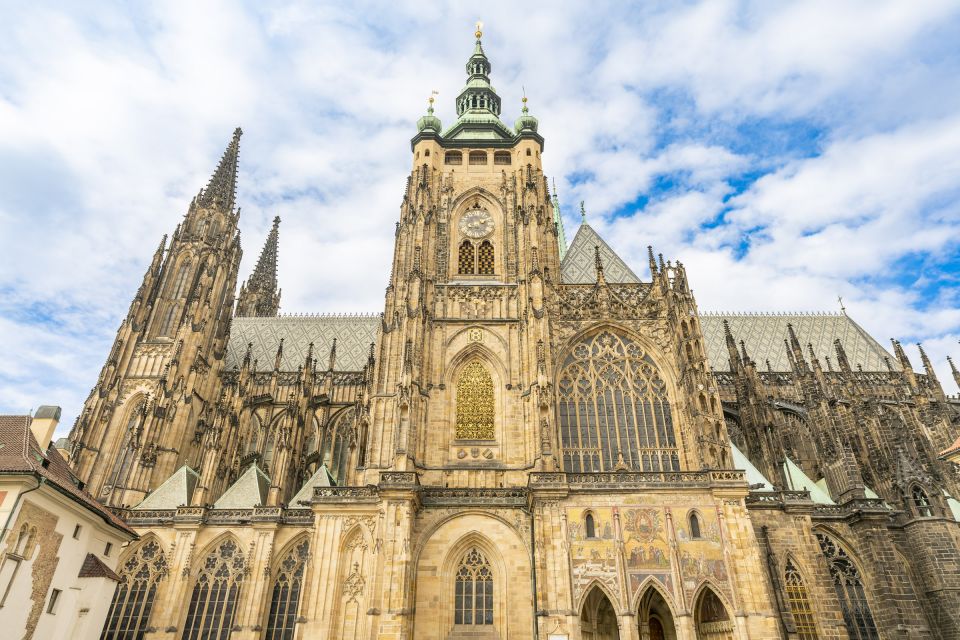
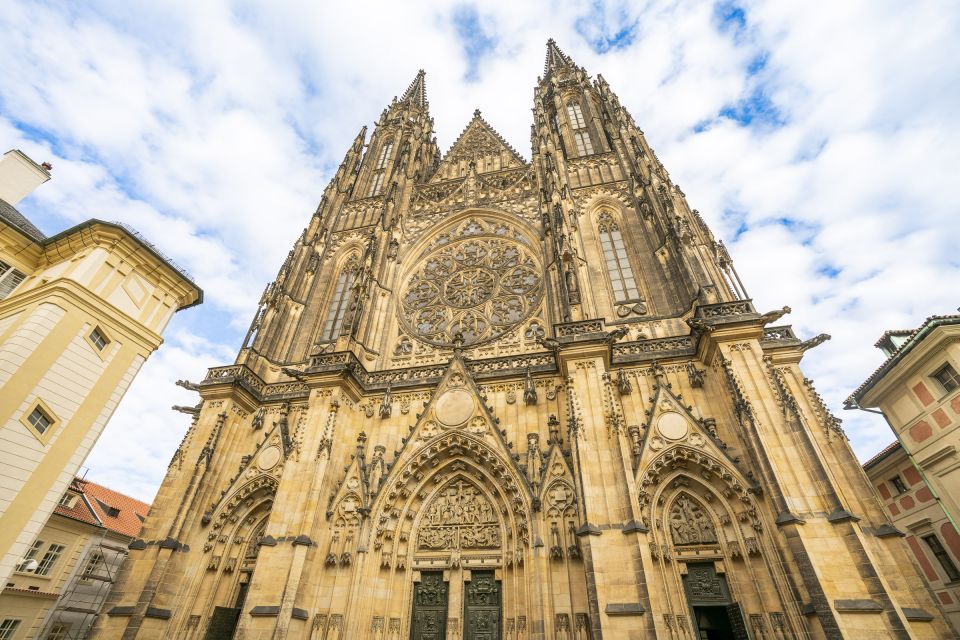
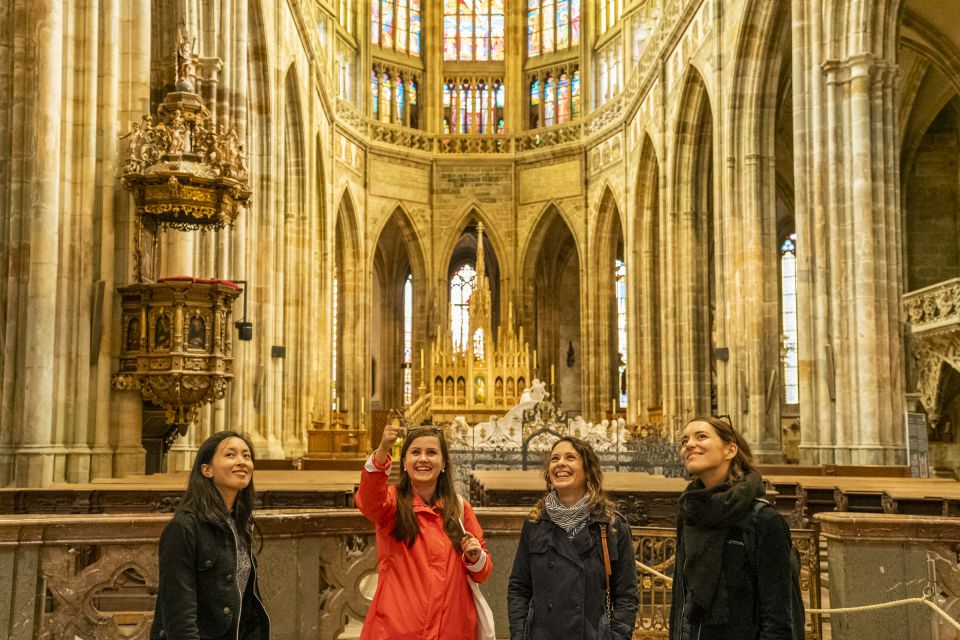
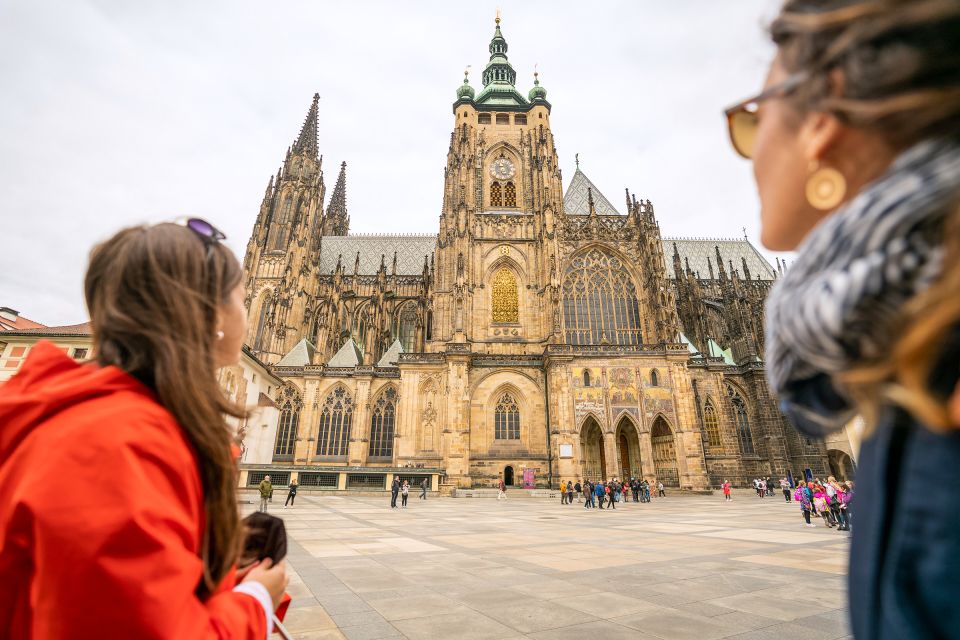
St. Vitus Cathedral is the star of the show, and the tour aims you at the parts that reward your attention right away. Expect Gothic architecture up close, plus the fun detail work outside. You’ll spot gargoyles on the exterior—those stone faces that look a little spooky and a lot like medieval design “branding.”
Inside, you’ll get the visual payoff people come for. The tour calls out Art-Nouveau stained glass made by Czech artist Alfons Mucha. You’ll also see a 14th-century mosaic of the last judgment. Those two details work well together: Mucha shows a later artistic style, and the medieval mosaic reminds you how long Prague has been rearranging beliefs, power, and art in the same space.
Then come the tombs and chapels. You’ll see tombs tied to major figures, including St. Wenceslas and Charles IV. You’ll also learn about the baroque tomb of St. John of Nepomuk and the Chapel of St. Wenceslas. If you care about how dynasties used art and religion to project authority, this portion delivers.
One reason I’d book this with a guide: the cathedral isn’t just “pretty.” With commentary in your ears, you’re less likely to miss what you’re looking at. In crowded interiors, standing near the guide can become impossible, so headphones are a real advantage.
Old Royal Palace and Vladislav Hall: vaulted ceilings and political drama
After the cathedral, the tour shifts into the Old Royal Palace. This is where the scale changes, and it’s a good mental reset from religious symbolism to state power.
A highlight here is Vladislav Hall. The tour points you to the massive vaulted ceiling, which is a visual flex in stone. It’s the kind of space that makes you understand why rulers wanted grand rooms: it’s hard to argue with a ceiling that says power in all directions.
The palace visit also includes the chamber tied to one of Prague’s most famous episodes: the Defenestration of Prague. Your guide will show you where Czech Protestant aristocrats threw Catholic governors of the Habsburg emperor and their secretary out the window, an event that helped set the tone for the Thirty Years War. It’s a wild story, but the value is in the cause-and-effect. You start seeing how a single moment can trigger decades of conflict.
This is one area where good guiding makes the difference. Some guides on this tour, like Ross and Hannah (names I’ve seen), have a knack for explaining the story without turning it into a lecture. You get the plot, the context, and why it mattered—while still moving at a pace that keeps the tour from turning into a bottleneck.
St. George’s Basilica: quieter stone, big contrast
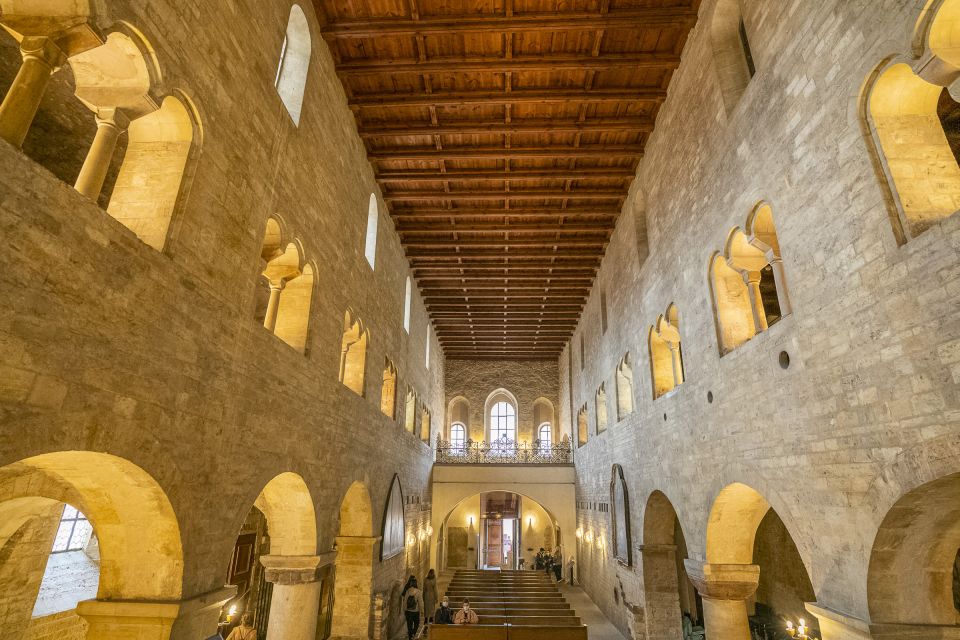
St. George’s Basilica offers a different feel from St. Vitus. The tour frames it as a counterpoint to the grandiosity of the castle complex. The stone walls and design make it feel more grounded, and that contrast is helpful.
Here you’ll see fragments of 12th-century frescoes. Those older wall paintings can be easy to overlook if you’re not sure what you’re looking for. With a guide and headphones, you’re more likely to spot the details that connect the basilica to the deeper timeline of Prague’s religious and artistic life.
You’ll also walk up the double staircase where the remains of St. Ludmila lie. That moment works as a “pause” within the tour: you’re not just rushing past objects, you’re stepping into a specific spot with significance.
You can also read our reviews of more guided tours in Prague



Golden Lane: from sharpshooters to goldsmiths to Kafka’s shadow
Golden Lane is the section that feels most like a living picture book. The cottages along the alley were originally built for the castle’s sharpshooters. Later, they housed goldsmiths. Over time, those practical spaces became stages for culture, and artists like Franz Kafka lived there.
What I like about this part of the tour is that it’s not only about who was famous. You’ll get a sense of everyday life. The tour walks you along the reconstructed workshops and homes, so you can imagine how people worked and lived in the shadow of the castle. That’s what turns Golden Lane from “cute houses” into a real historical snapshot.
It’s also a place where the headset pays off. The alley can get tight and slow, and when you want to look at the facades, you don’t want to also chase sound. With headphones, you can focus on the lane while the story keeps coming clearly.
Value for $61: what you’re really paying for
Price is $61 per person, and the best way to judge value here is what’s bundled in.
You’re getting:
- Tram ticket to reach the castle district
- Admission ticket covering St. Vitus Cathedral, the Old Royal Palace, St. George’s Basilica, and Golden Lane
- An expert local guide with live commentary
- Headphones so you hear the guide clearly
- Skip-the-ticket line plus use of the short security line
If you’ve ever stood in a long ticket queue at Prague Castle, you already know the hidden cost: time and frustration. This tour trades money for smoother access and a guided flow that helps you see the right rooms in the right order.
Is it the cheapest way to see the castle? No. But it is a strong value if you want the highlights, the connections, and the “why” behind the sights without spending your vacation doing crowd math.
Choosing small-group vs private: pace, comfort, and expectations
You can choose from either a small-group or a private guided experience. That choice affects your pace and how easily you can stop for questions.
In real life, group size can change by departure. I’ve seen feedback where the group felt bigger than expected for the small-group option. So if you truly want a quieter pace, ask what group size looks like for your specific departure before you commit.
On the bright side, the headphones help with group density. Even when you’re packed into the cathedral or moving through busy corridors, you still get the guide’s commentary without needing to stand shoulder-to-shoulder.
If you’re the kind of traveler who likes a steady schedule but also wants time to look at details, this format usually works well. If you need lots of unstructured freedom, you might use this tour as your “first pass,” then come back on your own for anything that grabs you.
Practical tips so you enjoy it (not just survive it)
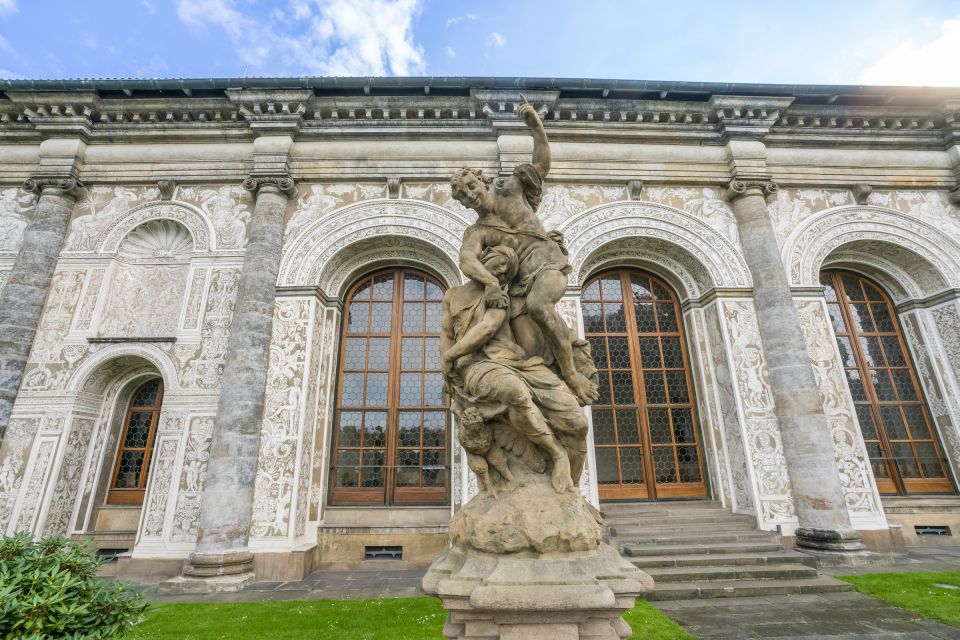
This tour moves through several major interiors and courtyards, so your comfort matters.
- Bring comfortable shoes. You’ll do plenty of walking and you’ll likely face stairs.
- Dress for cold weather if you’re going in winter. One review noted a chilly day, and open spaces can feel longer when the wind is involved.
- Have your phone ready for photos, but don’t let pictures steal all your attention. The story is part of the payoff, especially for the Defenestration of Prague moment.
- Plan for crowds. Headphones help a lot, and guides often keep the schedule tight even when lines are crowded.
Also, note the small “buffer” built into the tour: at the end, you’ll typically have the option to head back your way, such as returning by tram or walking down steps if you prefer. That flexibility lets you match your energy level.
When Prague Castle access changes on the day
Prague Castle can close certain areas due to official regulations, sometimes on short notice. This tour notes that your guide will do their best, but you can’t rely on every building being open.
What does that mean for you? Treat the tour as a best-effort highlights route, not a guarantee of every exact room. If something is closed, you’ll still get the core experiences the tour focuses on: St. Vitus, Old Palace highlights, St. George’s Basilica, and Golden Lane.
That “some things might shift” reality is normal at such a high-profile site. The key is that you won’t be left clueless. A good guide keeps you oriented and helps you make the most of whatever access is available that day.
Should you book this Prague Castle tour?
Book it if you want a clean, efficient highlights visit with strong storytelling. The combination of skip-the-line convenience, a guided route through the main interiors, and headphones for clear audio in crowds is the right mix for a first trip.
Skip it if your goal is mostly wandering and long stays in each building with zero structure. In that case, you’d probably prefer a looser plan and self-guided time. This tour is designed to help you see the major sites in about 150 minutes, not to replace a full-day explore-at-your-own-pace day.
If you do book, you’ll likely be in good hands with guides like Ross, Hannah, Anna, Marcela, or Janna (names I’ve seen associated with this experience). The consistent theme is clear explanations and enough pacing to keep you moving through the castle’s biggest moments without losing the plot.
FAQ
How long is the Prague Castle tour?
The tour lasts 150 minutes.
What parts of Prague Castle are included with the entry ticket?
The admission ticket includes St. Vitus Cathedral, the Old Royal Palace, St. George’s Basilica, and the Golden Lane.
Where do I meet the guide near Malostranská metro?
Meet directly in front of the exit of Malostranská metro station, by the small water fountain (covered in winter). Look for a brown and white sign with Meeting Point and a guide holding an orange umbrella.
Do I get headphones and live commentary?
Yes. You’ll receive headphones so you can hear your guide’s commentary clearly while you walk through the sites.
Is this tour only a group tour?
No. You can choose between a small-group experience or a private guided experience.
What languages are available for the live guide?
The tour offers live guiding in Italian, French, Spanish, English, German, and Russian.
What if some areas of Prague Castle are closed?
On rare occasions, areas may be closed due to official regulations. Your guide will do their best to create a great experience, but access to every building cannot be guaranteed.
Can I cancel, and do kids get in free?
There is free cancellation up to 24 hours in advance for a full refund. Children aged 5 and under go free of charge.