REVIEW · PRAGUE
Prague Castle 2.5-Hour Tour Including Admission Ticket
Book on GetYourGuide →Operated by Get Prague Guide · Bookable on GetYourGuide
Prague Castle makes more sense with a guide. Prague Castle in just 150 minutes feels like a smart crash course, starting on Charles Bridge and ending inside the Castle complex. You’ll ride a tram up, then move through the key stops that explain how this place shaped Czech and European power from the 9th to the 20th century.
I particularly love the balance of walking and tram time—you get the approach views without turning it into a full-day hike. I also love that your tickets are bundled for the big interiors, so you spend less time fiddling with entry lines and more time listening to the stories. The main drawback is simple: it’s not a light stroll, and it isn’t suitable for people with mobility impairments or wheelchair users.
If you’re visiting in winter, be ready for cold waits outdoors before entry. And if a building is partially closed for state or operational reasons, you might miss a planned stop even though the tour still runs.
In This Review
- Key Highlights That Make This Tour Worth It
- Why the 150-Minute Castle Plan Feels Just Right
- Starting at Charles Bridge: Where the Castle Story Begins
- Tram Up from Lesser Town: The Practical Shortcut
- St. Vitus Cathedral: Listening for Power, Not Just Pretty Stone
- Old Royal Palace and Vladislav Hall: Where Court Life Comes Through
- St. George’s Basilica: A Short Visit With a Strong Focus
- Golden Lane: Small Doors, Big Stories
- Meeting Point Options: Carlo Quarto vs. The Castle Courtyard
- Who This Tour Is Best For (and Who Should Rethink It)
- Booking Wisdom: Should You Pick This One?
- FAQ
- How long is the Prague Castle 2.5-hour tour?
- What’s included in the ticket price?
- Where does the tour start?
- Is this tour suitable for wheelchair users or people with mobility impairments?
- What languages are available for the live guide?
- What if parts of the buildings are closed during my visit?
Key Highlights That Make This Tour Worth It

- Charles Bridge start with context: you get the Prague Castle backstory before you even see the gates
- Tram ride from the Lesser Town area: a practical time-saver that cuts down the uphill grind
- Skip-the-ticket-line entry: you’re moving into the important interiors faster
- St. Vitus Cathedral guided focus: you’ll hear about the ceremonial role of rulers and the site’s meaning
- Golden Lane with everyday-life stories: not just palaces—also the people who lived in the shadows
- Guides with humor and pacing: many guides keep groups engaged without rushing
Why the 150-Minute Castle Plan Feels Just Right
Prague Castle can swallow a day. This tour doesn’t try to do everything—it does the right stops in a tight rhythm. The duration (150 minutes) matters because Prague Castle is big, crowded, and easy to overestimate. With a set order and a guide leading you between sites, you’re less likely to wander in confusion or lose time to getting turned around.
The price—$57 per person—also makes more sense when you compare what’s included. You’re paying for guide time plus entry to multiple interiors, along with a tram ticket. You’re not just buying views; you’re buying access and interpretation, which is where Castle visits often become expensive and frustrating on your own.
One more thing I like: this tour is designed for a range of ages and interests, as long as you’re okay with steady movement. The guides manage groups well, including larger groups that can get loud and tangled if no one’s in charge.
You can also read our reviews of more tours and experiences in Prague



Starting at Charles Bridge: Where the Castle Story Begins
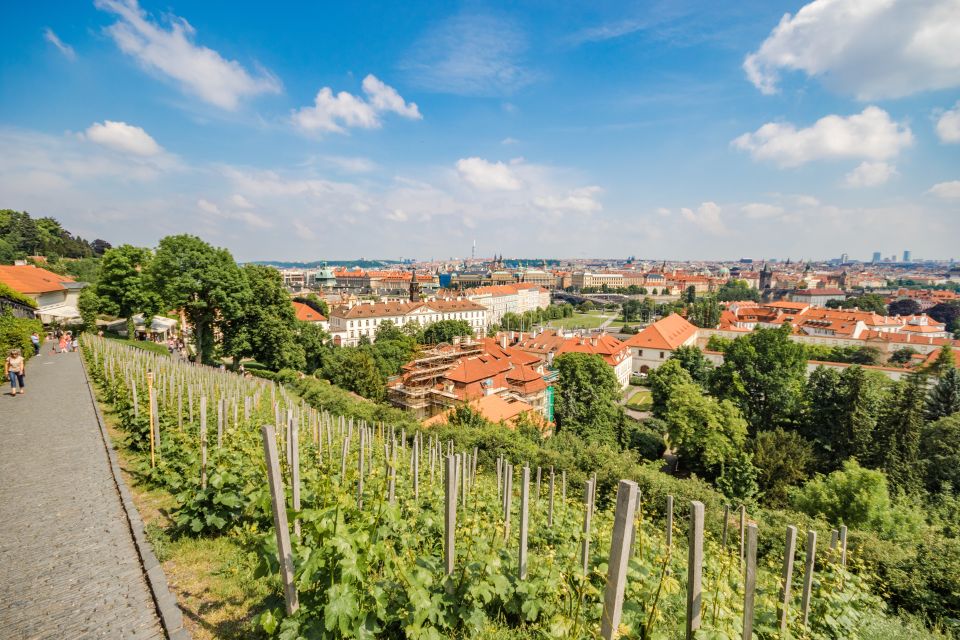
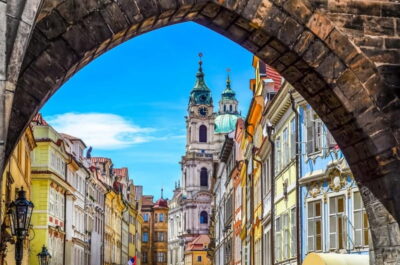
You begin on Charles Bridge, and that first chunk of time is about orientation. Your guide sets up what Prague Castle is—why it mattered, why it keeps changing, and why the structures you’re about to see weren’t just built for looks. Instead of treating the Castle like a pile of buildings, you start thinking of it as a power center that evolved over centuries.
It’s also a good psychological trick. When you cross Charles Bridge and then head toward the Castle approach, the architecture clicks faster. You’ll likely catch the major sightlines more easily because you know what each landmark is supposed to represent.
Guides are often praised for humor and an easy teaching style, and that tone helps here. In a place this historic, jokes sound a little out of place—until you realize they’re doing real work: they keep energy up so you can actually listen.
Tram Up from Lesser Town: The Practical Shortcut
Instead of doing a full slog uphill, you take a tram ride from the Lesser Town Square area to the Castle. That’s a smart move for two reasons.
First, it saves time—time you can spend inside St. Vitus Cathedral and the other key stops. Second, it reduces fatigue right at the point where the Castle complex starts feeling steep and crowded. Even if you’re a confident walker, cobblestones and stairs add up quickly in Prague.
This is where the included tram ticket earns its keep. If you were doing this on your own, you’d be budgeting time for transit plus entry tickets plus finding exact meeting instructions. Here, the transport is handled as part of the flow.
St. Vitus Cathedral: Listening for Power, Not Just Pretty Stone
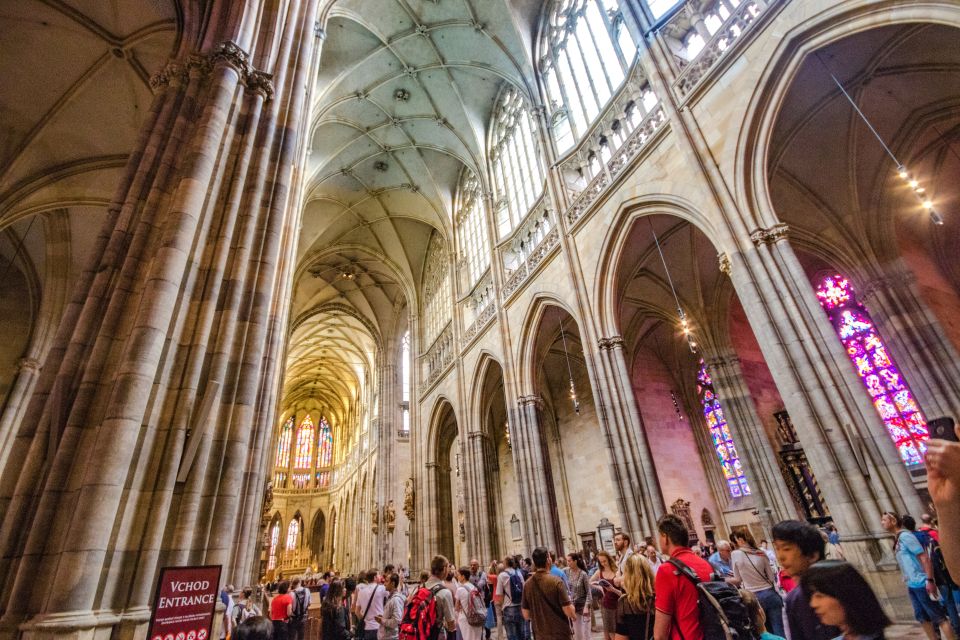
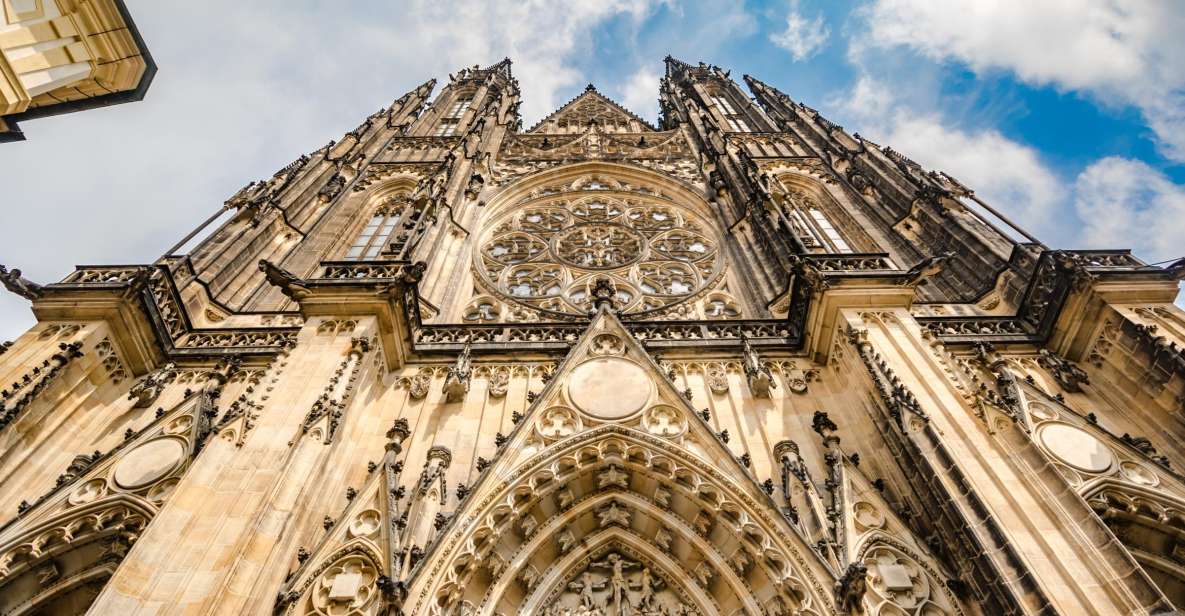
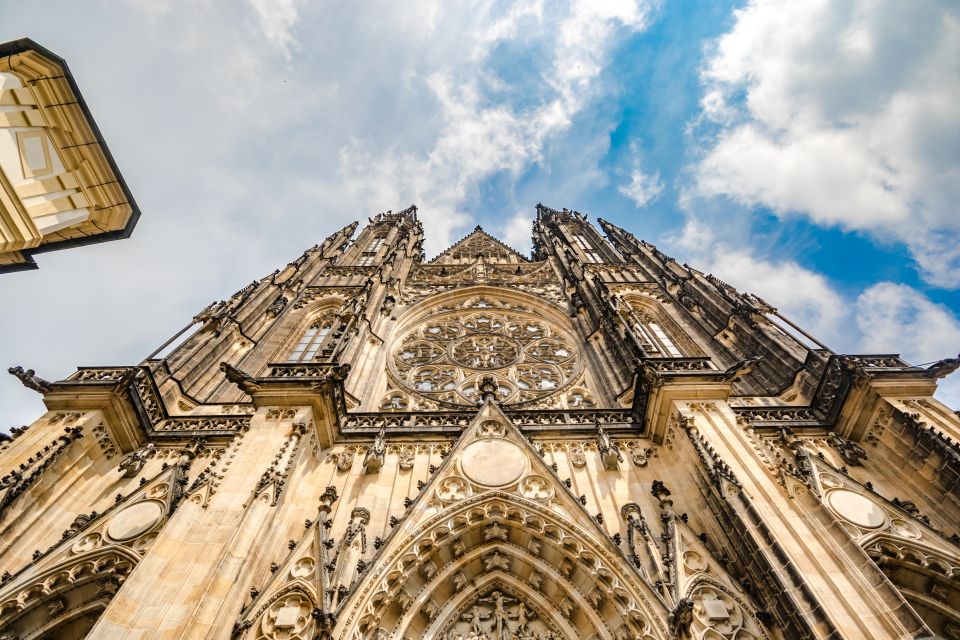
St. Vitus Cathedral is the big draw, and this tour treats it as more than a photo stop. You get a guided visit (about 25 minutes) focused on princes, kings, and emperors, plus the ceremonial history behind the site.
That framing changes how you look. You start noticing the “why” behind the scale and symbolism rather than just admiring height and detail. In a building like this, facts matter—but the guide’s job is to connect those facts into a story you can remember after you leave.
If you’re going during busy times, you may find the crowd thick and sound tricky. The good news: many groups are provided a way to hear clearly through ear pieces/headsets when needed. That can be a huge quality-of-life improvement because Prague Castle isn’t quiet.
A small reality check: in cold seasons, you might deal with queues and outdoor waiting before entry. Bring warm layers and be ready for a short standstill.
Old Royal Palace and Vladislav Hall: Where Court Life Comes Through
Next comes the Old Royal Palace, including a stop at Vladislav Hall (about 25 minutes). Even if you’re not a medieval architecture expert, this part helps you understand how rulers lived, ruled, and displayed authority.
The palace portion tends to stand out because it’s still tied to everyday court movement—people coming and going, ceremonies happening, power being performed in public spaces. A guide’s narration helps you place what you’re seeing into the larger timeline of Prague.
Here’s the consideration that’s worth knowing before you book: buildings may close for operational or state-ceremonial reasons. The tour plan can’t guarantee full access to every interior every day. In some cases, the Old Royal Palace has been reported as closed close to the visit, so you might get less than the full set of rooms than you expected. Even then, the guide should keep you moving through what’s open, but it’s still a good reason to be flexible.



St. George’s Basilica: A Short Visit With a Strong Focus
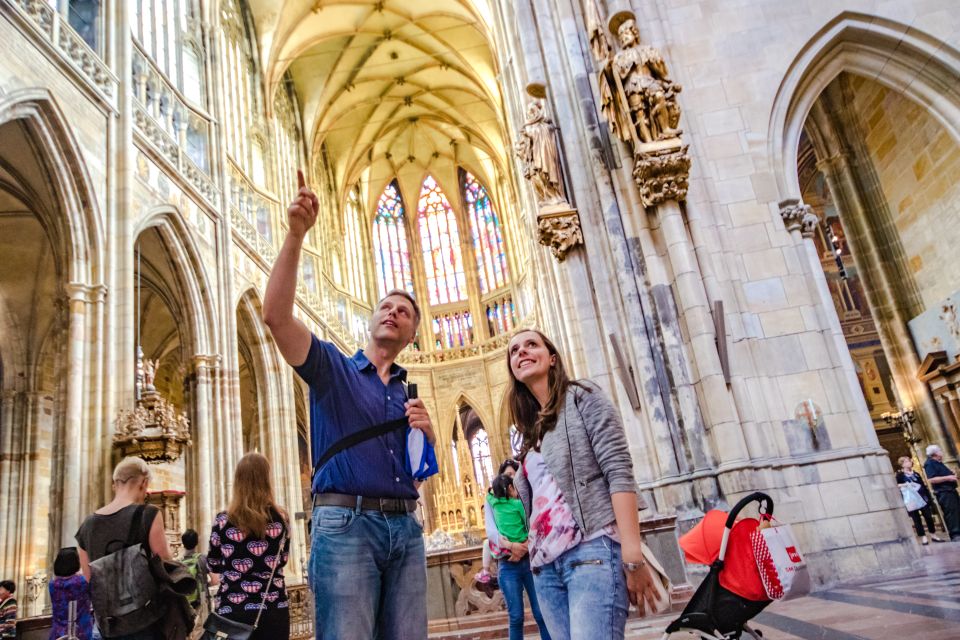
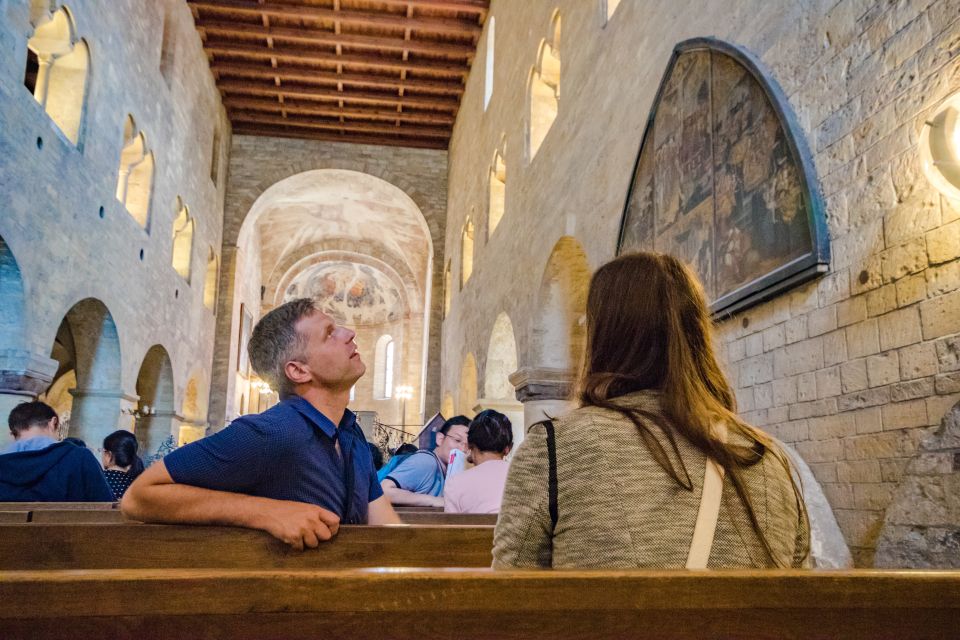
St. George’s Basilica gets its own guided visit (around 25 minutes). What you’re likely to hear isn’t just art history. The guide tells stories about Czech saints and how religious figures fit into the wider national and ceremonial story.
This stop works well because it gives you a break from the cathedral’s scale and allows a different angle on Czech identity. It also tends to be less “overwhelming” than St. Vitus, so it’s a good reset point if you’re feeling museum-fatigue.
If you love a tour that mixes big institutions with smaller, more human-scale meaning, this basilica stop is often where the tour starts feeling personal.
Golden Lane: Small Doors, Big Stories
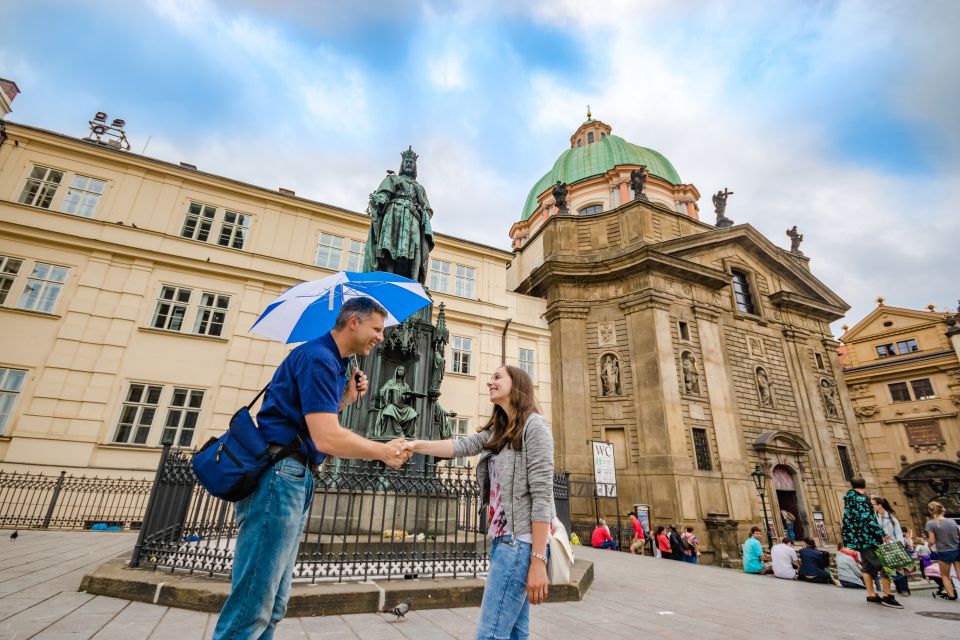
Golden Lane is where the tour often turns from monuments to people. You’ll spend about 25 minutes here, and the guide explains the lives of the local residents—what it meant to live in a tightly packed area inside the Castle complex.
Golden Lane is famous, but the best part of this experience is the interpretation. Instead of treating it like a quirky row of tiny houses, you learn how those spaces functioned in their time. That shift helps you walk away with an understanding of daily life, not just palace life.
It also offers a nice contrast after the larger ceremonial buildings. You can slow down here a touch and really take in the “small scale” feel that makes Golden Lane memorable.
Meeting Point Options: Carlo Quarto vs. The Castle Courtyard
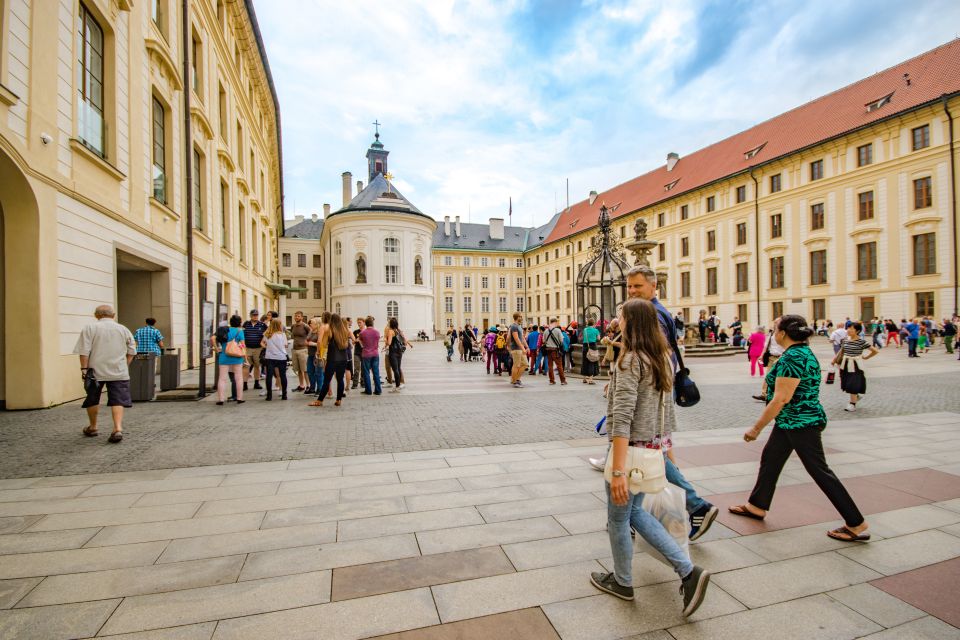
The meeting point can vary depending on the option you choose, and it’s worth double-checking your confirmation before you head out. Two common starting points listed for this tour are the Carlo Quarto (Charles IV Monument) area near the Charles Bridge zone, and Třetí nádvoří Pražského hradu 48/2 in the Castle courtyard area.
Why does this matter? Because if you arrive at the wrong reference point—especially around Charles Bridge—you can waste the most valuable minutes of the day. I’d treat meeting instructions like they’re time-critical. Get there early enough to find your guide without panic.
The good sign: guides are often described as attentive and organized in big crowds, even counting or checking the group so no one gets left behind. Still, you’ll have a smoother start if you’re punctual and clear on where you’re meeting.
Who This Tour Is Best For (and Who Should Rethink It)
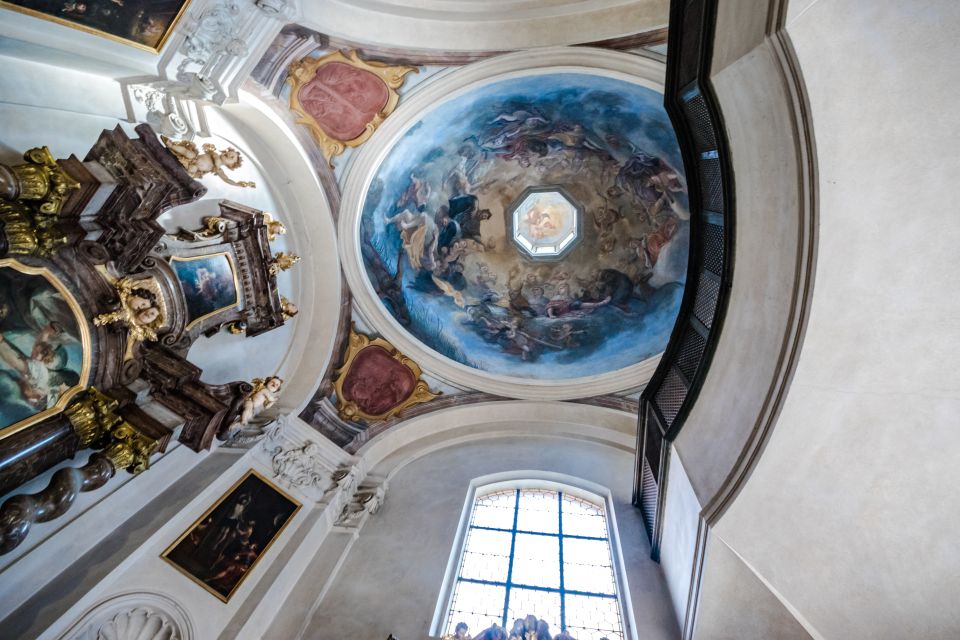
This tour is best for you if:
- you want a guided “Greatest Hits” route that hits the Castle’s key interiors in about 2.5 hours
- you’d rather spend time listening to context than wrestling with ticketing or routes
- you like historical storytelling with a light, human tone (many guides are praised for humor)
It’s not the right fit if you:
- have mobility limitations that make cobblestones, stairs, and standing difficult
- use a wheelchair (the tour is not suitable for wheelchair users)
Also, it’s a good match if you’re in Prague for a short window and need high value per hour. If you’re the type who likes wandering slowly and staying as long as you want inside each room, you might eventually want extra independent time after this tour. But as a first pass, it works well.
Booking Wisdom: Should You Pick This One?
I’d book this tour if you want the best use of a limited afternoon and you care about interpretation. You’re getting access to major interiors with skip-the-ticket-line advantages, plus a tram ride that keeps the day efficient.
I’d hesitate only if you’re relying on seeing every single interior no matter what. Partial closures can happen, and the tour may adjust to what’s open on the day.
If you want a confident plan with minimal hassle—especially on a cold or busy day—this is a solid bet. For most people, the mix of big sites (St. Vitus), court spaces (Old Royal Palace/Vladislav Hall), and human-scale storytelling (Golden Lane) is exactly the right balance.
FAQ
How long is the Prague Castle 2.5-hour tour?
The total duration is about 150 minutes.
What’s included in the ticket price?
It includes a live tour guide, the walking portion of the tour, a tram ticket, and entry tickets for St. Vitus Cathedral, Old Royal Palace, St. George’s Basilica, and Golden Lane.
Where does the tour start?
The meeting point may vary depending on the option you book. Starting points listed include Carlo Quarto (Charles IV Monument) and Třetí nádvoří Pražského hradu 48/2.
Is this tour suitable for wheelchair users or people with mobility impairments?
No. It is not suitable for people with mobility impairments and wheelchair users.
What languages are available for the live guide?
The tour is offered in English, German, Spanish, Czech, Italian, and French.
What if parts of the buildings are closed during my visit?
Some buildings may close for operational or state-ceremonial reasons. A refund is not issued during partial closures.