REVIEW · PRAGUE
Prague Communism History and Nuclear Bunker Tour
Book on Viator →Operated by Communism and Nuclear Bunker Tour · Bookable on Viator
Prague goes underground for a very real reason. This tour strings together Prague landmarks tied to Soviet-era control and resistance, then drops you into a nuclear bunker hidden four floors underground. It’s history you can see, not just read.
I really like the mix of city stops and confined bunker time. You get story-driven context at places like the StB Holding Cells and the Velvet Revolution Memorial, and then the bunker museum gives you a strong sense of Cold War fear.
One thing to weigh: this is not for slow walkers or claustrophobia. Between the bunker’s stairs and ramps and the underground feel, you’ll want to be comfortable with tight spaces.
In This Review
- Key Highlights You Should Know Before You Go
- Why Prague Communist History Feels Different on Foot
- Finding the Start Point at Malé náměstí (and What to Expect From the Pace)
- StB Holding Cells: Where Prague’s Secret Police Story Gets Real
- Velvet Revolution Memorial and Národní třída: How 1989 Landed in the City
- Wenceslas Square and August 1968: Dubček’s Story in the Right Setting
- Olšanské náměstí and the 1970s Socialist Concrete Look
- Prague Nuclear Bunker Museum: Four Floors Underground and a Lot of Stairs
- What Makes the Bunker Stop Worth Your Money
- How the Guide Style Can Change the Experience
- Price and Value: What $45.16 Buys You in Real Terms
- Who Should Book This Tour (and Who Should Skip It)
- Should You Book the Prague Communism and Nuclear Bunker Tour?
- FAQ
- What’s the duration of the Prague Communism and Nuclear Bunker Tour?
- How much does the tour cost?
- What’s included in the price?
- Where do I meet the tour?
- Is the tour in English?
- Can I join if I have mobility issues?
- Is it suitable for claustrophobia?
- Are photos and video allowed?
- Is cancellation free?
Key Highlights You Should Know Before You Go
- StB Holding Cells in the former secret-police building: a direct look at how repression worked in practice
- Velvet Revolution Memorial and 1989 turning point: short stop, big emotional weight
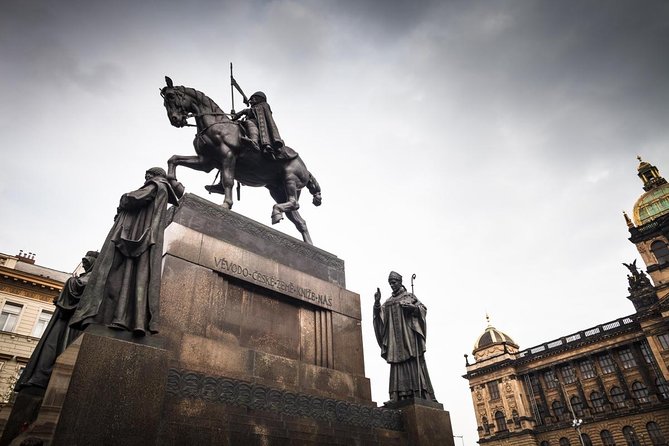
- Wenceslas Square and August 1968: Soviet invasion and the Dubček story in the place it mattered
- Olšanské náměstí socialist-era housing blocks: concrete-era architecture from the 1970s, still standing
- Prague’s nuclear bunker museum: included entry, plus materials like a bunker survival guide
- Small group size (up to 26): easier questions and fewer bottlenecks
Why Prague Communist History Feels Different on Foot
Prague has a way of making modern politics visible. You’re not just looking at statues and facades—you’re walking past locations that connect repression, resistance, and the shock of outside control.
What makes this tour work well is that it doesn’t stay in one mood. The street part shows how the system shaped daily life and national identity, while the bunker part reminds you what that fear looked like when the world might end.
You can also read our reviews of more historical tours in Prague
Finding the Start Point at Malé náměstí (and What to Expect From the Pace)
The tour meets at Malé náměstí, inside the Passage at Male Namesti Square 459/11, close to Hotel U Prince. The meeting spot matters because the group is organized and you’ll want to be on time before they move on.
Once you start, the flow is tight: city stops are brief, and then the bunker takes most of the visit time. The overall duration is about 2 hours 20 minutes, though it can run about 10–15 minutes longer depending on group size.
This is also a “show up ready” tour. You’ll need to speak the tour’s chosen language for safety, and you’re not allowed to join under the influence of alcohol or drugs. If you get easily distracted or want to constantly switch languages mid-tour, this format isn’t built for that.
StB Holding Cells: Where Prague’s Secret Police Story Gets Real
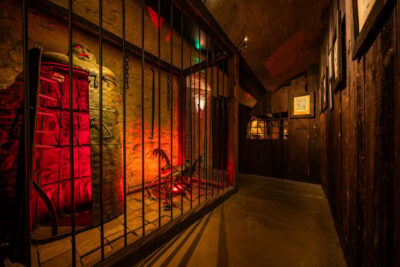
One of the first stops is the StB Holding Cells, tied to Vaclav Havel and the machinery of the former secret police. This is where the tour’s tone turns more serious, because you’re dealing with detention and surveillance, not slogans.
Even if you only get a short stop here, it changes the way you understand later moments. When you know the stakes of what the StB represented, the Velvet Revolution story hits harder, not softer.
A practical note: while this is still “above ground,” you’ll likely be standing and walking through tight indoor space. Wear shoes that won’t punish you later, because the day escalates once you reach the bunker.
Velvet Revolution Memorial and Národní třída: How 1989 Landed in the City
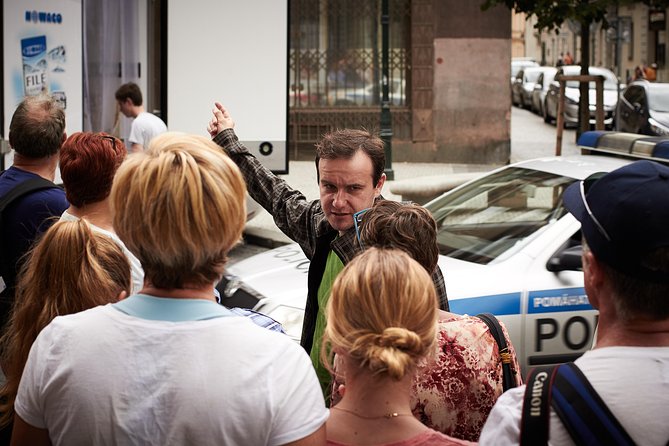
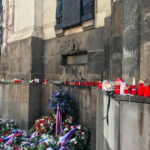
The Velvet Revolution Memorial stop focuses on 1989—how change happened without turning Prague into a battlefield. It’s an efficient stop, but it’s also one that anchors the tour’s main question: how did a society push back against a system built to control speech and movement?
Then you move toward Národní třída, where the guide connects historical events with more recent political history. This is one of those Prague stretches where you quickly understand the city as a living archive—places keep taking on new meanings even after the old chapter ended.
The drawback here is timing. Because the tour is designed to cover several key points, each location gets a set amount of time. If your style preference is slow and detailed museum pacing, you might wish you had more minutes per stop.
Wenceslas Square and August 1968: Dubček’s Story in the Right Setting
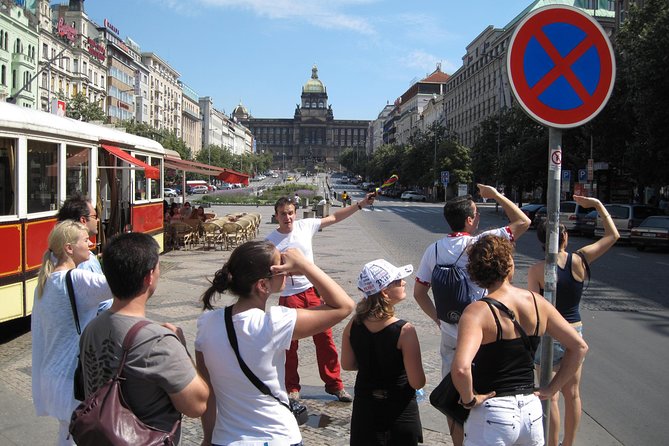
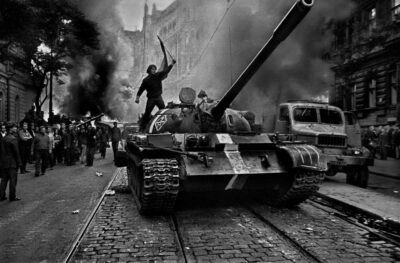
At Wenceslas Square, the tour looks at the Soviet invasion in August 1968 and the story tied to Alexander Dubček. This stop matters because the square is a stage—political events in Prague were always public, and the Soviet response wasn’t subtle.
I like that this part links big events to a place you’ll likely walk past on your own. Most visitors see the square as scenery; here, you’ll get the background that explains why people watched it so closely.
Also, because this is a major central area, it can feel busier around your group. The tour keeps moving, so you won’t have time to wander off for photos if you want the full bunker experience later.



Olšanské náměstí and the 1970s Socialist Concrete Look
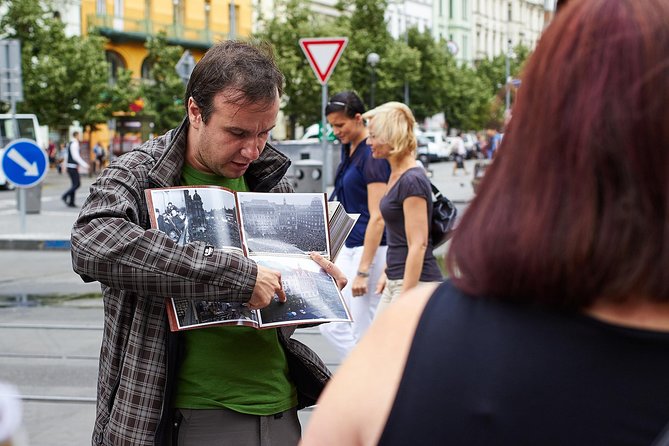
Olšanské náměstí is where the tour shifts from headlines to architecture and daily environment. You’ll be in a former workers district area with socialist-era design that still shows the concrete-and-function vibe from the 1970s.
This stop is a smart reminder: ideology isn’t only in government buildings. It’s in housing blocks, city planning, and the way people move through everyday spaces.
If you love photography, this is a decent place to pause—just don’t count on long hangs, since the tour keeps its schedule. And if you’re expecting a guided walk-through of interiors, you may be surprised: the focus is still on context and viewing, not entering buildings.
Prague Nuclear Bunker Museum: Four Floors Underground and a Lot of Stairs
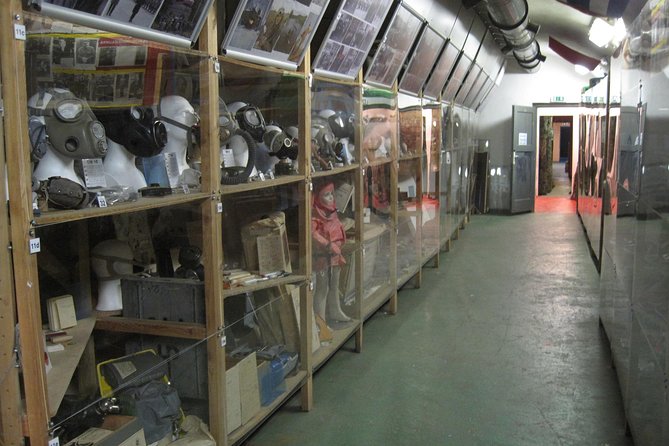
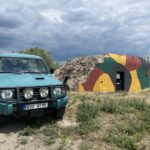
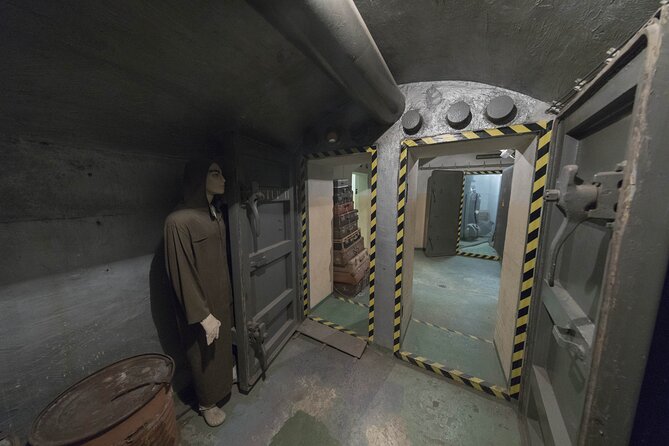
The biggest event is the Prague Nuclear Bunker visit, including entry to the museum. It’s described as being hidden four floors underground, and the experience is intentionally physical. The day doesn’t just tell you about nuclear fear—it forces you to feel how movement changes underground.
I want to be direct about this: you should go only if you’re comfortable with tight spaces. The tour is not recommended for claustrophobia, and people with serious walking limitations should skip it. Even with normal mobility, expect lots of steps and up-and-down ramps.
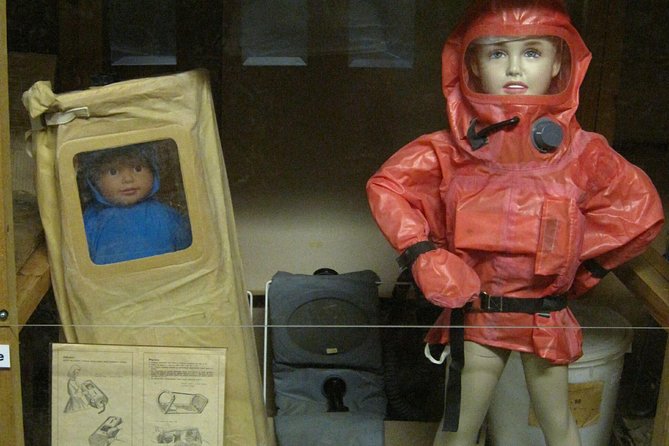
What you’ll see inside is meant to help you picture Cold War reality: the bunker survival theme, period styling, and the way the museum packages a scary idea into something you can walk through. Some guides lean into personal context, so the bunker can feel more emotional depending on who you get.
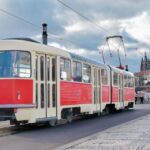
One more practical detail: expect some transit time to reach the bunker, and in some departures you may ride a tram or similar public transport as part of the included transfers. Either way, build in energy for the underground section, because the walking continues.
What Makes the Bunker Stop Worth Your Money
This is where the tour’s price starts making sense. You’re paying for more than a walk—the museum entrance is included, plus you receive a photo booklet and a bunker survival guide. The guided time inside is the part you can’t easily recreate on your own without planning.
If you only want city sights, you might feel the bunker is too heavy. If you want to understand how fear was engineered into planning, it’s the most memorable part of the day.
How the Guide Style Can Change the Experience
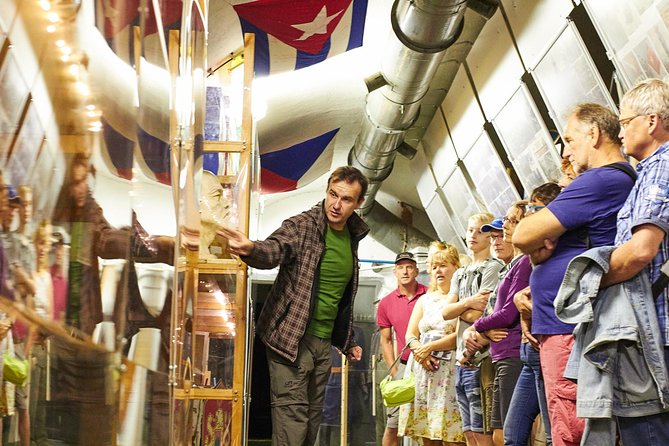
Guides matter a lot on this tour. Some guides bring personal history and humor to keep the mood from freezing. Names you may hear in different departures include Ladislav, Pavel, Tom, Maki, Karl, Stan, and Lada, and several of those guides are praised for mixing real-life experience with clear storytelling.
You’ll usually get a blend of political timeline and what it felt like to live through Soviet-era pressure. That angle is powerful because it turns facts into cause-and-effect—why people acted the way they did, and how fear shaped decisions.
Still, there’s a catch. The tour has a fixed route and a fixed length, so the guide pacing can make or break it. If your guide spends more time on tangents or repeats points, you might feel the tour drags. The same goes if you’re expecting a strictly neutral lecture with minimal emotion.
Price and Value: What $45.16 Buys You in Real Terms
At $45.16 per person, this isn’t a budget “see Prague quickly” option. You’re paying for three things that add up fast: a live English guide, included bunker admission, and included transfers to and back for the underground portion. On top of that, several key street stops have tickets included or are free, so the paid cost doesn’t all disappear into separate admissions.
Value also comes from the cap: a maximum of 26 people keeps the group manageable. A smaller group doesn’t automatically make the guide better, but it does tend to make the tour more interactive and easier to stay with.
Is it always perfect value? If you hate underground spaces, or if you already know the history and only want deeper academic detail, you might wish you paid less. But if you want an organized route that links places to meaning, this price can feel fair.
Who Should Book This Tour (and Who Should Skip It)
This is a great fit if you:
- like modern history where you can connect events to specific streets
- want a guide who tells Cold War stories with personal context
- enjoy visual contrasts, from public squares to underground rooms
- are comfortable with stairs and tighter spaces
You should skip it if you:
- have claustrophobia or anxiety that gets triggered in enclosed spaces
- have mobility limits that make steps and ramps hard
- travel with the smallest children below school age (it’s not allowed)
- prefer long, slow museum pacing over a brisk walk-and-stop format
Also, plan your expectations about time. Some parts are quick (city stops), and the bunker takes most of the day’s focus.
Should You Book the Prague Communism and Nuclear Bunker Tour?
I’d book it if you want a structured, guided way to understand Prague’s communist-era story and the Cold War fear that shaped planning. The combination of above-ground landmarks and a real underground bunker is the main reason to choose this over a general city tour.
I’d think twice if underground spaces are a hard no for you, or if you want a tightly academic, no-emotion history session. In that case, you may prefer a different kind of history tour.
If you’re on the fence, here’s my practical recommendation: wear comfortable shoes, bring a watchful eye for timing, and mentally save your energy for the bunker. That’s the moment you’ll remember.
FAQ
What’s the duration of the Prague Communism and Nuclear Bunker Tour?
The tour is approximately 2 hours 20 minutes, with a possible variation of about 10 to 15 minutes depending on group size.
How much does the tour cost?
It costs $45.16 per person.
What’s included in the price?
You get an English live guide, entrance to the nuclear bunker museum, transport to and back from the bunker, and a photo booklet plus a bunker survival guide.
Where do I meet the tour?
You meet at the Male Namesti Square 459/11 Passage area, inside the Passage, about 20 meters to the right of Hotel U Prince in Malé Nám. 459/11, Prague 1.
Is the tour in English?
The tour includes an English live guide, and the safety requirement says you must speak the chosen language of the tour.
Can I join if I have mobility issues?
No. It is not possible for people with any walking disability or mobility issue.
Is it suitable for claustrophobia?
No. It is not allowed or recommended for people with claustrophobia or similar conditions.
Are photos and video allowed?
Photos are allowed. Video recording requires special permission.
Is cancellation free?
Yes. You can cancel up to 24 hours in advance for a full refund. If you cancel less than 24 hours before the start time, the amount paid is not refunded.