REVIEW · PRAGUE
Prague Old Town: Private Tour
Book on Viator →Operated by Free Walking Tour Prague · Bookable on Viator
A 2.5-hour walk that makes Old Town click. This private route hits the big sights fast, with a friendly English-speaking guide who turns landmarks into stories you’ll remember. You get a clear sense of where things are, plus context for what you’re actually looking at.
I especially like the mix of architectural styles and famous anchors, from a Cubist building to the world-famous Astronomical Clock. And I like the pacing: it’s active walking, but it’s not a sprint, so you can ask questions as you go.
One consideration: you’ll need moderate walking stamina, and the day’s best views are spread across a lot of ground in a short time. If you want a very slow, linger-at-every-corner kind of tour, this might feel a bit brisk.
In This Review
- Key things that make this tour work
- Powder Tower to Charles Bridge: The smart Old Town route in 2.5 hours
- What you really see: Cubist Prague, Mozart’s theatre, and the big-name landmarks
- The start at the Powder Tower: getting your bearings fast
- Charles IV and Charles University (founded 1348): history you can point to
- Tyn Church, Jan Hus, and Saint Nicholas: where art meets politics
- The Astronomical Clock of Prague: more than a photo stop
- Jewish Quarter: synagogues, Jewish Town Hall, Ceremonial Hall, and the Old Cemetery
- Private guide energy: why the stories land in a small group
- Price and logistics: value for a focused, guided Old Town route
- Who should book this Old Town private tour (and who should skip it)
- Should you book this Prague Old Town private tour?
- FAQ
- How long is the Prague Old Town private walking tour?
- What is the price per person?
- What language is the tour offered in?
- Is this tour private or shared?
- Where does the tour start and end?
- What is included in the price?
- Are food and drinks included?
- What fitness level do I need?
- What if I need to cancel?
Key things that make this tour work
- Powder Tower to Charles Bridge: you get a natural Old Town thread instead of random stops
- Cubism meets Mozart: you pass from Prague’s 20th-century look to a theatre tied to Mozart
- Charles IV and Charles University (founded 1348): one stop explains why the city matters beyond sightseeing
- Tyn Church, Jan Hus statue, and Saint Nicholas Church: religion, politics, and art in one walk
- Astronomical Clock history, not just a photo stop: you’ll understand what you’re seeing
- Jewish Quarter focus: synagogues, the Jewish Town Hall, the Jewish Ceremonial Hall, and the Old Jewish Cemetery are included
Powder Tower to Charles Bridge: The smart Old Town route in 2.5 hours
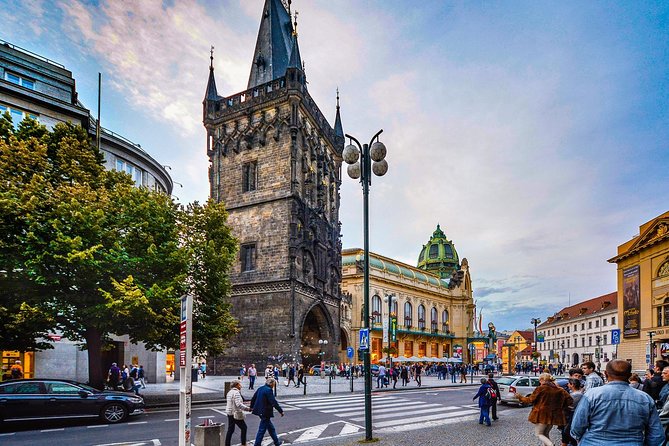
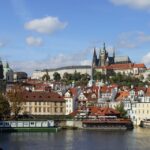
This is the kind of Old Town tour I recommend when you want to get oriented quickly, without turning Prague into a scavenger hunt. The meeting point at Powder Tower puts you right at the edge of the historic core, and the tour finishing near Charles Bridge helps you close the loop with one of the city’s most famous crossings.
At about 2 hours 30 minutes, you’re walking enough to feel like you moved through the city, but not so long that you lose the thread. It’s also set up as a private tour, meaning you’re with just your group. That matters here because Old Town has plenty to talk about, and you’ll likely want time for questions and back-and-forth explanations.
The guide also keeps you from missing the subtle stuff. Prague’s center can look like a patchwork of buildings and eras. A good guide connects them. Here, you’ll get that connection through stops that cover architecture, politics, religion, and education, with practical storytelling along the way.
You can also read our reviews of more private tours in Prague



What you really see: Cubist Prague, Mozart’s theatre, and the big-name landmarks
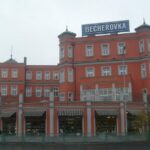
This route is built around recognizable “anchors,” but it’s not only photo spots. The tour includes a stop for the first Cubist building in Prague, which is a great way to break out of the usual medieval-only Prague expectation. Cubism can sound niche until you see it in place, and then it starts to make sense.
Then you hit a theatre described as the oldest theatre in Prague famous for Mozart. You don’t need to be a classical music expert to enjoy this stop. The value is learning how the city’s cultural life connects to its buildings, and how Prague’s importance goes beyond royal streets and churches.
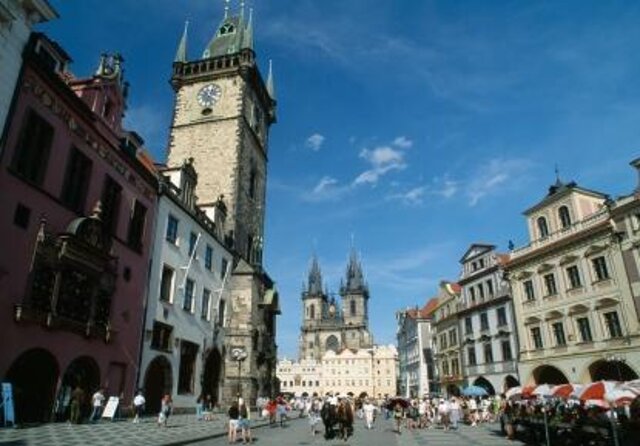
From there, the itinerary keeps stepping up. You’ll cover Charles University, Tyn Church, a statue of Jan Hus, Saint Nicholas Church, and the Astronomical Clock of Prague. The tour doesn’t treat them like separate attractions. It ties them into a bigger story of how power and ideas shaped the city.
And it keeps going into the Jewish Quarter, including multiple specific sites (synagogues, the Jewish Town Hall, the Jewish Ceremonial Hall, and the Old Jewish Cemetery). That part is especially important if you want your Old Town visit to feel complete, not just centered on the most obvious streets.
The start at the Powder Tower: getting your bearings fast
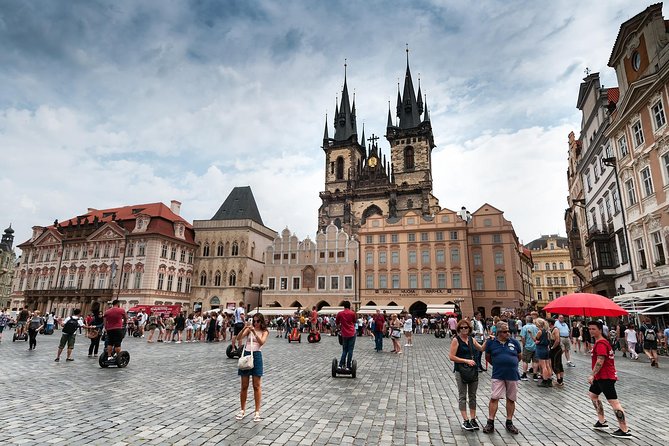
The tour begins at Powder Tower on Náměstí Republiky, which is a smart starting point. It’s central, easy to find, and close to public transport, so you’re not wasting your first minutes trying to triangulate directions.
This first segment is described as an introduction to the walking tour, which usually sounds basic, but it helps a lot in a dense historic area. You’ll get a sense of what you’ll cover and what to watch for. That matters in Old Town because the streets twist and the buildings layer on top of each other across centuries.
If you like having a plan that still leaves room for curiosity, this is that plan. You’ll be walking while the guide frames what comes next, so when the Cubist building appears or when the theatre shows up on the route, it lands with context instead of feeling like just another stop.
Charles IV and Charles University (founded 1348): history you can point to
One of the clearest “why it matters” stops is the Oldest University in Central Europe founded in 1348 by Charles IV. Universities are not just academic buildings. They’re power centers—places where ideas, people, and influence gather.
This stop is valuable because it gives you a perspective shift. When you’re sightseeing Prague, it’s easy to focus on what’s visually impressive. But the tour uses Charles IV and Charles University as a way to explain why Prague became such a big deal in the first place.
You’ll also appreciate how the tour builds momentum. After architecture and theatre, the university stop brings in learning, governance, and long-term change. It’s one of those moments where you start seeing Old Town as something that evolved, not something you just walked through.
A practical tip: if you’re someone who loves questions, this is a great moment to ask your guide how the city’s institutions shaped daily life. The itinerary sets up these connections well, so your questions won’t feel random.
Tyn Church, Jan Hus, and Saint Nicholas: where art meets politics
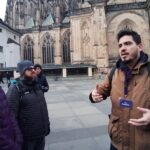
The itinerary clusters several major sites that connect to belief, reform, and community. The tour includes Tyn Church, a statue of Jan Hus, Saint Nicholas Church, and more. You’ll feel why this cluster works: it’s the same neighborhood world, but the guide shows you how different elements reflect different eras and messages.
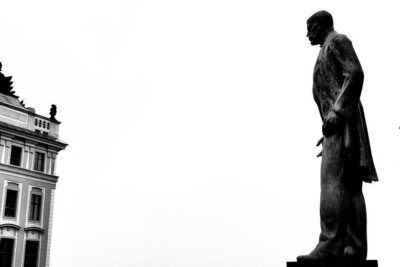
Jan Hus specifically is a standout because he represents reform and conflict, and his presence as a statue signal that history here isn’t only decorative. It’s public. The guide can explain why that matters, especially if you’ve ever wondered why Prague’s streets feel so “charged” with meaning.
Then you move into the churches. Even without going super technical, you can learn what to notice beyond the façade: how these buildings represent religious identity and how they fit into the larger story of who had influence and who challenged it.
One tradeoff: churches and monuments can feel visually similar if you’re rushing. Here’s the advantage—your guide gives you story threads so you can keep them straight. It’s one of the reasons a walking tour works better than self-guided wandering.



The Astronomical Clock of Prague: more than a photo stop
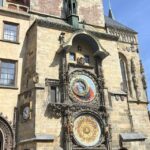
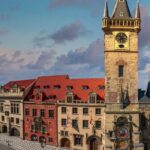
The tour includes the history of the building and the world famous Astronomical Clock of Prague. That’s a good sign. A clock stop can go two ways: either you stand there and take pictures, or you learn why it’s famous and what role it played.
In this tour, you’ll get the second version. You’ll also have time to process what you’re looking at because the stop isn’t positioned as a quick “see it and move on” moment. Instead, it’s tied to the surrounding architectural story. That approach makes the clock feel less like a random landmark and more like a piece of Prague’s public life.
If you’re visiting during peak hours, this kind of guided stop still helps. You’ll know what to focus on, and you won’t waste your time scanning for the important details.
Also, this is a practical point for your own planning: if you want to shop, snack, or revisit the clock later, you’ll come away with a clearer idea of how the area fits together. That’s the quiet value of a structured walking tour.
Jewish Quarter: synagogues, Jewish Town Hall, Ceremonial Hall, and the Old Cemetery
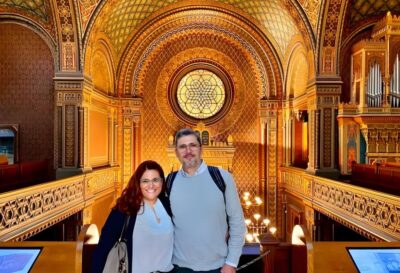
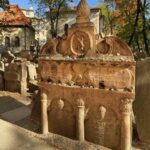
The Jewish Quarter segment is where the tour feels most emotionally grounded. The itinerary lists several distinct sites: synagogues, the Jewish Town Hall, the Jewish Ceremonial Hall, and the Old Jewish Cemetery.
This matters because it prevents the visit from turning into a one-building overview. Different places served different community functions, and that helps you understand the Jewish Quarter as a living network rather than a single stop on a list.
The guide’s job here is especially important: the subject can feel heavy, and you need context to understand why these buildings are significant. The tour includes these stops in the same walkthrough, which makes it easier to connect the dots—community life, governance, religious practice, and remembrance.
A useful way to get more out of this part: slow down a bit inside your head. Don’t treat it like you’re ticking off another box. Ask yourself what the building was meant to do, and then listen for what the guide explains. If you like respectful storytelling and clear explanations, this segment is likely one of your favorite parts of the day.
Private guide energy: why the stories land in a small group
The best part about a private tour is that the guide can shift the pace for your group. With a larger group, you often end up following a rhythm you didn’t choose. Here, it’s your schedule and your questions, and the itinerary is built so the stops connect cleanly from one to the next.
The guide is friendly and English-speaking, and the names Iva, Tereza, Via, and Tony show up in past experiences as people who make the walk feel fun, engaging, and not rushed. You’ll likely feel that energy in the way the guide explains the mix of architecture and political stories—especially if you prefer history that feels like it has characters, not just dates.
One of the repeated themes in the feedback is that the tours don’t feel rushed and include time for questions. That’s a huge deal in Old Town, where people often get overwhelmed and stop asking. Here, you don’t have to wait until the end to understand things.
If you travel with teens, a mixed group of adults, or you just want history without a lecture vibe, this private format is a strong fit. The walking tour gives you structure, and the guide’s personality helps it stay lively.
Price and logistics: value for a focused, guided Old Town route
At $54.42 per person, you’re paying for a guide-led, private walking experience that covers major Old Town highlights in about 2.5 hours. If you’re used to spending time reading maps and still missing key context, the price can feel fair because you’re buying interpretation, not only sightseeing.
You also get practical extras: a mobile ticket, and the tour is offered in English. The start and end are well placed—starting at Powder Tower and ending by Charles Bridge—so you can keep your day flowing instead of backtracking.
Departure times are flexible, which helps if you don’t want to commit to a single early-morning slot. Just remember that Old Town is compact but not flat everywhere, so comfortable walking shoes matter.
What’s not included is food and drinks unless specified. That’s normal for a walking tour, but plan for it so you’re not hangry while standing near the clock or churches. Bring water if it’s warm, and treat snack stops as part of your own schedule.
Overall, the value here comes from the fact that you’re guided through both “big names” and the meaningful connections between them, including the Jewish Quarter sites that many shorter tours skip or skim.
Who should book this Old Town private tour (and who should skip it)
This tour is a good match if you:
- Want a focused Old Town orientation without getting lost in a long self-guided day
- Like your history with stories, not just facts on a sign
- Prefer a private group where questions don’t feel like an interruption
- Are curious about more than medieval Prague, including Cubism
- Want a structured Jewish Quarter visit that includes multiple specific sites
You might want to think twice if you:
- Don’t like walking for 2.5 hours with a moderate fitness level
- Prefer unstructured wandering with lots of free time at each stop
- Want a food-centered tour (this one is sightseeing-first, not a meal plan)
If you’re planning a first visit to Prague and you want to come away with a coherent sense of how the Old Town pieces connect, this tour fits the bill.
Should you book this Prague Old Town private tour?
Yes, I’d book it if your goal is simple: see the key sights and understand what they mean without spending your whole day researching. The route from Powder Tower to the area near Charles Bridge is efficient, and the itinerary balances major landmarks with story-driven context.
The strongest reasons to choose it are the stop selection and the private-guide energy. You’ll cover Charles University (founded 1348 by Charles IV), multiple major church and reform sites like Tyn Church and Jan Hus, learn about the Astronomical Clock, and get a real Jewish Quarter walkthrough that includes several important places.
If you know you’ll be disappointed by a rushed checklist, or you want a guide who can adapt while keeping the walk moving, this private format is exactly where this tour shines.
FAQ
How long is the Prague Old Town private walking tour?
The duration is about 2 hours 30 minutes.
What is the price per person?
The price is $54.42 per person.
What language is the tour offered in?
The tour is offered in English.
Is this tour private or shared?
It’s a private tour/activity, so only your group participates.
Where does the tour start and end?
It starts at the Powder Tower (Nám. Republiky 5, Staré Město, 110 00 Praha 1) and usually ends by Charles Bridge (Karlův most, 110 00 Praha 1).
What is included in the price?
A friendly English-speaking guide is included.
Are food and drinks included?
Food and drinks are not included unless specified.
What fitness level do I need?
The tour is listed for travelers with a moderate physical fitness level.
What if I need to cancel?
Free cancellation is available up to 24 hours in advance for a full refund. If you cancel less than 24 hours before the start time, the amount paid is not refunded.