REVIEW · PRAGUE
Private Prague Art Nouveau and Cubism Walking Tour
Book on Viator →Operated by Prague Articulate · Bookable on Viator
Prague’s walls teach you geometry and ornament. This private walk pulls you through Art Nouveau curves and Cubism angles with real city buildings, not just photos. You’ll also learn where to stand to actually see the design tricks.
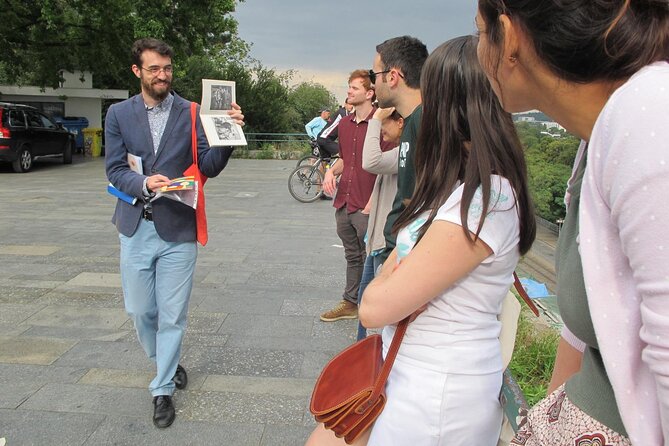
I especially like how the guide, Max Hutar of Prague Articulate, tells the story behind the styles in a human way, so the architecture stops feeling like homework. I also love that by the end, you can start spotting patterns for yourself across the city.
One thing to plan for: it’s still a walking tour, and some parts include short transit legs, so the experience can run a bit longer than the advertised 2 hours 30 minutes, especially if you pause for photos.
In This Review
- Key takeaways
- Why Art Nouveau and Cubism make Prague make sense fast
- Price and group size: when $94.93 per group is good value
- Meeting at Prague Main Station and how the 2.5 hours play in real life
- Art Nouveau highlights from Praha hlavní nádraží to Wenceslas Square
- Praha hlavní nádraží: Art Nouveau inside a major landmark
- Jerusalem Synagogue: Moorish roots with Art Nouveau timing
- Senožnážné náměstí: apartment buildings that teach you what “typical Prague” means
- Hybernská 10 Hotel Central Palace: early Art Nouveau experimentation
- Obecní dům: the Municipal House as Prague’s Art Nouveau statement
- Na Příkopě: Art Nouveau along a boulevard boundary
- Wenceslas Square: classic downtown setting for Art Nouveau storefronts
- Vodičkova street: a concentration of Art Nouveau and Cubist touches
- Cubism on the ground: Black Madonna, lamppost angles, and Vyšehrad’s trio
- House of the Black Madonna: Prague’s Cubist flagship
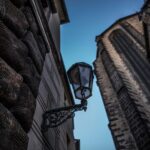
- Emil Kralíček’s Cubist lamppost: street furniture with an attitude
- Three Cubist Houses: the famous triplet under Vyšehrad’s rock
- Villa Kovarovic: Cubism with a Gothic-and-Baroque spirit
- Neklanova: a Cubist apartment building finish in 1913
- What you learn so you can keep spotting styles after the tour
- Who should book this Prague Art Nouveau and Cubism walking tour
- FAQ
- Where does the tour start, and where does it end?
- How long is the tour?
- Is this a private tour?
- What language is the tour offered in?
- Are entrance tickets included?
- Can I cancel for a full refund?
Key takeaways
- A true two-style orientation: Art Nouveau first, then Cubism, so your eye gets a system.
- Street-level architecture: not only landmark facades, but also details like a Cubist lamppost.
- Max Hutar’s storytelling: explanations that connect design choices to the period’s real tensions.
- Private group feel: only your party, with a maximum group size of up to 15.
- Mobile ticket plus transit help at the end: useful for getting back to the city center without stress.
Why Art Nouveau and Cubism make Prague make sense fast
Prague has a talent for mixing beauty with bold experiments. This tour helps you see how two major styles grew in the same city world—one leaning into decorative curves, the other slicing forms into sharp, modern-looking planes.
The best part is the pacing: you’re not wandering randomly. You’re guided from one visual clue to the next, so you start building a “recognition map” in your head.
You can also read our reviews of more walking tours in Prague

Price and group size: when $94.93 per group is good value
The price is $94.93 per group, with a maximum of up to 15 people. That’s often a smart deal if you’re traveling with friends or family and can split the cost, because you still get the private-tour format.
If you’re solo, it might feel less of a bargain than a per-person tour. But you do gain something practical: a smaller, controlled experience focused on design cues, plus a guide who can adjust to your pace (including accommodating people’s needs, based on how the experience is described by the guide’s past guests).
Also, this tour is offered in English and uses a mobile ticket, so you’re not scrambling over paper tickets at the meeting point.
Meeting at Prague Main Station and how the 2.5 hours play in real life
You start at Prague Main Station (Praha hlavní nádraží), specifically Wilsonova 300/8 in the Vinohrady area. The tour ends at the Albertov tram stop, and the transportation ticket used for the final leg is still valid long enough to get you back toward the center.
The listed stop times add up to less than the total duration because there’s travel time between areas, plus short walks. In other words, the 2.5 hours isn’t just “standing at monuments”—it’s a moving design lesson across neighborhoods.
If you’re the type who likes photos, I’d plan a little extra buffer. Some parts of the route naturally invite stopping and looking longer than the scheduled minutes.
Art Nouveau highlights from Praha hlavní nádraží to Wenceslas Square
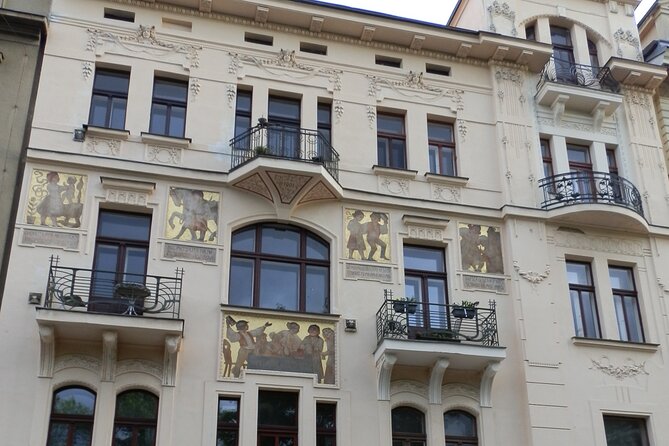
This is the stretch where Prague starts showing off. Art Nouveau shows up in curved lines, decorative symbolism, and facade details you’d miss if you only walk straight past.
A helpful mental trick: look for repeated shapes. When you see one facade pattern, the next building often echoes it—so your eye starts matching style cues quickly.
Praha hlavní nádraží: Art Nouveau inside a major landmark
Stop 1 is the Central train station’s historical building, opened in 1909 and recently reconstructed. It’s an Art Nouveau showcase where the hall and corridor beauty matters as much as the exterior.
Admission is free for this stop. It’s also a great starting point because it orients you right away—massive public architecture, then a guided shift into smaller, more detailed style examples.
You can also read our reviews of more private tours in Prague




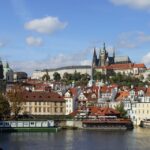

Jerusalem Synagogue: Moorish roots with Art Nouveau timing
Stop 2 is the Jerusalem Synagogue (from 1906), built in the traditional Moorish style common for synagogues, with Art Nouveau elements incorporated. It’s a reminder that Prague’s style story isn’t single-language; people mixed influences during that era.
Admission is not included here. Even so, the short stop is useful because it trains your eye to notice where styles overlap rather than stay in neat boxes.
Senožnážné náměstí: apartment buildings that teach you what “typical Prague” means
Stop 3 is Senovážné náměstí, where you’ll see three luxurious apartment buildings from the Art Nouveau era. This is the kind of view that makes Prague’s style feel livable, not just museum-like.
Admission is free. Take a moment to compare building-to-building details, because these streetscapes are where Art Nouveau shows its personality most clearly.
Hybernská 10 Hotel Central Palace: early Art Nouveau experimentation
Stop 4 is the Hotel Central Palác area at Hybernská 10, with an 1899 building date that places it among Prague’s early Art Nouveau examples. The point isn’t just the era—it’s how early designers were already testing ornament and form.
Admission is not included for this stop. Still, the short viewing time is enough to spot why it’s considered early style work.
Obecní dům: the Municipal House as Prague’s Art Nouveau statement
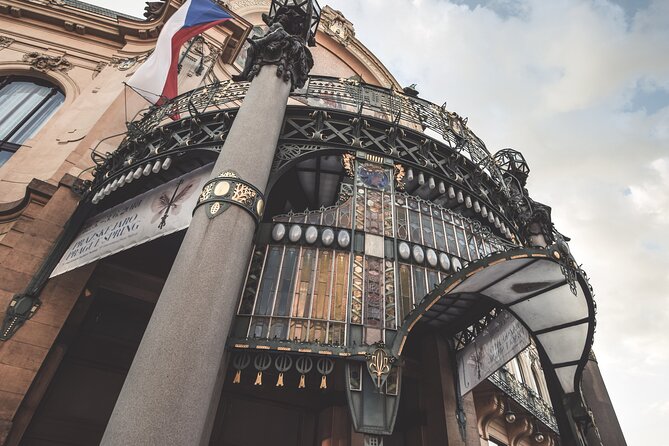
Stop 5 is Obecní dům (Municipal House of Prague), projected in 1905 and still used as a house of culture and representation. It’s one of the city’s biggest and most important Art Nouveau pieces.
Admission is not included here. The practical move: stand where you can take in both the overall composition and the fine facade work, because Art Nouveau rewards looking at two scales.
Na Příkopě: Art Nouveau along a boulevard boundary
Stop 7 is Na Příkopě, the borderline boulevard between Old Town and New Town. You’ll see bank and other buildings with the Art Nouveau style that makes even a workday street feel designed.
Admission is free. This is also where you can practice what you’ve learned: see the style cue, then find it repeated a few steps later.
Wenceslas Square: classic downtown setting for Art Nouveau storefronts
Stop 9 is Václavské náměstí, a central square with beautiful Art Nouveau hotels and department stores. It’s a good stop if you’re also trying to connect architecture with modern city life.
Admission is free. Look for the facade rhythm along the streets feeding into the square, not only the buildings directly on it.
Vodičkova street: a concentration of Art Nouveau and Cubist touches
Stop 10 is Vodičkova, where multiple Art Nouveau and Cubist buildings sit close together. This stop is helpful because it shows the “overlap zone” where styles start feeling like neighboring languages.
Admission is free. If you’re trying to keep the whole tour straight in your mind, this is one of the places where the guide’s explanations can make the biggest difference.
Cubism on the ground: Black Madonna, lamppost angles, and Vyšehrad’s trio
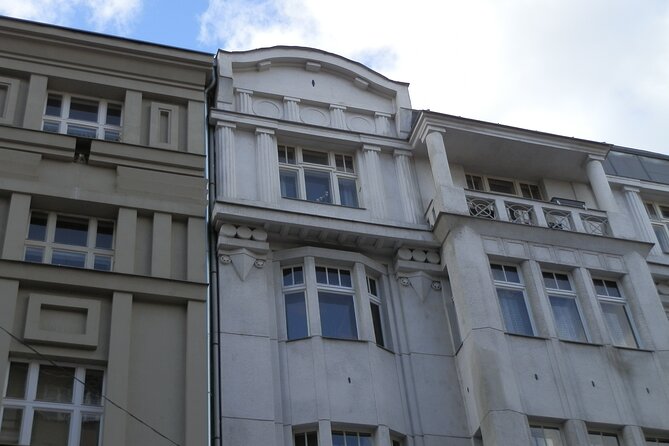
This is the turn where Prague starts looking modern. Cubism here isn’t just abstract theory—it shows up as hard-edged geometry in places you’d otherwise treat as normal street scenes.
Keep an eye out for broken planes and dramatic shape slicing. When you recognize that, you’ll start spotting Cubist influence across the city even after the tour ends.
House of the Black Madonna: Prague’s Cubist flagship
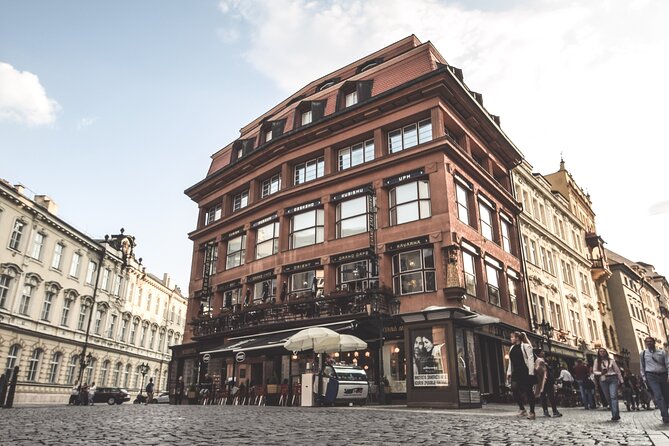
Stop 6 is the House at the Black Madonna, a flagship Cubist building from 1912. It’s described as stylistically pure, and it helped define Prague Cubism in the years before World War I.
Admission is not included. This stop is worth it even without entering because the outside structure gives you the best clue for the Cubist design idea: the building looks “assembled” rather than smoothly drawn.
Emil Kralíček’s Cubist lamppost: street furniture with an attitude
Stop 8 is Emil Kralíček’s Cubist lamppost, a unique piece of street furniture that’s often the most fun learning moment. It’s a small object, but it captures the same design mindset as bigger buildings—radical enough to feel like a statement on a sidewalk.
Admission is free. This is also a practical tip stop: if you want photos without needing tickets, this is the kind of detail that makes your camera time feel worthwhile.
Three Cubist Houses: the famous triplet under Vyšehrad’s rock
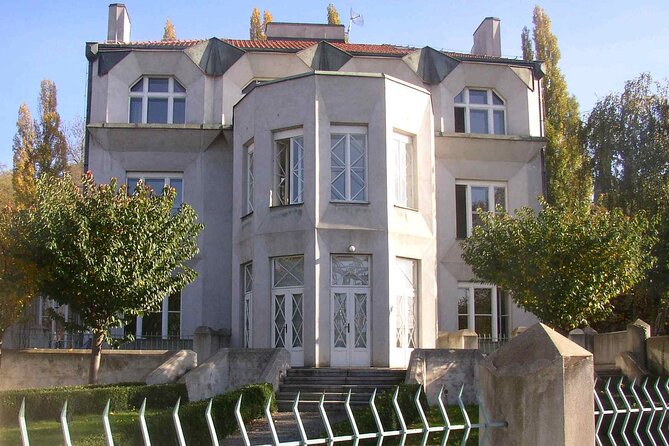
Stop 11 is the triplet of Cubist houses under the rock of the Vyšehrad fortress. If you’ve ever seen photos of Prague Cubism, there’s a decent chance it’s this cluster.
Admission is not included here. The short viewing time still works because the trio’s layout gives you a built-in comparison: multiple facades, same Cubist language, different angles and results.
Villa Kovarovic: Cubism with a Gothic-and-Baroque spirit
Stop 12 is Villa Kovarovic on the Vltava river banks, built in 1912 and inspired by Gothic and baroque architecture. It’s described as a Cubist masterpiece, and that mix of influences makes it easier to understand why Cubism could coexist with older style ideas in Prague.
Admission is not included. Even if you don’t enter, the “at the river” setting helps you understand how the building sits in real space rather than in a vacuum.
Neklanova: a Cubist apartment building finish in 1913
Stop 13 is Neklanova, with an amazing Cubist apartment building from 1913 that concludes the tour. Ending on a residential building is smart, because it reminds you these styles weren’t only for palaces and public monuments.
Admission is free. It’s also a great spot to run your final check: can you look at the facade and immediately name what you’re seeing?
What you learn so you can keep spotting styles after the tour
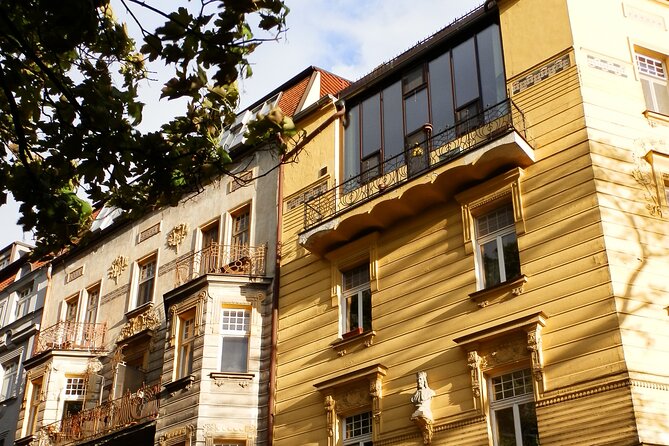
The goal here isn’t memorizing dates. It’s teaching your eye what to look for when you’re walking on your own later.
By the end, you should be able to recognize Art Nouveau ornament habits and Cubism geometry cues across Prague. That means you’ll get more from the city’s architecture whether you’re headed to a museum, a café, or just crossing a square.
I also like that the guide, Max, is described as engaging and passionate, which matters because these styles can feel technical at first. When the explanations tie to the period’s human side—why people wanted these forms, and why those choices could spark debate—the buildings start feeling less like academic exercises.
Finally, because the tour ends at Albertov tram stop, you can keep moving without a long walk back toward the center. It’s a small detail, but it helps you maintain momentum after 2.5 hours of concentrated looking.
Who should book this Prague Art Nouveau and Cubism walking tour
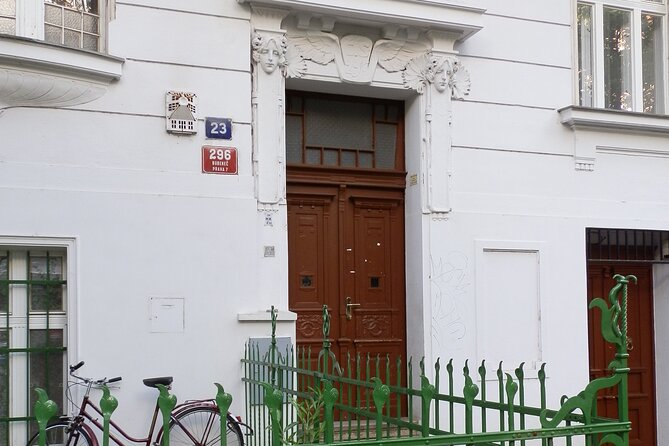
Book it if you want a focused, design-minded introduction to Prague without losing your time to random stops. This is ideal for architecture fans, visual learners, and anyone who wants to leave with a real ability to spot styles on the fly.
It also works well if you’re in a short visit window. The route is built around major style examples, and the combination of iconic buildings plus street details means you won’t just see “big monuments.”
Skip or consider a different option if you hate walking or you know you won’t keep pace through short moves between neighborhoods. Also, plan on the fact that several stops have admission tickets not included, so you may need to accept some separate paying depending on what you want to enter.
FAQ
Where does the tour start, and where does it end?
The tour starts at Prague Main Station (Wilsonova 300/8, Vinohrady, 120 00 Praha-Praha 2, Czechia). It ends at Na Slupi 2102/2b, Nové Město, and you finish at the Albertov tram stop for an easy return toward the center.
How long is the tour?
The duration is about 2 hours 30 minutes.
Is this a private tour?
Yes. It’s a private tour/activity, and only your group participates (up to 15 people).
What language is the tour offered in?
The tour is offered in English.
Are entrance tickets included?
Admission is free for some stops, but admission is not included for others. The tour notes specifically show ticket-free stops and stops where admission tickets are not included.
Can I cancel for a full refund?
Free cancellation is available. You can cancel up to 24 hours in advance of the experience start time for a full refund. If you cancel less than 24 hours before, the amount paid is not refunded.