Prague’s best stories fit a short walking loop. This Prague walking tour connects Old Town highlights with the Jewish Quarter, using a live local guide to explain what you’re seeing as you move on foot. You’ll start near Wenceslas Square, work your way through major sights like Powder Tower and the medieval astronomical clock, then end by John Lennon’s Wall with lots of photo angles.
I really like how the route pairs big, famous stops with the small details that make them make sense—especially the Astronomical Clock story (it was first installed in 1410) and the visit to the Old Jewish Cemetery, one of the oldest surviving Jewish burial grounds in the world. One thing to consider: entry tickets for the synagogues/cemetery and some other sights aren’t included, so you may spend extra once you get there. Also, language coverage can vary by group.
In This Review
- Key things to know before you go
- Getting ready for a 150-minute, 2.5 km walking route
- From Wenceslas Square to Powder Tower: old Prague’s doorway feel
- Old Town Square and the Astronomical Clock: the “1410” moment
- Pařížská Street townhouses and Art Nouveau hints you’ll spot later
- Jewish Quarter focus: Old Jewish Cemetery and community stories
- Rudolfinum: neo-Renaissance architecture and why music fits here
- Charles Bridge and quick scenic hits: photos with a plan
- Franz Kafka Museum area and the John Lennon’s Wall finish
- Price and value: what $41 covers (and what it doesn’t)
- Guide style and language options that can change your experience
- Who this tour suits best (and who should skip it)
- Should you book this Prague walking tour?
- FAQ
- How long is the Prague walking tour?
- How much walking is involved?
- Where do I meet the guide?
- What is the price per person?
- Are entry tickets included for the Jewish Cemetery and synagogues?
- What languages are available for the live guide?
- Is the tour suitable for children and older adults?
Key things to know before you go
- 1410 on the clock face: the guide explains why Prague’s medieval astronomical clock matters, including the 1410 installation date.
- Original city-gate start: Powder Tower is treated as more than a backdrop—it’s part of Prague’s old defenses.
- Jewish Quarter focus: you get context on the Jewish community and its famous figures, not just a quick photo stop.
- Rudolfinum acoustics angle: the stop isn’t random; the guide points out why it became a go-to place for music events.
- End at John Lennon’s Wall: you finish with an iconic wall you’ll want to photograph before heading off on your own.
Getting ready for a 150-minute, 2.5 km walking route
This tour runs about 150 minutes, and you’ll walk roughly 2.5 km along historic streets. That’s not a marathon, but it’s still a lot of cobblestones and indoor-outdoor time, so plan on steady walking rather than lingering everywhere.
You’ll meet your guide at Štěpánská 55, waiting in front of the garage door. Bring comfortable shoes first and foremost. Prague weather likes to change its mind, so pack an umbrella and rain gear even if the morning looks fine.
You’ll also need a passport or ID card. And there’s a quick rule set: no alcohol or drugs during the tour. The pace isn’t built for everyone, too. If you have heart problems, respiratory issues, or you’re over 70, this may be tiring. It also isn’t suitable for children under 10 or for people who are hearing-impaired.
You can also read our reviews of more walking tours in Prague

From Wenceslas Square to Powder Tower: old Prague’s doorway feel
Your walk begins by moving through the energy of Wenceslas Square and then down toward one of the city’s older entry points: Powder Tower. Even if you’ve seen pictures, Powder Tower works better in real life because you can feel its role as an original city gate.
The guide’s job here is to help you connect the dots: Prague isn’t just buildings laid side-by-side. It’s a city shaped by movement—where people entered, traded, and traveled in the past. This early stretch helps you understand the geography before the tour drops you into denser, more iconic areas.
If you like guided walking tours because they prevent that stuck feeling of, Where do I even look first?—this is exactly that moment. You get an orientation pass, not just sightseeing checklists.
Old Town Square and the Astronomical Clock: the “1410” moment
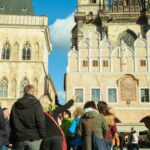
Next you hit Old Town Square, surrounded by the kind of architecture that makes you stop talking for a second. The space is famous, but the point of a guided approach is what you learn while you’re standing there.
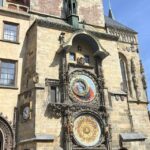
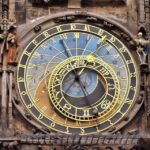
Then comes the Prague Astronomical Clock. The guide explains that it was first installed in 1410, and that makes it the third-oldest astronomical clock in the world. That detail matters because it reframes the clock from a tourist photo to a serious piece of medieval engineering and public timekeeping.
When you’re there, don’t just stare at the obvious face. Ask yourself what the clock was trying to do for the people in 1410: track time in an era where daily life depended on it. The guide’s explanation turns the clock into a story you can follow, not a static attraction you quickly forget.
Pařížská Street townhouses and Art Nouveau hints you’ll spot later
After the medieval heart, the tour shifts to Pařížská Street, where stately townhouses show Art Nouveau design features. This section is a nice contrast: Prague isn’t only gothic postcard scenes. It has layers from different design waves, too.
Why this stop is worth it: if you’re walking on your own later, you might miss those architectural clues because you’ll be focused on the next square. With a guide, you get pointers on what to notice—curves, ornamentation, and the more elegant street-level details.
This also helps you build a mental map. Even before you reach the Jewish Quarter and Charles Bridge area, you’re learning how Prague can look different block to block.
Jewish Quarter focus: Old Jewish Cemetery and community stories
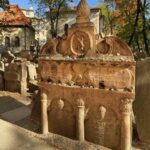
Now the tone shifts in a meaningful way. The tour heads into the Jewish Quarter and visits the Old Jewish Cemetery, described as one of the oldest surviving Jewish burial grounds in the world.
The guide shares stories about Prague’s Jewish community and its most famous members. The cemetery visit is where that context becomes real, because it’s not about legends floating in the air—it’s about people, family lines, and time preserved in stone.
A practical note: entry tickets for the Old Jewish Cemetery and synagogues aren’t included, so budget for that extra cost if you want to go inside fully. Also, plan to be respectful with your pace and volume. This is a place where you’ll want quiet attention, not speed-walking for photos.
You can also read our reviews of more guided tours in Prague
Rudolfinum: neo-Renaissance architecture and why music fits here
One of my favorite parts of the itinerary is the stop at Rudolfinum. The building is neo-Renaissance, but the best part is how the guide connects style to function.
Rudolfinum is known for hosting many musical events because of excellent acoustics. That’s a great example of how guided tours can improve your experience: it’s not just Admire this facade. It’s Why this building works for the purpose it was built for.
If you’re the type who likes understanding how a city’s physical spaces shape daily life, this stop lands well. And it’s also a calm breather before the walking intensifies again toward the bridge and photo-heavy finish.
Charles Bridge and quick scenic hits: photos with a plan
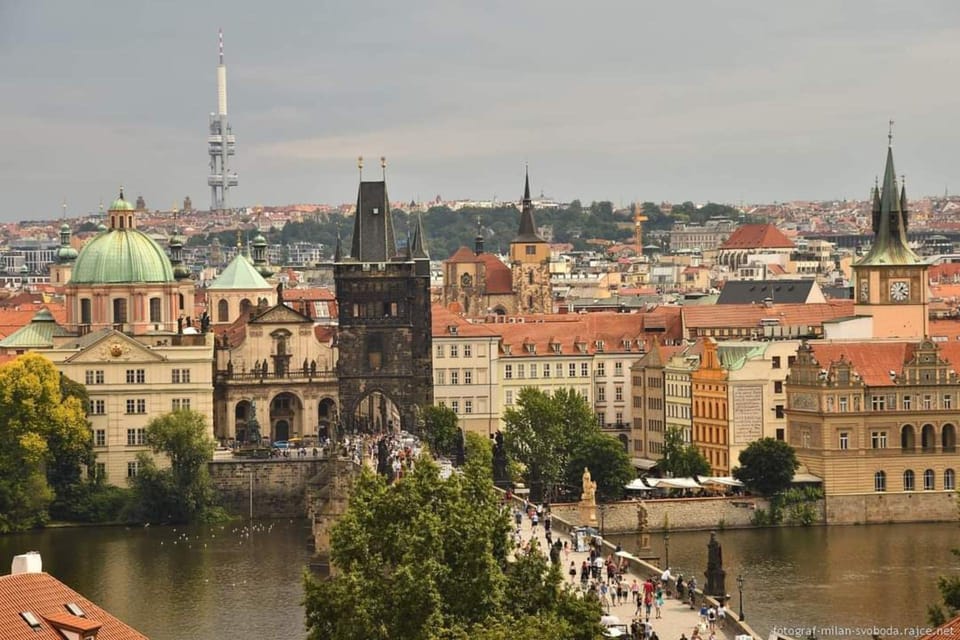
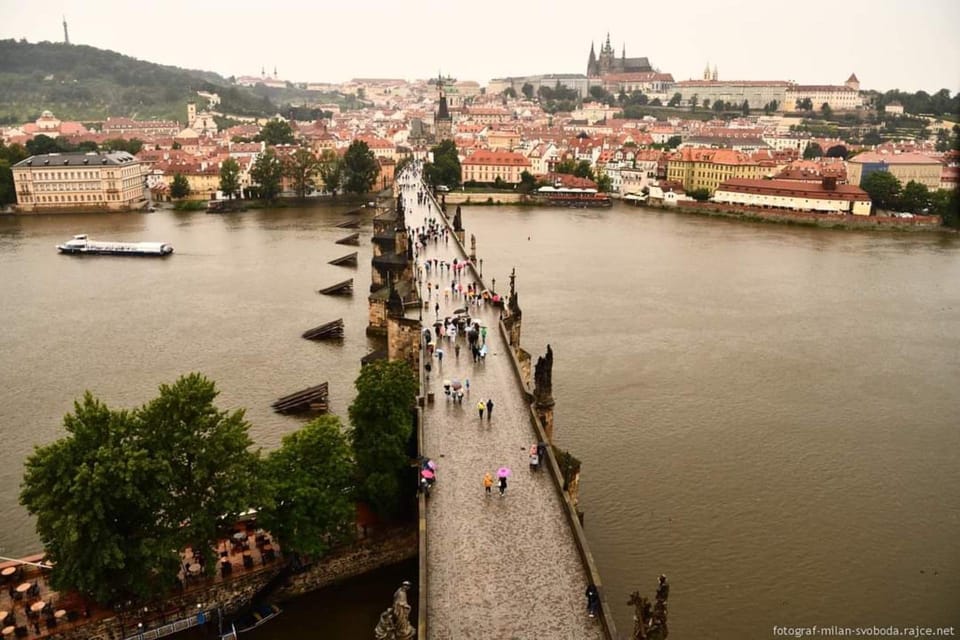
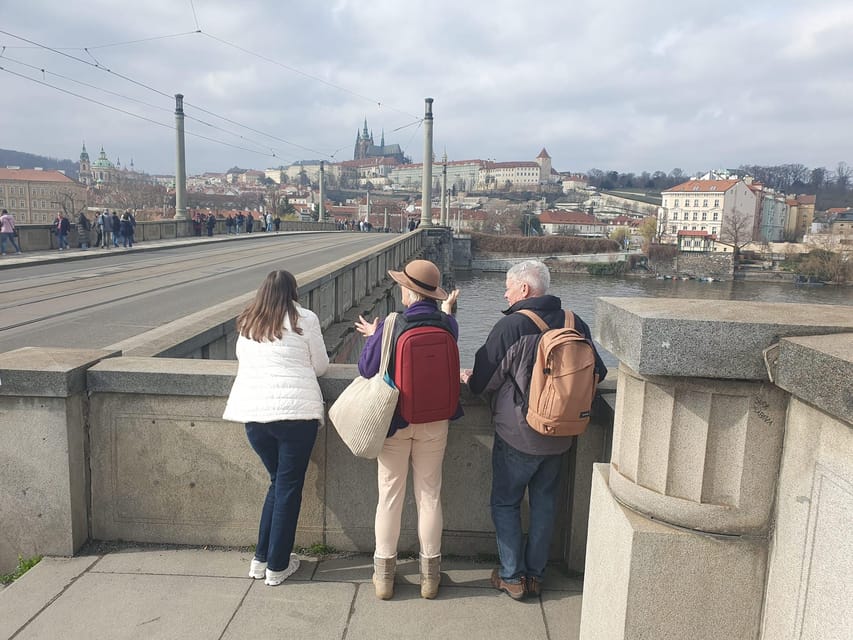
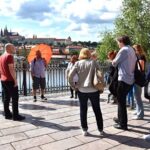
As the tour moves onward, you get scenic views along the way and then Charles Bridge. The guide’s approach here is practical: you don’t just arrive and hope for a good angle. You learn where the best photo moments tend to be and how to frame the shot so it includes enough context to feel like Prague, not just another bridge selfie.
The itinerary also includes stops related to the city’s smaller quirks—like Prague’s narrowest street. Those tight streets sound like a gimmick until you’re there and realize they’re part of why the old city feels so different on foot. They compress the experience. You hear more. You see textures up close.
If you’re coming for iconic sights and you want the city’s odd details (the ones that make a trip feel personal), this section hits the sweet spot.
Franz Kafka Museum area and the John Lennon’s Wall finish
The walk continues with a stop near the Franz Kafka Museum. Even if you don’t go in, the area is a helpful thread. Kafka is one of those names that pops up everywhere in Prague, and a guided stop helps you connect the literary legend to the geography you’re actually walking through.
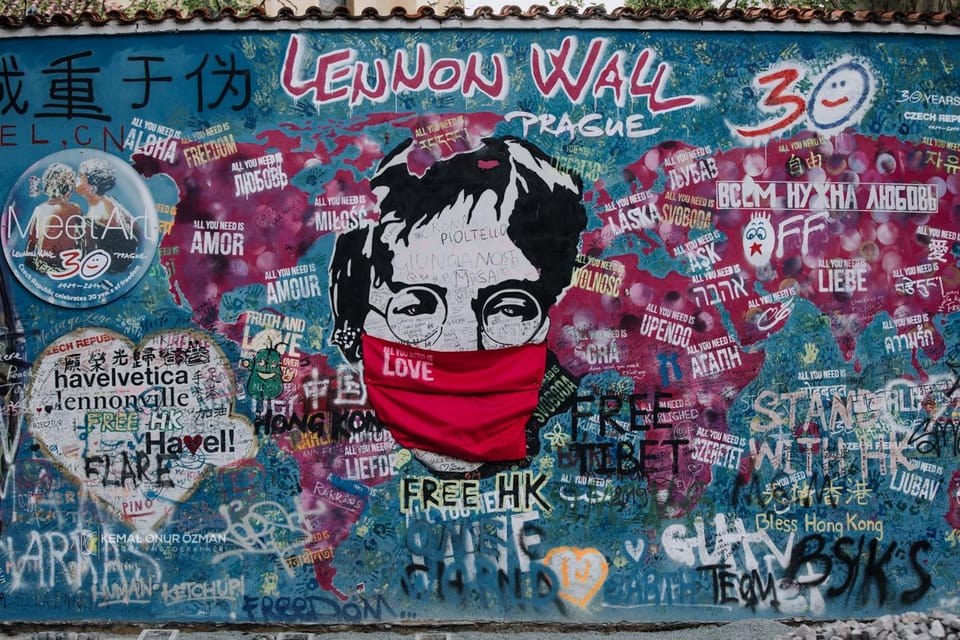
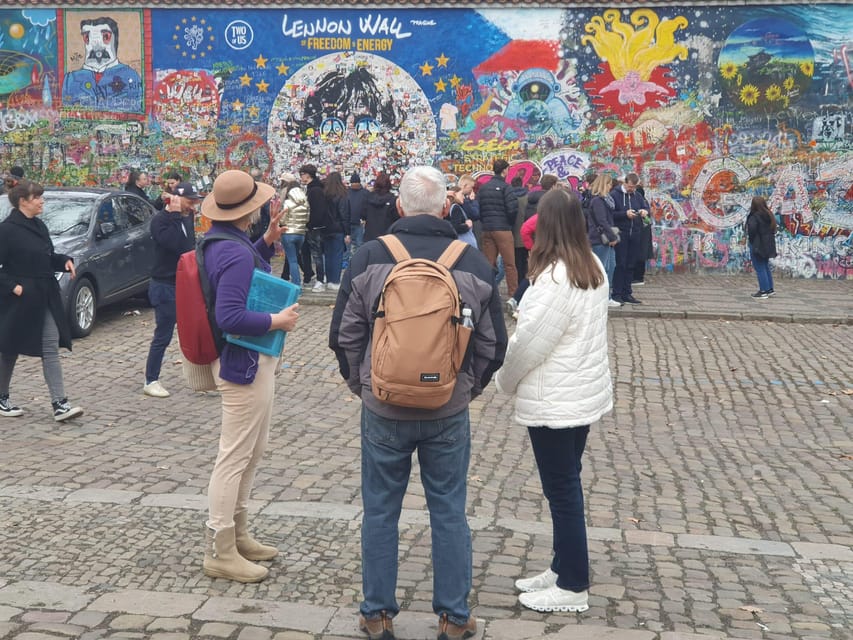
Then you end at John Lennon’s Wall. This is a photo finish in the best way: you’ll want to take a few pictures, check out the wall art, and then call it a day on your own terms. Ending here works because you’re not trapped in another timed attraction. You can linger just enough, then move on.
Also, the tour passes by the Prague Venice Boat Trip area. It’s a small reminder that Prague isn’t only for feet. If you want a water view later, you’ll already be oriented to where that experience starts.
Price and value: what $41 covers (and what it doesn’t)
The price is $41 per person for a 150-minute guided walk with a live guide. For a city like Prague, that’s decent value because you’re getting more than a route—you’re getting explanations at multiple stops, plus a structured way to hit highlights without wasting your first day figuring out logistics.
What’s not included matters: entry tickets to the synagogues, Old Jewish Cemetery, and other sights are extra. So the true total depends on how many of those you choose to enter. If you’re the kind of person who wants to see everything indoors, budget ahead. If you’re okay with only looking from outside at certain points, you’ll likely spend less.
The sweet spot for this tour is people who want context. You don’t just check off the Powder Tower, Old Town Square, and astronomical clock—you understand why they’re important, and how the Jewish Quarter story fits into the broader city picture.
Guide style and language options that can change your experience
This tour offers a live guide in multiple languages: English, Hindi, Punjabi, Urdu, Spanish, Portuguese, Czech, Turkish. If you book in a language you actually speak, it helps you get the most from the storytelling parts—especially the Jewish history sections and the explanation around the clock.
One thing to keep in mind: language matching can vary by group. There’s at least one documented case where the tour had to split across Spanish and English, which can reduce how much detail you personally get. To protect your experience, choose your language carefully and be realistic about how mixed groups can affect pacing.
When the tour runs smoothly, the human side shines. Local guides mentioned by name include Prince, Buse, Tipi, Nivea, and Daniela—and the common thread in those notes is friendliness plus practical guidance, not just dates. Some guides also toss in food and daily-life tips, which is handy when you’re deciding where to eat later.
Who this tour suits best (and who should skip it)
This is best for:
- You want a first-timer Friendly Old Town route with structure and explanations.
- You care about the Jewish Quarter beyond surface-level sightseeing.
- You’d rather walk 2.5 km with a guide than try to stitch together sights alone.
This may not be ideal if:
- You have heart problems, respiratory issues, or you’re over 70, since it’s still a walking route on uneven historic streets.
- You need hearing accessibility, because the format isn’t designed for that need.
- You’re traveling with kids under 10.
If you’re unsure, think about your own walking tolerance first. This tour isn’t described as extreme, but it’s also not a sit-and-stare museum day.
Should you book this Prague walking tour?
If you want a guided walk that ties together Prague’s major sights and then adds real meaning with the Jewish history thread, I think it’s a strong choice. The price is reasonable for the time, and the itinerary is built so you don’t waste your day hopping randomly between distant stops.
Book it if you:
- Want the astronomical clock’s 1410 story explained.
- Appreciate a stop at the Old Jewish Cemetery with context.
- Like ending with a fun, photo-ready landmark at John Lennon’s Wall.
Skip or choose another option if you:
- Don’t want to deal with extra entry tickets for synagogues/cemetery.
- Know you need a low-walking experience for health reasons.
FAQ
How long is the Prague walking tour?
It lasts about 150 minutes.
How much walking is involved?
You’ll walk about 2.5 km along Prague’s historic streets.
Where do I meet the guide?
You meet at Štěpánská 55, in front of the garage door.
What is the price per person?
The tour costs $41 per person.
Are entry tickets included for the Jewish Cemetery and synagogues?
No. Entry tickets to the synagogues, the Old Jewish Cemetery, and other sights are not included.
What languages are available for the live guide?
The live guide is available in English, Hindi, Punjabi, Urdu, Spanish, Portuguese, Czech, Turkish.
Is the tour suitable for children and older adults?
It’s not suitable for children under 10, and it’s also not recommended for people over 70 or for those with heart problems or respiratory issues.