REVIEW · PRAGUE
Small Group Prague Old Town and Jewish Quarter Walking Tour
Book on Viator →Operated by Livingprague · Bookable on Viator
You start in Old Town, then slip into the lanes big buses miss. This small-group walk mixes Prague street-level details with major landmarks like the Astronomical Clock—all paced for questions, not sprinting. You’ll get a local’s take on how the Old Town and Jewish Quarter look the way they do.
I especially like the format: it’s a max of 6 people, so the tour doesn’t feel like a lecture with a wall of earbuds. I also love the way the guide connects religion, architecture, and daily life—down to explaining Stolpersteine and pointing out what to look for inside major Jewish sites.
One thing to consider: you’ll be walking through lots of narrow streets and passageways for about 2.5 hours, so comfortable shoes matter, and cold or rain can make it feel longer.
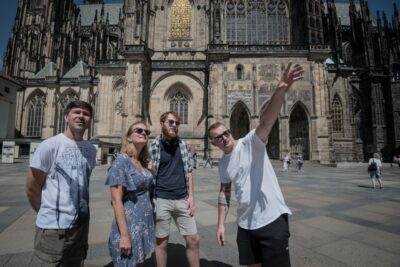
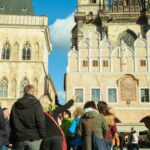
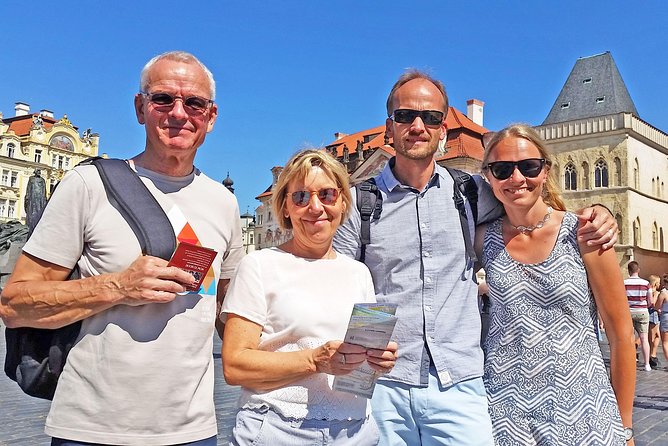
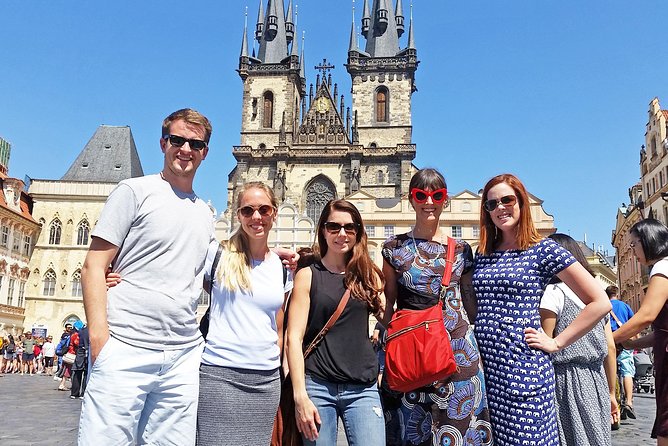
Small group size (up to 6) means real back-and-forth questions.
Stolpersteine turns sidewalk details into a moving, meaningful history lesson.
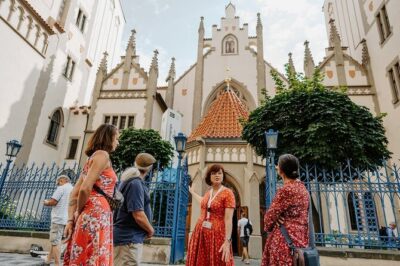
Jewish Quarter stops cover major sites like Pinkas and the Spanish Synagogue.
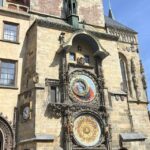
Old Town Hall and the Astronomical Clock get explained with practical viewing tips.
You’ll get local food and drink pointers, including Czech-style ways to eat chimney cake.
In This Review
- Where the Tour Begins: Staroměstské náměstí and Why Narrow Lanes Matter
- The Slow-Down Method: Learning to Read Old Town Like a Local
- Stolpersteine: The Meaning Hidden in Plain Sight
- Jewish Quarter Essentials: Pinkas, the Cemetery, Klausen, and the Spanish Synagogue
- A note on tone and focus
- Old Town Hall and the Astronomical Clock: How to Watch Without Missing It
- Jan Hus, the Hussites, and the Marian Column That Isn’t There
- Building Names, Czech Performance Rules, and What Changed Over Time
- Havelská Street Market: Where an Old Market Shrunk to 10% of Itself
- Beer Garden Directions and the Food Moment: What to Try After the Walk
- What You Get for $22.99: Small Group Value That Makes Sense
- Who This Walk Is Best For (and Who Might Skip It)
- Should You Book This Prague Old Town and Jewish Quarter Tour?
Where the Tour Begins: Staroměstské náměstí and Why Narrow Lanes Matter
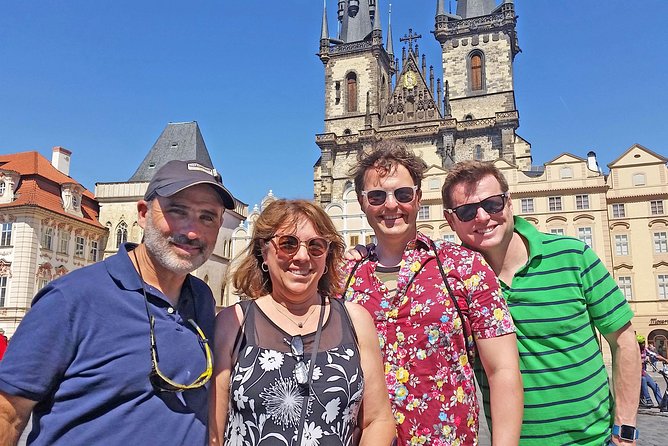
Most first-time Prague tours hit the big squares and call it a day. This one starts on Staroměstské náměstí and then does something smarter: it teaches you how to see the city you’re standing in.
You’ll begin with the idea that the “small stuff” is not small. Those little streets, passageways, and courtyard-like pockets are the reason Old Town and the Jewish Quarter feel layered. They aren’t attractions by themselves, but once you understand why they exist and how people moved through them, the whole area makes sense fast.
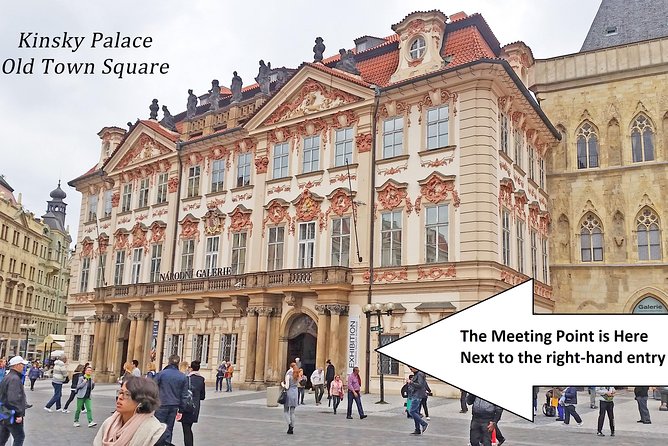
The meeting spot is right in the heart of Prague 1, so you’re close to the action without needing a long transfer. And because the tour is offered in English, you can focus on the story instead of decoding directions.
The Slow-Down Method: Learning to Read Old Town Like a Local
The best part of this walk is the pacing. It’s not a rushed “see it, check it off” loop. Instead, you’ll pause often to understand details you’d otherwise walk past.
You’ll also learn small practical skills that make Prague feel more navigable:
- how building identifiers can help you make sense of what you’re looking at
- how to recognize design styles in passing (so the city starts to “click” visually)
- simple Czech phrases you’ll actually use while wandering
This is where the British expat factor shows up. Guides highlighted in past tours—like Jason, Jans, and James—tend to explain clearly and keep the tone friendly, including humor that works even when it’s cold. That “ask anything” vibe shows up again and again, especially because the group stays small.
A possible drawback with any history-heavy walking tour: if you prefer short, light stops with little context, this might feel dense. The good news is the structure is designed to keep it digestible.
You can also read our reviews of more walking tours in Prague

Stolpersteine: The Meaning Hidden in Plain Sight
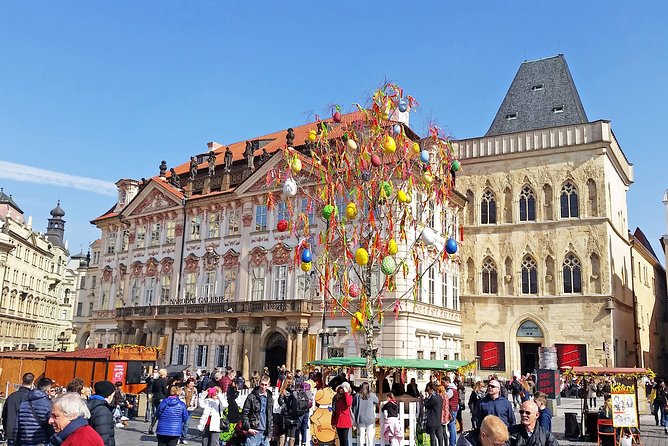
One of the most memorable parts of Prague’s Jewish-related landscape is how modern remembrance is built into everyday streets. Here, you’ll get introduced to Stolpersteine, sometimes described in English as stumble stones.
The guide doesn’t just point them out as objects. You’ll learn what the project is trying to do and how it fits into the broader story of the area. It’s the kind of stop that changes your walk—not because it lasts long, but because it adds meaning to things you’ll see again later.
If you’re the type who likes to understand context before you stare at the obvious landmarks, this is a great match. And if you’re not, it still works because it’s delivered as something you can relate to while physically moving through the neighborhood.
Jewish Quarter Essentials: Pinkas, the Cemetery, Klausen, and the Spanish Synagogue
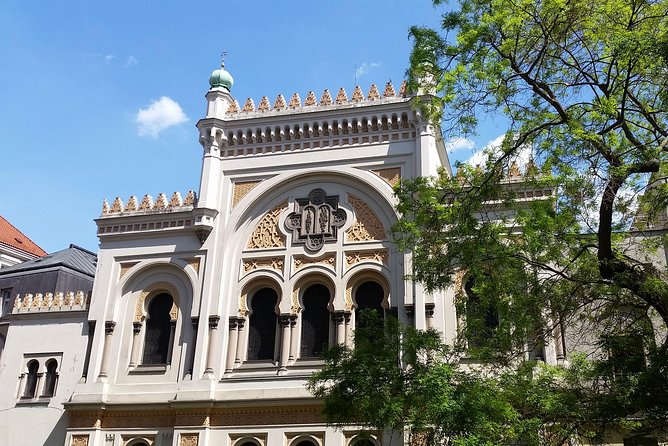
Once you’re ready to look properly, the tour shifts into the Jewish Quarter highlights. You’ll cover a set of places that explain how Jewish life, memory, and worship were shaped over time.
Expect stops that include:
- Pinkas Synagogue
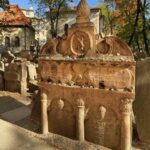
- the Old Jewish Cemetery
- Ceremonial Hall
- Klausen Synagogue
- the Old/New Synagogue
- the Spanish Synagogue
For each one, you’ll get a concise history and what the building does today, plus practical cues for what to notice. That’s a huge deal in synagogues and memorial spaces, because the details are easy to miss if you don’t know what you’re looking for.
You’ll also be coached on how to skip lines—at least as a planning concept—so your time doesn’t get eaten up by ticket queues and bottlenecks. The tour approach is built around keeping your momentum while still giving enough time to actually see.
A note on tone and focus
You may hear the term Holocaust history a lot in Prague tours, and it matters. This walk is designed to explain the area’s religious history and the meaning of what you’re seeing in context—not just to say hard things. It’s history with geography, architecture, and present-day function woven in.
Old Town Hall and the Astronomical Clock: How to Watch Without Missing It
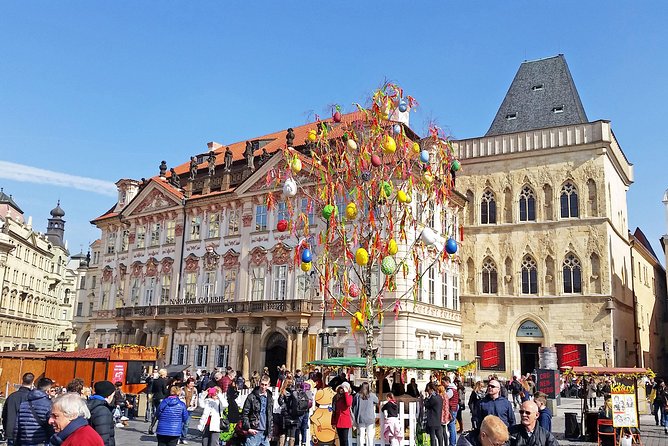
Then you reach the Old Town landmarks that practically pull you by the sleeve. The focus here isn’t just the view—it’s how to understand what you’re looking at.
You’ll learn when the Old Town Hall first opened, how it came to have the Astronomical Clock, and why it became such a symbol of Prague. You’ll also get a walkthrough of how the clock works in a way that makes it feel less like a mystery machine.
Most important: you’ll get tips on where best to watch the apostle procession. That matters, because the best spot can save you from crowd crush and awkward angles. Once you know where to stand, you can enjoy the show instead of fighting for visibility.
If you like “why is it there and how does it work,” this is one of the tour’s strongest segments. If you only want photos, you can still do that—but the explanation will make the photos better later.




Jan Hus, the Hussites, and the Marian Column That Isn’t There
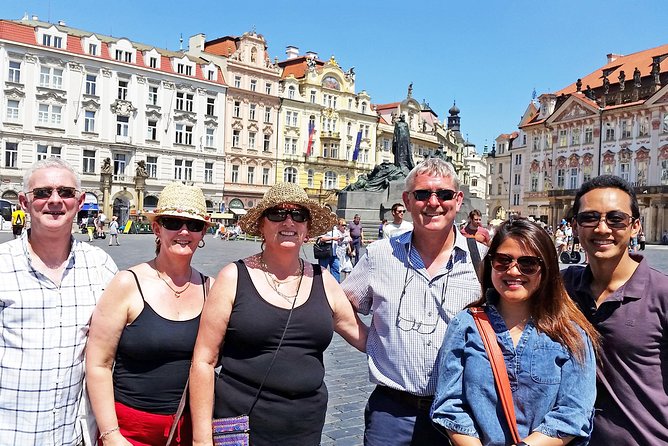
One of the most interesting ways to understand Prague is to treat Old Town Square like an outdoor textbook. This tour does that by tying religious and reform movements directly to what used to be on the square—and what is there now.
You’ll learn why the clockwork of belief and politics kept shifting, starting with Jan Hus, the Hussite movement, and the Czech reformist currents. You’ll also get help interpreting the religious symbolism you’ll see around you.
A key stop covers the Marian Column—what it was used for and why it’s no longer in its original place. That part is more than trivia. It helps you understand how public religious messaging changed across eras, and why Prague’s main squares can look “official” while still carrying reminders of older conflicts.
Then you continue with more context around a nearby church: what style it is, why it was built where it is, and how its denomination changed over the years. The tour also includes what you can expect when you want to go inside, including opening-time context.
I like this approach because you leave with a mental map, not just a list of sites.
Building Names, Czech Performance Rules, and What Changed Over Time
Some cities have monuments. Prague has places that keep changing jobs.
In a stop focused on one of the key synagogues, you’ll learn why it was built, who built it, and what different names it has had across the years. You’ll also hear about restrictions tied to Czech language performances—what wasn’t allowed and why.
That’s the kind of detail that makes history feel real. It’s also why a guided walk beats a self-guided shuffle: the building becomes a story, not just an exterior.
If you’re into the intersection of culture and law—language rules, allowed practices, and how religious spaces operated—this segment is a payoff. Even if you’re not, you’ll still walk away with a clearer understanding of how communities expressed identity through language and ritual.
Havelská Street Market: Where an Old Market Shrunk to 10% of Itself
Right between passageways, you’ll see a market that used to be much bigger than it is today: Havelska Street Market.
You’ll get an overview of when it opened, why it’s worth a visit, and why it’s only about 10% of its original size now. That shrinking isn’t just economic trivia. It helps explain how neighborhoods evolve, how trade routes shift, and how what’s “historic” can still be actively used.
This is a smart stop because it grounds everything you just learned. After synagogues and squares, the market puts you back into real street life—snacks, browsing, and the daily rhythm of Prague 1.
Beer Garden Directions and the Food Moment: What to Try After the Walk
A good guide doesn’t end at the last photo. You’ll also get direction to a popular beer garden in the area.
And you’ll receive practical food guidance as you move through the day, including tips on local drink. There’s also a stop related to the cake often called the Chimney Cake. You’ll learn how Czechs prefer to eat it, which helps you avoid the common tourist version of the experience.
I’m a fan of tours that give you the “what to do next” energy. Without that, a walking tour can feel like a standalone event. With it, you turn the walk into a launchpad.
What You Get for $22.99: Small Group Value That Makes Sense
At $22.99 per person for around 2.5 hours, this tour sits in the affordable lane for Prague. The price works because you’re paying for three things that add up quickly in a city like this:
- A small group (up to 6)
You can ask questions and actually hear answers. That’s not a small difference when you’re standing in crowds around major landmarks.
- A guide who connects places
The walk is built to tie street layout, architecture cues, and religious history together. It’s why you come away with a sense of how the Old Town and Jewish Quarter fit into each other.
- Practical “watch and see” help
The tips on where to watch the apostle procession, how to interpret building identifiers, and how to plan around line-skips are the kinds of things that prevent wasted time.
Also, the tour uses a mobile ticket and is in English, which makes it easier to travel lightly. And with confirmation received at booking and a focus on local tips, it feels designed for real visitors rather than sightseeing robots.
Who This Walk Is Best For (and Who Might Skip It)
This tour is a strong match if:
- you want the Old Town landmarks, but you care about what makes them tick
- you’re curious about Prague’s Jewish Quarter without turning it into a one-note story
- you prefer slow pacing with time for questions
It’s also great for people using their first morning to get bearings. The two and a half hours can feel quick because the guide keeps the flow moving and uses short pauses to explain what you’re seeing.
You might think twice if:
- you don’t like walking for extended stretches on uneven or narrow streets
- you want a mostly visual tour with minimal context
Should You Book This Prague Old Town and Jewish Quarter Tour?
I’d book it if you’re trying to understand Prague in a way that lasts longer than a photo scroll. The small group size, the hands-on street reading (including Stolpersteine), and the focus on Jewish Quarter landmarks like Pinkas Synagogue and the Spanish Synagogue give you more than standard sightseeing.
If you’re on the fence, use this simple test: if you enjoy “why” as much as “what,” you’ll be happy with your choice. If you only want quick hits and zero explanations, pick a shorter landmark-only option instead.