REVIEW · PRAGUE
Prague: Old Town and Jewish Quarter Guided Tour in German
Book on GetYourGuide →Operated by pragERLEBNIS · Bookable on GetYourGuide
Kafka fans, this starts fast. Prague’s Old Town and Jewish Quarter tour is a compact 135-minute walk with a guaranteed group size of 16 or fewer, so you actually hear your guide and see the important corners without feeling rushed. I like that it mixes big “must-see” icons with the less-obvious stories that make Prague feel lived-in.
Two things I’d highlight: first, the way the route is paced around major sights like Old Town Square and the Prague Astronomical Clock. Second, the Jewish Quarter portion sticks to the key places you can use as a springboard for further exploring, with clear context instead of a long lecture. One consideration: this tour is German language only, and the organizers note that people with limited German may not be admitted.
In the end, it’s a very practical way to orient yourself in Prague. If you want synagogue interiors or the cemetery experience inside, you’ll need a separate plan since this one keeps it mostly to exteriors and passing viewpoints.
In This Review
- Key Things That Matter on This Old Town + Jewish Quarter Walk
- What You Get for $29 in 135 Minutes
- Small Group Comfort: Why a Max of 16 Changes the Experience
- Where You Meet in Old Town Square (and When You Need to Be There)
- Old Town Square and the Church of Our Lady before Týn: Your Orientation Moment
- Charles University and Estates Theater Area: History in Plain View
- The Astronomical Clock Stop: Gothic Science That Actually Makes Sense
- Kafka’s Birthplace: A Short Walk with a Big Literary Payoff
- Josefov Jewish Quarter: Exteriors, Context, and the Places You Can Still Visit Later
- Clementinum and New Town Hall Exteriors: Finishing the Loop on a Thoughtful Note
- Charles Bridge Finish: A Strong Ending With Room to Keep Wandering
- Guide Style: What Makes the Walk Feel Easy, Not Exhausting
- Who Should Book This German Tour (and Who Should Skip It)
- What’s Missing: Synagogue and Cemetery Interiors
- Should You Book This Old Town and Jewish Quarter Tour?
- FAQ
- How long is the Prague Old Town and Jewish Quarter guided tour in German?
- How much does the tour cost?
- What group size should I expect?
- Is the tour offered in languages other than German?
- Are children allowed, and do they pay?
- Where is the meeting point?
- Where does the tour end?
- What is included in the price?
- Are synagogue interiors and the Old Jewish Cemetery included?
- What should I bring, and what’s not allowed?
Key Things That Matter on This Old Town + Jewish Quarter Walk
- Guaranteed small group (max 16): easier questions, better explanations, less crowd stress.
- Old Town Square to Charles Bridge: you get a logical flow through the core sights instead of zigzagging.
- Astronomical Clock explained clearly: several guides are praised for making the clock’s mechanics understandable and to the point.
- Kafka and Josefov in one route: you can connect literature, Jewish history, and Prague’s street-level details without extra transit.
- Exteriors-focused Jewish Quarter: you see major synagogues from outside and learn context, but you do not enter interiors.
What You Get for $29 in 135 Minutes
At $29 for about 135 minutes, this is priced like a “first-day orientation” tour: short enough to fit into a busy schedule, but substantial enough to leave you with names, dates, and a mental map. I like tours like this because you spend your time walking the meaningful stretches instead of just standing in lines and hoping you remember what you saw.
You also get something that’s hard to fake on your own: a guide who ties the street names to what happened there. The tour covers Old Town Square, Charles University area, the Astronomical Clock, then moves into Josefov (the historic Jewish Quarter) and ends at Charles Bridge. That sequence matters because each area answers a different question about Prague.
Value-wise, the smart trade-off is that you’re paying for guidance, not museum tickets. If you’re the type who enjoys “context walking” more than indoor entry, this fits well.
You can also read our reviews of more guided tours in Prague


Small Group Comfort: Why a Max of 16 Changes the Experience
A group capped at 16 sounds like marketing until you feel it. I’ve found that in crowded places like Old Town Square, the small-group format means you can actually keep up with the pace and still stop for photos. It also makes it easier for your guide to pause for questions.
The tour is also designed around a walking loop through tight historic streets. Smaller groups help with that, because you’re less likely to get stretched out or blocked at key corners. If you enjoy learning without constantly playing catch-up, this one has the right size.
And yes, the guides get credit for style. Names that come up often include Christa, Eva, and Dagmar—with praise for humor, clear explanations, and being open to questions.
Where You Meet in Old Town Square (and When You Need to Be There)
You meet at Old Town Square 5, on the corner of Pařížská Street, in front of the Cartier boutique. Look for the guide holding a green umbrella.
This tour starts precisely on time, and the organizers say they cannot wait for late arrivals and no refunds apply. So I’d treat the “10 minutes early” advice as serious. Old Town Square can be a maze when you’re checking maps, and you don’t want to waste your first minutes hunting for the group.
Bring comfortable shoes. You’ll be on your feet for more than two hours, and Prague cobblestones have their own opinions about footwork. Also pack a weather-appropriate layer and an umbrella if rain is possible.
Old Town Square and the Church of Our Lady before Týn: Your Orientation Moment
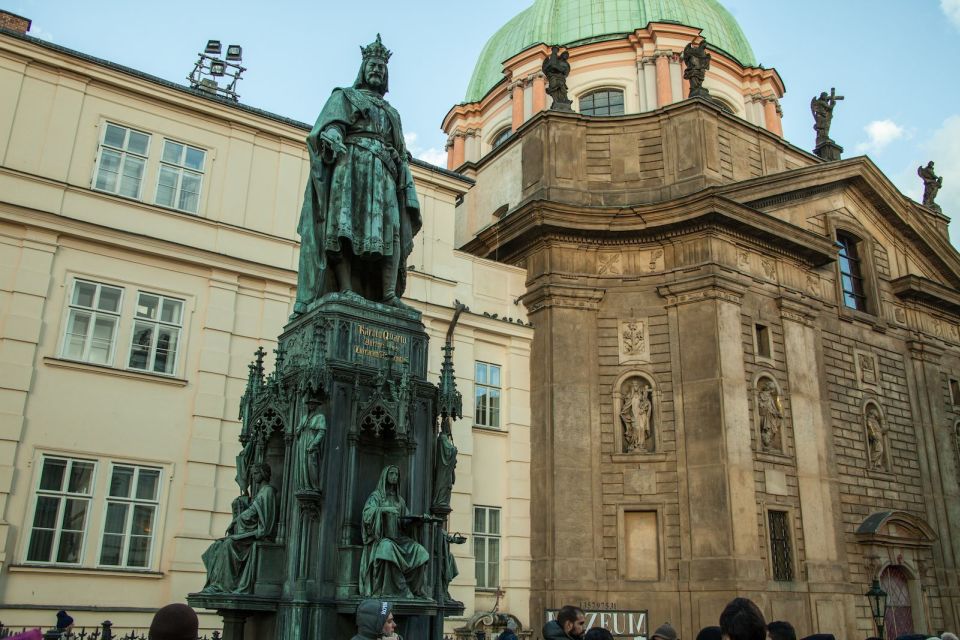
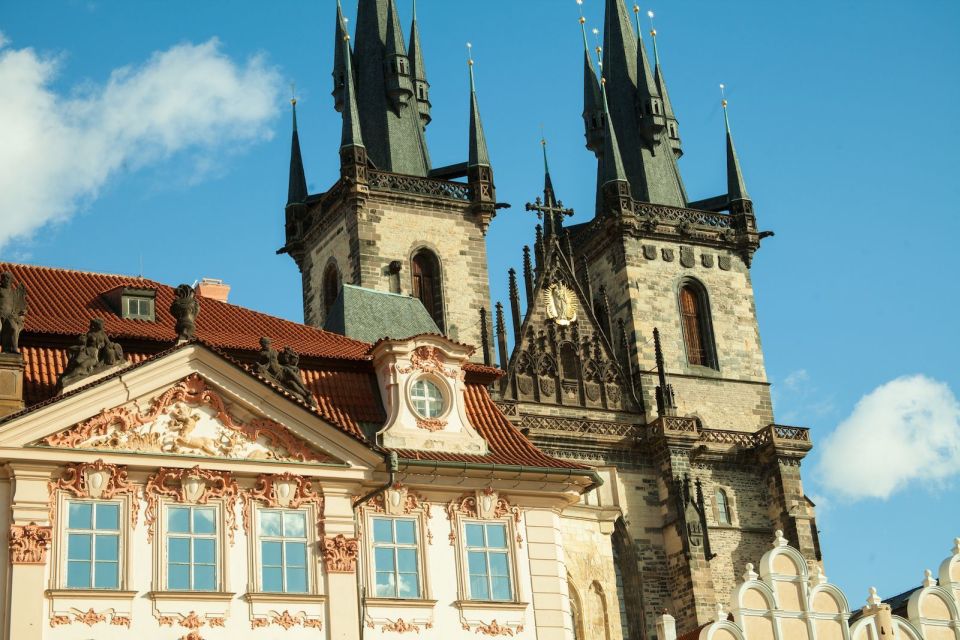
Old Town Square is where most first-time visits funnel in. This tour starts there, at the heart of Prague’s former main market square. You’ll pass by the Church of Our Lady before Týn, a landmark that’s easy to spot and hard to forget once you’ve seen it from street level.
What I like here is that your guide doesn’t just point. The goal is to help you understand why this square mattered and how the city’s power and commerce shaped what you see today. Even if you’ve already glanced at photos, getting the explanations in person helps you connect the architecture to the human story.
A small drawback: Old Town Square is busy, so depending on the time of day and weather, you may want to aim for slightly earlier or later in the day if you’re sensitive to crowds. (A guide can only do so much when the square is doing what it always does.)
Charles University and Estates Theater Area: History in Plain View
From Old Town Square, the walk moves along picturesque streets near Charles University and the Estates Theater area. This is the “Prague as a thinking city” stretch, where the architecture signals education, culture, and the long rhythm of civic life.
This portion works well because it gives you a break from the biggest photo magnets. You get to enjoy the street scale and the feeling of wandering through the real city, not only museum displays.
In practical terms: if you’re tempted to bolt ahead for photos, this is one of the spots where slowing down pays off. The guide’s context makes it easier to see why these buildings sit where they do.



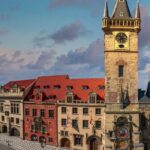

The Astronomical Clock Stop: Gothic Science That Actually Makes Sense
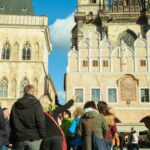
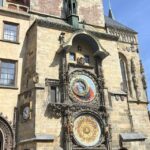
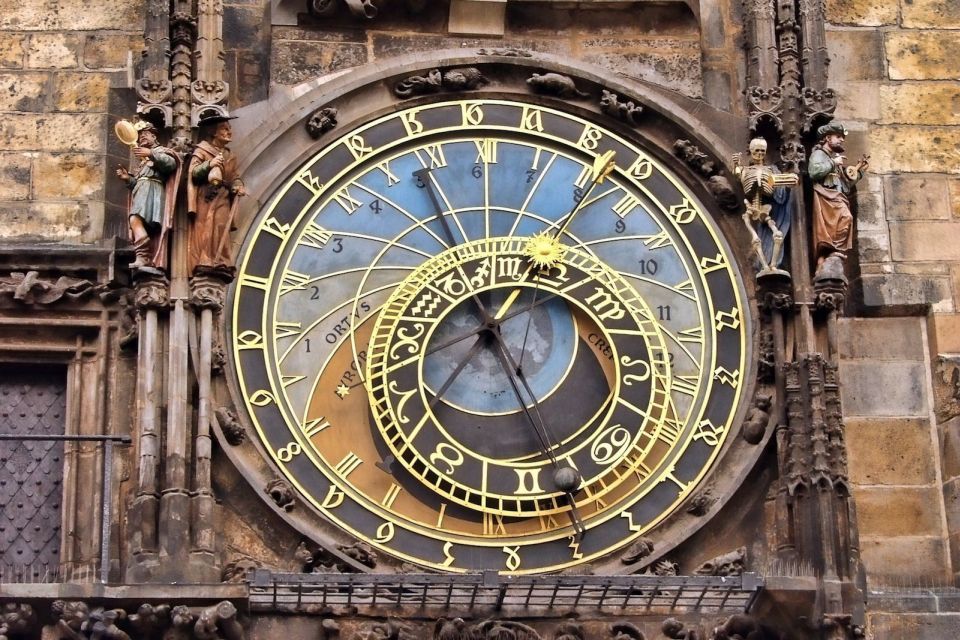
The Prague Astronomical Clock is the headline, and the tour gives it the time it deserves: a photo stop plus guided explanation. This is one of the key reasons to book a guide at all. The clock looks like decorative machinery until someone explains what’s going on.
I also appreciate that guides in this format get consistent praise for explaining the clock clearly. Dagmar is singled out for clock commentary that’s described as perfect and to the point, which is exactly the kind of pacing you want around a complicated object.
One thing to keep in mind: the clock area can be crowded. Your guide will manage where you stand as best they can, but you still might not have perfect sightlines at every moment. If you want the sharpest photos, plan to take shots during your designated stop and then listen first, shoot second. Your future self will thank you.
Kafka’s Birthplace: A Short Walk with a Big Literary Payoff
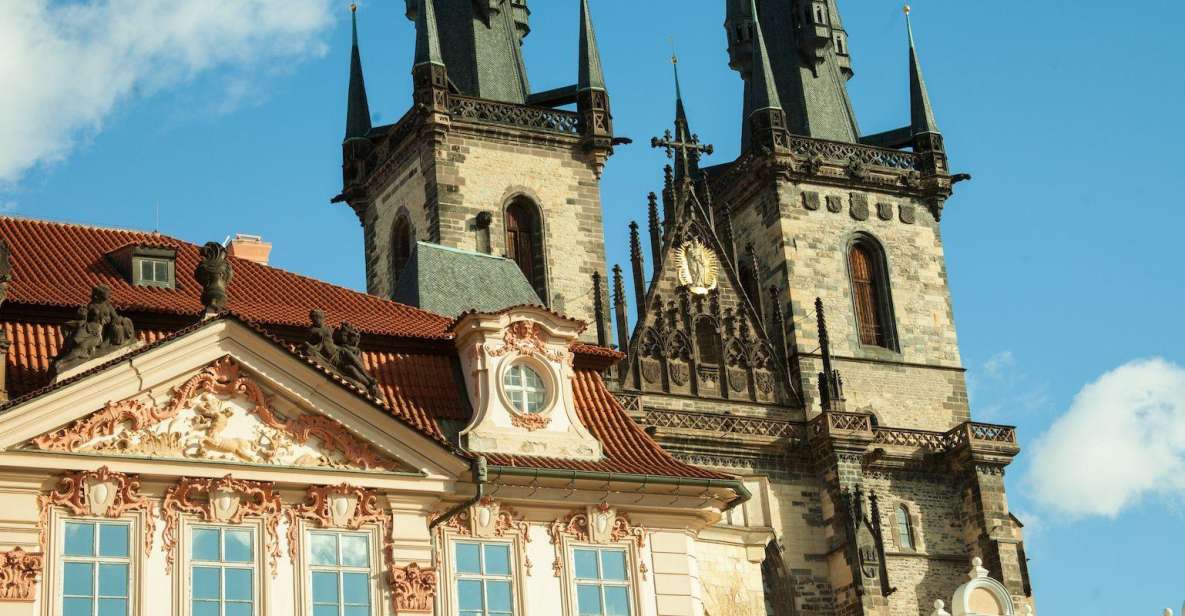
After the clock, the route heads toward the birthplace of Franz Kafka. This is a smaller stop, but it carries weight. Kafka is one of those names that feels everywhere, yet most people only know the headline. A good guide helps connect the literary reputation to the actual streets and era you’re seeing.
I like this stop because it’s not just “look at a plaque.” It’s a chance to understand how Prague’s neighborhoods shaped the people who lived there, and how the city’s atmosphere ends up in the writing.
If you’re visiting Prague for literature, this is a meaningful anchor. Even if you’re not, it adds variety to a tour that could otherwise become only architecture and dates.
Josefov Jewish Quarter: Exteriors, Context, and the Places You Can Still Visit Later
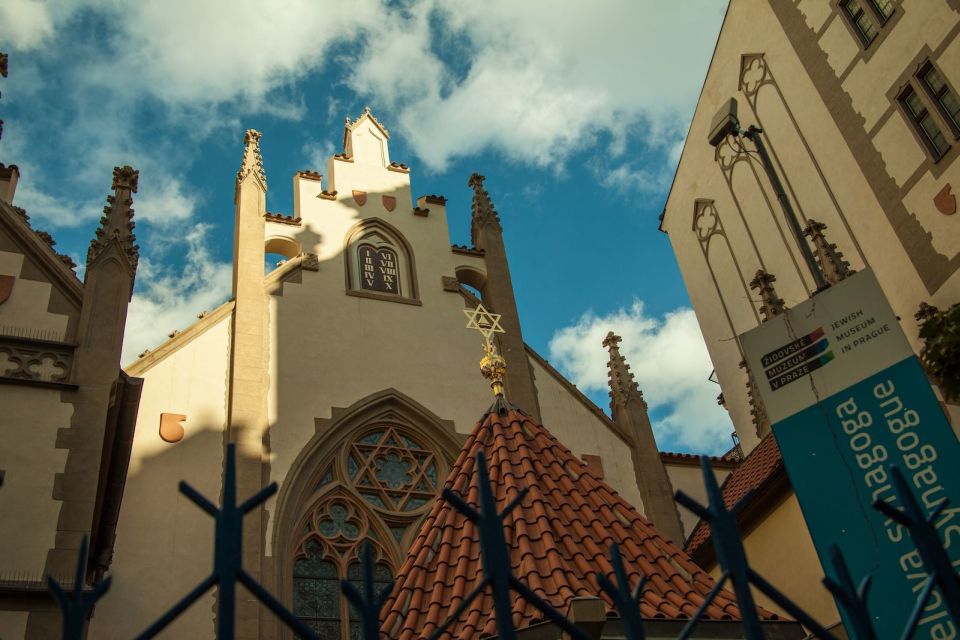
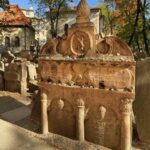
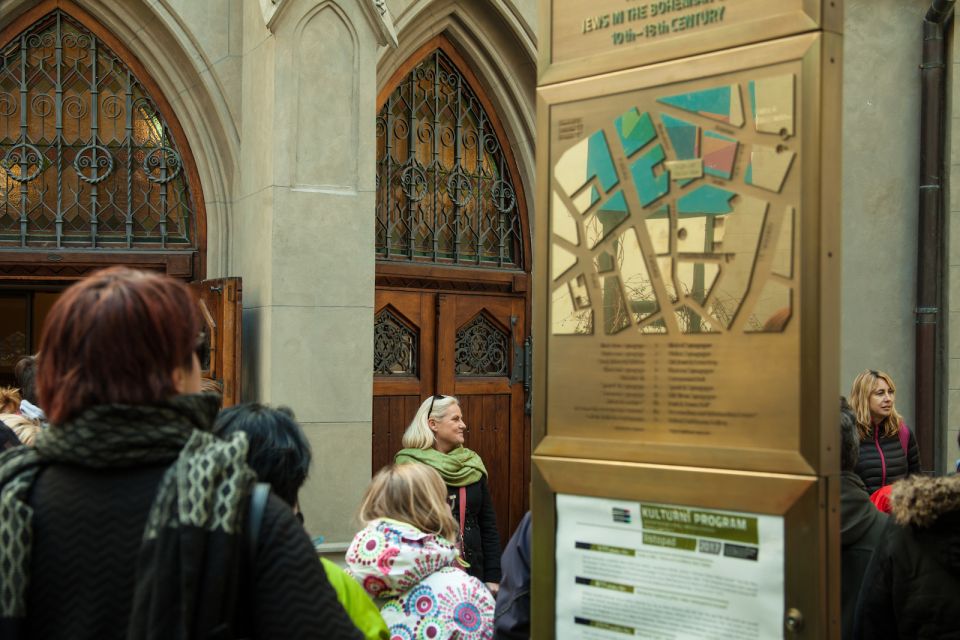
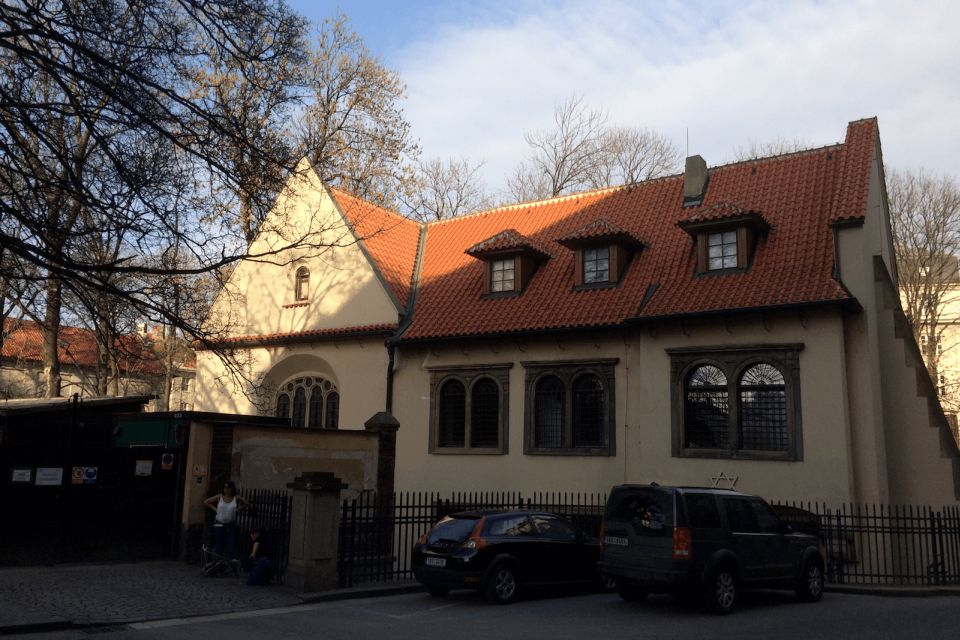
The Josefov segment is where the tour earns its name. You’ll spend around 45 minutes learning the old Jewish Quarter’s story and seeing key references in the streetscape. This includes passing the Maisel and Pinkas synagogues, plus viewpoints near the old Jewish cemetery.
Important detail: there is no entry to synagogues or the Old Jewish Cemetery on this walk. That can feel disappointing if you expected interior access. But for many people, it’s also a useful way to decide what you want to do next—because once you’ve learned the layout and meaning, you can choose which sites deserve your ticket time.
In terms of what this tour does well, it focuses on making the Quarter understandable without drowning you in long details. One caution: one review note says the Jewish Quarter explanations were sometimes shorter than expected, and that someone did not even visit the Jewish cemetery. So if Jewish Quarter depth is your top priority, you may want to budget extra time to revisit Josefov afterward on your own or with a ticketed visit.
That said, the tour’s approach still helps you orient: you’ll know what you’re looking at when you return.
Clementinum and New Town Hall Exteriors: Finishing the Loop on a Thoughtful Note
Next comes a shift back toward the wider city view. You’ll see the Clementinum and also the exteriors of New Town Hall. These aren’t necessarily the first things most people plan to photograph, but they add context: Prague isn’t only one old square. It’s a connected urban fabric built over centuries.
This part of the walk helps you connect Old Town’s intensity to how the city grew and organized itself. If you like reading a city like a page, these exterior stops feel like the margins where the story continues.
It’s also a breather in rhythm. By now, you’ve seen enough “wow” points that your attention shifts from spectacle to understanding.
Charles Bridge Finish: A Strong Ending With Room to Keep Wandering
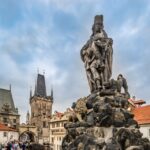
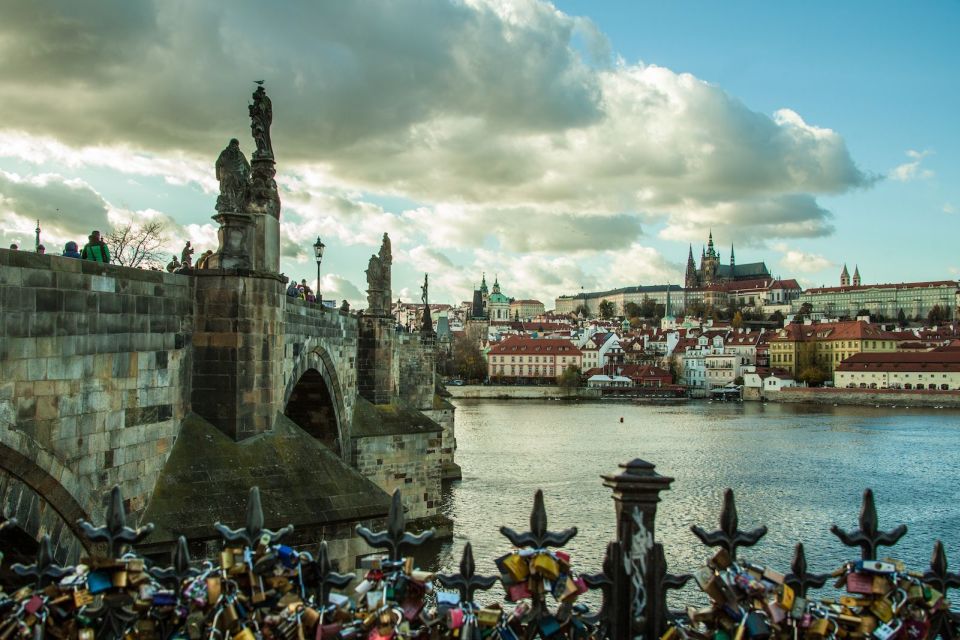
The tour ends at Charles Bridge, with a guided stop there. Charles Bridge is the kind of place where you’ll naturally pause even if you weren’t supposed to, because it’s that photogenic and that busy.
I like that the tour doesn’t pretend you need to be carried back to where you started. Ending on the bridge makes it easy to branch out to the next thing you want: riverside strolls, viewpoints, or simply continuing your Prague walk.
One practical note: the tour does not end at the starting location, so plan your next activity accordingly. If you’ve booked a dinner nearby, you’ll likely be glad you didn’t plan everything back at Old Town Square.
Guide Style: What Makes the Walk Feel Easy, Not Exhausting
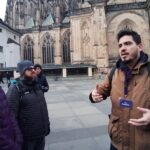
A big part of why this tour scores well is the guide approach. Guides are repeatedly praised for being experienced, friendly, and good at handling questions. Some guides, like Eva, get credit for delivering a happy, enjoyable group experience, while others like Christa receive compliments for humor and excellent timing.
I also like that the tour is designed for comfort: there’s mention of guides taking care of participants and even looking for shadowy places during breaks when possible. That small detail matters more than you’d think on a day with sun, wind, or drizzle.
If you’re someone who tends to ask questions, the small group helps. If you prefer to listen quietly, that works too. Either way, you’ll leave with a clearer sense of where things are and what they mean.
Who Should Book This German Tour (and Who Should Skip It)
This tour is in German only. The organizers also warn that people without good German skills may not be allowed to join, and no refunds apply in that situation. So if you’re comfortable with German conversation, you’ll likely enjoy the full benefit. If not, you’ll probably end up translating in your head, which makes the experience feel smaller than it could.
It’s also not for everyone physically. The tour is not suitable for children under 5, and it’s flagged as not ideal for people with back problems, mobility impairments, or recent surgeries. It involves walking through historic streets for more than two hours, so even if you can do a city stroll, cobblestones and steady walking can still be a factor.
Kids policy is a plus if you’re traveling with family: children up to 12 can join free of charge when accompanied by parents. That makes the price scale more reasonably for families than many paid-sight tours.
What’s Missing: Synagogue and Cemetery Interiors
This is the biggest trade-off you should plan for. The tour includes learning and exterior viewing, but it explicitly does not include entry to synagogues or the Old Jewish Cemetery.
If you’re hoping for interior architecture details, guided interior explanations, or a longer cemetery visit, you’ll need to book a separate activity. I’d treat this walk as your “set-up” tour. It gives you names and context so your later paid visit feels more meaningful.
On the other hand, if you don’t want multiple ticket lines and you value a smooth walking overview, you may actually prefer this format.
Should You Book This Old Town and Jewish Quarter Tour?
If your goals are to get your bearings fast, understand what you’re looking at, and connect Old Town and Josefov in one efficient walk, I think this tour is a strong bet—especially at $29 with a small group. It’s also a good choice as a first-day plan, since it covers the most orientation-heavy landmarks like Old Town Square, the Astronomical Clock, Kafka’s birthplace, and ends at Charles Bridge.
Skip it if you need synagogue or cemetery interiors included, or if German isn’t workable for you. Also consider the walking demands if you have mobility or back issues.
If you do book it, plan a little flexibility after Charles Bridge. You’ll likely want time to return to the places that grabbed you, now that you understand what they represent.
FAQ
How long is the Prague Old Town and Jewish Quarter guided tour in German?
The tour lasts about 135 minutes.
How much does the tour cost?
The price listed is $29 per person.
What group size should I expect?
It’s a small-group tour with a guaranteed maximum of 16 participants.
Is the tour offered in languages other than German?
No. The tour is German only.
Are children allowed, and do they pay?
Children up to 12 years old join free of charge when accompanied by their parents. The tour is not suitable for children under 5.
Where is the meeting point?
You meet at Old Town Square 5, at the corner of Pařížská Street, in front of the Cartier boutique.
Where does the tour end?
The tour does not end at the starting location. It ends at Charles Bridge.
What is included in the price?
You get a walking tour with a live guide. Children up to 12 join free when accompanied by their parents.
Are synagogue interiors and the Old Jewish Cemetery included?
No. There is no entry to the synagogues, the Old Jewish Cemetery, or other sight interiors.
What should I bring, and what’s not allowed?
Bring comfortable shoes and an umbrella. Large bags or luggage are not allowed, pets are not allowed (assistance dogs are allowed), and alcohol or drugs are not allowed.