REVIEW · PRAGUE
From Prague: Terezín and Ghetto Museum Guided Tour
Book on GetYourGuide →Operated by CA BEST TOUR Praha s.r.o. · Bookable on GetYourGuide
Terezín hits hard—and a guide helps. This half-day trip turns a quiet ride from Prague into a focused visit of Terezín’s Small Fortress and the Ghetto Museum, where the place’s layers of WWII history are explained in plain, human terms. I especially like how the best guides use dates, locations, and cause-and-effect so you don’t just see buildings—you understand why they mattered.
Two things I like a lot: you get a guided walk through the Ghetto Museum plus key sites tied to the ghetto’s daily reality, including the ceremonial halls and the central morgue. And you also get the context of the fortress itself, built in the 18th century by Emperor Joseph II, later used by the Nazis as a Gestapo prison and Jewish ghetto/concentration camp. One possible drawback: with only about 6 hours total, you may feel a bit rushed inside the museum exhibits, and there’s no snack or drink stop built in—bring something small if you need it.
In This Review
- Key things to know before you go
- From Prague to Terezín: the half-day pace that keeps it manageable
- The Small Fortress: Joseph II’s walls turned into a prison system
- Entering the Ghetto Museum: learning how persecution worked
- Ceremonial halls and the central morgue: where the story turns physical
- The drive, the guide, and how the tour actually feels
- How much you’ll actually see (and how not to feel rushed)
- Price and value: what you’re paying for at $86 per person
- Who should book this tour from Prague
- Should you book this Terezín and Ghetto Museum guided tour?
- FAQ
- How long is the Terezín and Ghetto Museum guided tour?
- Is hotel pickup and drop-off in Prague included?
- What does the tour visit in Terezín?
- Are meals included?
- What languages are available for the live guide?
- Is this tour suitable for people with mobility impairments?
- Can I cancel for free, and is pay later available?
Key things to know before you go
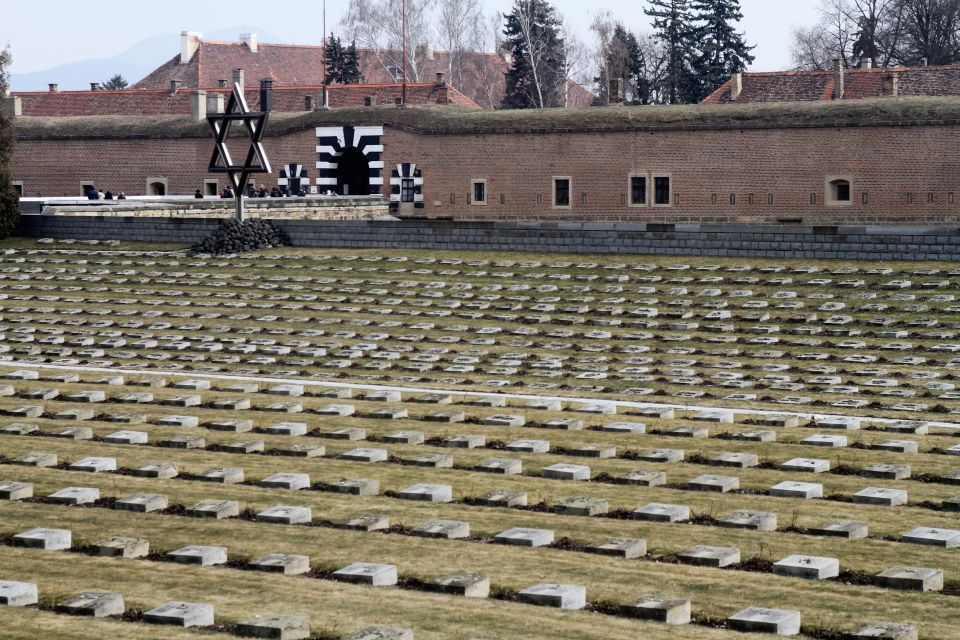
- Hotel pickup and drop-off in Prague makes this day feel easy from start to finish.
- Small Fortress + Ghetto Museum works well if you want one tight, guided storyline.
- Ceremonial halls and the central morgue are included, so you see more than just the main rooms.
- A 6-hour limit means you’ll see a lot, but you can’t read every label slowly.
- No food or drinks included, so pack a snack if you get hungry.
- Not suitable for mobility impairments, since there’s walking between sites and inside areas.
From Prague to Terezín: the half-day pace that keeps it manageable
The tour runs for about 6 hours, which is a very workable slice of time when you’re staying in Prague and want a serious WWII site without losing an entire day. You’ll be picked up from your hotel in Prague and then driven to Terezín, where you meet your guide and start the guided portion of the visit.
A small but important detail: the time on your voucher is the tour start time, not your pickup time. Pickup timing is sent to you by email at least 24 hours before the tour. Also, the driver waits no longer than 5 minutes after the scheduled pickup time, so you’ll want to be ready to go.
Pickup is also not available in every situation. If your reservation was made less than 24 hours before the tour start, free hotel pickup may not be available. And if your hotel is inside a pedestrian zone, you might not qualify for pickup—so it’s worth checking where your hotel sits on maps before you assume you’ll be collected right at the door.
This trip is best when you want an organized, guided route that keeps you moving between the fortress and the ghetto sites, rather than trying to stitch together separate tickets on your own.
You can also read our reviews of more guided tours in Prague



The Small Fortress: Joseph II’s walls turned into a prison system
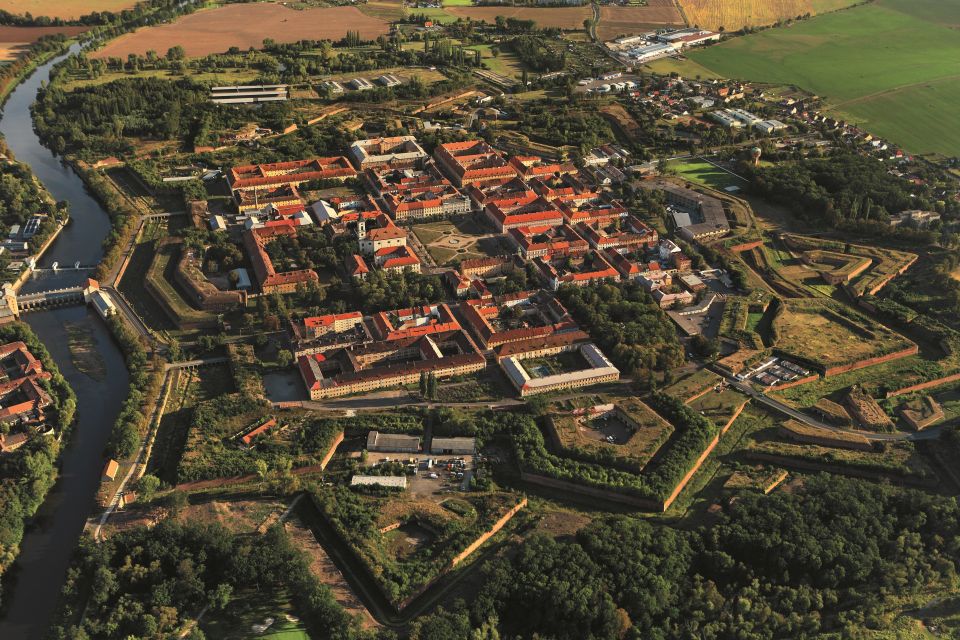
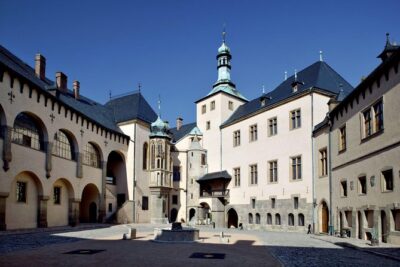
The Small Fortress is the kind of place that immediately changes the mood the moment you arrive. It was built in the 18th century by Emperor Joseph II, and that older origin matters, because it helps you see how prisons and military spaces get reused for later systems of control.
During WWII, the Nazis used this fortress as a Gestapo police prison and later as a Jewish ghetto and concentration camp. A good guide’s job here is to connect the physical layout to what happened inside it, instead of treating the story as a list of facts. This is where you’ll usually get your “why it’s here” explanation that makes the later museum rooms feel less abstract.
If you’re the type of traveler who likes structure—dates, locations, and cause-and-effect—you’ll appreciate how the guided approach keeps you oriented. Many guides bring a tone that’s serious but not robotic, and that balance helps you stay with the information without feeling lost.
One practical note: there’s walking involved, and some areas may involve stairs or uneven surfaces. The tour is not suitable for people with mobility impairments, so if that applies to you, you’ll want to consider another format or a different access option.
Entering the Ghetto Museum: learning how persecution worked
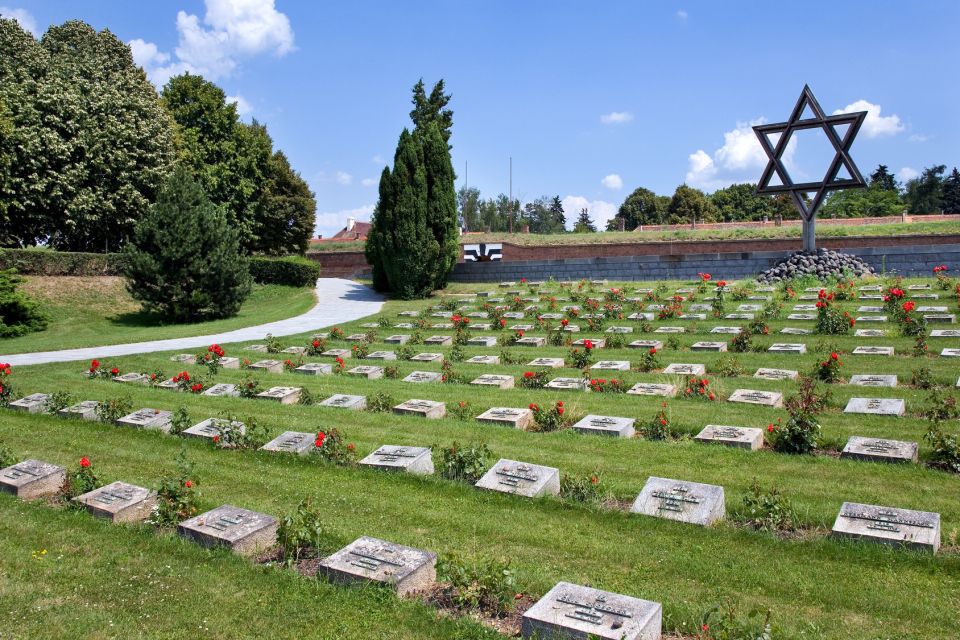
The Ghetto Museum opened in 1994 and contains a permanent exhibition focused on the history of the political prison and persecution of the Czech nation under Nazi rule. The museum is not trying to be comforting. It’s trying to be clear.
What I like about visiting with a live guide is that you get help turning the exhibition into a timeline. You’ll hear how the system escalated, how institutions were used for repression, and how Terezín fit into the broader Nazi strategy. The goal isn’t just to memorize names and dates—it’s to understand the machinery behind the cruelty.
In terms of what you’ll see, the guided program is structured around key parts of the ghetto story and the areas connected to imprisonment and suffering. The museum exhibition includes enough material that you can’t possibly read every panel at a relaxed pace within a 6-hour day, especially if your guide is also explaining key points as you go.
That’s the main trade-off. You’ll leave with a strong overview, but you might not have time to sit with every display. If you’re a slow reader or you like to re-read labels after your brain catches up, consider bringing a small notebook and focusing on the sections your guide marks as the most important.
Ceremonial halls and the central morgue: where the story turns physical
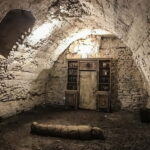
This tour includes stops that many people remember long after the drive back to Prague. The ceremonial halls and the central morgue of the ghetto are part of the guided visit, not an optional add-on.
Why that matters: these spaces help you understand that the persecution wasn’t only administrative. It was also about how the system processed people—how bodies and deaths were handled and how the Nazis controlled even the final stages of life.
Guides often emphasize context here—what you’re looking at, what the purpose of the spaces was, and how to interpret the setting without losing respect for what occurred. This is also where the emotional weight can feel strongest, so if you’re sensitive, plan to take a few quiet moments on your own while you’re there.
Also, keep your expectations grounded. Even on a guided tour, you won’t be walking through a long, unhurried memorial experience. The tour is half-day, which means you’ll see key spaces but not every corner at depth. If your priority is reflection time, you might want to complement this tour with extra time on your own at the sites that hit you the hardest.
The drive, the guide, and how the tour actually feels
The transport part is part of the experience. You’re on a comfortable drive from Prague, and the tour is designed so you’re not dealing with directions, transfers, and ticket confusion. That matters because Terezín is not close to Prague, and the day can feel like work if you don’t have a plan.
Guides are the difference-maker. Many guides on this tour are known for explaining with clear historical context, including details that make the WWII story easier to follow without turning it into a lecture. Some have a way of using humor lightly—mostly to keep the group comfortable while staying respectful. That tone helps on a site that’s undeniably heavy.
Language can also affect your experience. English is offered, along with Russian, Italian, Spanish, and German. Still, there can be cases where the group setup leads to less of your primary language than you expect. If language balance is crucial for you, it’s worth paying attention to what’s shown when you book and confirming the language for your exact departure.
One more practical comfort point: a few people note that the bus experience can vary by season and conditions. If you’re traveling in hot weather, plan for the possibility that air-conditioning comfort might not be perfect.
You can also read our reviews of more museum experiences in Prague






How much you’ll actually see (and how not to feel rushed)
This tour packs a lot into a single 6-hour window, so it can feel like a brisk sampler of major sites rather than a slow, reading-heavy visit. You’ll cover the Small Fortress, the Ghetto Museum, and key areas inside the ghetto complex, including the ceremonial halls and central morgue.
Inside the museum, you might run into the reality that there’s far more to read than time allows. Some people feel the museum portion moves quickly, especially if you like to absorb every exhibit label and photo caption. On the other hand, a guide helps by pointing out what’s essential, which can make your visit far more meaningful than reading everything randomly on your own.
Here’s what I recommend to avoid feeling rushed:
- Bring a snack and a bottle of water. Food and drinks aren’t included.
- Use your guide’s pacing as the baseline, but pause briefly if a room hits you hard.
- If you want deeper reading, focus on 3 to 5 displays you care about most and let the rest be guided overview rather than forced thoroughness.
The best tours leave you with a coherent understanding, not a completed checklist.
Price and value: what you’re paying for at $86 per person
At about $86 per person, you’re paying for three things that are hard to replicate solo without extra effort: hotel pickup and drop-off, a live guide, and admission fees.
If you’ve ever tried to plan WWII sites from Prague on your own, you know the friction: getting transport set up, buying the right tickets, and then building a route that makes chronological sense. This tour handles the time-consuming parts and gives you interpretation—especially important at Terezín, where context turns buildings into understanding.
Value also depends on your priorities. If you want a guided narrative and you’ll benefit from explanation, this price can feel very fair. If you already have strong background knowledge and prefer slow, independent museum time, you might wonder if you could DIY more cheaply. Still, the guided element is the part that tends to change the experience the most, particularly in places like this where details are easy to miss.
Who should book this tour from Prague
I think this is a strong fit for you if:
- You want one organized, guided half-day that covers the main sites connected to Terezín’s prison and ghetto story.
- You appreciate context—how the Nazi system worked and how the fortress and museum connect.
- You prefer being transported and guided rather than solving logistics on your own.
It may be less suitable if:
- You need an accessible route, since it’s not suitable for mobility impairments.
- You’re hoping for plenty of quiet reflection time and slow reading. This is a structured visit with limited time.
If you’re a first-time visitor to Terezín, starting with this guided tour is a smart way to get your bearings fast and then decide what you’d like to revisit later.
Should you book this Terezín and Ghetto Museum guided tour?
I’d book it if you want a serious, well-guided overview without wrestling with transportation and ticket planning. The combination of the Small Fortress, the Ghetto Museum, and the ceremonial halls plus central morgue gives you a fuller picture than many quick options.
Just go in prepared: bring a snack, expect the museum to feel time-pressured, and let your guide’s pacing shape what you notice first. If you’re willing to trade a little slow reading for a clearer story, this is a very solid use of your Prague time.
FAQ
How long is the Terezín and Ghetto Museum guided tour?
The tour duration is listed as 6 hours.
Is hotel pickup and drop-off in Prague included?
Yes. The tour includes hotel pickup and drop-off in Prague. Pickup time is not the same as the voucher time, and you’ll receive pickup timing by email at least 24 hours before.
What does the tour visit in Terezín?
You’ll visit the Small Fortress and the Ghetto Museum, including the ceremonial halls and the central morgue of the ghetto.
Are meals included?
No. Food and drinks are not included, so it’s smart to bring a snack if you need one.
What languages are available for the live guide?
The live guide is available in English, Russian, Italian, Spanish, and German.
Is this tour suitable for people with mobility impairments?
No. It is listed as not suitable for people with mobility impairments.
Can I cancel for free, and is pay later available?
Yes. You get free cancellation up to 24 hours in advance for a full refund, and you can reserve now & pay later.