REVIEW · PRAGUE
Prague : Visite insolite avec un guide journaliste français
Book on GetYourGuide →Operated by Mathieu Ponnard · Bookable on GetYourGuide
Prague gets better when you walk with a pro. This French journalist guided stroll mixes classic sights with little detours that make the city feel lived-in, not just photographed. I like how the guide blends history and architecture with the everyday side of Prague’s political, economic, cultural, and social life, so you come away with a clearer sense of how the city works.
Two things I really like: the small group size (up to 20) makes it easy to ask questions, and the route balances major landmarks with lesser-seen stops like Kafka’s Head, the Passageways, and the Powder Tower. You’ll also get practical advice you can use right away, from where to eat to what walks to take next.
One possible drawback: it’s a long, mostly on-foot outing (about 3.5 hours) with no food or drinks included. If you’re sensitive to walking time, plan your shoes and your post-tour meal in advance.
In This Review
- Key things to know before you go
- Why this French journalist-led Prague walk feels different
- Meeting at Saint Wenceslas and getting oriented fast
- Wenceslas Square: the wide streets and the big-city feeling
- Passageways and Adria Palace: where Prague hides its personality
- Kafka’s Head: legend you can use to see the city differently
- National Theatre and Old Town Square: the classics, explained like a local
- House of the Black Madonna: a small stop with real meaning
- Municipal House and the Powder Tower: architecture you can actually read
- The value of the tour’s advice: what to do after the walk
- What the 210 minutes feels like in real life
- Who should book this tour (and who should skip it)
- Should you book Mathieu’s insolite Prague tour?
- FAQ
- What language is the tour in?
- How long is the experience?
- What’s the group size?
- Where do we meet the guide?
- Where does the tour end?
- Is hotel pickup or drop-off included?
- Are food and drinks included?
- What does the tour include besides the guided walk?
- Can I cancel and get a refund?
- Is there an option to pay later?
Key things to know before you go
- French-only guide: The tour is led in French by Mathieu Ponnard.
- Up to 20 people: Better questions, less rushing, and more real conversation.
- Main monuments plus side corners: You’ll see Wenceslas Square, Old Town Square, and more, with detours to quieter details.
- Journalist + blogger perspective: Mathieu shares context and advice like someone who has been writing and living here for years.
- Yellow backpack meeting point: Your guide will be easy to spot at the start.
- Ends at Mikulášská 22: You finish in a spot that’s handy for continuing your evening.
Why this French journalist-led Prague walk feels different
This tour is built for people who want more than a checklist of famous buildings. Mathieu Ponnard isn’t just pointing at sights; he’s using them as entry points into the city’s story, including the political and social side that most monument tours skip. That matters because Prague can look “storybook” from the outside, but it feels real only when you understand how people actually move through it.
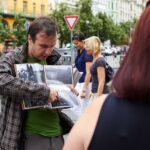
I also appreciate that the pace leaves room for questions. In a group capped at 20, you’re not stuck watching the back of someone else’s hat. You get to ask what you care about—architecture, legends, daily life, or what to do after the tour—then you get direct, local guidance.
You can also read our reviews of more guided tours in Prague
Meeting at Saint Wenceslas and getting oriented fast
You start at the Statue of Saint Wenceslas, and your guide will wear a yellow backpack so you can find him quickly. That first moment is surprisingly important in Prague. The city can feel like it has “zones,” and if you only arrive at the main squares, you miss the connective tissue that makes the whole place make sense.
From there, you’re set up for a comfortable walk that lasts about 210 minutes. You’re not just traveling from point A to point B; you’re learning how the neighborhoods connect and why certain streets and corridors matter. Even if you already know Prague’s big names, this kind of orientation helps you notice the smaller stuff you’d otherwise walk past.
Wenceslas Square: the wide streets and the big-city feeling
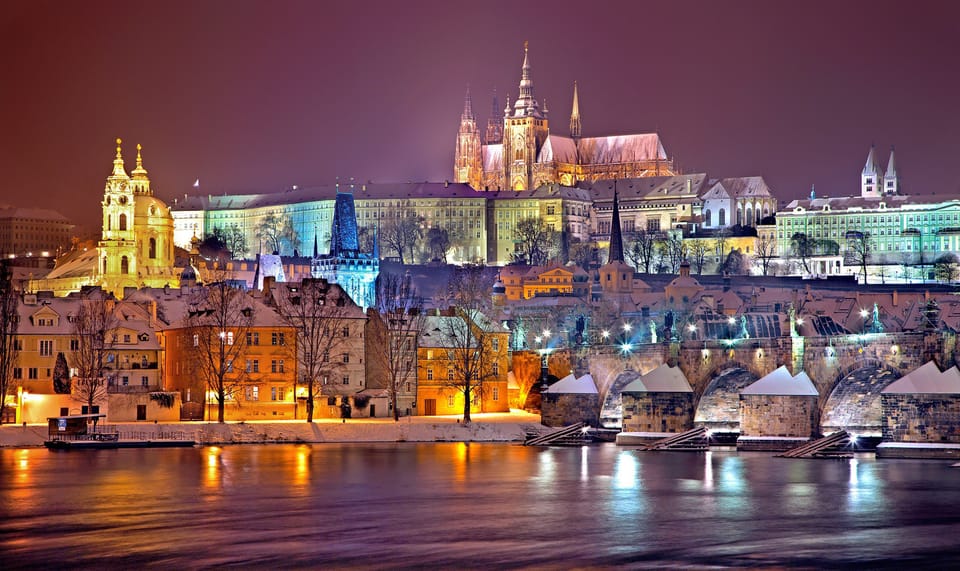
You’ll see Wenceslas Square early on, which is a smart move. It’s one of those places where Prague suddenly feels like a proper capital: open space, serious architecture, and a sense of movement that you don’t get in the narrower medieval lanes.
What I like about starting here is that it gives your brain a reference point. Then, as you move toward passages and quieter stops, you’ll understand what changed in the urban texture—and why. A good guide will also help you read the area without turning it into a lecture. You’ll learn the history and architecture, but also what you might call the human side: how the city’s cultural life and social rhythms shaped what you see.
Passageways and Adria Palace: where Prague hides its personality
After the main square energy, the tour shifts into the kind of places that make you slow down without trying. The passageways are exactly that: corridors and connections that feel more intimate than the big streets. They’re ideal for learning how Prague’s design creates shortcuts—both literal paths and emotional ones. You go from “look at it” to “experience it.”
Then you visit Adria Palace. Even without getting lost in too many technical details, the payoff is the contrast. It’s the kind of stop that reminds you Prague isn’t only Gothic and fairytale rooftops. The city also has layers from different eras, and the built environment shows those transitions if you know how to look.
Kafka’s Head: legend you can use to see the city differently
Kafka’s Head is the kind of name that pulls people in, and it can also become a dead-end photo spot if you don’t have context. In this tour, you’re not just seeing the object—you’re learning how Prague’s cultural identity weaves into its public spaces.
This is one of the best examples of what makes the tour “insolite,” in the useful sense. The city’s quirks aren’t random. They’re tied to the people who lived here, the writers and thinkers associated with it, and the way Prague markets its imagination while still being a real place.
If you enjoy travel that mixes art, literature, and street-level reality, you’ll get more out of this stop than you would on your own.
National Theatre and Old Town Square: the classics, explained like a local
At some point, you’ll reach the National Theatre area and then Old Town Square. These are the stops most visitors expect, but the benefit here is how they’re treated. Instead of treating them like isolated attractions, the guide uses them to stitch together architecture, history, and the city’s cultural life.
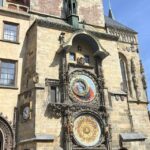
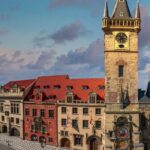
Old Town Square is often crowded and easy to rush through. With this tour, you’re not just walking through the busiest postcard scenery. You’re learning what to look for so the space feels readable. That changes your experience fast. You start noticing how buildings frame views, how public spaces invite different kinds of gatherings, and how the city’s identity shows up in stone.
This is also where the group conversations can pay off. If you’ve got questions about what you should prioritize later—morning walking routes, architecture focus, or how to plan for different neighborhoods—this is a good time to ask.
House of the Black Madonna: a small stop with real meaning
The House of the Black Madonna is one of those Prague details that can easily be overlooked if you’re only chasing the largest landmarks. In a guided setting, it becomes more than a point on a map. It turns into a reminder that Prague’s heritage isn’t just big monuments—it’s also the symbols and stories attached to specific facades and locations.
I like this kind of stop because it teaches you a method: when you see something slightly unusual, don’t assume it’s just decorative. Ask what it represents, who it connects to, and why it’s still part of Prague’s identity. Even if you don’t remember every detail, you’ll remember the habit—and it makes self-guided exploring much better after the tour ends.
Municipal House and the Powder Tower: architecture you can actually read
You’ll also visit Municipal House and the Powder Tower. These are great “architecture literacy” stops. They help you look at Prague like a design student for a couple of hours. You start noticing how materials, shapes, and forms communicate the city’s timeline.
Municipal House is especially interesting for travelers who love buildings, not just building photos. The tour focus on architecture means you’ll learn how to see the structure and style, not just where to stand for the perfect angle.
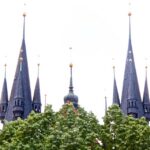
The Powder Tower is the kind of landmark that’s easy to remember because it has a clear presence. With a guide, it becomes more than a name you’ve heard. You get the context that links the tower to the broader history of the area, and you understand why it matters in the urban layout.
The value of the tour’s advice: what to do after the walk
Here’s the practical reason this tour works for real trips: you don’t just leave with photos—you leave with planning help. The tour includes advice for the rest of your stay: restaurants, visits, and walks.
That matters because Prague is a city where your second day can be your best day—if you plan it right. A guide like Mathieu, who’s lived in Prague for more than 15 years, can help you avoid the classic problem: choosing between places that are famous but not necessarily convenient, or missing what fits your interests. Since the tour is in French, that advice also stays clear and tailored instead of getting lost in translation.
Also, the small group format helps here. If something resonates—say you’re into architecture, or you want quieter routes, or you like cultural stories—your questions help shape the recommendations you get.
What the 210 minutes feels like in real life
Three hours and change is the sweet spot for a walking tour: long enough to move beyond the most obvious sights, short enough that you’re not exhausted by afternoon.
Just remember the simple reality: no food and no drinks are included. So build in a snack plan, or plan to eat soon after. Bring water if you normally do, and keep your energy steady—Prague walking adds up fast once you start paying attention to details.
If you’re the type who gets restless when a guide talks nonstop, don’t worry: this tour is structured around a pleasant walk with time for questions in a small group. You’ll likely feel like you’re being guided, not managed.
Who should book this tour (and who should skip it)
This tour is a strong fit for:
- You if you want a mix of major monuments and side corners rather than a purely mainstream route.
- You if you like context: architecture plus the way people live, work, and think in Prague.
- You if you want a French guide who’s also a journalist and blogger, meaning you’ll get explanations with a writer’s sense of pacing.
- You if you value direct local recommendations for restaurants and follow-up walks.
You might skip it if:
- You prefer self-paced wandering with no scheduled structure.
- You’re not comfortable with 3.5 hours on foot.
- You don’t speak French, since the tour language is French.
Should you book Mathieu’s insolite Prague tour?
If you’re trying to choose between a standard monument walk and something more “insolite” without turning it into a gimmick, this is the cleaner option. You get the landmarks you’ll want in your photos—Wenceslas Square, Old Town Square, and National Theatre—plus the route adds the kinds of details that make you feel like you understood Prague instead of just passing through it. The best part is the Q&A and the stay-planning advice, which turns the tour into a real tool for your trip.
For value, $48 for about 210 minutes is reasonable here because the ticket includes not only a live French guide but also practical recommendations you can use after the tour. It’s not just sightseeing; it’s guidance. If that’s what you want at the start of your Prague trip, book it early so you can base your next days on what Mathieu suggests.
FAQ
What language is the tour in?
The tour is in French.
How long is the experience?
It lasts about 210 minutes (around 3.5 hours).
What’s the group size?
The tour is in a small group with a maximum of 20 participants.
Where do we meet the guide?
You meet at the Statue of Saint Wenceslas. The guide will be wearing a yellow backpack.
Where does the tour end?
The tour finishes at Mikulášská 22.
Is hotel pickup or drop-off included?
No, hotel pickup and drop-off are not included.
Are food and drinks included?
No, food and drinks are not included.
What does the tour include besides the guided walk?
It includes the accompaniment with a French guide for about 3 hours and more, plus advice for the rest of your stay such as restaurants, visits, and walks.
Can I cancel and get a refund?
Yes. You can cancel up to 24 hours in advance for a full refund.
Is there an option to pay later?
Yes. You can reserve now and pay later.