REVIEW · PRAGUE
Prague Private Tour and Museum of Communism with transfer
Book on Viator →Operated by Continental Travel · Bookable on Viator
Communism history in Prague, made human. This private 4-hour outing pairs skip-the-line Museum of Communism entry with a guided walk through key Revolution-era stops. You get driven there in comfort, then you’re set loose (with direction) to connect the dots between propaganda, power, and daily life.
I like two things most: real context from a local guide who can speak from long personal experience, and the convenience of hotel pickup and a private Mercedes to keep you from wasting time figuring out the city. It’s the kind of tour where the facts stick because someone explains what it meant on the ground.
One drawback to plan for: it includes a moderate amount of walking, plus you’re outside for several stops. If you’re sensitive to cold or heat, wear the right shoes and dress for weather, since it runs in all conditions.
In This Review
- Key takeaways before you go
- Why this Prague combo tour works in about four hours
- Hotel pickup by Mercedes Benz: less time lost, more time learning
- Albertov: where the Velvet Revolution sparks
- Wenceslas Square (Vaclavske NamEsti): bullet holes and the smell of old politics
- The National Museum bullet-hole stop: preserved damage as a memory tool
- Narodni Trida: the wall where the police cordon caught people
- Museum of Communism: classroom, factory, and interrogation rooms
- Letna Park: Stalin’s base, then the metronome of a different era
- How your private walking portion adapts to what you care about
- Practical tips that make the day easier
- Price and logistics: is $221.60 per person good value?
- Should you book this Prague private tour?
- FAQ
- What’s included in the Prague Private Tour with Museum of Communism and transfer?
- Is museum admission included, and is there a skip-the-line benefit?
- How long is the tour, and how much walking is involved?
- Where does the tour start and end?
- What sights do you visit beyond the museum?
- What language is the tour offered in?
- What are the operating hours for the tour?
- Do I need to worry about weather?
- Can I choose where to go during the walking portion?
- Is free cancellation available?
Key takeaways before you go
- Skip-the-line museum admission so you start learning fast instead of waiting in a line
- Private Mercedes pickup and drop-off to cut the stress of navigating Prague between sites
- A focused route tied to the Velvet Revolution from Albertov to Wenceslas Square and Narodni Trida
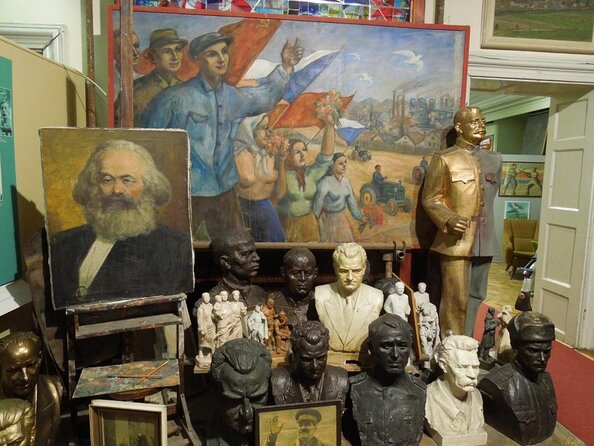
- Museum rooms built to recreate old life like an education space, factory setting, and interrogation room
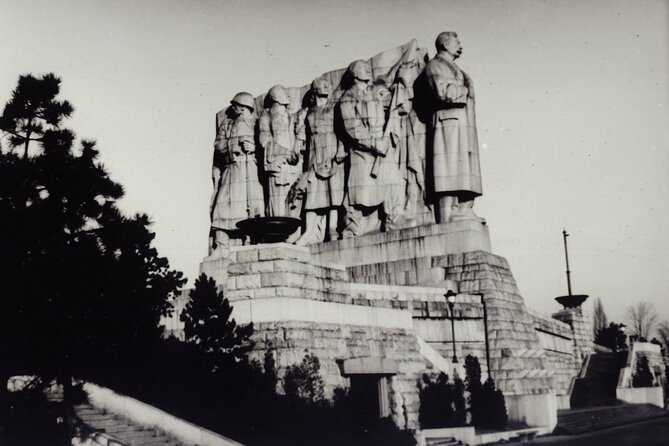
- Time in Letna Park for the symbolism shift from Stalin’s statue base to today’s viewpoint and metronome
- Your guide shapes the walking portion based on what you care about most
Why this Prague combo tour works in about four hours
This is a smart-length tour if you want more than a museum visit but you also don’t want a full-day commitment. You get a guided museum visit (about one hour), then a guided walking segment across the city’s Revolution landmarks, with enough flexibility to nudge the route toward your interests.
The best part is how the day is built around cause-and-effect. You don’t just read about an era. You stand where events happened—then you return to the museum to see the machinery behind the headlines. It’s a practical way to understand how power shows up in schools, workplaces, police methods, and the stories people were allowed to hear.
Also, the private format matters here. You’re not stuck in a fast group pace that turns everything into a blur.
You can also read our reviews of more private tours in Prague


Hotel pickup by Mercedes Benz: less time lost, more time learning
Prague can feel like a maze when you’re sightseeing and your feet are already tired. Here, you avoid that by starting with pickup from your hotel lobby (or a meeting spot of your choice in central Prague).
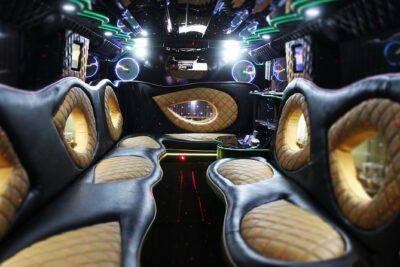
You ride in a comfortable Mercedes Benz with a driver, and bottled water is included in the car. In plain terms: you conserve energy for the parts that actually need your attention—like the museum and the key street stops that anchor the story.
And because it’s private, your guide can usually work around your group’s needs. In the real world, that flexibility often means fewer missed moments and less rushing.
Albertov: where the Velvet Revolution sparks
The tour starts at Albertov, connected to the peaceful student demonstrations that kicked off the Velvet Revolution in 1989. Even though the stop itself is short, it’s a powerful “first domino” moment: you’re reminded that major political change often begins with ordinary people acting together.
You’ll spend about 10 minutes here—enough time to understand the setting and what made those student protests matter without turning it into a long detour.
Wenceslas Square (Vaclavske NamEsti): bullet holes and the smell of old politics
Next comes Vaclavske NamEsti (Wenceslas Square), one of Prague’s most politically charged public stages. This is where you get multiple time layers in one place—history stacked in stone, not just in books.
You’ll hear about the 1968 Prague Spring clashes with Soviet armored units, and you can literally see preserved bullet holes in the walls of the National Museum after the site was renovated. That’s one of those details that changes the way you look at a city. The architecture suddenly feels like evidence.
You’ll also connect 1989 to Wenceslas Square through a protest rally against police brutality—an event tied to the overthrow of Communism. The square’s current look (hotels, restaurants, clubs, shops) is part of the point: life keeps going, even as regimes change.
Finally, there’s the Jalta Hotel angle. Your guide will pass by the Jalta Hotel, associated with STB, the secret police that monitored foreign diplomats and businessmen. It’s a good reminder that political power wasn’t only in official buildings.
Plan for about 30 minutes at the square. It’s enough time to get the story without feeling like you’ve been parked outside too long.
The National Museum bullet-hole stop: preserved damage as a memory tool
There’s a dedicated moment after Wenceslas Square for the National Museum, specifically to point out the bullet holes preserved as a memento from the 1968 clashes. The tour treats this as more than a photo stop.
Why it matters: preserved damage is one of the clearest ways a city decides what it wants you to remember. In this case, you’re seeing an active record—something the renovation kept visible instead of smoothing over.
If you’re a “look closely” type of person, this stop will reward you. Just bring your patience: standing and reading details takes longer than snapping a quick picture.
You can also read our reviews of more museum experiences in Prague



Narodni Trida: the wall where the police cordon caught people
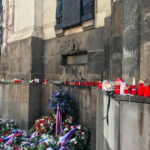
After that, you head to Narodni Trida, with a stop near the hands reaching out of a wall. This is tied to some of the worst beatings by police during the Velvet Revolution in 1989.
The location is described in a stark way: police blocked side streets and formed a narrow cordon, so whoever tried to escape had to pass through and received heavy beating. It’s not a comfortable story, but it’s exactly the kind of specificity that makes history feel real.
The stop is about 20 minutes. Don’t use that time like a quick photo break. Give yourself a few minutes to absorb what your guide is explaining—because the physical layout (and the idea of a trapped crowd) is part of what you’re meant to understand.
Museum of Communism: classroom, factory, and interrogation rooms
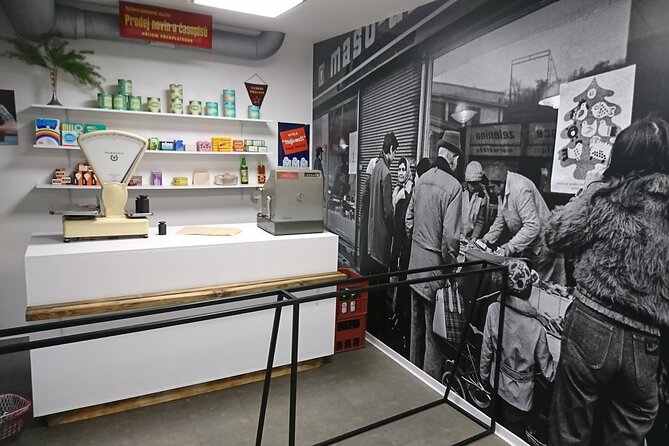
The museum visit is the heart of the day. You’ll have skip-the-line admission, which is a big quality-of-life perk in Prague—less waiting, more time on meaning.
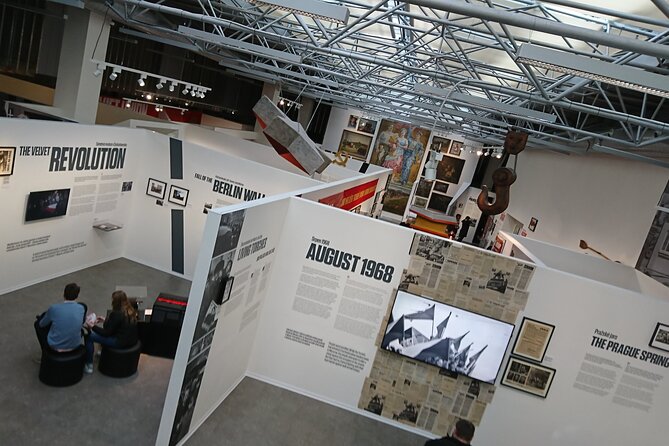
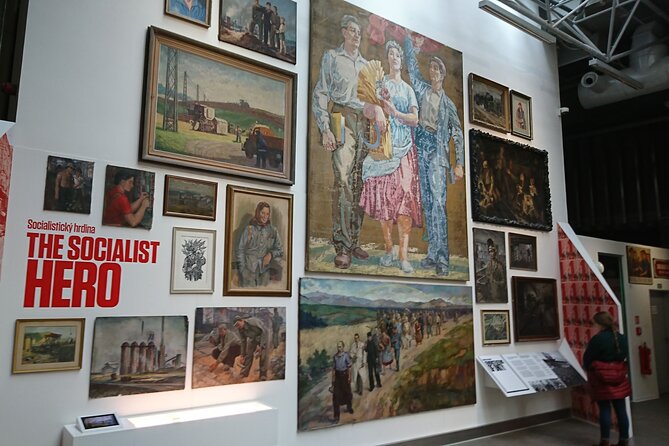
Inside, your guide covers daily life, politics, history, and economics under Communist-era Czechoslovakia. You’ll also see how propaganda worked across media, how censorship functioned, and how education and art (including Socialist Realism) were shaped by the regime.
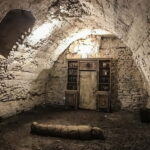
What I’d call the “lived-in” part of this museum experience is the recreation of spaces from the era. You can visit areas that recreate an old classroom, a factory, and an interrogation room. Those rooms are important because they connect ideology to routine: how you learned, how you worked, and how you were controlled.
The museum focuses especially on the totalitarian regime running from the February putsch in 1948 until the Velvet Revolution in 1989. Expect coverage of repression tools too—police (including the secret police, StB), courts, show trials, and even political labor camps during Stalinist times.
Your museum time is about one hour. That’s long enough to get oriented and make connections, but short enough to keep your brain from burning out. If you’re very interested in any one theme—education, policing, or propaganda—tell your guide ahead of time so they can pace the route through the museum.
Letna Park: Stalin’s base, then the metronome of a different era
After the museum, the tour heads toward Letna Park. This stop gives your mind a break from the museum intensity while keeping you anchored in political symbolism.
You’ll enjoy panoramic views of Prague from the area where a giant Stalin statue once stood overseeing Czechoslovak underlings. The story goes that after Nikita Khrushchev revealed Stalin’s atrocities in a famous speech, Stalin’s monument was removed. Only the base survived, and it became something else: a metronome sits where the statue stood.
Today, that location is popular with young people—dating and showing off skateboarding skills—turning a former symbol of power into a space for everyday life. It’s a reminder that public spaces change meaning over time.
This stop is about 30 minutes, and it’s one of the best spots for photos if the sky cooperates.
How your private walking portion adapts to what you care about
After the museum, you follow your guide on a walking tour that’s designed to be flexible. The idea is simple: you can influence where you go next, based on your interests.
The tour encourages you to list special interests at the time of booking so your guide can prepare for a private route. In practical terms, that’s how you end up with more than just the scripted highlights—you can steer toward what you want to learn, whether it’s Revolution-era events, WWII-era connections, or churches and memorials that show up in Prague’s modern history.
You’ll also be glad you started with pickup and a planned return, because at the end you can be dropped back at your hotel or another handy central location.
Practical tips that make the day easier
- Wear comfortable walking shoes. The tour includes moderate walking, and you’ll spend time outdoors at multiple stops.
- Plan for weather. It runs in all conditions, so dress appropriately for rain, heat, or cold.
- Bring curiosity, not just a camera. Bullet holes, cordons, and preserved spaces make the story better when you slow down for a minute.
- Expect short, focused stops. Times are tight by design (10–30 minutes each), so keep your phone in your pocket unless you’ve found the exact angle you want.
- Use the mobile ticket. It’s included, and it helps reduce hassle at the museum entrance.
- Hydrate. Bottled water is included in the car, but you may want to carry more if you’re out in warmer months.
If you’re someone who likes to understand what you’re seeing before you move on, this pacing usually feels satisfying rather than rushed.
Price and logistics: is $221.60 per person good value?
At $221.60 per person for about four hours, this isn’t the cheapest way to learn about Prague’s Communist-era story. But the value comes from what’s bundled in.
You get:
- Private Mercedes transport, including hotel pickup and drop-off
- A professional guide
- Skip-the-line museum admission (museum entry is included)
- Bottled water in the car
- A private setup (only your group participates)
So you’re paying for convenience and interpretation, not just admission to a museum. For many people, that’s the difference between reading about history and actually understanding how it shaped daily life. The museum is also the kind of place where a skilled guide changes what you notice and what you remember later.
If your travel style is DIY and you enjoy plotting routes yourself, you might find a cheaper option. But if you want to protect your time and reduce navigation stress, this format usually feels like a smart spend.
Should you book this Prague private tour?
I think this is a good booking if you want a focused history experience without spending your afternoon on logistics. It’s especially worth it if you care about the Velvet Revolution, you like museum storytelling, or you want a local guide who can explain how Communist systems showed up in daily life—not only in political speeches.
Book it if:
- you want private hotel pickup and a clean, comfortable transfer
- you prefer guided context to wandering
- you’d rather see the most meaningful sites in a short window
Skip it if:
- you dislike walking outdoors at several stops
- you’re only interested in general Prague highlights and not the Communist-era story
- you prefer to tour museums entirely on your own pace
FAQ
What’s included in the Prague Private Tour with Museum of Communism and transfer?
It includes hotel pickup and drop-off, transport by a private Mercedes Benz vehicle with a driver, a professional guide, bottled water in the car, a visit to the Museum of Communism, and museum admission (included). A mobile ticket is also provided. Food and drinks are not included.
Is museum admission included, and is there a skip-the-line benefit?
Yes. Admission to the Museum of Communism is included, and you’re set up for skip-the-line museum admission.
How long is the tour, and how much walking is involved?
The tour runs about 4 hours (approx.) and includes a moderate amount of walking.
Where does the tour start and end?
Pickup is from your hotel lobby or a place of your choice in Prague. The tour ends back at your hotel or another handy place in central Prague if you want to keep exploring.
What sights do you visit beyond the museum?
You’ll visit key Communist-history and Velvet Revolution related stops such as Albertov, Wenceslas Square (Vaclavske NamEsti), points connected to the National Museum’s preserved bullet holes, a stop on Narodni Trida, and a visit to Letna Park.
What language is the tour offered in?
The tour is offered in English.
What are the operating hours for the tour?
It runs Monday through Sunday from 8:00 AM to 2:00 PM.
Do I need to worry about weather?
It operates in all weather conditions, so dress appropriately.
Can I choose where to go during the walking portion?
Yes. After the museum, you follow your guide on a walking tour and it’s your choice where to go. You should list special interests at booking so the guide can prepare for your private tour.
Is free cancellation available?
Yes. Free cancellation is offered up to 24 hours in advance for a full refund.