REVIEW · PRAGUE
Discover Prague’s most Photogenic Spots with a Local
Book on Viator →Operated by LocalBini - The go-to platform for Experiences by Locals in Europe · Bookable on Viator
Prague turns every corner into a photo set. This 90-minute walk is built around Prague’s most photogenic stops, paired with a local’s perspective so you know what you’re looking at (and how to frame it). I like that it blends major landmarks with offbeat art, so your pictures look like more than just postcard copies.
I also like the variety: Kafka’s rotating metal head, David Černý’s provocation (Freud and the crawling Babies), and the ever-evolving Lennon Wall all land in one compact route. One thing to consider: if you want lots of pinpoint, highly detailed facts about every building, you should be ready to ask direct questions, because in one case a guide (Stefan) was punctual and communicative by text, but some building commentary felt broad.
In This Review
- Key Takeaways Before You Go
- A 90-Minute Photo Walk That Gets You Out of Auto-Pilot
- Price and What $76.46 Buys You (and What It Doesn’t)
- Meeting Point at Jiráskovo náměstí and a Clean Finish in Letná
- Dancing House: Architectural Play for Fast, Graphic Photos
- Kafka’s Rotating Head: The 11-Meter Moment You Can Time
- David Černý’s Man Hanging Out (Sigmund Freud): Provocation with a Cause
- Old Town Square and the Astronomical Clock: Motion, Crowds, and Worth-It Focus
- Charles Bridge, 14th-Century Edition: Statues and Photo Angles That Matter
- Wallenstein Palace Gardens: Quiet Time and a Photo Reset
- Lennon Wall: A Living Canvas for Freedom and Peace
- Isla Kampa’s Babies: Crawling Bronze and a Little Unease
- Pařížská Street: Prague’s Prestigious Fashion Boulevard for Elegant Street Shots
- Letná Park and the Metronom Monument: Views to Land the Plane
- Why the Local Guide Matters (and What to Ask if You Want More Detail)
- Who Should Book This Photo Prague Walk
- Should You Book It?
- FAQ
- How long is the tour?
- What does the tour cost?
- What language is the tour offered in?
- How big is the group?
- Where does the tour start and end?
- What’s included in the price?
- Are entrance tickets included for museums or monuments?
- Will the route stay the same all the time?
- Is the tour suitable for people with mobility issues?
Key Takeaways Before You Go
- Small group of up to 8 means you can actually hear your guide and get time for photos.
- Modern Prague + classic Prague: Dancing House, Kafka, Charles Bridge, and Old Town Square.
- David Černý appears twice with Man Hanging Out (Sigmund Freud) and Babies on Isla Kampa.
- Your ending move is strategic: Letná Park and the Metronom Monument give you payoff views after the walking.
- Stops can shift with weather and pace, so it’s not a rigid factory-line tour.
A 90-Minute Photo Walk That Gets You Out of Auto-Pilot
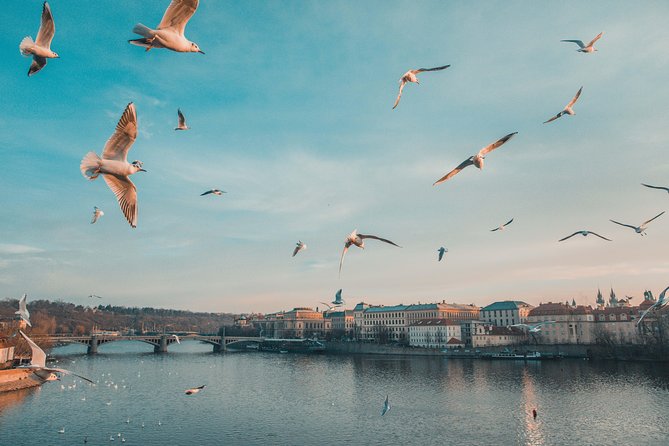
This is a short, focused Prague experience designed for one goal: better pictures, with less wandering. You’ll move through a stack of recognizable sights, but the pace is controlled for photography and comfort, and the route adapts to what you care about and how fast you walk.
The tour runs about 1 hour 30 minutes, which matters. With Prague’s crowds and constant distractions, a compact route helps you spend energy on framing and timing, not on constantly figuring out where to go next. You’ll also be in a group capped at 8 travelers, so it stays friendly instead of chaotic.
One practical bonus: you get a mobile ticket, and the meeting/end points are in well-connected areas with near public transportation. And yes, service animals are allowed. If you have mobility concerns, it is not recommended, so plan around that.
You can also read our reviews of more tours and experiences in Prague.
Price and What $76.46 Buys You (and What It Doesn’t)
At $76.46 per person, this isn’t the cheapest way to see Prague sights. But you’re paying for three things that are hard to replicate on your own in 90 minutes: a local’s context, small-group flow, and personalized recommendations that can save time.
Here’s the trade-off I’d watch: some people want highly detailed explanations the whole time. In one instance I saw mention of a guide like Stefan arriving promptly and communicating by text, but the building information felt general and not always razor-precise. If your priority is ultra-specific facts, come prepared with questions like:
- What should I photograph from street level versus higher up?
- Which details matter most on this façade?
- What’s the story behind the art piece, not just who made it?
Also, plan for what’s not included. Public transportation, museum/monument entry tickets aren’t included, and of course you’ll handle personal expenses. That means your total trip cost can rise slightly depending on what you choose to enter.
Meeting Point at Jiráskovo náměstí and a Clean Finish in Letná
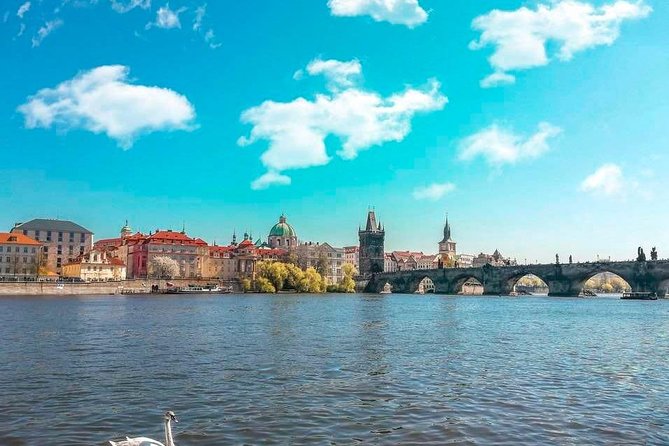
The tour starts at Jiráskovo náměstí in Nové Město and ends at Letenské sady 173 (Letná area). That matters more than you might think: you’re walking a route that keeps pushing you toward a high-energy finale.
Starting in Nové Město helps you get moving quickly, and finishing near Letná Park is smart because the end has both open space and city views. In other words, you’re not stuck finishing in a cramped, crowd-heavy zone with nowhere to take photos.
You’ll be meeting your independent local host, and you’ll stay with the group for the whole stretch. Since the itinerary can shift based on weather conditions, keep your expectation flexible. Prague weather changes fast, and the tour is designed to adapt instead of forcing the same route no matter what.
Dancing House: Architectural Play for Fast, Graphic Photos
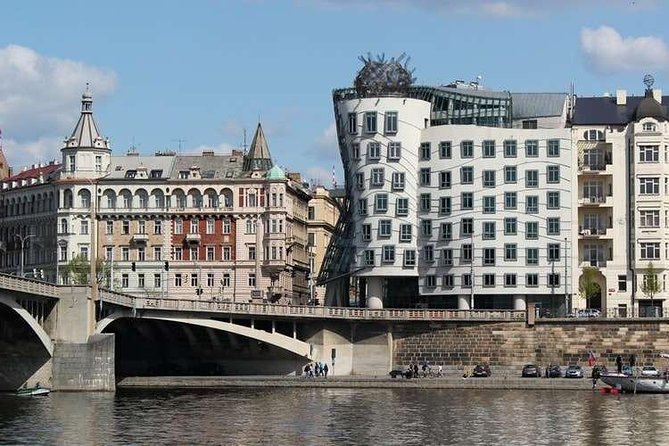
Your first major stop is the Dancing House, a modern landmark known for twisting, playful lines that break the rules of traditional building shapes. It’s a perfect early stop because it gives you immediate visual variety from the start.
If you like photos with strong geometry, this is your warm-up. Watch how the building curves and “leans” in different directions. You’ll want to compare shots from different angles and heights, because Dancing House reads very differently depending on where you stand.
A local guide helps here because you can focus on details you might otherwise miss, like what makes the design feel like motion, even though the building is obviously still. The goal is simple: you get better images, faster.
Kafka’s Rotating Head: The 11-Meter Moment You Can Time
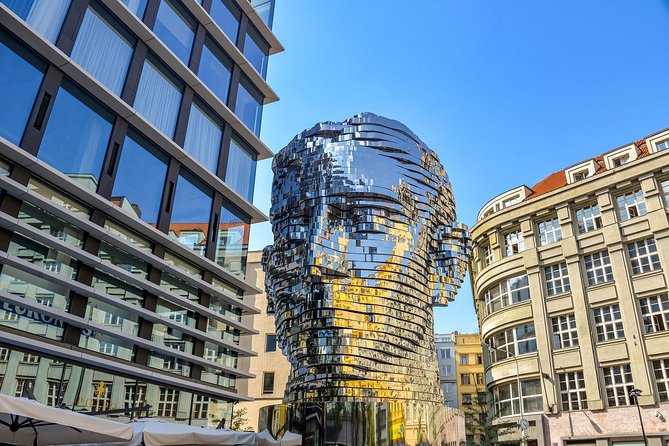
Next comes a very literal piece of visual drama: Franz Kafka’s rotating metallic head. This sculpture is listed at 11 meters tall and made of 42 moving layers. That combination is why it works so well for photos.
The key is timing. Since the head rotates, you don’t just “take one picture and move on.” You can wait a minute for the angle you like. Even without any special camera trickery, movement makes the object feel alive, and it helps you get photos that don’t look like a single frozen snapshot.
If you’re the type who likes to photograph motion, this stop is satisfying because the subject does the work for you. And because it’s clearly Kafka, you’ll likely get context on why it fits Prague’s intellectual identity.
David Černý’s Man Hanging Out (Sigmund Freud): Provocation with a Cause
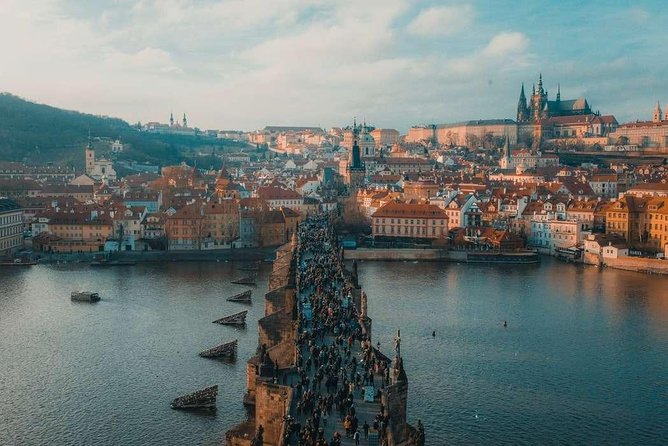
After Kafka, you shift into a different kind of art experience with Man Hanging Out – Sigmund Freud, by David Černý. This is the kind of piece that makes people pause, because it’s designed to feel provocative and a little uncomfortable.
For photography, that’s actually a plus. When a sculpture has strong attitude, your images look more interesting even if you use your phone. Try framing so the pose and expression (and the context around it) are both visible. A local can point out what to include so the photo reads as more than just a statue on a sidewalk.
For thinking, this stop is also a chance to connect art to the larger theme of the 20th century: ideas, psychology, and the cultural push-pull that Prague is known for. The tour’s short length means you won’t get a full lecture, but you do get a guided lens.
Old Town Square and the Astronomical Clock: Motion, Crowds, and Worth-It Focus
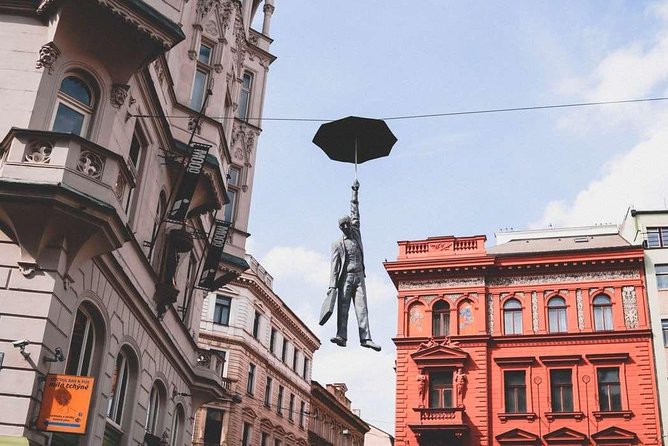
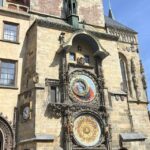
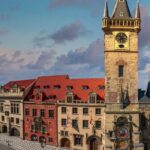
Then you hit Old Town Square, one of Prague’s most famous public spaces. Here the big moment is the Astronomical Clock in motion. The tour gives you time to see it as it works, not just as a background landmark.
This is where strategy matters. Old Town Square can feel like a sea of people, and it’s easy to waste time by standing in the wrong spot. A local’s guidance helps you position yourself so you can actually watch and capture the clock rather than spending the whole time peering over shoulders.
Even if you don’t love crowds, don’t skip this stop. The clock is one of those Prague icons where the movement is the point, and your photo results improve massively if you focus on timing instead of just location.
Charles Bridge, 14th-Century Edition: Statues and Photo Angles That Matter
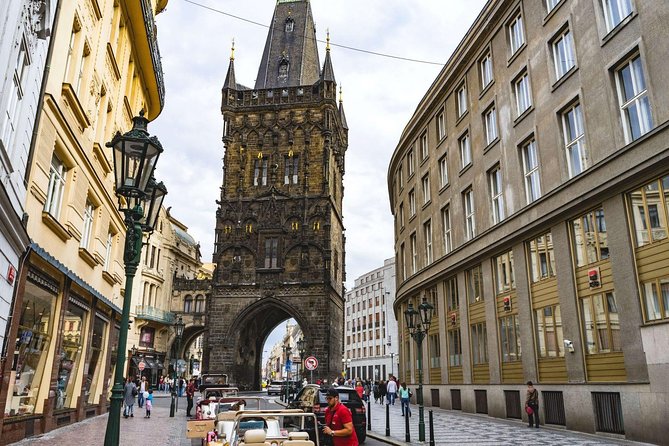
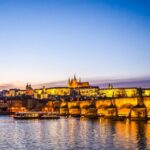
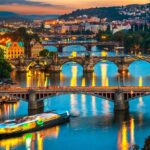
Next is Charles Bridge, dating back to the 14th century. This is a classic Prague experience, and it’s also one of the best places to test whether your photo plan is working. You’ll admire the statues and architecture while learning about its significance.
Charles Bridge is famous for a reason, but the practical question is: how do you get a photo that doesn’t look like everyone else’s? The answer is angles and patience. Look for viewpoints where the statues and bridge lines lead you into the frame, not straight toward the camera.
A guided stop helps because you’re not guessing what details are worth your attention. You also get context that makes the photos feel more meaningful, especially if you’re the kind of traveler who wants to understand what you’re photographing.
Wallenstein Palace Gardens: Quiet Time and a Photo Reset
One highlight I love about this tour is the inclusion of a wander through the Wallenstein Palace Gardens. This works as a photo reset. After bridge crowds and square energy, gardens bring down the noise level and give you room to breathe and slow your shooting pace.
Gardens are also where you can get different types of photos: softer scenes, calmer compositions, and greenery-friendly framing. If you’re tired of architecture straight-on, this is where you can switch to details and atmosphere.
It’s also simply a smarter pacing choice. In a short tour, you still want a moment that feels less like “checklist sightseeing” and more like strolling with purpose.
Lennon Wall: A Living Canvas for Freedom and Peace
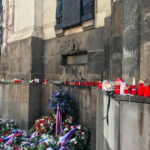
Then you’ll visit the Lennon Wall, described as an ever-evolving canvas for freedom and peace. The phrase ever-evolving is important for your expectations. This is not a static museum piece where the scene is the same every day.
For photos, that means your shot becomes time-specific. You’ll see the wall as it exists now, with messages and layers that reflect the wall’s continuing life. If you take portraits or street-style images, this kind of background can make your photo feel more personal.
For emotional tone, this stop adds heart. You’re not only photographing objects; you’re photographing messages, and that changes how you stand and what you frame.
Isla Kampa’s Babies: Crawling Bronze and a Little Unease
Next up is one of David Černý’s most visually memorable Prague moments: Babies. These are eerie bronze sculptures crawling around Isla Kampa, described as a distinct landmark.
This stop is fun if you like odd, slightly dark humor. It’s also great for photography because the sculptures encourage you to change your position. The crawling action reads differently from each angle, so you’ll likely find yourself taking multiple shots to capture the “movement” feeling.
Because they’re bronze and outdoors, you’ll also want to watch how light falls on them. A local guide can help you get to the spot where the sculpture feels most dramatic, not just visible.
Pařížská Street: Prague’s Prestigious Fashion Boulevard for Elegant Street Shots
After art and monuments, the tour shifts into style with a stroll along Pařížská Street, called Prague’s most prestigious boulevard. This street is framed as a fusion of history, art, and luxury, with a fashion focus.
For photos, this is where you can pivot to a more “editorial” look. Think façades, storefront rhythm, and street details that feel more refined than the central-sight chaos. If you’re building a photo set that shows Prague’s range, Pařížská helps you show the city’s present-day polish alongside its famous past.
It’s also a nice palate cleanser. After sculptures and clocks and bridges, strolling a boulevard feels calmer, and your camera can rest while you still keep moving toward Letná.
Letná Park and the Metronom Monument: Views to Land the Plane
You finish in Letná Park, a green oasis known for city views, recreational activities, and the Metronom Monument. Ending here is smart for two reasons.
First, it’s open and photo-friendly. Second, it gives you a final “big look” after tighter street scenes. A city view is a different kind of photograph than a close-up statue: it pulls everything into context.
If you want one last picture set before you go, this is the place to do it. Even if your main interest is architecture and art, the view makes it easier to remember where everything sits in relation to everything else.
Why the Local Guide Matters (and What to Ask if You Want More Detail)
The included local host is the heart of this tour. You’re not just walking between landmarks. You’re getting personalised recommendations, plus a group size that keeps the experience interactive.
Here’s the best way to use the guide. Don’t wait for a lecture. Ask practical questions as you go:
- Where’s the best angle for photos from this spot?
- What’s the one detail most people miss?
- If I only photograph one thing here, what should it be?
That advice is extra important because there’s a chance the commentary could feel broad depending on the guide’s style. In one experience, Stefan’s arrival and messaging were clearly organized, but building explanations came off general. You can avoid that by steering the conversation toward what you care about: photos, symbolism, and the most interesting details.
When the tour adapts to your interests and pace, it works best if you make your preferences known early.
Who Should Book This Photo Prague Walk
This is a strong match if you:
- Want a tight route packed with iconic and offbeat visuals
- Have limited time and want a guided plan that keeps you moving in the right order
- Like modern design as much as classic sights
- Prefer small-group attention over a huge crowd tour
- Enjoy street art and conceptual sculpture (Kafka and David Černý are major draws)
It may not be ideal if you:
- Need a lot of museum entry time, because entry tickets aren’t included
- Want a slow, deep, hours-long history format
- Have mobility limitations, since it is not recommended
Should You Book It?
If your priority is photography with helpful context in a short window, I’d say yes. The combination of Charles Bridge, Old Town Square, Lennon Wall, and David Černý adds visual variety that you can’t easily replicate with a simple self-guided stroll, especially when you only have about 90 minutes.
If your priority is strict value for money and very detailed historical accuracy, consider booking only if you’re willing to engage. Ask questions. Use the guide for angles and meaning. With a small group, you can get more from the experience than you would on a bigger tour.
In short: book this when you want a photo-ready Prague sampler with a local’s push in the right direction. Skip it (or pair it with extra independent time) if you want a long-form education day and expect every explanation to be ultra-specific.
FAQ
How long is the tour?
The tour lasts about 1 hour 30 minutes.
What does the tour cost?
The price is $76.46 per person.
What language is the tour offered in?
It’s offered in English.
How big is the group?
You’ll be part of a small group of up to 8 travelers.
Where does the tour start and end?
It starts at Jiráskovo náměstí and ends at Letenské sady 173.
What’s included in the price?
A knowledgeable local host, a small group experience, and personalized recommendations are included.
Are entrance tickets included for museums or monuments?
No. Entry tickets for public transportation, museums, and monuments are not included.
Will the route stay the same all the time?
The itinerary adapts to travelers’ interests and walking pace, and stops may vary depending on weather conditions.
Is the tour suitable for people with mobility issues?
It is not recommended for guests with impaired mobility.