REVIEW · PRAGUE
Prague: Jewish Quarter and Museum Guided Tour
Book on GetYourGuide →Operated by Prague Articulate · Bookable on GetYourGuide
Prague’s Jewish Quarter tells its story on foot. This 3-hour guided tour pairs museum-certified storytelling with hands-on synagogue viewing, so the architecture makes sense instead of feeling like a stop-and-snap checklist.
I especially like two things: stepping into the Old-New Synagogue (still active and dating to the 13th century), and having a guide who can explain what you’re seeing in plain, grounded terms.
One thing to plan around: the tour is wheelchair accessible, but a few key buildings are not accessible (Jewish Town Hall, High Synagogue, and Klausen Synagogue).
In This Review
- Key things to know before you go
- Jewish Quarter in 3 hours: what you actually get
- Starting at Pařížská 131/28: a quick way to get oriented
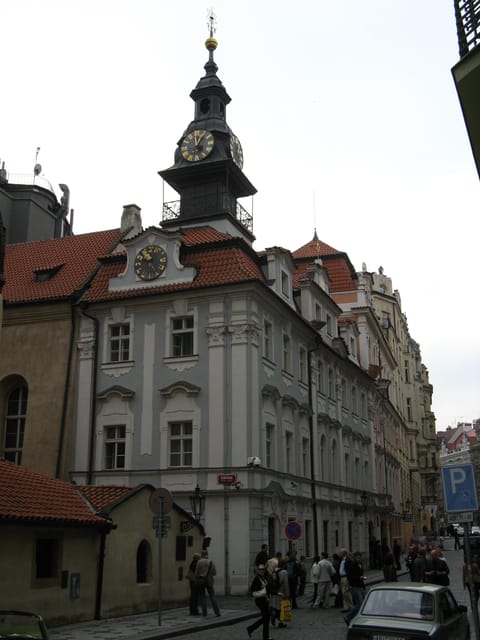
- Jewish Town Hall and the High Synagogue: how the community organized itself
- Old-New Synagogue: the 13th-century interior that still feels alive
- Spanish Synagogue’s Moorish interior: why the style change is meaningful
- Maisel Synagogue exhibits: turning rooms into context
- Pinkas Synagogue, then the Old Jewish Cemetery: memory you can walk into
- Klausen Synagogue and the Jewish Ceremonial Hall: the closing notes of the route
- Price and what you’re paying for (including the €25 entrance fee)
- Practical tips that actually help
- Who this tour suits best
- Should you book this Prague Jewish Quarter and Museum tour?
- FAQ
- How long is the Prague Jewish Quarter and Museum guided tour?
- Where does the tour start?
- Where is the tour finished?
- What is included in the $84 per person price?
- Is there an entrance fee?
- What languages are offered?
- Is the tour wheelchair accessible?
- Are service animals allowed?
- What should I bring?
- Is there a minimum age?
- What are the cancellation terms?
- Can I reserve without paying right away?
Key things to know before you go
- Museum-certified guide access gives you privileged entry connections to the Prague Jewish Museum areas, not just a walk-by.
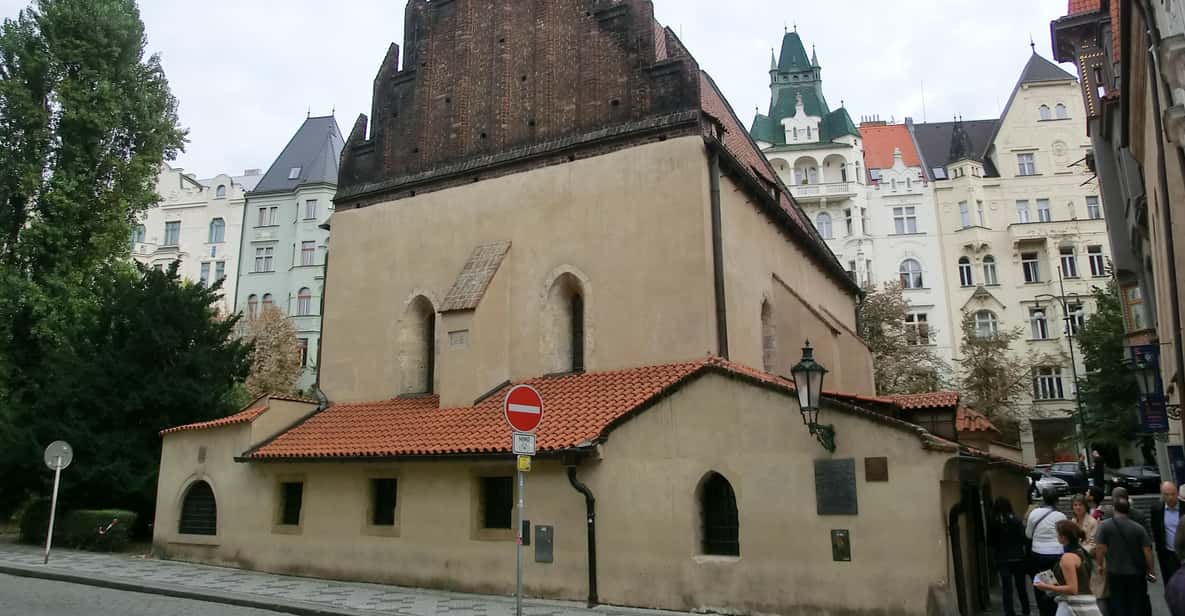
- Old-New Synagogue is the star stop: still active and described as the oldest house of Jewish prayer of its kind in Europe.
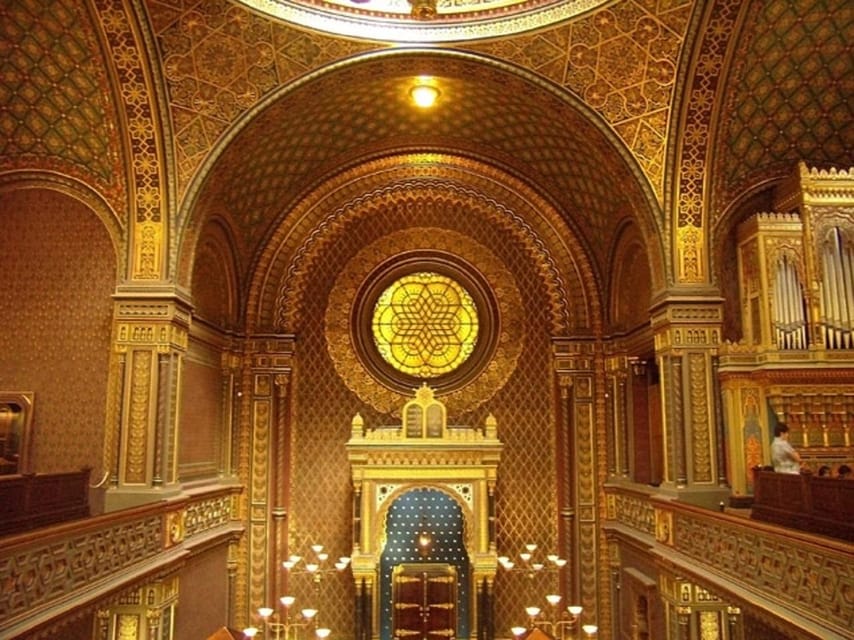
- Spanish Synagogue’s Moorish interior is a real visual shift from the older spaces around it.
- Maisel Synagogue and its exhibits help you connect the rooms to Jewish life and tradition, not just dates.
- Old Jewish Cemetery adds weight and context, especially when you’re hearing the stories behind notable burials.
- Short walking legs keep the pace friendly for a 3-hour outing, even with multiple interior visits.
Jewish Quarter in 3 hours: what you actually get
If you only have a half day, this tour is a smart use of time. Prague’s Jewish Quarter can feel like a maze of doors and courtyards, but a guide keeps the thread tight: community life, worship spaces, memory, and how it all sits in one compact neighborhood.
You’ll also avoid one common problem with self-guided history in Prague: you can see beautiful buildings, but you miss why each one exists. Here, you’re getting a guided route that moves from major synagogue sites to museum exhibits and then into the cemetery. That order matters because it mirrors how people often think of Jewish life—prayer and study first, and remembrance always close behind.
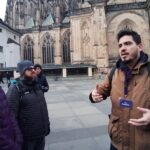
It’s also private, so you’re not squeezed into a loud shuffle. The guide speaks live in English or German, and the experience is set up to be understandable rather than lecture-heavy.
You can also read our reviews of more guided tours in Prague


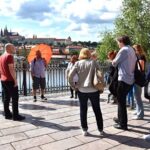
Starting at Pařížská 131/28: a quick way to get oriented
The tour starts at Pařížská 131/28, which is handy because you’re meeting at a clear, fixed point before you step into the older streets. The first moments are all about bearings: cobblestones, tight lanes, and the general feel of the Jewish Quarter as a place people lived—not a museum district on display.
From there, the route moves by foot through short connections between stops. The walking segments are brief enough that you can focus on what’s coming next. It’s a good pattern for a history tour because you’re not spending the whole time checking maps and street signs while your attention drifts.
Bring what you need for that first hour: comfortable shoes and a bottle of water. You’ll be moving in and out of buildings, and you don’t want your legs to decide the pace for you.
Jewish Town Hall and the High Synagogue: how the community organized itself
Before you reach the most famous interior spaces, you start with the supporting institutions of Jewish community life. Jewish Town Hall and the High Synagogue are part of that early framework—think of them less like standalone sights and more like the gears behind daily order.
This is the moment where a good guide changes everything. Instead of treating these buildings like trivia, the guide explains how the community used different spaces for governance, worship, and tradition. You start to see the neighborhood as a system, not just a collection of landmarks.
There’s a practical note here: Jewish Town Hall and the High Synagogue are not accessible for wheelchair visitors. So if you’re using a wheelchair, you’ll want to go in with realistic expectations. The tour is still designed to work in the area, but those particular stops may not be reachable inside.
Old-New Synagogue: the 13th-century interior that still feels alive
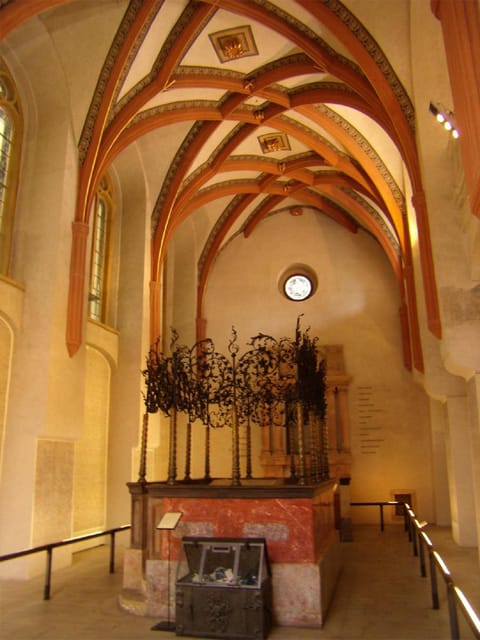
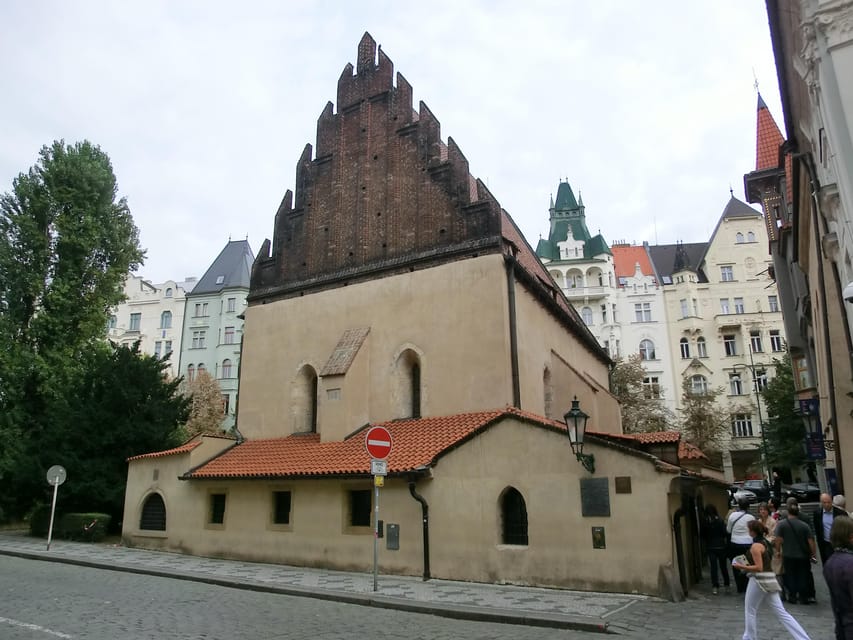
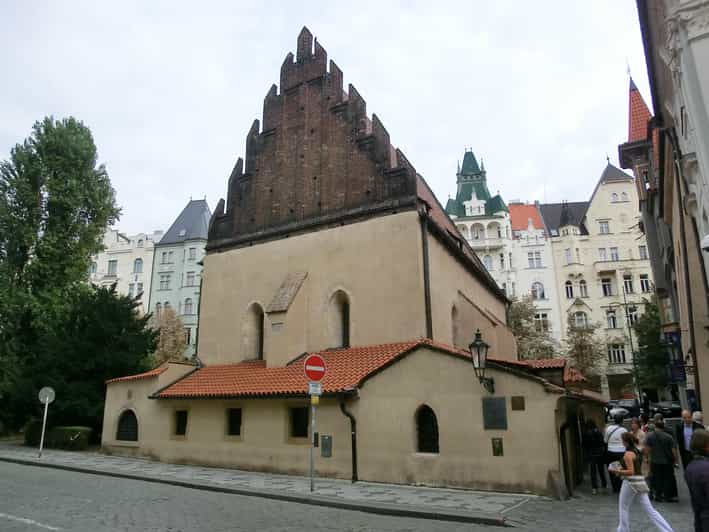
The Old-New Synagogue is the stop most people remember, and for good reason. You’ll visit it as the 13th-century oldest still-active house of Jewish prayer in Europe, and the guide’s job is to make the interior legible.
This is where the tour stops being generic history. The building’s age becomes more than a number because you’re hearing what it represents: continuity, survival, and the way religious practice shaped how space was built and used.
I like tours where the guide tells you what to notice in the first few minutes. Here, that matters. You’re looking at a room designed for worship, with details that gain meaning when explained. Without that, you might admire the look but miss the point.
Also, if you care about architecture and religious history, this synagogue isn’t just a visual landmark. It’s proof of continuity that you can physically stand inside.
Spanish Synagogue’s Moorish interior: why the style change is meaningful
Later in the route, you’ll see the Spanish Synagogue. The big draw is its splendid Moorish interior, a striking look compared with the older, more austere visual language you see in the Jewish Quarter.
That shift isn’t just aesthetic. It hints at how Jewish culture in Prague wasn’t frozen in time. Styles, influences, and community ambitions can show up in the way worship spaces are decorated and expressed.
When you enter a space like this with a guide, you’re not stuck trying to interpret design alone. You’ll get context for what you’re seeing and how it fits into the broader story of the neighborhood.
The tour also finishes at the Spanish Synagogue, which is a smart payoff. After seeing quieter, more solemn spaces and the cemetery’s weight, you end in a room that’s visually vivid and memorable—almost like a final chapter your brain can hold onto.
You can also read our reviews of more museum experiences in Prague






Maisel Synagogue exhibits: turning rooms into context
Maisel Synagogue is another interior stop, and it’s paired with exhibits. This is one of the easiest places to get value, because the exhibits can translate what you heard earlier into something you can see.
You’re not just walking from one famous building to the next. You’re getting the in-between connective tissue: the background of Jewish traditions and the way life was organized around religious practice and community learning.
I find exhibit synagogues work best on a guided route because you don’t have to guess which details matter. You can focus on the big ideas while the guide highlights the key points.
If you’re the kind of traveler who likes to understand a place in a single afternoon, this stop is a payoff. It helps you connect the exterior architecture you passed earlier to the lived meaning behind it.
Pinkas Synagogue, then the Old Jewish Cemetery: memory you can walk into
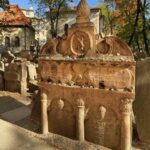
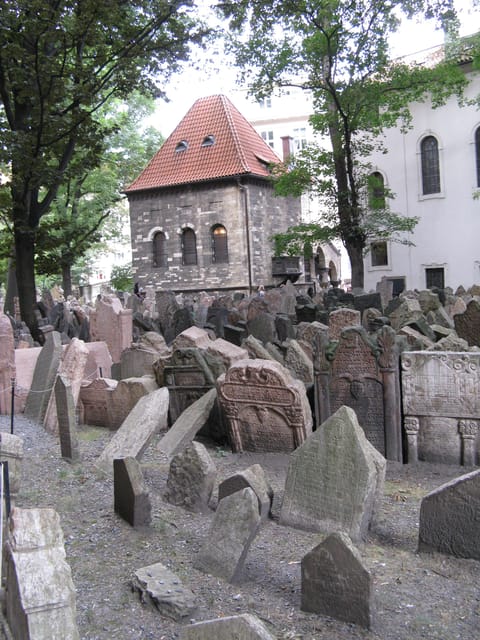
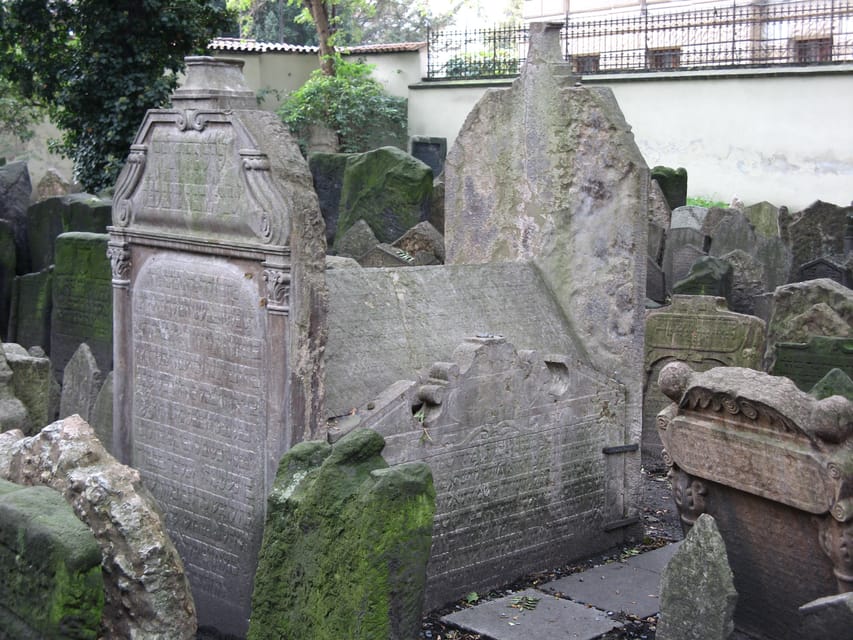
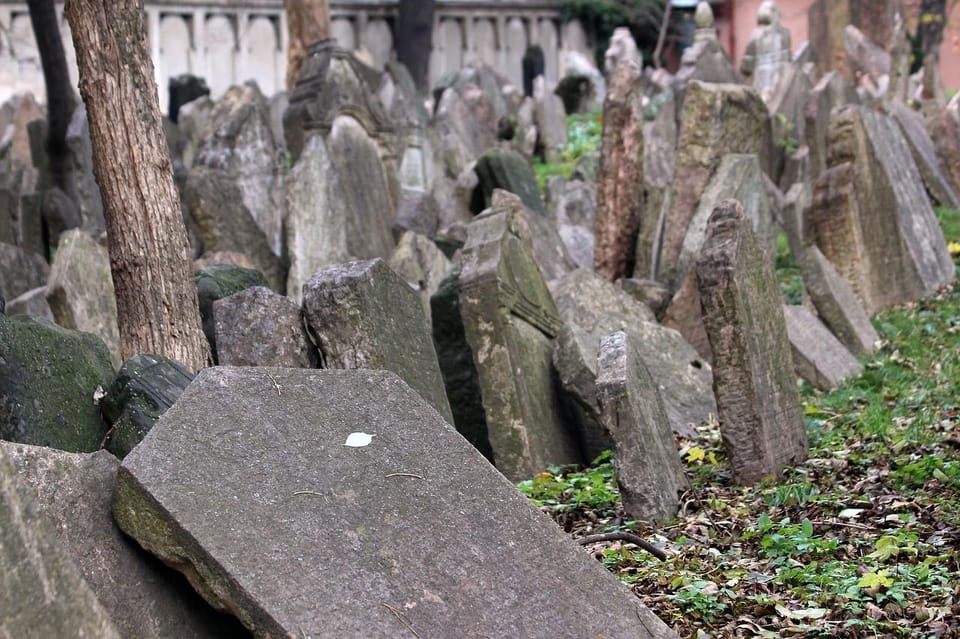
As the tour continues, you’ll see Pinkas Synagogue before heading to the Old Jewish Cemetery. This part of the experience changes tone. Synagogues are about worship and communal life, while the cemetery is about remembering people—names, families, and a long chain of lives tied to Prague.
The Old Jewish Cemetery is described as the final rest place for many notable Jewish figures in Prague’s history. The result is that you’re not just viewing an old burial ground. You’re hearing stories that make the place feel personal instead of distant.
What I like about this sequence is the emotional logic. After you learn about religious spaces and traditions, you finish with the kind of memory that outlasts any single generation. You start to understand why visitors often leave the cemetery quieter than they arrived.
Time-wise, the cemetery visit is longer than most single stops in the route. You’ll want to pace yourself here. If you rush, you lose the meaning.
Klausen Synagogue and the Jewish Ceremonial Hall: the closing notes of the route
After the cemetery, the route continues to Klausen Synagogue and the Jewish Ceremonial Hall, then ends back at the Spanish Synagogue. This last stretch rounds out the story by adding more specialized spaces associated with Jewish tradition and community practice.
Klausen Synagogue is one of the buildings that are not accessible for wheelchair visitors. If mobility is an issue for you, treat that as a heads-up so you’re not surprised on arrival.
The Jewish Ceremonial Hall adds another perspective on how different rooms supported different parts of practice and tradition. By the time you return to the Spanish Synagogue, you’ve already seen enough variety that the ending doesn’t feel random. You get a satisfying arc: older active worship, museum context, cemetery remembrance, then a visually striking finale.
Price and what you’re paying for (including the €25 entrance fee)
The tour is priced at $84 per person for a 3-hour private experience with a professional guide certified by the Jewish Museum. That guide component is the real value here. You’re not just buying access to buildings—you’re buying interpretation from someone trained to explain the significance of what you see.
Then there’s an additional €25 entrance fee that’s not included. That’s the main extra cost to plan for. If you’re comparing options, watch how cheap tours often skip the museum access or the certified guide aspect, leaving you with a self-guided “see what you can” experience.
Add it up and this becomes a mid-range spend for Prague, but the trade is quality and clarity. For a destination like the Jewish Quarter, I think that’s money well spent—because the hardest part isn’t finding the synagogues. The hardest part is understanding them.
Practical tips that actually help
This tour is built around comfort and pacing. Still, you’ll feel the walking and the stairs (depending on the specific building layouts), so comfortable shoes are non-negotiable.
Also bring water and weather-appropriate layers. Prague weather can change fast, and you’ll be outside between stops, even if the legs are short.
If you care about accessibility, go in with the exact detail that’s provided: the overall tour is wheelchair accessible, but Jewish Town Hall, High Synagogue, and Klausen Synagogue are not accessible. You can still enjoy the rest of the route, but your inside visits may be limited at those specific points.
Languages are English and German, and the guide does live narration. That’s important because synagogue rules and museum displays can be confusing without someone to explain what you’re looking at.
Who this tour suits best
This works especially well for you if:
- You want a guided way to understand Prague’s Jewish Quarter without spending time piecing together context yourself.
- You care about synagogue interiors, museum exhibits, and the cemetery as separate parts of one story.
- You prefer a private group format where you can ask questions and move at a steady pace for 3 hours.
It’s not suitable for children under 6, so it’s a better fit for families with older kids who can handle a more reflective, history-focused route.
Should you book this Prague Jewish Quarter and Museum tour?
Book it if you want a clear, meaningful route through major Jewish sites in Prague, with a certified guide who can explain the significance behind the buildings. The price is fair for what you get, especially once you factor in the €25 entrance fee and the value of museum-linked access.
Skip it only if you strongly need every synagogue stop to be wheelchair accessible inside, since a few key locations are not accessible. Otherwise, this is one of those Prague experiences where careful guidance turns a compact neighborhood into a full story you’ll remember.
FAQ
How long is the Prague Jewish Quarter and Museum guided tour?
The tour lasts 3 hours.
Where does the tour start?
The starting location is Pařížská 131/28.
Where is the tour finished?
The tour finishes at the Spanish Synagogue.
What is included in the $84 per person price?
You get a private professional guide who is experienced and certified by the Jewish Museum.
Is there an entrance fee?
Yes. There is a €25 entrance fee that is not included.
What languages are offered?
The live guide speaks English and German.
Is the tour wheelchair accessible?
The tour is wheelchair accessible, but the Jewish Town Hall, the High Synagogue, and the Klausen Synagogue are not accessible.
Are service animals allowed?
Yes, service animals are allowed.
What should I bring?
Bring comfortable shoes, water, and weather-appropriate clothing.
Is there a minimum age?
Yes. The tour is not suitable for children under 6.
What are the cancellation terms?
Free cancellation is available up to 24 hours in advance for a full refund.
Can I reserve without paying right away?
Yes. You can reserve now and pay later, with an option to pay nothing today.