REVIEW · PRAGUE
Grand Tour of Prague “among history, legends and curiosities” (NO ENGLISH)
Book on Viator →Operated by GUIDA di PRAGA · Bookable on Viator
Prague turns into a story, not a checklist. On this Grand Tour, I liked how guide Alessandro keeps you talking and makes the city feel like it connects to real moments in the 1900s, not just postcard views. You’ll move through courtyards and galleries, with a pace that lets legends and history land in your head.
I also loved the mix of famous stops and smart detours: Charles Bridge, the Old Town Hall and Astronomical Clock, plus the Jewish Quarter walk that explains rules and daily life, not just dates. You’ll also get Prague’s “hill magic” in the afternoon—through viewpoints and streets where the city suddenly feels royal, romantic, and a little strange in the best way.
One consideration: this tour is built around the outside views of the Jewish sites, since there are no entries to the synagogues and Jewish cemetery. Prague Castle access is also seasonal, and there’s no tram ticket included for the Castle hill.
In This Review
- Key things I’d bank on before you book
- A morning that starts with Charles Bridge energy
- Old Town icons, told with street-level context
- What to watch for here
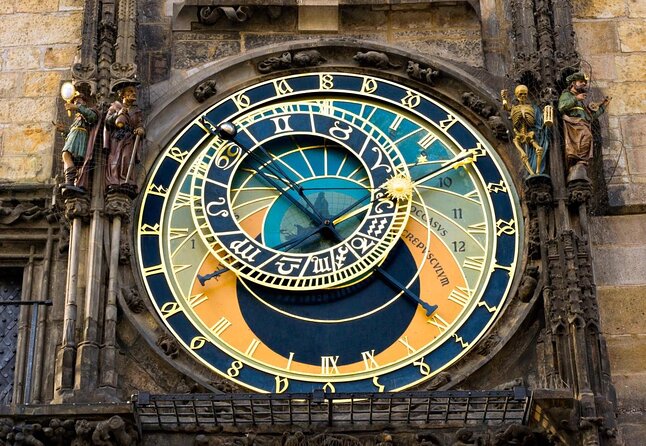
- Old Town Hall and the Astronomical Clock stop you can actually understand
- Prague Castle courtyards: the first cathedral look, without overcommitting
- St. James Church and the power of a single legend
- The Lennon Wall and the 1900s story turning darker
- Nerudova, Celetná, and the Imperial Way feel
- Strahov Monastery Brewery: views that reward the uphill effort
- Kampa Park, Knights of Malta, and the quieter side of the river
- Lesser Town and the lanes of Mala Strana
- National Theater: a quick stop with big atmosphere
- Jewish Quarter exteriors: meaningful context, no interior tickets
- Price and logistics: what $234.61 per group feels like in real life
- Who this tour suits best
- Should you book the Grand Tour of Prague with this approach?
- FAQ
- How long is the Grand Tour of Prague?
- What time does the tour start, and where does it meet?
- Where does the tour end?
- Is the tour private, and how many people are in a group?
- Is pickup offered?
- Are tickets included for the main stops?
- Do I get to enter the synagogues and Jewish cemetery?
- Is Prague Castle included?
Key things I’d bank on before you book
- Small private group (up to 10): more time for questions and a calmer pace than the big bus crowd
- A human guide, not robot mode: Alessandro’s prepared, attentive style makes the story feel personal
- Charles Bridge to Mala Strana in one flow: you see major highlights plus the quieter lanes between them
- Astronomical Clock and Old Town Hall: a focused stop so you understand what you’re looking at
- Castle courtyards only (plus seasonal limits): you get the right first look, without the full-ticket gamble
- Jewish Quarter exteriors: meaningful context, but you won’t go inside the synagogues or cemetery
A morning that starts with Charles Bridge energy
Your day begins at Muzeum New Town around 9:30 am, with the tour ending above Charles Bridge. The meeting spot is convenient for public transport, and if pickup is offered for your time slot, it can save you a chunk of morning stress. You’ll get a mobile ticket, and the day runs at a walking-tour rhythm, not a sit-and-watch rhythm.
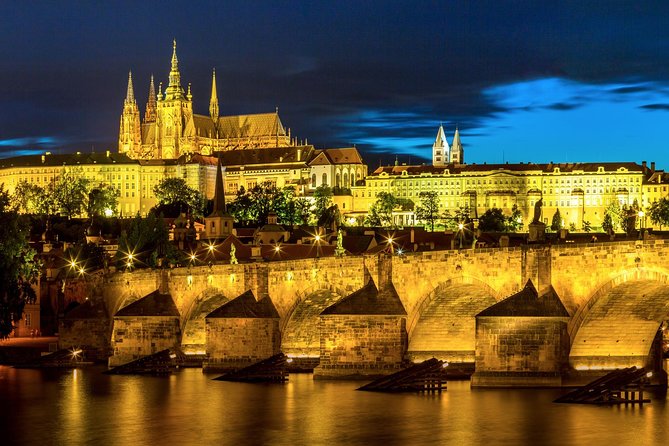
Charles Bridge is a good first move. It’s the kind of place where you can orient fast—river, towers, the Old Town skyline—and then build your understanding from there. You won’t just be told what the bridge is; you’ll get the why behind its role and how Prague used this kind of crossing over time.
Expect to walk a bit early, with short stops that keep things lively. The tour is designed for conversation, so if you like asking questions, this is the format that actually supports it.
You can also read our reviews of more historical tours in Prague
Old Town icons, told with street-level context
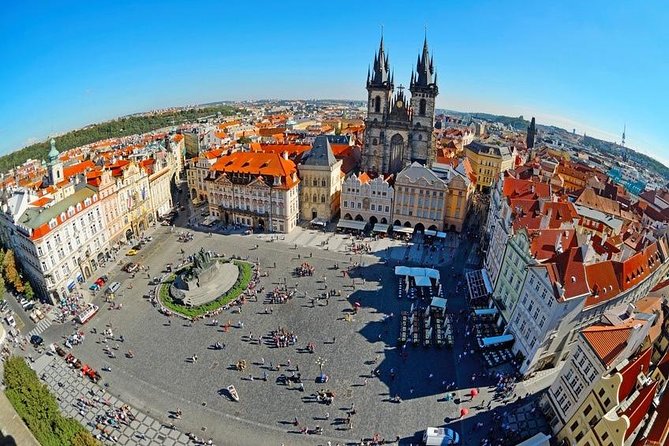
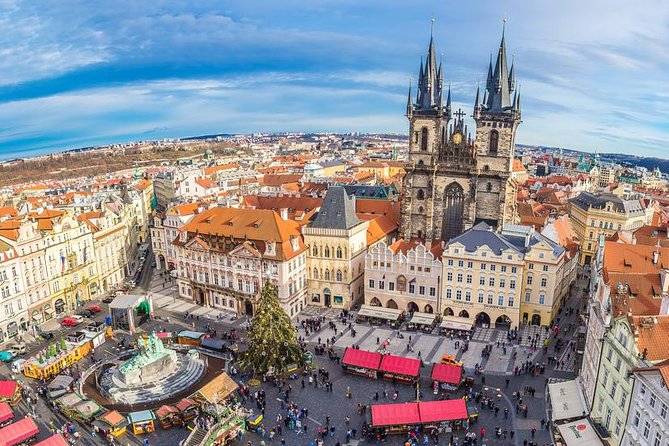
The route quickly shifts into the feel of central Prague. After Charles Bridge, you head to Republic Square, with its dramatic buildings and the Powder Tower area. This is a good place to understand how Prague’s public spaces work—where people gather, where power shows, and how the city’s layout shapes movement.
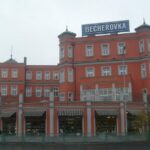
Next is the Municipal House, where you’ll get a taste of Prague’s Art Nouveau side. This stop matters because it changes the tempo from medieval stone to turn-of-the-century elegance. Even if you’re not an architecture nerd, you’ll still feel the difference in mood when a façade turns from fortress-heavy to decorative, almost cinematic.
Then comes the big central stage: Wenceslas Square. This is one of the strongest “history-in-motion” parts of the day. You’ll connect St. Wenceslas Square from the early idea of the saint and the state, then forward through the Nazi period with its headquarters, and later into the communist era. The tour also points out the side-world of courts and galleries that sit off the main boulevard—small passages that change how you experience the city. You get Prague’s lesson: power often hides just off the street.
What to watch for here
Keep an eye on doors, alleys, and side entrances. The tour’s whole method is that Prague is never only what’s in the open.
Old Town Hall and the Astronomical Clock stop you can actually understand
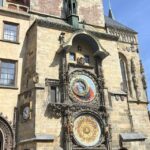
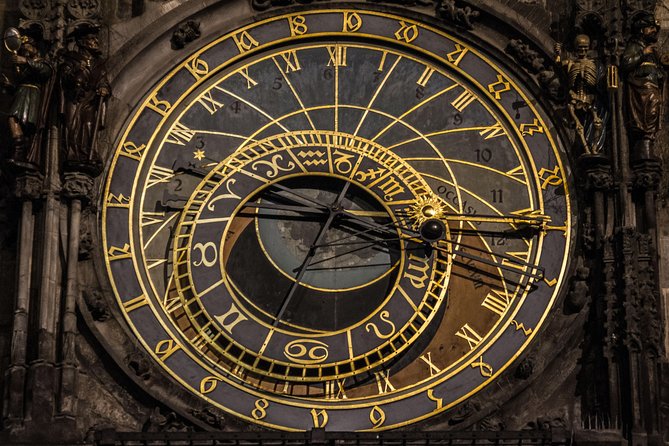
At the Old Town Hall with the Astronomical Clock, you get a focused look at one of Prague’s most famous mechanical sights. The key is that this is not treated like a quick photo stop. You’ll hear the story behind what you’re seeing and why it became a symbol people still track and argue about.
Even if you think you already know the basics, this kind of guided framing helps you notice details you’d otherwise miss. Astronomical clocks aren’t just clever gimmicks; they reflect how people once mapped time, meaning, and authority onto daily life.
This is also a good place to slow down slightly. The Old Town gets busy fast, and having a guide manage the flow is a real quality-of-life upgrade.
Prague Castle courtyards: the first cathedral look, without overcommitting
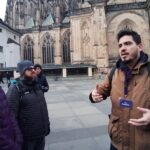
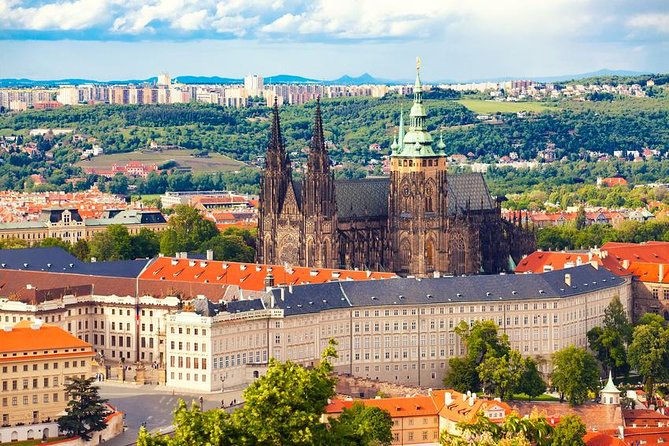
Prague Castle is where many first-time visitors either rush or get stuck in ticket lines. Here, you’ll see together the first free part of the St. Vitus Cathedral and the first two courtyards, including the changing of the guard moment. That’s a smart compromise: you get the iconic setting and the ceremonial feel, without promising you the entire Castle complex.
Still, you should plan around what’s included and what isn’t. There’s no tram ticket included to get up the hill, so factor in time and transport if you don’t want to walk uphill. The tour also notes that during the Christmas period and the Easter period, there will be no access to Prague Castle (other places are included instead).
If you’re visiting in those windows, ask before you go—or just treat the Castle part as conditional. The rest of the route still gives you a lot of Prague’s best viewpoints and street atmosphere.




St. James Church and the power of a single legend
The day continues with Church of St. James (San Giacomo), where you’ll see the interior of the Basilica of San Giacomo and hear a legend tied to it. Short stops like this can feel rushed on some tours. Here, the point is different: a legend gives the building a second layer.
If you like places that carry stories beyond their walls, you’ll probably enjoy this. It’s an example of how the tour balances big landmarks with smaller stops that add flavor.
The Lennon Wall and the 1900s story turning darker
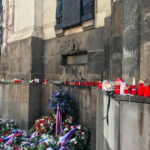
One of the most emotional parts of the route is Lennonova zeď, the John Lennon Wall. You’ll learn its history and the way it’s been shaped by bloody events—a reminder that Prague’s 1900s story isn’t only about art and architecture. It’s about resistance, regimes, and people trying to keep human values alive when the city feels like it’s under pressure.
This stop works well in the middle of the day because it changes your mood. After that, the route starts feeling more like a walk through the city’s memory: streets soften, viewpoints open, and you start noticing the “magic” side of Prague that people talk about.
Nerudova, Celetná, and the Imperial Way feel
Then you move onto Nerudova, one of the city’s most beautiful streets. Expect the vibe to be steep and scenic—more about the experience than the architecture trivia. The tour gives it context so it doesn’t feel like a postcard road.
Next is Celetná Street, described as the Imperial Way. This is one of those places where old routes still shape your sense of direction. When a guide connects streets to past movement and status, even a short segment can feel like a timeline you can walk through.
If you’re the type who likes to understand where you are in the city, these street stops do a lot for you. They help you build mental maps instead of just collecting monuments.
Strahov Monastery Brewery: views that reward the uphill effort
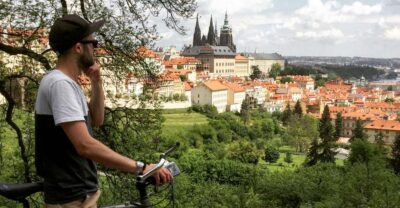
At Strahov Monastery Brewery, you’ll get a courtyard experience and a major viewpoint. It’s described as the most beautiful monastery in Prague with a fantastic courtyard and a grand panorama of the city.
This stop is practical value. Prague’s best photos often require you to accept the uphill. A guide-timed viewpoint helps you catch the right light and avoid wasting energy. Plus, monastery courtyards have a different sound than streets: you feel the shift from traffic and crowds to a calmer pocket of time.
If you’re walking all day, treat this as your reward break—hydrate, take a slow look at the skyline, and let Prague’s layout sink in.
Kampa Park, Knights of Malta, and the quieter side of the river
The route then crosses over to Kampa Park, described as the Island of Kampa, plus the Knights of Malta area. This is where the river becomes part of your route, not a background line. Kampa also gives you that small-breath feel you need halfway through a long walking day.
You’ll get context that helps explain why certain institutions and symbols cluster where they do. Even if you skip museums on this day, this kind of place-based story still builds a real understanding of the city.
Lesser Town and the lanes of Mala Strana
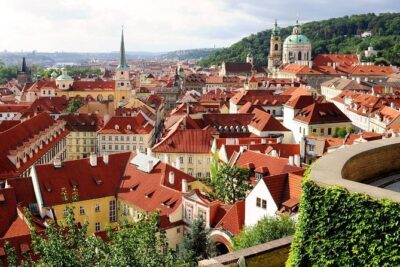
You’ll spend good time in Lesser Town (Mala Strana), with hidden alleys and a slower rhythm. The tour gives you around 50 minutes here, which is long enough to do more than point and move on. This is one of those segments where you can start noticing the small architectural differences: how streets curve, how houses face each other, how corners create small, private views.
If you like wandering, this portion gives you permission to slow down without feeling lost. But it’s still guided, so you’re not guessing what you’re looking at.
National Theater: a quick stop with big atmosphere
Next is the National Theater, the national opera theater in Prague. It’s a short 10-minute moment on the route, but it’s worth it. Even from the outside, it anchors the cultural side of the city so the day doesn’t feel only political and religious.
If you’re curious about how Prague projects identity through culture, this stop helps balance the darker 1900s themes you’ve already touched.
Jewish Quarter exteriors: meaningful context, no interior tickets
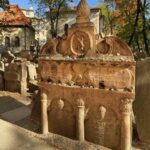
Later in the day, you’ll reach the Jewish Quarter focus: Jewish Museum in Prague and then the Spanish Synagogue area. Important: you’ll see these as external sights only. There are no entrances to the synagogues and no entry to the Jewish cemetery.
That limitation is real, so you should know what you’re buying. The value here is the historical framing: you’re not touring rooms and reading exhibits. You’re getting the city’s layout and the outside presence of these sites, with guidance aimed at understanding what you’re seeing.
If your heart is set on interior visits, you’ll need a separate ticketed plan. But if your goal is to understand Prague’s Jewish quarter through story and street context, this tour still delivers.
Also note how this part complements the day’s theme. Earlier, you touched the broader 1900s timeline, including the Holocaust and the Prague Spring themes. Ending with Jewish-quarter context helps tie the emotional thread of Prague’s modern history to specific places on the map.
Price and logistics: what $234.61 per group feels like in real life
The price is listed as $234.61 per group (up to 10) for about 6 hours. That framing matters. You’re not paying per person for a private, guided walking story across major sectors—Old Town, the Castle hill area, and Mala Strana—plus a strong political-and-cultural narrative.
You’ll also want to factor in what’s included: the guide, culture, walking through historic courtyards and galleries, and hidden non-touristic places. Stops are marked as admission ticket free, which helps you avoid surprise costs for the scheduled viewpoints.
What’s not included is where your planning comes in:
- no tram ticket up to the Castle hill
- no interior access to the synagogues and cemetery
- Castle access can be blocked during Christmas and Easter periods
On the logistics side, this tour is private, and that usually means smoother pacing. Still, it’s a walking tour. Wear real shoes and accept that Prague is not flat.
One more practical note: the experience mentions that you cannot take back and record explanations, with a gentle push for phone discipline. If you’re trying to document everything with constant recording, you may feel a bit constrained.
Who this tour suits best
This tour is ideal if you want Prague to feel like a story you can walk through. You’ll enjoy it most if you like:
- history that connects to real locations
- small-group conversation
- a route that mixes the big icons with quieter streets
It may feel less ideal if you mainly want museum-level interior time. Here, the Jewish sites are exterior only, and Castle coverage is limited to free areas and courtyards.
Accessibility is listed as suitable for most people, but your comfort will depend on walking and the uphill stretches.
Should you book the Grand Tour of Prague with this approach?
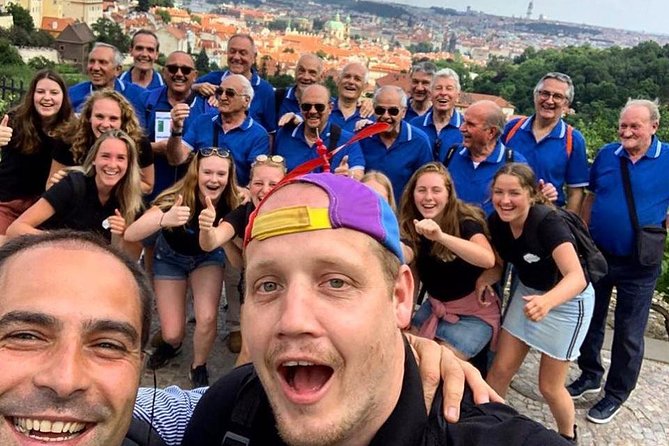
If you want Prague’s highlights plus the 1900s meaning behind them, this is a strong pick. The best part is the human delivery—guide Alessandro is clearly prepared and attentive, and that matters because the tour is built around dialogue, not memorized facts.
I’d book it if:
- you’re visiting for the first time and want a guided mental map fast
- you care about how legends and major historical events show up in streets and buildings
- you want a small-group day that avoids the big-tour rush
I’d think twice if:
- you want synagogue and cemetery interiors on this same day
- your dates fall in Christmas or Easter and Castle access is a must for you
- you hate uphill walking and don’t want to plan transport to the hill
FAQ
How long is the Grand Tour of Prague?
It runs for about 6 hours.
What time does the tour start, and where does it meet?
The start time is 9:30 am. You meet at MuzeumNew Town, 110 00 Prague 1, Czechia.
Where does the tour end?
The tour ends above Charles Bridge, at Karlův most, Praha 1-Staré Město, Czechia.
Is the tour private, and how many people are in a group?
Yes, it’s a private tour/activity with only your group participating. Group size is up to 10.
Is pickup offered?
Pickup is offered. You’ll need to confirm the exact arrangement as part of your booking details.
Are tickets included for the main stops?
The stops listed are marked as admission ticket free, and you’ll have a mobile ticket. Some transport items are not included.
Do I get to enter the synagogues and Jewish cemetery?
No. The tour includes only external views of the synagogues and the Jewish cemetery.
Is Prague Castle included?
You’ll see the first free part of the St. Vitus Cathedral and the first two courtyards. However, during the Christmas period and Easter period, there is no access to Prague Castle.