REVIEW · PRAGUE
Communism and its fall Prague private tour
Book on Viator →Operated by Jana Neubergova Private Tour Guide · Bookable on Viator
Prague turns politics into street scenes. This private tour traces how the Communist system broke, stop by stop, in locations tied to Czech identity and protest.
What I love most is Jana Neubergova’s first-hand perspective and the way she connects what you see on the street to what people lived through. I also like the simple pacing: short, timed stops that let you absorb each site instead of rushing past them.
One possible drawback: entrance tickets for the National Theater aren’t included, and you’ll be on your feet with a moderate fitness level requirement.
In This Review
- Key highlights you’ll actually feel
- A 2-hour walk through Prague’s Communist turning points
- Hotel pickup on foot: how the start works in real life
- Meeting point of Czech intellectuals: context before you look
- National Theater: a symbol you can read in architecture
- Narodni Street: where the Velvet Revolution’s momentum began
- Lucerna Arcade: Vaclav Havel’s family and a social center vibe
- Wenceslas Monument on Wenceslas Square: protest in the heart of Prague
- Memorial to the Victims of Communism: a free stop that lands hard
- What Jana Neubergova brings that a normal guide can’t
- Price and what you truly get for $85
- Logistics that affect your comfort: walking, time, and tickets
- Who this tour suits best (and who might want a different style)
- Final call: should you book this Prague Communism tour?
- FAQ
- How long is the Communism and its fall Prague private tour?
- Is this tour private or shared with other groups?
- Are entrance tickets included?
- Do you offer pickup from Prague hotels?
- What’s included in the $85 per person price?
- Can I cancel for free?
Key highlights you’ll actually feel
- Jana Neubergova’s real-life November 1989 perspective: she shares personal memories and context as you walk.
- Velvet Revolution beginnings at Narodni Street: you’re shown exactly where that momentum took off.
- Wenceslas Square’s protest legacy: the tour ties today’s public space to past demonstrations.
- Vaclav Havel’s family connection at Lucerna Arcade: you get family-era context, not just a name drop.
- Memorial to the Victims of Communism is free and reflective: a stop designed for seriousness, not spectacle.
- Private format for just your group: you can ask questions and set the pace.
A 2-hour walk through Prague’s Communist turning points
This tour is built like a guided timeline you can see with your feet. In about two hours, you move through central Prague at a comfortable pace, using major landmarks and a couple of key streets to explain how the Communist system operated—and how it fell.
You’ll get a professional, fully licensed guide and a free map of Prague. You also get an easy format: private tour means only your group participates, and it runs in English. The route is concentrated, so it works well if you want a meaningful historical experience without turning your day into a long marathon.
The topic is heavy, but that’s the point. The best part is that the guide doesn’t treat these places like museum labels; she treats them like evidence. As you stand in public squares and near iconic buildings, it becomes obvious how quickly ideas can turn into action.
You can also read our reviews of more private tours in Prague



Hotel pickup on foot: how the start works in real life
The tour offers pickup on foot from all Prague hotels. That sounds simple, and it usually is, but it’s worth planning for the reality of meeting outdoors in the center of town.
Because it’s pickup on foot (and private transportation isn’t included), you should come ready for walking from your hotel area to the starting point. The good news is that the tour is noted as near public transportation, so if you’re not staying in the city center or you prefer to meet closer to the route, you’re not completely dependent on the hotel-side start.
Also note the practical time window: tours operate Monday through Sunday from 9:00 AM to 6:00 PM. If you want the best light for photos and comfortable temperatures for walking, aim for a mid-morning or early afternoon slot.
Meeting point of Czech intellectuals: context before you look
The first stop is the meeting point of Czech intellectuals. Think of this as the setup scene—the place where you’re given the frame you’ll need for the rest of the walk.
Prague’s twentieth-century story is tangled. National identity, literature, public speech, and ordinary people all get woven together. Starting with Czech intellectuals helps you understand that the Communist era wasn’t only about politics and police; it was also about culture, language, and who had the right to speak publicly.
This is also where a good guide matters. Jana Neubergova’s advantage is that she can connect the dots in a way that feels lived-in, not textbook-straight. From here on, the landmarks won’t just look impressive; they’ll start behaving like chapters in a single narrative.
National Theater: a symbol you can read in architecture
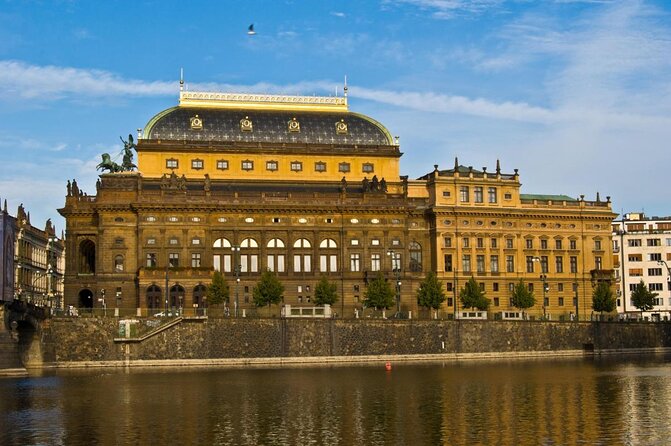
The National Theater stop is short—about 10 minutes—but it carries weight. The tour focuses on why this theatre played an important role in Czech history, which matters because Czech cultural spaces weren’t just for entertainment. They were stages for identity.
For you, this is useful because it teaches you a kind of local reading skill: noticing how buildings reflect social goals. Even if you don’t go inside, the exterior and the surrounding setting can point you toward how public emotion was built and expressed over time.
Do plan around the one practical catch: admission tickets for the National Theater aren’t included. If you want to actually enter, budget extra time and money for that. If you’re only there for the guided explanation from outside, you’ll still get the historical context without needing extra tickets.
Narodni Street: where the Velvet Revolution’s momentum began
Next comes Narodni Street, around 15 minutes. This is the stop that gives the tour its “oh wow” factor, because you’re standing where the Velvet Revolution started—and you’re not just hearing a date. You’re hearing how the story unfolded in a specific street-level setting.
When a guide anchors history in a street, you start imagining daily movement: where people gathered, how they could see one another, and how quickly a crowd can shift from talk to action. That’s the kind of understanding that’s hard to get from a single museum exhibit.
One thing to be mindful of: this part of Prague can be busy. Your guide’s job here is to keep you oriented without losing the narrative. If you like history that feels immediate—more lived moments than dates—you’ll probably enjoy this segment the most.


Lucerna Arcade: Vaclav Havel’s family and a social center vibe
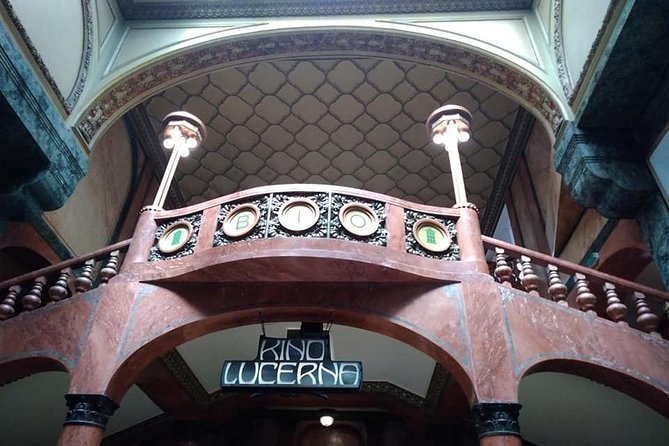
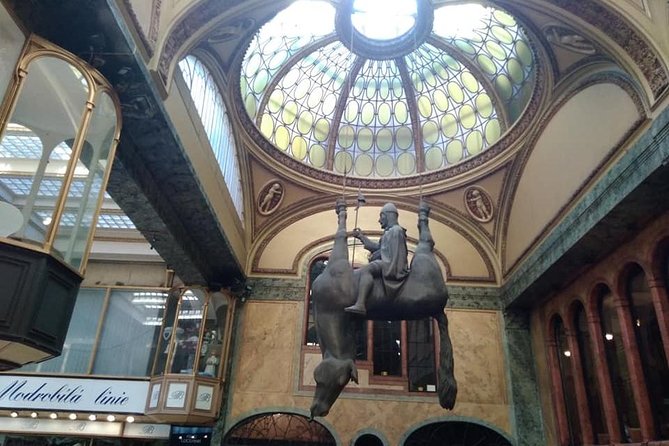
At Lucerna Arcade, you’ll spend about 10 minutes. The focus is on its role as an important cultural and social center founded by Vaclav Havel’s family.
This stop matters because it shows you how Czech public life moved through spaces that weren’t officially “political,” at least not on paper. Culture and social life can be a kind of power. When a society controls what can be said, places where people meet and express ideas become significant.
You’ll likely appreciate this stop if you’re interested in how networks form. The guide’s context can help you see Lucerna Arcade as part of a broader web—public conversations, cultural influence, and eventually political change.
Wenceslas Monument on Wenceslas Square: protest in the heart of Prague
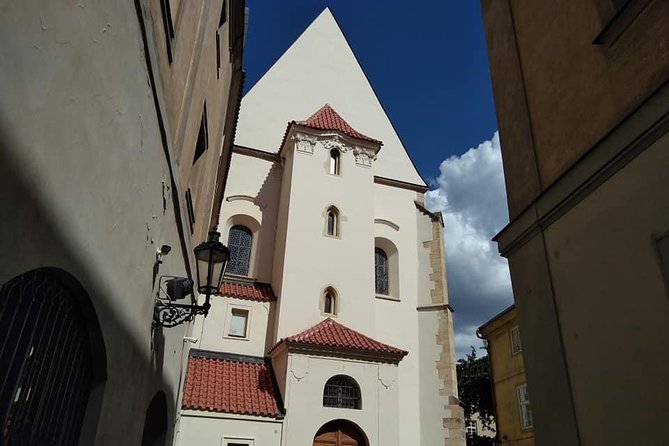
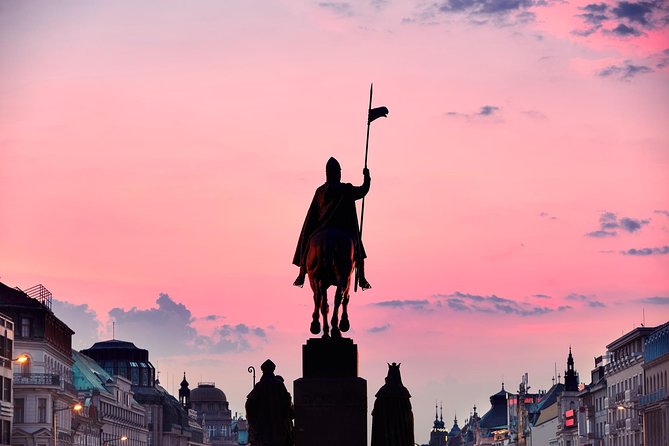
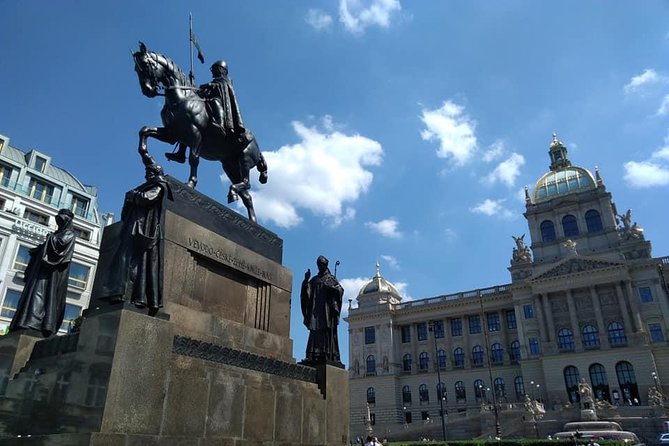
The tour then lands at the Wenceslas Monument, located on Wenceslas Square, with about 20 minutes. This is described as the very heart of Prague and also the place where demonstrations have taken place, continuing to the present day.
This stop is built for perspective. When you stand where modern demonstrations still happen, you can feel the long continuity of public speech. The tour’s value here is in connecting that today-ness with yesterday’s struggles.
It’s also the kind of location where you can step back and look at the big picture. From here, you understand why Prague can feel both ceremonial and confrontational—because the urban layout supports crowd gathering and movement.
Tip for your comfort: plan to spend time just standing, looking, and listening. This is not just a photo stop. Let the guide’s framing guide your attention, and you’ll get far more than a quick walk-by.
Memorial to the Victims of Communism: a free stop that lands hard
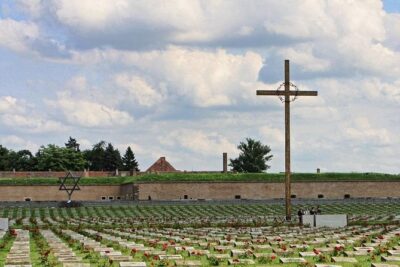
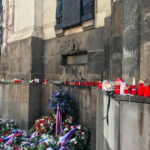
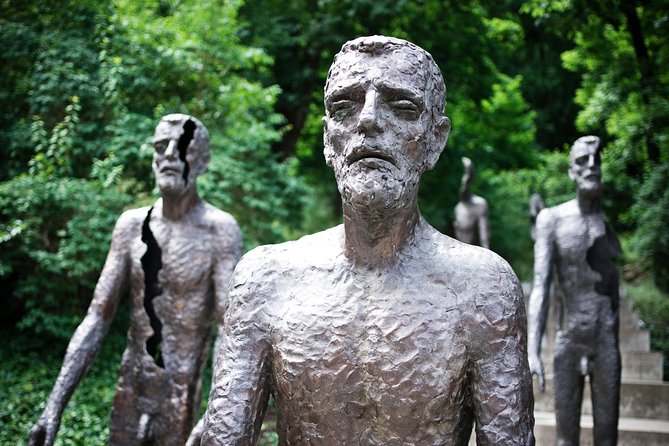
The final stop is the Memorial to the Victims of Communism, about 15 minutes, and it’s free. The tour presents it as a memorial created by sculptor Olbram Zoubek, one of the most notable Czech artists.
This is where the tone shifts from political explanation to human cost. Even if you know the broad history already, the memorial invites you to slow down. It’s the most reflective stop on the route, and it’s also the easiest to underestimate if you expect it to be another quick landmark.
I like that this stop is free. It gives you a genuine emotional conclusion without turning the experience into an add-on fee hunt. If you’re sensitive to heavy subject matter, give yourself a minute to absorb what the memorial is communicating, then let the guide’s final connections wrap up the story.
What Jana Neubergova brings that a normal guide can’t
This is the part that reviewers tend to focus on, and it makes sense: Jana Neubergova is not just passing on information. She brings lived connection to multiple layers of the story.
Based on what’s shared about her background, she speaks perfect English and is friendly and approachable. More importantly, she has deep, personal credibility: she was a participant of the Velvet Revolution, and she’s described experiencing demonstrations against communism in November 1989. She also had the honour to work for Czech President Vaclav Havel shortly after that.
For you, that means the tour doesn’t feel like someone reading a script. You’ll get specific details and a sense of what it meant to be inside the moment when public pressure changed the system.
One practical upside of a guide like this: it’s easier to ask follow-up questions. In a private tour format, you’re not pushed to fit into someone else’s schedule. If you want to understand why certain people took certain risks, you’ll have room to ask—and you’ll get grounded answers.
Price and what you truly get for $85
The price is $85.00 per person for about 2 hours. That’s not the cheapest option in Prague, so it’s fair to ask whether it’s worth it.
Here’s the value case: you’re paying for a fully licensed guide, private tour structure, and a topic-specific narrative connected to real personal experience. You’re also getting a free map of Prague, plus a mobile ticket and a group discount option (if you’re traveling with others). The stops are central and efficient, so you’re not wasting time crossing town.
The main cost consideration is the one clear exception: National Theater admission isn’t included. If you decide you want to go in, you may spend extra. Also, since private transportation isn’t included, you’re relying on pickup on foot and walkable logistics.
Overall, I’d call this good value if you want something more than generic Communist-era sightseeing. If you’re happy with broad overviews from an app, you can do cheaper. If you want meaning and a human guide who can connect facts to memory, $85 starts to feel reasonable.
Logistics that affect your comfort: walking, time, and tickets
This experience asks for moderate physical fitness. That doesn’t mean it’s extreme, but you should assume you’ll stand, walk between stops, and spend time listening in busy public areas.
The route includes stops that are mostly outside or at public spaces, which keeps it manageable. Still, plan for weather and wear comfortable shoes. Prague in summer can be hot; winters can be icy. Bring layers and be ready to pause frequently for the guide’s context.
Also, admission tickets aren’t included where noted. The National Theater is the explicit one. The Memorial to the Victims of Communism is free, which helps the tour end on a no-extra-cost note.
Who this tour suits best (and who might want a different style)
This tour fits best if you:
- love twentieth-century history and want it tied to exact city locations
- prefer a guide who can answer questions with specifics, not just general summaries
- want a private format so you can set the pace and ask follow-ups
It may be less ideal if you:
- want a tour that focuses mainly on inside-the-building museum visits (ticketed entries aren’t included, and the route is time-sliced)
- dislike heavy political topics; the memorial stop makes the emotional tone clear
If you’re traveling with history-minded friends, the group discount option can make the overall cost easier to justify. And because pickup is offered from hotels on foot, it can work well even when your itinerary is crowded.
Final call: should you book this Prague Communism tour?
I’d book this tour if you want Prague history with a human backbone. The big advantage is Jana Neubergova’s real connection to the Velvet Revolution era and her ability to turn public landmarks into understandable, personal storytelling.
If you’re the type who likes to stand in major squares and ask why people gathered there, this route will satisfy you. If you’re budgeting carefully, plan for possible extra cost if you want to enter the National Theater.
One simple decision rule: if you want a guided narrative that feels close to the real moment—not just a checklist of places—this is the kind of tour that pays off.
FAQ
How long is the Communism and its fall Prague private tour?
It runs for about 2 hours.
Is this tour private or shared with other groups?
It’s a private tour/activity, so only your group will participate.
Are entrance tickets included?
Admission tickets are not included for the National Theater stop. The Memorial to the Victims of Communism is free.
Do you offer pickup from Prague hotels?
Yes. Pickup is offered on foot from all Prague hotels.
What’s included in the $85 per person price?
The price includes a professional and fully licensed guide and a free map of Prague. You’ll also have a mobile ticket.
Can I cancel for free?
Yes. Free cancellation is available up to 24 hours in advance for a full refund.