REVIEW · PRAGUE
Amazing !!! Electric Trike Tour of Prague, live guide included
Book on Viator →Operated by Prague Segway Tours · Bookable on Viator
Prague moves fast, and this tour helps you keep up. The electric tricycle setup is built for comfort, and the live guide turns quick stops into real context. You’ll start with helmet-on training, then glide through areas buses and cars can’t reach, grabbing views and photos without the usual slog.
What I like most is the way they handle confidence up front: helmets are mandatory and provided, plus you get a safety training and supervised test-drive before you take off. Second, the route is designed for variety—riverside photo moments, hilltop panoramas, and Old Town streets you can actually enjoy instead of rushing through.
One drawback to plan for: the ride can feel a bit bumpy on Prague’s cobblestones, and the “pause-and-go” style takes a minute to get used to. If you’re uncomfortable riding right away, give yourself that first training time and don’t book if you’re expecting a hands-off experience.
In This Review
- Key highlights at a glance
- Why an electric trike tour works so well in Prague
- Meeting point and the all-important start at Maltézské náměstí
- Safety training and the test-drive that prevents most problems
- Maltezské náměstí: where the tour teaches you to ride
- Kampa Island and the river views without long walking
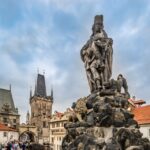
- Charles Bridge viewpoints and Prague’s most camera-friendly streets
- Metronome, Letná Park, and the panorama logic of the route
- Prague Castle: what you see from the outside (and why that’s enough)
- Lesser Town and the classic Old Town loop
- Wenceslas Square and the market season add-on
- Rain, cold, and riding comfort you can actually plan for
- What the included extras mean in real life
- How long should you book: 1 hour vs 3 hours
- Who this tour is best for (and who should pick something else)
- Should you book the Amazing Electric Trike Tour of Prague?
- FAQ
- How much is the electric trike tour in Prague?
- How long does the tour last?
- Where do we meet for the tour?
- Do I need to know how to ride before I go?
- Are helmets included?
- Are the sights entered during the tour?
- What about rain or bad weather?
- Are there age limits for children?
- What’s the group size limit?
Key highlights at a glance
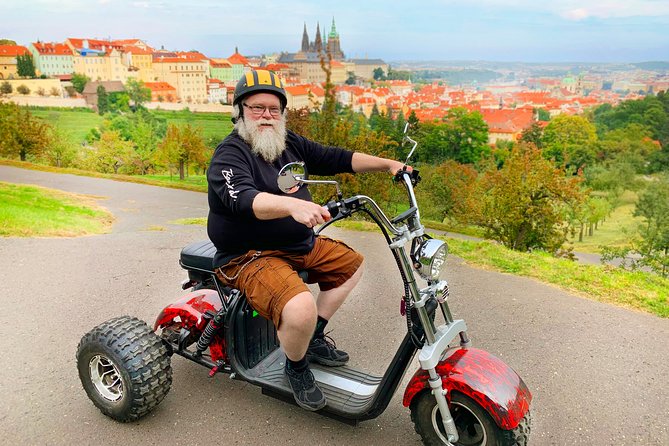
- Helmet + supervised test-drive first so you’re not thrown into traffic-like cobblestones
- Photo stops built into the route (Charles Bridge viewpoints, hill overlooks, narrow street shots)
- A tight group (max 20) makes it easier to stay together
- Views without extra ticket lines since you mainly see sights from the outside
- Private options add extra icons like the John Lennon Wall and more Hradčany viewpoints
Why an electric trike tour works so well in Prague
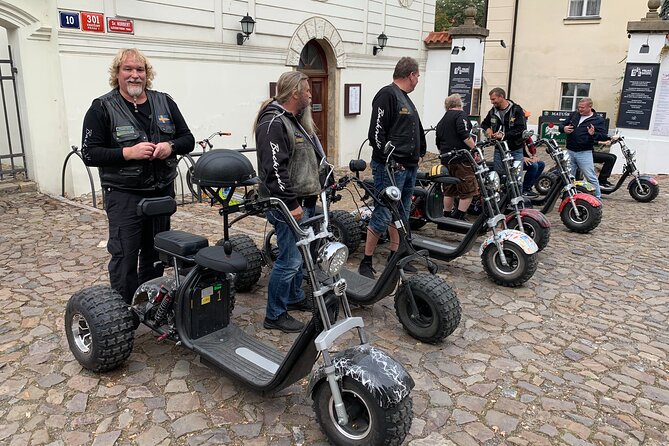
Prague is gorgeous, but it’s also a workout. Stone streets, sharp corners, and steep bits can turn a “quick walk” into a full-body event. An electric trike helps you cover ground while still moving at a human pace. You’re not stuck behind a windshield, and you’re not sprinting between attractions either.
The best part is how the route is guided. The tour isn’t just transport; it’s a sequence of moments that make the city click. You get to see the river bends near Charles Bridge, the island feel of Kampa, and the “why people love this view” reason behind Letná—all while someone explains what you’re looking at in plain language.
There’s also value in the format. With a tour like this, you can spend your limited time doing the things you’d otherwise only partially manage: broad viewpoints, photo angles, and signature streets like the Narrowest Street in Europe. Then, after you return, you can pick the neighborhoods you want to linger in on your own.
You can also read our reviews of more guided tours in Prague

Meeting point and the all-important start at Maltézské náměstí
Your tour starts back at Maltézské nám. 479/7 in Malá Strana (and yes, that’s also where you end). Plan to arrive a little early so you’re not stressed when it’s time for the helmet fit and the pre-ride briefing.
They also set the mood right away with small comforts while you wait—unlimited tea, water, and coffee is included in the office. One review even mentioned a welcome shot of local Becherovka, which sounds like the kind of Prague welcome you either love or wish you had guessed earlier.
From a practical standpoint, starting in Malá Strana is smart. It puts you close to the river and to the Old Town-adjacent areas where the sightseeing density is high. It’s also a good location if you’re planning other days around it, because you can move on afterward without a long commute.
Safety training and the test-drive that prevents most problems
Before you ride, you do safety training plus a supervised test-drive. This is not “watch someone for 30 seconds, then go.” It’s a real warm-up so you learn how the trike responds—especially important on cobblestones.
Helmets are mandatory, and they provide all sizes. If you’re riding with kids or family, the rules are also clear: under 18 can go as a passenger, not as a driver. If you’re traveling with a child taller than 150 cm (4.9 ft), you need to contact them in advance about an e-bike or e-scooter option. For younger children (1–6 years), they can provide a classic electric bike with a special child seat (EU certified), with a child weight limit of 22 kg (48.5 lbs).
Age limits are also part of the planning: the max age is 69 for drivers and 75 for passengers, and they reserve the right to check your passport.
Bottom line: if you take the test-drive seriously, you’ll have a smoother ride. And if you don’t, you’ll feel it quickly—Prague cobblestones are honest about traction.
Maltezské náměstí: where the tour teaches you to ride
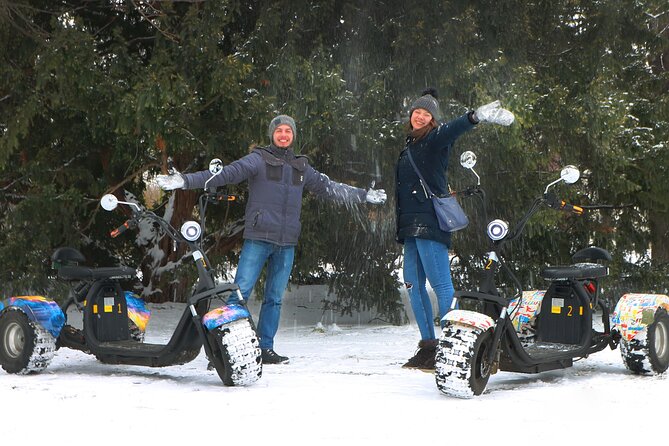
One of your early stops is Maltezské náměstí, basically right in front of the shop where you begin training. This is where the tour sets you up for the rest of the day: you practice, you get instructions, and you take a supervised “test spin” before you join the sightseeing loop.
This matters because it’s easy to underestimate how different Prague streets feel. In your first few turns and stops, you’re learning the trike’s pace, braking, and how it handles uneven stone. Once that clicks, the rest of the tour feels surprisingly smooth for how much ground you cover.
Kampa Island and the river views without long walking
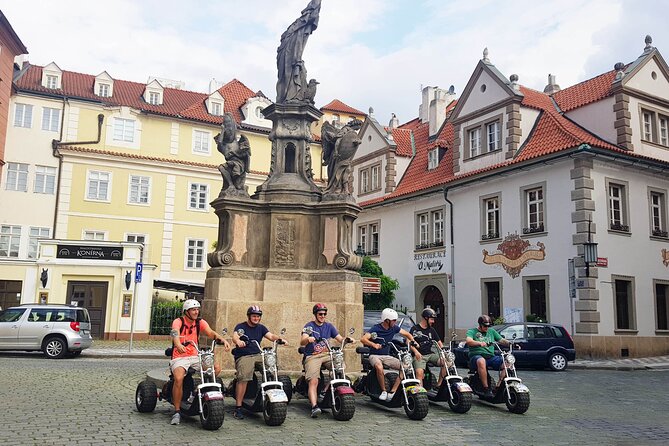
After training, you head toward one of Prague’s prettiest “pause and look” areas: Kampa. Kampa Island sits near Charles Bridge and feels different from the busy street grid. Even if you’ve never been here, you’ll understand why it shows up on postcards.
Season can change your experience. In winter time, the Kampa Island Christmas Market is part of the mix. Even if markets aren’t your thing, the route timing can still help because it brings you out of the main traffic flow into a calmer pocket for photos.
From here, it’s an easy rhythm: short riding segments, quick explanatory stops, then a photo moment. It’s not a long lecture tour. It’s more like a guided walk that happens at trike speed.




Charles Bridge viewpoints and Prague’s most camera-friendly streets
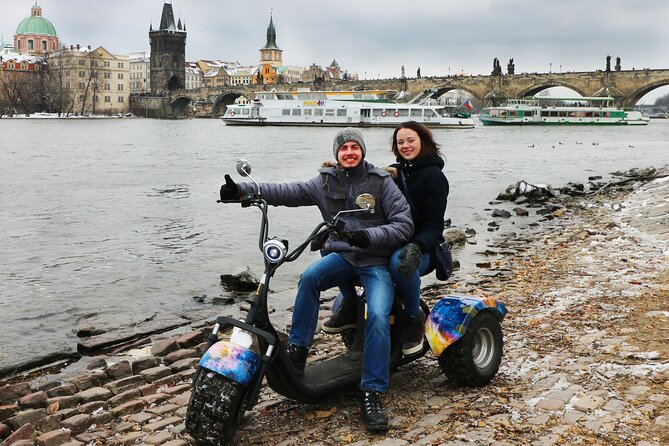
You’ll pass under Charles Bridge and stop at one of the best viewpoint areas near it. This is a smart way to experience the bridge because you’re not stuck fighting crowds for a single angle—you get a planned stop and time for photos.
Then comes a fun, very Prague-specific moment: the Narrowest Street of Prague. It’s famous for a reason, and riding up to it on a trike makes the moment feel like a mini attraction, not just a quick glance.
You also get a taste of Prague’s quirky culture via a stop at the Franz Kafka Museum area—you don’t visit the museum itself, but you do see the peeing boy statue in the yard. That’s a great use of time: it’s memorable, quick, and doesn’t turn into another indoor waiting game.
Metronome, Letná Park, and the panorama logic of the route
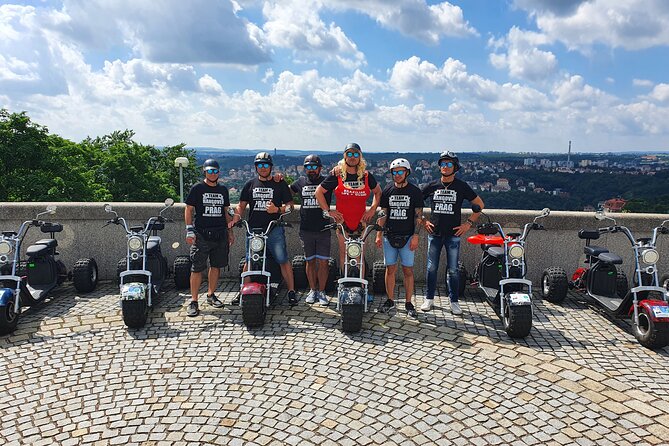
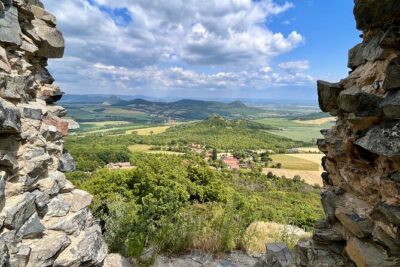
The tour leans into the city’s big views with a stop at Letná Park, including a viewpoint over the Vltava river and Old Town. This is the kind of stop that makes the map make sense. From a hilltop angle, Prague’s layout stops being abstract and starts feeling obvious.
Before or around that viewpoint you’ll pass the Metronome, a monument formerly associated with Joseph Stalin and now known as the Metronome. It’s a small stop, but it helps you understand how the city’s public spaces changed over time.
One practical point: this section tends to be where you benefit from the trike most. Hills and distances that feel annoying on foot become easy when you’ve got electric help. And because the tour includes photo stops, you don’t need to stop your whole day to find the “perfect view.”
Prague Castle: what you see from the outside (and why that’s enough)
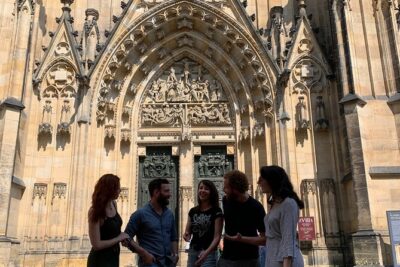
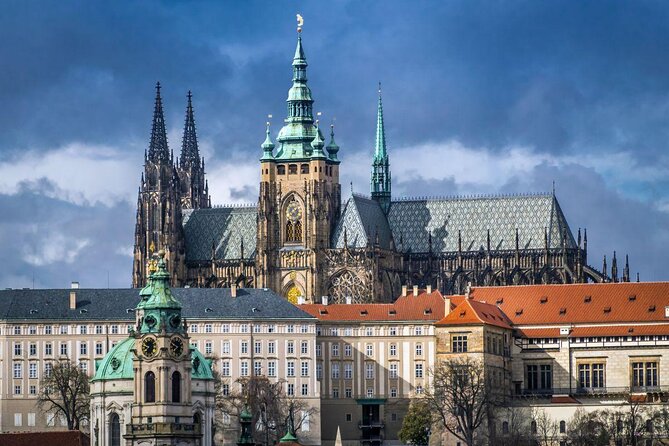
Prague Castle is a must-see, but this tour takes a strategic approach: you don’t enter the castle. Instead, you view it from the outside from several spots, including the Prague Castle area and nearby viewpoints.
They also mention that in private tour options, you can configure an itinerary with access to a free entrance part of the Castle. For the open-group experience, think of this as “big picture first.” You get the scale, the silhouette, and enough angles to decide whether you want a deeper castle day later.
This “outside-only” approach is also practical. It keeps the pace moving and avoids added tickets for entrances. Since paid entry is not the tour’s focus, you spend time riding, learning, and looking—rather than standing in lines.
Lesser Town and the classic Old Town loop
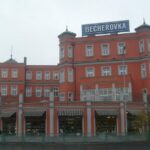
As you continue, you’ll move through Lesser Town and into areas that feel like the historic center’s hinge. Stops can include Obecní dům (you see it without entering on the open-group experience) and other iconic structures from street-level angles.
You’ll also have time at St Nicholas Church (not described as an inside visit) and a stop near Golden Lane in the Castle vicinity on private options. The private-versus-open difference shows up again in the rest of the itinerary: some famous places only appear on tailor-made routes.
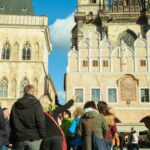
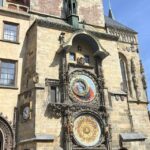
Then you reach the Old Town “hits,” with stops like Staroměstské náměstí and the Old Town Hall with the Astronomical Clock area. In the open format, you’re positioned to see, photograph, and get context without turning your tour into a queue marathon.
Wenceslas Square and the market season add-on
If your tour timing lines up with the season, you can catch multiple market stops. You may include Wenceslas Square and a Wenceslas Square Christmas Market stop, plus additional market points depending on which private options your itinerary includes.
Even outside peak season, Wenceslas Square is a useful contrast to the old-world lanes. It gives you the “modern Prague” feeling—wide streets, bigger sight lines, and a different kind of energy.
Tip: if markets are part of your reason for booking, aim for a longer duration. Shorter options skip some of the later viewpoints, so you’ll want time to enjoy both riding and the “stop and browse” moments.
Rain, cold, and riding comfort you can actually plan for
Prague weather can be sneaky. The good news: in light rain, proper raincoats are provided free of charge and tours run as planned. In extreme weather, the tour may be rescheduled or canceled with a full refund for safety.
Cold days are still cold days, of course. But the structure of the tour helps: you’re moving, you’re stopping for short photo breaks, and you’re not spending your day sitting on a bus. If you’re sensitive to chill, dress like you expect wind off the river—then you’ll feel much happier during the ride.
Also, remember this is a riding experience. If you’re comfortable riding after the test-drive, you’ll handle the rest.
What the included extras mean in real life
This tour includes the basics that prevent hassle:
- Live guiding
- Helmets (all sizes)
- Safety training and supervised test-drive
- Photo shooting (they help with pictures during stops)
- Unlimited tea/water/coffee in the office
Tipping your guide is optional.
The photo shooting detail is more valuable than it sounds. Prague is famous for angles, and it’s hard to balance riding safety with “hold the phone just right” when you’re on uneven stone. Having someone help you get a few solid shots means you’ll actually keep souvenirs, not just blurry attempts.
And because the group maximum is 20, the pace usually stays friendly—enough time to stop, see, and move on without feeling herded.
How long should you book: 1 hour vs 3 hours
The tour duration is listed as 1 to 3 hours (approx.), and different lengths include different stops. Shorter options skip later highlights. For example, some major additions like parts of the Castle area and certain hilltop or monastery-view stops are not included in the 30-minute option, and additional points aren’t included in the 60-minute option.
So here’s the rule I’d use if you’re deciding:
- Book 1 hour if you want a quick orientation to the city and a handful of classic photo stops.
- Go 2 hours if you want a real feel for the neighborhoods and multiple viewpoints.
- Choose 3 hours if you want the most stops and more chances to enjoy markets or extra viewpoint areas.
If you’re only in Prague briefly, this matters. The tour is designed to get you oriented fast, then help you decide what to see in detail the rest of your trip.
Who this tour is best for (and who should pick something else)
This electric trike tour is a great fit if you:
- Want to see a lot without walking for hours
- Enjoy photo stops and “why this spot matters” explanations
- Prefer a fun guided ride over a museum-heavy day
- Like getting to places you might skip on your own
It’s also great for older travelers who still want movement. Several reviews highlight the experience as ideal for 50+ travelers looking for adventure, especially because the electric assistance makes it manageable.
It may be less ideal if you:
- Absolutely hate cobblestones or feel uneasy learning a new vehicle
- Want to enter lots of attractions (this is mainly outside viewing and photo stops)
- Plan to spend all day indoors somewhere (this tour is built for outdoors and street-level sightseeing)
Should you book the Amazing Electric Trike Tour of Prague?
I’d book it if your goal is getting your bearings fast and enjoying Prague’s top streets and viewpoints without spending your whole day walking. The pairing of helmeted training with a structured sightseeing loop makes the experience feel safe and fun, and the outside-only approach keeps the pace flowing.
If you’re choosing between this and a bus tour, the trike format usually wins because you can get closer to the streets people actually walk, including car-free-feeling lanes and narrow spots. If you’re choosing between this and a pure walking tour, the electric help and photo assistance save time and stress.
Just be honest about one thing: you need to be willing to practice and ride. If you can handle that, this is one of the easiest ways to see a broad slice of Prague in a short window.
FAQ
How much is the electric trike tour in Prague?
The price is listed as $60.65 per person.
How long does the tour last?
Duration is listed as 1 to 3 hours (approx.).
Where do we meet for the tour?
The meeting point is Maltézské nám. 479/7, Malá Strana, 118 00 Praha-Praha 1, Czechia. The tour ends back at the same meeting point.
Do I need to know how to ride before I go?
You’ll get safety training and a supervised test-drive before the tour starts, and helmets are provided. The tour is described as workable for most travelers, but you should be prepared to learn how to drive the trike during the training.
Are helmets included?
Yes. Helmets are mandatory and all sizes are provided.
Are the sights entered during the tour?
No. You do not go inside sights where you would be charged additional paid entrance. You mainly view attractions from outside.
What about rain or bad weather?
In light rain, proper raincoats are provided free of charge and tours run as planned. In extreme weather, your tour may be rescheduled or canceled with a full refund for safety.
Are there age limits for children?
Under 18 can go as a passenger, not as a driver. If a child is taller than 150 cm (4.9 ft), you must contact the company in advance for an e-bike or e-scooter option. For children 1–6 years old, a classic electric bike with a child seat may be available (child is free if you mention it in special requirements), with a maximum child weight of 22 kg (48.5 lbs).
What’s the group size limit?
The tour lists a maximum of 20 travelers.