Prague WWII history can feel heavy. This semi-private walk makes it personal, street by street, with stories tied directly to real places. I like the way the tour brings in named Czech historian Jiří Klůc and the tour guide’s own research so the details don’t feel generic.
What I really enjoy is the focus on human stakes, not just dates and uniforms. You’ll also get standout storytelling at the places connected to Operation Anthropoid and Nicholas Winton, including the church/crypt tied to resistance after Reinhard Heydrich was assassinated.
The one thing to think about: this is a dark-history route, so if you prefer lighter sightseeing, the tone may be a lot for you, even though the guide keeps it thoughtful and clear.
In This Review
- Key highlights
- A Prague WWII tour that feels personal, not scripted
- Start at Wenceslas Square: where Nazi occupation stories begin
- Prague National Theater Opera: 1945 liberation and the Prague Uprising
- Praha hlavní nadraží: Nicholas Winton and the train rescue
- The Heroes of the Heydrich Terror memorial: bullet holes and the hiding church
- Dancing House: the American bombing story at a modern landmark
- Petschkův palác: Gestapo headquarters on the walk’s later leg
- Price and what you’re really paying for (and what costs extra)
- Logistics that help you enjoy it more
- Who should book this Prague WWII tour
- Should you book? Yes, if you want Prague to make sense
- FAQ
- How long is the WWII Prague semi-private tour?
- How many people are in the group?
- What language is the tour offered in?
- Where does the tour start and end?
- Is admission included for all stops?
- What’s included in the price?
- Is public transportation included?
- What happens if weather is poor?
Key highlights
- Maximum 6 travelers keeps the pace calm and questions actually get answered
- English-language tour with a local historian approach and plenty of on-the-ground context
- Operation Anthropoid and the Heydrich Terror memorial stop includes a church/crypt visit where resistance hid
- Nicholas Winton’s story at Praha hlavní nadrazi connects Prague to the film One Life
- Gestapo headquarters at Petschkův palác anchors the WWII story in the city’s real geography
- American bombing of Prague covered at the Dancing House ties 1945 events to modern landmarks
A Prague WWII tour that feels personal, not scripted
This is the kind of Prague history tour I recommend when you want more than a checklist. In about 2 hours 30 minutes, you cover major WWII and post-war sites without racing, and the small group size (up to 6) helps the guide keep the pace humane.
I also appreciate that the tour is explicitly semi-private. That matters in a place like Prague, where you can easily get swept up in big group clumps. Here, you can ask questions and actually get answers instead of hearing history through a fog of distance and timing.
Finally, you get a strong “local brain” feel. The stories connect Czech experience, occupation-era pressure, liberation-era violence, and survivor-linked rescue history—delivered in English, with a guide who clearly cares about how the past still lands on people.
You can also read our reviews of more private tours in Prague


Start at Wenceslas Square: where Nazi occupation stories begin
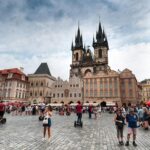
Your tour starts at the Statue of Saint Wenceslas on Václavské náměstí in Prague 1. Wenceslas Square is one of those places where it’s easy to look at buildings and forget that history has weight here. This stop is built to fix that.
You’ll get stories from the beginning of the Nazi occupation, using the square and its surrounding historic area as the anchor. It’s not just “something happened near here.” You’re guided to understand the square as a stage where power, fear, and public life collided.
A bonus at this stop: the time is short—about 25 minutes—and the admission is free. That’s a good rhythm for a tour with heavier moments ahead.
Prague National Theater Opera: 1945 liberation and the Prague Uprising
Next comes Prague National Theater Opera, with a focus on 1945 liberation. The tour highlights the advance of the U.S. Army led by General George S. Patton in western Bohemia, then connects that to dramatic events in Prague itself.
This is also where you’ll hear about the Prague Uprising in 1945. The value here is how the guide uses the theater setting as a lens for a turning point—one that’s easy to admire from the outside, yet tense in context. If you’ve ever looked at Prague’s grandeur and wondered what it cost, this stop starts answering that.
The stop runs about 20 minutes and again has free admission. It’s short enough to digest, but it carries enough context to make the rest of the walk hit harder.
Praha hlavní nadraží: Nicholas Winton and the train rescue
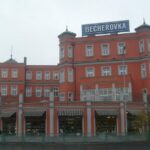
After the theater, you head to Praha hlavní nádraží (the main train station). This is where the tour shifts tone in a powerful way: away from occupation and terror, toward rescue and survival.
The story centers on Nicholas Winton, who saved 669 children, mainly Jewish, through train transports. If you’ve seen the film One Life, this stop is the kind that makes the movie’s subject feel real and specific—because it’s tied to Prague’s railway geography.
What makes this stop especially memorable is the added connection to the human side of history. The tour includes access to exclusive locations linked to Sir Nicholas Winton, plus the guide’s personal research. One line that stands out: the guide had a rare opportunity to interview some of the children he rescued.
This stop is about 30 minutes, with free admission. For me, it’s also a reminder that WWII history isn’t only about destruction. It’s also about people who helped, often at enormous risk and with limited power.
The Heroes of the Heydrich Terror memorial: bullet holes and the hiding church
Now you’re in the heart of Operation Anthropoid and the assassination of Reinhard Heydrich. This part of the tour is long enough to feel weighty—about 45 minutes—and it’s the stop where admission is included.
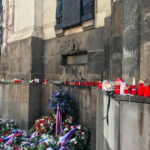
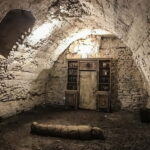
You’ll visit the National Memorial To The Heroes Of The Heydrich Terror, where you can see bullet holes. That detail matters because it takes the story out of abstraction. You’re looking at the physical aftermath, not just hearing a summary.
The tour also includes the church where the resistance hid after the assassination. Since the guide frames Heydrich as the founder of the Holocaust and the third-highest-ranking Nazi, the experience doesn’t shy away from what that leadership meant. The point isn’t sensationalism; it’s cause and effect—how terror policies drove resistance, and how resistance changed lives.
Practical note: this stop is emotionally intense. If you’re someone who processes best by keeping moving, you might want to pace yourself here and take in the space in small doses.

Dancing House: the American bombing story at a modern landmark
After the memorial, the route pivots to the Dancing House for a 15-minute stop. The theme is the American bombing of Prague in 1945.
What I like about this stop is the contrast. You’re looking at a modern, famous structure, and the guide uses it as a reminder that the city’s architecture didn’t appear in a vacuum. It connects an iconic present-day shape to a 1945 event that changed the city.
You won’t need long here, and admission is free. It’s a short course correction that helps you keep your bearings: yes, Prague is beautiful, and yes, beauty survived alongside destruction.
Petschkův palác: Gestapo headquarters on the walk’s later leg
The last big WWII anchor is Petschkův palác, presented here as Gestapo headquarters. This stop is only about 15 minutes, with free admission, but the theme is unmistakable.
In a short time, you get the sense that Prague’s WWII story wasn’t only on battlefields. It played out in specific institutions and specific rooms, and the guide keeps pointing out how a city’s geography preserves that history.
This stop also fits the pace of the full tour. By now you’ve moved through occupation, liberation, rescue, resistance, and bombing. Gestapo headquarters gives the “surveillance and repression” thread the tour needs to feel complete.
Price and what you’re really paying for (and what costs extra)
The price is $62.47 per person for roughly 2.5 hours. That’s not “cheap-cheap,” but in Prague, small-group, English-led, heavily scripted-history tours can cost more. Here, you’re paying for access to specific places and the guide’s ability to connect them into one coherent narrative.
Also worth noting: all fees and taxes are included. That reduces the usual math stress where you’re constantly guessing what’s extra.
Admission is free for most stops. The one stop that lists admission as included is the Heroes of the Heydrich Terror memorial. So you’re not paying extra for every single location.
What’s not included: public transportation, listed at €1.30 per person. If you’re relying on transit between stops, build that into your budget. The tour is near public transportation, which helps, but it doesn’t remove the transit cost.
My practical take: for this topic mix, the value is in the pairing of places with named stories—especially Nicholas Winton (669 children) and the Heydrich/Operation Anthropoid memorial visit.
Logistics that help you enjoy it more
This tour is offered in English and uses a mobile ticket. Confirmation is received at booking, which keeps things simple when you’re planning a busy trip.
Group size is capped at 6, which you’ll feel in the guide’s ability to answer questions and keep the pace steady. The tour also allows service animals, and it notes that most travelers can participate.
The big “plan ahead” item is weather. The experience requires good weather, and if it’s canceled due to poor conditions, you’ll be offered a different date or a full refund. For a WWII walking tour, that’s not a small detail—some stops involve standing and absorbing sensitive information in place.
Who should book this Prague WWII tour
I’d point you to this tour if you:
- Want a Prague WWII walking experience that covers more than one era (occupation, 1945 liberation, post-war resonance)
- Care about stories tied to exact places, not just general background
- Like history delivered with a human focus and plenty of time for questions
- Plan to connect Prague to broader WWII stories like One Life and Operation Anthropoid
It’s also a great fit for history buffs, families who want context that’s more than a textbook, and couples who want a meaningful shared activity.
If you’re looking for a light, casual sightseeing stroll, you may prefer to pair Prague’s WWII history with a separate day of parks, viewpoints, and food.
Should you book? Yes, if you want Prague to make sense
Book this tour if you want Prague WWII history that stays grounded in real geography: Wenceslas Square’s occupation-era stories, the main station link to Nicholas Winton’s rescue of 669 children, the Heydrich Terror memorial with bullet holes and a hiding church, and the Gestapo headquarters at Petschkův palác. The ending at the Dancing House gives you a “present-day Prague, shaped by 1945” feeling that lingers.
Skip it only if you know you want less intensity. This tour covers dark material, and the guide keeps it respectful rather than casual.
If you’re the type of traveler who enjoys asking questions and coming away with names—Jiří Klůc, General George S. Patton, Nicholas Winton, Reinhard Heydrich—this is a strong use of your time in Prague.
FAQ
How long is the WWII Prague semi-private tour?
It’s about 2 hours 30 minutes.
How many people are in the group?
The tour has a maximum of 6 travelers.
What language is the tour offered in?
It’s offered in English.
Where does the tour start and end?
It starts at the Statue of Saint Wenceslas on Václavské náměstí, and it ends at the Dancing House on Jiráskovo nám. 1981/6.
Is admission included for all stops?
Admission is free for most stops, and admission is included for the National Memorial To The Heroes Of The Heydrich Terror stop.
What’s included in the price?
All fees and taxes are included.
Is public transportation included?
No. Public transportation is listed as €1.30 per person.
What happens if weather is poor?
The experience requires good weather. If it’s canceled due to poor weather, you’ll be offered a different date or a full refund.