REVIEW · PRAGUE
Stories of Jewish Prague Walking Tour
Book on Viator →Operated by Insight Cities · Bookable on Viator
One walk, many centuries, serious meaning. This Stories of Jewish Prague tour strings together medieval, wartime, and modern Jewish life in the Jewish Quarter, starting at the Old-New Synagogue and ending with what’s next for the community today. What I like most is the way the route gives you both landmarks and human stories, in a tight 3 hours.
Two things I’d put on my must-do list right away: the small group size (max 8) and the quality of the historian guide. You’re not shoved along; you get time for questions, and you’ll hear stories shaped by real ties to Prague. A possible drawback to weigh: entrance tickets to major sites like the Old-New Synagogue and the Jewish Museum are not included, so your total cost will be higher once you add those.
In This Review
- Key highlights worth planning for
- Old-New Synagogue to the Jewish Quarter: what this walk actually covers
- Entering the medieval roots: construction, custom, and daily life
- Mordechai Maisel’s Renaissance Prague: power with a personal side
- Rabbi Judah Loew ben Bezalel and the thinkers of the era
- The cemetery and memorial stop: when the story gets sobering
- From Maria Theresa to the Edict of Toleration: expulsion, reversal, survival
- Nazi Germany, local tensions, and the path toward catastrophe
- Communist-era life and Prague’s Jewish community today
- Guides, pacing, and how the small group changes everything
- Price and tickets: what you’re really paying for
- Where you meet, how long you’re out, and what to wear
- Who should book this Jewish Prague walk (and who might want a different match)?
- Should you book Stories of Jewish Prague Walking Tour?
- FAQ
- How long is the Stories of Jewish Prague Walking Tour?
- What does the price include?
- How much are the entrance fees?
- Where do I meet the tour?
- How big is the group?
- Can I choose a morning or afternoon departure?
- Is it okay for most travelers to participate?
Key highlights worth planning for
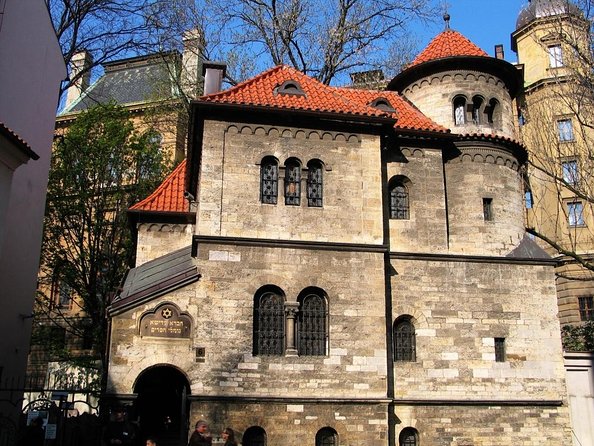
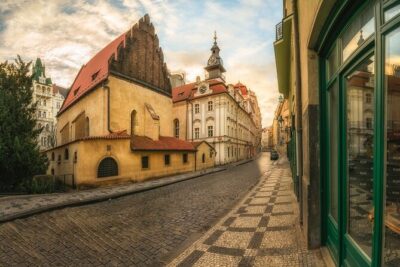
- Old-New Synagogue start at Europe’s longest-functioning synagogue, built on late-13th-century foundations
- Mordechai Maisel’s legacy: the Renaissance Town Hall, plus his money for paving and charity
- Rabbi Judah Loew ben Bezalel and the thinkers who shaped Jewish life and learning in Prague
- Maria Theresa to the Edict of Toleration story—expulsion, then reversal, then survival
- Sober moments like the cemetery/memorial segment, handled with care in the overall narrative
- Modern follow-through: wartime damage, Communist-era life, and Prague’s Jewish community today
Old-New Synagogue to the Jewish Quarter: what this walk actually covers
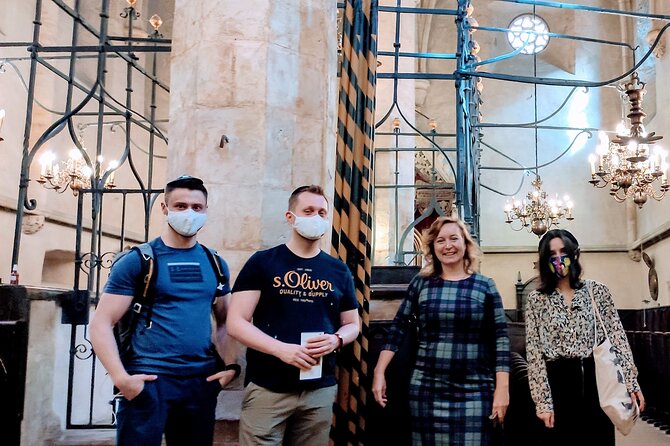
If you’re trying to understand Prague’s Jewish Quarter without getting lost in facts, this tour is built for you. You’ll begin at Maiselova 38/15 in Josefov, then head to the Old-New Synagogue—the longest functioning synagogue in Europe. That starting point matters because it anchors everything that comes after. You’re not just looking at old stones; you’re starting where a community’s story kept continuing.
From there, the route moves through the Jewish Quarter on a specially designed path that connects different time periods. The tour’s framing is simple: medieval roots, Renaissance growth, expulsions and legal reversals, destruction during Nazi rule, then the long shadow of Communism, and finally what the community looks like today. You’ll hear how local Jews hired Christians to build the synagogue in the late-13th century, which immediately gives you a grounded sense of how life worked on the ground.
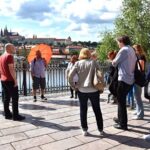
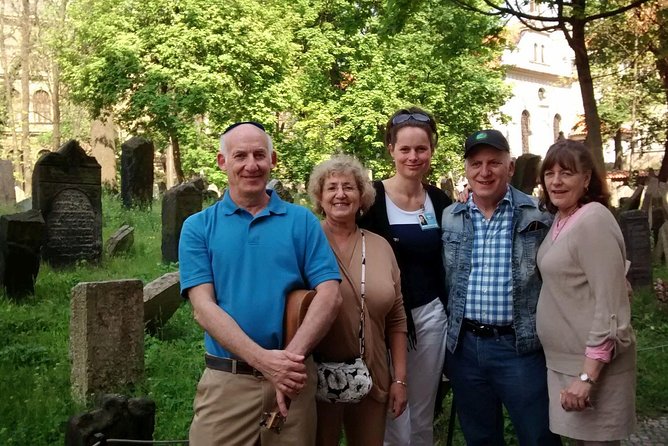
One practical thing you’ll appreciate: with a historian guide and a group capped at 8 travelers, this is easier to manage than the big-bus-style walking tours. You can ask questions without the whole day stalling out. In guides’ hands—like Martina, Petr, Katerina Prusova, and Bonita—the storytelling tends to include both structure and personality. People also note details like humor and clear explanations, and even thoughtful extras such as a guide helping with a bag or umbrella when the weather turns.
Good to know: the tour is about 3 hours and you’ll be on your feet for most of it. If you need lots of frequent breaks, you’ll want to plan for that in advance.
You can also read our reviews of more walking tours in Prague

Entering the medieval roots: construction, custom, and daily life
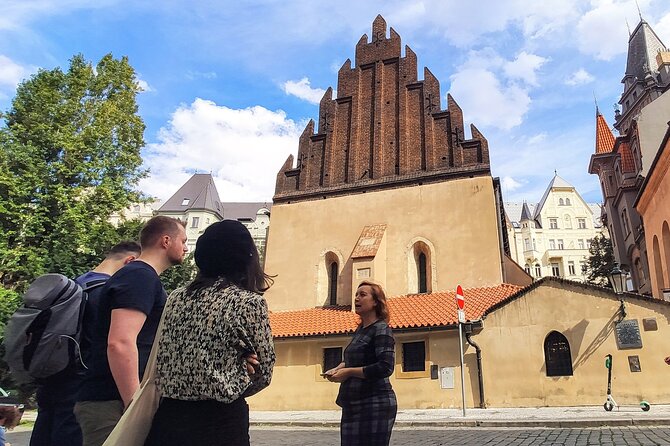
The tour starts by explaining the deepest roots of the Prague Jewish community, and it does so with a specific point of origin: the synagogue’s construction in the late 13th century. The idea isn’t just to say, “This is old.” It’s to show you what cooperation and conflict looked like back then—local Jews hiring Christians to build the synagogue.
Then you move from building history to human history: Jewish religious and social customs during the medieval period. This portion is valuable because it helps you read the neighborhood with better eyes. Without this context, the Jewish Quarter can feel like a museum after a museum. With it, you start noticing how the physical spaces relate to community structure—who had authority, how people lived together, and what rituals and social norms shaped daily life.
Here’s the only caution I’d give you on this part: one guide may emphasize cultural and political history more strongly than the nuts-and-bolts of ritual practice. If you’re hoping for a deeper “how the service works” type of explanation, you’ll likely do best by asking your guide during the walk. The tour format gives you that chance.
Mordechai Maisel’s Renaissance Prague: power with a personal side
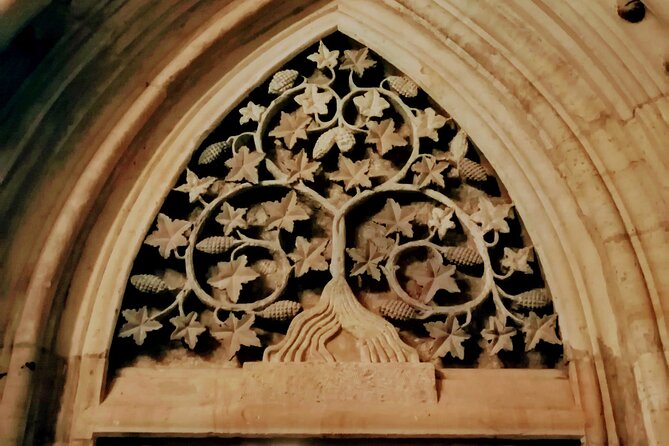
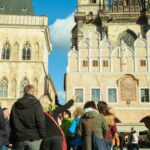
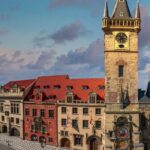
Renaissance Prague is where the story takes on a different pace. You’ll visit the Renaissance Town Hall built by Mordechai Maisel, then learn why he mattered beyond architecture. Maisel wasn’t just a figure in a textbook; the tour explains that he used his own money to pave neighborhood streets and provide charity. That’s one of the best “value of storytelling” moments in the experience: it connects politics, money, and neighborhood life in a way that sticks.
When you stand in these places, it’s easier to understand how a community could gain stability and influence. And it also shows a less tidy truth: even “golden age” periods are layered. They can bring prosperity, but they also raise stakes when outside power shifts.
If you enjoy places where buildings reflect social decisions, you’ll like this section a lot. It turns history into something you can point at: a location, a person, a practical effect on real streets.
Rabbi Judah Loew ben Bezalel and the thinkers of the era
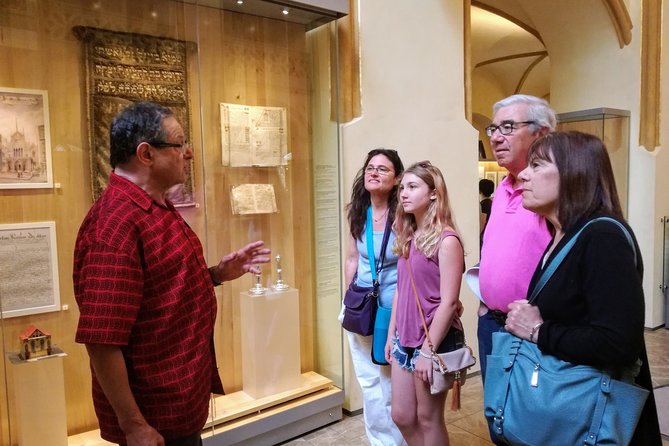
The tour doesn’t only focus on mayors and emperors. It also brings in intellectual figures, including Rabbi Judah Loew ben Bezalel—a writer and theologian tied to the ideas that shaped Jewish life in Prague.
Why this part matters for you: thinking about scholars in a city makes the history feel less like a sequence of punishments and decrees. It adds a “what did people argue about, study, and build” layer. You’ll get a sense of the community as active—producing thought, religion, and scholarship—rather than only reacting to events.
This also helps later with the wartime and Communist-era sections. When the tour reaches modern destruction, you’ll have a better emotional baseline for what was lost.
The cemetery and memorial stop: when the story gets sobering
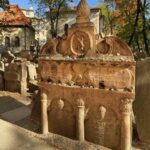
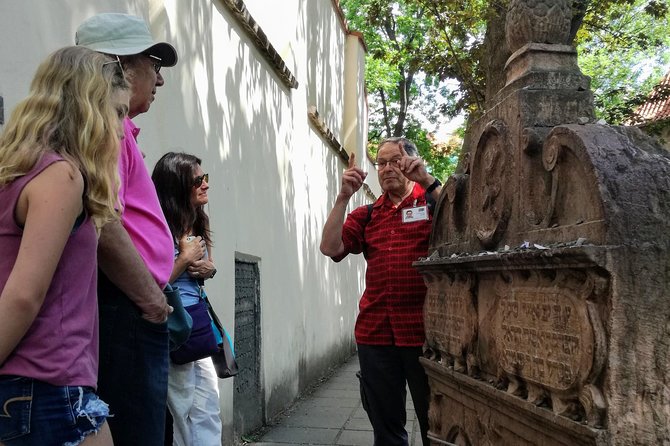
One segment that really lands is the old Jewish cemetery/memorial moment. People describe it as sobering, and you should treat it as that kind of stop. This is not the time for multitasking or speed-walking past details.
The value here is tone control. The tour’s history spans centuries, but the cemetery segment reminds you that these are not abstract dates. It’s where names and lives become visible. If you’re sensitive to emotional content, plan to slow your pace here and take a beat.
Also, because the tour involves walking most of the time, this is a good point to decide your own rhythm: if you want a longer look, ask your guide to give you time. The small group size generally makes that easier than on large tours.




From Maria Theresa to the Edict of Toleration: expulsion, reversal, survival
Then the story pivots toward hardship and legal power. The tour covers how Empress Maria Theresa expelled the entire community, followed by her son’s reversal through the Edict of Toleration. Hearing these changes explained in sequence helps you understand something key: tolerance in history isn’t always a straight line. It can flip due to political decisions.
For you, this section is useful because it builds a “cause-and-effect” map. You’ll connect policies to lived reality. The Jewish Quarter becomes more than a set of sites—it becomes a place shaped by orders coming from above, but navigated by people on the ground.
It’s also a helpful mental step before the twentieth-century material. When the tour moves into Nazi rule and the lead-up to invasion, you won’t feel like you’re jumping from one tragedy to the next without context.
Nazi Germany, local tensions, and the path toward catastrophe
The tour then covers how Nazi Germany decimated Prague’s Jews. It also discusses local politics and ethnic tensions that preceded Hitler’s invasion of Czechoslovakia.
This is one of the most important parts of the tour if you care about understanding history honestly, not just romantically. The story doesn’t stop at the moment violence starts; it includes the social conditions that made it possible. That matters because it helps you recognize patterns in how scapegoating and political friction can grow over time.
One practical note: this section can feel heavier than the earlier ones. I’d give yourself permission to absorb it slowly. A good historian guide can keep it human and comprehensible, and the best guides in this experience have that balance of narrative and clarity.
Communist-era life and Prague’s Jewish community today
After the twentieth-century devastation, the tour continues through the Communist era and ends with a discussion of the Jewish community today. That closing matters for modern travelers. A lot of tours about Jewish history end at the worst moment and leave you with grief but no sense of continuation.
Here, you finish with a present-tense viewpoint. That doesn’t erase suffering, but it prevents the experience from becoming purely tragic. It also gives you a framework for what you might see now in Prague: community resilience, ongoing identity, and how history shows up in daily life.
If you’re the type who likes tours that end with practical understanding—how people live now, what’s changed, what hasn’t—this final discussion is a strong reason to pick this walk over a purely museum-based route.
Guides, pacing, and how the small group changes everything
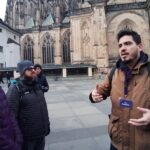
The guide is the engine of this experience. The tour is led by a historian guide (included in the price), and the impact shows up in the details people mention: clear communication, respectful tone, and room for questions.
You’ll also benefit from the group size. With a maximum of 8 travelers, it’s easier to:
- ask follow-ups when a name or policy feels confusing
- get clarification without feeling rushed
- adjust pacing when the story turns emotional
Several guides are highlighted in the experience’s feedback—Martina, Petr, Katerina Prusova, and Bonita—and they’re described as bright, articulate, kind, and sometimes funny. One person even notes a guide helping carry a bag or an umbrella. That kind of small care matters when you’re walking in older streets.
There is one pacing concern to consider: a few people note that the tour ran closer to four hours instead of three. That’s not necessarily bad if you’re flexible, but it does affect planning. Build in buffer time after the tour.
Price and tickets: what you’re really paying for
The tour price is $126.03 per person for about 3 hours. For Prague, that’s not a bargain-bucket price, but it can be good value if you care about context and a human guide rather than just hopping between monuments.
Two cost points to plan for:
1) Your guide time is included. You’re paying for historian-led storytelling and a structured route through key Jewish sites in the Jewish Quarter.
2) Major entrance fees are not included. You should budget extra for Jewish Museum and Old-New Synagogue tickets: 600 CZK for adults and 400 CZK for students (as listed). If you don’t add this in your mental math, the sticker shock can hit at the ticket desk.
If you’re traveling as a pair, you may also like the practical note that there are group discounts, though exact details aren’t spelled out here. The key takeaway is simple: treat the ticket fees as part of the trip budget from the start.
One more planning angle: the tour uses a mobile ticket. That’s handy, and it reduces hassle at check-in.
Where you meet, how long you’re out, and what to wear
You meet at Maiselova 38/15, 110 00 Praha 1-Josefov. The tour is near public transportation, so you’re not stuck with a long walk just to get started. It ends somewhere in Prague after the final discussion.
For comfort, plan on standing and walking much of the time. Since it’s a Jewish Quarter walking route with several stops, wear shoes you trust on cobblestones and uneven pavement. If it’s rainy, the experience is still doable, but you’ll want a light rain layer. One guide even helped with umbrellas, which suggests weather can factor into real comfort.
Who should book this Jewish Prague walk (and who might want a different match)?
I think this tour is a strong fit if you want:
- a chronological story of Jewish life in Prague, not just a checklist of sights
- context for Jewish Quarter landmarks like the Old-New Synagogue and the Maisel connections
- a guide-led experience with time for questions in a max-8 group
You might want to be a bit picky if:
- you’re expecting a heavy focus on step-by-step Jewish religious rituals as a central theme
- you have limited mobility or need frequent long breaks, since much of the tour is spent standing and walking
If you’re visiting Prague for the first time and want one guided experience that gives you a framework for the rest of your trip, this is a solid choice. And if you already plan to visit museums on your own, this walk helps make them make sense.
Should you book Stories of Jewish Prague Walking Tour?
Yes, I’d book it if your goal is understanding. The route starts in a meaningful place—the Old-New Synagogue—then builds out through Renaissance leadership (Mordechai Maisel), thinkers (Rabbi Judah Loew ben Bezalel), major political shifts (Maria Theresa and the Edict of Toleration), the catastrophe under Nazi rule, Communist-era life, and then today’s community. That arc is the payoff.
Do book with your budget in mind: the ticket price doesn’t include entrance to the Jewish Museum and Old-New Synagogue, so plan for those 600/400 CZK fees. Also, leave yourself a little flexibility, since some experiences run longer than the stated 3 hours.
If you want a guided walk that’s more than “see the sights,” this one is worth your time.
FAQ
How long is the Stories of Jewish Prague Walking Tour?
It runs about 3 hours (approx.).
What does the price include?
The price includes a historian guide. Entrance fees to the Jewish Museum and Old-New Synagogue are not included.
How much are the entrance fees?
The listed entrance fees are 600 CZK for adults and 400 CZK for students for the Jewish Museum and Old-New Synagogue.
Where do I meet the tour?
The meeting point is Maiselova 38/15, 110 00 Praha 1-Josefov.
How big is the group?
The tour has a maximum of 8 travelers, which keeps it small and allows for personal attention.
Can I choose a morning or afternoon departure?
Yes. You can choose either a morning or afternoon departure when booking.
Is it okay for most travelers to participate?
The tour states that most travelers can participate. It is a walking experience, so comfort on your feet will matter.