REVIEW · PRAGUE
Private Prague Introduction Walking Tour
Book on Viator →Operated by Insight Cities · Bookable on Viator
Prague clicks into place fast here, especially with a guide’s storyline. This private walking tour threads together Old Town and New Town landmarks with a historian guide, so you get the why behind what you’re seeing. I like that you can ask questions on the spot and steer the pace a bit, instead of being herded like a menu.
My second favorite part: the route doesn’t stop at postcard stops. It builds toward the Jewish Quarter memories and ends with photo-friendly views along the Vltava River. One drawback to keep in mind: food and hotel pickup/drop-off aren’t included, so plan for snacks and public transit unless pickup is offered for your booking.
In This Review
- Key Highlights at a Glance
- Entering Old Town Square: Your Start Point and How the Walk Works
- Old Town Hall and the Astronomical Clock: Symbols You Can Actually Read
- Church of Our Lady before Týn: Gothic Needles Pointing Up
- Old Town Square: Medieval Market to Political Stage
- Charles Bridge: A 600-Year Walk With Religious and Artistic Layers
- Bethlehem Chapel and Jan Hus: The Reformation in One City
- St. Giles Church: Baroque Interior as Evidence of Conflict
- Moving Into New Town: Prague as Capital of the Holy Roman Empire
- Wenceslas Square and the Czech Story in Public Space
- Theatre des États and Mozart-Era Prague
- St. Nicholas Church and Jan Hus Monument: Two Extremes of the Same Story
- Parizská Street and the Jewish Ghetto Memory
- Kafka’s Kinetic Statue and the Vltava River Finish
- Who This Private Prague Intro Fits Best (and Who It Doesn’t)
- Price and Value for a Group of Up to 10
- A Quick Before-You-Go Checklist
- Should You Book This Private Prague Introduction?
- FAQ
- FAQ
- How long is the Private Prague Introduction Walking Tour?
- What’s the group size limit for this private tour?
- Where do we meet the guide?
- Where does the tour end?
- What time does the tour start?
- Is hotel pickup included?
- Is a mobile ticket provided?
- Are tickets and admissions required for the stops?
- Does the tour include food and drinks?
- Is the tour only for my group?
- What happens if I cancel?
Key Highlights at a Glance
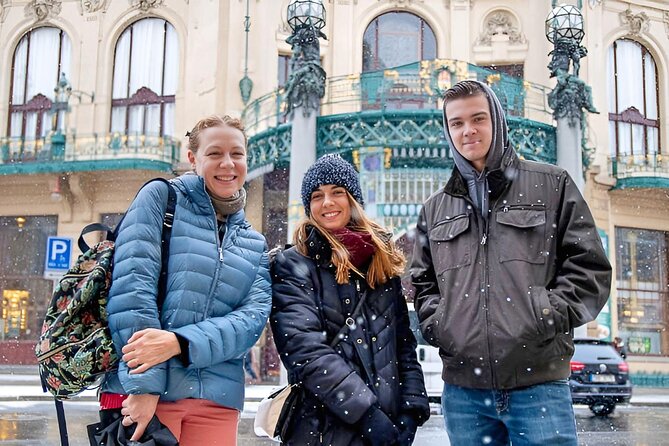
- Private group up to 10: everyone stays together with a guide who can answer your questions.
- Old Town Square to Vltava finish: you start in the heart of medieval Prague and end with big skyline photos.
- Historian-level storytelling: the tour uses buildings and symbols to explain centuries of change.
- Jewish Quarter context on Parizska Street: you get the hard part of Prague’s story, not just the pretty parts.
- Kafka and Enlightenment stops: from a kinetic Kafka statue to the Theatre des États and Mozart era connections.
- Most stops have free entry: you’re not constantly paying small admission fees along the way.
Entering Old Town Square: Your Start Point and How the Walk Works
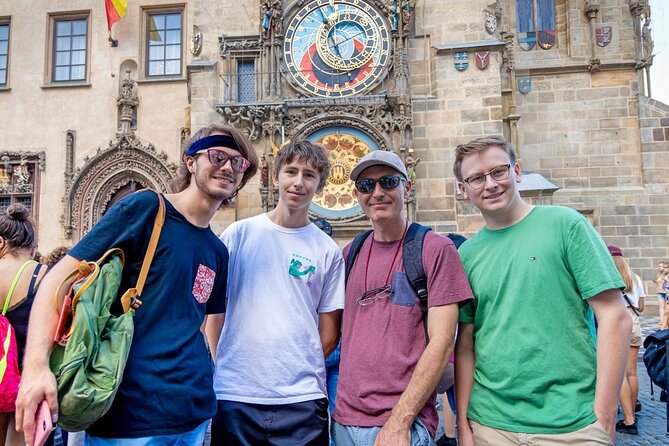
The tour begins at a café meeting point right by Old Town Square (MONDIEUM, Malé Strana side at Maltezské náměstí). That location matters. It puts you in the exact zone where Prague’s story starts turning into architecture—gates, towers, squares, and churches packed close enough that you can compare styles in minutes.
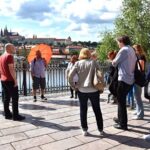
You’re also not starting with a lecture. You’ll walk almost immediately, which is the best way to absorb Prague. The route is set up for a comfortable flow through Old Town and on toward New Town, and it typically runs about three hours. It’s private, so you don’t have to fight for the guide’s attention when you want details.
One practical note: because it’s a walking tour through central Prague, shoes matter. Wear something you’d be happy to log a few thousand steps in. Even if the stops are short, the city is all uphill-in-spots and uneven stone.
You can also read our reviews of more walking tours in Prague

Old Town Hall and the Astronomical Clock: Symbols You Can Actually Read
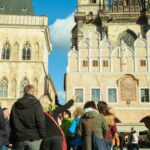
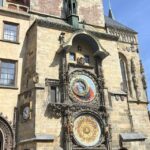
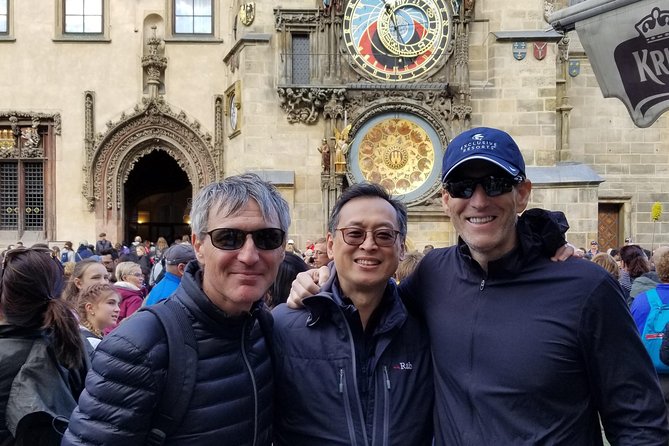
The first anchor is the Old Town Hall area and the Astronomical Clock. You’ll look at the structure and talk through the clock’s meaning—not just what it looks like. The key value here is interpretation. Prague’s clocks, towers, and guild-era buildings often use symbols to say who had power and what the city believed about time, order, and authority.
At this stage of the walk, your guide is also setting the tone: Prague’s history isn’t a straight line. It’s a stack of decisions made by rulers, religious movements, and everyday city life, layer after layer.
A tip that helps: when you hear the guide explain a symbol, glance back at what you’re seeing immediately after. Prague rewards that quick loop of description → looking.
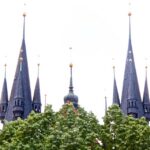
Church of Our Lady before Týn: Gothic Needles Pointing Up
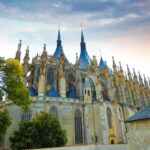
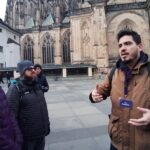
From the Old Town Hall zone you move to the Church of Our Lady before Týn. The contrast angle is built into the experience: you’ll compare its Gothic look with what you can see across the square, including St. Nicholas’ Church (another stop later).
Why I like this moment: Prague does Gothic in a very specific way. Those tall, pointed forms don’t feel like decoration. They feel like a statement—religion aiming for height, authority aiming for visibility. Your guide helps you see the choices in the architecture instead of just naming style labels.
Even if you’re not a church person, this is a good stop. It teaches your eye how to read the city quickly.
Old Town Square: Medieval Market to Political Stage
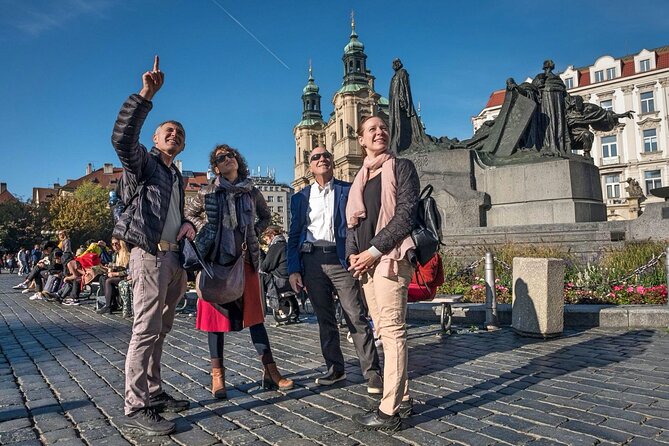
You’ll spend time back in Old Town Square for how it functioned as both marketplace and political space. This is where the tour becomes more than sightseeing. Your guide connects architecture and layout to real-world life: who met here, what commerce looked like centuries ago, and how governance played out in public space.
If you want to get your bearings fast in Prague, this stop is gold. You see the square as a system, not just a big photo area. The shape of the streets leading out, the prominence of key buildings, and the way the square concentrates attention all tell you how Prague was designed for people to gather and power to be visible.
Charles Bridge: A 600-Year Walk With Religious and Artistic Layers
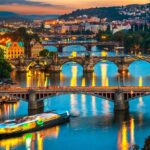
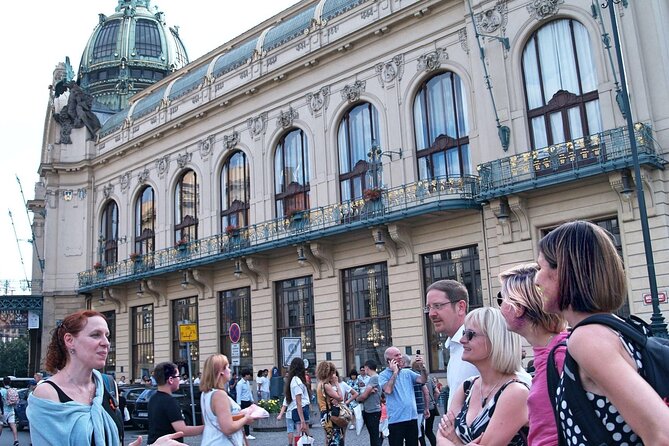
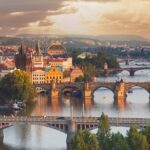
Charles Bridge is one of the most famous bridges in Europe, but the way this tour handles it is the difference. You’re not just walking across a pretty bridge. You talk about its long timeline and how the bridge developed with Prague’s changing identity, including the Baroque statues of saints that line it.
Here’s the practical payoff: the guide gives you a way to slow down while you’re crossing. Instead of treating it like a race to the far side, you can notice how the statues work as a kind of moving religious gallery—especially if you’re standing still long enough to take in the lineup.
Photo tip: if you want Castle views, use pauses during the crossing. People tend to stream, so timing matters more than you’d think.
You can also read our reviews of more private tours in Prague


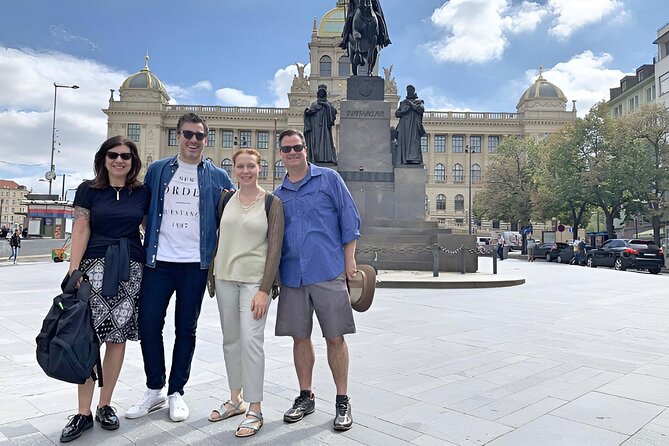
Bethlehem Chapel and Jan Hus: The Reformation in One City
Bethlehem Chapel is where the walk turns toward religious history and reform. You’ll connect Jan Hus and his role with later Protestant shifts. This matters because Prague isn’t only Catholic in its story. The city sits at a crossroads of ideas that spread, fought back, and left visible traces in public memory.
Even if you know only the basics—Hus as a reform figure—the tour’s structure helps you place him into the larger European religious upheaval. The guide’s approach is to show how the same city can contain multiple spiritual loyalties across time.
St. Giles Church: Baroque Interior as Evidence of Conflict
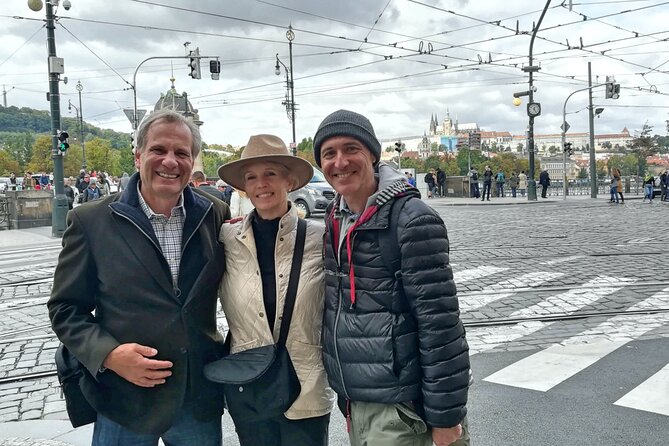
Next comes St. Giles Church, framed through the lens of religious wars, Reformation, and Counter-Reformation. The interior is where this stop pays off most. Instead of treating baroque decoration as “pretty,” you’re shown how it functioned in a political-religious argument.
Think of it like this: architecture is propaganda that survived. Once you hear that idea, the carvings and ornamentation start making sense as persuasion, not just craft.
Moving Into New Town: Prague as Capital of the Holy Roman Empire
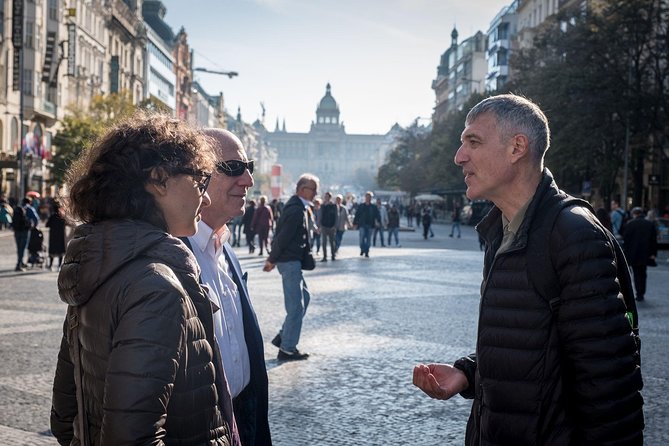
The tour shifts into New Town with a discussion of the 600+ year story there and Prague’s relationship to the Holy Roman Empire. This is one of those moments where the guide makes Prague feel bigger than just its Old Town postcards.
You’re being nudged to see why Prague mattered. Not only as a place with castles and churches, but as a political center where big European currents met local life. That explanation helps everything you see afterward—including squares and institutions—feel connected.
Wenceslas Square and the Czech Story in Public Space
Wenceslas Square is the “big square” stop, but the tour approach is specific: you discuss the square’s history in the context of the Czech Republic and Prague. In other words, it’s not just a wide boulevard for photos. It’s a stage where national identity has been performed in real time.
If you want a quick sense of modern Prague politics, this is a good stop because the guide links space to events and ideas. You come away understanding why locals pay attention to this area.
Theatre des États and Mozart-Era Prague
At Theatre des États, you’ll talk about Mozart’s relationship to Prague and the Age of Enlightenment. This is a nice change of pace because it broadens the tour beyond medieval and religious themes.
The value is perspective. Prague wasn’t always a battlefield of faith. It was also a place where culture, ideas, and arts shaped how educated Europe thought. The theatre context helps you connect that to what you can see in the city’s buildings and street life.
St. Nicholas Church and Jan Hus Monument: Two Extremes of the Same Story
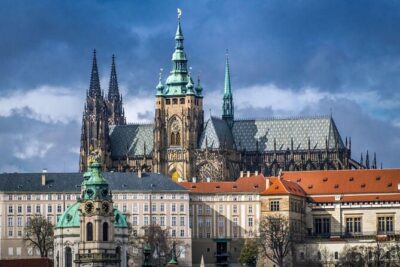
St. Nicholas Church comes up with a discussion of Czech religious reversals and how Baroque and Gothic architecture show up in that story. Then the walk continues to the Jan Hus Monument, tying Hus’s revolutionary role to the development of European Christianity and the history of the Czech lands.
These two stops work well back-to-back because they let you compare themes:
- One points to how architectural style and religious allegiance can swing.
- The other points to how one reform figure could shape long-term identity.
If you’re the type who likes your history in human-size chunks, this section is satisfying. You can picture ideas as people, not just dates.
Parizská Street and the Jewish Ghetto Memory
Parizská Street is where the tour takes a necessary turn. You’ll discuss the history of the Jewish Ghetto of Prague and its destruction. This is not a “quick mention” stop. The guide frames it in a way that connects the street to the people who were affected and the changes Prague went through.
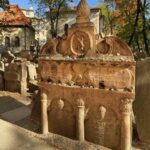
I appreciate that this tour doesn’t treat the Jewish Quarter as an optional add-on. It treats it as part of Prague’s core identity—beautiful synagogues and cemeteries aren’t the only story. The city’s losses matter, too.
A practical suggestion: if you’re sensitive to heavy history, take a moment to slow down here. Let yourself absorb what you’re hearing rather than trying to rush to the next sight.
Kafka’s Kinetic Statue and the Vltava River Finish
Before the final stretch, you’ll encounter the revolving, kinetic statue resembling Franz Kafka by Czech artist David Černý. This is a great contrast with the medieval stone around you. You get modern Prague in a single glance—art that moves, not just structures that stand.
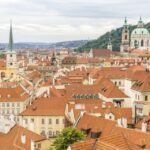
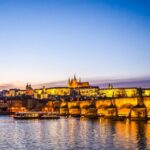
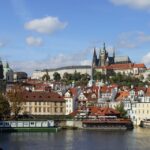
Then the tour ends on the banks of the Vltava River with photo-worthy views toward Prague Castle. This finish works because you’re walking out of dense streets into open sightlines. You get a sense of how Prague’s geography turns everything into a viewpoint.
If you want the best photos, don’t just snap from the first spot. Walk a bit along the river and try a couple angles. Castle views shift fast depending on where you stand.
Who This Private Prague Intro Fits Best (and Who It Doesn’t)
This tour is ideal if you want a first-time Prague orientation that still treats history seriously. It’s also a solid match for families or mixed-age groups because it’s private and time at each stop stays short enough to avoid dragging.
It’s especially useful if you like your guides to be able to answer questions—not only recite facts. In past experiences, guides such as Bonita and Vadim are repeatedly praised for deep explanations and for keeping the tour interesting for different interests. There’s also a pattern of flexibility in how guides handle the group’s curiosity, which you feel in a private setting.
Who it might not fit: if you want a food-focused tour or you hate walking, this won’t be your best match. Food and drinks aren’t included (unless specified), and it’s a walking route through central sights.
Price and Value for a Group of Up to 10
The price is $367.61 per group (up to 10 people). That structure can be great value if you split it among a few friends or family members, because you’re paying for guided time rather than per-person museum ticket costs. It also means you can keep the experience private without needing a huge group.
If you’re traveling solo or as a couple, it can feel steep compared with shared tours. In that case, the value hinges on what you want: if you want a guide who can tailor the pace and answer questions as you go, paying for privacy can still feel worth it.
One way to decide: ask yourself whether you’d spend extra time reading plaques alone later. If you’d rather get context while standing in front of the building, a private guide becomes the efficient option.
A Quick Before-You-Go Checklist
This tour doesn’t include food, so I’d treat it like a morning or afternoon activity where you eat before or after. Bring water, and if you’re traveling in warmer months, a small cooling break strategy helps.
Also, plan for weather. Prague can go from pleasant to chilly without warning, and the walking is real even if each stop is short. Layers beat one heavy coat.
Should You Book This Private Prague Introduction?
If you want a guided start in Prague that connects the dots—Old Town Square, Charles Bridge, reformation-era stories, New Town institutions, and Jewish Quarter memory—this is a strong choice. The historian-style approach is a real benefit when you’re trying to understand why Prague looks the way it does.
I’d book it if:
- you’re short on time and want the city’s main story beats in about three hours
- you care about context, not just photos
- you can share the group price with at least a couple people
I’d think twice if:
- you expect food included
- you don’t want to walk through central Prague
FAQ
FAQ
How long is the Private Prague Introduction Walking Tour?
It lasts about 3 hours.
What’s the group size limit for this private tour?
The tour is private and priced per group, with a group size of up to 10 people.
Where do we meet the guide?
The start meeting point is MONDIEUM, Malé Strana (Maltezské nám. 480, 118 00 Praha-Praha 1, Czechia).
Where does the tour end?
The tour ends at Václavské nám. 772/2, 110 00 Praha 1-Můstek, Czechia.
What time does the tour start?
The start time shown is 10:00 am, and you can choose morning or afternoon departure when booking.
Is hotel pickup included?
Hotel pickup and drop-off are not included, but pickup may be offered depending on your booking.
Is a mobile ticket provided?
Yes, the tour includes a mobile ticket.
Are tickets and admissions required for the stops?
Most stops list free admission, and the Franz Kafka statue stop is marked as included.
Does the tour include food and drinks?
No. Food and drinks are not included unless specified.
Is the tour only for my group?
Yes. It’s a private tour/activity, so only your group participates.
What happens if I cancel?
You can cancel up to 24 hours in advance for a full refund. If you cancel less than 24 hours before the start time, the amount paid will not be refunded.