REVIEW · PRAGUE
Private Prague Cold War Walking Tour
Book on Viator →Operated by Insight Cities · Bookable on Viator
Cold War Prague isn’t just museum talk. I like the private historian guide and the way you stand in front of real Cold War landmarks while the story explains what daily life felt like. One thing to plan for: there’s a steep climb up Vitkov Hill, which can slow you down if you have mobility limits.
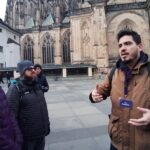
This is a true private group walk (up to 10 people), so you’re not squeezed into a big herd. You also get tram tickets and an English-speaking guide, plus a morning or afternoon start, which helps you fit it into a day of sightseeing.
Because it’s built around political change from 1948 to 1989, the pacing is part walking, part conversation. You’ll cover Soviet-era sites, protest symbolism, and the locations tied to major events like the 1968 Prague Spring and the 1989 Velvet Revolution.
In This Review
- Key highlights before you go
- Why this private Cold War walk helps Prague make sense
- Pedestrian Tunnel Karlin–Žižkov: where fear had a door
- Vitkov Hill: Red Army symbolism, Gottwald’s mausoleum, and wide city views
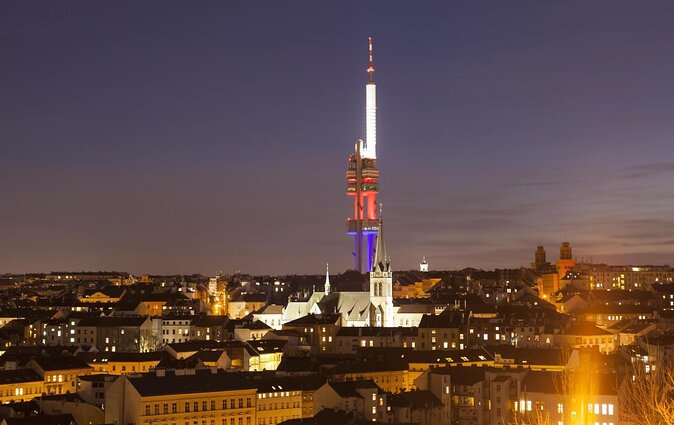
- Žižkov Television Tower: a brutalist photo stop with perspective
- Letná Hill’s Stalin shadow, then the John Lennon Wall’s hope
- Wenceslas Square: the 1968 crackdown and the 1989 turning point
- The upside-down King Wenceslas statue: Cold War irony still matters
- Timing, pace, and what to do with your 3 hours
- Price and value: $390.37 per group is either a steal or a splurge
- Who this tour is best for
- Should you book this Private Prague Cold War Walking Tour?
- FAQ
- How long is the Private Prague Cold War Walking Tour?
- Is this tour private, and how big is the group?
- What language is the tour guide using?
- Where do I meet the guide?
- What’s included in the price?
- Is the tour physically demanding?
- Can I cancel and get a full refund?
Key highlights before you go
- Private, English-speaking historian guide with undivided attention for your group
- Vitkov Hill’s Hall of the Soviet Soldier and the Klement Gottwald mausoleum complex
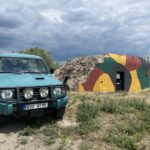
- Pedestrian Tunnel Karlin–Žižkov with still-maintained nuclear shelter access doors
- John Lennon Wall as a real street signal of Western-style hope and revolution
- Wenceslas Square as the stage for 1968 tanks and the 1989 gatherings that reshaped Prague
- You can skip Vitkov Hill if mobility is an issue, and focus on other Cold War sites instead
Why this private Cold War walk helps Prague make sense
Prague can look postcard-pretty, but the Cold War years are where a lot of the tension lives in plain sight. What I like about this tour is that it doesn’t treat the communist era like a separate chapter. It connects political decisions to buildings, squares, and even underground spaces—so you’re not just memorizing dates.
With a private guide, you can ask the questions that matter to you. I’m especially interested in the “how did people live?” angle, and this route is designed for that. You’ll walk through places that were meant to control fear and behavior, then pivot to places where people tried to push back.
The trade-off is that the topic can feel heavy, and one stop involves a former mausoleum tied to the mummified body of Klement Gottwald. If you prefer only light sightseeing, this might not be your best fit. If you want the real story behind the city’s symbols, it’s a strong choice.
You can also read our reviews of more walking tours in Prague
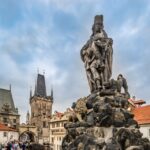
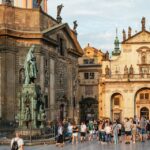

Pedestrian Tunnel Karlin–Žižkov: where fear had a door
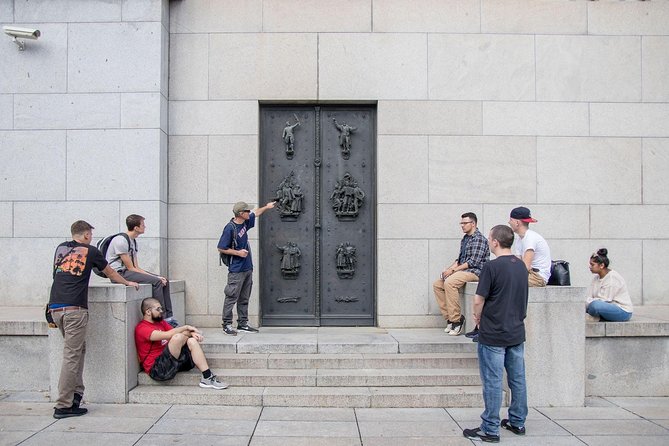
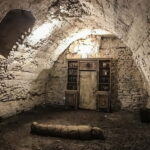
The tour starts with the Pedestrian Tunnel Karlin–Žižkov, a spot most people simply walk past without knowing what it meant. You go through the tunnel and look at locked doors that once led to nuclear bomb-shelter corridors. The key detail is that those doors and access points are still maintained, which makes the Cold War feel physical instead of abstract.
Why this matters: underground infrastructure is easy to miss on a typical Prague walk. Here, the tunnel acts like a quiet reminder that the Cold War was planned at street level, not only in speeches. It also gives you a strong emotional contrast early on—before the story moves into grander monuments and public squares.
Timing is short here (about 10 minutes), so it works even if you’re not fast on your feet. It’s also free of admission costs as part of the stop.
Vitkov Hill: Red Army symbolism, Gottwald’s mausoleum, and wide city views
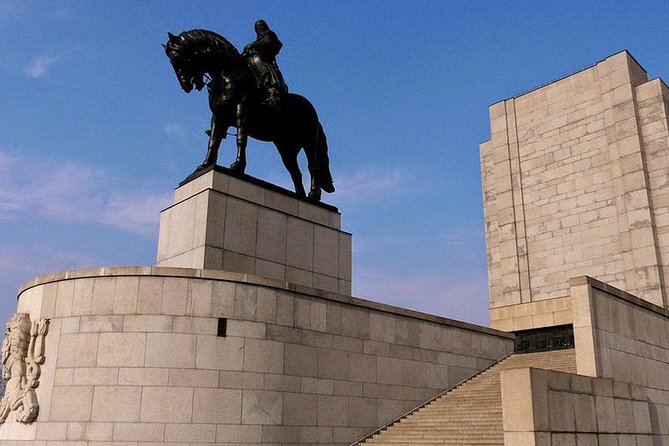
Vitkov Hill is the tour’s main effort, and also where you’ll remember this day the most. You’ll head to the National Monument area, which includes the Hall of the Soviet Soldier and the former mausoleum linked to Klement Gottwald (Czechoslovakia’s Communist Party leader and president from 1948 to 1953).
Here’s what to expect as you move through the complex:
- You’ll see the Hall of the Soviet Soldier, designed to honor Soviet soldiers killed during World War II in Eastern Europe.
- You’ll visit the mausoleum that once displayed the mummified body of Klement Gottwald.
- You’ll also learn about the laboratory and temperature-control center staff used to maintain the embalmed body.
This is the point where the tour turns from “what happened” into “how states tried to control memory.” Monuments and memorial spaces weren’t neutral. They were messaging systems—designed to shape what people believed was worthy, heroic, and inevitable.
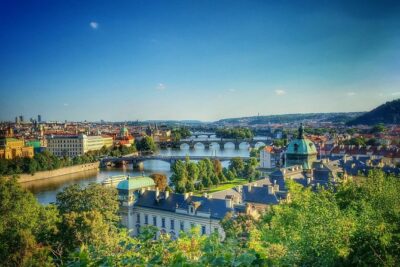
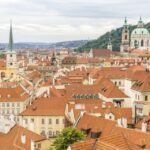
Then comes the payoff for your legs: the walk up the memorial gives sweeping views over Prague, including the Old Town and the Žižkov Television Tower on the horizon. If the weather behaves, this is one of those moments that makes the history stick.
Important practical note: there’s a steep climb (about 20 minutes up Vitkov Hill). The tour operator specifically says you should let them know if you have mobility issues so they can leave out Vitkov Hill and focus on other Cold War sites. If this is you, don’t wait—tell them early so the plan matches your comfort level.
Žižkov Television Tower: a brutalist photo stop with perspective
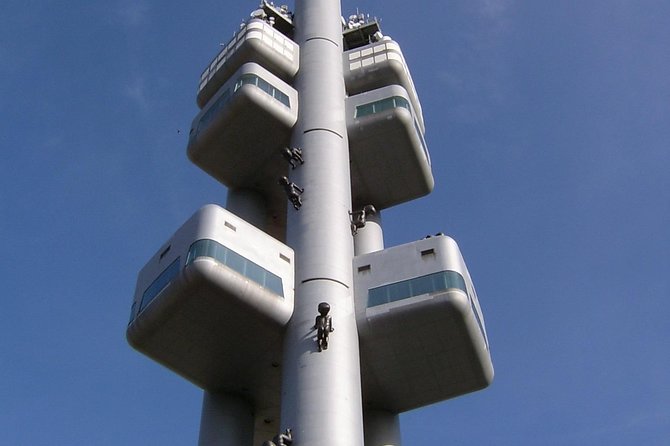
After Vitkov, you get a short look at the Žižkov Television Tower. Even if you don’t go inside (admission isn’t included for this stop), it’s still a standout visual. The tour is timed so you can take in the brutalist style and use the tower as a reference point for the views you just got from Vitkov.
Why I like adding this: it keeps the day from becoming only “history buildings.” You’re connecting eras through viewpoint—seeing how the skyline evolved, and noticing what stands tall now compared to what once dominated the political message.
This stop is brief (about 5 minutes), and it’s free.
Letná Hill’s Stalin shadow, then the John Lennon Wall’s hope
The tour also includes Letná Hill, where one of the world’s largest statues of Josef Stalin once looked down over the city. That shift—from looming state power to later street-level protest energy—is part of the point.
From there, you’ll stop at the John Lennon Wall. This is where you’ll see protest graffiti linked to Western-style freedom during the Cold War years. The message you’re meant to catch is simple but powerful: even when official channels were controlled, people found ways to speak in public.
I like this pairing because it reframes “Cold War history” as a conflict over voice. Stalin’s statue represented enforced ideology at a distance. The Lennon Wall represents people pushing back close to the ground.
You can also read our reviews of more private tours in Prague


Wenceslas Square: the 1968 crackdown and the 1989 turning point
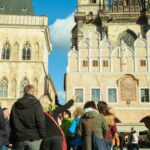
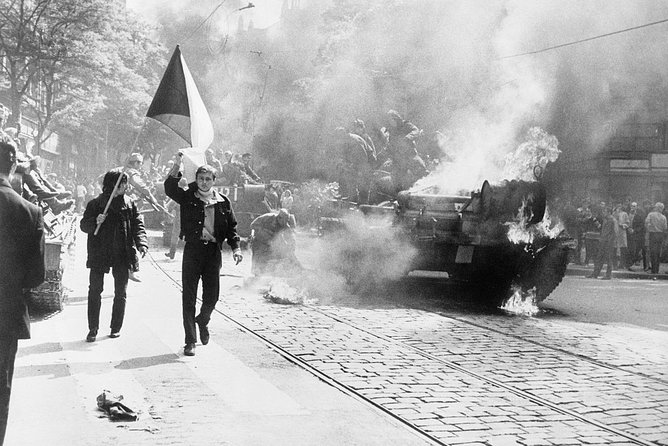
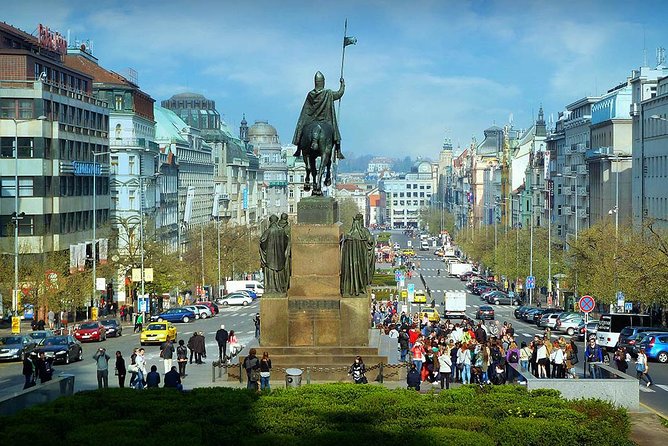
Wenceslas Square is the big public stage in Prague, and this tour treats it like the political center it became. You’ll walk through the square and consider its long timeline—from its 14th-century founding to the parade history that came with occupation.
But the focus is the late 20th century:
- You’ll hear how events connected to the Prague Spring unfolded.
- You’ll learn about the Warsaw Pact tanks converging here to crush the 1968 Prague Spring and end the roughly eight-month period when freedom of speech and an independent press were allowed to blossom.
- You’ll then connect that to 1989, when demonstrations built toward what’s known as the Velvet Revolution, ultimately ending communist rule.
As you walk, look for the monuments to brave Czech protestors. Those are physical anchors for the story of ordinary people taking risk in public space.
This portion is longer (about 20 minutes) and free of admission costs. It’s a good time to pause and let your guide’s explanation land—especially if you like politics that has real street consequences, not just textbook summaries.
The upside-down King Wenceslas statue: Cold War irony still matters
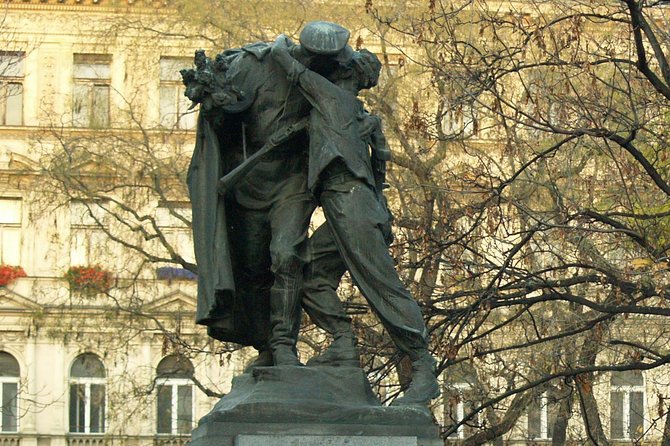
Near Wenceslas Square, you’ll also see the Upside-Down Statue of King Wenceslas riding a Dead Horse. It’s an ironic sculpture, and the tour ties it to the contemporary Central European political mood.
Why it works on this route: by this point, you’ve seen propaganda-style messaging and protest messaging. Now you get a symbol that plays with authority and outcomes. The sculpture doesn’t ask you to “agree” with one side—it asks you to notice power, change, and misdirection.
This stop is quick (about 5 minutes) and free.
Timing, pace, and what to do with your 3 hours
The tour is about 3 hours total. The walking is manageable for most people with moderate physical fitness, but you should treat Vitkov Hill as the one real workout moment.
I recommend building your day around this. Don’t schedule a long museum visit right before if you know you’ll feel it in your calves after the climb. Also, bring water if it’s warm. The tour includes tram tickets, but it doesn’t include food or drinks.
Good news: because it’s private, your guide can adjust the tempo if your group needs extra time. If you tell them you’re slower, they can work with you. That matters when a day includes both monuments and sidewalks.
Price and value: $390.37 per group is either a steal or a splurge
The price is $390.37 per group (up to 10 people) for roughly 3 hours. That sounds high if you’re thinking per person. It’s a lot more reasonable when you’re splitting among a small group.
A quick way to think about it:
- With 2 people, it’s roughly $195 per person.
- With 6 people, it’s roughly $65 per person.
- With 10 people, it can be about $39 per person.
So the value depends on your group size and what you want from the experience. If you’re traveling solo, this is most worth it if you care deeply about political context and want a guide who can tailor explanations to your questions. If you’re a couple or small family, it can still be a good buy, especially if you’d otherwise spend money on multiple separate tours or audio guides that don’t answer your follow-ups.
Also note what’s included: historian guide and tram tickets. What’s not included: food and drinks, and hotel pickup/drop-off. If you already plan to use public transport, tram tickets help cover that baseline cost.
Who this tour is best for
This is a strong match if you:
- want Cold War context that connects street corners to political decisions
- like guided explanations and questions, not just a list of sights
- are comfortable with serious themes, including monuments tied to communist leadership
It’s less ideal if you:
- have trouble with steep climbs and don’t want to consider skipping Vitkov Hill
- prefer only relaxed, lighter sightseeing on a half-day
If you have mobility issues, the tour explicitly suggests you let them know so they can leave out Vitkov Hill and focus on other Cold War sites. That flexibility is a big deal.
Should you book this Private Prague Cold War Walking Tour?
I’d book it if you want Prague to feel understandable, not just beautiful. The mix of places—underground shelter doors, the Hall of the Soviet Soldier, Gottwald’s mausoleum complex, and the public rebellion signals of Wenceslas Square and the John Lennon Wall—gives you a complete emotional arc from control to resistance.
I wouldn’t book it if you’re skipping history and only want postcard stops. This tour needs your attention. And if Vitkov Hill is a concern, speak up early so the route can adapt.
If you want an hour-by-hour reason to choose it, pick this for the Vitkov Hill portion and the way your guide connects that power with the protest culture you see later in the day. That contrast is what makes this tour more than a sightseeing walk.
FAQ
How long is the Private Prague Cold War Walking Tour?
It’s approximately 3 hours.
Is this tour private, and how big is the group?
Yes. It’s a private tour for your group only, with a group price that covers up to 10 people.
What language is the tour guide using?
The tour is offered in English.
Where do I meet the guide?
You’ll meet in central Prague at Náměstí Republiky 1077/2, Nové Město, Praha 1. If you didn’t arrange hotel pickup, plan to meet 15 minutes early at Kostel Svaty Josef at that same address.
What’s included in the price?
Your historian guide is included, along with tram tickets. You also receive a mobile ticket.
Is the tour physically demanding?
It’s listed for travelers with moderate physical fitness. There is a steep climb of about 20 minutes up Vitkov Hill, and the operator suggests letting them know if mobility issues require skipping Vitkov Hill.
Can I cancel and get a full refund?
Yes. Free cancellation is available, and you can cancel up to 24 hours in advance for a full refund. If you cancel less than 24 hours before the start time, the amount you paid is not refunded.