REVIEW · PRAGUE
Private Prague Castle Walking Tour
Book on Viator →Operated by Insight Cities · Bookable on Viator
Prague Castle can feel like a maze, so a good guide matters. This private walking tour helps you get your bearings fast and focuses on the castle complex’s 1,100+ year story, with architectural variety from Romanesque to Neoclassical. I like that you choose a morning or afternoon start, and you get a historian-style guide who can match the walk to your interests. One thing to plan for: Prague Castle admission isn’t included, so you’ll still pay entry tickets on top of the tour price.
You’ll meet near Malá Strana (or get pickup if you’re centrally located), then work uphill through gardens, moats, and royal buildings. Along the way, you’ll hit the big-name sights—St. Vitus Cathedral, St. George’s Basilica, the Royal Palace, and Golden Lane—without turning it into a sprint.
In This Review
- Key highlights worth planning around
- Price and value: what you’re paying for
- Your timing choice: morning vs afternoon departures
- Meeting point and pickup: getting to the hill without stress
- The walk up to Prague Castle: gardens, moat, and first context
- Prague Castle in layers: Romanesque to Neoclassical without the confusion
- Ball Game Hall: a short stop with surprising human scale
- Queen Anne’s Summer Palace: Renaissance architecture meets science
- St. Vitus Cathedral: the Gothic centerpiece with royal meaning
- Old Royal Palace and Vladislav Hall: power, banquets, and the defenestration story
- St. George’s Basilica: Romanesque contrast after Gothic grandeur
- Golden Lane: tiny homes, big stories, and Dalibor Tower
- Customizing the walk to your interests (and how to use it)
- What to bring so the 3 hours feels easy
- Is this tour worth it for you?
- Should You Book This Private Prague Castle Walking Tour?
- FAQ
- How long is the Private Prague Castle Walking Tour?
- Is this tour private or shared?
- What is the group size limit?
- Is Prague Castle admission included in the tour price?
- Does the tour include hotel pickup?
- Where is the meeting point?
- What departure times are available?
- Can I cancel for a full refund?
- Is the tour offered in English?
Key highlights worth planning around
- Private historian guide focused on interpretation, not just facts
- Pick morning or afternoon to help with crowd timing
- Big architectural range in one compact walk
- Royal Garden routes and moat views that make the hill feel manageable
- Golden Lane walkthrough plus the Dalibor Tower connection
Price and value: what you’re paying for
At $397.36 per group (up to 10), this is priced for a small crew, not solo budget travel. That sounds high if you’re thinking per person, but it often becomes a fair deal once you split it among family or friends—especially because you’re paying for a historian guide and a private format.
Also, the tour isn’t just pointing and walking. You’re paying for someone who can explain why the castle looks the way it does—how centuries of power, warfare, and rebuilding left visible layers of styles and political drama. If you’ve got limited time in Prague, this is the kind of “one hit, many payoffs” experience that can save you energy and ticket-planning headaches.
Do remember the admission piece: Prague Castle entry tickets aren’t included (adults CZK 450; students and seniors CZK 300). And the tour doesn’t include food or drinks. In practice, that means you should plan to budget for entry plus a water/coffee stop during your walking break.
You can also read our reviews of more walking tours in Prague



Your timing choice: morning vs afternoon departures
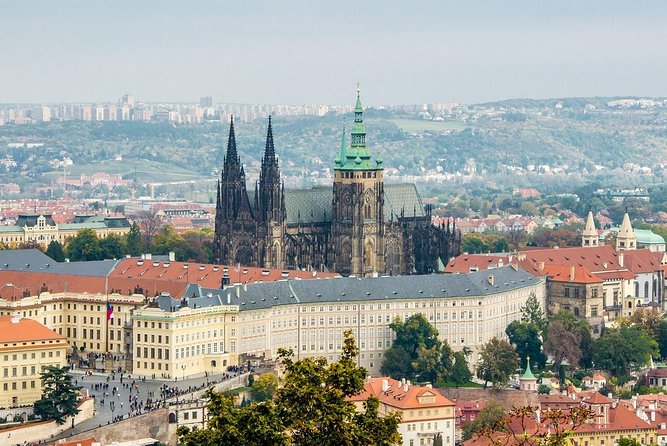
You can choose morning or afternoon, and I take that choice seriously with Prague Castle. The complex is huge, and even with smart routing, crowds can slow down your attention. The good news is that an afternoon departure is often easier to breathe in because parts of the castle grounds tend to feel calmer later in the day.
If you’re visiting other sights the same day, use the timing like this:
- If you want photos with a gentler crowd feel, lean afternoon.
- If you prefer earlier starts and fewer “where do we go next” pauses, pick morning.
Meeting point and pickup: getting to the hill without stress
Your starting point is Bagel Lounge Malostranská (Letenská 118/1, 118 00 Praha 1-Malá Strana). If you request pickup, the guide meets you at your centrally located accommodation and leads you onward by metro, tram, or foot when sites are close.
If you’re staying farther away or you don’t want pickup (or you don’t send your address), you’ll meet the guide 15 minutes early at the default Bagel Lounge meeting point.
This matters because Prague Castle sits up on Hradčany Hill. When the start is clean and organized, you spend your energy on architecture and views—not on figuring out the next connection.
The walk up to Prague Castle: gardens, moat, and first context
The tour climbs to Prague Castle, perched on Hradčany Hill, and that first uphill push is part of the effect. You’re not just arriving at a landmark; you’re stepping into a landscape built for power and defense.
As you move through the Royal Garden and past features like the Stag Moat, the guide frames the castle as an evolving fortress complex, not a single building. That “ensemble” framing helps a lot, because Prague Castle can otherwise feel like separate attractions that happen to share a ticket.
What I’d watch for here:
- How the grounds lead you toward the cathedral and palace areas in a logical flow.
- How defensive elements like moats set the tone for the stories you’ll hear later.
- The mix of building materials and rooflines that hint at multiple centuries of rebuilding.
This is also where you’ll hear dramatic background—attacks, plunder, and rulers whose priorities shaped what got restored and what got left to deteriorate.
Prague Castle in layers: Romanesque to Neoclassical without the confusion
Prague Castle’s real magic is its architectural timeline. You walk through a complex where you can spot Romanesque, Gothic, Baroque, Rococo, Renaissance, and Neoclassical influences, sometimes within the same broader area.
That’s why a guided route is so valuable. Without context, you’d see stunning facades and interiors but miss the “why.” With a historian guide, the styles become clues:
- Gothic tells you about the monumental shift toward height and cathedral design.
- Baroque and Rococo often signal periods when art and spectacle were part of politics.
- Renaissance work tends to show up as balance and classical influence during major rebuilding phases.
- Neoclassical elements reflect later tastes and re-interpretations.
Even if you’re not a design nerd, this makes the site feel coherent. You’re not chasing random photo stops; you’re following a timeline drawn in stone.
You can also read our reviews of more private tours in Prague






Ball Game Hall: a short stop with surprising human scale
One quick detour is the Renaissance Ball Game Hall, a space connected to sport and status. It’s where aristocrats played tennis with the Emperor—an odd, charming detail that makes the castle feel less like a museum and more like a lived workplace for power.
You’ll also see a sgraffito panel depicting allegories of virtues, arts, and sciences. The point of this stop isn’t to spend 45 minutes staring. It’s to shift your mind from “royal war stories” to “royal daily life and culture.”
Queen Anne’s Summer Palace: Renaissance architecture meets science
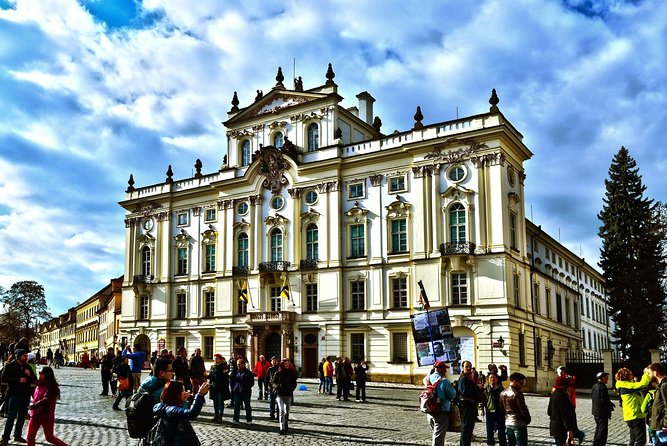
Next is Queen Anne’s Summer Palace, known for being pure Renaissance architecture outside Italy. That line is the hook, but the real payoff is what happened after Ferdinand I commissioned it.
The palace was later converted into an astronomical observatory by Rudolf II. And the guide can connect the space to major scientific names linked with the era, including Tycho de Brahe and Johannes Kepler, plus the note that Rudolf II died here after losing the royal title.
If you like how history isn’t just politics and battle, this is one of the most interesting stops. The castle isn’t only defensive—it’s a stage for intellectual ambition.
St. Vitus Cathedral: the Gothic centerpiece with royal meaning
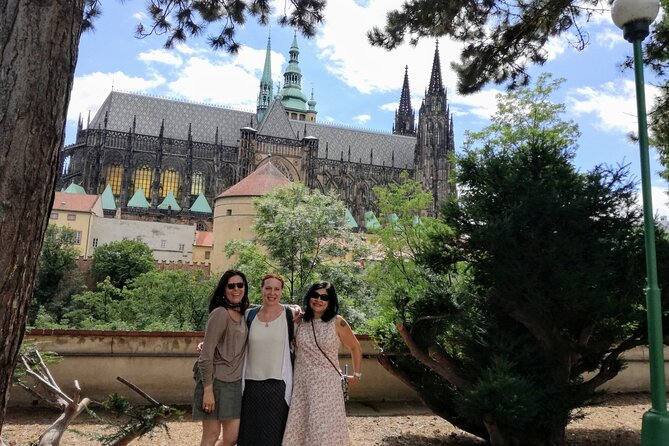
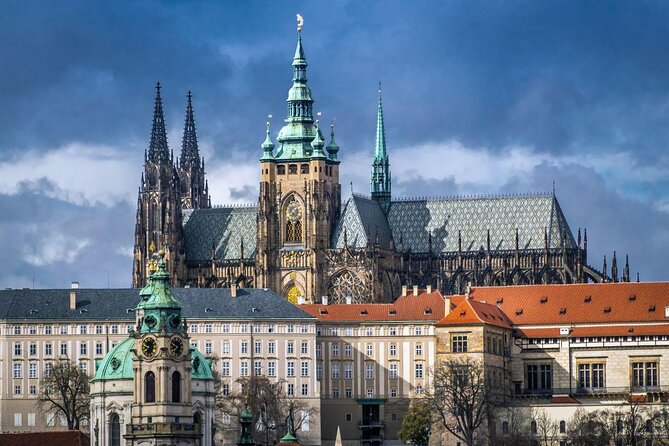
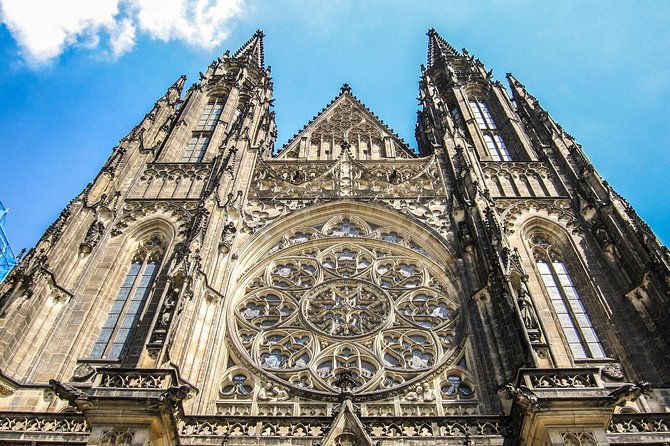
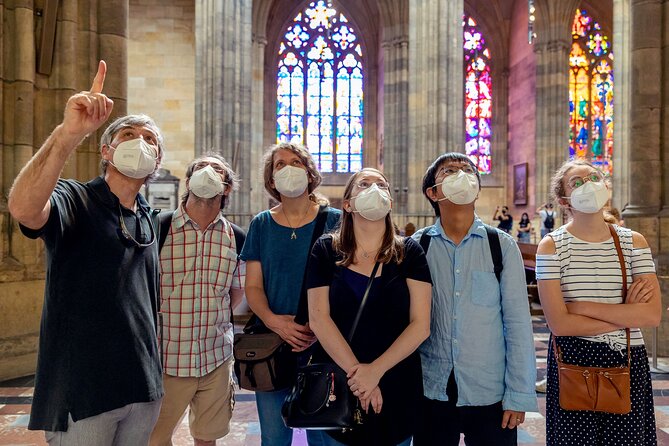
No Prague Castle route feels complete without St. Vitus Cathedral. This is one of Central Europe’s most monumental cathedrals and a major Gothic statement.
A few practical context points help you enjoy it more:
- It was founded in the 14th century and completed about 600 years later in the 19th century.
- The cathedral connects to Czech identity through the royal crypt of Czech sovereigns and patron saints.
- Inside, you’ll notice standout chapel and tomb elements tied to devotion and power.
The guide will point out major features such as the Baroque tomb of St. John of Nepomuk, and the Gothic St. Wenceslas Chapel, which houses relics of the saint. Even if you only do a shorter interior viewing time, the guide’s framing helps you see why these pieces matter instead of treating them as “pretty stops.”
One drawback to know: cathedral interiors can take time, and some people find themselves doing too much “standing and staring” with no story to anchor it. In a private guided format, you can keep it moving while still understanding what you’re looking at.
Old Royal Palace and Vladislav Hall: power, banquets, and the defenestration story
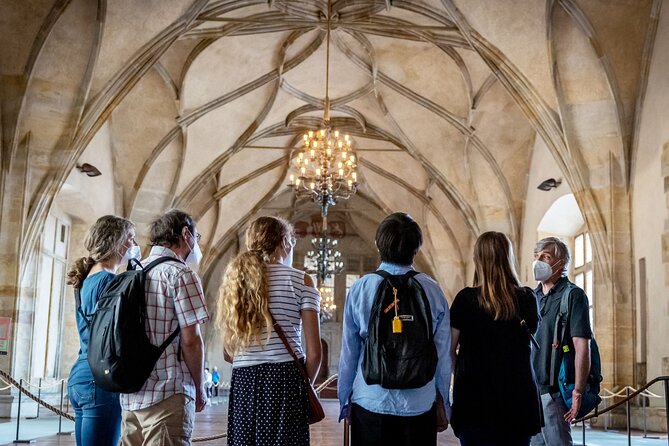
The Old Royal Palace section brings you into Vladislav Hall, a late-15th-century space that blends Late Gothic with Renaissance design. This hall wasn’t quiet ceremonial space—it hosted coronation festivities, banquets, and even knights’ tournaments.
You’ll hear how armored knights entered the hall via the Riders’ Staircase, designed for that kind of movement. Then you’ll get the political shock moment: in the Ludwig Wing area, the scene tied to the defenestration of two Austrian governors and their scribe, which helped spark the Thirty Years’ War.
That’s the kind of story that changes how you see architecture. You start paying attention to circulation—where people moved, where events happened, where power was displayed. A guided walk turns a hall into a timeline.
St. George’s Basilica: Romanesque contrast after Gothic grandeur
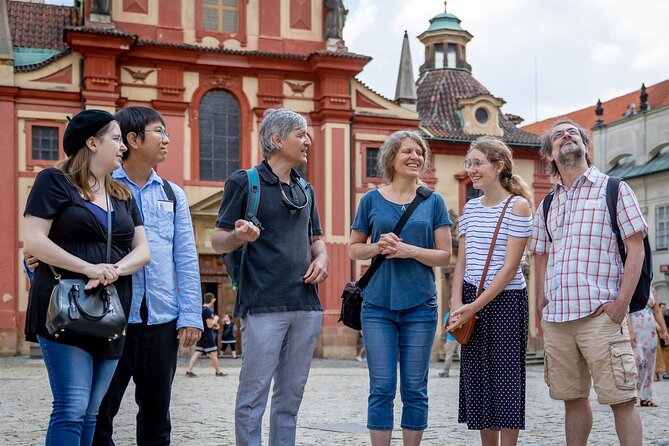
After the cathedral’s Gothic scale, St. George’s Basilica gives you contrast. It’s an austere Romanesque basilica built around the 1100s, so the interior and architectural language feel different right away.
If you’ve been overwhelmed by too much Gothic in one day, this stop can be a relief. It slows your brain down and gives your eyes a different visual rhythm.
Even if you only spend about 10 minutes here on the route, the guide’s comparison to St. Vitus helps you notice changes in proportions, materials, and overall mood.
Golden Lane: tiny homes, big stories, and Dalibor Tower
Golden Lane is one of those Prague spots that feels like it was designed for close-up wandering. It’s a diminutive street originally built in the 16th century to house Rudolf II’s castle guards.
You’ll walk through the narrow lanes and step into tiny rooms that today mostly serve as souvenir spaces. But the structure still gives a real sense of how constrained life could be inside the castle walls.
There’s also a medieval armoury museum accessible from Golden Lane, within a former 14th-century fortification. And the lane connects with Dalibor Tower, which used to function as a dungeon.
This stop is where I think the tour earns its “best for short on time” reputation. You get variety—small spaces, defensive context, and cultural texture—without needing extra transit or separate tickets for every corner.
Customizing the walk to your interests (and how to use it)
This is a private tour, so you have more control over how the story is told. If you’re into architecture, spend a little more time on the style transitions—Romanesque to Gothic, then Baroque/Rococo into later updates. If you prefer political history, focus on the artillery, plunder, and the royal decisions that shaped the castle’s fate.
In practice, the customization works best when you give your guide a clear preference at the start, like:
- I want the architecture timeline more than the legend stories.
- I want the political turning points and why they mattered.
- I want a quick overview of everything, but with the best details.
On past departures, guides like Vadim have been praised for matching the group’s depth—especially when the group cared about the fine details and didn’t want generic narration. If you get a guide with that historian energy, it can make the walk feel longer in the best way, because you’ll keep learning as you move.
What to bring so the 3 hours feels easy
Even though the schedule is tight, you can keep it comfortable with a few basics:
- Comfortable walking shoes (you’re going up and moving between multiple interiors)
- A light layer (cathedral areas can feel cooler)
- Water (food and drinks aren’t included)
- Your Prague Castle ticket plan for entry (since it’s not included)
Also, if you plan to use public transport during pickup coordination, keep an eye on timing. The guide will handle the routing when sites are close, but you’ll still want to be ready at meeting time.
Is this tour worth it for you?
This is a strong choice if:
- You’re short on time but want a meaningful introduction to the castle complex.
- You like history told through real places, not just dates.
- You want a private setting where the guide can tailor focus.
- You’re visiting Prague for the first time and want the key sights connected into one story.
It might be less ideal if:
- You want a self-guided visit at your own pace without discussion.
- You’re mainly interested in one interior (like only the cathedral) and don’t care about the rest.
- You hate walking uphill and between multiple stops, even with a guided pace.
Should You Book This Private Prague Castle Walking Tour?
Yes, I’d book it if you want the castle complex to make sense fast. The big value is the combination of a private historian guide, a structured route through major buildings, and the focus on how centuries of change show up in architecture and politics. Pick afternoon if you can, plan for entrance tickets since they aren’t included, and come ready to walk with curiosity.
If you’re the type who likes details—why a palace was rebuilt, what a style change signals, how stories connect to physical spaces—this tour is built for you. If you’re unsure, send a quick note about what you most care about before you go, and choose the departure time that fits your energy and crowd comfort.
FAQ
How long is the Private Prague Castle Walking Tour?
It lasts about 3 hours.
Is this tour private or shared?
It’s private. Only your group participates.
What is the group size limit?
The price is per group up to 10 people.
Is Prague Castle admission included in the tour price?
No. Prague Castle entrance tickets are not included. Adults are CZK 450, and students & seniors are CZK 300.
Does the tour include hotel pickup?
Pickup is offered at your central hotel or flat. If you don’t want pickup or don’t respond with an address, you meet the guide 15 minutes before start time at Bagel Lounge Malostranska.
Where is the meeting point?
The default meeting point is Bagel Lounge Malostranská, Letenská 118/1, 118 00 Praha 1-Malá Strana.
What departure times are available?
You can choose between a morning and an afternoon departure time when booking.
Can I cancel for a full refund?
Yes. Free cancellation is available up to 24 hours in advance for a full refund.
Is the tour offered in English?
Yes, it’s offered in English.