REVIEW · PRAGUE
Private Former Concentration Camp Terezin Tour from Prague
Book on Viator →Operated by Eva Prague Tours · Bookable on Viator
Terezín hits you fast. This private 6-hour tour from Prague helps you deal with a heavy place with skip-the-line entrance and a dedicated guide, so you can move at the right speed. One possible drawback: the schedule is efficient, so it can feel emotionally intense if you need long pauses.
You start with convenient pickup in Prague, ride in comfortable round-trip transport, and keep the whole outing in English with a guide focused on getting the story right. A mobile ticket and smart casual dress code keep things simple, but you’ll still want to be ready for real walking between sites.
The route takes you through the Small Fortress, memorial spaces, the ghetto museum, a hidden prayer hall, the Magdeburg Barracks exhibit, and the Jewish Cemetery crematorium. It’s a structured path, but it doesn’t feel rushed—because this is one of those places where pacing matters.
In This Review
- Key highlights you’ll actually care about
- A private Terezín day trip that lets you slow down
- From Prague to Terezín: how the logistics support the day
- Stop 1: Mala Pevnost (Small Fortress) and why the walls mattered
- Stop 2: The Terezín Memorial National Cemetery and the meaning of exhumation
- Stop 3: The Ghetto Museum and how the exhibit teaches without sugarcoating
- Stop 4: The small Jewish prayer hall—hidden faith in plain sight
- Stop 5: Magdeburg Barracks and the ghetto’s cultural life under control
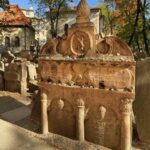
- Stop 6: The Jewish Cemetery and crematorium details you can’t forget
- Price and value: what $356.42 buys you in real time
- Who this tour fits best in your trip
- Should you book the Private Former Concentration Camp Terezín Tour?
- FAQ
- How long is the Private Former Concentration Camp Terezin tour from Prague?
- Is the tour in English?
- Do you provide pickup from Prague?
- Do I get a mobile ticket?
- Are entrance tickets included?
- Is there a line-skip benefit?
- What should I wear?
- Is this a private group?
- Are children allowed?
- What if I need to cancel?
Key highlights you’ll actually care about
- Private guide, your pace: You’re not stuck orbiting other people’s photos.
- Entrance time saved: Included entries help you start learning faster.
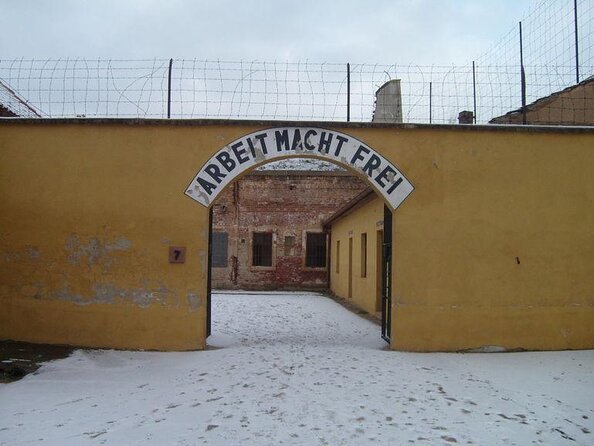
- From fortress to crematorium: You see how the system worked, step by step.
- Museums with context: The ghetto museum includes children’s memorials and documentary screening.
- A human-scale ending: The cemetery stops aren’t just facts—they’re design, function, and memory.
A private Terezín day trip that lets you slow down
Terezín (also known historically as Theresienstadt) is one of those day trips where the location is the lesson. The grounds cover a lot of real space, and the story moves through multiple types of places—fortress prison, ghetto institutions, cultural life, and the machinery of death. If you’ve ever worried you might miss something important, this private format is exactly how you remove that stress.
I like that the tour is private and structured around your group, not around shoehorning you into a crowd. That matters here because the emotional rhythm is part of understanding the place. Having a guide also helps you ask questions on the spot instead of trying to guess what you’re supposed to notice.
Value-wise, the biggest reason this tour can feel worth it is the combination of transportation plus multiple site admissions. You’re not paying for a guide only—you’re paying for an organized route that handles the entry process and keeps your time on the ground meaningful.
That said, there’s no way to make this light. You’re visiting mass murder sites, and even with good guidance, it can feel heavy. If you tend to get overwhelmed, plan extra time buffer after the tour for decompressing.
You can also read our reviews of more private tours in Prague



From Prague to Terezín: how the logistics support the day
The tour starts in Prague with pickup from the Prague Marriott Hotel (or from your hotel/Airbnb if you give the exact address). That “door-to-meet-point” style makes a difference on a long day, especially when you’re going out to a complex site.
You’ll ride in round-trip transportation, and the day runs about six hours total. The duration matters because it sets the expectation: you’ll see the key parts of the complex, but you won’t have unlimited time to wander beyond what’s planned. For most people, that’s a win—Terezín is big, and having a route prevents “I’m here but I’m lost” syndrome.
You’ll also get a mobile ticket, which removes one more small obstacle. And since the tour is offered in English, you can focus on the material instead of rationing brainpower for translation.
One more practical note: the dress code is smart casual. You’re still outdoors and between buildings, so wear what keeps you comfortable for walking and standing. If you’re bringing kids, they must be accompanied by an adult, so plan the day accordingly.
Stop 1: Mala Pevnost (Small Fortress) and why the walls mattered
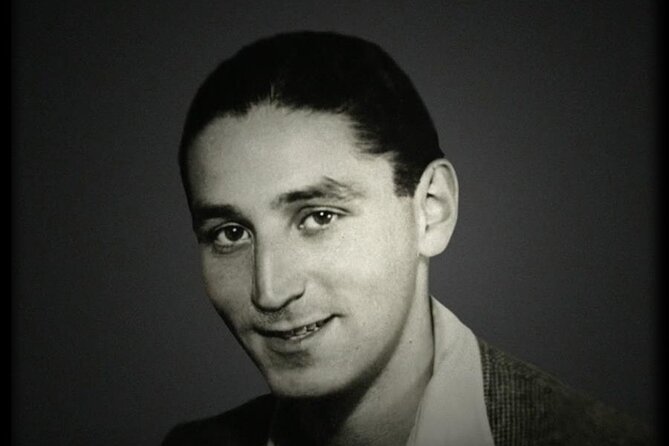
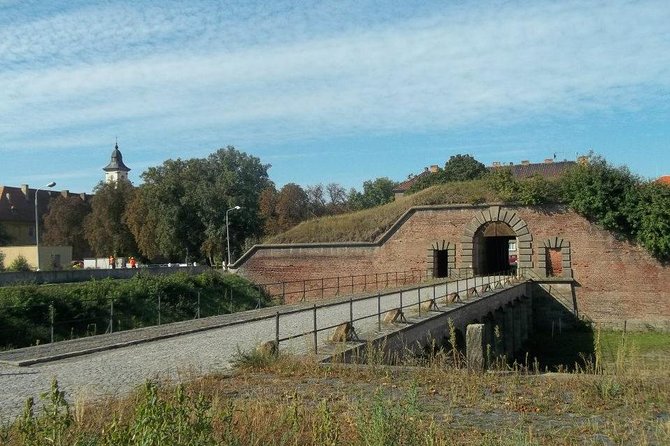
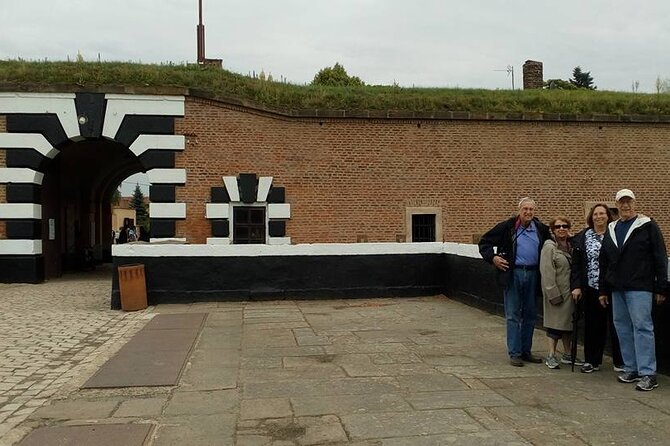
The first stop is Mala Pevnost, the Small Fortress. This place started life as a fortress designed to be impregnable. It was built at the end of the 18th century, with its first cornerstone laid by Emperor Joseph II, while the city name connects to Empress Maria Theresa.
That origin story is useful because it frames what happens next: in the 19th century the fortress became a jail, and then, during the Second World War, it became part of the Nazi prison system. The Small Fortress became a prison of the Prague Gestapo in 1940, especially for political prisoners. Then about a year later, the whole town was turned into a collective and pass-through camp for Jews.
One standout detail here is the story connection to Gavrilo Princip, a famous prisoner who fired the first shot in Sarajevo—helping ignite World War I—before being brought here in 1914. Your guide’s job in this first stop is to help you hold the place in your head as a changing tool of power, not as a single snapshot.
This stop lasts about an hour. That’s enough to get bearings and understand the core transformation—fortress to prison, then prison to part of a wider system. If you only visit one location in the area, start here. It sets the language for everything else you’ll see later.
Potential drawback: because it’s an early stop and the emotional impact can hit hard, it can be harder to absorb details at the beginning of the day. If you’re sensitive, this is where you’ll appreciate a guide who knows when to slow down and when to keep moving.
Stop 2: The Terezín Memorial National Cemetery and the meaning of exhumation
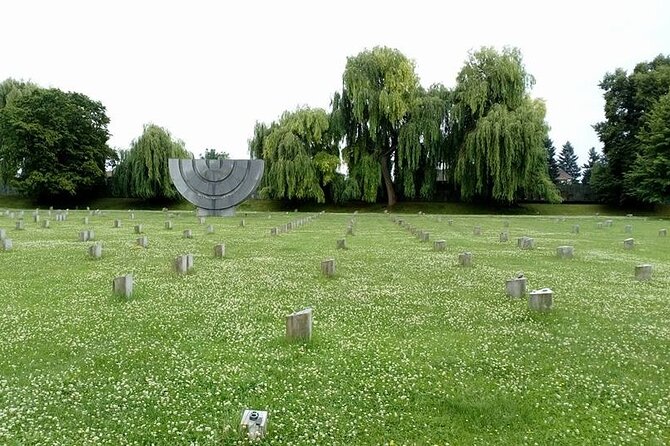
Next you’ll visit the National Cemetery, created artificially after liberation in 1945. This is not just a memorial space; it’s also connected to the physical recovery of remains.
The cemetery’s creation was prompted by former prisoners and by heirs of those who died. At their request, physical remains were exhumed from six mass graves located in the ramparts of the Small Fortress, which had been used from March 1 to May 7, 1945. That includes people who arrived in May 1945 via death marches at the Small Fortress.
This stop is short—about 15 minutes—and that’s intentional. Here, the value isn’t in cramming facts. It’s in noticing the shift from describing a system to honoring individual absence. If your guide handles the pacing well, it lands as a pause in the day rather than a break in the story.
What I like about having this stop in the middle of the route is that it prevents the tour from becoming only architectural or only historical. It brings you back to what the system cost, before you move onward into the museum interpretation of ghetto life.
Stop 3: The Ghetto Museum and how the exhibit teaches without sugarcoating
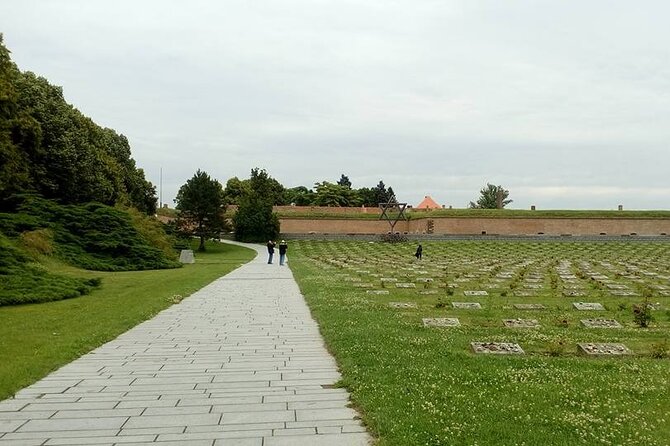
The Ghetto Museum is in the former municipal school, and it opened in 1991. This part of the tour is where context really turns into understanding.
The museum’s permanent exhibition runs under the theme Terezín in the Final Solution of the Jewish Question, 1941–1945, and it opened in 2001 as a newly conceived permanent exhibit. You’ll also find a Memorial Hall focused on the ghetto’s children, plus a selection of drawings made by children from the ghetto.
There’s also a scale model of the ghetto with an electronic orientation system that helps you grasp layout and locations. And for an extra layer, the building includes a reading room and a cinema where documentary films are screened.
This stop runs about 45 minutes. That’s a good length because it’s enough time to see the major components of the exhibit without turning it into a museum marathon. A private guide helps you connect the museum content to the physical places you saw earlier and the places you’ll see later.
One drawback to be aware of: museum time can feel abstract compared with walking the actual grounds. If you tend to need the “where am I standing” feeling, ask your guide to tie the exhibit details back to specific parts of the complex as you go.




Stop 4: The small Jewish prayer hall—hidden faith in plain sight
The tour then moves to a place that feels quiet, small, and deeply personal: the small Jewish prayer hall. It was founded during the ghetto period to serve spiritual needs of prisoners living in the neighboring houses.
Owned by František Bubák, it also served as part of a funeral parlor before World War II. Bubák was forced to leave Terezín during 1942, but after the war he reclaimed the property. His family feared Communist repercussions and kept the prayer room secret, using it as storage.
The prayer hall only became publicly known after the 1989 Velvet Revolution, when Bubák’s descendants notified the authorities. Visitors have been allowed to see the room since the late 1990s.
This stop lasts about 30 minutes, and it’s one of those times where the structure of the tour is helpful. You can take in the space without rushing, and you get the full story of why a room like this survived—hidden, then revealed.
If you prefer emotional processing over fast interpretation, this is a good place for it. The guide’s tone matters here. You’ll get more out of it when the explanation doesn’t race.
Stop 5: Magdeburg Barracks and the ghetto’s cultural life under control
Next is Magdeburska Kasarna (Magdeburg Barracks). During the ghetto period, the ghetto’s local government was headquartered in this building. Important decisions were still controlled by the camp SS command, but this is where internal affairs were administered.
The building today opened in 1997 following renovations. You’ll see a replica of prison barracks from the ghetto period, plus exhibitions focused on the ghetto’s artistic and cultural life. This includes artifacts related to music, visual arts, literature, and theatre.
A useful detail is the tour’s framing: these objects are evidence of forced inhabitants’ desire for humanity and hope, even under concentration camp conditions. That’s not a “positive twist” on the tragedy—it’s an explanation of how culture functioned as survival and memory.
There’s also an educational Meeting Centre in the building.
Plan on about 30 minutes here. It’s long enough to get the main ideas without losing the rest of your day to one stop. If you’re the type who reads labels slowly, you might wish you had more time. But within the tour’s total duration, this stop strikes a solid balance.
Stop 6: The Jewish Cemetery and crematorium details you can’t forget
The final stop is the Jewish Cemetery, with the crematorium complex. The crematorium itself was built by ghetto prisoners by order of SS commanders, and its operation began at the start of October 1942.
Here are the kinds of specifics your guide should help you interpret, because they explain how a system was engineered:
- The central part had four oil-powered incinerators, supplied by Ignis Hüttenbau from Teplice-Šanov.
- The front section served as a space for unloading corpses from coffins.
- One side bordered the autopsy room; the other bordered an annex that housed guards made up of Czech police officers and prisoners working at the crematorium.
- At the peak of mortality, there were up to 18 prisoner workers rotating on permanent shifts. When mortality rates dropped, the number of workers decreased to four.
- Supervision was carried out by SS-Scharführer Heindl, one of the camp’s feared top officers, while routine checks were carried out by commanders.
This stop lasts about 30 minutes. The time is short, but the details are heavy. If you go too fast, it turns into a checklist. If you slow down, it becomes a lesson in organization, bureaucracy, and violence.
One reason this last stop is powerful is that it ends the day with the mechanics of what you’ve been hearing about. Earlier stops explain imprisonment and memory. This one explains function.
Price and value: what $356.42 buys you in real time
Let’s talk money in a clear, practical way. The tour costs $356.42 per person and runs around six hours. At first glance, that can seem steep—until you look at what’s bundled.
You’re getting:
- Round-trip transportation from Prague
- Pickup from the Prague Marriott or your accommodation address
- A private guide in English
- Mobile tickets
- Entrance access for multiple sites (and a skip-the-ticket-line benefit)
Most stops include admission tickets, and one stop (the National Cemetery) is listed as ticket free. That means you’re not paying separately for every entry or spending your limited time at each site solving ticket problems.
Private guiding isn’t just about comfort. It’s about accuracy and pacing. At Terezín, the facts matter, but so does how they’re told. A good guide helps you connect buildings, dates, and roles so you don’t end the day with confusing impressions.
If you’re traveling as a couple or a small group and you’d rather have your questions answered than scroll explanations on your phone, this kind of pricing can feel more fair than it looks.
Who this tour fits best in your trip
This is a strong choice if you want:
- A structured day that still allows your group to go at its own pace
- English interpretation of a complex site
- Enough time to cover multiple major components: fortress, museums, memorial spaces, prayer hall, barracks, and cemetery
- The convenience of hotel pickup and round-trip transport from Prague
You might want another format if:
- You already feel very comfortable with Holocaust history and prefer total self-guided freedom
- You’re trying to keep the day lighter emotionally and don’t want a tightly linked sequence of stops
- Your group needs long pauses at each location beyond what a 6-hour route can offer
This tour’s “most travelers can participate” note is helpful, but remember: even when participation is possible, the sites involve movement between indoor and outdoor spaces. Plan for time on your feet.
Should you book the Private Former Concentration Camp Terezín Tour?
I’d recommend booking this private tour if you want a Prague day trip that treats Terezín with the seriousness it deserves and still gives you enough structure to understand what you’re seeing. The biggest win is the combo of private guiding and time-saving entrance access, which keeps your day from turning into logistical stress.
It’s also a good call if you care about emotional pacing. The route includes quieter memorial and faith spaces (like the prayer hall and the cemetery context), not only the big museum stops, so your day ends with reflection rather than data overload.
If you’re coming to Prague and you only have one day for Terezín, this itinerary hits the core places without pretending you can see everything. Book it with the mindset of bearing witness and asking questions, not “sightseeing.”
FAQ
How long is the Private Former Concentration Camp Terezin tour from Prague?
It runs about 6 hours (approximately).
Is the tour in English?
Yes. The tour is offered in English.
Do you provide pickup from Prague?
Yes. Pickup is offered from the Prague Marriott Hotel, or from an airbnb/hotel accommodation if you share the exact address and name.
Do I get a mobile ticket?
Yes. You receive a mobile ticket.
Are entrance tickets included?
Entrance tickets are included for several stops. The National Cemetery is listed as ticket free, while the other major sites on the route are marked as admission ticket included.
Is there a line-skip benefit?
Yes. The tour includes a skip-the-ticket-line benefit with included entrance.
What should I wear?
The dress code is smart casual.
Is this a private group?
Yes. It’s a private tour/activity, meaning only your group participates.
Are children allowed?
Children must be accompanied by an adult.
What if I need to cancel?
You can cancel up to 24 hours in advance for a full refund. Cancellation within 24 hours of the start time isn’t refunded.