REVIEW · PRAGUE
Prague: Private Prague Art Nouveau and Cubism Tour
Book on GetYourGuide →Operated by Prague Articulate · Bookable on GetYourGuide
Prague’s architecture turns into a 20th-century story. This private tour uses Art Nouveau and Cubism as your timeline, starting at the reconstructed Central Train Station from 1909 and rolling into the New Town with a guide’s clear, in-context storytelling. I love how the guide frames style as something people debated in real time, not just something to photograph. I also like that you get both the famous-looking streets and the calmer, off-center corners where details live.
The main consideration: the day is packed with stops and walking, so if you like a slow pace, you’ll want to bring patience (and comfortable shoes) for the longer segments.
In This Review
- Key things I’d plan around
- A 1909 Central Station opening scene
- Art Nouveau in the New Town: more than pretty facades
- Jubilee Synagogue and the city’s layered cultural map
- Municipal House and the art you feel in the details
- House of the Black Madonna: history you can read at street level
- Wenceslas Square: famous space, explained rather than just passed
- Tram to Vyšehrad: where Cubism starts getting bold
- Three Cubist Houses and the lesson of hard angles
- Kovařovicova vila and Cubist house Vyšehrad č. p. 98
- Value and price: what $84 buys you
- Who this tour is best for (and who should skip)
- A note on guide style: Max and Eva make it click
- Should you book this Prague Art Nouveau and Cubism tour?
- FAQ
- Where is the meeting point?
- How long is the tour?
- Is this tour private?
- What languages are offered?
- Is public transportation included?
- Is the tour wheelchair accessible?
- Is it suitable for children?
- What should I bring?
- Can I cancel for a refund?
- Is there a reserve and pay later option?
Key things I’d plan around
- Starting at 1909 Central Train Station to set the scene for modern Prague
- Art Nouveau explained as a break from 19th-century tastes, then shown on real buildings
- Cubism framed as a revolt, and what happened after World War I to both styles
- Downtown on foot, then a short public-transport ride toward Vyšehrad for bolder forms
- Stops near major landmarks plus smaller architectural details you can easily miss alone
- A convenient tram back to downtown with public transport tickets included
A 1909 Central Station opening scene
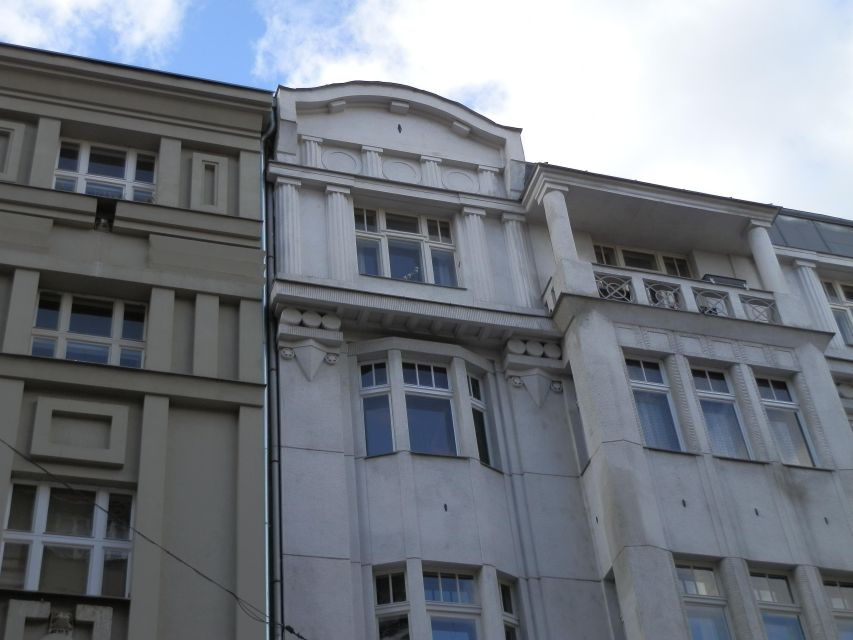
You start at Prague’s Central Train Station, at the platform area on the middle side where the guide carries a red folder. The meeting point ties into the theme fast: this is not a random downtown walk, it’s a guided look at how “modern” Prague began reshaping itself in the early 1900s.
Standing near the station puts you right at the edge of the story. Prague’s New Town developed in waves, and the tour’s structure mirrors that. You’ll walk through areas shaped by the Belle Époque mood, then the guide will zoom out to explain what came before and why people felt the need to change their visual language.
This opening is useful even if you already know Prague. You get a vocabulary for what you’re seeing, so later you’re not just admiring facades—you’re spotting the clues the guide points out: curves versus geometry, ornament versus structure, and how the city’s identity keeps getting redrawn.
You can also read our reviews of more private tours in Prague



Art Nouveau in the New Town: more than pretty facades
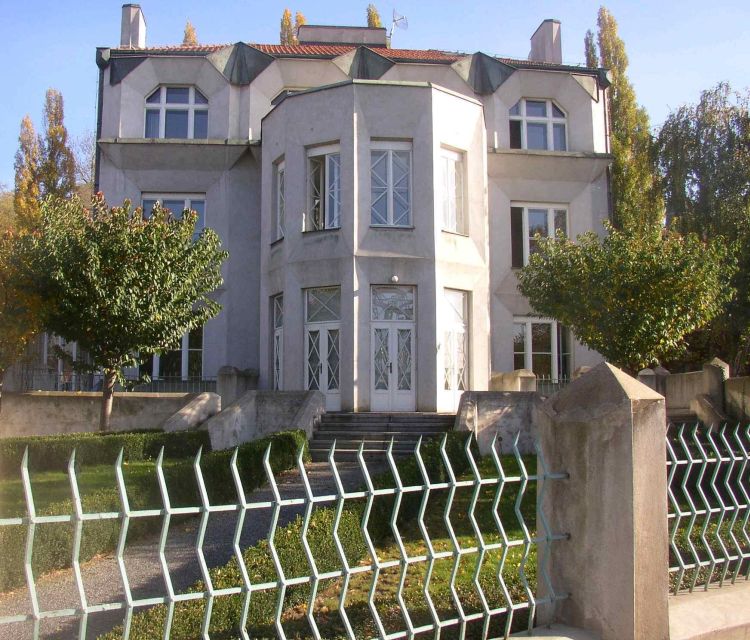
The first big chunk focuses on Art Nouveau as it grew out of 19th-century design habits. The guide lays out the logic: Art Nouveau wasn’t invented as a decorative hobby. It was a reaction—social, aesthetic, and practical—to an era that felt ready for something new.
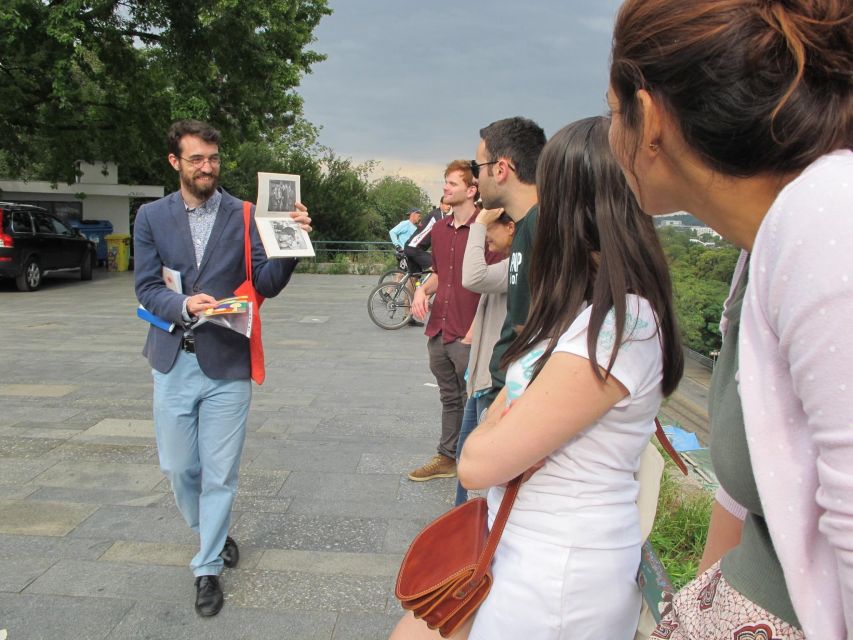
What you’ll notice quickly is that the style shows up in recurring ways: in window and door shapes, in ironwork and stone detailing, and in the way buildings try to look alive rather than strictly formal. The guide’s narrative connects those details to the “why.” That matters because Prague can trick you into thinking ornament is just ornament. Here, it’s tied to the idea of modern aesthetics—how people began imagining architecture as a whole system, not separate parts.
You also get to see how Prague’s Art Nouveau wasn’t identical everywhere. Local interpretations appear in the city’s particular mix of historic layers and the new confidence of the early 1900s. If you’ve already done the major attractions on your first pass, this portion feels like leveling up: you’re learning how to read the streets.
Jubilee Synagogue and the city’s layered cultural map
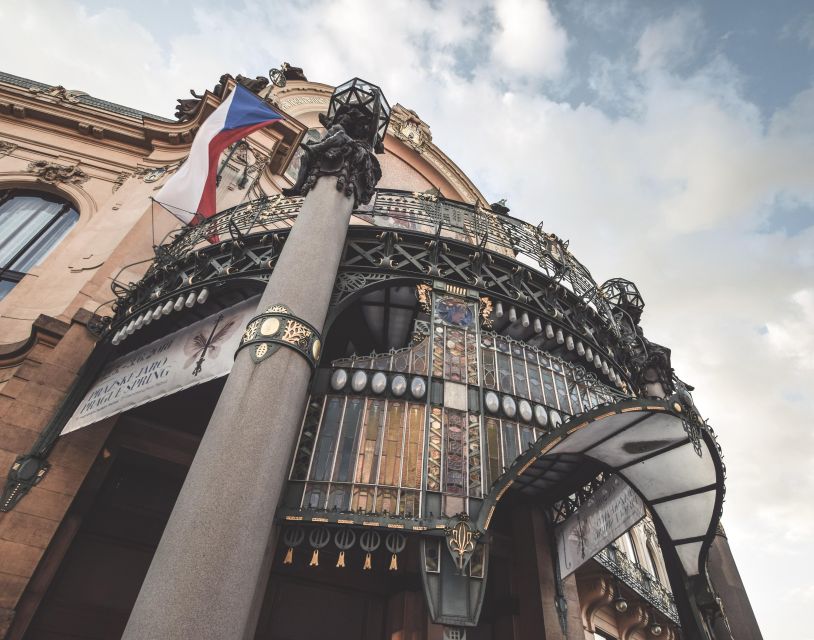
One of the first named stops on the walk is the Jubilee Synagogue. Even though the viewing time is brief, it’s a meaningful anchor. You’re not just touring art styles in isolation—you’re seeing how architecture sits inside a broader cultural map.
The guide uses stops like this to widen the lens. That’s important because Art Nouveau and Cubism didn’t develop in a vacuum. They arrived in a city with deep traditions, changing communities, and a politics of identity. Even when you’re looking at modern design, the atmosphere of earlier Prague still shapes what you see next.
This is also where the tour’s pacing becomes a “choose your own attention” moment. If you like to look slowly, you can linger on details while the group moves between short segments. If you want momentum, you’ll stay with the guide’s flow and let the context do the work.
Municipal House and the art you feel in the details
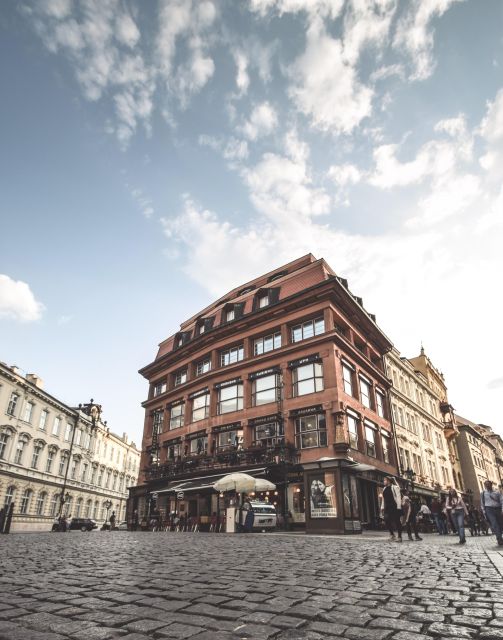
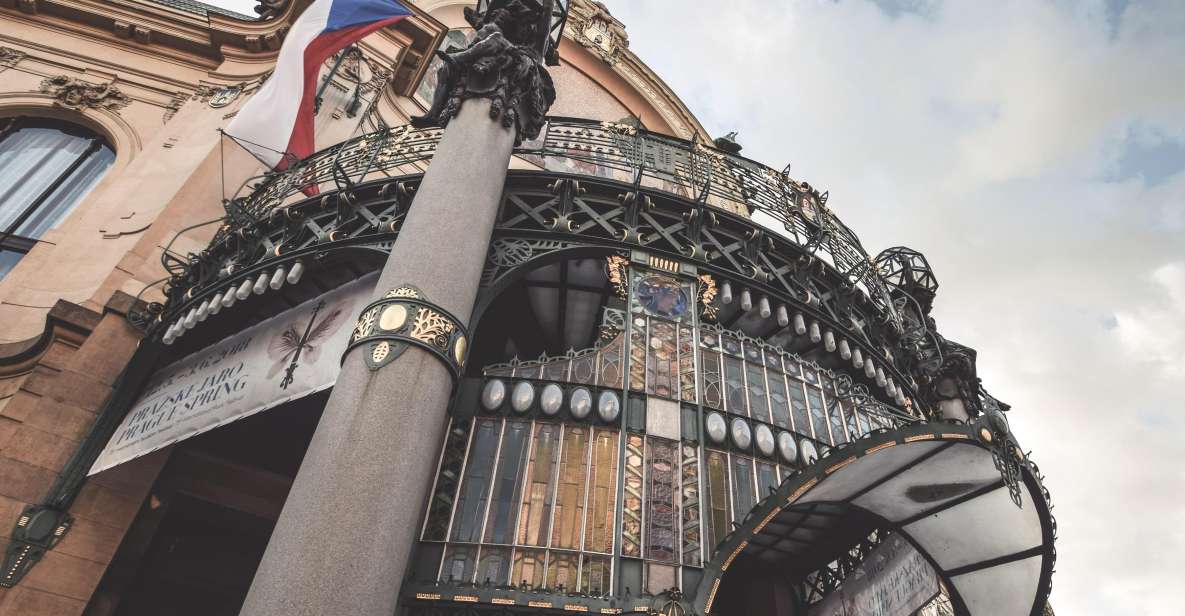
Another highlight in the downtown area is the Municipal House. Even in a short stop, it’s the kind of building that rewards your eyes. You’ll get a chance to notice how the city’s early-20th-century vision shows up in the overall feel—how the facade communicates prestige, confidence, and craftsmanship.
This is also where the guide’s “style as argument” approach starts clicking. Art Nouveau can look like it’s just reacting against something. But the guide frames it as a positive push toward a new modern look—one meant to be coherent from street level upward.
If you’re the kind of traveler who thinks buildings are easiest to understand from inside, you’ll still be fine here. You’re outside, but the guide points out what to look for so you can extract meaning from what you can see. It’s not about memorizing facts; it’s about training your eye.
House of the Black Madonna: history you can read at street level
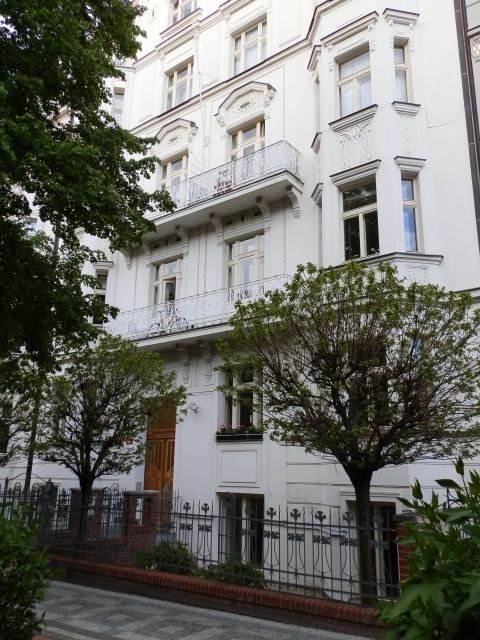
The House of the Black Madonna is next, and it’s a good example of why a guided approach beats wandering alone. Like the other named stops, the point isn’t only the building itself. It’s what the guide does around it—how it fits into the story of taste, identity, and change in Prague.
Here the tour keeps walking you through the city’s timeline. You’re moving from the New Town atmosphere toward a later section where Cubism becomes the star. The transition helps you understand that Prague’s “modern” doesn’t arrive in one clean step. It comes in arguments, overlaps, and interruptions.
So if you’re thinking of this as a style tour, yes—you’ll learn the differences. But you’ll also learn the pattern: Prague keeps redeveloping how it wants to be seen.



Wenceslas Square: famous space, explained rather than just passed
Wenceslas Square is a familiar name, but the tour doesn’t treat it as a checkbox. You get time to look around and absorb the scale, then the guide brings you back to the main theme—how the city’s aesthetic choices tie into the 20th century’s shifts.
This stop works two ways. First, it gives you a mental reset. After several shorter architectural moments, a longer square stop gives your eyes a breather and helps you reconnect what you saw on smaller streets to the broader urban stage.
Second, Wenceslas Square is a reminder that style is also about visibility. Art Nouveau and Cubism weren’t only artistic movements; they were attempts to stake out what the city should look like in public view. The square helps you see the stakes.
If you’re tired, you can use this as your pacing checkpoint. Take a few minutes, stand back, and let the guide’s narrative settle before you head toward the more remote portion near Vyšehrad.
Tram to Vyšehrad: where Cubism starts getting bold
After spending substantial time around the downtown core, you switch from walking to a short public-transport ride. The direction matters: you’re heading toward a more remote area under Vyšehrad fortress, where the most daring Cubist architecture is hiding.
This is one of the tour’s smartest choices. Cubism in Prague can be easy to miss if you only target the postcard spots. By using public transportation, the guide gets you to a different kind of city experience—less centered on constant crowds, more focused on architecture living in its own neighborhood rhythm.
You’ll then slow down on the Cubist portion and focus on what makes the style feel like a revolt. The guide explains how Cubism started as a pushback against popular Art Nouveau, with both styles later affected by the turbulence brought by World War I. In other words: you’re not just seeing shapes. You’re seeing how culture changes when history shakes people’s confidence.
Three Cubist Houses and the lesson of hard angles
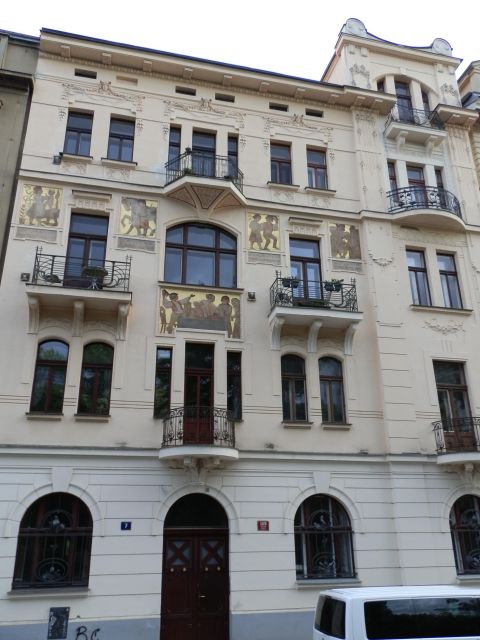
The tour includes the Three Cubist Houses, each one showing Cubism’s love of structure-breaking forms. With only a short sightseeing window, the value comes from what you’re taught to look for: how lines slice the facade, how perspective feels unstable, and how the building tries to challenge your expectation of how a wall should behave.
This is where the tour feels most “alive.” Art Nouveau can make architecture look decorative and flowing. Cubism makes it look argumentative. Standing in front of these houses, you start to understand Cubism as a design stance rather than a single look.
If you’re wondering how to “read” Cubism when you’re not an architecture student, let the guide’s points do the heavy lifting. The whole idea here is to make the style understandable in the street, with context that connects it to what came right before.
Kovařovicova vila and Cubist house Vyšehrad č. p. 98
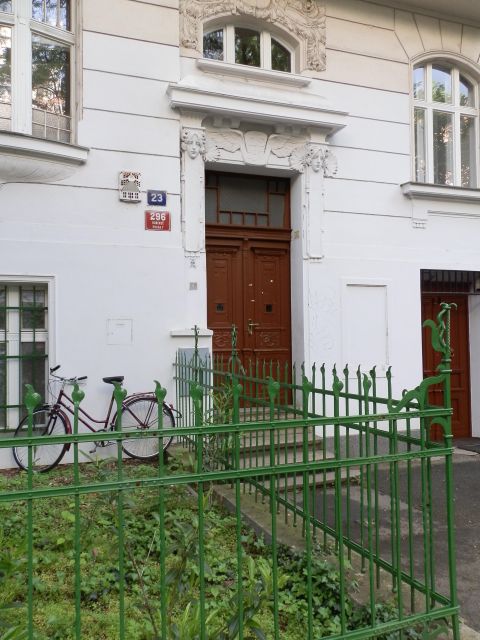
Two more Cubist targets finish out the Vyšehrad-side part of your day: Kovařovicova vila and the Cubist house Vyšehrad č. p. 98. These stops keep the focus on the same theme—Cubism’s move away from ornament-as-main-idea toward geometry and tension.
This is also where you’ll appreciate the tour’s storytelling approach. By the time you arrive here, you’ve already learned the transition from Art Nouveau to Cubism and why both were shaken by World War I. So the buildings don’t feel random. They feel like chapters that follow each other.
Practical tip: keep your phone/camera ready, but also pause without recording. Cubist facades often reward your eye for angles and shadow patterns. If you constantly lift your camera, you miss the way the building’s geometry changes with your position.
Value and price: what $84 buys you
At $84 per person for a private tour, you’re paying for more than “someone to show up with a map.” You’re buying a guided narrative that connects style, time period, and city identity. The included public transportation tickets—and the tram back near the end—also matter. They reduce your hassle and keep the tour from turning into a car-only sightseeing day.
If you’re traveling with friends or family, private pricing can be good value because the guide can tailor attention to your interests—still within the structured stops. And if you’ve already seen the big-name Prague sights, this tour is often a smarter use of your time than repeating them. It’s built for the second look, the one where you start noticing the design logic inside the streets.
Who this tour is best for (and who should skip)
This works especially well if:
- You’ve already done the classic Prague highlights and want a different angle
- You like architecture but want it explained in plain language
- You’re curious about how 20th-century events shaped what people built and why
It’s less ideal if:
- You travel with children under 12, since the tour isn’t suitable for that age group
- You hate walking or prefer a very relaxed pace
- You want a long, open-ended neighborhood wander with no structured transitions
If you can do short stops and then move on, you’ll get a lot from the way the guide keeps the story going without turning it into a lecture.
A note on guide style: Max and Eva make it click
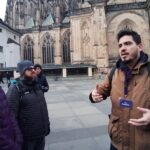
The guide experience seems to make a real difference. Guides like Max and Eva are highlighted for bringing a clear, compelling explanation of Art Nouveau and Cubism—and for answering questions on the spot. Max, for example, is noted for presenting the architecture story in German, while Eva’s English-led sessions are described as educational and wide-ranging across the city’s styles.
Even if your guide speaks a different language choice on the day, the format is the same: short viewing windows plus a narrative that tells you what you’re looking at and why it matters.
Should you book this Prague Art Nouveau and Cubism tour?
Book it if you want Prague through the lens of modern style—starting at the 1909 station, moving through New Town Art Nouveau, then finishing with Cubism under Vyšehrad. It’s a strong fit for a return visit and for anyone who likes learning how architecture reflects real arguments from the 20th century.
Skip it if you’re only looking for big-ticket monuments and don’t care about design transitions. Also skip if your ideal day is slow and flexible with minimal walking, because the structure includes lots of short segments plus a couple transport switches.
If you’re in that middle zone—curious, comfortable on foot, and ready to read buildings like a story—this private tour is a tidy, high-value way to do it.
FAQ
Where is the meeting point?
You meet on Prague’s Central Train Station, in the middle of Platform No. 1. The guide is carrying a red folder. The starting point also corresponds to the bankomat UniCredit Bank area.
How long is the tour?
It’s valid for 1 day. Starting times depend on availability.
Is this tour private?
Yes. It’s a private group.
What languages are offered?
The live tour guide is available in English and German.
Is public transportation included?
Yes. Tickets for public transportation are included, and the tram ride back toward downtown is included as part of the tour.
Is the tour wheelchair accessible?
Yes, it’s listed as wheelchair accessible.
Is it suitable for children?
No. It is not suitable for children under 12.
What should I bring?
Wear comfortable shoes.
Can I cancel for a refund?
Yes. Free cancellation is available up to 24 hours in advance for a full refund.
Is there a reserve and pay later option?
Yes. You can reserve now and pay later.