REVIEW · PRAGUE
Prague Castle Walking Tour
Book on Viator →Operated by Insight Cities · Bookable on Viator
Prague Castle can feel like a maze without help. This small-group, English-language Prague Castle walking tour (max 8 people) keeps things easy to hear and easy to follow, with an historian guide who puts the story behind every major stop on Hradčany Hill. I especially like how you get a real comparison of Romanesque, Gothic, Baroque, Rococo, Renaissance, and Neoclassical styles in a short walk. One drawback to plan for: the Prague Castle and cathedral/royal interiors entry tickets are not included in the price.
I also like the pacing. You’re on foot for about 3 hours, with a tight route that still covers the big visual hits: St. Vitus Cathedral, the Old Royal Palace/Vladislav Hall area, the Royal Garden buildings, and Golden Lane. You get to choose morning or afternoon timing too, and if your schedule allows, afternoon often means a calmer feel around the complex.
For curious travelers who want more than postcard views, this tour hits the sweet spot: Czech history tied to architecture and the politics of the place. Just note the terrain—this is a hilltop site, and you’ll be walking and moving through areas with steps and uneven ground.
In This Review
- Key points you’ll care about before you go
- Meeting in Malá Strana and finding the vibe
- Heading up Hradčany Hill: where the view meets the story
- Prague Castle complex: 1,100 years of style changes you can actually see
- Quick value check on castle entry
- Royal Garden architecture breaks: Ball Game Hall and Queen Anne’s Summer Palace
- Ball Game Hall in the Royal Garden
- Queen Anne’s Summer Palace
- St. Vitus Cathedral: Gothic power and standout chapels
- Old Royal Palace and Vladislav Hall: jousting, banquets, and a political spark
- St. George’s Basilica and the style contrast you’ll appreciate
- Golden Lane and Dalibor Tower: small rooms, big stories
- Domeček and Strahov Monastery: the political layer after the royal layer
- Price and what you’re really paying for
- Who this tour suits best (and who should think twice)
- Final verdict: should you book this Prague Castle walking tour?
- FAQ
- How long is the Prague Castle walking tour?
- What is included in the tour price?
- Do I need to pay for St. Vitus Cathedral?
- How many people are in the group?
- What languages is the tour offered in?
- Can I choose a morning or afternoon time?
Key points you’ll care about before you go
- Small group size (up to 8) means you’ll actually keep up without constant shouting over crowds.
- Architecture comparisons in one loop: you’ll see multiple styles laid out close together, from church to palace to garden buildings.
- Historian-style storytelling covers damage, plunder, and shifting rulers, not just dates and facts.
- Royal Garden stops include memorable structures like the Ball Game Hall and Queen Anne’s Summer Palace.
- Hradčany context beyond the castle: you pass politically loaded sites like Domeček and end near Golden Lane.
Meeting in Malá Strana and finding the vibe
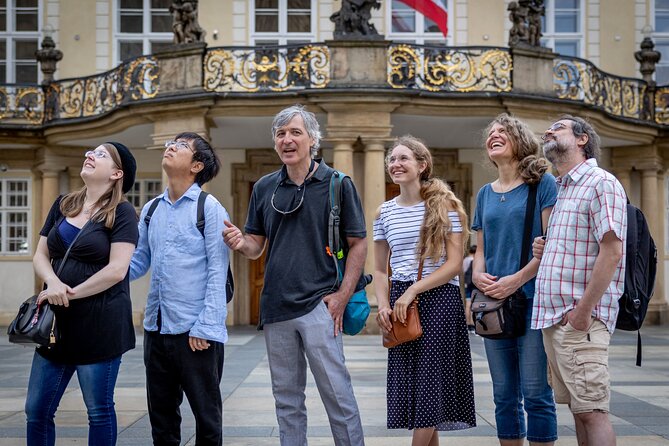
You’ll meet in Malá Strana at Bagel Lounge Malostranská Letenská (118/1). It’s designed to be an easy starting point, and it’s also near public transportation, which matters because Prague runs on schedules and you don’t want a “where is it?” scramble while you’re already late.
The tour gives you a simple choice: morning or afternoon. That choice is more than convenience. The castle complex can be busy, and the route includes both exterior walking and time at major interiors. If you’re picking a time slot, I tend to prefer afternoon when you can, since it often feels less crowded and you can spend more time looking instead of rushing.
One more practical note: you’ll get a mobile ticket, which is handy if you don’t want to mess with printed vouchers. And with group discounts offered, it can be a smart value if you’re traveling with one or two friends and want the same guide.
You can also read our reviews of more walking tours in Prague



Heading up Hradčany Hill: where the view meets the story
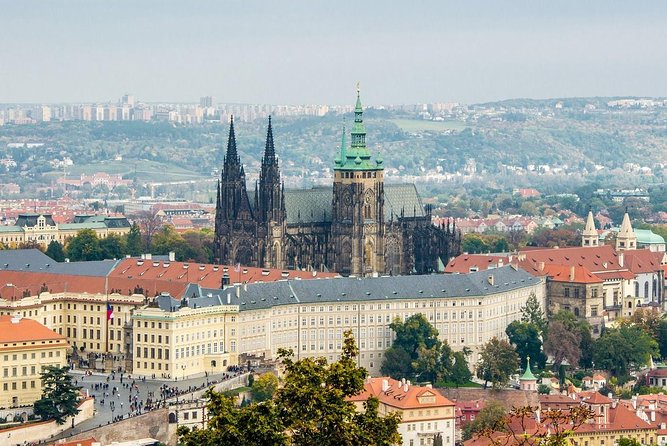
Once you’re together, the tour walks you from Malá Strana up toward Hradčany Hill—the natural spine of Prague Castle. The uphill approach matters because it changes how the site reads. From below, you see it as a fortress. Up close, you start noticing why the whole place became a symbol of state power: it’s dramatic, layered, and impossible to understand in a quick photo stop.
As you walk, you follow a route through key exterior areas like the Royal Garden and around the Stag Moat. This is the part where the guide’s job really shows. You’re not just being told what the buildings are called—you’re being taught how the castle kept getting rebuilt, updated, and repurposed as rulers changed. That’s the theme running through the entire experience: the same site, constantly rewritten.
If you want one reason this walking tour is worth it, it’s this: you get the why behind what you’re seeing while your brain is still working through the layout. When you reach the top, the complex doesn’t feel random.
Prague Castle complex: 1,100 years of style changes you can actually see
The core of the tour is the Prague Castle complex itself, with an emphasis on architecture as a timeline. The guide points out how the buildings were constructed and reconstructed across centuries, showing major style eras such as Romanesque, Gothic, Baroque, Rococo, Renaissance, and Neoclassical.
What I like about this approach is that it turns the castle into a set of visual arguments. For example, you’re not just told that Gothic is about height and light; you’re standing near the kinds of elements Gothic is famous for, then moving to a different style and seeing the contrast. Same site, different rulers, different design priorities.
You also get the “how did this place survive?” side of history. The guide covers how the castle suffered from artillery attacks and plunder by marauding armies, and how it deteriorated under indifferent Austrian emperors. That context changes the tone of your visit. It’s no longer just royal and scenic. It’s survival, power struggles, and long-term rebuilding.
Quick value check on castle entry
The walking tour includes a guide and the time on site, but Prague Castle entrance is not included in the tour price. Adults are listed at CZK 450, and students/seniors at CZK 300. Plan to add that cost if you want to go inside key buildings like St. Vitus Cathedral and other royal interiors the tour focuses on.
Royal Garden architecture breaks: Ball Game Hall and Queen Anne’s Summer Palace
After you’ve established the castle’s big-picture story, the tour shifts into smaller, more specific buildings that make the place feel human and quirky in the best way.





Ball Game Hall in the Royal Garden
You’ll stroll past the Ball Game Hall, a Renaissance structure tied to the playful side of aristocratic life. The tour highlights the idea of sporty nobles practicing games with the Emperor. You’ll also see Renaissance sgraffito depicting allegories of virtues and of arts and sciences.
This stop is short, but it’s a good reminder that royal life wasn’t only ceremony and war. It was also routine, leisure, and status performance.
Queen Anne’s Summer Palace
Next is Queen Anne’s Summer Palace, described as a Renaissance building often noted as the purest Renaissance architecture outside Italy. It was commissioned by Ferdinand I in the mid-1500s, and later converted into an astronomical observatory by Rudolf II.
This is one of those stops where the guide can connect dots fast. You see how the same walls served different purposes as interests shifted—from courtly life to science and observation. The name Rudolf II comes up again and again in Prague Castle history, so it helps to have that context early.
St. Vitus Cathedral: Gothic power and standout chapels
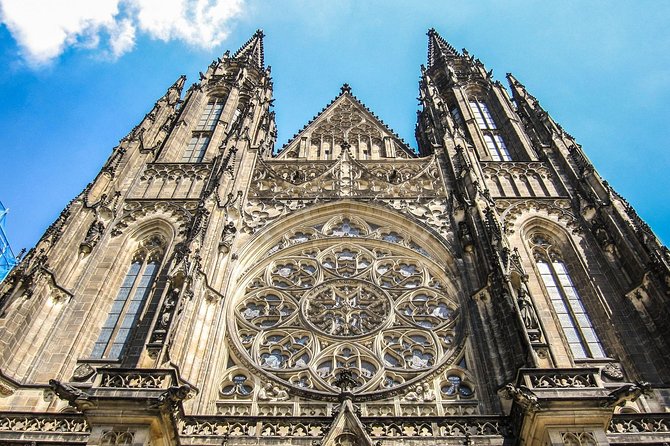
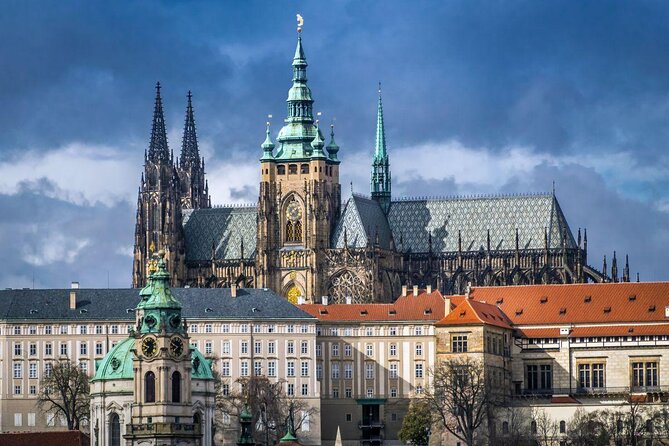
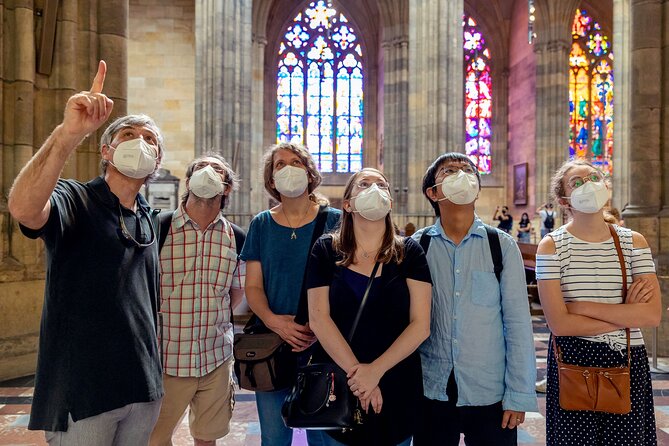
Time inside St. Vitus Cathedral is one of the biggest reasons people decide to tour the castle complex with a guide. This is the monumental Gothic church that took centuries to finish—founded in the 14th century and completed in the 19th century.
You’ll learn what you’re seeing in practical terms: the cathedral represents a prominent Gothic example in Central Europe and houses the royal crypt of Czech sovereigns and patron saints.
The tour also points you to particular artistic and spiritual highlights:
- The Baroque tomb of St. John of Nepomuk, known for its silver cast
- The Gothic St. Wenceslas Chapel, which houses relics of the saint
One practical note: St. Vitus Cathedral admission is not included. So you’ll want to budget for it along with the castle entrance if you’re following the full experience the tour is built around. The upside is that this isn’t time wasted. Without context, St. Vitus can feel like “one big beautiful room.” With context, you start noticing the differences between chapels, tombs, and the cathedral’s long development.
Old Royal Palace and Vladislav Hall: jousting, banquets, and a political spark
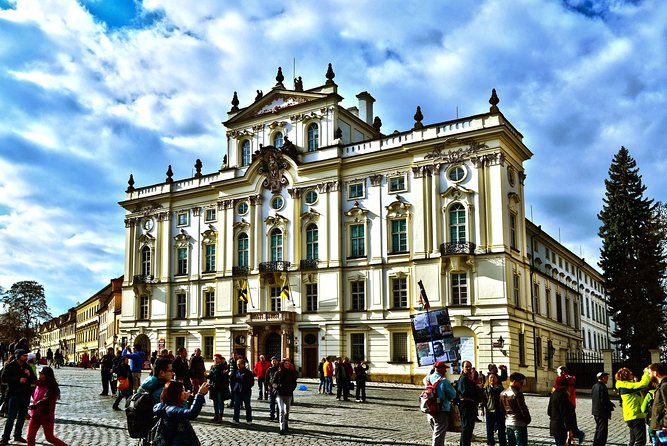
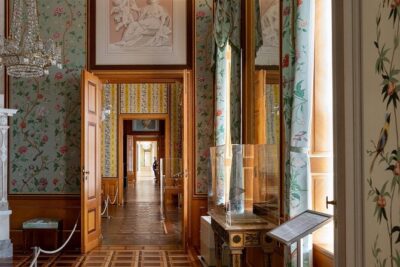
The Old Royal Palace segment puts you inside one of the castle’s most dramatic spaces: Vladislav Hall. Built at the end of the 15th century, it blends Late Gothic structure with Renaissance additions. It was used for coronation festivities, banquets, and knights’ tournaments.
If you’ve ever wondered what it looked like when medieval politics mixed with spectacle, this hall is your answer. The guide explains how knights could enter and take part in competitions in full armor, using the Riders’ Staircase designed for that exact purpose.
Then the story turns sharp. You’ll hear about the Ludwig Wing and the window connected to the defenestration of two Austrian governors and their scribe, an event that sparked the Thirty Years’ War. That’s not just a fun fact—it’s the kind of moment where a building stops being decorative and becomes evidence of real history.
Like other interiors, admission is not included for parts of this segment, so expect ticket costs on top of the tour price.
St. George’s Basilica and the style contrast you’ll appreciate
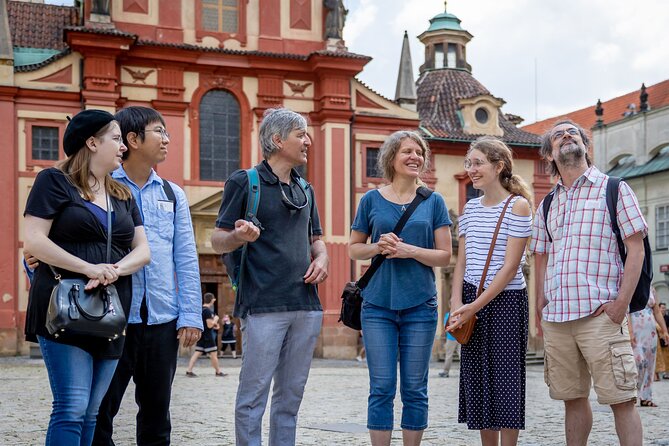
Next comes St. George’s Basilica, described as an austere Romanesque basilica built in the 1100s. This is a smart pairing after St. Vitus Cathedral. You’re already in a Gothic mindset, then you switch to Romanesque, so the contrasts are easier to spot.
Even if you don’t consider yourself a church person, it’s useful to see how style changes how a space feels—heavier, simpler, more grounded in Romanesque design compared with the tall, dramatic Gothic language you just experienced.
This stop is shorter and not included for admission, so treat it as a focused look rather than a long sit-and-stare.
Golden Lane and Dalibor Tower: small rooms, big stories
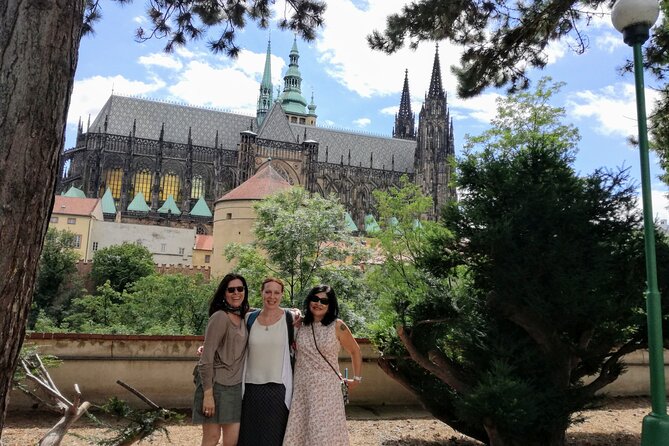
At Golden Lane, you walk a quaint, diminutive street originally built in the 16th century for Rudolf II’s castle guards. The tour encourages you to step into the tiny rooms—today many are mostly souvenir shops, but the layout is the point: these were practical spaces tucked into the castle’s defensive zone.
Golden Lane also connects to a few heavier themes. There’s mention of a museum of medieval armoury accessible from Golden Lane, and Golden Lane is connected with Dalibor Tower, which used to be a dungeon.
This is another place where the guide’s framing helps. It would be easy to treat Golden Lane as just a cute alley. With the right context, you understand why it’s tiny and why it was part of the castle’s security system.
Domeček and Strahov Monastery: the political layer after the royal layer
After the castle time ends, the route shifts away from the most famous royal rooms into broader Hradčany context.
You’ll pass Domeček, described as the former prison where political opponents were imprisoned by the Gestapo. That detail adds weight to the walk because the castle is not only about kings and saints. It also ties into darker periods of Prague’s 20th-century history.
Then you’ll pass by Strahov Monastery, where an ancient library is housed. Even if your time there is limited, the stop helps you understand why this whole district feels scholarly and historic—not just ceremonial.
Price and what you’re really paying for
At $126.16 per person, this tour isn’t a “cheap and cheerful” experience. But here’s where the value math becomes clearer.
You’re paying for:
- A historic guide and a structured route through the complex
- A small group size (max 8) so you can hear explanations and ask quick questions
- Time focused on major architectural stops, rather than leaving you to connect the dots on your own
The tradeoff is that key entries aren’t included. Prague Castle entrance costs CZK 450 adults / CZK 300 students and seniors, and the tour also notes that St. Vitus Cathedral and other interiors have tickets not included. So your total out-of-pocket spend depends on how many interiors you want to use your time for.
When does this feel like a great deal? If you care about architecture and you want an explanation that turns a long and confusing site into a clear story. If you just want the quick highlights at your own pace, you might prefer a self-guided route. But if your brain likes cause-and-effect, a guide pays off fast.
One helpful signal from past tour experiences: people consistently praised the guide quality. One guide named Robert was highlighted as entertaining and very knowledgeable, and that kind of “storytelling clarity” is exactly what you’re buying with a paid historian-led walk.
Who this tour suits best (and who should think twice)
This tour is best for you if:
- You enjoy architecture history and want to compare styles in a single walk
- You want context around Czech political and religious history, not only names and dates
- You’d rather have a small group than fight for audio in a 20+ person pack
- You like a guide who adds real-world details, including how major events connect to specific buildings
It may be less ideal if:
- You want a completely free-roaming schedule with no planned route through key interiors
- You dislike ticket add-ons at major sites
- You prefer low walking and minimal stairs, since this route involves hilltop movement
Also, this tour states that most travelers can participate, and the small group setup tends to make things smoother if you’re traveling with a stroller.
Final verdict: should you book this Prague Castle walking tour?
If you’re the kind of traveler who looks at a church façade and thinks, Wait, why does this look different from the last one, book it. The biggest win here is that you get a tight, logical route up Hradčany Hill with a guide who can explain what you’re seeing and why it changed over time. Add in the small group size, and it becomes a far more human experience than trying to tackle Prague Castle alone.
If you don’t plan to buy the extra entrances or you’re mainly chasing quick photos, you might feel the ticket costs more than the guide value. But for curious history and architecture lovers, this is one of the most efficient ways to make Prague Castle make sense.
FAQ
How long is the Prague Castle walking tour?
The tour runs about 3 hours.
What is included in the tour price?
You get a historic guide. Prague Castle entrance and interior admissions are not included.
Do I need to pay for St. Vitus Cathedral?
Yes. St. Vitus Cathedral admission is not included.
How many people are in the group?
The tour has a maximum of 8 travelers.
What languages is the tour offered in?
The tour is offered in English.
Can I choose a morning or afternoon time?
Yes. You can choose between morning or afternoon timings.