REVIEW · PRAGUE
Walking through ages: 11th to 21st century, Prague flavoured
Book on Viator →Bookable on Viator
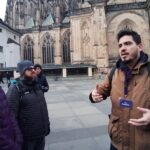
Prague turns into a time machine walk. You’ll move from Prague Castle to Wenceslas Square, tracing the city’s style shifts from the 11th to the 21st century, guided by Vadim. I also love the way the guide handles questions on the spot, with clear, detailed answers and stories that make the sights make sense.
This tour works well for a “see the big stuff fast” day. Many stops are exterior-only, so you keep momentum and still get excellent orientation for the rest of your trip, plus practical tips on getting around by tram.
The main drawback is simple: the pacing is brisk. Most viewpoints are quick hits (often 10 to 20 minutes), and interiors like St. Vitus Cathedral and St. Nicholas Church are not included.
In This Review
- Key highlights you’ll feel right away
- A 4-hour walk that charts 11th–21st century Prague
- Price and value: what $60.21 buys (and what it doesn’t)
- Getting to Prague Castle and moving on foot (with tram help)
- Stop-by-stop: Prague Castle, St. Vitus, and Hradčany in quick, high-impact hits
- Prague Castle (exterior orientation)
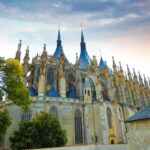
- St. Vitus Cathedral (gothic meaning, not entrance tickets)
- Hradčany Square (views and the noblemen’s backdrop)
- Lesser Town: baroque streets, Malostranské náměstí, and the St. Nicholas dome
- Lesser Town (free time to explore the feel)
- Malostranská náměstí and St. Nicholas (baroque icon on the skyline)
- Charles Bridge to Josefov: where Prague’s postcard icon meets older identity
- Charles Bridge (700 years of statues and views)
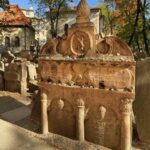
- Josefov (Jewish quarter’s architectural rebuild)
- The Old-New Synagogue (historic age and golem legend)
- Old Town Square to Estates Theatre: the civic center and Mozart’s stage link
- Old Town Square and the Astronomical Clock
- Stare Město (Old Town) and Charles University area
- Estates Theatre (Mozart link, still active)
- Obecní dům and Wenceslas Square: Art Nouveau pride to modern-era contradictions
- Obecní dům (Czech Art Nouveau and 1918)
- Wenceslas Square (a timeline you can walk along)
- How fast is this walk, really?
- Who should book this tour, and who should skip it
- Should you book this Prague Castle to Wenceslas Square tour?
- FAQ
- How long is the tour?
- What does the tour cost?
- Is admission included?
- Is pickup offered?
- What time does the tour start, and where does it end?
- What group size should I expect?
Key highlights you’ll feel right away
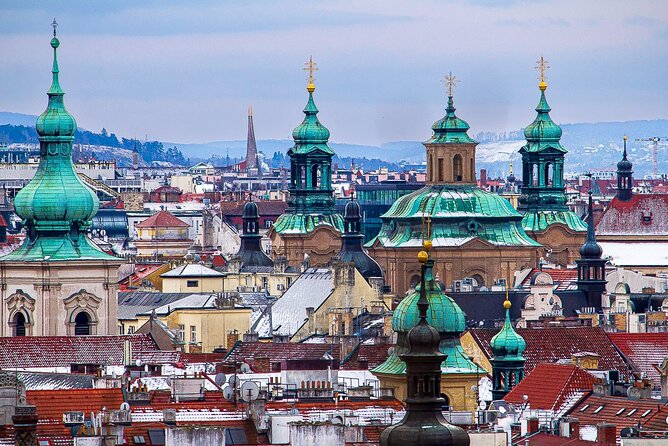
- A single route through centuries, from Bohemian power to 20th-century civic Prague
- Vadim’s Q&A style, with detailed, responsive explanations (and a bit of humor)
- Exterior-first planning, so you avoid getting bogged down by entrances you didn’t buy
- Small group size (max 10), which helps you hear the guide and adjust the pace
- Tram and navigation help to make the rest of your stay easier
- A route that balances icons and side streets, not just the postcard spots
A 4-hour walk that charts 11th–21st century Prague
This tour is built like a “what changed and why” walk. You start in the era of royal power and national symbolism at Prague Castle, then you work forward through gothic, baroque, and Jewish-quarter reconstructions, before landing in the Czech state-building moments of the 1900s. The endpoint at Wenceslas Square keeps the timeline moving into 20th-century design styles and the modern sense of Prague as a living city.
What I like for you: the route doesn’t treat Prague as one big medieval theme. It shows how the city keeps being rebuilt, redesigned, and reinterpreted over time, and you can see those layers with your own eyes as you walk.
You’ll also notice the rhythm of the day: quick landmark checks, then longer stretches where you can slow down and actually look at streets, squares, and building details.
You can also read our reviews of more walking tours in Prague


Price and value: what $60.21 buys (and what it doesn’t)
At $60.21 per person for about four hours, this is priced like a guided highlights walk, not a museum-heavy day. The guide service is included, the tour is in English, and the group size is kept small (up to 10 travelers). There are also practical extras like a mobile ticket and the option of pickup, which helps reduce the friction of starting at Prague Castle.
Where value gets tricky: admissions are not included because it’s exterior only. Stops tied to major interiors include Prague Castle areas, St. Vitus Cathedral, St. Nicholas Church, the Old-New Synagogue, the Estates Theatre, and Obecní dům. That’s not a dealbreaker, but it means you should plan on separate tickets if you want to go inside.
So the smartest way to think about the cost is this: you’re paying for guided context, good pacing, and a route that stitches together big visual anchors from place to place. If you want hours inside buildings, budget extra time and likely extra tickets.
Getting to Prague Castle and moving on foot (with tram help)
The tour meets at Pražský hrad (Prague Castle) at 10:00 am, and it ends at Wenceslas Square. It’s a walking tour, but you don’t start by walking from wherever you sleep. Public transport is part of the plan: plan on paying €2.00 per person for the transit segment, since private transportation is not included.
If you have pickup offered, that can make a difference. One of the best practical touches here is that your guide uses the tram system to get you to Prague Castle efficiently and then shows you how to use it during your stay. That matters more than it sounds, because Prague’s trams can save you time and hills when you’re juggling multiple sights.
Bring water or snacks if you think you’ll need them. There’s no mention of snacks being included, so pack small and easy.
Stop-by-stop: Prague Castle, St. Vitus, and Hradčany in quick, high-impact hits
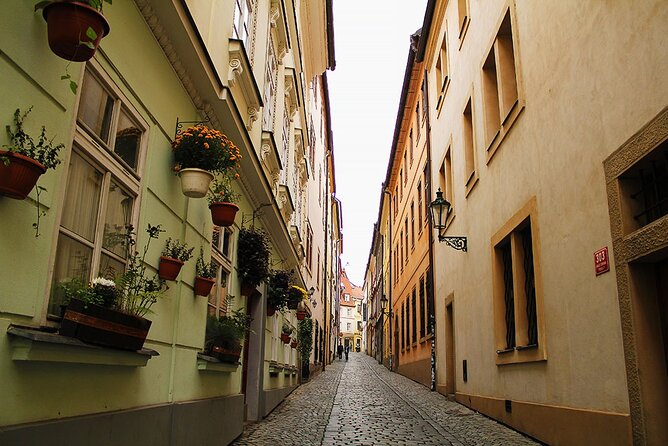
Prague Castle (exterior orientation)
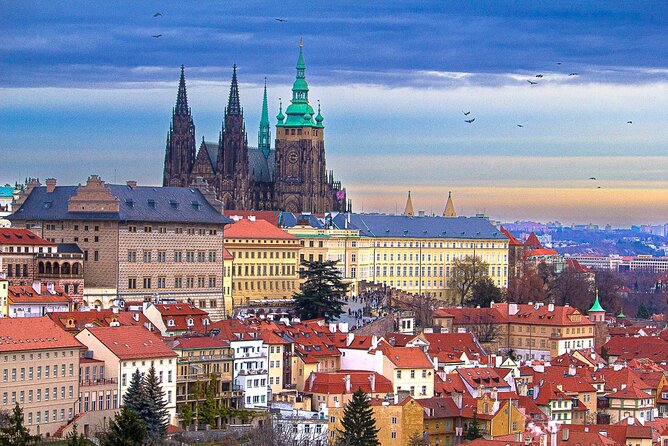
Prague Castle is the dominant landmark and a UNESCO World Heritage Site, tied to Bohemian rulers going back to the 10th century. Since admissions aren’t included here, your time is focused on orientation and exterior storytelling. In about 10 minutes, you’ll get enough context to understand why Prague Castle feels less like one building and more like a whole state-within-the-city.
A useful mindset: treat this as the “gateway” stop. If you later decide to go inside, you’ll know what you’re looking at instead of just staring at walls.





St. Vitus Cathedral (gothic meaning, not entrance tickets)
Next comes a brief look at St. Vitus Cathedral. The point isn’t a long visit; it’s the cathedral’s role as a gothic masterpiece and a symbol of Czech state identity. Expect a fast, guided glance that helps you spot the cathedral’s importance before you move on.
If you’re a photo person, this is one of those moments where quick guidance can improve your angles. If you’re an architecture nut, you’ll appreciate that the guide frames what makes it distinct without requiring paid entry time.
Hradčany Square (views and the noblemen’s backdrop)
Hradcanske Namesti is your “breathe and look” pause. It’s the square in front of Prague Castle, edged by 17th-century palaces of powerful noble families. You’ll also get a stunning view over the city, which is exactly what you want after the castle-dominant scale.
This stop is free and set for around 15 minutes. Use it to reset your eyes after the visual density of the castle area.
Lesser Town: baroque streets, Malostranské náměstí, and the St. Nicholas dome
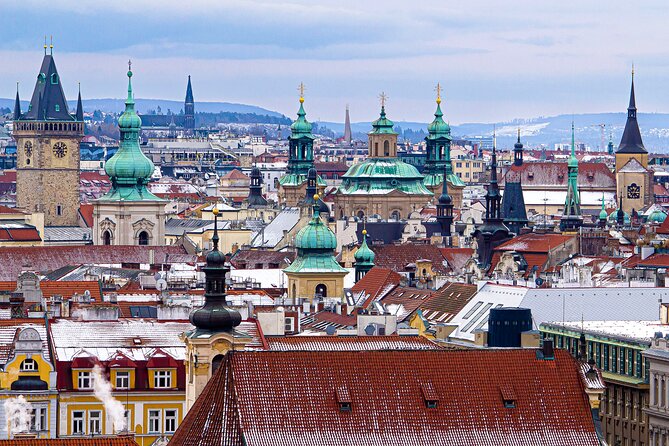
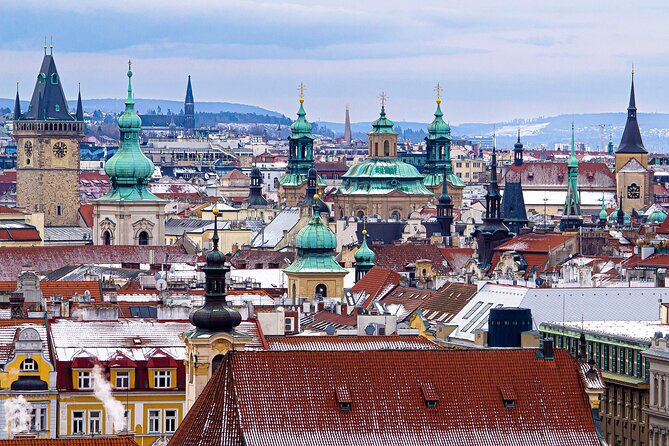
After the castle complex, the tour moves into Prague Lesser Town, known for one of Europe’s best-preserved baroque quarters. This section is a real shift in texture: lush gardens, majestic palaces, and streets that feel made for strolling. The itinerary gives you around 30 minutes here, which is long enough to move slowly and actually read the city with your eyes.
Lesser Town (free time to explore the feel)
One of the best parts of Lesser Town is that it’s practical sightseeing. You get the look of baroque elegance, but you also find cosy restaurants and small shops nearby. Even if you don’t stop for a meal right away, you’ll leave knowing where your next break could happen.
Malostranská náměstí and St. Nicholas (baroque icon on the skyline)
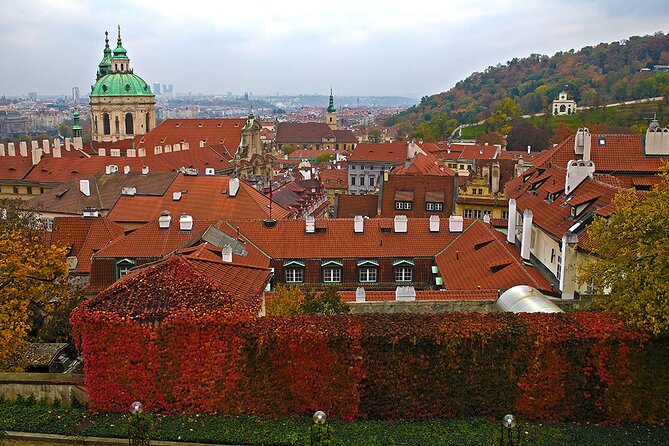
Malostranske namesti is the center of Lesser Town, set up for about 15 minutes. The spotlight is St Nicholas Church, a baroque jewel with a dome that shows up on Prague’s skyline in a way you can recognize from a distance.
Your stop at St. Nicholas is exterior-only and brief. That’s the tradeoff again, but it’s also the advantage of this tour: you see the landmark and the reason it matters, then you keep moving.
Charles Bridge to Josefov: where Prague’s postcard icon meets older identity
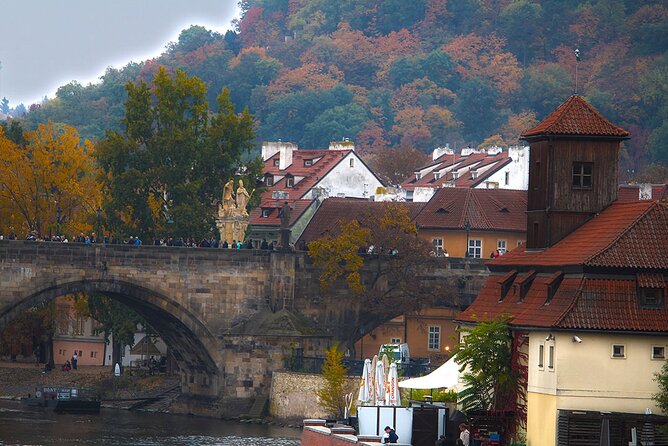
Charles Bridge (700 years of statues and views)
Charles Bridge is one of Prague’s main landmarks, and it’s roughly 700 years old. Expect 15 minutes with statues along the bridge and wide views over the city. The guide’s job here is to help you connect the visual details to the larger city story, so it doesn’t feel like only a photo stop.
A small piece of practical advice: go slow with your eyes. Prague’s bridge views can get repetitive fast if you’re only hunting for the perfect shot. Let the guide direct you to the parts that make the city look different from each angle.
Josefov (Jewish quarter’s architectural rebuild)
Next is Josefov, Prague’s Jewish quarter, described here as rebuilt on the border of the 19th and 20th centuries. What you’ll likely notice is how neorenaissance and art nouveau styles show up in a neighborhood people often remember for older eras. The tour gives you about 30 minutes here, so this isn’t rushed like some other stops.
This is also a good stretch for perspective. Prague can feel like one era at a time, but Josefov shows the city’s ability to reshape identity through rebuilding.
The Old-New Synagogue (historic age and golem legend)
The Old-New Synagogue is one of the oldest surviving synagogues in Europe, dating back to 1270. There’s also a legend tied to a closed attic and the Golem story. Your time here is about 10 minutes, and the tour is exterior only, so treat it as a guided context moment rather than a full cultural deep dive.
Old Town Square to Estates Theatre: the civic center and Mozart’s stage link
Old Town Square and the Astronomical Clock
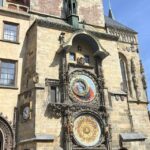
Old Town Square is the heart of the city with around 800 years of history. You’ll get about 20 minutes here, and the main magnet is the Astronomical Clock. Since the stops are free and focused, you’ll learn what makes this square the city’s central meeting point through time, not just why it looks famous today.
Practical move: use the guide’s direction to position yourself. With a busy square, timing and spot choice can make the difference between feeling stuck in the crowd and actually seeing what you came for.
Stare Město (Old Town) and Charles University area
Next is Stare Mesto, set for around 30 minutes. This stop can feel like Prague’s intellectual core as much as its historic center, with Charles University nearby and other major sights in the area. You’ll also hear about Estates Theater, a key connection for Mozart.
This is one of the longer time blocks in the middle of the day, which helps after the quick-fire bridge and Josefov segments.
Estates Theatre (Mozart link, still active)
Then you’ll stop at the Estates Theatre for about 10 minutes. The itinerary emphasizes that it’s the only theater in the world still in operation where Wolfgang Amadeus Mozart personally conducted his operas. Since admission tickets aren’t included, your visit is about understanding the place and its significance, not a performance.
If you’re musically minded, this is a strong emotional anchor in the route. It turns the buildings into dates and people in a way that feels human, not just architectural.
Obecní dům and Wenceslas Square: Art Nouveau pride to modern-era contradictions
Obecní dům (Czech Art Nouveau and 1918)
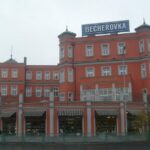
Obecní Dum is a flagship building of Czech Art Nouveau. It was built on the former Royal Court site and completed on the eve of Czechoslovak independence. The tour connects it to national identity, and notes that it was here where the new state was proclaimed in 1918.
Exterior-only doesn’t stop this from being meaningful. You’ll get a guided read on why this building matters: it isn’t just pretty design; it’s political and cultural symbolism in stone. The stop is about 10 minutes.
Wenceslas Square (a timeline you can walk along)
Wenceslas Square is the final big named stop, and it’s scheduled for around 20 minutes. It’s described as the main square of new-time Prague, tied to movements of the 20th and 21st centuries, and it’s clearly a place with constant life.
What makes this end section especially useful is the blend of architectural styles you can spot within walking distance: the neo-gothic presence of Our Lady of the Snows, the neo-classical National Museum, Art Deco elements like Hotel Europa, and even rondocubism from the 1930s. You’re effectively closing your timeline walk with a real-world “Prague keeps changing” finale.
How fast is this walk, really?
Most stops are brief: Prague Castle and St. Vitus Cathedral are set for about 10 minutes each, Charles Bridge around 15, and key city-center sights like Old Town Square around 20. Lesser Town and Josefov are longer blocks at about 30 minutes each.
That pacing is great if you want structure and guidance. It can be less great if you know you want to linger for photos, sketch, or read plaques for long stretches. This is a tour that favors efficiency, not slow wandering.
The upside: because the group is capped at 10, you should be able to hear the guide and keep your own pace without feeling lost.
Who should book this tour, and who should skip it
Book it if you want:
- A guided way to connect Prague Castle, Charles Bridge, and Old Town Square without planning every ticket separately
- A manageable day route that helps you understand Prague’s changing styles from medieval to modern
- Small-group attention, English guidance, and practical transit help
Skip it if you:
- Want lots of time inside major interiors (this is exterior only)
- Prefer long, unstructured wandering with minimal schedule pressure
- Need a slower pace for extended viewing at each stop
Also, since the tour is walking-focused and covers a lot of ground, wear comfortable shoes and plan for frequent short stops rather than one long “sit down and enjoy” stretch.
Should you book this Prague Castle to Wenceslas Square tour?
If your day in Prague needs direction, this is a strong choice. The price-to-time ratio makes sense for a 4-hour guided highlights route, and the guide’s style (especially Vadim’s detail and ability to tailor timing) can turn a simple walk into a clearer sense of how Prague grew into what it is now.
I’d book it if you want orientation plus standout exteriors, and plan separate time for any interiors that matter most to you. If you want a deep ticket-based museum day, save your money and build a different itinerary around paid entry experiences.
FAQ
How long is the tour?
It lasts about 4 hours.
What does the tour cost?
The price is $60.21 per person.
Is admission included?
No. It’s an exterior-only tour, and admissions are not included for stops like Prague Castle, St. Vitus Cathedral, St. Nicholas Church, the Old-New Synagogue, the Estates Theatre, and Obecní dům.
Is pickup offered?
Pickup is offered, and the tour also uses public transport to reach the starting point at Prague Castle.
What time does the tour start, and where does it end?
It starts at 10:00 am at Pražský hrad (Prague Castle) and ends at Wenceslas Square.
What group size should I expect?
The tour has a maximum of 10 travelers.