REVIEW · PRAGUE
Terezin In-Depth Holocaust Tour From Prague’s Center (max 7 pax)
Book on Viator →Operated by Terezin and Prague Jewish Quarter Tours · Bookable on Viator
Terezín starts heavy, even before the gates. This semi-private Holocaust tour from Prague’s center is built for meaning, not ticking boxes, with an English-speaking educator and a small group size (up to 8). I also like that the pacing is flexible—each visit can be adjusted to the group’s timing and interests—so the day doesn’t feel like a factory line.
I love the focus on specific preserved places, including the Hidden Synagogue with original inmate-painted prayers, and the way the storytelling is tied to survivor interviews and Czech specialist Pavel Batel. The main drawback is also the obvious one: this is intense, emotionally sharp history, and a single day can only cover so much of Terezín—properly seeing it all would take several days.
In This Review
- Key things to know before you go
- Prague to Terezín: what a 6–7 hour day is really like
- Meeting point at Kaprova 15 and how to make the start smooth
- Terezín Memorial: the place Nazis sold as a model
- Hidden Synagogue and the power of original prayers
- Magdeburg Barracks: art and culture created under confinement
- The Jewish Cemetery and crematorium: remembrance that changed over time
- Small Fortress: memoir-based accounts and a brutal kind of focus
- Heydrich assassination site and Operation Anthropoid context
- Price and value: is $145.18 a fair trade for your day?
- Who this tour fits best, and who might want a different approach
- The one red flag you should take seriously
- Should you book the Terezín In-Depth Holocaust Tour from Prague?
- FAQ
- What time does the tour start?
- How long is the tour?
- What’s included in the price?
- Is admission ticket included?
- How many people are in the group?
- Where does the tour meet?
- What language is the tour offered in?
- Can I cancel for a full refund?
Key things to know before you go
- Small-group format (up to 8) keeps the experience personal and gives you room to ask questions.
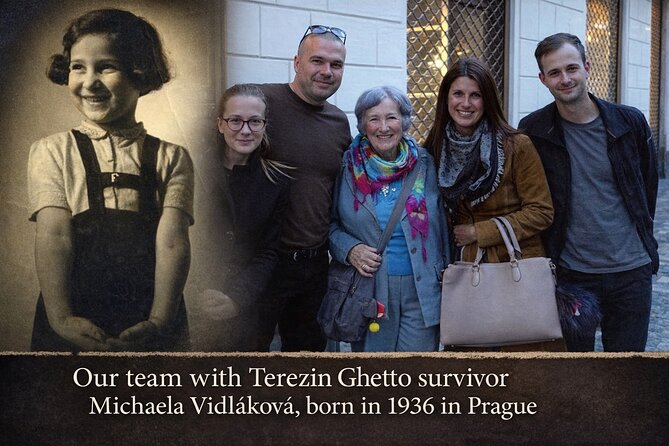
- Educators with ties to Pavel Batel use survivor-based interviews and decades of field research in their explanations.
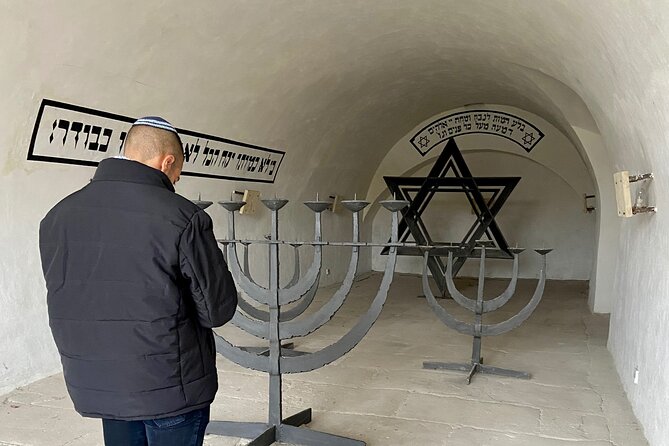
- Hidden Synagogue details include original inmate-painted prayers, which makes the memory feel immediate.
- Magdeburg Barracks shows creative resistance through drawings, theatre programs, music compositions, and poems created in captivity.
- Small Fortress is the most dramatic stop, with accounts drawn from eyewitness memoirs written right after the war.
- A short drive-by context stop includes the site linked to Reinhard Heydrich’s assassination and the Czech resistance story around Operation Anthropoid.
Prague to Terezín: what a 6–7 hour day is really like
This is one of those trips where you should expect your mood to shift fast. You start in Prague’s Old Town area, then spend part of the day traveling and part of the day standing, reading, and listening in places designed to confront what happened.
Your schedule runs from 9:00 am, and the tour typically lasts about 6 to 7 hours end-to-end. You’ll return to the start area when it finishes, so you’re not scrambling for dinner reservations far from home base.
Because it’s semi-private and capped at around 8 people, you’re less likely to get the rushed feeling that comes with bigger bus tours. That matters here. The material benefits from pauses, and a smaller group makes it easier for your guide to slow down when a question lands.
You can also read our reviews of more tours and experiences in Prague.

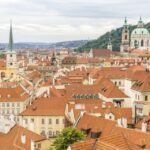
Meeting point at Kaprova 15 and how to make the start smooth
The meeting point is Kaprova 15, Praha 1-Staré Město. Plan to arrive a few minutes early—this tour starts at 9:00 am, and the day is built around careful timing once you’re on the road.
You’ll have a mobile ticket, which is convenient, but I still recommend you keep a screenshot of your confirmation. Not because it’s complicated, but because it’s one less thing to think about when you’re trying to get everyone moving on time.
The drive to Terezín is described as roughly 45 minutes, and your day includes a short stop related to Czech WWII resistance before you settle into the memorial sites. Translation: you won’t just “arrive and jump in.” You’ll get context first.
Terezín Memorial: the place Nazis sold as a model
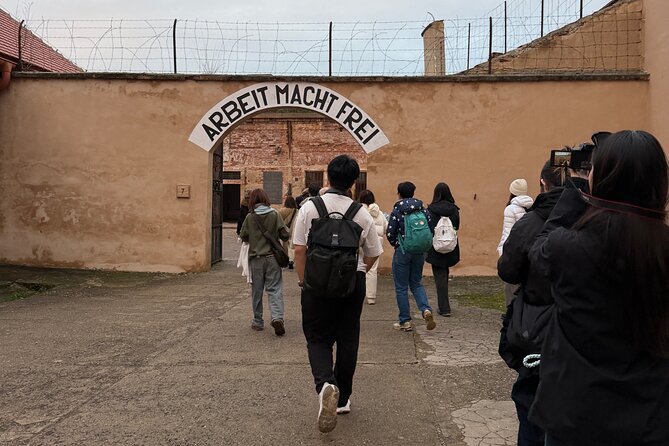
The Terezín Memorial is the heart of the day, and it’s also where the tour’s tone becomes unmistakable. The site honors tens of thousands of Jews imprisoned in what the Nazis falsely presented as a model ghetto. The point of your visit is to see the gap between propaganda and reality—forced displacement, cultural resilience, and deception used to mislead both Europe and the outside world.
Your guide focuses the visit so you can understand the major areas without feeling like you need a week. The operator notes that to see all of Terezín properly would take several days, so the route is an efficient way to hit the strongest anchors of the story.
One of the most valuable parts of this memorial visit is that your educator connects places to what people did to survive emotionally, spiritually, and culturally. That doesn’t soften the horror. It just shows that the human response was not only suffering, but also endurance.
Admission for parts of the memorial complex is not included in the price, so it’s smart to budget for separate entry for what’s ticketed. Your guide will handle the flow, but you should be ready for that extra step.
Hidden Synagogue and the power of original prayers
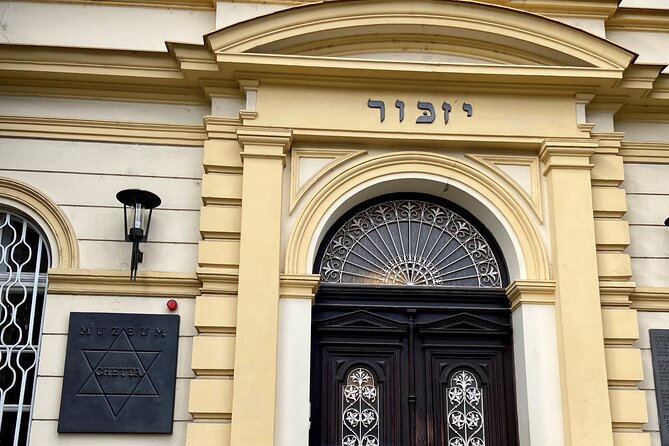
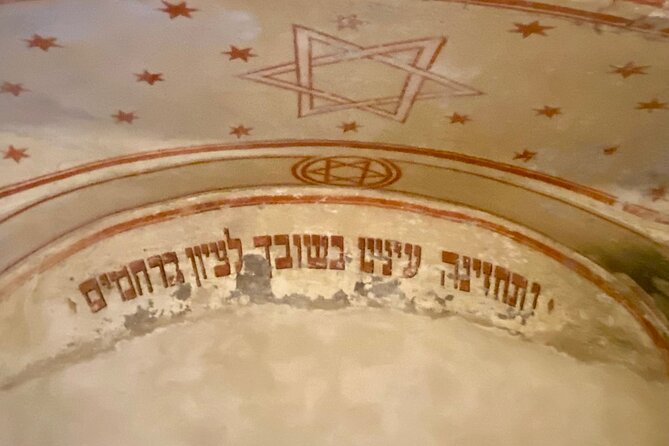
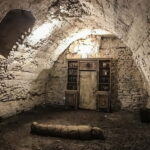
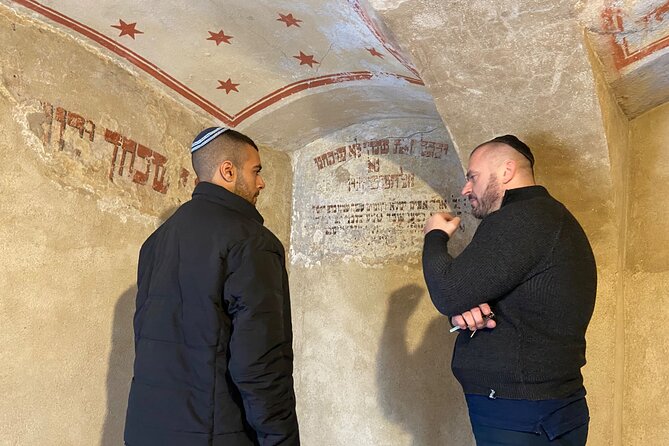
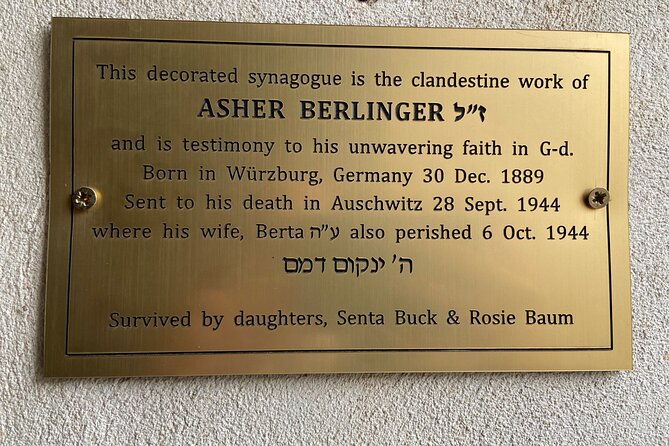
Within the Terezín Memorial complex, you’ll encounter the Hidden Synagogue, preserved with original inmate-painted prayers. That detail is not just decoration. It’s a direct, physical connection to religious practice and inner life inside captivity.
I like how tours often treat synagogues as artifacts, but here the messaging is different: the prayers are evidence of continuity. Even when people were stripped of freedom, they still tried to hold onto faith and community.
This is the kind of moment where a small-group format really helps. When you’re not elbow-to-elbow, you can look longer and process what you’re seeing. The prayers can feel like they’re talking back, quietly, through time.
Magdeburg Barracks: art and culture created under confinement
The Magdeburska Kasarna, or Magdeburg Barracks, is a focused stop (about 30 minutes) that shifts the angle of the story. The site housed prominent Jewish artists, educators, and community leaders imprisoned in Terezín.
Today, the displays include drawings, theatrical programs, music compositions, and poems made during captivity. Your guide explains how this wasn’t a break from reality—it was resistance inside reality. People used creativity to keep meaning alive when meaning was being stolen.
A practical note: because this stop is shorter, you’ll get the key highlights, not every single display label. If you’re the type who loves reading every caption, you might want to allow extra time to return later on your own. But for most people, this structured visit is the right length.
Admission for this stop is not included. So again, expect that you may pay separately depending on what you’re entering.



The Jewish Cemetery and crematorium: remembrance that changed over time
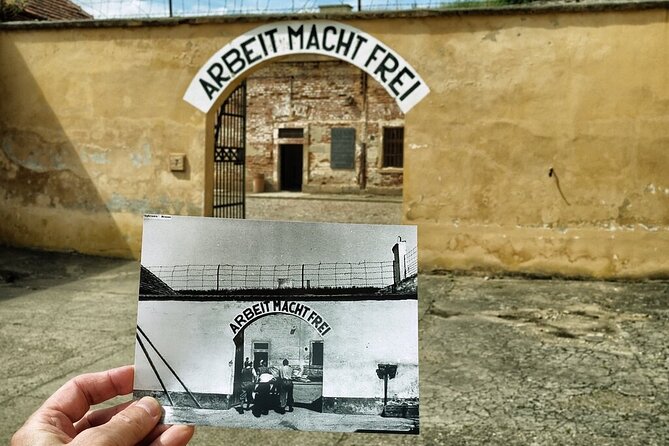
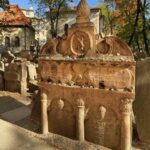
Your visit to the Jewish Cemetery is another deeply moving segment (also about 30 minutes). This area honors thousands who perished in Terezín, with marked graves and mass burial sites alongside the adjacent crematorium.
The crematorium matters because it shows how death was handled systematically. Your guide also explains how memorial rituals and remembrance evolved after the war—so you’re not only looking at the past. You’re seeing how people tried to respond to what could not be undone.
This stop’s admission is listed as free, which is a nice practical bonus on a day with other paid entries. Still, go in with emotional stamina. This isn’t the kind of place where a quick glance feels satisfying.
Small Fortress: memoir-based accounts and a brutal kind of focus
If you want one part of the day that will feel most intense, it’s Mala Pevnost (Small Fortress). Plan about 1 hour here. The description isn’t vague: it’s dramatic and intensive.
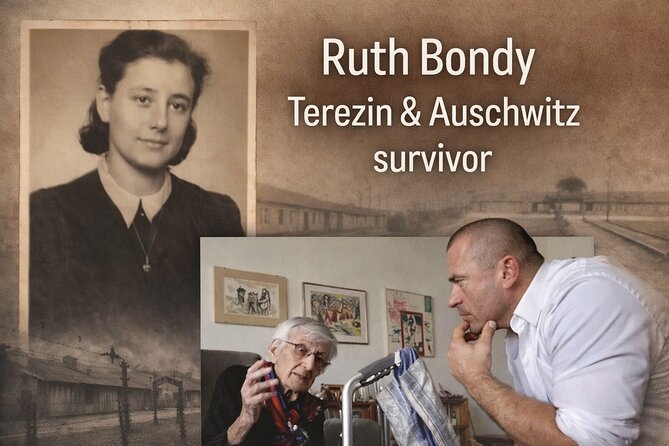
You’ll hear stories about Czech political prisoners held in a Nazi-era concentration camp context. What makes this stop especially different is how your guide frames the narration—facts from original memoirs written by eyewitnesses and survivors right after the war. The operator also says the educator personally interviewed family members, so the accounts are tied to lived aftermath, not just distant documentation.
This is also the segment that calls out the special brutality of a particular group: prisoners who had no names and no numbers and were usually held for only a few days. The guide’s framing is that these prisoners were called Jews.
You should also know that the tour description acknowledges long-term effects for survivors, including post-traumatic stress disorder. That means you might hear history spoken with the clarity of someone describing what it cost, not just what happened.
Practical takeaway: wear something comfortable enough for long standing and walking. If you need a moment to step aside, do it without guilt. This tour is about attention, not toughness.
Admission for the Small Fortress stop is not included.
Heydrich assassination site and Operation Anthropoid context
Between Prague and Terezín, you’ll get a short context stop tied to WWII events in Czech history. Around the 45-minute drive, you’ll pass the site connected to Reinhard Heydrich’s assassination, tied to Operation Anthropoid.
The stop itself is described as about 15 minutes. Even though it’s brief, I think it helps you understand that this wasn’t only one isolated tragedy inside a camp. Resistance, repression, and fear shaped the broader environment people lived in across the region.
Your guide connects this to the Czech experience in World War II and the role of Czech resistance. It gives you a fuller map of the story around the memorial, rather than a single-location experience.
Admission at this stop is listed as free.
Price and value: is $145.18 a fair trade for your day?
At $145.18 per person, this isn’t a budget “quick tour” price. But you are paying for several things that matter here: transport out of Prague, English instruction, and—most importantly—trained educators who bring structured survivor-based research into your visit.
Also, this is semi-private with a group cap around 8 people, which typically means more time with the guide and less crowd pressure. For heavy content, that personal pacing is part of the value.
On the cost side, some admissions aren’t included. Terezín Memorial and key stops like the barracks and Small Fortress list admission as not included, while the Jewish Cemetery stop is free and the Heydrich site is free. So your final spending for the day may be a bit higher than the headline price once you add entry fees for the ticketed areas.
Timing is another value factor. You spend a full half-day traveling and touring, starting at 9:00 am, which reduces the hassle of coordinating your own transport and then trying to connect the story thread between sites.
Booking tends to happen ahead of time, with an average booking window of about 64 days. If you have fixed plans in Prague, I’d treat that as a hint to reserve early.
Who this tour fits best, and who might want a different approach
This is a strong match if you want guided structure. If you’re the kind of visitor who appreciates context—why these locations matter, how remembrance changed, and how resistance and culture persisted—this format is designed for you.
It also fits well if you’re trying to do a lot of emotionally significant sites in one day without feeling lost. The tour’s pacing is built around making the memorial comprehensible, even though you’d ideally spend more time there.
That said, consider skipping or supplementing if you need a slow, self-directed pace. The operator notes that seeing all of Terezín properly takes several days. A one-day plan can feel tight even when it’s done well.
If you’re sensitive to intense historical testimony, especially around the Small Fortress segment, plan your day around rest afterward. Don’t stack your next activity right at closing time. Let your brain come down from what you’ll read and hear.
The one red flag you should take seriously
Most people rate this tour extremely well, with an average rating of 5 and about 170 reviews, and a reported 99% recommended rate. That’s encouraging.
Still, one outlier issue is worth mentioning. There has been at least one report of a guide not showing up as arranged, along with an inability to reach the tour contact by phone, and an office that looked inaccessible. That doesn’t mean it will happen to you, but it is enough to justify a simple safety move: keep your confirmation details handy, and on the morning of the tour, make sure you know exactly where you’re meeting and how you’ll contact the operator if anything changes.
Should you book the Terezín In-Depth Holocaust Tour from Prague?
I’d book this if you want a highly structured, English-language educator-led day to the most important parts of the Terezín story, with a small group and a focus on specific preserved details like the Hidden Synagogue prayers. The value comes from the way the guide connects sites to survivor-based research and the broader Czech WWII context, not just from seeing buildings.
Skip it or plan differently if you know you need more time on your own to wander and read at length. Terezín is not a place you should rush, and the tour itself is transparent that full coverage takes more than one day.
If you’re ready for a day that hits hard but stays organized, this is one of the better options from Prague’s center.
FAQ
What time does the tour start?
The tour starts at 9:00 am and ends back at the meeting point.
How long is the tour?
It typically runs 6 to 7 hours (approx.).
What’s included in the price?
You’ll get an English-speaking guided tour with stops at key Terezín sites and a drive/context portion in route. A mobile ticket is provided. Some admission fees are not included (see next question).
Is admission ticket included?
Admission is listed as not included for the main Terezín Memorial areas and for Magdeburg Barracks and Small Fortress. The Jewish Cemetery stop is listed as free, and the Heydrich assassination site stop is also free.
How many people are in the group?
The tour has a maximum of 8 travelers.
Where does the tour meet?
The meeting point is Kaprova 15, Praha 1-Staré Město, Czechia.
What language is the tour offered in?
The tour is offered in English.
Can I cancel for a full refund?
Yes. Free cancellation is available if you cancel at least 24 hours before the experience start time.