REVIEW · PRAGUE
Small-Group World War 2 & Operation Anthropoid Tour in Prague
Book on Viator →Operated by McGee's Trips & Tickets · Bookable on Viator
Prague can feel peaceful, then it gets brutally honest. This small-group walk links Nazi occupation sites to the assassination of Reinhard Heydrich and the resistance that followed. I love how it uses real addresses and buildings you’d otherwise miss, and I love that the stories connect cause-and-effect instead of just listing dates. The main drawback is the tone: this is serious WWII material, with a lot of standing and hearing.
What makes it work is timing and focus. In about 3 hours, you cover central Prague’s key turning points—from early war buildup to the crypt at the end—without feeling like you need a full day. Still, expect that some stops are more about interpretation and photos than you’ll be wowed by a dramatic sight.
In This Review
- Key Highlights You’ll Actually Care About
- Starting Point at Týnská: Where the Story Begins
- The Big Picture: From WWI Aftershocks to the Protectorate
- Stone Bell House and the Sudeten Crisis: Munich Agreement to Protectorate
- Týn Church Views and Old Town Telltales
- Old Town Hall and the Prague Uprising Wound
- Celetná Street: The 1939 Student Execution and Heydrich’s Rise
- Melantrichova Safehouse Stories: The Svatoš Apartment Role
- Baťa Department Store: Evidence from the Heydrich Assassination
- Wenceslas Square and Lidice: When Punishment Replaced Justice
- Esplanade Hotel Prague: Nazi “Favorites” in Plain Sight
- Petschek Palace and Gestapo Terror: Interrogation and Betrayal
- Vodičkova and the Unsuccessful Operations
- Karlovo náměstí: 1945 Bombing in a City You Know as Beautiful
- St Cyril and Methodius Cathedral and the Heydrich Terror Memorial Crypt
- Price, Value, and What You’re Really Buying
- How the Tour Feels: Standing, Photos, and a Lot of Storytelling
- Who This Tour Is Best For (and Who Should Rethink)
- Booking Decision: Should You Go?
- FAQ
- How long is the tour?
- What language is the tour offered in?
- Where does the tour start and end?
- Is food included?
- What’s included at the church stops?
- Is there much walking or standing?
- Is this tour appropriate for children?
- Are service animals allowed?
- How big is the group?
- Is there free cancellation?
Key Highlights You’ll Actually Care About
- Real WWII locations in central Prague you can’t easily “self-tour” in a meaningful way
- Operation Anthropoid context tied to the streets and buildings where the story unfolded
- A tight 3-hour walking format that fits a busy day
- The ending St Cyril and Methodius area + Heydrich terror memorial crypt feels especially heavy in a good way
- Guides like Daniel, Allen, Dan, Richard, Pablo, Martin, Robin, Dana, and Rafek are repeatedly praised for making the history land
- You’ll walk through a sequence of events that helps you understand why it happened, not just what happened
Starting Point at Týnská: Where the Story Begins
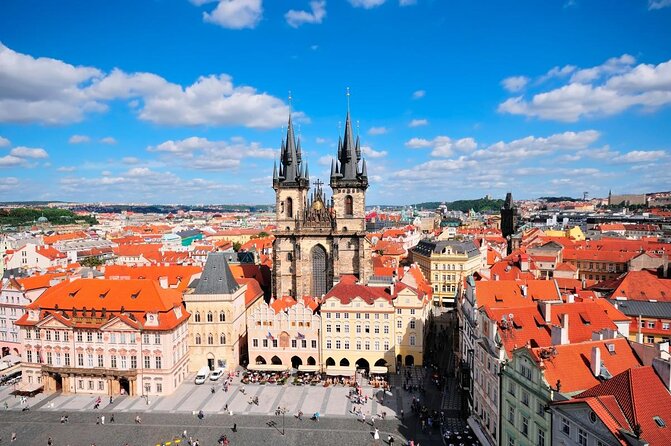
You start in Old Town at Týnská 627/7 (McGee’s Trips & Tickets). This matters because the tour is built like a route through the city center, not a random series of landmarks. You’ll want to arrive a little early so you’re not trying to sprint across the Old Town streets mid-lecture.
From the first minutes, the approach is clear: you’re not just sight-seeing. You’re moving through Prague as a wartime “map,” where each corner has a reason for existing in the story.
And yes, it’s English-language, and the tour uses a mobile ticket, which is handy when your day is already packed.
You can also read our reviews of more tours and experiences in Prague.
The Big Picture: From WWI Aftershocks to the Protectorate
One of the smartest parts of this tour is how it doesn’t pretend WWII starts in 1939. You begin by working through the knock-on effects after WWI—the Treaty of Versailles, the fall of major powers, and the creation of new nations including Czechoslovakia.
Then you get the economic and political pressure points: runaway inflation, the Great Depression, and rising nationalism. This is the kind of setup that makes later events make sense when you’re standing in front of Czech neighborhoods and government buildings.
A quick practical note: early in the tour, you’ll likely hear more “timeline” than “scenery.” If you like understanding the why behind the what, you’ll feel right at home.
Stone Bell House and the Sudeten Crisis: Munich Agreement to Protectorate
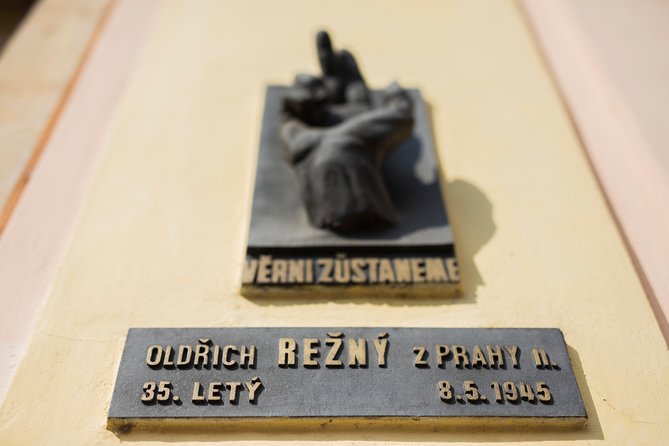
Next comes a sharp turning point: the Sudeten Deutsche Party, the Munich Agreement, and how that paved the way for the Protectorate of Bohemia and Moravia. The value here isn’t the politics in isolation. It’s watching how neighboring decisions and internal tensions squeezed Czechoslovakia into a new reality.
This is also where a good guide earns their pay. In multiple experiences shared from different guides—people like Daniel and Allen show up often in the feedback—the storytelling is what keeps these complicated topics from feeling like a textbook.
If your brain likes patterns, you’ll appreciate that the tour keeps looping back to what these agreements changed on the ground.
Týn Church Views and Old Town Telltales
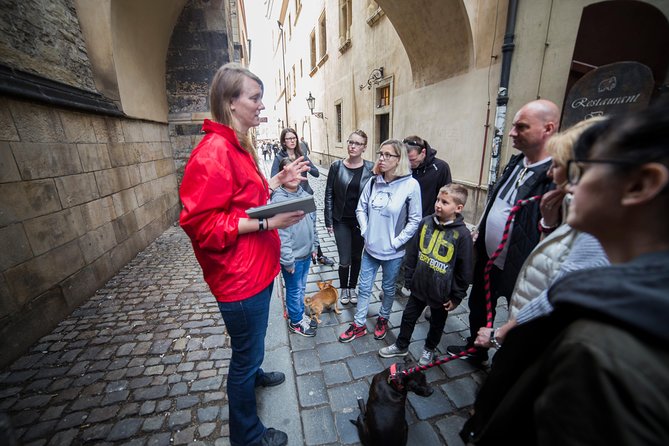
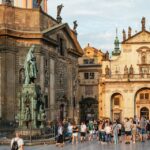
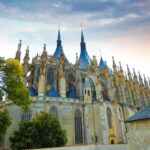
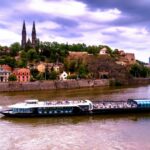
As you move through central Prague, you get moments where the city’s beauty is right in front of you. The tour uses that contrast deliberately. You’ll pause near a dominant Gothic church view tied to the Old Town’s fabric, a reminder that the occupation happened in a place that still looked like Prague.
That contrast is not just aesthetic. It underlines something uncomfortable: the city didn’t transform its streets to warn you. People lived, worked, and tried to survive while the machinery of occupation tightened.
Old Town Hall and the Prague Uprising Wound
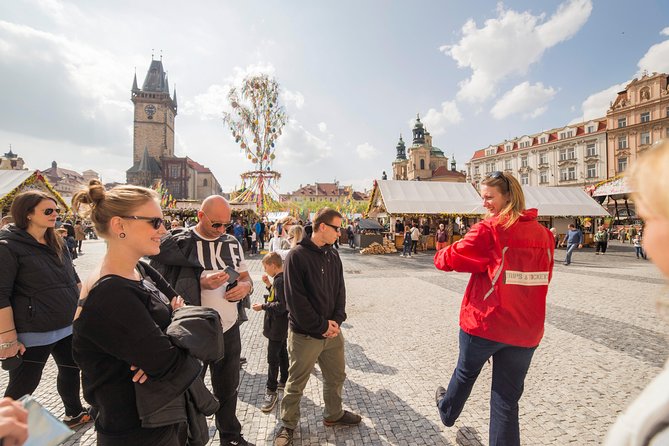
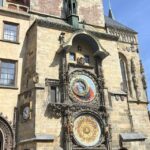
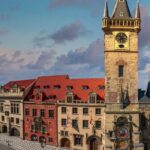
At Staroměstská radnice (Old Town Hall), you get to the physical mark of resistance: the wing destroyed during the Prague Uprising in 1945. This stop also ties everyday occupation life to the later uprising, so it feels like one story instead of separate chapters.
A detail that helps you picture it: you hear how the May uprising led to victory and the end of the war on May 8. Standing at a damaged landmark, that date stops being abstract.
If you’re short on time in Prague but want something meaningful beyond a checklist, this is the kind of stop you’ll be glad you didn’t skip.

Celetná Street: The 1939 Student Execution and Heydrich’s Rise
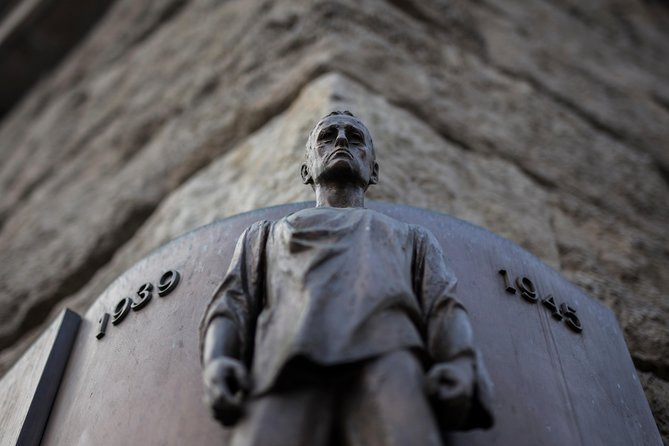
Then you move into the occupation’s tightening grip along Celetná Street. You hear about November 17, 1939—the execution of Czech students and the closure of Czech universities. It’s one of those moments that makes the occupation feel immediate rather than historical.
You also cover Konstantin von Neurath’s tenure and how it set the stage for a major shift when Reinhard Heydrich was appointed on September 27, 1941. The tour presents Heydrich’s role as a turning point, and it explains why people began preparing for the risk of what came next.
This section is especially strong if you like a clear cause-and-effect chain. The guide’s job here is to help you connect repression to resistance, and you’ll feel that connection as you walk.
Melantrichova Safehouse Stories: The Svatoš Apartment Role
On Melantrichova, the tour leans into the resistance network—specifically the apartment of Josef and Marie Svatoš. This is one of the most valuable “real-location” elements because it’s hard to know, as a visitor, that a normal-looking building once served as a war hideout.
The stop also brings in the exiled Czechoslovak government in London, and references operations and code names like Operation Benjamin and Silver A and Silver B. Even when not every detail is visible on the street, the tour makes the information feel tied to place.
A common theme in the feedback: guides like Allen and Dan are praised for their careful storytelling and emotional sensitivity. That matters here, because you’re talking about people who didn’t just plan history—they risked their lives for it.
Baťa Department Store: Evidence from the Heydrich Assassination
At Bata Department Store, you hear about the way objects found at the assassination scene were exhibited there. That’s a striking angle: instead of only focusing on the plot, you see how the occupiers handled the aftermath in public.
This stop also sets expectations for the tour’s style. Some locations are “light on architecture,” but “heavy on meaning.” If you prefer dramatic ruins, you may find yourself wishing for more visuals at times. If you’re okay with the walking-and-telling approach, you’ll enjoy how the guide brings each site to life.
Wenceslas Square and Lidice: When Punishment Replaced Justice
On Wenceslas Square, the tour shifts to one of the most tragic retaliations: the village of Lidice. You learn that on June 10, 1942—around ten o’clock in the morning—men were executed and women were taken to concentration camps. Then comes the chilling sentence: Lidice ceased to exist.
This stop is heavy. There isn’t much “to look at,” and that’s part of the point. The tour uses a central, recognizable square to show how far-reaching Nazi punishment could be.
If you’re traveling with anyone who gets uncomfortable with graphic themes, this is the moment to know.
Esplanade Hotel Prague: Nazi “Favorites” in Plain Sight
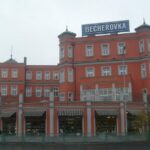
You also pass Esplanade Hotel Prague, described as a favorite Nazi hotel during the occupation. This is one of those stops that makes history feel uncomfortably practical. It’s not only about violence; it’s about power enjoying comfort.
Sometimes, that’s harder to process than battlefield stories. A guide’s job is to keep you grounded in what the place represents while still respecting the seriousness of the subject.
Petschek Palace and Gestapo Terror: Interrogation and Betrayal
At Petschek Palace, you get the darkest “administrative” side of occupation. It’s described as a Gestapo headquarters, where Czechoslovaks were interrogated, tortured, and killed in thousands.
You also hear about June 16, 1942, when Karel Čurda enters the building and betrays his comrades—presented as a turning point in the search for Heydrich’s assassins.
This stop is a strong example of why the tour is worth paying for. You could walk around Prague and see impressive buildings all day. This gives you the specific story attached to each address, so your eyes don’t just skim façades—you read them.
Vodičkova and the Unsuccessful Operations
On a central New Town street like Vodičkova, you learn about two covert operations described as Tin a Bioscop, including that they were unsuccessful. This part can feel more abstract than the Lidice or Gestapo stops, because you’re dealing with plans, attempts, and failures rather than a single surviving landmark.
Still, it adds a realistic layer. Resistance wasn’t a movie of nonstop wins. It was courage mixed with uncertainty—and sometimes, loss.
Karlovo náměstí: 1945 Bombing in a City You Know as Beautiful
At Karlovo náměstí, the tour mentions the bombing of Prague in 1945. Prague is often pictured as timeless and untouched, so adding this gives you a fuller picture of what the city endured in the war’s final stretch.
This is also where pacing becomes important. By this point, you’ve already walked and listened through heavy material, so the guide’s flow matters. Strong guides keep you moving without letting the tone collapse into pure sorrow.
St Cyril and Methodius Cathedral and the Heydrich Terror Memorial Crypt
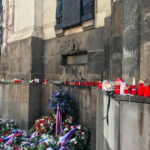
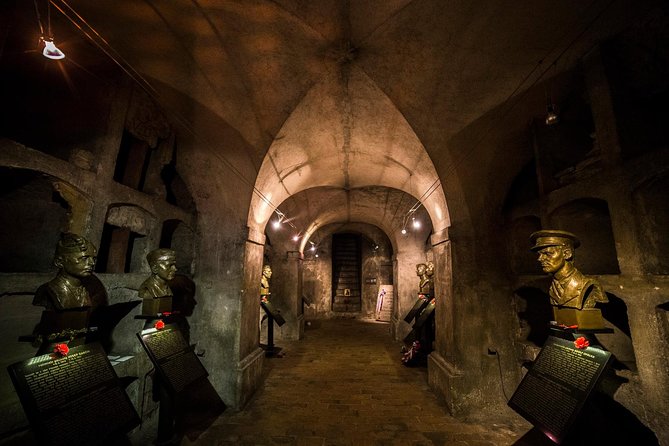
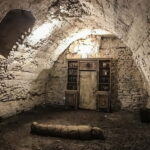
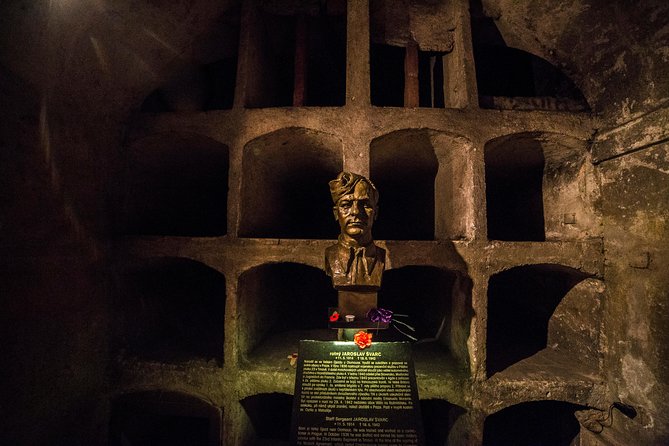
You finish with two connected stops: St Cyril and Methodius Cathedral (included) and then the National Memorial to the Heroes of the Heydrich Terror, including the crypt where Czech paratroopers paid the ultimate price.
This is the part that repeatedly shows up as the highlight—people describe the crypt as especially atmospheric and emotionally effective. Even if you’ve seen memorials before, a crypt tied to a resistance story lands differently because the tour has already built your understanding.
If you’re the type who likes to keep your head on straight during emotional topics, this ending gives you time to slow down and absorb what you’ve learned. It’s not just information now—it’s a place.
Price, Value, and What You’re Really Buying
At $33.88 per person, the price is low enough that you shouldn’t feel nickel-and-dimed by your schedule. What you’re paying for is not just “a guide.” You’re paying for a route that strings together WWI aftermath → Protectorate → Heydrich → Operation Anthropoid → resistance → uprising → aftermath, with access to the included cathedral and the memorial crypt.
All the walking stops along the way are free to enter, but the value comes from interpretation: seeing why each site matters and how it connects to the bigger story.
Also, this tour tends to get booked about a month in advance, so if your travel days are tight, it’s smart to pick your time early.
How the Tour Feels: Standing, Photos, and a Lot of Storytelling
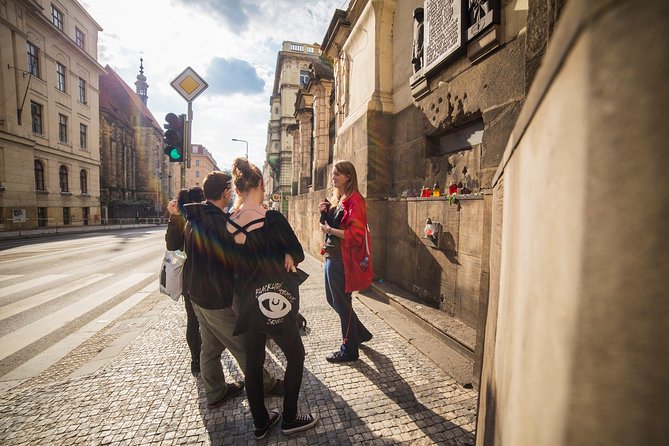
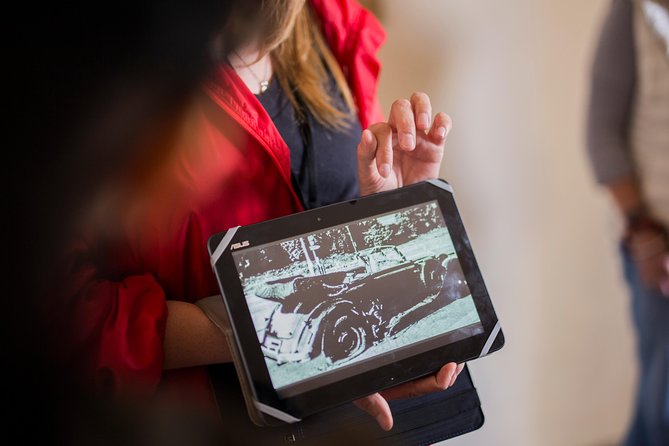
This experience is built as a guided walk-and-talk. Some stops are meaningful even if there’s not much visible in plain sight. In feedback, you’ll see that guides may use photos when a location doesn’t offer much to look at, and that can actually help.
That said, you should be ready for a good amount of standing and hearing. One less-positive comment mentioned a guide who delivered a monotone flow with filler words. That’s not a guaranteed issue, but it’s a reminder that tour quality can vary by guide—so choose based on the overall fit: if you want a lecture with context, you’ll be happy.
Who This Tour Is Best For (and Who Should Rethink)
This is best for you if:
- You want WWII history tied to real addresses, not just general Europe-war background.
- You care about resistance stories, including Operation Anthropoid and what happened after.
- You like a guided pace that helps you avoid getting lost in central Prague.
It’s less ideal if:
- You want only dramatic visual sites.
- You’re traveling with small children. The tour specifically notes it’s not recommended for young kids due to WWII topic content.
Booking Decision: Should You Go?
I’d book this tour if you’re coming to Prague for more than postcards. The appeal here is the way the guide turns the city into a story you can follow—from occupation policies to resistance actions to the final memorial. At this price, you’re getting a tight 3-hour route that would be hard to assemble correctly on your own.
If you know ahead of time that heavy historical topics make you uncomfortable, you might want to pick a different kind of sightseeing. But if you’re okay with serious history—and you want the Heydrich and Lidice threads explained where they happened—this is a strong use of a half day in Prague.
FAQ
How long is the tour?
It runs for about 3 hours.
What language is the tour offered in?
The tour is offered in English.
Where does the tour start and end?
It starts at Týnská 627/7, Staré Město (Praha 1) and ends at the Orthodox Cathedral of Saints Cyril and Methodius at Resslova 9a, Praha 2 (Nové Město).
Is food included?
No. Food and drinks are not included.
What’s included at the church stops?
The tour includes a visit to St Cyril and Methodius Church/Cathedral, and the memorial stop includes access to the National Memorial to the Heroes of the Heydrich Terror and its crypt.
Is there much walking or standing?
There is some standing and walking, and the tour recommends a moderate physical fitness level.
Is this tour appropriate for children?
It’s not recommended for small children because of the WWII subject matter. Children up to 6 are free of charge, and children must be accompanied by an adult.
Are service animals allowed?
Yes, service animals are allowed.
How big is the group?
The tour has a maximum of 30 travelers.
Is there free cancellation?
Yes. You can cancel for a full refund up to 24 hours before the experience start time.