REVIEW · PRAGUE
Second World War & Communism (Tip-based 3 hour tour)
Book on Viator →Operated by Real Prague Guides · Bookable on Viator
Prague gets heavy, fast. This Second World War & Communism tour turns city landmarks into a clear timeline, with guides like Kamil and Vaclav known for telling the story in a straight, suspenseful line. I love the human scale of the stops—what happened to Czech Jews, resistance fighters, and ordinary people—and I also love that the Museum of Anthropoid Operation entry is included. One possible drawback: group size may be larger than you expect, so if you crave lots of elbow room, you should plan for that.
You’re walking through the shift from Nazi occupation to Communist rule, then to the end of Communism, all in about 3 hours. It’s offered in English, and it’s tip-based, which one guide-praiser described as fair because you pay what you feel the experience was worth.
You’ll cover major sites in central Prague on foot, with moderate walking and a moderate fitness level recommended. It’s also a private tour, so it’s only your group, but the schedule still moves along at city-street pace.
In This Review
- Key things to know before you go
- Starting at Klárov: independence, resistance, and the first hard turns
- Pinkas Synagogue: the fate of Czech Jewish communities, told through real outcomes
- Old Town Hall area: Prague Uprising, then the stage for Communism
- Wenceslas Square: 1968 invasion and Jan Palach’s self-immolation
- OC Quadrio and the Rotating Head of Kafka: art under a controlled system
- Narodni Trida: the Velvet Revolution, with memory that grabs you
- National Theatre and Vaclav Havel: why leadership mattered after the fall
- Dancing House: Valentine’s Day bombing and the city’s scars
- St Cyril and St Methodius Cathedral: Operation Anthropoid and the tour finale in the crypt
- Price and value: tip-based, but you get real content per hour
- Timing, walking distance, and how to keep it comfortable
- Language, group size, and what happens on the street
- Who should book this Prague WWII and Communism tour?
- FAQ
- Where does the tour start and end?
- How long is the Prague WWII and Communism tour?
- Is the tour offered in English?
- What’s included in the tour price?
- Are there admission tickets for the stops?
- Is it suitable for people with mobility issues?
- Can I bring a service animal?
- What is the cancellation policy?
- Should you book this tour?
Key things to know before you go
- Jewish WWII history at Pinkas Synagogue, focusing on what happened to Czech Jewish communities and why some could emigrate while others couldn’t
- Prague Uprising + rise of Communism, linked to what happened after WWII and how power shifted
- 1968 Warsaw Pact invasion and Jan Palach’s story near Wenceslas Square
- Kafka and art under Communism at the Rotating Head of Kafka (OC Quadrio)
- Operation Anthropoid ending in the crypt hideout, with museum entry included
Starting at Klárov: independence, resistance, and the first hard turns
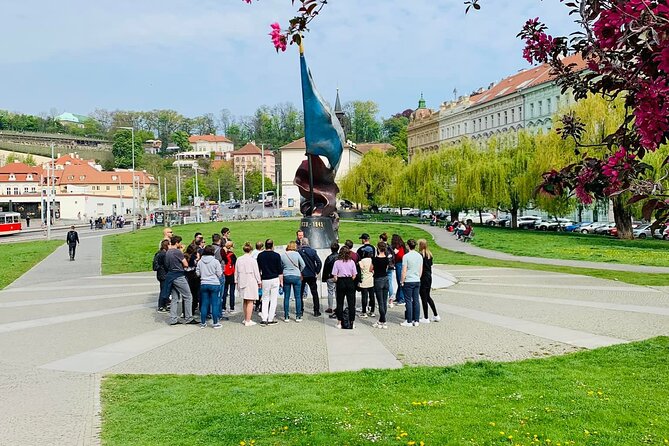
Most Prague history tours start with castles and saints. This one starts with political teeth. At Klárov, you begin at two memorials tied to resistance: the Memorial to the Second Resistance and the Winged Lion Memorial.
What I like about this opener is that it gives you quick context before the big names and big dates. You hear how Czechoslovakia gained independence after WWI, why the country became one of the first Hitler occupied, and what happened to Czechoslovak soldiers during WWII. It’s not abstract. The guide’s style—praised as clear and linear by multiple names such as Kamil and Vaclav—keeps the story moving so you can follow the logic of who did what, and why it mattered.
Practical note: this stop is short, around 20 minutes. In other words, you’ll get orientation, not a lecture marathon.
You can also read our reviews of more tours and experiences in Prague
Pinkas Synagogue: the fate of Czech Jewish communities, told through real outcomes
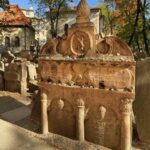
From Klárov, you head to Pinkas Synagogue, a place where memory is not decorative. Here the focus is on the fate of Czech Jewish people in WWII—how many managed to emigrate and what happened to those who didn’t.
This is one of the emotionally weightier stops on the route, and it works best if you let yourself absorb it slowly rather than trying to multitask with photos. A good guide helps you hold the facts and the stakes at the same time: choice, escape, persecution, and the brutal narrowing of options under Nazi rule.
Time on this stop is brief (about 15 minutes), so if you’re the type who likes to linger, just remember the tour is designed for a full arc from WWII into the Cold War. You can always come back later on your own for more quiet time.
Old Town Hall area: Prague Uprising, then the stage for Communism
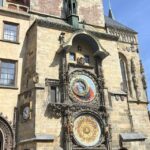
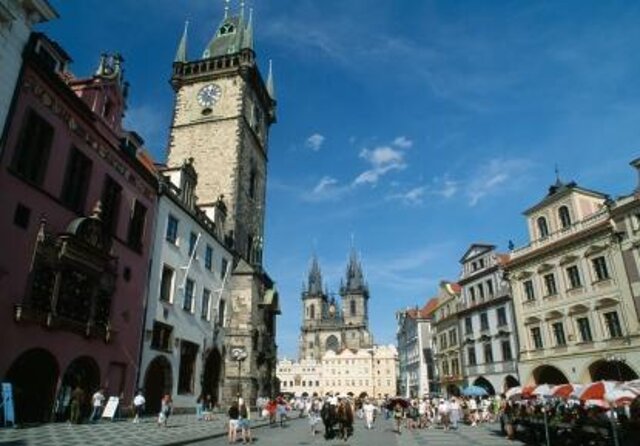
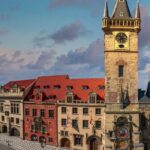
Next you’re in Staromestske namesti, near the Old Town Hall, where the conversation turns to the Prague Uprising and what came after it. The guide explains how the end of WWII set the stage for the rise of Communism in Czechoslovakia.
This is where the tour earns its title. It doesn’t treat WWII as something frozen in the past. Instead, it connects the end of one occupation to the beginning of another kind of control—political, ideological, and enforced.
What to watch for here is how the story links streets and symbols to shifting power. This stop is about 20 minutes, enough time to grasp the sequence without feeling rushed through the whole Cold War.
Wenceslas Square: 1968 invasion and Jan Palach’s self-immolation
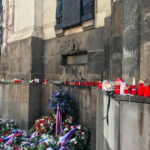
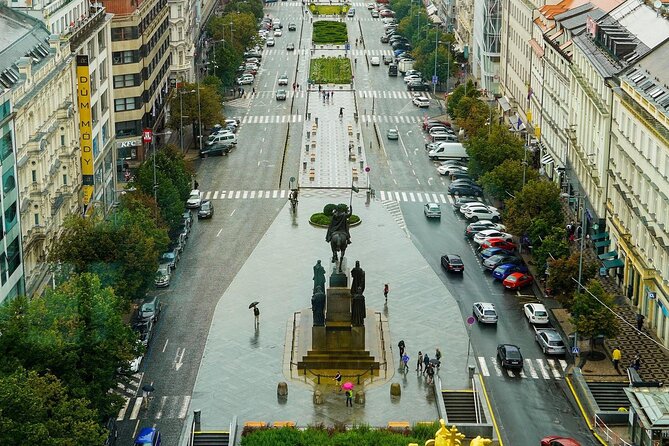
At Wenceslas Square, the tour zooms forward to the Communist era. You’ll hear what happened after Communism started in Czechoslovakia, why Warsaw Pact armies invaded in 1968, and where Jan Palach’s self-immolation took place.
This is a rare way to learn about the Cold War that doesn’t rely on textbooks alone. The square is one of those places where history feels like it keeps echoing—because the events are meant to be remembered as turning points.
This stop is around 20 minutes. If you like understanding the cause-and-effect chain behind uprisings, this is one of the spots you’ll likely remember later.
OC Quadrio and the Rotating Head of Kafka: art under a controlled system
A quick hop takes you to OC Quadrio, where you’ll see the Rotating Head of Kafka. Here the guide talks about art during Communism, and how creativity can survive—sometimes by bending, sometimes by coding messages, and sometimes by finding room in the margins.
I like this stop because it broadens the story. WWII and Communism often get taught as pure politics. But art is also a form of response to pressure: what people say out loud versus what they hint at, what institutions allow versus what they fear.
The time is about 15 minutes, so expect a focused snapshot rather than a lecture on Czech literature and censorship.

Narodni Trida: the Velvet Revolution, with memory that grabs you
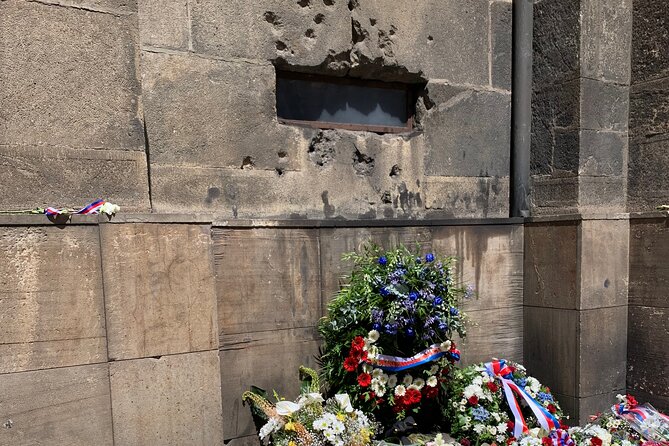
Next comes the Hands reaching out of the wall on Narodni Trida. The tour connects this memorial space to the Velvet Revolution and the fall of Communism.
This is a good mid-tour reset. You’ve dealt with wartime survival and state violence; now the guide reframes the story around resistance and change. The memorial hands give you a physical image for something political: people reaching for freedom, even when the system wants them to stop.
Time is about 15 minutes. If you find yourself slowing down here, you’re in the normal range for this stop.
National Theatre and Vaclav Havel: why leadership mattered after the fall
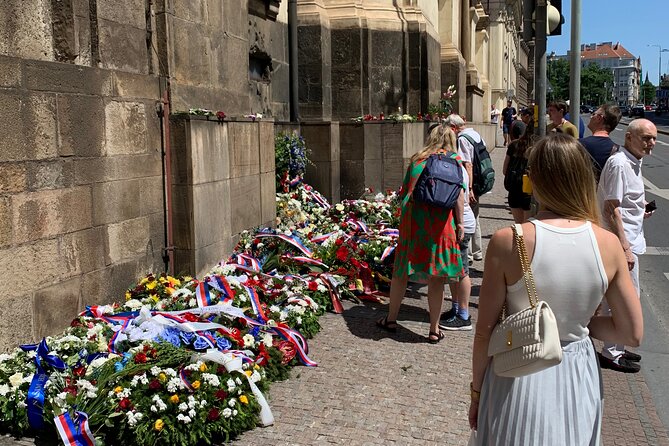
At the National Theatre, the tour introduces Vaclav Havel and explains his role during the Velvet Revolution and afterward, when he became the first president of Czechoslovakia after the fall of Communism.
This stop is about 10 minutes, so it’s not trying to be a full biography. Instead, it helps you understand why Havel’s position wasn’t just ceremonial—it was tied to the movement and the moment.
If you’re a fan of political history, you’ll appreciate how the tour keeps returning to people making choices under pressure.
Dancing House: Valentine’s Day bombing and the city’s scars
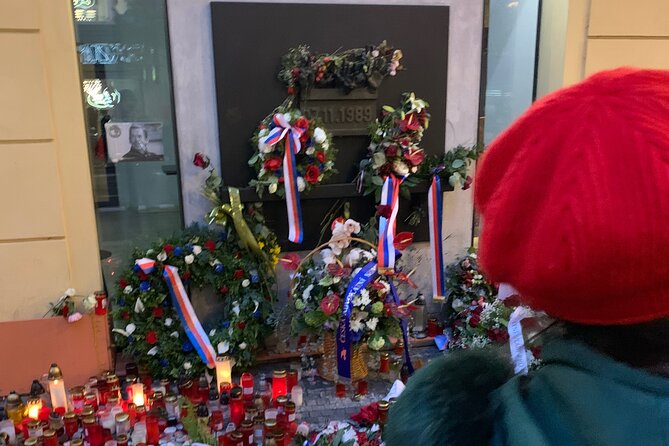
Then you’ll see the Dancing House, and hear the story of the Valentine’s Day bombing. This is another stop that keeps the tour grounded in lived events tied to real places.
Even if you’ve read about the bombing before, this kind of walk-through helps it stick. The city becomes a map of consequences, not just a pretty backdrop.
Time here is about 10 minutes, so you’ll likely treat it as a short storyline plus a photo stop before you move on.
St Cyril and St Methodius Cathedral: Operation Anthropoid and the tour finale in the crypt
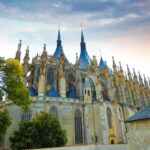
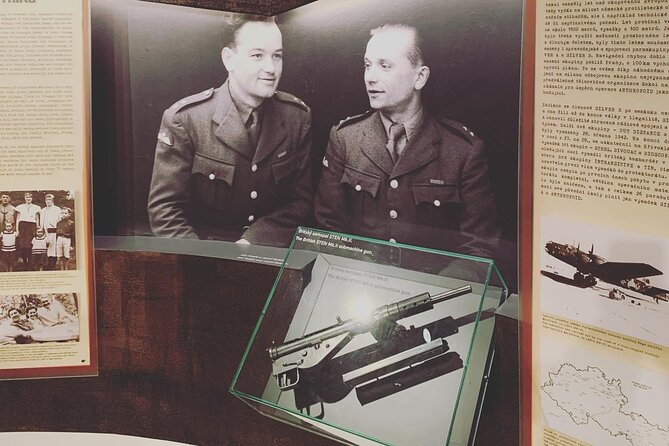
Your final stop is St Cyril and St Methodius Cathedral, where the tour ends with Operation Anthropoid—described as the most important achievement of Czechoslovak resistance during WWII. This is also where the included museum entry comes in: you get free entry to the Museum of Anthropoid Operation.
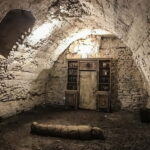
The tour ends in the crypt, described as the hideout of the soldiers involved in the operation. The end point is about a 1-minute walk from the Dancing House or Charles Square, so it’s easy to continue your day afterward.
One important practical note: animals are not allowed inside the war memorial we visit at the end of the tour. Service animals are allowed, but if you’re traveling with any other animal, plan accordingly.
This ending works well because it closes the circle. You start with resistance monuments at Klárov, move through WWII and the Jewish story, then through uprisings and Communism—then you finish with a resistance operation where the stakes were brutally personal.
Price and value: tip-based, but you get real content per hour
The listed price is $3.60 per person, and the experience is tip-based. That’s the kind of pricing that makes you wonder what you’re actually paying for. Here, the answer is: you’re paying for a structured, multi-era route led by a certified guide, plus included museum entry.
What makes the value feel solid is the combination of:
- A certified in-person English guide
- A tight 3-hour arc from WWII into Communism and beyond
- Included access to the Museum of Anthropoid Operation
- Stops that are listed with free admission tickets (for the monument and landmark sites on the route)
Also, the guides’ storytelling style seems to be a big part of why people rate the tour so highly. One review described paying more than the starting amount because the guide made the narrative feel worth it. That’s a good sign for a tour at this price point: you’re not getting a rushed walk with no substance.
Timing, walking distance, and how to keep it comfortable
The duration is about 3 hours, and it’s built from a series of short stops across central Prague. Even though each stop is often 10–20 minutes, the total walking time adds up.
You should go in with moderate physical fitness. It’s not recommended for travelers with mobility problems, and that makes sense if you’re thinking about uneven sidewalks, turns, and the fact that the route moves between multiple central locations.
One review mentioned that around 5K walking felt like a lot, especially if your energy is limited. So, if you want to do this comfortably, wear shoes you can walk in for a few hours and plan to stretch a little after the tour.
Language, group size, and what happens on the street
This experience is offered in English, with a certified guide. The route is described as near public transportation, which can help if you want to hop off early or meet back up if your plans change.
The key “on the day” detail is group size. The tour is private, meaning it’s only your group. But the group size itself can still be bigger than the number you might hope for, based on a complaint about a group size of 24 when the expectation was smaller. If you hate crowds and prefer quiet questions, you might want to check your booking details once you have them, and set expectations for a city-street walk.
Also note: service animals are allowed, but animals can’t go inside the war memorial space at the end.
Who should book this Prague WWII and Communism tour?
Book it if you want:
- A straight timeline from WWII through Communism and into the Velvet Revolution
- A tour that connects politics to human outcomes, like the fate of Czech Jews and the logic behind resistance
- Focus on major Cold War moments, including 1968 and Jan Palach’s story
- A strong ending at Operation Anthropoid, with museum entry and the crypt hideout
Consider skipping if:
- You need a low-walking, low-stairs route
- You’re sensitive to larger group dynamics
- You prefer only lighter, touristy stops with no heavy WWII themes
FAQ
Where does the tour start and end?
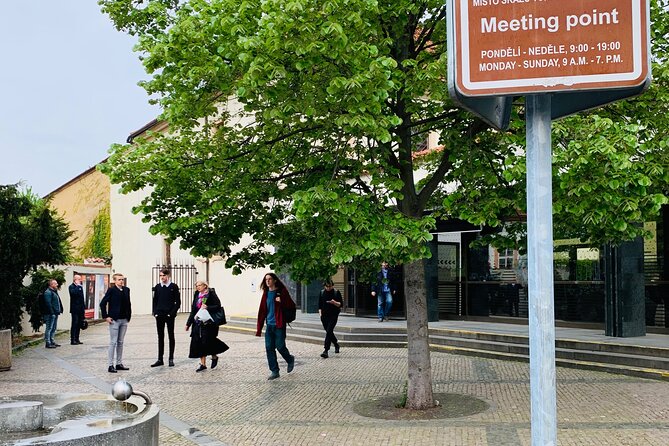
It starts at Metrocafe Klárov, address 51, 118 00 Praha 1-Malá Strana, Czechia. It ends at the Orthodox Cathedral of Saints Cyril and Methodius, address Resslova 9a, 120 00 Praha 2-Nové Město, Czechia, in the crypt hideout area.
How long is the Prague WWII and Communism tour?
The tour lasts about 3 hours.
Is the tour offered in English?
Yes. The tour is offered in English.
What’s included in the tour price?
The tour includes a certified in-person English guide and free entry to the Museum of Anthropoid Operation.
Are there admission tickets for the stops?
For the stops listed on the route, admission ticket entry is marked as free. The tour also includes free entry to the Museum of Anthropoid Operation.
Is it suitable for people with mobility issues?
No, it is not recommended for travelers with mobility problems.
Can I bring a service animal?
Yes, service animals are allowed. Animals are not allowed inside the war memorial visited at the end of the tour.
What is the cancellation policy?
You can cancel for a full refund up to 24 hours before the experience’s start time. If you cancel less than 24 hours before, the amount paid is not refunded.
Should you book this tour?
If you want a focused Prague history walk that ties WWII, Communist rule, and the Velvet Revolution into one understandable story, this is a strong choice. The included museum entry at the Operation Anthropoid site and the guide-led narrative style are big reasons it scores high. Just go in ready for street walking and for themes that aren’t light, and you’ll get a tour that feels like Prague’s 20th-century turning points, mapped right where they happened.