REVIEW · PRAGUE
Prague Renaissance & Baroque Gardens Walking Tour
Book on Viator →Operated by Insight Cities · Bookable on Viator
Prague’s gardens have secrets worth walking for. This Renaissance and Baroque stroll is a focused way to see the art, plants, and symbolism around Prague Castle—without spending your whole day in crowds. I like that it’s structured like a real guided walk, not a random wander.
What I love most is the small group size (max 8) and the way the guide brings details to life. Guides like Bonita (and sometimes Vadim) don’t just point at statues; they connect them to the stories meant to impress power and belief. Second, you get a strong mix of famous and off-the-main-path garden spaces, including a Baroque walled garden with dramatic Prague views.
One drawback to plan for: the tour includes steep stairs in the Vrtba Garden to reach the highest terrace. If that’s an issue, you can wait on the second terrace while the group goes up, or look into a private option to adjust the pace.
In This Review
- Key things that make this tour worth your time
- Meeting at Malostranská and getting to the Castle gardens
- Belvedere Summer Palace grounds: Renaissance garden design you can read
- What to watch for
- Fig House and Orangery: the plant history stops people rarely notice
- Why this section is valuable
- Wallenstein (Waldstein) Garden: myth sculptures, fountains, and surprises
- Quick reality check
- Queen Anne’s Summer Palace and the Royal Garden details
- Ball Game Hall above the Stag Moat: Renaissance life behind the scenes
- Vrtba Garden: Baroque walled garden, UNESCO symbolism, and steep stairs
- The catch: extra admission and stairs
- The guide experience: how Bonita (and Vadim) makes sculpture feel personal
- Price and value: what you’re really paying for at $126.03
- Who this tour is best for (and who might not love it)
- Should you book this Prague Renaissance & Baroque Gardens tour?
- FAQ
- How long is the Prague Renaissance & Baroque Gardens Walking Tour?
- What time is the tour offered?
- Where do I meet the guide?
- Is Vrtbovská Garden included in the price?
- Are other garden admissions included?
- Is the tour difficult?
- Can I cancel for a full refund?
Key things that make this tour worth your time
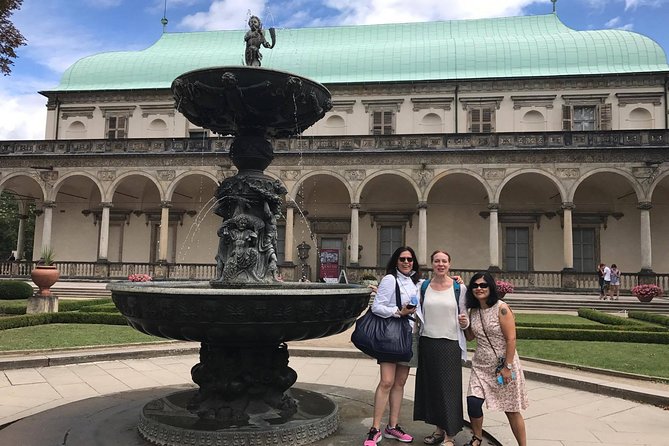
- Max 8 people means you’re not fighting for attention when you stop for details.
- Tram 22 up to the Castle area keeps the walk efficient while still feeling like a neighborhood trek.
- Garden “propaganda” through myth and sculpture is a real theme here, not just pretty landscaping.
- Wallenstein (Waldstein) Garden is free to enter, so it’s easier to budget your garden time.
- Vrtbovská Garden is the payoff, with UNESCO-linked symbolism and city-and-Castle views, but it costs extra and has steep steps.
Meeting at Malostranská and getting to the Castle gardens
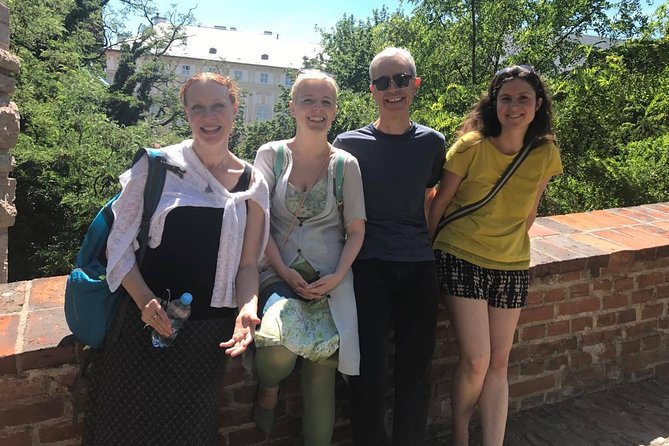
You start near Malostranská Metro, right by the Bagel Lounge Malostranská Letenská (118/1). That’s a practical meet point: you can arrive by tram or metro without guesswork.
Once everyone’s together, your group rides tram 22 together toward the Castle gardens. This matters more than it sounds. Instead of hiking across uneven streets to find the right entrances, you spend your energy on the places that actually reward walking: terraces, fountains, statues, and viewpoints.
Because the tour runs about 3 hours and includes some up-and-down movement, wear shoes you’d use for a hilly old town day. I’d also bring a light layer—Castle-area gardens can feel cooler and windier than you expect.
You can also read our reviews of more walking tours in Prague



Belvedere Summer Palace grounds: Renaissance garden design you can read
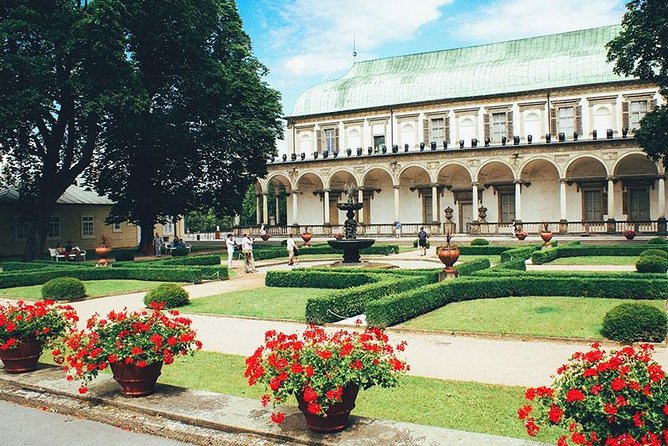
The first garden area centers on the Belvedere Summer Palace at Prague Castle. The feel here is classic Renaissance: designed sightlines, intentional symmetry, and decorative garden architecture that’s meant to frame views.
This section is especially good if you like “design thinking.” You’ll notice how paths guide you from one view to the next, and how the garden’s shapes make Prague’s setting part of the show. You’re not just looking at plants—you’re looking at a plan that someone built to communicate status.
If you love photos, this is where you’ll want them most. The garden edges give strong compositions, and the Castle complex makes a perfect backdrop without needing extra stops.
What to watch for
- How each turn seems to reveal a new angle of the Castle.
- Any sculptures and architectural elements placed where a visitor’s gaze will land.
Fig House and Orangery: the plant history stops people rarely notice
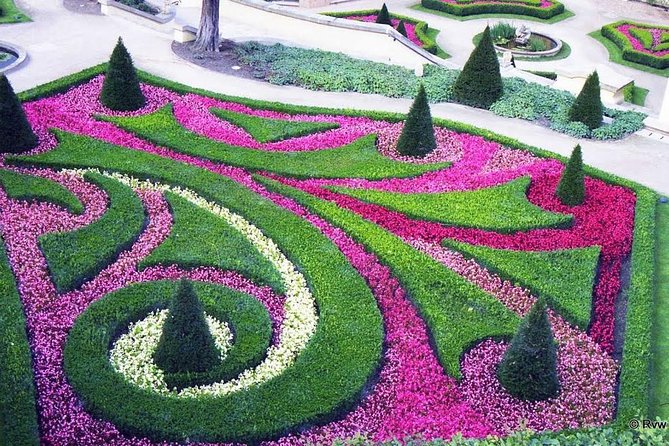
Next comes the Fig House and the Orangery on the Castle grounds. This is the kind of detail that makes the whole tour feel smarter. Gardens aren’t only about beauty; they’re also about collecting, experimenting, and showing off what’s coming from far away.
Here’s a specific highlight: this area was among the early places in central Europe where figs, almonds, oranges, and lemons were grown. That’s an easy sentence to skim—but on the ground, it makes the garden feel like a living museum of trade routes, curiosity, and elite gardens.
Your guide also talks about tulips and their introduction to Prague. Even if you’ve heard the word tulip before, it hits differently in a place like this, because you can connect plant “fashion” to an actual historical setting.
Why this section is valuable
You’ll finish this part understanding that Renaissance gardening wasn’t only aesthetic. It was also science-by-curiosity and status-by-collection.






Wallenstein (Waldstein) Garden: myth sculptures, fountains, and surprises
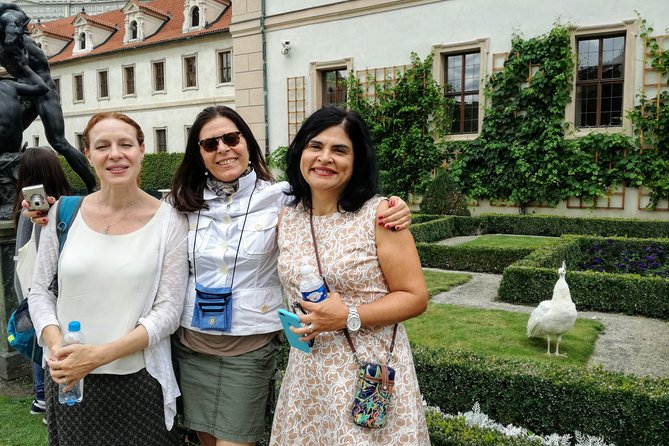
After that, you’ll pass by the South Gardens and then reach Wallenstein Garden. This is where the tour shifts from “garden architecture” into “myth and sculpture as messaging.”
In the Wallenstein Garden, you’ll see the Italian-style layout, plus features that sound like they belong in a palace interior: an aviary, an artificial grotto, a sculptural gallery of mythological heroes, and a fountain associated with Adrian de Vries. The combination is a hint at what you’re looking for: statues weren’t random. They were part of a story, often tied to power and culture.
You may also spot bright peacocks, which help break the formal feel. They’re not guaranteed, but when they’re there, they make the garden feel lived-in rather than staged.
One practical bonus: the Wallenstein Garden admission is listed as free, so it’s a low-friction stop for your budget and schedule.
Quick reality check
If your day in Prague is mostly “churches and bridges,” this is a relief. The Wallenstein Garden offers a calmer pace and visual variety without needing another museum ticket.
Queen Anne’s Summer Palace and the Royal Garden details
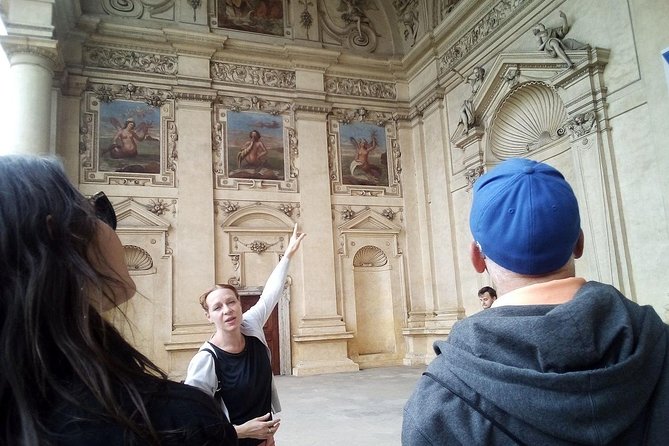
Then you move into the Royal Garden zone of Prague Castle. This garden was established on older medieval vineyard land, then later shaped into a Renaissance garden known for rare botanical specimens and exotic plants. That layering matters: you’re walking through multiple eras that reused and reworked the same ground.
The standout building here is Queen Anne’s Summer Palace, finished in the mid-1500s. It’s described as some of the purest Renaissance architecture outside Italian territory. Look closely at the façade details your guide points out: an ornamental figurative frieze, arcades with decorated Tuscan heads, and wall reliefs depicting mythology, hunting, and wars.
One very specific story point that you’ll hear tied to a figure of Ferdinand I and the Order of the Golden Fleece—linked with Queen Anna and a fig tree blossom. It’s the kind of connection that only works when someone explains it, because the symbolism is built into the art itself, not explained with labels.
Admission for this part is listed as free, so it’s a solid “pay-off section” in the walk.
Ball Game Hall above the Stag Moat: Renaissance life behind the scenes

The walk also includes the Ball Game Hall in the Royal Garden area, on the south side of the Royal Gardens. This Renaissance building dates to the mid-1500s and once served as a ball games hall.
Later, it was used for riding school and stables—so the space has more functional life than you’d guess from its garden setting. That’s a theme in this tour: many of these spots look “purely decorative,” but they once had jobs.
This stop is short, but I like it because it breaks the spell. You remember these gardens were part of daily life and elite routines, not just a postcard set.
Admission for this part is also listed as free.
Vrtba Garden: Baroque walled garden, UNESCO symbolism, and steep stairs
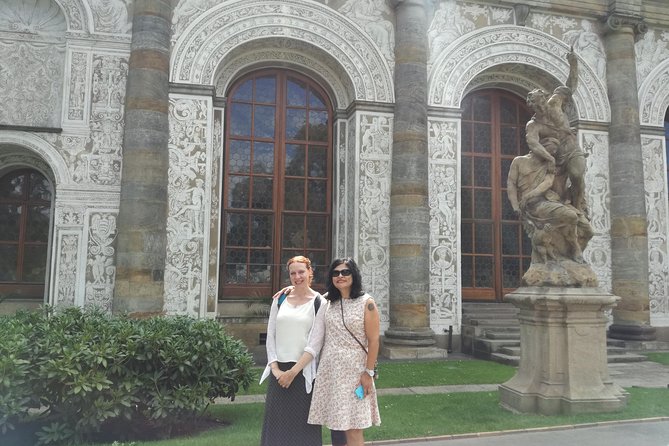
Finally, you reach Vrtbovská Garden (Vrtba Garden). This is the stop many people wait for. It’s a walled Baroque garden from the early 1700s, with original statuary and sculptural decor from that period. Your guide also explains the symbolism connected to its historic cultural values recognized by UNESCO.
The view is another major reason to end here. From the garden grounds, you get Prague’s cityscape with a strong sense of how Prague Castle sits above the city. Even if you’ve seen Castle photos before, the angle from a garden terrace feels different. It’s more “you are above it” than “you are looking at it.”
The catch: extra admission and stairs
Vrtbovská Garden admission is not included; it’s listed as CZK 130 for individuals, or CZK 100 for students and seniors. You should also expect steep stairs to reach the highest terrace.
If steps are an issue, there’s a helpful plan: you can wait on the second terrace while the group goes up, and your guide will come back in about 10 minutes. There’s also an option for a private tour where the guide can modify that part for your group.
This makes the garden more approachable than it first sounds. It also means you should decide in advance how you feel about stairs, so you can enjoy the views rather than stress about them.
The guide experience: how Bonita (and Vadim) makes sculpture feel personal
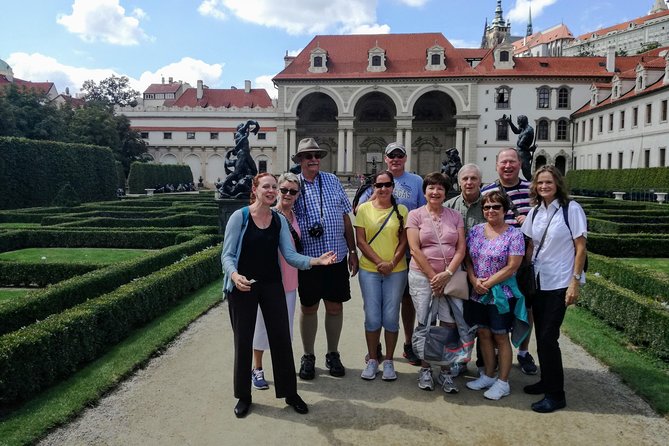
The reviews and tour style point to one clear advantage: you’re not getting a script. You’re getting a guide who connects what you see to why it mattered.
Bonita is specifically praised for passionate storytelling, and for making the same location feel new even to locals. That’s not small talk. It’s a real skill—taking sculpture, myth, and plant history and making them land in your brain while you’re walking.
Vadim is also mentioned in a few context points, including strong knowledge of Greek and Roman mythology used to explain why particular pieces of sculpture were chosen. That kind of explanation turns the garden from decoration into a message system.
If you enjoy asking questions, this tour format is a good match. With a max of 8 people, the group stays small enough for your interest level to matter.
Price and value: what you’re really paying for at $126.03
At $126.03 per person for about 3 hours, you’re paying for three things:
- A professional scholar guide who interprets garden art and symbolism, not just scenery.
- A small-group format (max 8) that keeps the pace human.
- Time savings from getting transport into the Castle gardens area smoothly.
On paper, the biggest “value lever” is admissions. Your tour info says garden admission is included except Vrtbovská Garden. But the pricing details also list separate garden admission fees for gardens under Prague Castle (CZK 90, reduced CZK 60) and Vrtbovská (CZK 130, reduced CZK 100).
Here’s how I’d handle it without panicking: treat Vrtbovská as the clearly extra-cost stop, and expect there could be additional entry fees depending on which garden areas the ticket covers. When tours involve multiple garden zones on the Castle hill, coverage rules can vary by time period and exact access.
If you’re the type who likes “see it, then understand it,” this price can feel fair fast. If you only want a quick photo circuit and would skip the explanations, you may feel it’s heavier than you need.
Who this tour is best for (and who might not love it)
This works especially well if you’re one of these:
- You like architecture plus storytelling—not just views.
- You want a break from crowded landmarks and prefer quieter garden pace.
- You enjoy mythology and symbolism, because sculptures aren’t random here.
You might want to think twice if:
- You hate stairs. The Vrtbovská terrace climb is the main challenge.
- You want a strict checklist of only “major sights.” This walk rewards attention to the smaller details.
It’s a strong option for first-time visitors. It’s also a great choice if you already know Prague’s big sites and want a different angle—both literally (views) and mentally (meaning behind the art).
Should you book this Prague Renaissance & Baroque Gardens tour?
I’d book it if you want the Castle hill experience with context and calm. The combination of Renaissance garden planning, Baroque symbolism, and that extra effort of explaining myth in the sculpture makes the whole walk feel earned.
I’d skip it only if you’re step-sensitive and you don’t want the extra planning for Vrtbovská. Otherwise, it’s one of the better ways to spend a half-day in Prague Castle’s garden world—especially if you like to understand what you’re looking at, not just snap pictures and move on.
If you can manage a few steep sections, you’ll come away with a sharper eye for why each fountain, statue, and garden structure is placed where it is—and why Prague’s nobility once cared so much about how it all looked from a terrace.
FAQ
How long is the Prague Renaissance & Baroque Gardens Walking Tour?
It’s about 3 hours.
What time is the tour offered?
You can choose between a 10am departure and a 2pm departure.
Where do I meet the guide?
The meeting point is Bagel Lounge Malostranská Letenská 118/1, 118 00 Prague 1-Malá Strana. It’s also described as near the Malostranská Metro station.
Is Vrtbovská Garden included in the price?
No. Vrtbovská Garden admission is listed as not included, and you pay it separately (CZK 130; students and seniors CZK 100).
Are other garden admissions included?
The tour notes garden admission is included except Vrtbovská Garden, but the pricing details also list an additional fee for gardens under Prague Castle (CZK 90; students and seniors CZK 60). Check what your ticket covers for the specific Castle garden areas.
Is the tour difficult?
It’s listed for travelers with moderate physical fitness. The Vrtbovská Garden involves climbing steep stairs to reach the highest terrace, with an option to wait on the second terrace while the group goes up.
Can I cancel for a full refund?
Yes. Free cancellation is available up to 24 hours in advance for a full refund.