
REVIEW · PRAGUE
Prague Renaissance and Baroque Gardens Walking Tour
Book on GetYourGuide →Operated by insightcities.com · Bookable on GetYourGuide
Prague gardens tell political stories. This tour makes that idea feel real by showing how emperors, architects, and even imported plants shaped the look and meaning of Prague’s outdoor world. I especially love the behind-the-scenes garden history, like Ferdinand I hiring Italian landscapers, and the wow factor of Wallenstein Garden with albino peacocks and storybook fountains. One thing to consider: the route includes stairs that can be narrow or steep, and you may also need to pay separate admission for some garden areas.
You’ll start with a historian guide and a smart, paced walk that ties the Renaissance shift north of the Alps to the later Baroque style. Expect stops that mix big-name design with smaller details you’d miss on your own, like the Fig House and Orangery, plus the walled Vrtba Garden that many people never find. If you value clear explanations and a relaxed pace, you’re in good shape—guides such as Miriam are often noted for making the tour feel easygoing while still being thorough.
In This Review
- Key garden facts you’ll carry home
- Starting at Bagel Lounge Malostranska: shoes, stairs, and what to expect
- Renaissance roots: how Ferdinand I changed Prague’s garden idea
- Prague Castle gardens: Fig House, Orangery, and the Mediterranean fruit experiment
- The Singing Fountain and the little “pleasure” moments that make the design click
- Down the Bull Stairs: terraced gardens and the Garden of Paradise atmosphere
- Wallenstein Garden: albino peacocks, mythical fountains, and the Baroque shift
- Vrtba Garden (1720): the walled Baroque retreat most people miss
- Price and value: what $123 buys, and what you might pay separately
- Who should book this tour, and who should consider a private option
- Should you book the Prague Renaissance and Baroque Gardens tour?
- FAQ
- How long is the Prague Renaissance and Baroque Gardens Walking Tour?
- Where do I meet the guide?
- Is the tour guide available in English?
- What’s included in the price?
- Are entrance fees included for the gardens?
- Does the tour include stairs or difficult walking?
Key garden facts you’ll carry home
- Ferdinand I’s Italian team: why classicism took root in Prague through imported gardeners and architects
- Fig House and Orangery: how Mediterranean fruits like figs, almonds, oranges, and lemons fit Central Europe
- The Singing Fountain: water dropping into a bell-bronze bowl designed to resonate like a note
- A plant called tulips: how an exotic “gift” story ties tulips to the Royal gardens
- Wallenstein Garden’s cast: albino peacocks, Mannerist statues, a grotto wall, and mythical fountains
- Vrtba Garden, from 1720: a rarely seen Baroque walled retreat with marine-themed grotto views
Starting at Bagel Lounge Malostranska: shoes, stairs, and what to expect
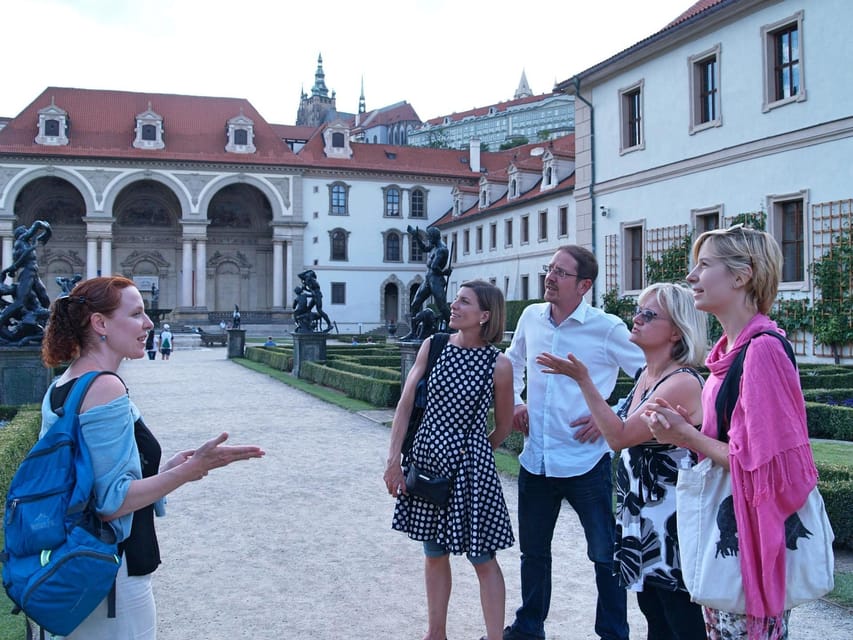
Meet at the door of Bagel Lounge Malostranska, and that location makes sense once you’re on your feet. This isn’t a “sit and look” garden cruise. It’s a walking history thread that links major garden spaces around Prague Castle, then drops you down toward the Lesser Town.
The big practical note is the terrain. You’ll go up and down stairs, and some are narrow or steep. If you’re the type who hates rushing on uneven steps, plan for a slower rhythm. This is also why the tour offers private or small groups—so your guide can tailor the route if you need to skip a part.
Since the tour is 3 hours, you’ll want to treat it like a focused mini-adventure, not a casual stroll. I’d plan your day so you’re not trying to squeeze in another demanding attraction right after. Garden walks in Prague often come with hills, steps, and long looks.
You can also read our reviews of more walking tours in Prague



Renaissance roots: how Ferdinand I changed Prague’s garden idea
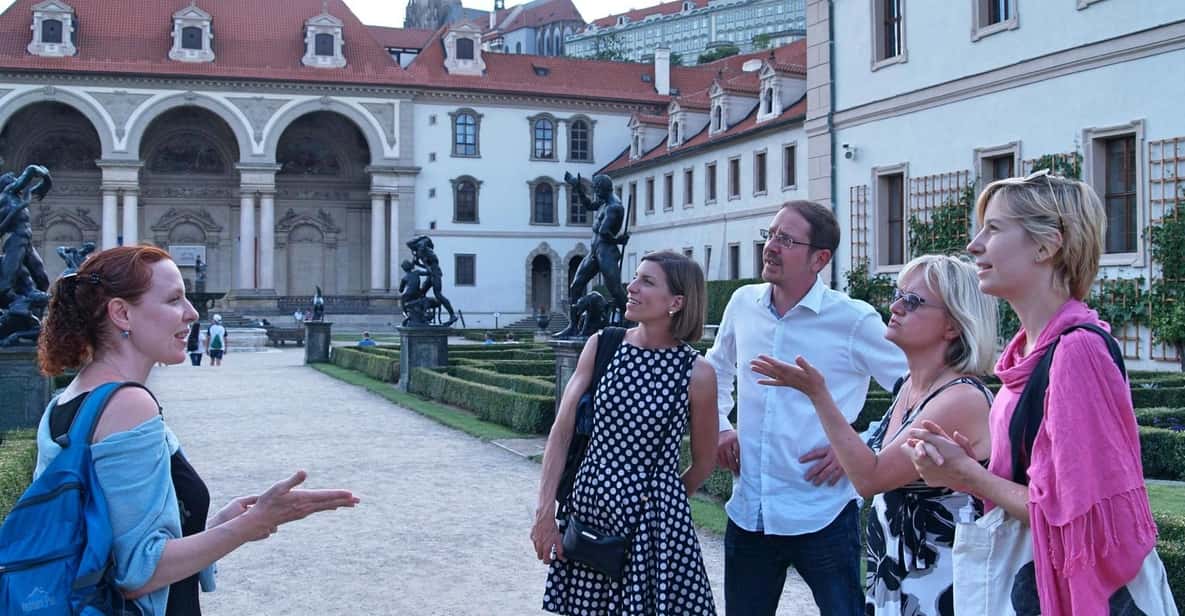
The tour’s center of gravity is the transformation from Renaissance classicism to Baroque drama. But it starts earlier than you might expect, with the way gardens reflect society. Even if you aren’t a plant person, you’ll feel the difference between gardens meant for usefulness and gardens built for status.
A good chunk of the storytelling is about how gardening evolved. Early medieval gardens were often about practical cultivation—herbs for medicinal or culinary life—and the surviving examples tend to be in Gothic cloisters. Then, on the hills around Prague, vineyards stretch back to before Charles IV. That context matters because it explains what changed in the 1500s: the idea of a large, showy palace garden.
Then comes the key plot point. Emperor Ferdinand I was keen on lush Mediterranean gardens inspired by the Italian Renaissance, and he imported a serious team of Italian gardeners and architects to Prague. This is one of those “you can’t fake this” cultural shifts. You see the result in the style choices—classic order, elegant pleasure architecture, and a garden layout meant to impress.
Even the pleasure details carry meaning. You’re not just looking at greenery. You’re watching power and taste get planted into stone, water, and planned views.
Prague Castle gardens: Fig House, Orangery, and the Mediterranean fruit experiment
From the start, the tour keeps pulling you toward the Royal garden world. One of the most interesting stops is the Fig House and the Orangery. These aren’t just “nice buildings.” They’re evidence of a big ambition: growing Mediterranean fruits in Central Europe.
Your guide will connect the dots between what the plants represented and what the gardens were trying to do. You’ll hear that figs, almonds, oranges, and lemons were grown here as part of the Royal garden experiment. It’s a reminder that Renaissance gardens were often about control—temperature, cultivation, and the ability to shape nature into something impressive.
You’ll also get a plant story that feels almost like court gossip: tulips. The tour explains that tulips, previously unknown in Europe, were introduced to the Royal gardens as an exotic gift from the Sultan of Constantinople. That little “how it got here” detail makes the gardens feel international, not provincial.
Before the tour drops you deeper into the Castle garden landscape, you’ll also see the stag moat and cross through the courtyard. It’s a small moment, but it helps you understand how the garden spaces were designed with drama and controlled transitions in mind—moving you from one kind of space to another rather than simply passing through.
The Singing Fountain and the little “pleasure” moments that make the design click
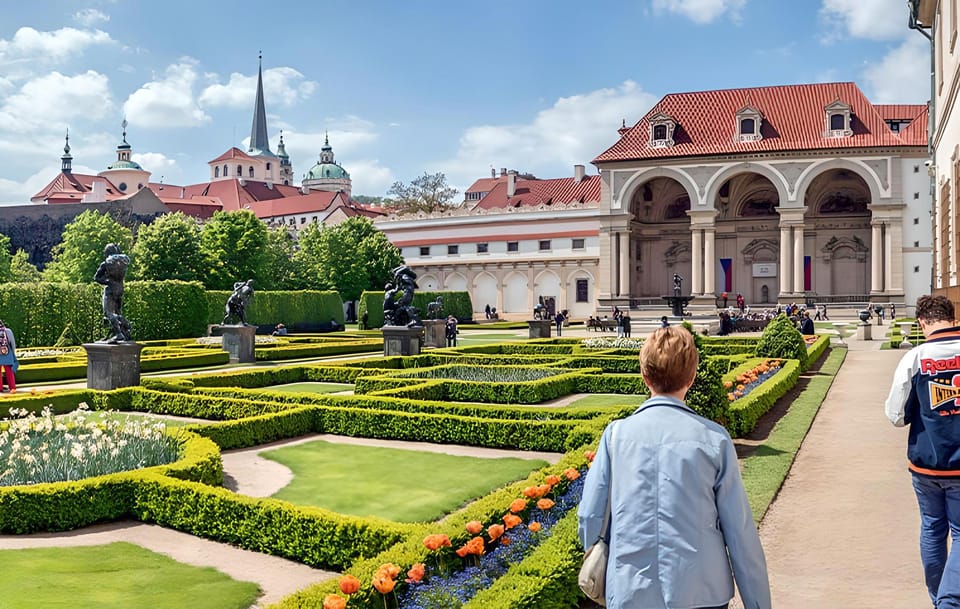
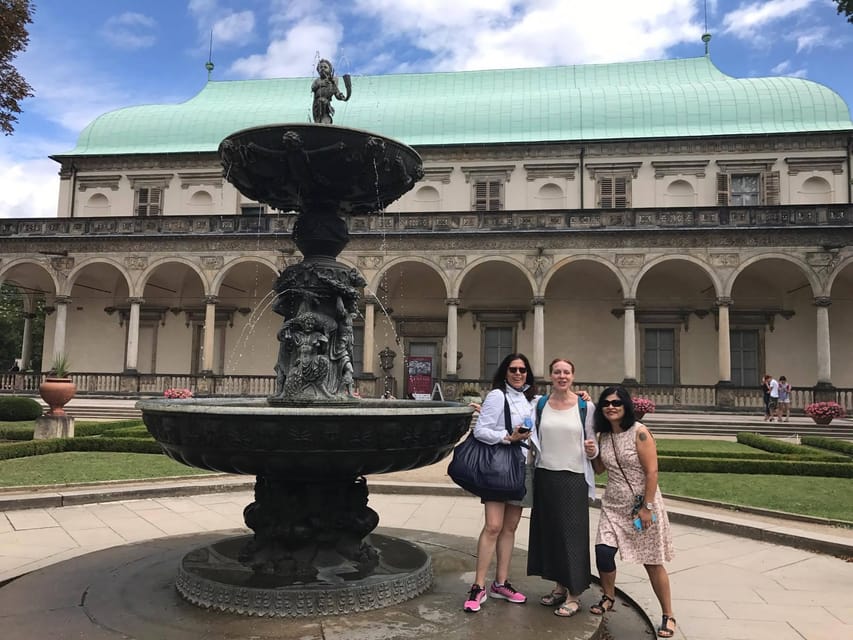
A standout here is the Belvedere Summer Palace commissioned by Ferdinand I as a present for his wife, Queen Anne—even though she didn’t live to see it completed. If you like architectural symbolism, this stop gives you a clear anchor: the palace wasn’t just for relaxation; it was wrapped in a story about love, display, and courtly imagination.
One relief depicts Ferdinand presenting his wife with a flower from the Royal Gardens surrounding the palace. That’s the kind of detail you’d miss wandering alone. Here, it becomes a clue: the gardens weren’t separate from the palace world. They were part of the message.
The pleasure palace itself is tied to an Italian designer, Paola della Stella, and it’s often described as one of the most beautiful Renaissance structures outside Italy. Even if you don’t get caught up in “ranking,” you’ll still feel why people single it out: the building is made to be looked at, and it leads naturally into the garden features in front of it.
Then comes a literal sound effect you can’t ignore. In front of the palace is a Giardinetto with the so-called Singing Fountain, cast in 1564 in bell bronze. The idea is simple and brilliant: water dropping into the bowl causes it to resonate or sing. It’s not just decoration. It’s a designed sensory moment, where the garden uses sound as part of the experience.
These are the stops that made the tour feel more than a list of sites. They help you understand how Renaissance design aimed to entertain and persuade—without needing a modern audio guide.
Down the Bull Stairs: terraced gardens and the Garden of Paradise atmosphere
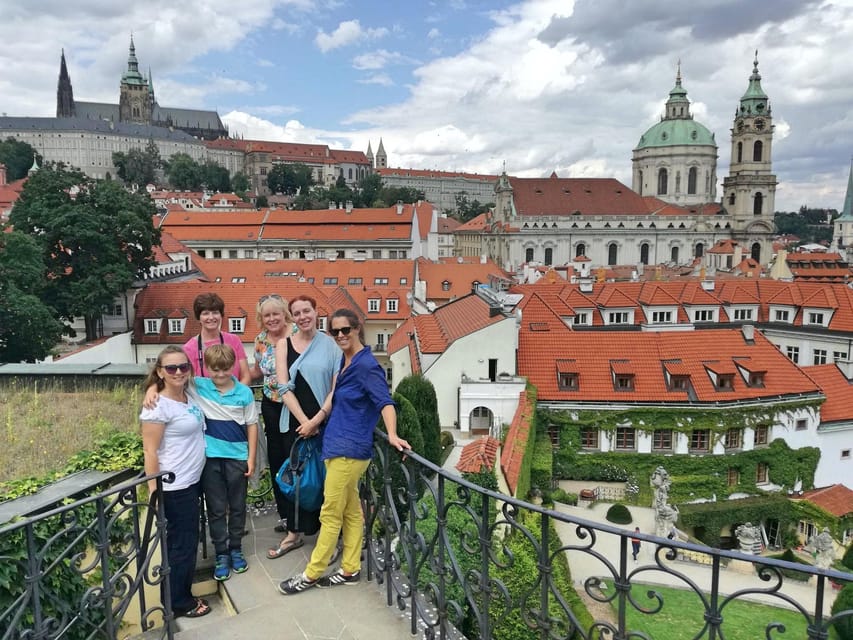
After admiring the palace area and key garden structures, the tour continues by moving through the South Gardens. One of the iconic transitions is descending the Bull Stairs. The tour also includes stops like the Garden of Paradise and the Garden on the Bulwark, then leads you down through terraced gardens below the Castle.
This section is where the walking starts to feel like “vertical storytelling.” Terraces matter because they manage slopes and create different viewpoints. You’re not simply moving downhill; you’re watching the garden’s design take advantage of Prague’s terrain.
The Garden of Paradise is the kind of name that could be just poetic—until you see the layout and realize it’s tied to Renaissance and later Baroque ideas about ideal spaces. Even if you can’t fully map the philosophy on the first pass, you can feel the intention: create ordered beauty, control sightlines, and build a sense of progression.
The Garden on the Bulwark adds another layer. Bulwarks are about defensive thinking, so seeing them linked to garden design helps you understand how Prague’s elite spaces borrowed from practical architecture. It’s a reminder that these weren’t “backyard” gardens. They were planned spaces shaped by the city’s structure.
When you’re walking through terraced areas, keep an eye out for what the guide points at: view corridors, the way paths frame buildings, and how water features appear in different levels. Those details are often what make the tour click emotionally.






Wallenstein Garden: albino peacocks, mythical fountains, and the Baroque shift
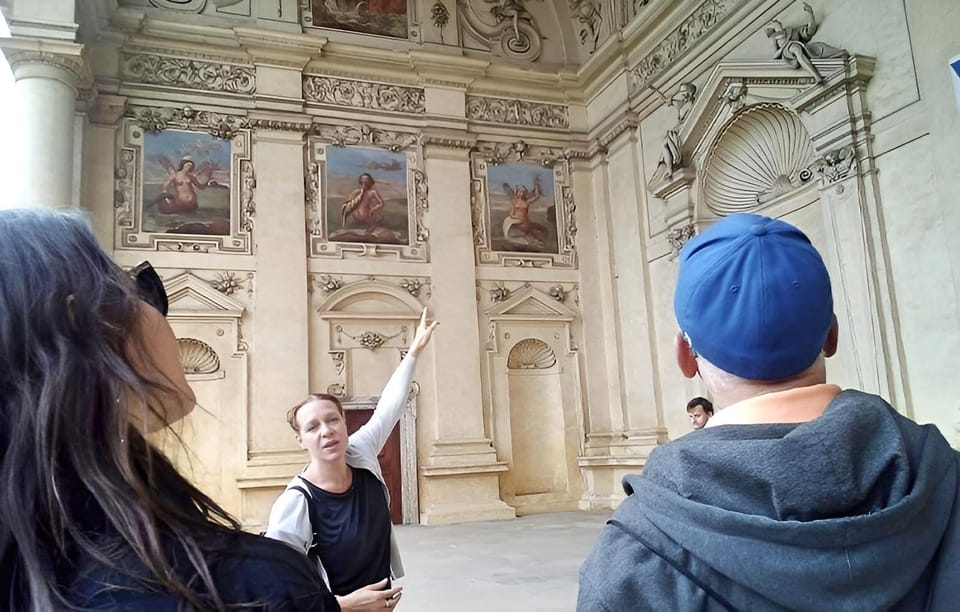
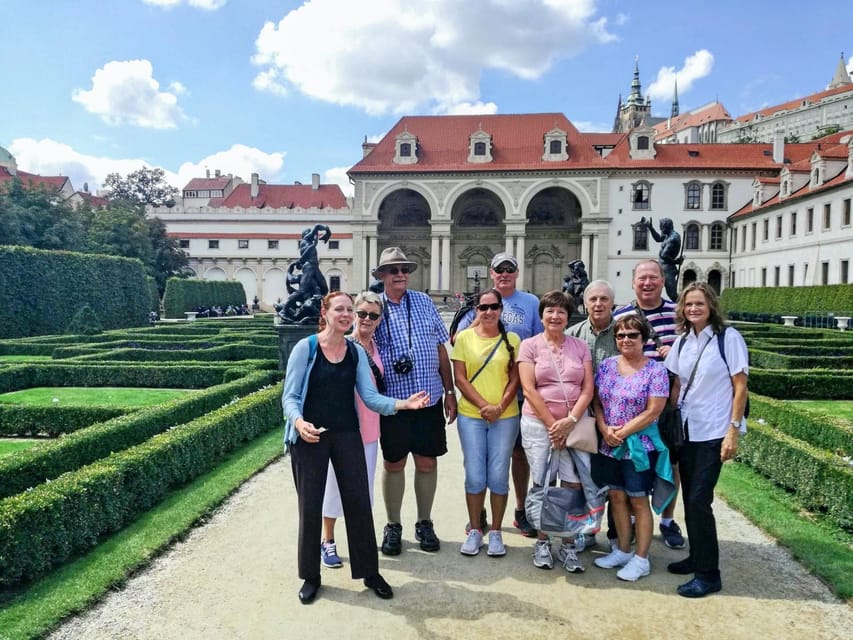
At the bottom of the hill is the Wallenstein Garden, and this is where your camera roll starts earning its keep. It’s grand, but the tour helps you see why it works. It isn’t only about beauty. It’s about turning ideas into spectacle.
You’ll learn about the transition from Renaissance classicism to Baroque philosophies. That translation can sound abstract on paper, so the guide ties it to the garden’s dramatic elements. You’ll also hear about the garden’s commissioner, Albrecht von Wallenstein, including the dramatic life behind the space.
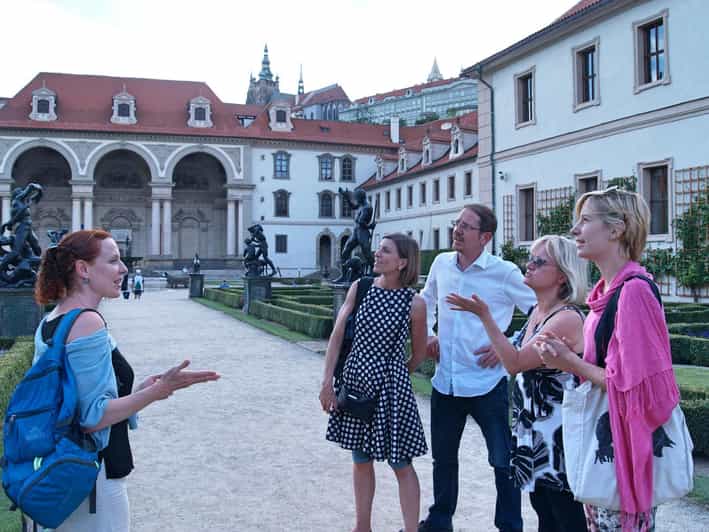
Then you get the visuals. The Wallenstein Garden includes albino peacocks, Mannerist statues, a grotto wall, and mythical fountains. The peacocks alone are worth the stop. They’re not “cute animals.” They’re part of the performance of the garden—an attention-grabber that communicates wealth and curated nature.
The Mannerist statues are another reminder that this garden era liked art that feels slightly theatrical, not only balanced. The grotto wall adds texture and mood. And the mythical fountains bring the Baroque habit of telling stories in stone and water.
If you like when a place has a clear “why,” this is it. By the time you reach Wallenstein, you understand the earlier stops better: Ferdinand’s Mediterranean ambitions set up the garden idea; later patrons turned it into dramatic theater.
Vrtba Garden (1720): the walled Baroque retreat most people miss
The tour ends by showing you the Vrtba Garden in the Lesser Town (Mala Strana). This is a Baroque walled garden dating from 1720, and it’s rarely seen by casual Prague sightseeing. That’s partly why it feels special. You get a quieter sense of noble life and Baroque landscaping aesthetics without the same crowds you might expect at more famous sites.
As you climb to the top courtyard, you’re rewarded with sweeping city views. That’s an important part of the design: gardens here aren’t only for being in them. They’re also for framing what’s beyond.
At the very top, there’s also a marine-themed grotto. Even if you don’t know the symbolic meaning ahead of time, you can appreciate the craft. It’s another example of how Baroque gardens used atmosphere—cool shadows, theatrical features, and surprise details—to keep visitors moving and looking.
The tour also gives you a sense of how “walled” changes the experience. A wall turns the garden into a controlled world. You feel the boundary between ordinary streets and curated elite space.
Price and value: what $123 buys, and what you might pay separately
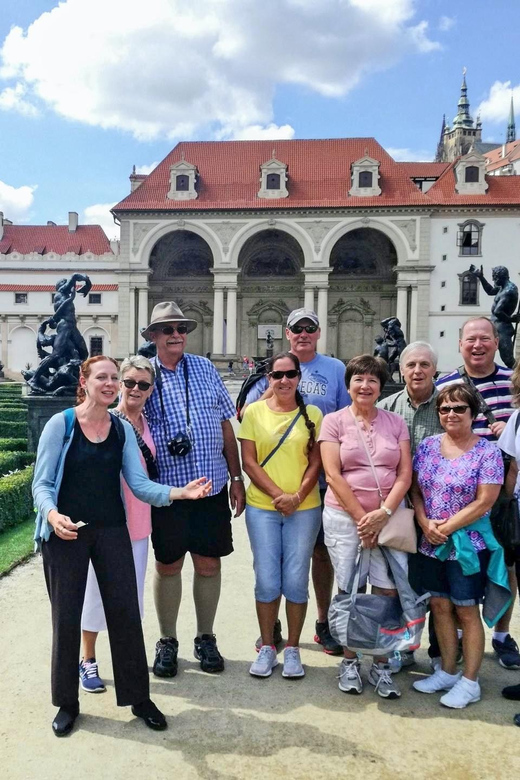
At $123 per person for a 3-hour guided history walk, you’re paying for more than “access.” What you’re really buying is the historian guide and the way the tour connects places, patrons, and styles into one story.
That said, not everything is included. Gardens under Prague Castle admission fee aren’t included, and the Vrtba Garden admission fee isn’t included either. So treat the listed price as the guide cost plus likely on-site fees for the specific garden areas.
Is it still good value? For me, yes—because the tour gives you context that makes the gardens easier to read. You’re also getting a tight schedule: you see multiple garden phases in a single morning/afternoon window, rather than trying to stitch them together alone and risking missing the details that turn “pretty” into “understood.”
If you’re budget conscious, I’d do a quick check of which garden sections you plan to visit. If you’re happy to pay extra for those entrances anyway, the tour feels like a smart buy.
Who should book this tour, and who should consider a private option

This tour is perfect if you like:
- architecture and garden design (not just plants)
- stories about patrons and how power shows up in art
- places that mix art, water, and small theatrical surprises
It’s less ideal if you hate stairs. Since the walking includes narrow or steep steps, it can be tough for mobility limitations. The tour provider specifically notes that you should consider a private tour if you think you’ll struggle. A private option can let your guide tailor the route and focus on the sites that fit your pace.
Also, if you’re the type who likes to linger, you may feel slightly rushed near the end because the tour is time-boxed to 3 hours. Still, the guide’s pace is part of what makes it manageable.
Should you book the Prague Renaissance and Baroque Gardens tour?
Book it if you want Prague gardens explained in a way that makes sense. You’ll get the bigger story—how Ferdinand I’s Italian Renaissance taste shaped Prague—and then you’ll enjoy the payoffs: the Fig House and Orangery, the Singing Fountain, Wallenstein’s albino peacocks and mythical fountains, and the calmer, walled surprise of Vrtba.
Skip or switch to a private format if stairs are a deal-breaker for you, or if you’d rather spend your time solo wandering without fixed timing. And plan for extra garden admission fees where they apply.
If you do go, come ready for a walk with meaning. Prague’s outdoor spaces are never just “pretty lawns,” and this tour proves it in three satisfying hours.
FAQ
How long is the Prague Renaissance and Baroque Gardens Walking Tour?
The tour lasts 3 hours.
Where do I meet the guide?
Meet at the door of Bagel Lounge Malostranska.
Is the tour guide available in English?
Yes, the live guide speaks English.
What’s included in the price?
The price includes a 3-hour guided history walk with a historian guide.
Are entrance fees included for the gardens?
No. Gardens under Prague Castle admission fee and Vrtba Garden admission fee are not included.
Does the tour include stairs or difficult walking?
Yes. The tour regularly includes walking up and down stairs that are sometimes very narrow or steep. If you have mobility issues, you should consider booking a private tour so your guide can tailor the route.