REVIEW · PRAGUE
Prague Old Town New Town and Jewish Quarter Morning Tour
Book on Viator →Operated by Explore Prague · Bookable on Viator
Prague really shows its layers when you walk. This 3-hour morning route is a time-saving way to connect the city’s big 20th-century moments, medieval streets, and Jewish landmarks into one clear story. I especially like the mix of major sights with small local stops, and the way guides such as Petra or Jack (Honza) keep the pace friendly even when you’re covering a lot of ground.
You’ll also appreciate the ending: you finish right by the Astronomical Clock, so you can keep exploring on your own without restarting your day. One possible drawback: the name can make you expect a deep Jewish-quarter focus, but it’s more like Prague overall with the Jewish Quarter as a key thread, not the only theme.
In This Review
- Key highlights to look for before you go
- Why this Prague Old Town and Jewish Quarter tour works so well
- Wenceslas Square: Prague’s 20th-century stage setting
- Lucerna Arcade and the upside-down horse
- Franciscan Garden and the Church of Our Lady of the Snows: quiet plus drama
- Estates Theatre and Karolinum: art, conflict, and Charles IV’s era
- House of the Black Madonna, Powder Tower, and the Municipal House
- St. James Church: baroque scale you can feel
- The Jewish Quarter thread: synagogues, cemetery, and why the ghetto formed
- Spanish Synagogue (with Kafka nearby)
- The Old-New Synagogue and neighboring synagogues
- Old Jewish Cemetery: memory you can walk through
- Old Town Square and the Astronomical Clock: finish with the best kind of chaos
- Price, value, and what you may pay separately
- Pacing, comfort, and the small things that affect your morning
- Who should book this tour, and who might want a different one
- Should you book the Prague Old Town, New Town, and Jewish Quarter morning tour?
- FAQ
- How long is the tour?
- What is the meeting point?
- Where does the tour end?
- Is the tour in English?
- What’s included in the price?
- Are entrance fees included for every stop?
- Does the tour run in bad weather?
- How big is the group?
- Are food and drinks included?
- Is there a cancellation policy?
Key highlights to look for before you go
- A true orientation walk: Old Town, New Town, and the Jewish Quarter in one morning
- Short stops, clear context: most locations are only 5–20 minutes, so you get the “why,” not just the “what”
- Local pace breaks like a stop in a quiet Franciscan garden
- Landmarks plus side streets that feel less mass-touristy than doing it solo
- Guides with standout storytelling (Petra, Jack/Honza, Mikal, Anna are frequently mentioned)
- A convenient finish at Old Town Square right by the clock show
Why this Prague Old Town and Jewish Quarter tour works so well
This tour is designed for one thing: help you get your bearings fast. You’re walking through a compact, high-impact slice of Prague—New Town’s major boulevard beginnings, the Old Town’s church-and-square rhythm, and then into the Jewish Quarter area with context that makes the sights click.
At about 3 hours and with a maximum group size of 20, the route is doable for most people. In practical terms, it beats trying to stitch together “the highlights” using maps while you’re tired, jet-lagged, or just trying not to waste hours zigzagging across neighborhoods.
The price—about $32.65 per person—is low for what you get: a professional licensed guide, a set route, and a narrative that connects buildings, streets, and historical turning points. It’s also booked in advance fairly often, which is a hint that this is a popular “first morning in Prague” choice.
You can also read our reviews of more tours and experiences in Prague

Wenceslas Square: Prague’s 20th-century stage setting
You start at the top of Wenceslas Square, starting-point easy and central. The guide frames it as a stage that “faced” the big revolutions and military parades of the 20th century. Even if you’ve already seen photos of the square, hearing it explained this way helps you see it less as a shopping strip and more as a national spotlight.
This first stop is short—around 15 minutes—but it sets tone. You’re not just touring buildings; you’re learning how Prague’s public spaces carried political weight.
Lucerna Arcade and the upside-down horse
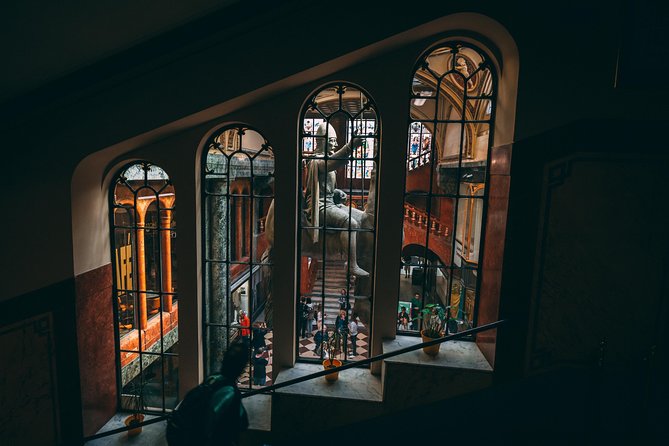
Next comes Lucerna Arcade and the nearby Lucerna palace. The standout here is the upside-down horse statue by Czech modern designer David Černý, a striking pop-art moment that mixes modern art into a more historic street scene. The guide also connects it to the Havel family palace context, which helps you place the building beyond just “it looks cool.”
This is another quick 15-minute stop, which is exactly right for orientation. You’ll get the story, then move on before the route slows down.
Franciscan Garden and the Church of Our Lady of the Snows: quiet plus drama
Then you get a breather: the Franciscan Garden. This is the kind of pause that makes walking tours feel worth it—locals use it to step away from the city noise, and it gives your brain a reset before the next concentration of major sights.
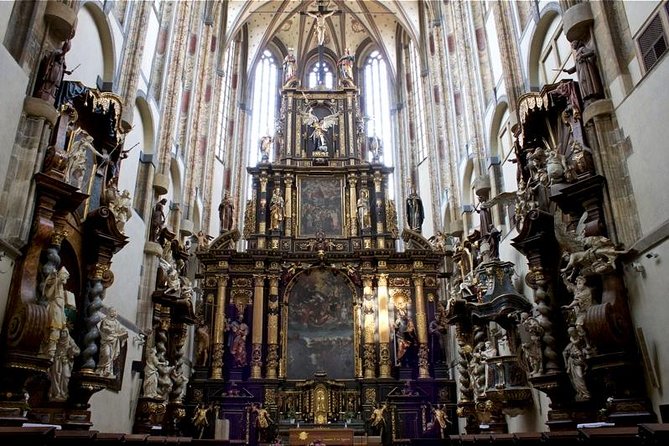
Right by the garden is the Church of Our Lady of the Snows, where the tour shifts from calm to intriguing history. You learn why the church was supposed to become the greatest church of Prague but was never finished. The interior includes a detail visitors don’t always expect: the tallest altar in Prague.
Even with just 10 minutes here, it’s a good contrast stop. You get a garden moment, then a gothic church story that feels full of “what ifs.”
Estates Theatre and Karolinum: art, conflict, and Charles IV’s era
Two stops keep the theme moving: culture and education in older Prague.
Estates Theatre is next (about 10 minutes). It’s described as the oldest theatre in Prague city centre, and it once hosted W. A. Mozart. The guide also explains why locals opposed the theatre’s construction—this adds a useful layer. It’s not only about famous names; it’s about how new ideas can trigger local resistance.
Then you cross to Karolinum, connected to Charles University. The tour highlights the university’s age and uses Charles IV as the anchor for why he’s such an important figure in Czech history. This stop is about 15 minutes, and it works well because it turns “old building” into “old institution.”


House of the Black Madonna, Powder Tower, and the Municipal House
From here, the tour starts layering architectural variety on you.
At the House of the Black Madonna, the guide points out a Czech architectural style you don’t find in the same form elsewhere. It’s quick—around 10 minutes—but it’s one of those stops that changes how you look at facades afterward.
Then comes Prasna brana (Powder Tower), once a representative Old Town entrance and later used more practically. It’s a short stop (about 5 minutes), but the guide’s explanation gives the strange turns of the tower’s history meaning instead of leaving it as trivia.
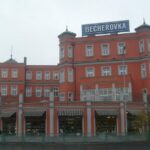
Right next door is Obecni dum (Municipal House), described as an Art Nouveau pearl. The guide covers when and why it was built, plus how it’s used today. This is another 5-minute moment, so don’t expect long interior time—but do expect to leave noticing style differences across streets.
St. James Church: baroque scale you can feel
In the Old Town, you’ll also hit Church of St. James (about 10 minutes). It’s presented as the biggest and most beautiful baroque church in the area, with an emphasis on admiring the interior.
This stop is a helpful reminder that churches in Prague aren’t just religious spaces here—they’re art statements with serious scale. If you’re sensitive to long standing, keep an eye on your energy, but the time is short enough to stay comfortable.
The Jewish Quarter thread: synagogues, cemetery, and why the ghetto formed
Now the tour leans into the Jewish Quarter (about 55 minutes total across several stops), and this is where the guide’s framing matters most.
You’ll learn why Prague historically had such large Jewish ghettos and how the Jewish Quarter story moves from medieval times toward the present day. That context is what makes the architecture and memorial spaces feel more than just stops on a list.
Spanish Synagogue (with Kafka nearby)
The first synagogue-area stop is the Spanish Synagogue (about 15 minutes). The guide ties it to a bigger cultural story and notes the nearby statue of Franz Kafka, using him as a bridge between Prague identity and Jewish cultural history.
The Old-New Synagogue and neighboring synagogues
Next is the Old-New Synagogue (about 20 minutes). It’s described as Prague’s oldest synagogue, and the tour includes stories about neighboring synagogues, including the High Synagogue, Klausen Synagogue, and Ceremonial Hall.
Even if you don’t know much about synagogue types, this sequencing helps you understand that a neighborhood could include multiple houses of worship with different functions and styles.
Old Jewish Cemetery: memory you can walk through
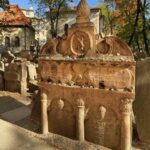
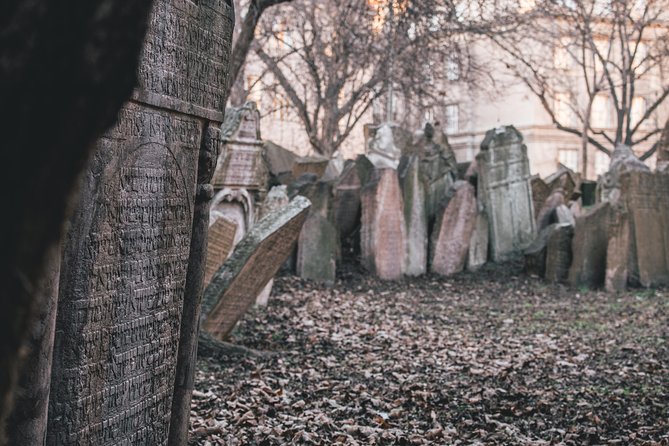
Finally, you visit the Old Jewish Cemetery (about 10 minutes). The guide explains why it’s considered one of the most enchanting cemeteries in central Europe, why it’s so extensive, and the fact that it’s among the few old Jewish cemeteries that survived World War II.
This is one of the stops where you want a steady pace and a quiet mind. Don’t rush it for photos—let the guide’s context set the tone first.
Old Town Square and the Astronomical Clock: finish with the best kind of chaos
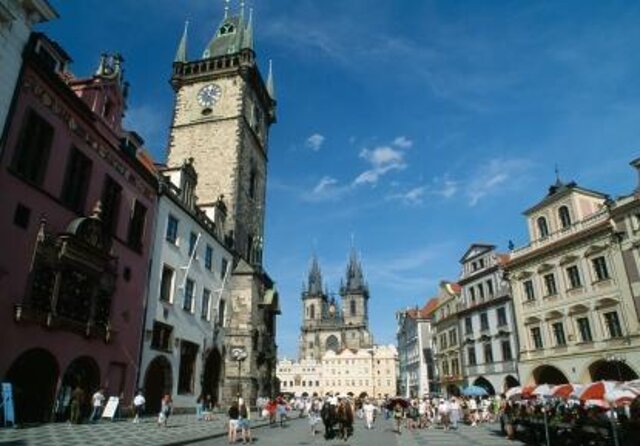
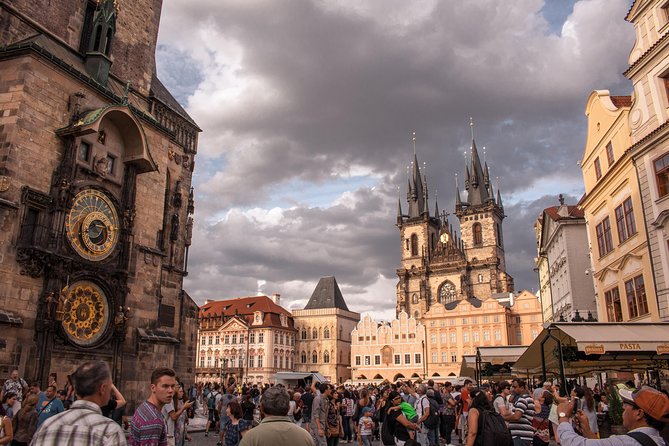
You close at Staromestske namesti (Old Town Square), the heart of the Old Town where you can see multiple architectural styles in one view. The guide points out major anchors like St. Nicholas Church, Týn Church, the statue of Jan Hus, and the column of St. Mary. This is about 15 minutes, and it’s timed to make the ending feel like a payoff rather than a last-minute sprint.
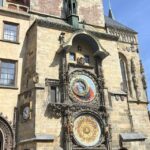
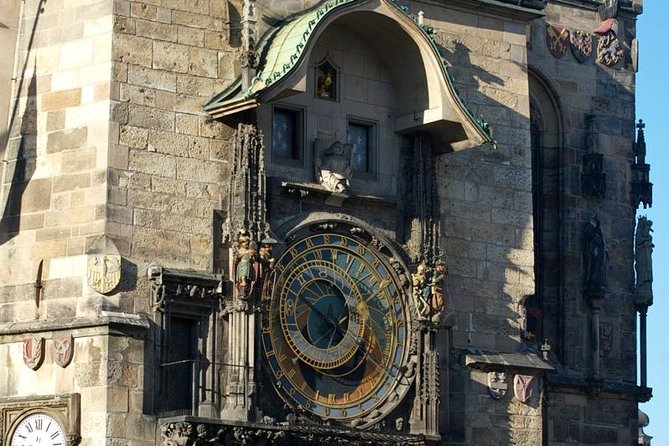
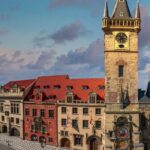
Then the route ends at the Old Town Hall with the Astronomical Clock. The guide explains when the complex clock was built and how it works, and you can watch the hourly show. This is around 10 minutes on the tour itself, but it’s the kind of moment that pulls you into staying longer afterward.
Practical tip: after the tour ends in front of the clock, you’re already in the perfect starting point to wander the square streets—so you don’t waste your energy retracing steps.
Price, value, and what you may pay separately
The tour fee is $32.65, and it includes a professional licensed guide. What’s not included is variable: some places are marked admission-free, and others are marked as admission not included.
Here’s the useful way to think about it:
- If you want a guided route with built-in context for free exterior stops, the tour covers plenty.
- If you want to enter museums or synagogues, plan on paying some admissions on top of the base price.
Stops marked as admission not included include the Estates Theatre, Karolinum, House of the Black Madonna, Prasna brana, Municipal House (Obecni dum), Spanish Synagogue, Old-New Synagogue, Old Jewish Cemetery, and the Old Town Hall/Astronomical Clock complex. Some other stops are free, including Wenceslas Square, Lucerna Arcade, Franciscan Garden, Church of Our Lady of the Snows, Church of St. James, and much of the Old Town Square exterior time.
For value, this structure is actually smart: you’re paying mainly for interpretation and navigation. You’re not forced into one expensive entry after another, but you do have the option to go deeper where it matters.
Pacing, comfort, and the small things that affect your morning
This is a walking tour. You should expect a lot of steps in about three hours. One review notes it can be around 15,000 steps, and you can feel it in your legs if you wear the wrong shoes.
My advice:
- Wear comfortable shoes you can trust on uneven pavement.
- If the weather is cold, dress for it—this runs in all weather conditions.
- If you’re picky about hearing, position yourself where you can clearly face the guide; one guest noted difficulty hearing during a larger group situation.
Good news: the tour includes short stops often enough that you’re not constantly “on” without breaks. And several guides are praised for pacing and warm-up pauses—especially when it’s chilly.
Who should book this tour, and who might want a different one
I think this tour is a great match if you:
- are in Prague for the first time and want a clear overview
- love history and architecture but don’t want to research every turn yourself
- want a morning plan that ends in Old Town Square so you can keep exploring right away
- like guides who answer questions and make the city feel like a story, not a spreadsheet
It might be less ideal if you:
- want a pure, long, deep dive into the Jewish Quarter only (this route includes it, but it’s still a broader Prague overview)
- struggle with hearing in bigger groups and are sensitive to accents or sound issues—try to get a day with fewer people, and make sure you can see the guide
Should you book the Prague Old Town, New Town, and Jewish Quarter morning tour?
Book it if you want the best kind of first-morning experience: a guided walk that ties together squares, churches, Jewish sites, and Prague’s major cultural markers without forcing you into a full-day commitment.
Skip or consider an alternative if you’re planning this as your only Jewish Quarter experience and you want time for deeper entry visits and slower pacing. Also, if hearing clearly is a big deal for you, go in with realistic expectations for a walking group and be prepared to stand closer.
If your goal is simple—get oriented, learn the “why,” and end by the Astronomical Clock—this one is a strong pick.
FAQ
How long is the tour?
The tour lasts about 3 hours.
What is the meeting point?
Meet at the Statue of Saint Wenceslas at Václavské náměstí, Praha 1-Nové Město.
Where does the tour end?
It ends in Old Town Square, in front of the Astronomical Clock.
Is the tour in English?
Yes, it is offered in English.
What’s included in the price?
A professional licensed guide is included.
Are entrance fees included for every stop?
No. Some stops are free (for example, Wenceslas Square and Lucerna Arcade), while several others are marked admission not included (such as the Spanish Synagogue and Old-New Synagogue).
Does the tour run in bad weather?
It operates in all weather conditions, so dress appropriately.
How big is the group?
The tour has a maximum of 20 travelers.
Are food and drinks included?
Food and drinks are not included unless specified.
Is there a cancellation policy?
Free cancellation is available up to 24 hours in advance for a full refund.