REVIEW · PRAGUE
Prague: Old Town and Jewish Quarter Tour
Book on GetYourGuide →Operated by Fun in Prague · Bookable on GetYourGuide
A walk that turns Prague landmarks into a story you can feel. This Old Town + Jewish Quarter tour connects big sights like the Astronomical Clock with the quieter streets of Josefov, including the legends and daily life that shaped the neighborhood. You’ll hear how places got their names, why certain buildings matter, and what the Jewish community went through over centuries.
I especially like the way the guide ties architecture to real life—from house signs and statues near Powder Tower to the façade of the Church of St. Nicholas at the Municipal House. I also like the focus on “what it meant,” not just “what it is,” including careful handling of Jewish persecution topics with seriousness and sensitivity when the tour touches darker parts of the past.
One consideration: the tour can include Jewish Museum entry only if you select that option, and the Jewish Museum is closed on Saturdays and Jewish holidays. If your visit lands on one of those days, you’ll want to plan around that so you don’t feel like you’re missing the best indoor stops.
In This Review
- Key points before you go
- Starting at Křižovnické náměstí: easy start, good orientation
- From Powder Tower to Josefov: Prague’s building stories in walking form
- Municipal House and the Church of St. Nicholas façade: architecture you’ll actually notice
- Old Town Square and the Astronomical Clock: more than a photo stop
- Josefov streets and the golem legend: where story becomes atmosphere
- Synagogues and the Jewish Town Hall site: understanding a community through institutions
- Jewish Cemetery and the largest synagogue in Europe: scale hits you in person
- How long is long enough? 90 minutes for Prague’s two most important districts
- What kind of traveler this suits best
- Options to consider: Jewish Museum tickets, and what’s not included
- Price and “value for your feet”
- Should you book the Prague Old Town and Jewish Quarter tour?
- FAQ
- How long is the Prague Old Town and Jewish Quarter tour?
- Where does the tour meet?
- What are the main highlights on the tour?
- Is the Jewish Museum included?
- What languages is the guide available in?
- When is the Jewish Museum closed?
Key points before you go
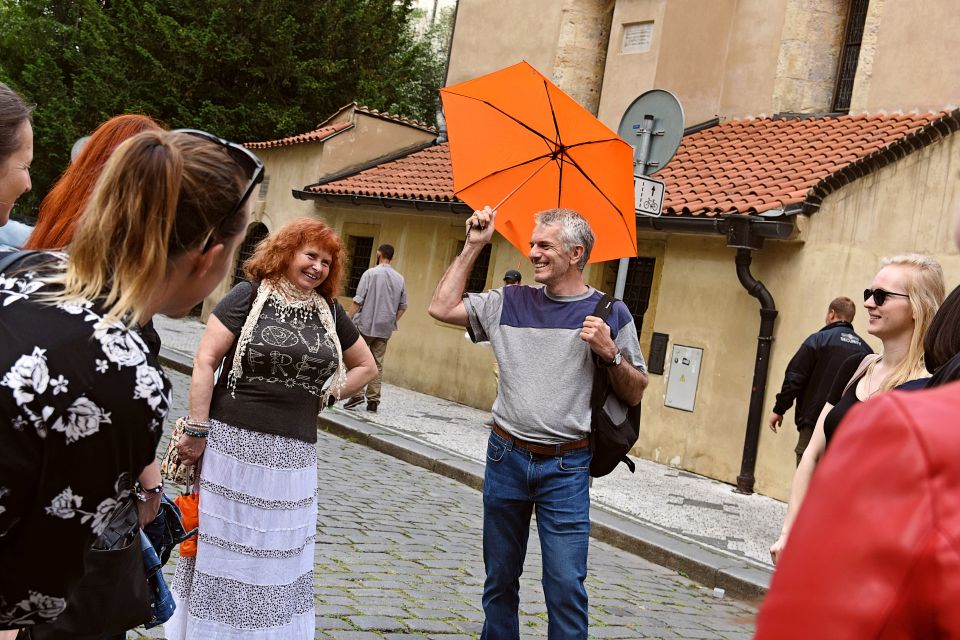
- Meet at the Charles IV statue by Charles Bridge and look for the guide with an orange umbrella, so you don’t waste time hunting.
- Old Town Square landmarks get context, including what you’re looking at before you take photos.
- Powder Tower and Municipal House are explained as story landmarks, not just pretty façades.
- Josefov is where the legends and real routines meet, from Rabi Loew’s golem story to everyday Jewish habits and traditions.
- Kafka and major sites fit into a walkable route, so the references feel connected rather than random.
- You’ll see major synagogues and the Jewish Cemetery, including claims like the largest synagogue in Europe and one of Europe’s oldest.
Starting at Křižovnické náměstí: easy start, good orientation
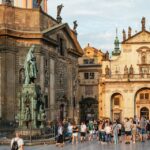
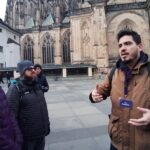
The tour starts at Křižovnické náměstí, at the statue of King Charles IV near Charles Bridge. The nice part is that this is a very specific meeting point: it’s described as the only statue on that small square (in front of the Old-Town Bridge Tower). You’re looking for a guide holding an orange umbrella.
This matters because Prague’s center is busy and full of look-alike street corners. A clear meeting point helps you get your bearings fast and then focus on the walking instead of stressing about logistics.
Wear comfortable shoes. The tour is only 90 minutes, but you’ll still cover enough ground that stiff shoes or shoes with no grip become annoying.
You can also read our reviews of more tours and experiences in Prague.


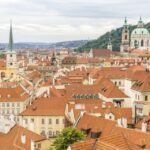
From Powder Tower to Josefov: Prague’s building stories in walking form
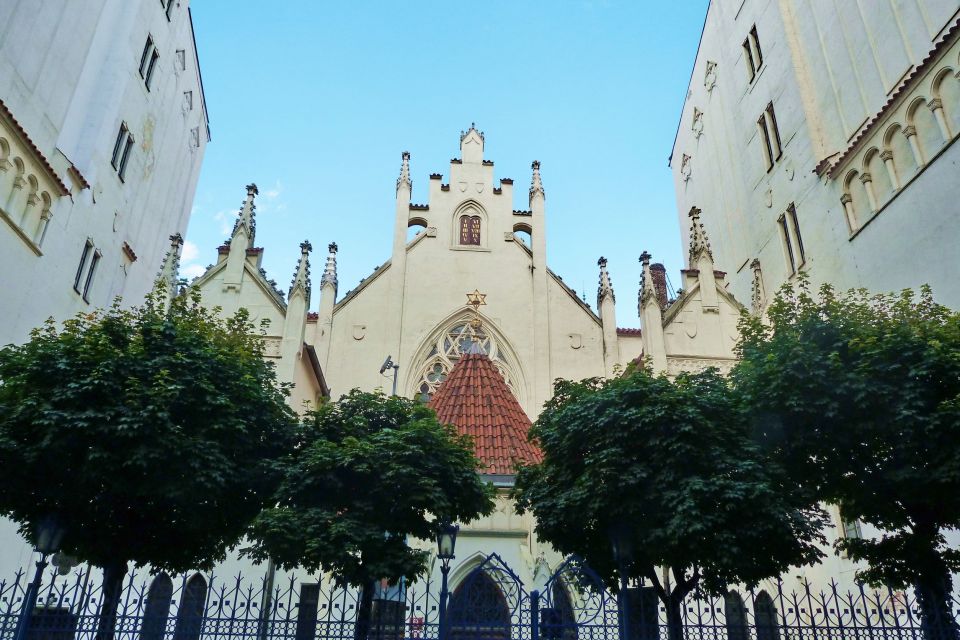
After you start, the route flows toward the Old Town core and then into Josefov. This is where the tour’s “story first” approach really clicks: the guide points out details that most people miss when they’re simply sightseeing.
Powder Tower is one of those stops where the guide’s explanations can change your whole view. You’ll hear tales tied to the tower and nearby landmarks—stories that connect the physical building to Prague’s shifting political and cultural world. It’s not trivia for trivia’s sake; it’s the kind of context that makes the streets feel less like a set and more like a place that had consequences.
Then Josefov brings the tempo down a bit. The walk through the former Jewish Ghetto is where the tour becomes more than a highlight circuit. You’re not just looking at old stones; you’re hearing about how Jewish residents lived, practiced, and adapted over time—along with how the city treated them.
Municipal House and the Church of St. Nicholas façade: architecture you’ll actually notice
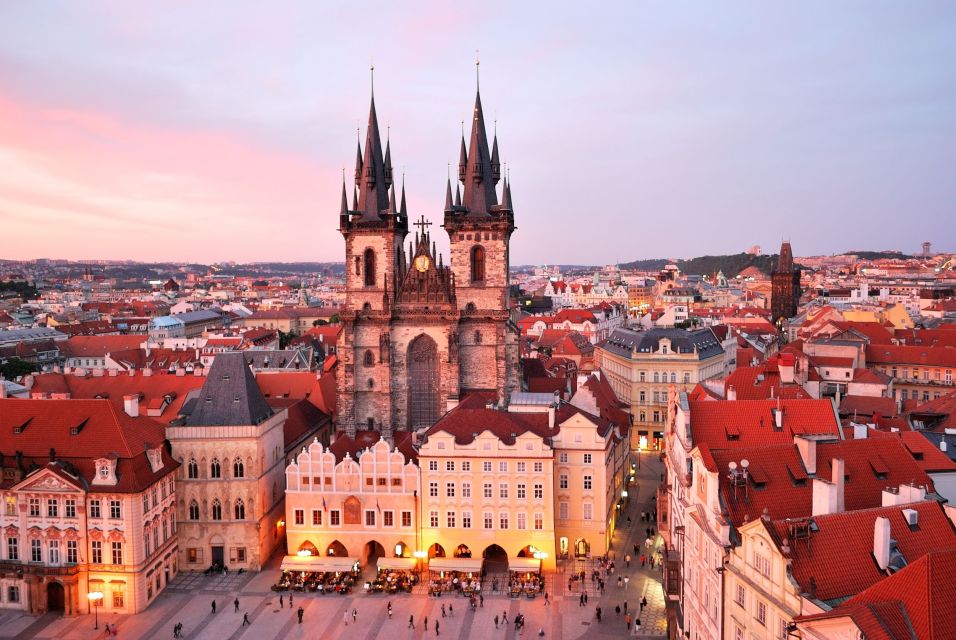
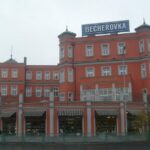
The Municipal House stop is a smart choice because it gives you a quick lesson in Prague’s “public grandeur.” You’ll go to the Municipal House and see the façade of the Church of St. Nicholas.
Here’s what I like about this kind of framing: Prague’s center can look like a postcard, but the guide helps you spot what to pay attention to—shapes, placement, and the feeling of ceremony that buildings like this were meant to project.
Even if you’re not an architecture nerd, you’ll get more from the exterior viewing because you’ll know what to look for. It’s a short stop, but it has the value of making the city’s style legible as you keep walking.
Old Town Square and the Astronomical Clock: more than a photo stop
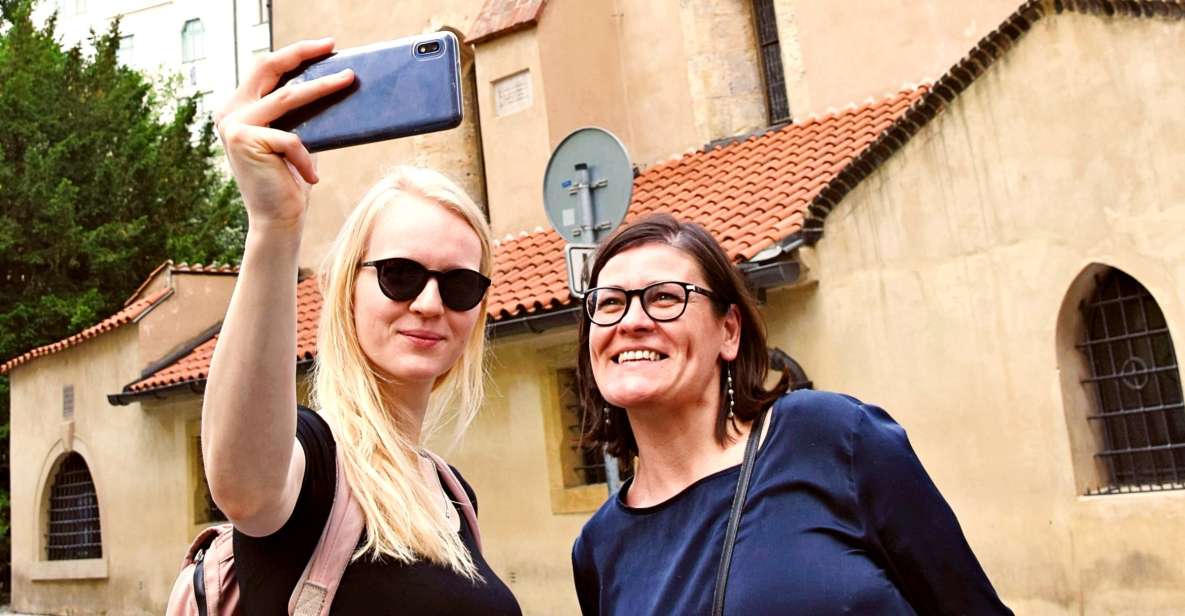
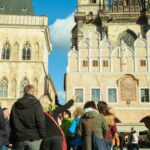
Old Town Square is packed, which means the Astronomical Clock can become a crowd magnet. This tour treats it like a turning point rather than a mere attraction.
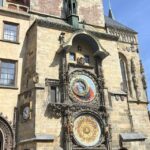
You’ll see the legendary Astronomical Clock on the Old Town Hall, and you’ll hear what’s behind it. The best part of doing it with a guide in a busy square is that you’re guided through the meaning before you get overwhelmed by the motion of the crowd.
This is also where the tour’s pacing works for first-timers. You don’t need to research 20 tabs of background material. The guide provides just enough to make the clock feel like an artifact with purpose—something built for people in their own time, not an old mechanism trapped behind glass.
Josefov streets and the golem legend: where story becomes atmosphere
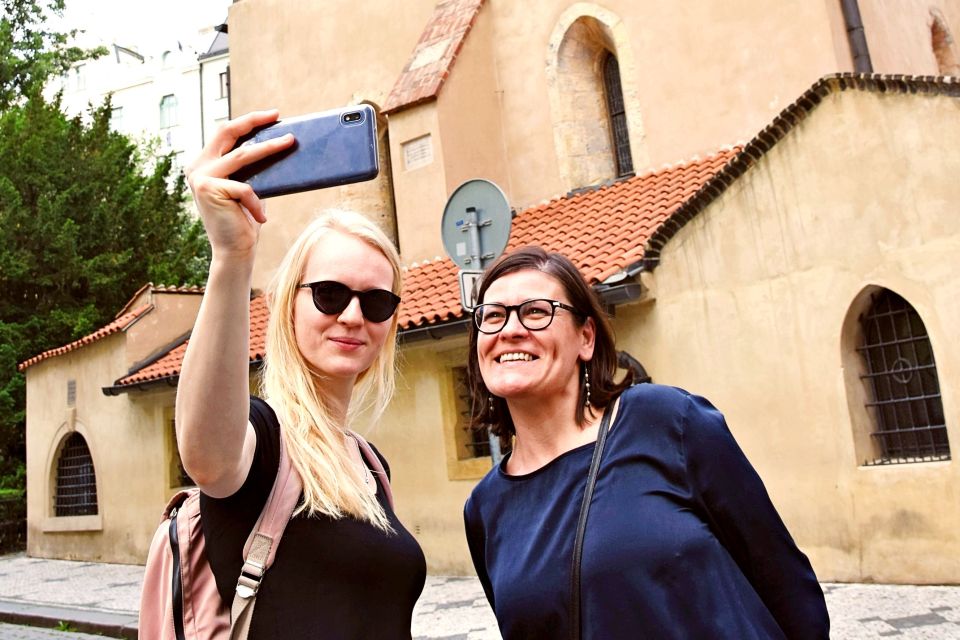
When you reach Josefov—the former Jewish Ghetto—the tour’s tone shifts. The guide shares stories that mix legend and cultural memory, including the legendary monster Golem associated with Rabi Loew.
If you’re the type of person who normally skips “myths,” this is still worth it because the story isn’t offered as empty fantasy. It’s used to explain how communities processed fear, identity, and survival in a city that often had hard edges.
The guide also talks about Jewish habits and traditions. That part is valuable because it helps you see synagogues and cemeteries not as isolated sights, but as part of a lived culture with routines, meaning, and community structure.
The tour also brings in Kafka’s life and work. Even if you only know one or two Kafka references, the walk-style context helps you connect the author to place, not just to a name on a book cover.




Synagogues and the Jewish Town Hall site: understanding a community through institutions
A standout strength of this tour is how it keeps returning to institutions—synagogues, community spaces, and civic-religious life—rather than treating each sight as a separate stop.
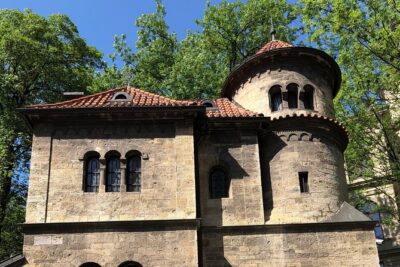
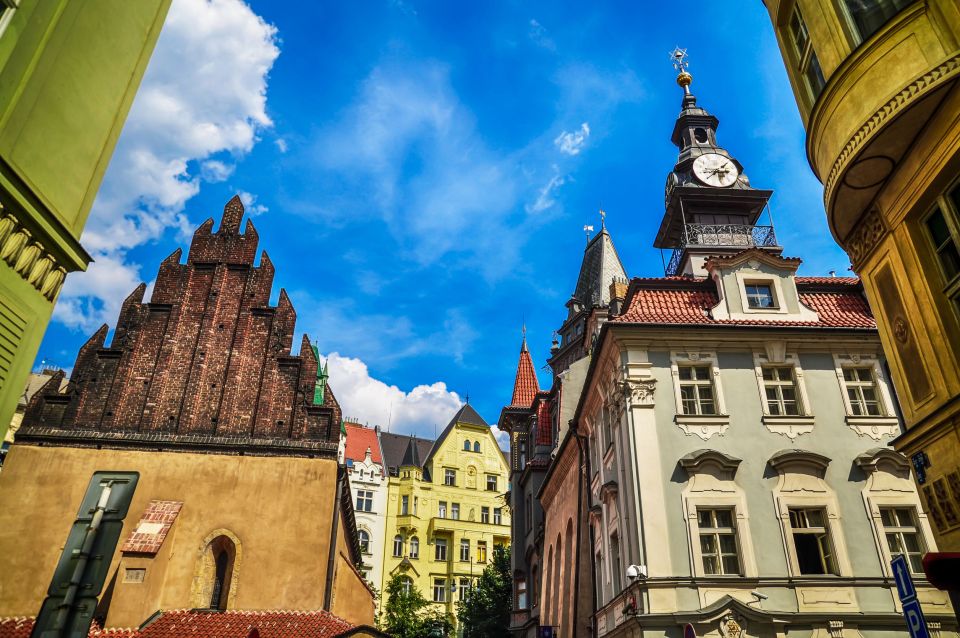
You’ll see city synagogues, including one of Europe’s oldest. The tour also references the site of the Jewish Town Hall, which helps explain how Jewish communal life had its own organization within Prague.
This is where the tour can feel especially powerful: you get a sense that Josefov wasn’t just a set of religious buildings. It was a functioning community with governance, rituals, education, and social identity—all reflected in architecture and location.
One detail that makes the tour feel like it has “teeth” is how it addresses the past with care. A guide named Martin has been praised for handling the Holocaust and Jewish persecution topics with seriousness and sensitivity, and that kind of approach matters on a walking tour where you’re standing in the real spaces tied to those events. You’re not watching a lesson from a distance; you’re hearing the story while you’re surrounded by it.
Jewish Cemetery and the largest synagogue in Europe: scale hits you in person
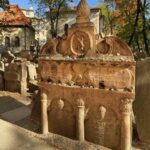
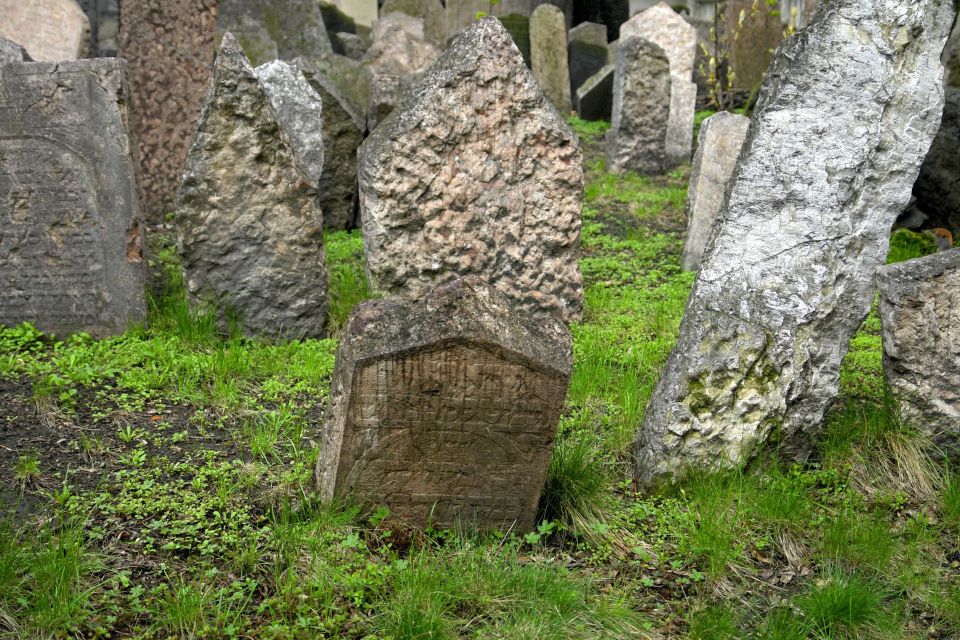
The tour includes the Old Jewish Cemetery and also takes you to major synagogue sites, including mention of the largest synagogue in Europe.
Cemeteries are never just “another stop.” In a place like Prague, they also become a map of memory—names, dates, and the long timeline of community presence. The guide uses the cemetery to build a picture of Jewish life across centuries, not only the hardships.
Seeing the largest synagogue claim in person adds a different kind of perspective. Big buildings make it clear that there was wealth in community life as well as spirituality, education, and public presence. The point isn’t to treat synagogues like museum pieces; it’s to show how the community built structures for continuity.
If you want a tour that doesn’t rush you past the most emotional parts, this one is set up to slow down mentally, even if the itinerary stays tight on time.
How long is long enough? 90 minutes for Prague’s two most important districts
At 90 minutes, the tour is short by walking-tour standards. That can be a plus: you get a concentrated orientation to Old Town and Josefov without losing your whole day to one activity.
It’s also a realistic match for Prague sightseeing because you’ll likely keep exploring after. In fact, one reason I like this format is that it gives you the vocabulary to navigate on your own right afterward—what to notice, where to look next, and what’s worth revisiting at a slower pace.
Price is listed at $24 per person. That’s good value for what you get: multiple major exterior landmarks, a focused walk into Josefov, and a guided narrative that links them together. It’s not a full-day museum plan, so you shouldn’t expect it to replace deep visits inside every building—but as a way to understand Prague’s layout and story quickly, it holds up.
What kind of traveler this suits best
This tour fits you if you want:
- A fast route that makes Prague feel organized, not chaotic
- A guide who can explain context on the street (not only behind a desk)
- Jewish history and culture presented in a serious, respectful way
- A short plan that still leaves time to wander afterward
It can also work well for families. Some bookings mention children staying engaged, which usually means the guide explains clearly without drowning the group in details.
If you want a long, quiet, museum-heavy day, you might pair this with additional time at the Jewish Museum or other sites you care about most. But as a starting point? It’s a solid one.
Options to consider: Jewish Museum tickets, and what’s not included
The tour includes tickets to the Jewish Museum only if you select that option. Importantly, the Jewish Museum guided tour itself is not included.
That matters because the walking tour is one thing, and the museum experience is another. If you choose the museum add-on, you should be prepared for a mix of guided walking outside and independent or self-guided time inside the museum space.
Also, the Jewish Museum is open every day except Saturdays and Jewish holidays. If your dates fall on those closures, you might not get the full indoor experience you expected, so plan your day with flexibility.
Price and “value for your feet”
For $24, you’re paying for a focused guide-led narrative across two of Prague’s most meaningful areas: the tourist-heavy Old Town core and the historically complex Jewish Quarter.
You’ll get:
- Multiple key landmarks (including Old Town Square and the Astronomical Clock area)
- A Josefov walk that explains community life and major stories
- Cemetery and synagogue-level stops tied to community memory
If you’re the type who usually skips guided tours because you think you can read a plaque, try this one with an open mind. The value isn’t in the number of stops. It’s in the way the guide gives those stops a sequence that makes Prague feel coherent.
Should you book the Prague Old Town and Jewish Quarter tour?
Yes, if you want a clear, guided route that turns Prague’s biggest symbols into real context, and you’re ready for both inspiring and heavy material.
Book it if:
- You’re short on time and want a concentrated overview
- You want the Astronomical Clock explained instead of just photographed
- You care about understanding Josefov beyond surface-level sightseeing
- You like guides who handle sensitive topics with care
Think twice if:
- Your schedule depends on Jewish Museum access on a Saturday or Jewish holiday
- You prefer long, slow museum time over a brisk guided walk
If you fall into the first group, this is an easy yes. The 90 minutes are tight, the route makes sense for first-timers, and the guide’s storytelling gives Prague’s old streets a reason to matter.
FAQ
How long is the Prague Old Town and Jewish Quarter tour?
It lasts about 90 minutes.
Where does the tour meet?
Meet your guide by the statue of King Charles IV near the Charles Bridge, at Křižovnické náměstí 191/3, Prague 1. Look for the guide holding an orange umbrella.
What are the main highlights on the tour?
You’ll see Old Town Square and the Astronomical Clock, and you’ll explore the Jewish Quarter area including the Jewish Cemetery and synagogues (including the largest synagogue in Europe and the oldest synagogue in Europe). The tour also covers stories linked to Powder Tower, Municipal House, and the Church of St. Nicholas façade, plus the Jewish writer Kafka.
Is the Jewish Museum included?
Tickets to the Jewish Museum are included only if you select that option. A guided tour inside the Jewish Museum is not included.
What languages is the guide available in?
The live tour guide is available in Spanish, French, English, Russian, and German.
When is the Jewish Museum closed?
The Jewish Museum in Prague is open every day except Saturdays and Jewish holidays.