REVIEW · PRAGUE
Prague Communism tour with visit of Communism museum
Book on Viator →Operated by Supreme Prague · Bookable on Viator
Communism has a smell in Prague’s streets. This Prague Communism tour connects the Museum of Communism to the places where 1948–1989 history unfolded, from Wenceslas Square to the walk that leads toward the Velvet Revolution. I especially love the way the Museum of Communism gives you the why, not just the dates, and I like that guide Lenka brings personal, lived-in context to every stop.
The one thing to plan around is cost and time at the start: the museum visit takes about 90 minutes, and the €15 museum ticket is not included in the $114.39 tour price. If you’re sensitive to heavy topics, give yourself a moment before you enter the museum and pace the walk with breaks as needed.
In This Review
- Key highlights at a glance
- A Prague Communism Tour That Turns Slogans Into Real People
- Museum of Communism: 90 Minutes of Context Before the Streets
- Wenceslas Square in 20 Minutes: A Public Stage for Protest
- Narodni National Avenue: Where Momentum Builds Toward Change
- The Jan Palach Memorial: Protest, Loss, and the Price of Dissent
- How Much Is It Really Worth? Price and Value at $114.39
- Practical Tips That Make the Walk Feel Easy
- Who Should Book This Prague Communism Tour (and Who Might Not)
- FAQ
- What’s the duration of the Prague Communism tour?
- Is the Museum of Communism admission included in the price?
- What stops are included in the experience?
- Is the tour offered in English?
- Is this a private tour?
- Where does the tour start and end?
- What if the weather is bad?
- Should You Book It?
Key highlights at a glance
- Museum of Communism (about 90 minutes) for context before the street stops
- Lenka’s personal stories tying policy and propaganda to everyday life
- Wenceslas Square stop for a quick, focused look at public protest space
- Narodni National Avenue connected to the momentum behind the Velvet Revolution
- Jan Palach Memorial as a clear reminder of protest and consequence
- Private tour format (just your group) with a local guide in English
A Prague Communism Tour That Turns Slogans Into Real People
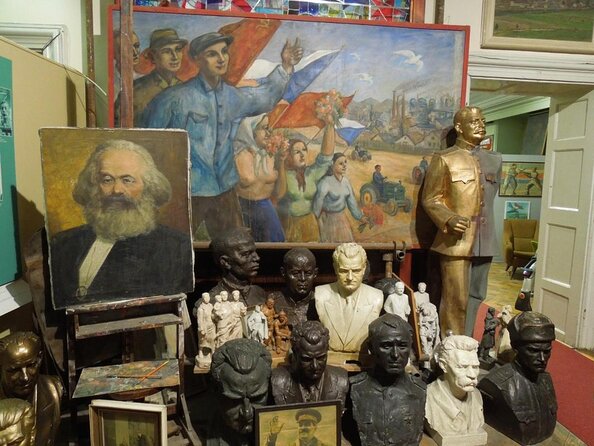
Prague is beautiful, but it has layers. This tour helps you read one of the hardest layers without getting lost in trivia.
What makes it work is the pacing: you start with the Museum of Communism, then you step back outside for short stops that point to specific moments in the run-up to the Velvet Revolution. You’re not stuck in a classroom for the whole time. Instead, you get just enough time in each place to understand what it meant, then move on before it gets numbingly repetitive.
I also like that this isn’t a one-size lecture. Lenka, who grew up under Communism, connects what you’re seeing to how it affected family and friends. That personal thread matters in Prague, because so many historic buildings look neutral until someone tells you what happened in their shadow.
If you like history that has consequences—rationing, surveillance, public fear, small acts of defiance—you’ll probably feel the tour click into place fast.
You can also read our reviews of more museum experiences in Prague



Museum of Communism: 90 Minutes of Context Before the Streets
The centerpiece is the Museum of Communism visit, about 1 hour 30 minutes, with admission ticket paid separately (not included in the tour price). Plan for that extra cost up front so there are no awkward moments right when you’re ready to go in.
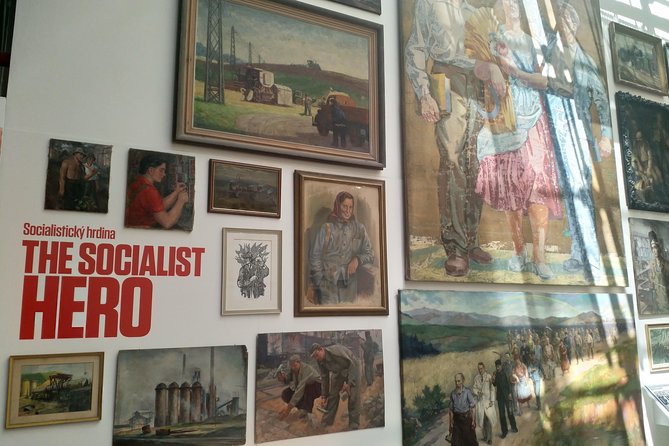
This is where the tour does the real explaining. The museum gives you the framework: how the system functioned, what propaganda looked like in real life, and why daily life under Communist rule could feel suffocating. You come out with words for things you might otherwise just sense.
Then Lenka’s role really shows. In the museum, she doesn’t treat Communism as a distant topic. She shares personal stories from growing up in that era, which helps you interpret what the exhibits are trying to communicate. One review noted how the museum visit tied into what you’d see later on the walk. That’s exactly how it feels when you’re guided this way: the museum becomes a key, and the city becomes the lock.
Practical note: museum pacing can be slow in a good way, but the topic is heavy. If you need a breather, take one. The guide can keep you oriented so you don’t miss the big points.
Wenceslas Square in 20 Minutes: A Public Stage for Protest
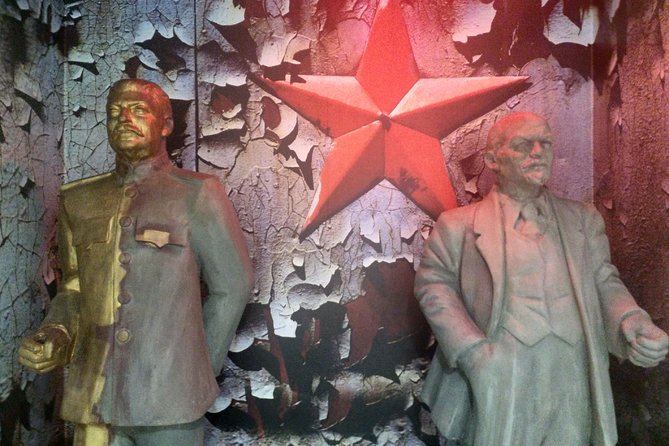
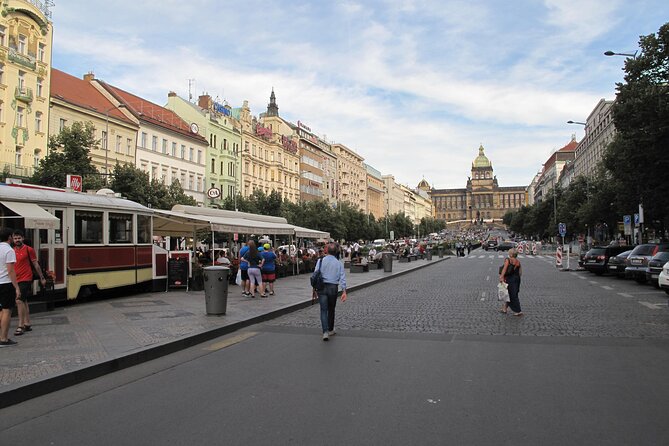
After the museum, you head to Wenceslas Square for about 20 minutes. This stop is short, so your job is to show up ready to pay attention. Think of it as a quick orientation to where public energy used to gather and where dissent could become visible.
Wenceslas Square is famous in Prague, but this tour frames it as more than a postcard location. Your guide uses the space to connect the idea of public life to political pressure. You’re not just looking at statues and architecture—you’re learning how the square functioned as a stage where people could feel watched, and where protest could still find a voice.
The drawback of a short stop is also the risk: if you’re the type who wants to linger and read every detail, you may wish you had more time. But for most visitors, 20 minutes is enough when paired with the museum first. You already understand the rules of the story, so the square becomes easier to read.
Narodni National Avenue: Where Momentum Builds Toward Change
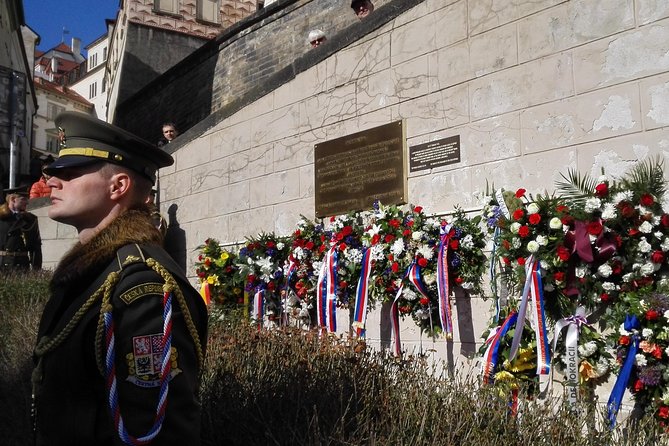
Next is the National Avenue (Narodni) area for around 20 minutes. This is one of the key connections the tour makes to the period leading toward the Velvet Revolution.
Here, the walk style matters. You’re not aimlessly wandering; you’re moving between landmarks that represent pressure, resistance, and turning points. The tour links the built environment to political change—why certain places carried meaning, and why crowds and messages mattered when systems began to crack.
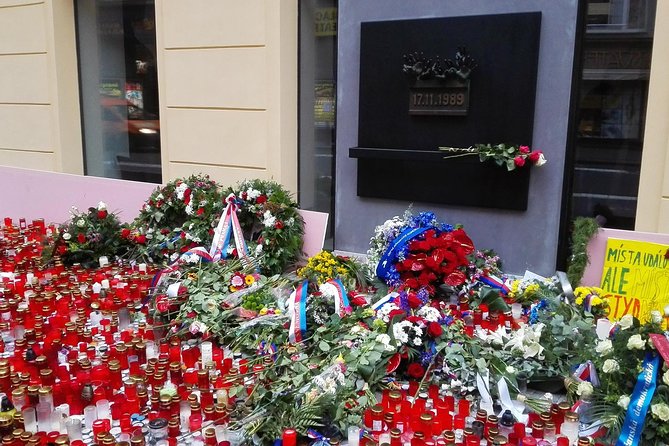
One review highlighted how the guide pointed out commemorative elements connected to oppression and tragedy, including memorial-style details in the streets. That’s useful because it trains your eye. You start noticing small plaques and markers that you’d otherwise walk past without understanding. Prague has a lot of history you can spot if you know what you’re looking for, and this stop is where that skill starts.
If you want to take photos, do it in bursts. Some of the meaning here is in the guide’s explanations, and you’ll get more out of standing still and listening for a minute than trying to film the entire time.
The Jan Palach Memorial: Protest, Loss, and the Price of Dissent
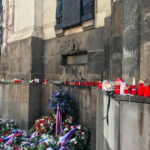
The Jan Palach Memorial stop is also about 20 minutes, located in the center of Prague. This part of the tour is emotionally intense, even if it’s brief.
Jan Palach’s story is tied to protest and consequence. A review mentioned how the tour references images and memorial materials connected to his act of self-immolation as part of understanding how oppression and fear can push people toward desperate statements. Even if you already know the name, the guided framing helps you grasp why the story mattered to Czech society at the time.
This stop isn’t designed to be a long meditation spot. It’s more like a verbal and visual checkpoint: you look, you hear the context, you connect it back to the larger arc from Communist rule toward freedom. When the tour is done well, you leave not just remembering the event, but understanding the human cost behind political shifts.
If you’re visiting with kids or you’re traveling with a group that prefers lighter content, you might want to talk about expectations before you start the museum. The memorial stop is where the weight of the whole program becomes unmistakable.



How Much Is It Really Worth? Price and Value at $114.39
At $114.39 per person for about 3 hours, you’re paying for two things: a guided walk through key sites connected to the late Communist era, and a guided Museum of Communism visit with a local guide. The museum ticket is €15 per person extra, so treat the headline price as the base for the human guidance and program, not the full museum cost.
For value, I think the private format is the deciding factor. This is described as a private tour/activity, so only your group participates. That usually means fewer time delays, fewer interruptions, and more chance to ask questions in the moment. The reviews also specifically praised Lenka’s delivery and the way her personal background tightened the link between exhibits and streets.
You also get small practical extras that make planning easier: it’s offered in English, you get a mobile ticket, and it runs in all weather conditions (so you’re not hunting for a backup plan when the sky opens).
One more value point: this isn’t just “see the sites.” The tour is structured around meaning—what happened, where it happened, and why it mattered. If you’re interested in history but hate tours that feel like a worksheet, this format tends to feel more like a story with stops.
Practical Tips That Make the Walk Feel Easy
Here’s how to make this tour go smoothly once you arrive in Prague.
First, plan your outfit. It runs in all weather conditions. Wear comfortable shoes. Even though the walk portions are short, you’ll be standing for explanations at multiple points, and Prague sidewalks can be uneven.
Second, build in focus time for the museum. The museum is the anchor, at about 90 minutes. If you treat it like a casual stop, you’ll miss what the guide is doing—turning context into understanding you can carry into the street stops.
Third, ask questions. This tour is built for a local perspective, and Lenka’s stories are part of the package. If something doesn’t click—why a square matters, what a marker indicates, why a memorial connects to the revolution arc—this is the time to ask.
Logistics you’ll appreciate: the meeting point is at 4 V Celnici 1031, Nové Město, Prague 1, and the tour ends around Národní třída in the city center. It’s also near public transportation, so you’re unlikely to feel trapped by the location.
Finally, book with some lead time. This experience is often booked in advance (about 54 days on average), and it’s private, so your best bet is reserving early so your preferred time actually works.
Who Should Book This Prague Communism Tour (and Who Might Not)
This tour fits best if you want history with a human face and you’re comfortable with serious material. You’ll like it if you’re curious about how Communism shaped daily life, not only how regimes rose and fell.
It’s also a good pick if you enjoy guided walking tours but want a clear storyline. The stops are short—Wenceslas Square, Narodni, and Jan Palach Memorial—so you get variety without being stuck walking for hours.
You might want to skip or adjust expectations if:
- You want a light, scenery-first tour. This program focuses on oppression, protest, and the road to freedom.
- You prefer long independent time at museums. The museum is structured and time-based, not a self-directed browse.
For everyone else, especially first-timers who want one high-signal introduction to Prague’s Communist era and the lead-up to the Velvet Revolution, it’s a strong option.
FAQ
What’s the duration of the Prague Communism tour?
The tour runs for about 3 hours.
Is the Museum of Communism admission included in the price?
No. The museum ticket costs €15.00 per person and is not included.
What stops are included in the experience?
You’ll visit the Museum of Communism, then make stops at Wenceslas Square, the Narodni National Avenue area, and the Jan Palach Memorial.
Is the tour offered in English?
Yes, the tour is offered in English.
Is this a private tour?
Yes. It’s private, so only your group participates.
Where does the tour start and end?
It starts at 4 V Celnici 1031, Nové Město, Praha-Praha 1, and ends in the city center around Národní třída.
What if the weather is bad?
It operates in all weather conditions, so dress appropriately.
Should You Book It?
If you want a Prague tour that teaches something real—not just where famous events happened—this one is worth your time. The combo of Museum of Communism context plus a guided walk through key sites makes it easier to understand the late Communist era and the momentum toward the Velvet Revolution.
The only real catch is the extra museum ticket cost and the fact that the content is emotionally heavy. If that works for you, book it and plan on paying attention during the museum. This is the kind of experience that changes how you look at the city when you’re done.