REVIEW · PRAGUE
Prague city tour + Charles Bridge and Campa island small groups
Book on Viator →Operated by Pre našu planétu · Bookable on Viator
Prague’s bridges feel different on foot. This small-group tour follows a compact route through the riverfront and Malá Strana gate area, guided by a Czech native who grew up in Czechoslovakia during communist times. Expect a lot of context, traditions, and practical city-color woven into the walk.
I love how the stops are tied to real places with clear roles—Rudolfinum as a music and art hub (with Dvořák Hall and Prague Spring connections) and Charles Bridge with a straight-line story from medieval construction to its modern name. You also get plenty of photo angles without needing complicated transport, since you’re basically moving through one central corridor.
One watch-out: the pace is friendly and talk-heavy. With a total 2.5 hours, it can feel long if you prefer a quick, silent sight loop over conversation—one guest even felt the tour should be shorter and disengaged by the end.
In This Review
- Key things I’d bookmark before you go
- Start at Jan Palach Square: how the walk gets you oriented fast
- Rudolfinum to Mánesův Most: music, art, and a Vltava view with meaning
- Vojanovy Sady to the Malá Strana Bridge Tower: a garden break and the gate feeling
- Charles Bridge like a story: construction, floods, and why it’s called that
- Guide style, included drinks, and why timing can make or break it
- Value and pairing with a Prague Castle follow-up (without the stress)
- Should you book this Prague small-group Charles Bridge and Campa-area walk?
- FAQ
- How long is the Prague city tour with Charles Bridge?
- How much does the tour cost?
- Where is the meeting point?
- How big are the groups?
- Is the ticket mobile?
- Are admission tickets included for the stops?
- What is included and what is not?
- What stops does the tour cover?
- What happens if the weather is bad?
- Is there a cancellation deadline?
Key things I’d bookmark before you go
- Rudolfinum first: Neo-Renaissance building on Jan Palach Square, linked to the Czech Philharmonic and Galerie Rudolfinum
- Mánesův Most connection: A Vltava bridge named for painter Josef Mánes, replacing an older footbridge
- Vojanovy Sady pause: A park/orchard on the site of one of Prague’s oldest gardens
- Malá Strana Bridge Tower: The entry feel from Charles Bridge into the Little Quarter
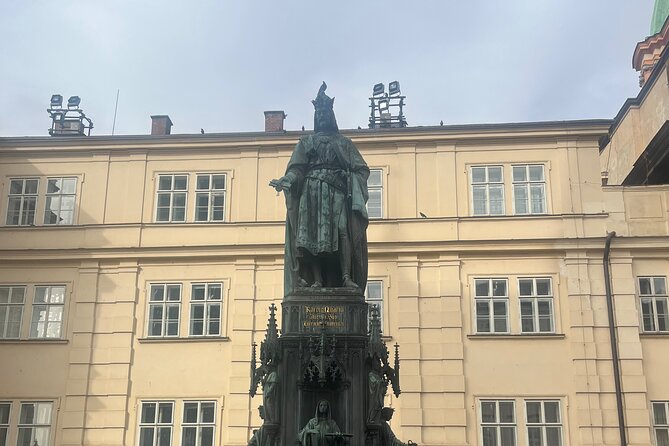
- Charles Bridge backstory: Built under Charles IV (1357 start), replaced after the Judith Bridge flood damage, with the name shift in 1870
- Small groups up to 30: Enough people for energy, not so many you lose the thread
Start at Jan Palach Square: how the walk gets you oriented fast
You meet at nám. J. Palacha 79 (right at Jan Palach Square), and the tour loops back to the same spot at the end. That matters more than it sounds. When you start here, you’re already in Prague’s most straightforward “workable” walking zone: the Vltava riverfront and the bridge approaches that pull you toward Old Town and Malá Strana.
This tour runs about 2 hours 30 minutes, and it’s designed for a compact route rather than a checklist across the entire city. With up to 30 people, you won’t feel like you’re swallowed by a huge crowd. The mobile ticket keeps things simple, too—you just show up with your ticket on your phone.
A bonus point for planning: the host says there’s a castle follow-up scheduled after a short break and refreshments at the same meeting point. If you want a one-two punch day (riverfront stories now, Castle area stories later), this format can help you stay organized without juggling meeting locations.
You can also read our reviews of more city tours in Prague


Rudolfinum to Mánesův Most: music, art, and a Vltava view with meaning
The first stop is Rudolfinum, a Neo-Renaissance building on the Vltava bank at Jan Palach Square. Since it opened in 1885, it’s been tied to music and art, and today it’s home to the Czech Philharmonic Orchestra and Galerie Rudolfinum. Even if you don’t go inside, the building sets the tone: Prague isn’t just gothic postcards—it also has grand cultural institutions layered into the riverfront.
One specific detail worth caring about: Rudolfinum’s largest music auditorium is Dvořák Hall. It’s noted for excellent acoustics and is a main venue for the Prague Spring International Music Festival. That’s the kind of context that changes how you look at a façade. Instead of seeing only architecture, you see a stage that’s been active for generations.
From there, you head to Mánesův Most, a road-and-tram bridge over the Vltava. It links the Aleš Embankment and Rudolfinum to Malá Strana (the Lesser Quarter). It also replaces an older Rudolf footbridge that dated to 1869. The naming is a neat Prague detail: it’s named after painter Josef Mánes.
This is where you get an “aha” about how the city reads. Bridges here are not just crossings. They’re timeline markers—who built what, when routes shifted, and how new infrastructure carried old symbolic names forward.
Vojanovy Sady to the Malá Strana Bridge Tower: a garden break and the gate feeling
Next up is Vojanovy Sady, a park with an orchard set on the site of one of Prague’s oldest gardens. A stop like this can feel small on paper, but it does two practical things for you. First, it gives your legs a breather after the riverfront. Second, it reminds you that the Charles Bridge corridor isn’t only stone and crowds—there’s also green space history tucked in near the water.
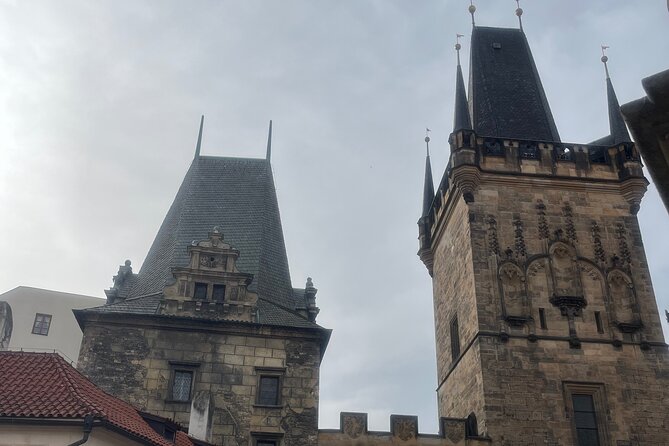
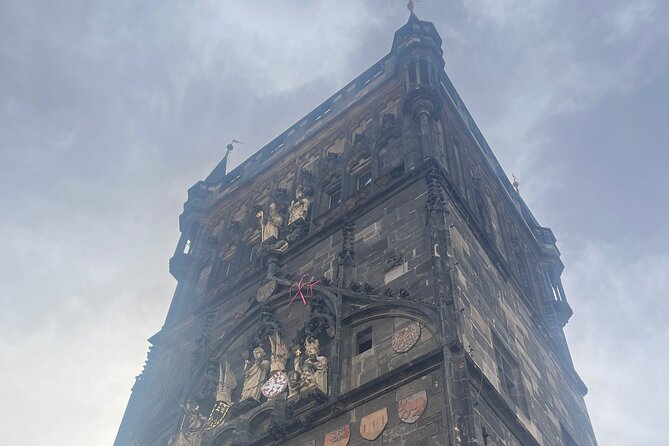
Then you move to the Little Quarter Bridge Tower—the Malá Strana Bridge Tower, which acts as the entrance into Malá Strana from the Charles Bridge side. This is a psychologically important spot. Standing at a tower that marks the transition from one district to another helps you “place” what you see next. Prague is all about moving between layers of identity, and this is one of the clearest transitions you’ll feel on foot.
If you’re someone who likes to understand a city map as you walk, these two stops are smart. They reduce the feeling of moving randomly between landmarks and replace it with a steady sense of place: riverfront → greenery → district gateway → bridge.
Charles Bridge like a story: construction, floods, and why it’s called that
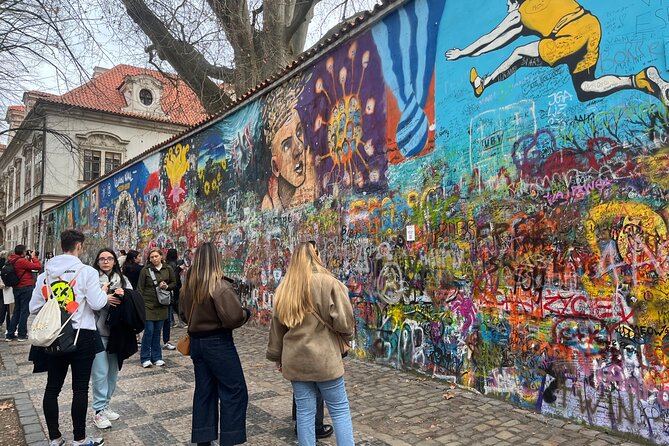
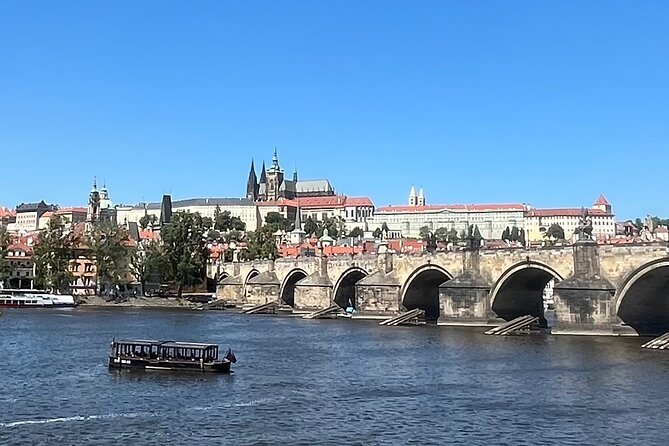
Then comes Charles Bridge, the medieval stone arch bridge that crosses the Vltava. Construction began in 1357 under King Charles IV, and it was finished in the early 15th century. You’ll also hear the bridge’s origin story: it replaced the older Judith Bridge built 1158–1172, which had been badly damaged by a flood in 1342.
That flood-replacement detail is not trivia. It explains why Charles Bridge is what it is—stone, permanent-feeling, and central to how Prague rebuilt after disaster. It also gives you a better mental picture of why so many “old Prague” scenes converge around this single crossing.
Here’s another name detail that helps you connect the present to the past: the new bridge was originally called Stone Bridge or Prague Bridge, and it has been referred to as Charles Bridge since 1870. Knowing that helps you interpret plaques, signage, and even older references you might see later in books or on maps.
Practical note: Charles Bridge is famous, so it can be busy. This tour portion is built around a guided flow rather than standing still forever. If you’re sensitive to crowds, going in with a story in your head helps. You’ll look for the bridge as a sequence of events, not just a backdrop for photos.
Also, the tour name mentions Campa/Campa island, but your route here is clearly centered on the bridge and the Malá Strana gateway. If Kampa/Campa views are part of what you want most, ask your guide which riverfront stretch they’ll include while you’re walking.
Guide style, included drinks, and why timing can make or break it
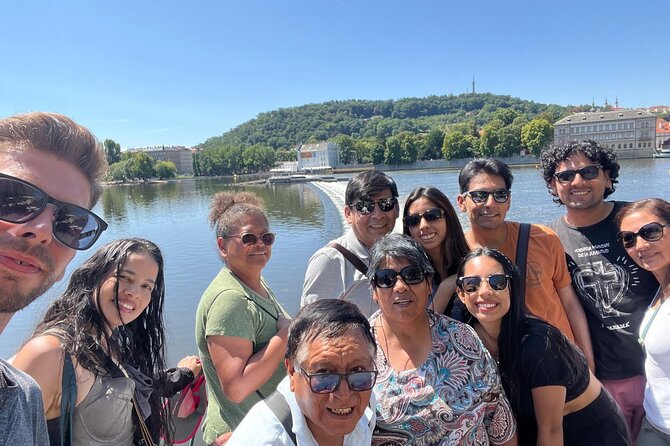
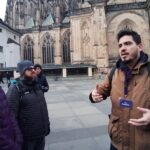
The host is described as a Czechoslovak native born during communist times, and the format is presentation-style storytelling. One name that showed up in a guest review is Robby, described as engaging and friendly with lots of information.
That’s both a strength and a potential mismatch. The upside is obvious: you don’t just get what you can read on a sign. You get the “why” behind traditions and buildings, plus the personality of someone who lived through a different era. If you like history as lived perspective, you’ll probably enjoy the way the guide brings Prague to life.
The downside shows up in the length. The tour runs 2 hours 30 minutes, and one guest felt the route was slow for the amount of ground covered. If you’re the type who wants a quicker, quieter sightseeing loop, this might feel heavy by the end.
One more practical detail: alcoholic beverages are included, but snacks are not. That doesn’t mean you’ll be hungry the whole time, but it does mean you should plan for it. If you’re the kind of person who needs food to stay focused, bring a small snack before you start, and pace your drinks so you don’t lose attention for the bridge history.




Value and pairing with a Prague Castle follow-up (without the stress)
At $26.93 per person for roughly 2.5 hours, you’re paying for guide expertise plus a tight, central route that hits meaningful landmarks along the Vltava. This isn’t priced like a private tour, and with the maximum of 30 travelers, you should generally get more interaction than the very large group format.
Also, it’s not just “outside photos.” Rudolfinum is presented as a real cultural venue with concrete links to major events, and Charles Bridge gets the full chain: who started it, what it replaced, and when the name changed.
You’ll also notice the tour includes multiple stops labeled admission free, including the Rudolfinum stop. That’s a small but important part of value. You’re not constantly wondering if your ticket covers another entry fee or a timed lineup.
Finally, the tour is set up so you can continue to Prague Castle later the same day after a short break. This is a smart way to build a first-day “Prague core” without backtracking across the city. If you like structure and you don’t want to guess meeting points, this paired format can save your brain.
One condition to keep in mind: the experience requires good weather. If skies look questionable, decide early whether you’ll risk it or switch plans.
Should you book this Prague small-group Charles Bridge and Campa-area walk?
Book it if you want a story-driven Prague walk that connects architecture to real events and cultural roles, and if you enjoy a guide who talks and explains. It’s especially good as a first visit because it helps you build a working mental map around the river and the Malá Strana entry corridor.
Skip it or choose carefully if your ideal tour is short, quiet, and low on explanation. The 2.5 hours plus a chatty, info-heavy presentation can feel like too much time for a compact route.
If you’re planning a Castle day too, this kind of start is a practical win. You’ll leave with better context for what you see next, not just better photos.
FAQ
How long is the Prague city tour with Charles Bridge?
It’s about 2 hours 30 minutes.
How much does the tour cost?
The price is $26.93 per person.
Where is the meeting point?
You start at 1, nám. J. Palacha 79, 110 00 Praha 1-Staré Město, Czechia, and the tour ends back at the same point.
How big are the groups?
The tour has a maximum of 30 travelers.
Is the ticket mobile?
Yes, it uses a mobile ticket.
Are admission tickets included for the stops?
Admission is listed as free for the stops on the route.
What is included and what is not?
Alcoholic beverages are included. Snacks are not included.
What stops does the tour cover?
It includes Rudolfinum, Mánesův Most, Vojanovy Sady, the Malá Strana Bridge Tower, and then Charles Bridge.
What happens if the weather is bad?
The tour requires good weather. If it’s canceled due to poor weather, you’ll be offered a different date or a full refund.
Is there a cancellation deadline?
You can cancel for a full refund up to 24 hours before the experience’s start time.