REVIEW · PRAGUE
Medieval Prague Through a Nightwatchman’s Eyes
Book on Viator →Operated by Night Watchman of Prague · Bookable on Viator
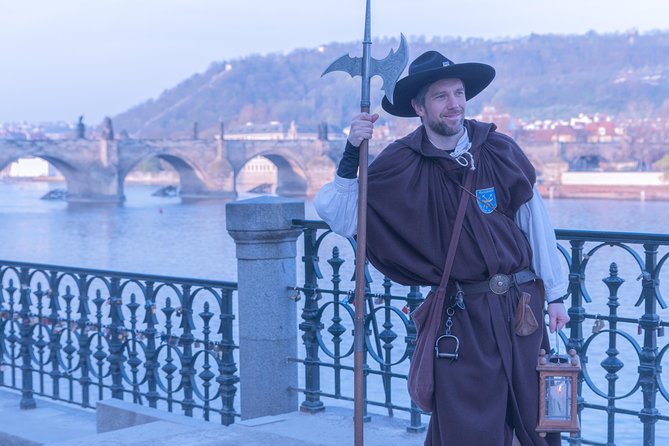
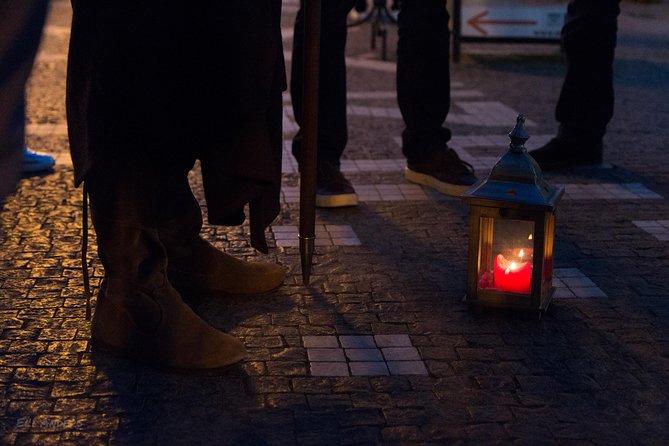
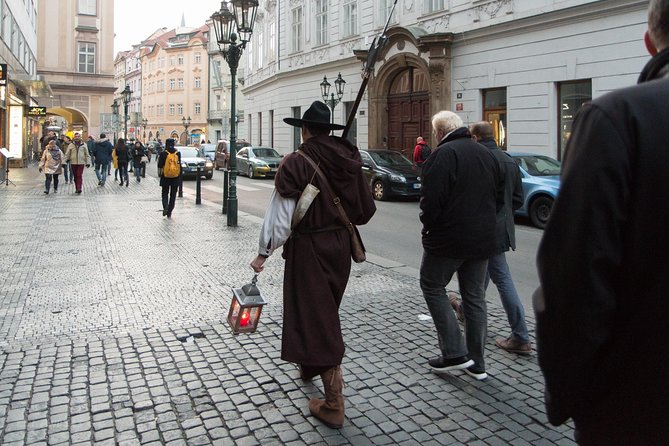
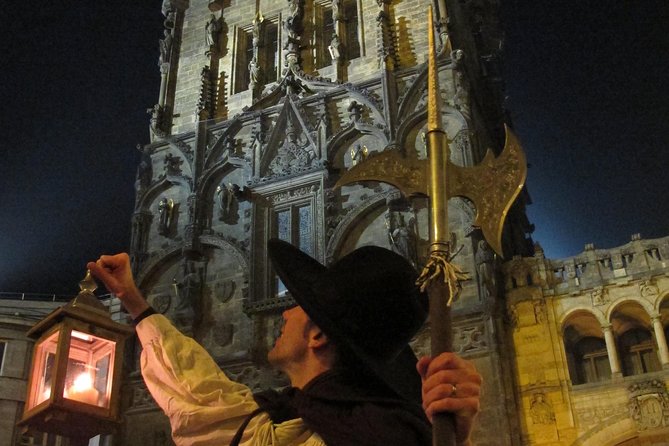
Prague at night feels like a secret patrol. In this 90-minute Old Town walk, a guide in period garb keeps you in the mood with a lantern and halberd in hand.
I love the small group energy, and guides such as Thomas, Oscar, and David keep the night watchman persona going stop after stop. One possible drawback: this tour talks about executions and brutal public punishment, so it is not strictly light and fluffy sightseeing.
You’ll move at a steady walking pace between major landmarks and quieter streets, starting at the Powder Tower area and ending near Charles Bridge.
In This Review
- Key highlights at a glance
- Why a night watchman walk works in Prague
- Meeting at the Powder Tower and setting the scene
- Prasna brána and Ovocný trh: the city framed by gates and food
- Estates Theatre, Don Giovanni, and the layers between buildings
- Old Town Hall and the Astronomical Clock area: the civic drama gets darker
- Jan Hus Monument and Church of Our Lady before Týn: religion in stone
- Rudolfinum riverside pause: Prague Castle through the quiet
- Charles Bridge finish at the Charles IV statue
- Price and value: why $26.62 can make sense here
- What to wear and how much you’ll walk
- Who should book this night watchman tour
- Should you book Medieval Prague Through a Nightwatchman’s Eyes?
- FAQ
- Is the tour in English?
- How long is the Medieval Prague night watchman walking tour?
- Where do I meet and where does the tour end?
- Do I need transportation or hotel pickup?
- Is the tour outdoors and does it run in bad weather?
- What if I need to cancel?
Key highlights at a glance
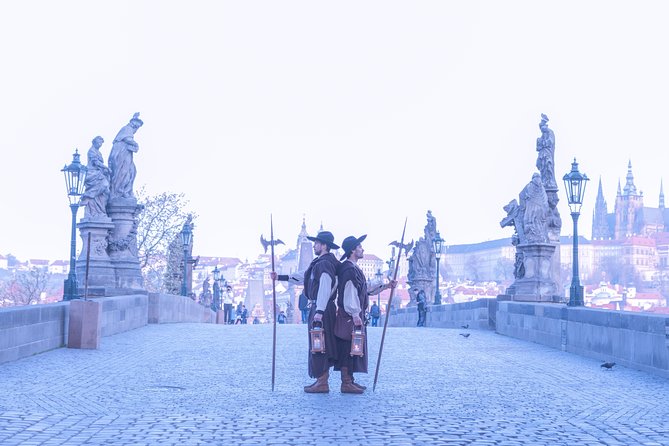
- Night watchman character the whole way with period clothing and props (lantern, staff/halberd for photos in some groups)
- Prasna brána (Powder Gate) and the story behind the gunpowder connection
- Ovocný trh and bread for common people to frame who actually lived these streets
- Don Giovanni links around the Estates Theatre plus a statue tied to Il Commendatore and the 1787 premiere
- Old Town Hall with the Astronomical Clock area and the darker civic stories (defenestration and executions)
- Riverside break near Rudolfinum for Prague Castle views, then a Charles Bridge finish
Why a night watchman walk works in Prague
Prague’s Old Town can feel like a postcard by midday. In the evening, the same streets turn more human—narrow lanes, shadowy corners, and sudden bursts of light off stone and windows.
This tour uses that mood on purpose. A guide in historical dress narrates Prague as if you’ve stepped into a night watchman’s world, not as a list of monuments. I like that the story focuses on daily life, social order, and the tension of earlier centuries, not just architecture trivia.
You’ll also get the practical benefit of a guided route. Instead of deciding what to see first, you get a clear path that hits major sights fast, then uses side streets to add context. And because groups cap at 15, it stays manageable for questions—even when the subject matter turns grim.
You can also read our reviews of more tours and experiences in Prague.


Meeting at the Powder Tower and setting the scene
You start at the Powder Tower area at Nám. Republiky 5, Staré Město. From there you’re guided through Old Town streets toward the heart of the historic center, ending at Charles IV Statue, Křižovnické nám., Staré Město, at the beginning of Charles Bridge.
Timing matters here. This is a 1 hour 30 minute walk, so you’ll want to arrive a bit early, settle in, and be ready to move. Stops are short, so the guide keeps the story moving rather than waiting for a museum pace.
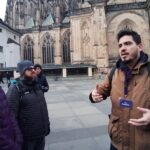
What I find smart is how the guide uses props and roleplay to keep attention. Multiple guides have been praised for staying in character and using entertaining bits while still sharing facts. If you’re traveling with kids or teens who get tour fatigue, this kind of story delivery often works better than a lecture style walk.
Also: you’re outside the whole time. The experience runs in all weather, so treat it like a nighttime stroll with a story, not a quick hop between indoor sites.
Prasna brána and Ovocný trh: the city framed by gates and food
The first stop is Prasna brána (Powder Gate). This gate is tied to Prague’s defensive system—one of the 13 gates that helped protect the city. The detail that makes it stick is how it later stored gun powder, which is where the name comes from. It’s a small stop, but the story changes how you view the arch in front of you.
From there you head to Ovocný trh, the fruit market area. This is more than a photo moment. You’ll hear how markets worked and what food meant for common people. You even get a bread of the common people moment as part of the presentation, which is a clever way to connect daily life to the broader history you’re walking through.
What you gain at these two stops is perspective. Gates and markets sound like separate topics, but together they explain the two big forces shaping everyday Prague: security and survival. If you usually skip food history, this is a fun way in.
Potential drawback: because both stops are quick, don’t expect time to browse adjacent buildings. Think of them as story anchors for the rest of the walk.
Estates Theatre, Don Giovanni, and the layers between buildings
Next comes Theatre Des Etats (Estates Theatre). Here the emphasis shifts to culture and performance—specifically the era around Mozart and the premiere of Don Giovanni. The guide ties this landmark to local identity by connecting it to a Czech hero in the broader narrative.
Right around this stretch, you also pass sites that help you understand Prague as a lived-in capital, not just a stage set. One stop in your route is described as the passing of the first middle European university. Even if you don’t catch every detail, it’s a key reminder that Prague wasn’t only about kings and churches; it also mattered as a center of learning.
You’ll also pass a statue of Il Commendatore and the story reminder that Don Giovanni’s first play was in 1787. This is one of those Prague tricks that feels magical: you walk just a few steps, and suddenly you’re linking music, legend, and street-level history.
How this helps you as a traveler: these are the kinds of connections you usually miss when you roam alone. On a solo walk, you might notice a theatre façade. With the guide’s framing, it becomes a clue in a bigger puzzle.
Old Town Hall and the Astronomical Clock area: the civic drama gets darker
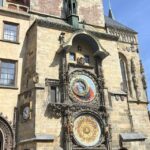
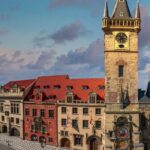
At Old Town Hall with the Astronomical Clock area, the tone shifts. You’ll talk about Prague’s market square role, and you’ll hear about major civic events—especially the famous defenestration episodes and executions that took place in the public eye.
This section is where the night watchman idea turns from costume to explanation. The watchman’s world is basically the city’s nervous system: order, patrols, punishments, rumors, and fear that can spread faster than any lantern light.
If you like history that has teeth, this is a strong segment. It also pairs well with the earlier stops: once you understand how markets fed common people and how gates protected the city, you’re ready to understand what happened when society broke down.
Possible drawback: if public violence makes you uncomfortable, you might want to mentally pace yourself here. It’s not a gore show, but it is part of the storytelling, and the guide treats it as meaningful history rather than a quick spooky aside.

Jan Hus Monument and Church of Our Lady before Týn: religion in stone
Then you move into two religious landmarks that make Prague’s power struggles easier to picture.
First is the Jan Hus Monument, where you’ll learn about the Hussites and the 14th and 15th century context. This is one of those stops that clarifies why religion wasn’t just belief in Prague—it shaped politics, identity, and conflict.
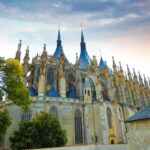
After that you stop at Church of Our Lady before Týn, described as dating to 1368 and framed as one of the oldest churches you can still see today. This stop is short, but it gives you a sense of scale and endurance. The building stands as a reminder that Prague’s story didn’t happen overnight.
What I like about placing these stops right before the riverside pause: it resets your brain from the civic violence stories and lets the city’s spiritual architecture carry you forward. You get a new kind of atmosphere.
Rudolfinum riverside pause: Prague Castle through the quiet
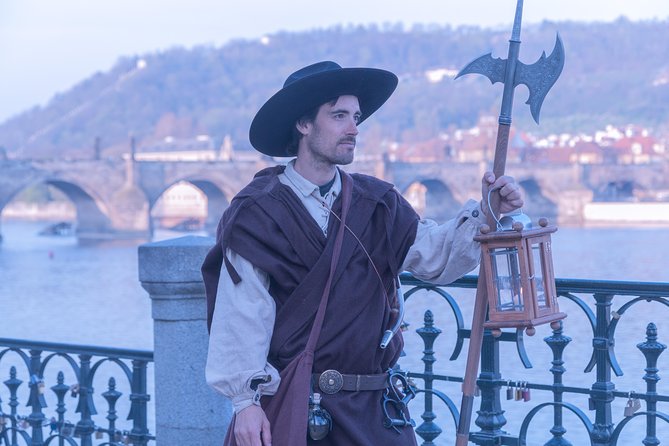
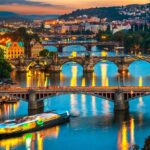
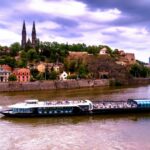
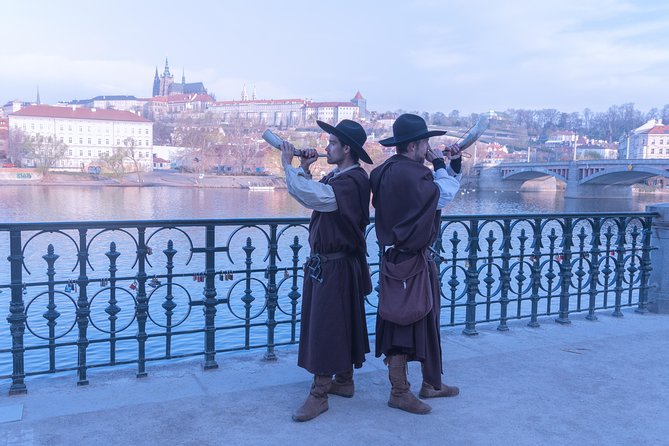
At Rudolfinum, you don’t just pass by. You take a breather at a quieter spot along the riverside, with time for photos and for simply looking back across to Prague Castle.
This is a smart pacing move in a 90-minute tour. After dense history and heavy topics, the river gives you a visual reset. In plain terms: you walk, you listen, then your eyes get to do the last part for you.
You should expect the guide to highlight what you’re seeing from this angle, not just the view itself. Even when you’ve seen Prague Castle in photos, the river perspective makes it feel more grounded, like a piece of the city rather than a distant icon.
If the weather is rough, this break can still work, but keep your footing in mind. Cobblestones near rivers can get slick.
Charles Bridge finish at the Charles IV statue
Your tour ends at the beginning of Charles Bridge, near a Charles IV statue at Křižovnické nám. This finish matters because it places you at one of the most walkable historic thresholds in the city.
The guide talks about nobles from the other side of the bridge, tying the story back to Charles IV and Prague’s ruling class. It’s a fitting closer: you’ve gone from gates and markets, through universities and theatres, into civic drama and religious conflict. Then you end where movement across the city becomes the story itself.
Also, you’ll be in a great location to keep exploring. Charles Bridge is busy later in the day, but at the end of a guided night walk, it still feels like you’re stepping into your own second act.
Price and value: why $26.62 can make sense here
At $26.62 per person for about 1 hour 30 minutes, this tour is priced like a budget-friendly guided walk. The value comes from more than the landmarks.
You get:
- a guided character presentation in historical dress
- a route that covers major Old Town highlights plus quieter storytelling stops
- an evening pacing that helps the city feel connected, not chopped into separate attractions
- a small group cap of 15 travelers, which keeps the experience from turning into a human traffic jam
You also don’t pay extra for admission at the stops listed in the route, since the walk is designed around free-access sightseeing points and exterior views.
One thing to remember: there’s no hotel pickup or drop-off, and there’s no transportation included. So you’re paying for the guide and the storytelling time, not convenience logistics.
If you’re spending limited time in Prague and want the city to feel personal fast, this is a strong use of an evening.
What to wear and how much you’ll walk
This experience has a moderate physical fitness note. In practice, that usually means steady walking with occasional short stops. Most stops are around 5–20 minutes, so the guide keeps momentum.
Because it operates in all weather, dress for conditions you might not anticipate when you check the forecast earlier in the day. Even in mild weather, Prague evenings can feel colder than you expect, especially near rivers.
A smart kit:
- comfortable walking shoes with grip
- a light rain layer or umbrella you can manage hands-free
- a warm top for late-night temperatures
If you’re traveling with kids, they must be accompanied by an adult. Good news: this kind of character-led storytelling often holds attention better than standard tours, especially for families with teens who still want to feel entertained.
Who should book this night watchman tour
I’d book it if you want Prague history explained through street-level life, not just monuments. It’s especially good for:
- first-time visitors who want a fast Old Town orientation with meaning
- people who enjoy narrative history, humor, and a guide who stays in character
- families who want something a bit different from the usual checklist tours
- travelers who like off-the-main-street moments between the famous sights
If you want an archaeology or art-history seminar, this probably won’t be your top fit. This tour is about how the city felt and how people lived under the pressures of their time.
Should you book Medieval Prague Through a Nightwatchman’s Eyes?
Yes, if you’re looking for an evening that turns Prague into a story. For the money, you get a guided route through major Old Town landmarks, plus a themed presentation that gives context you’re unlikely to piece together on your own.
I’d think twice only if you strongly dislike dark historical topics like public punishments, or if you’re not comfortable walking outdoors at night in variable weather. Also, if you need lots of indoor time, this walk is built for the streets.
FAQ
Is the tour in English?
Yes. The experience is offered in English.
How long is the Medieval Prague night watchman walking tour?
It runs for about 1 hour 30 minutes.
Where do I meet and where does the tour end?
You meet at the Powder Tower area at Nám. Republiky 5, Staré Město. The tour ends at the Charles IV statue near Charles Bridge at Křižovnické nám., Staré Město.
Do I need transportation or hotel pickup?
No. Hotel pickup and drop-off are not included, and transportation to or from attractions is not included.
Is the tour outdoors and does it run in bad weather?
Yes. It operates in all weather conditions, so dress appropriately.
What if I need to cancel?
You can cancel for a full refund up to 24 hours in advance. If you cancel less than 24 hours before the start time, the amount you paid is not refunded.