REVIEW · PRAGUE
Guided Old Town & Jewish quarter Walking Tour Prague (Tip-based)
Book on Viator →Operated by I Love Praag · Bookable on Viator
Prague turns corners into instant stories. I like the Charles Bridge photo viewpoints and the way the route slows down enough for you to notice small details you’d miss on your own. I also love that the guide-style facts go beyond the usual postcards, plus you get practical advice for where to go next.
One thing to plan for: this is a tip-based experience, so the final cost depends on how much gratuity you feel is fair. And since it’s a walking tour with lots of stone pavement, you’ll want good sneakers—your feet will thank you by hour two. If you’re assigned a guide like Daniil, Vadym, or Joan, the vibe tends to be friendly and chatty, with plenty of chances to pause for photos.
In This Review
- Key highlights at a glance
- A tip-based Old Town and Jewish Quarter route you can actually use
- Where you start (Malostranská) and where the tour ends (Rudolfinum)
- David Černý’s Urinating Sculptures: Prague’s playful start
- The Narrowest Street of Prague: tight lanes with traffic lights
- Lennonova zed (Lennon Wall): street art with a timeline
- Kampa Park and the little Venice angle
- Charles Bridge: 30 statues and the best photo vantage
- Statue of St. Jan Nepomuck: the luck-touch tradition
- Klementinum and the Old Town Square setup
- Prague’s Astronomical Clock moment (and the buildings around it)
- Church of Our Lady before Týn: the silhouette you’ll remember
- Jewish Quarter from outside: synagogues, names, and meaning
- Prasná brána: the gate that marks the shift between old and new
- Price and value: what $3.62 really buys (and when it’s worth it)
- Comfort tips that make the difference on this route
- Who should book this Prague walking tour
- Should you book it?
- FAQ
- How much does the guided tour cost?
- How long is the walking tour?
- Is the tour offered in English?
- Is this a tip-based tour?
- Where does the tour start and where does it end?
- Will I need an entry ticket for the stops?
- How big is the group?
- Is there a mobile ticket?
- Is service available nearby public transportation and are service animals allowed?
- Is free cancellation available?
- What’s the average booking lead time?
Key highlights at a glance
- Charles Bridge statue spotting: 30 figures on the bridge, with your guide pointing out the most famous ones
- Lennonova zeď + Kampa Park: street-art history meets postcard views called little Venice
- Old Town Square icons: Astronomical Clock area stops without rushing past the big stuff
- Jewish Quarter exteriors: synagogues and memorial-minded stops viewed from the street so you keep moving
- Prague’s tight lanes: the Narrowest Street is controlled with traffic lights, which feels very Prague
- Prasná brána boundary moment: the gate marks the line between old and new city areas
A tip-based Old Town and Jewish Quarter route you can actually use
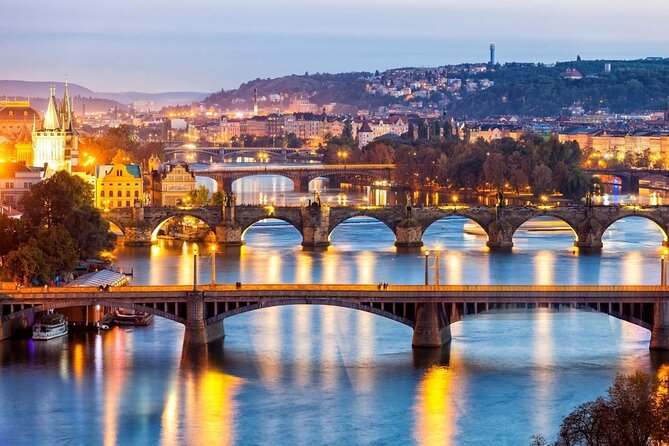
This walking tour is built for getting oriented. In a little over three hours, you cover the classic Prague “wow” zones plus the Jewish Quarter area, but the pacing and stop choices are what make it useful. You aren’t just ticking landmarks off a list. You’re learning what to look for—tiny architectural shifts, street-plan quirks, and symbols people recognize even if they don’t know where they came from.
What makes this one especially appealing for first-timers is that it mixes different types of Prague: playful (yes, there’s a peeing-sculpture moment), photogenic (the bridge and Kampa Park), and historically minded (the Old Town Square stops and synagogue exteriors). And since the tour is led in English, you’re not stuck translating your way through the city.
The other smart part: it’s tip-based. That can be a plus if you enjoy a conversational style. Just be ready to decide on your gratuity at the end.
You can also read our reviews of more walking tours in Prague

Where you start (Malostranská) and where the tour ends (Rudolfinum)
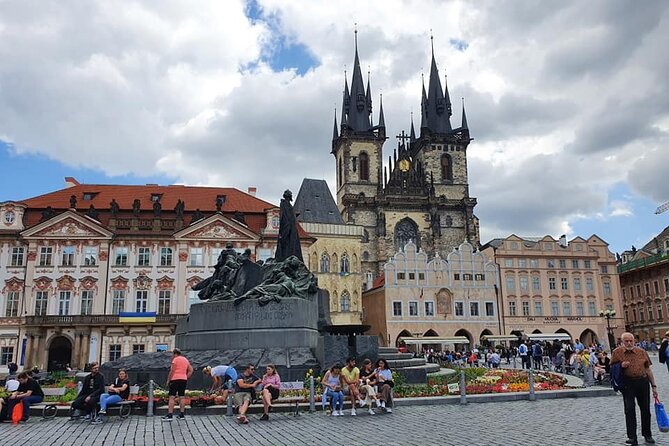
The tour begins at Malostranská (the meeting point is listed around Malostranská metro area, and the route info points you toward Malostranská station). That’s a good start position because it puts you close to the river-crossing energy without having you sprint across town first.
You end near Rudolfinum on Alšovo nábř. in Staré Město. That finish is practical. From there, you can catch tram, bus, or metro to get back to your hotel or head somewhere you discovered during the walk.
The main thing to watch is timing and finding the exact start point. One mismatch can send you chasing across Prague streets, and the tour moves on quickly between stops. If you’re arriving by public transport, give yourself a few extra minutes to get oriented before the start.
David Černý’s Urinating Sculptures: Prague’s playful start
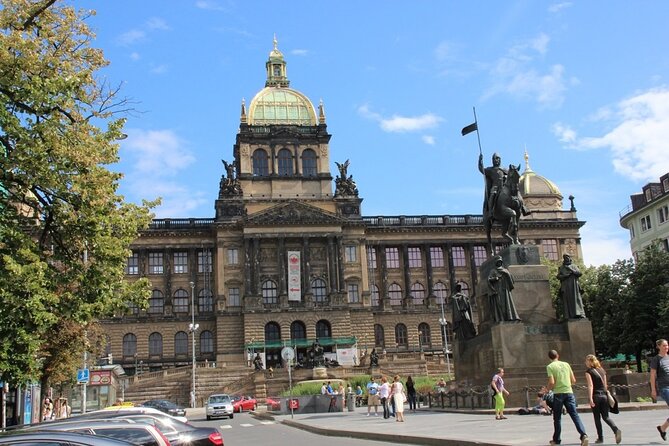
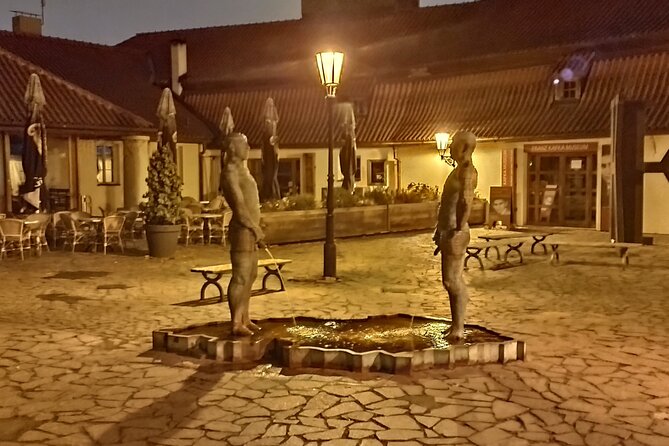
You kick off at the Urinating Sculptures by David Černý. This is a great opening choice because it breaks the “serious monuments only” spell. Prague likes humor, and Cerný’s work is instantly recognizable once you see it—public art that feels like a wink.
A short stop here helps you reset your brain. After that, you’ll move into tighter, more scenic parts of the city where your eyes need to stay alert. If you love street-level details, this is a fun warm-up before the classic big scenes.
One practical note: even though this is a quick stop, bring your camera anyway. Public sculptures like this become more interesting the moment you understand how the artist wants you to look at them.
The Narrowest Street of Prague: tight lanes with traffic lights
Next up is the Narrowest Street of Prague, a famous pinch-point that’s regulated with traffic lights. That detail matters. You’re not imagining a medieval bottleneck that nobody controls—you’re seeing how Prague manages the space today.
What I like about this stop is the “scale lesson.” It trains your sense of how people and movement shaped the old city streets. You’ll likely notice how building angles and street width change your view from one step to the next.
It’s short—just a moment to spot it, take photos, and move on. But it’s one of those places that gives you a better understanding of Prague’s layout instead of just another pretty street.
Lennonova zed (Lennon Wall): street art with a timeline
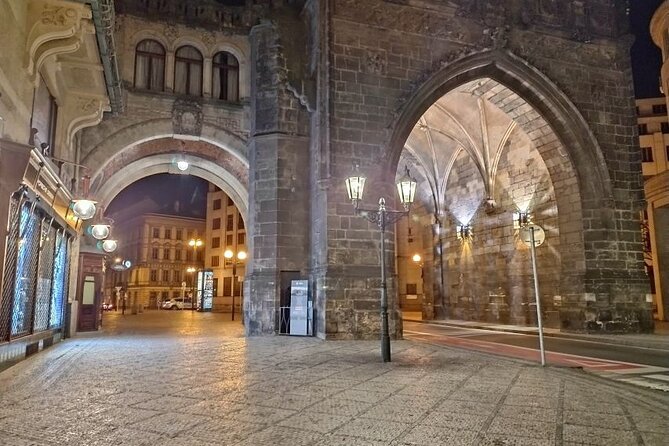
Then you hit Lennonova zed, where your guide shows you the first Lennonwall of the world. Even if you’ve seen photos before, seeing it in person is different because you start noticing the layers: how the space has been used and reused over time by the city.
For me, it’s one of the best stops on the route because it’s both visual and story-driven. You can photograph the wall easily, but you’ll also want to listen for the context—what people associate with it, and why it matters in a city full of older monuments.
If you’re the type who enjoys a reason behind the photo, this stop is worth your attention. It turns a wall into a conversation.
You can also read our reviews of more guided tours in Prague


Kampa Park and the little Venice angle
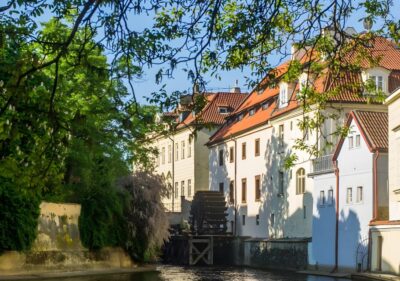
Kampa Park is next, often called little Venice in Prague. The “why” is visible quickly: the park area gives you a calmer feel, plus water-adjacent views that contrast with the crowded streets elsewhere.
This stop is a breather. You get a more relaxed walking rhythm and a chance to capture the river-side mood. It also sets you up for the later river-and-bridge segment, because you’ll already be in the right headspace—Prague from the water’s perspective.
Drawback to consider: because it’s a park area, it can feel breezy and cooler than the main streets. Pack accordingly if you’re walking in shoulder-season weather.
Charles Bridge: 30 statues and the best photo vantage
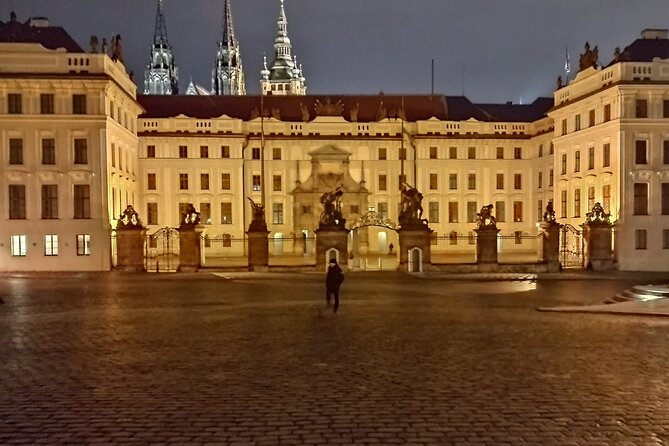
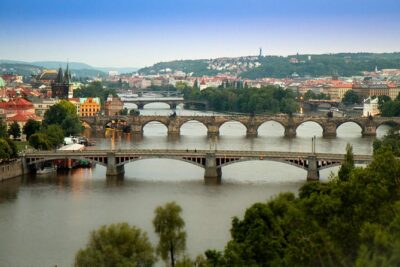
Charles Bridge is the centerpiece, and your guide uses that time well. The bridge holds 30 statues, and the guide points out the most famous ones so you don’t spend your walk playing guess-the-name.
I love this part because it’s a natural photo platform. The bridge gives you a raised view through Prague’s river corridor. Stand where your guide suggests, shoot quickly, then move. Hanging too long in one spot means you miss the chance to see how the angle changes as you walk.
Also, don’t treat the bridge like a straight hallway. Look at the statues’ positions and how they anchor the bridge’s rhythm. That small attention makes the experience feel richer without adding effort.
Statue of St. Jan Nepomuck: the luck-touch tradition
Right after, you stop at the statue of St. Jan Nepomuck, widely associated with a luck-touch tradition. Even if you don’t care about superstitions, it’s worth noticing how such traditions become part of daily sightseeing in Prague. People come back to the same spots with the same ritual because the story sticks.
Your guide will help you connect the statue with the bridge’s cultural weight. That turns a quick stop into something you understand, not just something you snap.
Timing-wise it’s brief, so keep your camera ready—but also take one second to look first. It’s easy to miss details when you’re trying to capture everything at once.
Klementinum and the Old Town Square setup
Klementinum comes next, seen from outside. Your guide points out that it’s the second biggest building of Prague from the outside. It’s a good stop because it helps you appreciate the scale of Prague’s institutions without getting stuck in the “only if you enter” mindset.
Then you move into Stare Mesto (Old Town) and the Old Town Square area—where the big names matter. This is the kind of stop where your guide’s value shows up: instead of just pointing at buildings, you get a sense of how the square functions as Prague’s social and civic center.
Old Town Square can overwhelm your brain if you’ve only seen it through screens. This tour helps you see it in an order that makes sense.
Prague’s Astronomical Clock moment (and the buildings around it)
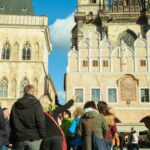
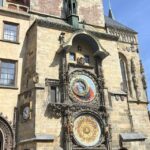
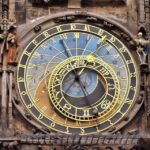
You’ll stop at the Old Town Hall with the Astronomical Clock, described as the oldest one in the world. The main point here is your chance to orient yourself to the clock area and the surrounding facades so it feels less like a random landmark wall.
It’s a short stop. That’s fine. Many visitors spend too long staring at one angle and then miss everything else the square offers. Here, you glance, absorb the key features your guide points out, and keep moving.
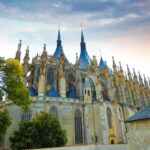
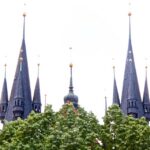
A bonus to the route: the Church of Our Lady before Týn is also covered from outside nearby. You’ll see the church without committing to an interior visit. It’s a smart way to get the visual signature of the square area while you still have time to move through the Jewish Quarter.
Church of Our Lady before Týn: the silhouette you’ll remember
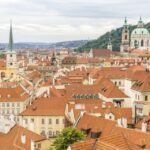
This exterior view is brief but memorable. The church’s profile is one of the most recognizable skyline shapes in Prague, and seeing it during your walk helps your brain map the area.
The tour’s approach works here: you don’t just hit one landmark and leave. You get a cluster—square, clock area, then this church. That makes the route feel like a story, not a checklist.
If you’re someone who likes to photograph architecture, pay attention to the way the streets frame the church. Prague’s old streets can turn a simple exterior view into a “framed picture” moment.
Jewish Quarter from outside: synagogues, names, and meaning
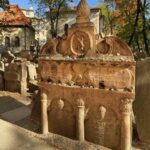
Now the route shifts into the Jewish Quarter. The tour includes stops where you’ll see important synagogue sites from the outside, including an oldest synagogue exterior and then the Spanish Synagogue and Jewish Museum area from outside.
Even without entering buildings, exteriors matter because they show you location and presence. That’s important here: the Jewish Quarter isn’t just an add-on aesthetic zone. The exteriors help you connect the neighborhood with the rest of the story you’re hearing along the walk.
You’ll also pass the Statue of Franz Kafka by Jaroslav Rona near the Spanish Synagogue. Kafka shows up in Prague in a lot of ways, but pairing him with the synagogue area keeps the walk grounded in the city’s layered cultural identity.
Consideration: because these are exterior-only stops, if your priority is interior access and deeper museum time, you may want a separate Jewish heritage visit afterward.
Prasná brána: the gate that marks the shift between old and new
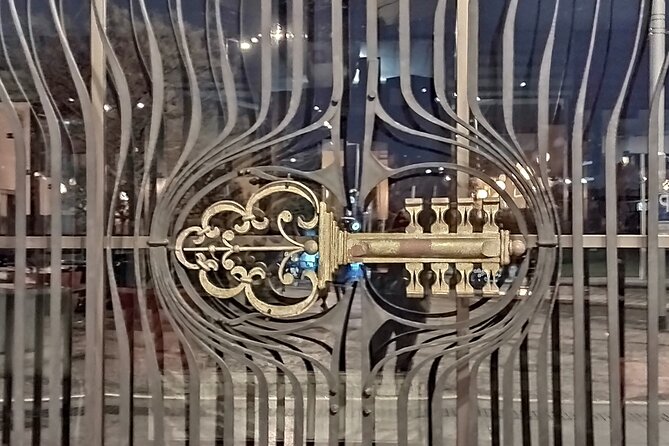
Finally, you reach Prasná brána. Your guide frames it as a border point between the old and new town of Prague. That’s exactly the kind of “big idea” landmark that lands well in a walking tour because it gives you a mental boundary to carry around.
A gate like this is more than a photo wall. It tells you that Prague grew in phases. You’re not only seeing where people lived—you’re seeing how the city expanded and organized itself.
Once you finish here near Rudolfinum, you’re in a good position to keep exploring with your new map in your head.
Price and value: what $3.62 really buys (and when it’s worth it)
At about $3.62 per person for a 3 hours 15 minute guided walk, the price is strikingly low. That usually means you’re paying for the guide service and structure, not for entry tickets or lots of in-museum time. In fact, the listed stops are free-entry. You’re not burning your budget on admissions across the route.
But because it’s tip-based, the real “value equation” includes what you plan to tip at the end. If you enjoy a guide-led city orientation, I think this is a strong deal. If you dislike guided time or prefer to roam on your own, you might find it less satisfying than a longer, more immersive tour.
Also, the group size caps at 25. That’s big enough to meet new people but small enough that the guide can still point, pause, and keep the pacing. If you want guided clarity without feeling swallowed by a huge crowd, that cap matters.
Comfort tips that make the difference on this route
This is a lot of walking on stone pavement. Wear sneakers with grip. Even if you’re a confident walker, your feet will get less patient as the hours stack up.
Plan for short photo stops, not long museum-style hangs. The route moves through many zones—bridge, park, square, and Jewish Quarter—so your best strategy is to travel light and be ready when your guide says stop.
If you’re coming in hot with tight shoes, swap them beforehand. You’ll enjoy the views more when you’re not constantly adjusting your stride.
Who should book this Prague walking tour
Book it if you want:
- A fast way to get your bearings in multiple neighborhoods
- A guide who helps you notice details (especially around Charles Bridge and the Old Town Square area)
- A route that includes both the river-famous sights and the Jewish Quarter exteriors without adding formal museum time
Skip it or plan a follow-up if:
- You need interior access to synagogues and deeper museum exploration
- You prefer fully independent travel with minimal structure
If you’re there for your first Prague visit and want a practical orientation loop, this tour hits the sweet spot.
Should you book it?
I’d book this if you like guided walking that teaches you what to look at. The value is the route design: you cover major landmarks, plus quirky Prague moments, while staying on a schedule that helps you keep exploring afterward. The only real “watch-out” is comfort and cost planning—bring good shoes and set your tipping budget ahead of time.
If you’re the type who enjoys a guide pointing out the specific statue, the key street detail, or the meaning behind a stop, you’ll feel like the time paid off.
FAQ
How much does the guided tour cost?
The price listed is about $3.62 per person.
How long is the walking tour?
It runs for approximately 3 hours 15 minutes.
Is the tour offered in English?
Yes, the tour is offered in English.
Is this a tip-based tour?
Yes, it’s a tip-based walking tour.
Where does the tour start and where does it end?
It starts in the Malostranská area (meeting point listed near Malostranská metro area) and ends at Rudolfinum on Alšovo nábř. near Staré Město.
Will I need an entry ticket for the stops?
All the listed stops show admission ticket free.
How big is the group?
The maximum group size is 25 travelers.
Is there a mobile ticket?
Yes, the tour uses a mobile ticket.
Is service available nearby public transportation and are service animals allowed?
It’s near public transportation, and service animals are allowed. Most travelers can participate.
Is free cancellation available?
Yes, you can cancel for a full refund up to 24 hours in advance.
What’s the average booking lead time?
On average, this tour is booked about 20 days in advance.