REVIEW · PRAGUE
Glass blowing in Prague
Book on GetYourGuide →Operated by Visita Praga · Bookable on GetYourGuide
In This Review
- Prague Glass Blowing in 20 Minutes
- Key Points You Should Know Before You Go
- Prague Glass Blowing: Close to the Furnace, Not Just Watching
- What Happens During Your 20-Minute Workshop Session
- The Part You Control: Helping Shape Your Own Glass
- Traditional Handmade Glass With UNESCO Intangible Heritage Roots
- Beer, Heat, and Small-Group Comfort in the Glass Workshop
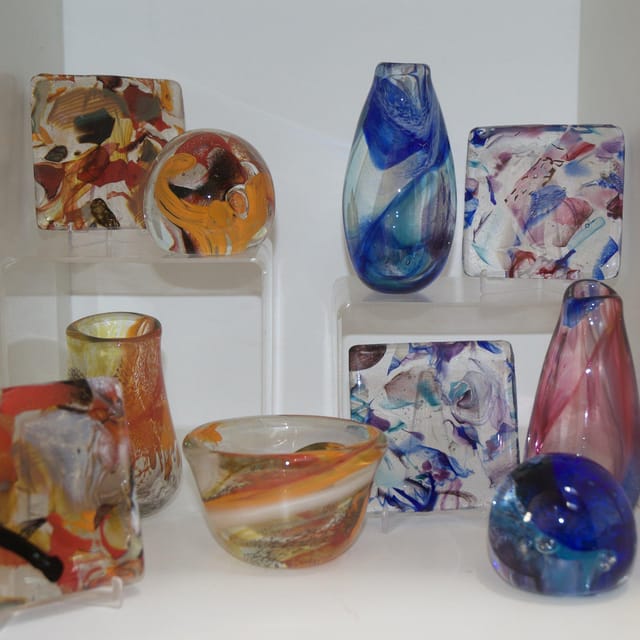
- Your Glass Souvenir: 12-Hour Cooling and Next-Day Pickup
- Price and Value: Is $156 for 20 Minutes a Good Deal?
- Who This Workshop Suits Best
- Should You Book Glass Blowing in Prague?
- FAQ
- How long is the glassblowing workshop?
- What is included in the price?
- Can I pick up my glass the next day?
- Is there an option to ship my glass home?
- What language is the instruction in?
- How big are the groups?
Prague Glass Blowing in 20 Minutes
If you like hands-on crafts, try this. This small-group glass workshop in Prague puts you close to the heat and tools of traditional glassblowing, where you’ll watch master makers work and then help make your own souvenir. I especially like how much you’re involved for a short 20-minute session, and I also like the human scale: limited to just 3 participants so you’re not lost in a crowd. The one thing to consider is that the glassmaking is safety-heavy, so you won’t control every step, and your piece needs time to cool before you take it home.
The vibe is practical, not touristy. You’ll get English instruction, learn a few techniques by seeing them done at the furnace, and then you’ll do the part you can safely do. Afterward, you’ll cool down with 2 beers or water, which matters because the workshop can get very warm.
Daan (from the Netherlands) really enjoyed being actively pulled into the process, and he noted that the space stays hot, so the cold drink is a smart touch. Melanie (from Switzerland) loved the up-close look at how the pieces turn out and said the session includes a bit of the science behind what you’re doing. If you hate heat, plan for that now.
Key Points You Should Know Before You Go
- Small group (up to 3 people) means more time at the glass and fewer waiting gaps.
- Close-up work near the furnace shows how the pros do it, and you’ll understand the why behind the steps.
- You actively help shape your piece, even if the master does many actions for safety.
- A beer break is included (2 beers or water) right after the hot work.
- Your glass needs 12 hours to cool, so you’ll return the next day for pickup (or pay extra to ship it).
- English instruction makes the learning curve feel manageable.
You can also read our reviews of more tours and experiences in Prague.



Prague Glass Blowing: Close to the Furnace, Not Just Watching
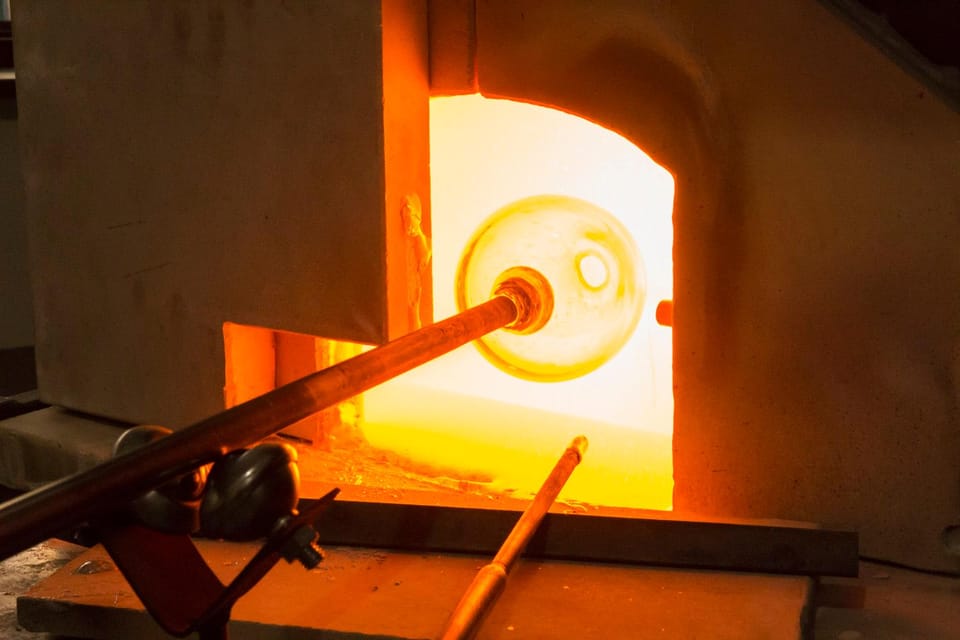
Prague is packed with pretty sights, but this is different. This glass workshop focuses on a single craft action—making glass—so you leave with a real object, not just photos. You also get the benefit of seeing the process firsthand while professionals handle the parts that require steady timing and strict safety.
What I like is the balance between watching and doing. You’ll see experienced glassmakers produce items like glasses and statuettes, so you understand what your small piece connects to. Then you’ll get your turn with the tools and techniques, but in a controlled way.
And yes, it’s warm. Even the simplest tasks around hot glass feel intense because the furnace and materials don’t care about your comfort level. If you’ve ever wondered how anyone works with glowing material at close range, this answers it fast.
What Happens During Your 20-Minute Workshop Session
Your session is short on paper—20 minutes—but it’s focused. You’ll spend the time learning how the glass behaves, watching techniques in action, and participating in the shaping steps you’re able to do safely. The instructor is English-speaking, so you can ask questions as you go.
Typically, you’ll start by seeing the master make glass products and understand the flow of the work. That matters because glassblowing isn’t just blowing air into a lump. Heat, timing, and tool control all affect the final shape, and you’ll get that lesson through observation.
Then you shift from watching to participating. You’ll work with the glassmaker on your own piece, doing the steps where a guest can contribute without taking over everything. Since you’re a small group, you’re not constantly switching seats or waiting for attention.
Finally, you wrap up and transition from hot work to cooling down and celebrating. You’ll be offered 2 beers or water after the session, which is a nice practical finish when you’ve been around heat and fumes.
The Part You Control: Helping Shape Your Own Glass
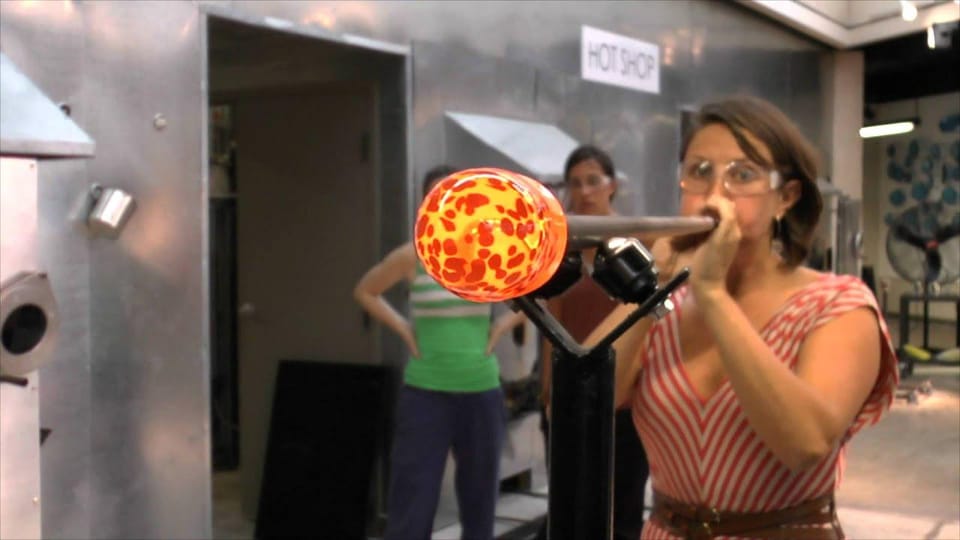
Here’s the key to understanding what you’re buying. The workshop is hands-on, but it’s also a professional process. The information you get is clear: much of the work must stay with the glassmaker because the steps are complex and safety matters.
So you’re not signing up to take full command of a furnace session. Instead, you’re cooperating with the glassmaker in a way that lets you learn techniques and feel the craft from the inside. That’s exactly why the experience feels special—there’s a real moment where you see how your small actions connect to the finished result.
In a conventional showroom-style glass demo, you watch from farther away. Here, you’re close enough to understand the production process, including how the glass is heated and manipulated. That closeness is a big part of the value, because you can’t learn this from a video where heat and timing are missing.
You should also expect a bit of frustration that turns into satisfaction. If the glass cools at the wrong time, the work changes. The master handles the hardest parts, but you’ll still feel the craft logic in your own hands.
Traditional Handmade Glass With UNESCO Intangible Heritage Roots
One of the neat details is that the workshop is tied to traditional handmade glass production recognized on UNESCO’s intangible cultural heritage list. That doesn’t mean you’ll get a museum lecture. It means you’re learning within a living craft tradition—something practiced, refined, and passed along rather than staged for tourists.
You’ll see the professionals produce multiple item types right in front of you, and that gives you context for how techniques vary. Your piece may be smaller or simpler than what you watch, but it’s built on the same core ideas: consistent heat, controlled shaping, and a sequence of steps that must happen in the right order.
Melanie’s comment about learning a bit of the science is a good sign you’ll get more than just hand movements. You’ll understand why heat level changes the glass behavior, and why airflow and timing matter. That kind of explanation makes the session feel like craft education, not just entertainment.






Beer, Heat, and Small-Group Comfort in the Glass Workshop
This is a craft, not a relaxed spa. The workshop environment is warm, and you’ll feel it when you’re near the working area. Daan’s note about getting something cold to drink is a helpful reminder: go in expecting heat, and use the included drinks as your reset button.
The beer part is also worth noting for value. Your price includes 2 beers or water, which means you’re not adding a separate activity just to get a local drink afterward. It’s a simple perk, but it makes the session feel complete: work hard, then cool down with something Czech.
Because the group is limited to up to 3 participants, you’re not stuck in a long wait while someone else takes their turn. That small group also makes instruction feel more personal, even though the session is short.
And if you’re worried about language, you’re covered. Instruction is in English, so you should be able to follow along and ask questions without guessing.
Your Glass Souvenir: 12-Hour Cooling and Next-Day Pickup
This part is the make-or-break detail for planning. Your glass creation needs 12 hours to cool down, so you won’t walk out with a finished piece right away. Instead, the workshop keeps it long enough for it to set properly.
The good news: free pickup the next day is included. That means you can schedule the workshop near the start of your trip, then swing back the next day when it’s ready. For many people, that’s easier than trying to fit “cooling time” into the same day itinerary.
If you can’t return, shipping is an option, but it’s not included. The average shipping cost is 80–100 EUR, and it depends on your country. That’s a real cost to keep in mind if you’re traveling long-term or moving between cities.
Also, think about packing. Glass is fragile, even when it looks sturdy. If you pick up in person, plan to transport it carefully back to your lodging.
Price and Value: Is $156 for 20 Minutes a Good Deal?
Let’s talk money plainly. At $156 per person, this isn’t a cheap souvenir workshop. But it’s also not a generic “tourist craft” where you decorate something pre-made.
You’re paying for three things that usually cost extra:
- professional instruction and guidance at a real glass workshop,
- time close to the furnace and the production process,
- and a real glass souvenir created through a safety-controlled process.
The price also includes 2 beers or water and next-day pickup, which adds value beyond the lesson itself. For comparison, many short activities charge more or include none of the drinks, and a souvenir made through real craft time is usually pricey no matter what.
The real tradeoff is that the workshop is only 20 minutes. If you want a long, sit-and-learn class, this might feel too short. But if you want a memorable, hands-on experience that fits into a day in Prague, the time length is a strength.
The other cost consideration is shipping (average 80–100 EUR) if you don’t plan to return for pickup. If you’re likely to be away the next day, the effective cost goes up.
Who This Workshop Suits Best
This glassblowing experience works best if you want a hands-on craft moment in Prague without committing to a half-day. You don’t need to be artistic to enjoy it. The process is guided, and you’re cooperating with professionals rather than being left alone with hot glass.
It’s also a solid pick if you like learning through observation. You’ll watch the glassmakers create products, see techniques in action, and then participate in a controlled way. Melanie’s take fits this: seeing up close is part of why it’s fun, and the science bits make it feel smarter than a basic craft demo.
You might skip it if you hate heat, dislike constrained participation, or want a fully custom piece where you control every step. The process is complex and safety-driven, so cooperation matters more than solo creativity.
The workshop is also wheelchair accessible, and it runs with a small group size. If mobility or crowded tours are an issue for you, this format is worth considering.
Should You Book Glass Blowing in Prague?
I’d book this if you want a short, memorable craft experience that produces a tangible souvenir and gives you real insight into how glass is made. The included beer, the small group size, and the chance to get close to the furnace are the reasons it’s worth it. Daan’s experience captures the good part: you feel involved, you learn by watching, and you can pick up your work the next day.
But I’d think twice if you need your souvenir immediately, because the glass must cool for 12 hours. I’d also factor in potential shipping costs if you won’t be around for pickup.
If you’re visiting Prague for a few days and you’re the type who likes practical activities, this is a strong fit. The session is in English, and you can also reserve with pay later, so you’re not locked into plans far in advance.
FAQ
How long is the glassblowing workshop?
The workshop lasts 20 minutes. The glass also needs 12 hours to cool before pickup the next day.
What is included in the price?
Your ticket includes the 20-minute glassblowing workshop, 2 beers or water, and free pickup the next day for the glass you make.
Can I pick up my glass the next day?
Yes. Your creation can be picked up the day after the workshop since it needs time to cool for 12 hours.
Is there an option to ship my glass home?
Shipping is available for an additional fee, and the cost depends on your country. The average price is 80–100 EUR.
What language is the instruction in?
The instructor provides instruction in English.
How big are the groups?
The group is small, limited to 3 participants, which helps keep instruction more focused.