REVIEW · PRAGUE
From Prague: Terezin with Admissions
Book on Viator →Operated by BEST TOUR · Bookable on Viator
Terezín hits fast, and getting there is easy. I like that this trip handles the transport and entrance so you don’t burn your Prague day trying to figure out routes, and I also like the structured way you learn what Terezín became during World War II. One heads-up: the experience can swing based on guide style and how smoothly languages are handled on your specific departure.
You’ll be out for about 6 hours total, with a smallish group size (up to 30) and a mobile ticket that keeps things simple. The sites are heavy and physically active in places, so if you’re sensitive to crowds, audio issues, or tight spaces, plan accordingly.
In This Review
- Key things to know before you go
- Why this Terezín trip feels workable from Prague
- Price and what $87.71 is really paying for
- Prague pickup, meeting point, and how to avoid the most common snag
- The main memorial visit: small fortress first, then the larger story
- Small Fortress Terezín: where the ground feels close
- Big Fortress museums: ghetto reality, shown through sections
- The most important variable: guide style and how audio/language affects comprehension
- Time on site: what “not too short” actually means
- Getting around inside the site: walking, tight spots, and bathroom reality
- Who this tour suits best (and who should think twice)
- Should you book this Terezín tour?
- FAQ
- How long is the Terezín trip from Prague?
- How much does it cost per person?
- Is hotel pickup available?
- Where does the tour start?
- What time does the tour start?
- What language is the tour offered in?
- Is admission to Terezín included?
- How big is the group?
- What ticket format will I receive?
- What if the tour is canceled because there aren’t enough travelers?
- Will I definitely see the crematorium?
Key things to know before you go
- Pickup reduces stress: You start from a central meeting point, with hotel pickup arranged when eligible.
- Admission is included: Your ticket covers the main memorial visit components.
- You’ll see both “fortress” and ghetto themes: Expect the small fortress side plus museums in the big fortress area.
- There’s a narrow underground tunnel segment: One stretch is reported as low and tight, so wear comfortable shoes.
- Time on site matters: The day is packed with explanation, and some areas may have limited access depending on the day.
- Guide quality really matters here: A strong guide can make complex, painful history easier to follow.
Why this Terezín trip feels workable from Prague
Terezín isn’t a “quick photo stop.” It’s a place where your emotions catch up with the facts. That’s exactly why I like a guided day trip that keeps the logistics off your plate.
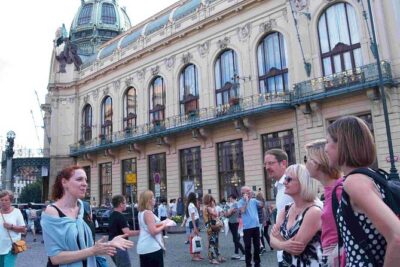
From Prague, the biggest friction is simply getting there and staying organized once you arrive. This format gives you a clear start time (9:30 am) and gets you into the program with admission handled. You also don’t have to wrestle with schedules, transfers, or parking. If you’re only in Prague for a few days, that’s a big deal.
The other reason this works is that the tour is designed around interpretation, not sightseeing-by-instinct. Your guide is there to explain why this place existed in the first place—first as a fortress, then as a Jewish ghetto under German control—and what the different sections of Terezín are meant to show.
You can also read our reviews of more tours and experiences in Prague.



Price and what $87.71 is really paying for
At $87.71 per person, you’re paying for three things: transport, guided context, and admission. If you tried to DIY, you’d likely spend time (and energy) on getting to the sites and coordinating entry, then you’d still need someone to explain the meaning behind what you’re seeing.
This tour is about 6 hours total, which fits well into a typical Prague itinerary. It’s not a full day, so you won’t be stuck for hours in transit or stuck at one location with no structure. Instead, you get a guided visit that’s long enough to be serious without turning into a burnout marathon.
The group size cap of 30 also matters for value. It’s not a tiny private bubble, but it’s far easier than trying to manage a bigger crowd at sensitive memorial spaces. If you end up in a smaller group, that can make the explanations land better—especially for questions.
Prague pickup, meeting point, and how to avoid the most common snag
The tour starts at Na Florenci 1413/33, 110 00 Praha 1-Nové Město. That’s your anchor point.
One detail that can save you stress: the time on your voucher is the tour start time, not the pickup time. Pickup time is supposed to be sent to you by Viator private message at least 24 hours before the tour begins. If you’re counting minutes and you show up too early expecting pickup, you can end up waiting in the wrong place.
Hotel pickup is described as available, but there’s a cut-off: free hotel pickup isn’t available for reservations made less than 24 hours before the start. If that applies to you, you should head to the meeting point and arrive about 5 minutes early so you don’t miss the handoff.
Also keep in mind that this is a shuttle/van-to-bus type setup on many departures, with people getting sorted before you head out. That’s normal. Just don’t treat the morning like a solo city walk—be ready to follow the staff lead.
The main memorial visit: small fortress first, then the larger story
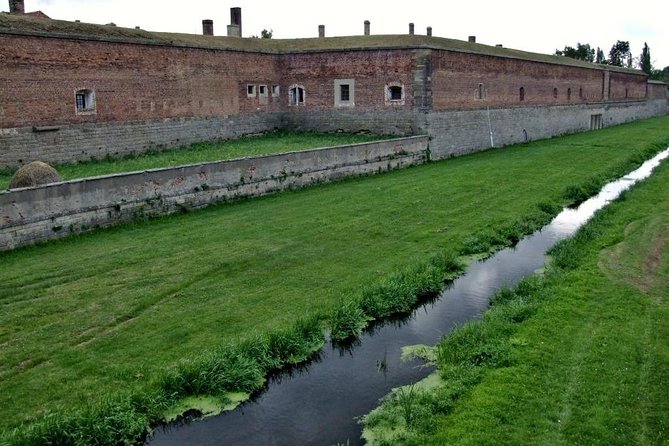
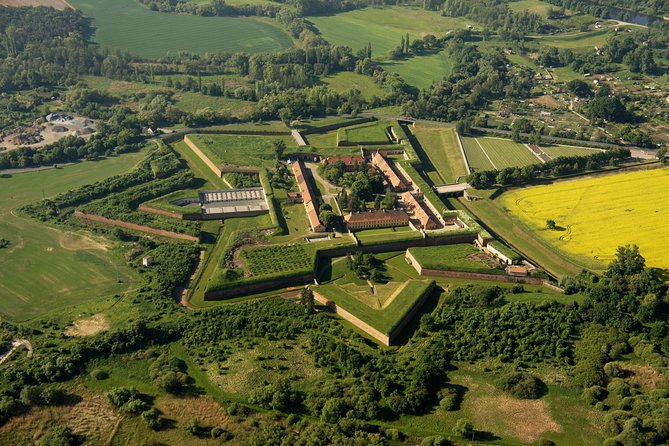
The heart of the visit is the Terezín Memorial area. You get an admission ticket included for the core stop, and the program is designed around the story arc: a fortress built to protect the Kingdom of Bohemia, then taken over and transformed under German authority, and finally turned into a Jewish ghetto.
Small Fortress Terezín: where the ground feels close
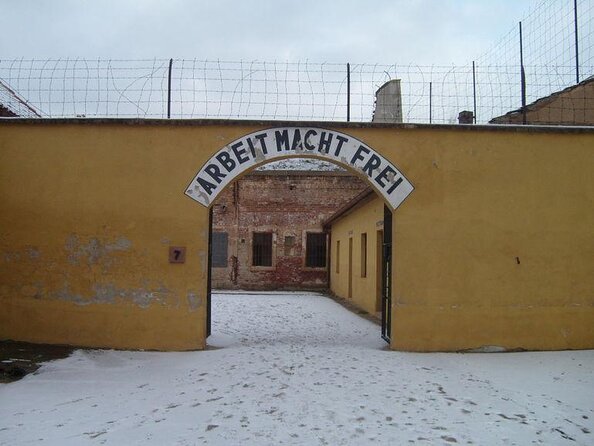
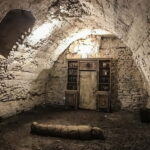
This part of Terezín is where the history becomes physically present. You’ll cover the small fortress and its museums, and you can expect at least one segment of underground passage.
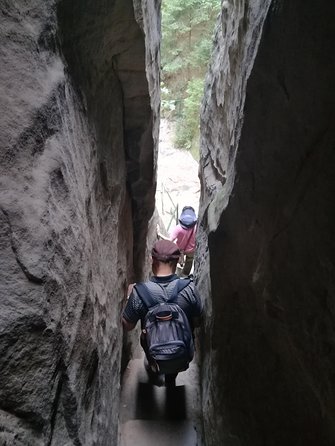
One recurring practical note from past visitors: there’s a long, narrow, low tunnel stretch (reported as about 500 meters). That means you should plan for tight space and reduced comfort. Wear shoes that give you traction and support, and be ready for a slower pace through parts that don’t feel spacious.
Even if you’ve read about the Holocaust online, this kind of physical route helps your brain connect the story to the place. You don’t just hear that people were imprisoned—you walk through parts that force you to imagine confinement in a real, immediate way.
Good to know: if you’re traveling with mobility limitations, this tunnel section is worth factoring in before you commit. It may be the hardest part of the day.





Big Fortress museums: ghetto reality, shown through sections
After the small fortress material, the program shifts toward the bigger fortress and related museums. The tour concept is straightforward: you’re there to understand both the fortress background and the ghetto transformation, not just to look at one monument.
Depending on the day, you may spend time on areas connected to the ghetto experience and the broader memorial themes. In some guided formats, that includes the museum sections connected to daily life under confinement and the parts of the site that are meant to be stark and explanatory.
You’ll also hear about why different buildings and spaces exist in the narrative you’re being shown. A strong guide does a lot here: they keep the explanations anchored to what you’re standing in front of, instead of talking in generalities.
The most important variable: guide style and how audio/language affects comprehension
This is the part I can’t ignore. Terezín is emotionally loaded, but it’s also dense. If the guide doesn’t manage the group well, you feel it immediately.
I’ve seen guides praised for being kind, engaging, and able to explain the material in a respectful way. Guides such as Martín were described as keeping to schedule and making conversation flow, and Veronica was highlighted as friendly while leading enough time to see multiple parts of the small fortress and the ghetto areas. Sandra also received strong marks for helping people understand Terezín and its history in a way that felt clear and human.
I’ve also seen the other side. Some departures had guides who seemed disinterested, distracted, or hard to follow. There were also complaints about translation switching back and forth when a multi-language group shared the bus experience, which can be rough if you booked specifically for English.
So here’s my practical advice: treat audio and language clarity as a central part of your decision. If you’re very sensitive to muffled microphones, confusing translation, or a guide who doesn’t clearly address your group, you’ll want a departure where the English experience is truly the main track.
One more practical point: pacing. Some tours felt rushed at first, or left people standing while another group was being handled. When that happens, you lose the structure that makes the day meaningful.
Time on site: what “not too short” actually means
The schedule is built around giving you time, not just stopping for a quick look. The main memorial stop is listed as 3 hours with admission included, and the broader day trip format runs about 6 hours total.
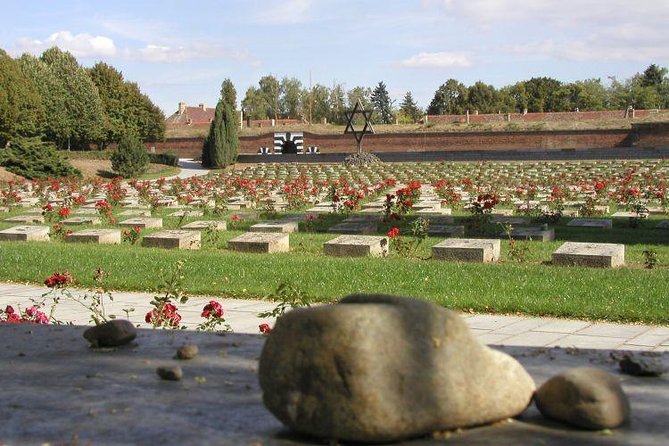
In real life, that can feel like just the right amount if you want the history without turning the day into a full-day endurance test. Several visitors described the tour as long enough to take in key sections, including the small fortress and related ghetto areas, barracks/cemetery themes, and the broader memorial explanation.
The trade-off is that Terezín can’t be fully “covered” like a casual attraction. Even with a well-run tour, you’re moving through a curated set of stops. If you want extra time in every corner, you may feel the limits. If you want a guided framework and a chance to process, the timing often feels right.
Also, some areas may not be accessible on every day. For example, there’s a report that the crematorium wasn’t open on a specific tour date. If that happens on your day, you’ll still have the rest of the memorial program, but you may not see every component you hoped for.
Getting around inside the site: walking, tight spots, and bathroom reality
This tour involves real walking and at least one tight, low underground passage. That combination means you should plan your comfort like it’s a museum day plus a memorial day.
Bring your own basic supplies. One visitor advice that’s worth taking: bring your own drinks and snacks if you think you’ll need them, since there may not be much option for breaks during the day. Another practical point from the same theme is that bathroom options can be limited between segments, so don’t wait until you’re desperate.
If you like to ask questions, do it early. A good guide will check in on the group, but if the group is large or multi-language, you might find it harder to get your question answered once momentum carries forward.
And for your peace of mind: if you’re ever in a shuttle van, treat seatbelts and safe driving seriously. There is at least one safety complaint tied to driving speed and rain conditions. That’s an outlier, but it’s still a good reminder to speak up if anything feels unsafe.
Who this tour suits best (and who should think twice)
This is a strong match if you:
- want a guided interpretation of Terezín without planning transit from scratch
- have limited time in Prague and want a half-day that stays focused
- are comfortable with somber, factual history and structured walking
- prefer small-to-medium groups (up to 30)
It might be a weaker match if you:
- need a very quiet, low-audio environment (language switching or mic issues can be frustrating)
- have mobility limits that would make narrow, low passages difficult
- get thrown off by rushed pacing or if you strongly prefer one-on-one, in-depth touring
If you’re traveling as a couple or solo traveler, this kind of guided day can still feel personal when the guide is strong. Names like Martín, Veronica, Sandra, and Tony came up as examples of guides who made the history easier to follow in a respectful way.
Should you book this Terezín tour?
Yes, I think it’s worth booking if you want a guided, organized day trip that covers the core parts of the Terezín memorial in a realistic time window. The biggest value is that transport plus admission plus interpretation are bundled, so you spend your limited Prague hours actually learning instead of troubleshooting how to get there.
But I’d choose carefully if your top priority is crystal-clear English audio and you know you get stressed by translation switching or mic problems. In a place like this, comprehension matters. If you’re concerned, look for cues that your departure will keep the English track consistent.
Bottom line: this tour is for people who want structure and context in a difficult setting—and who are ready for a memorial day that isn’t light, but is meaningful.
FAQ
How long is the Terezín trip from Prague?
The tour runs about 6 hours (approx.).
How much does it cost per person?
The price is listed as $87.71 per person.
Is hotel pickup available?
Pickup is offered. You’re told the voucher time is the tour start time (not the pickup time), and pickup time is sent at least 24 hours before start. Free hotel pickup requires providing your hotel name at least 24 hours before the tour; it’s not available for reservations made less than 24 hours before.
Where does the tour start?
The meeting point is Na Florenci 1413/33, 110 00 Praha 1-Nové Město, Czechia.
What time does the tour start?
Start time is 9:30 am.
What language is the tour offered in?
The tour is offered in English.
Is admission to Terezín included?
Yes. Admission Ticket Included is part of the main memorial stop.
How big is the group?
The maximum group size is 30 travelers.
What ticket format will I receive?
You receive a mobile ticket.
What if the tour is canceled because there aren’t enough travelers?
If it’s canceled due to the minimum number of travelers not being met, you’ll be offered a different date/experience or a full refund.
Will I definitely see the crematorium?
Not guaranteed. There are reports of the crematorium not being open on at least one tour date, so it may vary by day.