REVIEW · PRAGUE
Communism & Nuclear Bunker Tour + 70s Canteen Lunch (own expense)
Book on Viator →Operated by Prague Extravaganza Tours · Bookable on Viator
Cold War Prague gets real fast. This small-group walking tour links key events in Czechoslovakia’s 20th-century story with a rare chance to enter a real 1950s nuclear bunker. I like how the route connects big politics to everyday fear, and I especially like the small group size that leaves room for questions. One heads-up: the bunker setting has tight, underground spaces, so it’s not ideal if you get claustrophobic.
You’ll meet at the Powder Tower on Náměstí Republiky and walk through the city center in a way most sightseeing routes never do. Expect a guide-led story that moves from independence to Nazi occupation, then onto Communist rule, the Prague Spring in 1968, and the Velvet Revolution in 1989. And yes, there’s a lunch break at an authentic 1970s-style worker’s canteen where you can try Czech soda like kofola and a proper working-class meal for an extra cost.
In This Review
- Key things I’d circle before you book
- Cold War Prague in 3.5 Hours: what you actually see
- Start at Powder Tower on Náměstí Republiky: the story’s opening scene
- Republic Square and Old Town Square: Communists celebrating where everyone could watch
- Wenceslas Square for 1968 and 1989: hope crushed, then hope returns
- The 70s canteen break: kofola and working-class food (food is extra)
- End in a real 1950s nuclear bunker: what to expect underground
- Price and value: where your $35.07 goes
- Group size and guide style: how you’ll experience the walk
- Who should book this tour, and who might skip it
- Should you book this Communism & Nuclear Bunker tour?
- FAQ
- How long is the tour?
- Where do I meet the guide?
- What’s included in the price?
- Is lunch included?
- Is this tour suitable for claustrophobic travelers?
- Is the tour offered in English?
- Can I cancel for a refund?
Key things I’d circle before you book
- Small groups up to 10 keep the pace human and the questions flowing.
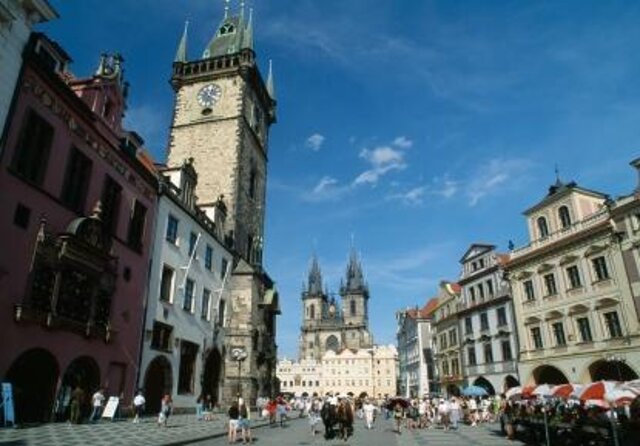
- Powder Tower to Wenceslas Square links Old Town and New Town through one continuous Cold War narrative.
- Real bunker time is included via the Cold War Museum entrance fee.
- Hands-on bunker moments may include a gas mask experience and other interactive exhibits.
- 70s canteen lunch break gives you a taste of how people ate during the era (food is extra).
- Not for claustrophobia due to underground tight spaces and stairs.
Cold War Prague in 3.5 Hours: what you actually see
This tour is built like a story walk. You start in the center of Prague, then move stop to stop along the places where power, propaganda, and protest played out in public. The timing is tight but not rushed: you get guided segments spread across Old Town and Wenceslas Square, plus a solid hour at the bunker shelter at the end.
What makes this work for real people (not just history nerds) is the focus on cause and effect. You’ll hear how major events changed daily life: jobs, movement, speech, and even what people feared at night. Then the bunker turns the idea of fear into something physical.
You can also read our reviews of more tours and experiences in Prague

Start at Powder Tower on Náměstí Republiky: the story’s opening scene
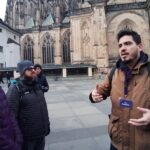
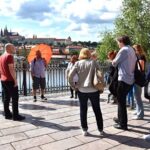
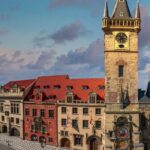
You meet at the Powder Tower at Náměstí Republiky, right where Prague’s Old Town and New Town energy collide. Your guide should be easy to spot (look for the person holding a blue umbrella), and you’ll start with the historic context that shapes the whole tour.
This first segment is about getting your bearings. The guide frames the moment Czechoslovakia formed in 1918 and why the new state was so hard for powerful neighbors to ignore. From there you’ll connect World War II realities to what came next—especially why post-war elections and shifting power structures opened the door for Communist control.
What I like here: you’re not just absorbing dates. You’re learning why those dates mattered for how the country developed afterward.
Possible drawback: if you’re expecting a casual “see the sights” walk, this opener is more lecture than postcard.
Republic Square and Old Town Square: Communists celebrating where everyone could watch
At Republic Square, you’ll look at the public face of power. The tour covers why Nazi forces were deeply interested in this state early on, and then moves forward to the post-war period. You’ll hear why the Communist Party won elections in 1946—an inflection point that helps the later 1948 takeover make sense.
Then the tour shifts into Staroměstské náměstí (Old Town Square) where you stand in a space tied to the Communist victory celebrations in 1948. The guide turns the square into a timeline: first the public triumph, then the private cost.
This part focuses on the 1950s era often described as fear-driven rule. Expect discussion of things like working camps, manipulated trials, collectivisation, and the secret police—plus what life behind the Iron Curtain could feel like day to day. You’ll also hear about a major monument connected to Stalin that used to stand here, which is a useful way to understand how regimes build legitimacy through symbols.
Why it’s valuable: you see how power worked both ways—through public ceremonies and through the machinery that controlled everyday life.
One practical note: Old Town streets are narrow and the walking is continuous, so wear shoes you’d trust for uneven stone.
Wenceslas Square for 1968 and 1989: hope crushed, then hope returns
Wenceslas Square is where the tour tightens from “history lesson” into “this could happen again” realism. You’ll learn about August 1968 and the Prague Spring era—especially how Soviet forces crushed the country’s push toward more open democracy. The guide anchors the story to specific areas around Wenceslas Square (and mentions Vinohradska street as part of where the occupation played out).
Then you’ll shift to November 1989 and the protests against the Communist regime. You’ll connect those street demonstrations to the Velvet Revolution. The guide brings in modern Czech figures such as Václav Havel and explains why he matters in the larger narrative.
What I like about this stop: it doesn’t treat 1968 and 1989 like separate history chapters. You’ll feel the arc—idealism, suppression, then a new kind of organizing that changes the end of the story.
If you’re short on attention: consider reading a small amount of background before you go. Even simple familiarity makes the guide’s connections land faster.
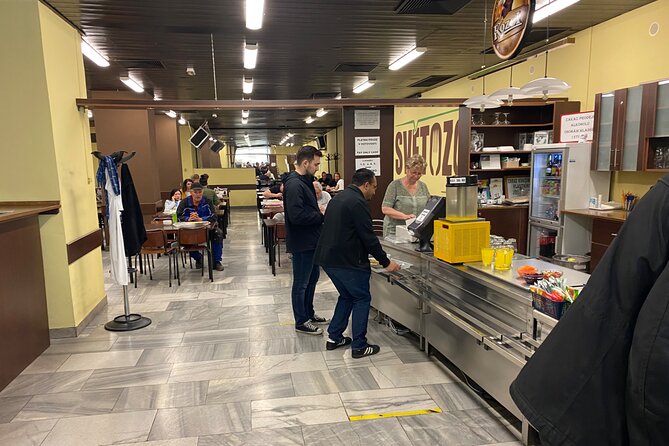
The 70s canteen break: kofola and working-class food (food is extra)
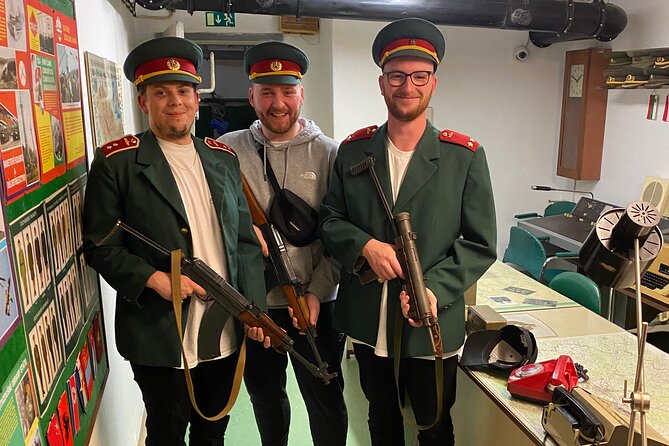
Between the political stops, you get a break at a local worker’s canteen designed to feel like the 1970s. This is scheduled as a pause, not a long detour, so you can cool down without losing the thread.
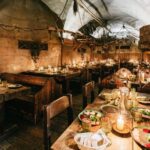
Food and drinks are not included, but you can order something along the lines of kofola or other Czech canteen fare, and you’ll have a chance at a proper working-class lunch. In the bunker world, food doesn’t seem like a big deal. On this tour, it becomes part of the human side: daily routines, plain comfort, and what people ate in an era of tight control.
Practical tips before you order:
- Bring a bit of cash so you can handle the canteen payment smoothly.
- If you want kofola, say so early so you don’t end up waiting while everyone else orders.
End in a real 1950s nuclear bunker: what to expect underground
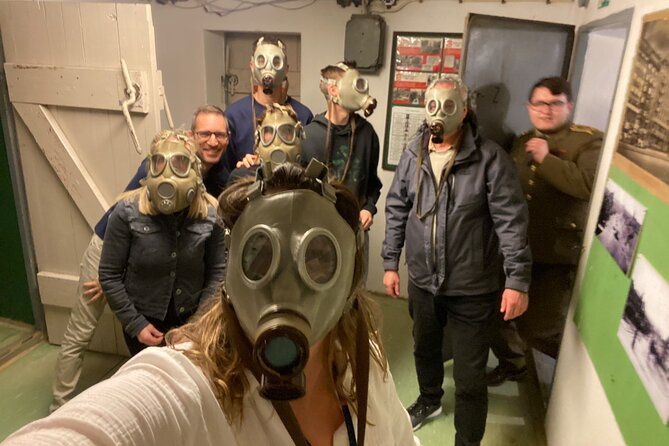
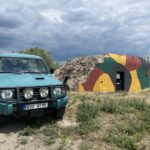
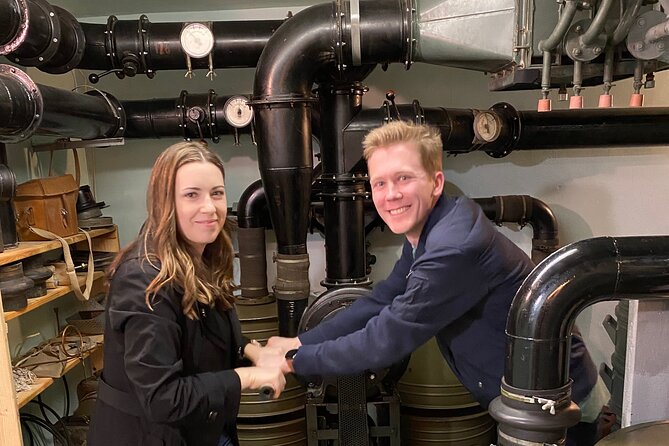
This is the main event. The tour finishes at a nuclear shelter in the upper area of Václavské náměstí, and the bunker admission fee (10 EUR) is included in the price. You’re not just viewing a model. You’re walking through real underground space built for Cold War fears.
A few realities to know:
- The setting is tight and can feel claustrophobic for some people.
- Expect stairs. One guide explanation shared that you go down one level by elevator and then walk around 30 steps to reach deeper areas.
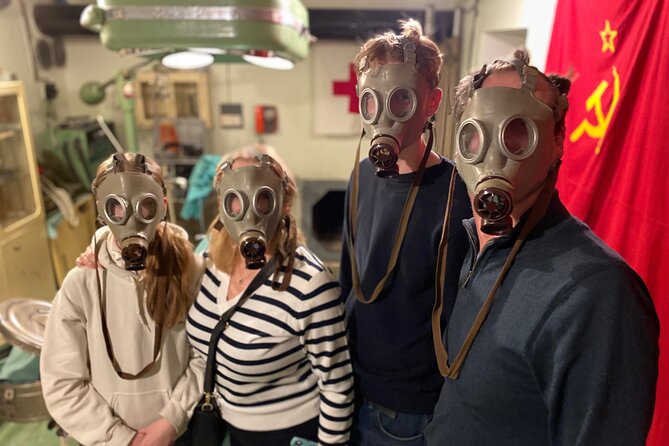
- The bunker is presented with exhibits that can include interactive moments such as trying on a gas mask and experiencing playful secret-police roleplay.
The guide also tends to use humor at times, but the serious point stays put: this is what governments planned for, and what civilians were meant to fear.
Why the bunker matters: it changes your understanding from abstract ideology to practical survival thinking. You can stand in the layout and imagine what control, waiting, and uncertainty would feel like in a real shelter situation.
Price and value: where your $35.07 goes
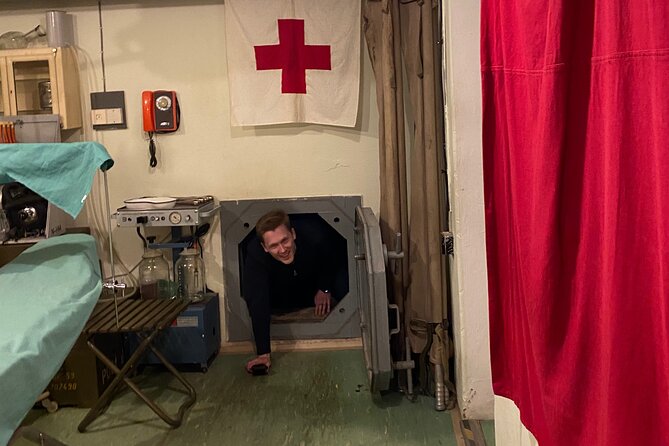
At around $35.07 per person for roughly 3 hours 30 minutes, the value comes from what’s bundled. You get the guided walking route plus the bunker entrance fee (10 EUR) included. The tour also runs with a small group size (up to 10 people), which often means less time stuck waiting and more time asking questions.
What’s not included is the canteen food and drinks. So if you’re comparing this with a “walking tour only” product, the bunker makes the difference. If you’re comparing it with a “museum-only” stop, the walk gives you the political context that makes the bunker feel more meaningful.
My take on budgeting: plan for the tour price, then add the canteen lunch cost on top. You’ll get more out of the bunker if you arrive fueled and not hungry.
Group size and guide style: how you’ll experience the walk
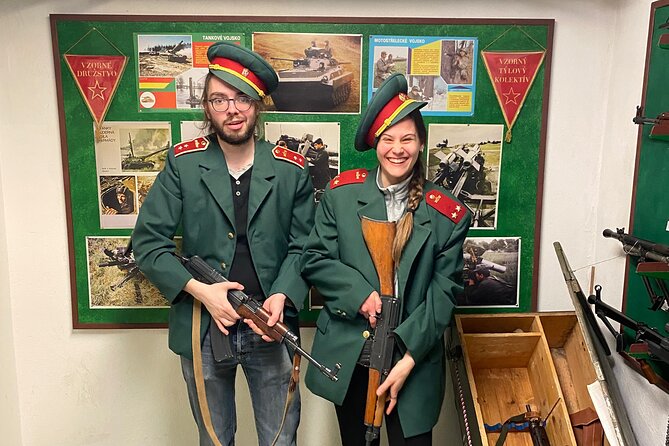
Tours like this are only as good as the guide’s storytelling. Here, the format is designed for conversation: a max group size of 10, and enough time between stops to talk.
From guide-led experiences you’re likely to hear personal perspective mixed into the history—stories shaped by local life under Communist rule. In past sessions, guides such as Klara (and others like Leo or Carla/Clara) have been praised for making the political story understandable, answering lots of questions, and keeping the tone engaging even when the topic is dark.
If you like learning through discussion, this structure fits you.
Who should book this tour, and who might skip it
I think you should book if:
- you want a small-group Prague experience, not a big bus crowd
- you care about modern Central European history, not just medieval sights
- you want to see a real nuclear bunker rather than a reenactment
- you’d enjoy a lunch break that feels like it belongs to the era you’re learning about
You might skip if:
- you’re claustrophobic or uncomfortable underground
- you want a purely light sightseeing route
- you can’t handle walking on uneven old-street surfaces plus stairs at the bunker
Should you book this Communism & Nuclear Bunker tour?
Yes, if your trip has room for one guided walk that links politics to daily fear, and you’re curious enough to go underground. The standout value is the combination: a focused Old Town and Wenceslas Square storyline plus included bunker entry with a 1950s Cold War setting.
If you’re on the fence, here’s the easiest decision rule: if you’d rather read about communism than stand inside its physical warning system, book it. If you only want city highlights and light culture, choose a standard Old Town walk instead.
FAQ
How long is the tour?
It runs about 3 hours 30 minutes (approx.), including multiple walking stops, a canteen lunch break, and an hour at the nuclear bunker.
Where do I meet the guide?
You start at the Powder Tower on Náměstí Republiky (Nám. Republiky 5, Staré Město, Praha 1). Look for the guide holding a blue umbrella.
What’s included in the price?
You get a local guide, a max group size of 10, and the Cold War Museum bunker admission fee (10 EUR) is included. You’ll also get mobile ticket details after booking.
Is lunch included?
Food and drinks are not included. You’ll have a canteen lunch break where you can buy items like kofola and a working-class lunch for an extra cost.
Is this tour suitable for claustrophobic travelers?
It is not recommended for claustrophobic travelers due to the underground bunker setting and tight spaces.
Is the tour offered in English?
Yes, the tour is offered in English.
Can I cancel for a refund?
Free cancellation is available up to 24 hours in advance of the experience start time for a full refund.