REVIEW · PRAGUE
Classic Prague Castle Tour, Strahov Monastery & Castle District
Book on Viator →Operated by Prague Pulse Tours · Bookable on Viator
Prague Castle feels different with a guide. This 2.5-hour walk from Josef Manes up the hill ties Prague Castle to Strahov’s monastery and library, with guides using storytelling so the place clicks fast. I like that you get big-picture context, then you immediately see it in stone, arches, and viewpoints.
My second favorite part is the practical start. At Klarov Park, you learn how to use Prague public transport, then the route turns politics and architecture into real stops at Cernin Palace and Schwarzenbersky Palace. I also love the Strahov Library moment, because it’s short but memorable, full of curious details that make the district feel lived-in rather than museum-still.
One consideration: expect uphill cobblestones and a steady walking pace. Also, while the tour doesn’t require paid monument entry, you might still want extra time (and maybe tickets) if you plan to go inside areas like St. Vitus Cathedral beyond the guided look, and the seasonal gardens only run Mar to Oct.
In This Review
- Key highlights worth your time
- Starting at Josef Manes and learning Prague transport at Klarov Park
- Strahov Monastery, the Brewery area, and the Strahov Library
- Castle District story stops: Cernin Palace, the main square, and Schwarzenbersky Palace
- Entering the Prague Castle complex: gate, courtyards, and Old Royal Palace
- St. Vitus Cathedral viewpoints and the best angles from the Third Courtyard
- Gardens below Prague Castle (Mar–Oct): city views plus the 1618 defenestration link
- Pace, footwear, and how guides keep the hill manageable
- Price and value: what $3.63 buys you, and what you should still plan for
- Who should book this Prague Castle tour
- Should you book the Classic Prague Castle Tour, Strahov Monastery & Castle District?
- FAQ
- How long is the tour?
- Is the tour in English?
- Are paid monuments included?
- Do I need a public transport ticket?
- Where do I meet and where does it end?
- Does the tour include the gardens?
Key highlights worth your time
- Klarov Park orientation: a quick lesson on getting around Prague before you climb
- Strahov Monastery and Brewery stop: views from the hill plus a monastery-side breather
- Defenestration stories tied to locations: Cernin Palace and the 1618 reference point in the gardens area
- Courtyard sequence: a guided route through major castle courtyards that helps you see how the complex evolved
- St. Vitus Cathedral viewpoints: best angles from the castle grounds, not just from afar
- Small group size: up to 30 people, which helps keep the pace controlled on busy days
Starting at Josef Manes and learning Prague transport at Klarov Park
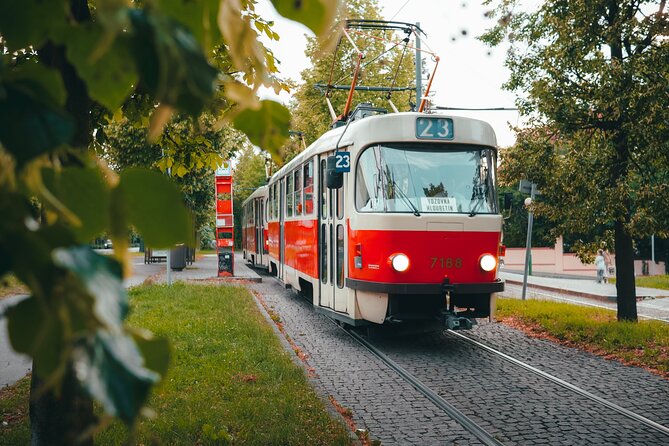
You start at the Josef Manes monument in Prague 1, a handy location if you’re already exploring Old Town. The tour then moves to Klarov Park, and this first stop is smarter than it sounds. Instead of only lecturing on the Castle, the guide explains how to use Prague’s public transport so you can get back down the hill with less stress.
It’s a tiny chunk of time, but it matters because Castle District is a maze if you’re guessing. Klarov Park sets you up with the basics before you hit stairs, trams, and crowded walkways. You’ll also hear guidance on what to look for on the climb.
Practical tip: wear shoes that handle rough stone. Even when the tour pauses, you’re still in a walking rhythm. The quick transport lesson makes it easier to plan your next hop after the tour ends near the castle ramparts.
You can also read our reviews of more tours and experiences in Prague.



Strahov Monastery, the Brewery area, and the Strahov Library
The hike up to Strahov is the moment where Prague’s geography starts doing the storytelling for you. At the top of the Castle District hill, you visit the Strahov Monastery for a short but scenic stop. This is where you get that “I’m high above the city” feeling, which makes the rest of the tour easier to follow.
You also get a look around the Monastery Brewery area. The point isn’t just to see a building—it’s to understand how monastic life and practical work sat side by side here. You’ll get the sense that Strahov isn’t only about what’s old; it’s about how people used these spaces day after day.
Then comes Strahov Library. It’s brief, but it’s timed well: you’re already warmed up by the monastery views, so the library details land. Guides often use this stop to explain oddities and stories hiding in plain sight. If you get a high-energy guide like Aris or Lyle, this is the kind of moment they can turn into a quick favorite, because the facts come with a sense of play.
What to expect: lots of looking up and around. Don’t come here if you’re trying to rush. This stop works best when you slow your eyes and take in the hilltop surroundings.
Castle District story stops: Cernin Palace, the main square, and Schwarzenbersky Palace
After Strahov, the tour shifts from hilltop calm to the Castle District’s political spine. One of the most interesting stops is Cernin Palace, where you learn about Prague’s defenestration story—specifically the most recent one tied to the city’s historical drama. It sounds like trivia until the guide connects it to what you can see in the streets and the power struggles behind the architecture.
You’ll also pass through the main square of the Castle District, which helps you understand how the district is laid out. This square gives you a reference point, so when you later reach courtyards and gates, it feels like one connected site instead of a list of landmarks.
A short stop at Schwarzenbersky Palace focuses on its striking sgraffito architecture. This is one of those details that you can easily miss if you’re only hunting for the big-ticket names. The guide’s value here is simple: they train your eye to spot the artwork on facades and explain why that style matters in the Czech context.
If you’ve ever seen architecture photos and thought, I’ll figure it out later, this is where it clicks. The stories give the stone meaning, and the stone gives the stories a location.
Entering the Prague Castle complex: gate, courtyards, and Old Royal Palace
The tour’s heart starts at Prague Castle, at the ornate main gate. Before you move inside the complex area, you’ll get a quick framework on the Castle’s founding over 1,000 years ago. This “start with the big idea, then show the evidence” approach helps you decode what you’re looking at.
From there, the route flows through multiple courtyards—especially the Second Courtyard and Fourth Courtyard—with explanations about final touches made in the 20th century. Courtyards can feel like empty space until someone shows you what to notice. Here, the guide points you toward how changing eras left visible marks in the layout and design.
You’ll also reach the Third Castle Courtyard, an important viewing area for the cathedral angle later on. Think of these courtyards as your architectural timeline checkpoints.
Then there’s Old Royal Palace, where you’ll hear how the building was upgraded by successive rulers. This is a fast stop, but it’s a useful one: you learn to see evolution in a single structure instead of treating each part like a separate attraction.
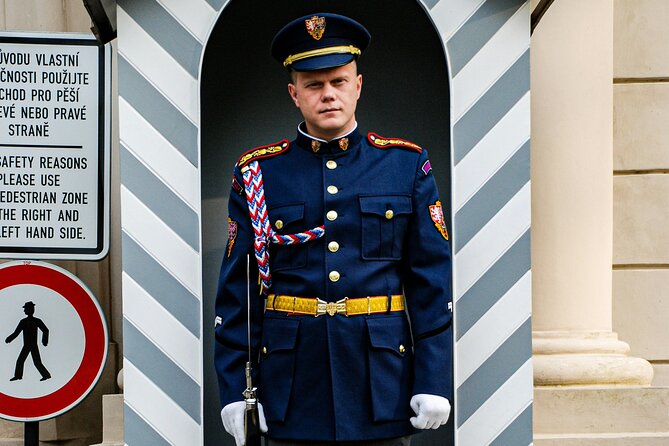
Crowd control is part of the win here. Several guides are praised for keeping the group moving and finding better sightlines. One review even highlighted a possible front-and-center view of the Changing of the Guard while avoiding the usual tourist crunch—timing matters, but the approach is clearly intentional.
Important reality check: the tour is designed so you do not enter paid monuments during the guided portion. So you’ll get guided exterior and courtyard context, but if you want deeper interior access, plan on adding time (and tickets) separately.
St. Vitus Cathedral viewpoints and the best angles from the Third Courtyard
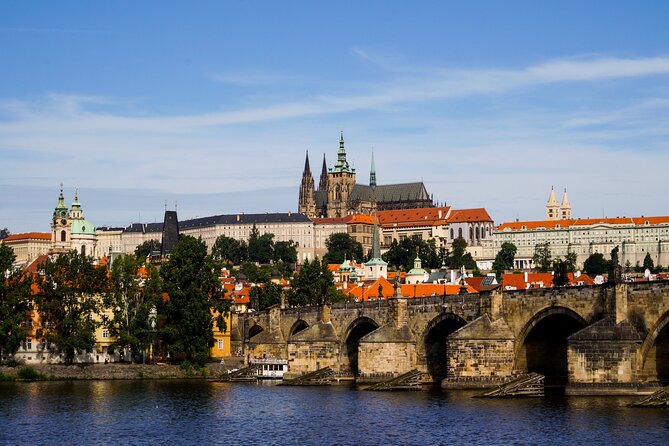
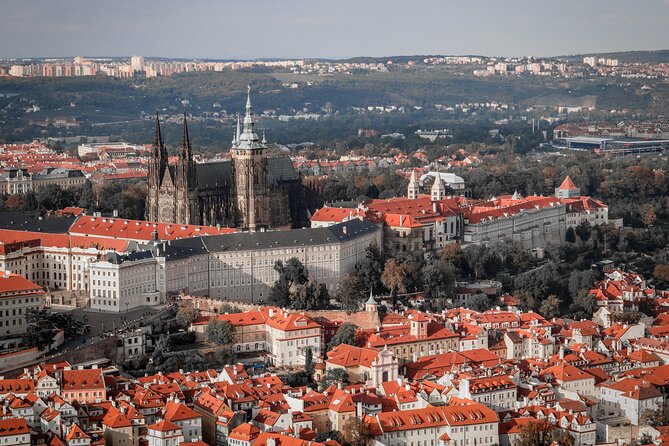
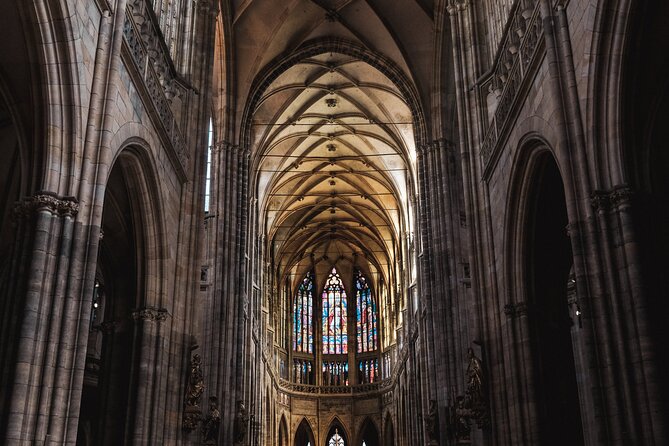
St. Vitus Cathedral gets a full stop, and the emphasis is on what you can actually see from the castle grounds. The guide connects the cathedral to King Charles IV and points out history that can hide in plain sight—details you’d likely miss if you just wander.
The most practical part is the viewing strategy. From the Third Castle Courtyard, you get a stronger angle on the cathedral than you’d get from the open squares around town. This matters because photos from the street often feel flat; inside the castle complex, you get perspective.
You should also know how this tour handles entrances. Officially, paid monuments aren’t part of the guided entry, which means your experience is largely “seeing with the guide” rather than doing a full inside tour. Reviews do warn that entry to areas like the cathedral may require tickets if you decide to go in on your own.
So my advice is simple: decide your priority before you arrive. If you want a deep cathedral interior visit, budget extra time. If your goal is to understand the building and get the best angles, this tour is set up exactly for that.





Gardens below Prague Castle (Mar–Oct): city views plus the 1618 defenestration link
One of the tour’s nicest “reward” moments is the time in the Gardens Below Prague Castle. This stop only runs during Mar to Oct, so if you’re traveling outside those months, you’ll miss this specific viewpoint time.
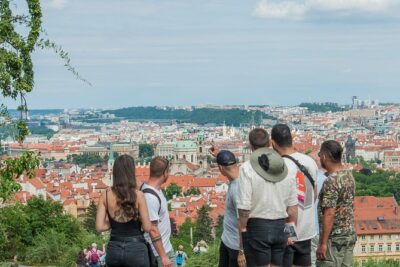
When it is included, the gardens deliver some of the best city views from the castle area. You look down over Prague in a way that feels different from the viewpoints you’ll get from bridges or towers. It’s also a good place to catch your breath—though the tour keeps moving, it’s not a sit-for-an-hour scenario.
The tour also ties this area to the 1618 defenestration story. That’s one of the reasons I like this stop: it turns a dramatic historical phrase into a location-based memory. You’re not just hearing dates—you’re linking the story to a real spot you can stand in.
If your trip timing matches Mar–Oct, don’t rush this segment. Take a minute at the overlooks, then use the guide’s explanation to connect what you see to what happened here.
Pace, footwear, and how guides keep the hill manageable
This is a walking tour built around elevation. Even with short stops (5 to 20 minutes), you’re climbing and descending cobblestones on uneven ground. I strongly recommend supportive shoes over fashion sneakers, especially if rain turns Prague stones slick.
The good news: the tour structure helps. It’s not a long slog where you only get explanations at the end. You get frequent “stop and see” points, from Klarov Park to Strahov, then into courtyards and viewpoints.
Guides who score highest in the reviews—Dylan, Aris, Anna, and Ian are mentioned often—tend to keep the pacing tight and the storytelling playful. If you like history that doesn’t sound like a textbook, you’ll likely appreciate that style. One review praised a guide for using humor and architecture links, which is exactly what makes the castle grounds feel less intimidating.
If you get stuck with a slower-moving guide (it happens), the tour still has enough visual variety that you won’t feel totally lost. Just manage your expectations: this is a “see and learn while walking” format, not a slow, seated lecture.
Price and value: what $3.63 buys you, and what you should still plan for
At $3.63 per person (per the tour info), you’re paying for a licensed local guide, a structured route, and a guided understanding of a huge complex. That’s the real value. Prague Castle District is easy to overspend on if you keep buying individual ticketed sites. This tour is built to keep you informed without forcing paid monument entry during the tour itself.
You do need to plan for one extra cost: a public transport ticket. The tour notes a 30 CZK ticket (about 1.2 EUR) is not included. Even if you walk parts of the route, you’ll likely want transport flexibility on either side of the climb.
The other “value trade” is depth. Because paid monuments aren’t entered during the guided portion, you’re getting smart context and best-angle viewing, not a full interior checklist. If you want cathedral interiors, museum-level room time, or long time in crown-jewel rooms, you may add tickets after the tour.
Who should book this Prague Castle tour
I think it fits best if you want two things at once: context and views, with minimal wasted time. You’ll enjoy it if you like stories you can connect to places—like the defenestration references—and if you enjoy architecture that comes with explanations for how it changed over centuries.
It also works well for first-timers who feel overwhelmed by the Castle District layout. Starting at Josef Manes and getting orientation at Klarov Park helps you stop guessing. And with a max group size of 30, you’re less likely to feel swallowed by a giant crowd.
If you want to spend half a day inside multiple ticketed interiors, you’ll probably treat this tour as the “setup” and then do additional stops on your own afterward.
Should you book the Classic Prague Castle Tour, Strahov Monastery & Castle District?
If you’re aiming for an efficient, story-driven walk through Prague Castle, Strahov Monastery, and the Castle District viewpoints, I’d book this. The mix of a transport orientation at Klarov Park plus the castle courtyards and cathedral angles is a strong match for travelers who want to feel oriented fast and remember what they saw.
Book soon if your dates are fixed. This one gets booked about 16 days in advance on average, and the small group size means good time slots can disappear. And if your visit falls outside Mar–Oct, go anyway—just adjust expectations about the gardens stop.
FAQ
How long is the tour?
It runs about 2 hours 30 minutes.
Is the tour in English?
Yes. The tour is offered in English.
Are paid monuments included?
No. The tour states you will not enter any paid monuments, and no admission fee is needed for the guided portion.
Do I need a public transport ticket?
Yes. A public transport ticket costs 30 CZK (about 1.2 EUR) and is not included.
Where do I meet and where does it end?
You start at the Josef Manes monument near Alšovo nábř., Staré Město, and you end at Hradčany 192 near the Prague Castle ramparts.
Does the tour include the gardens?
The stop at the Gardens Below Prague Castle is only included during summer season (Mar–Oct).