REVIEW · PRAGUE
Prague: Immersive History Walking Tour and VR
Book on GetYourGuide →Operated by VR Guide ME · Bookable on GetYourGuide
Prague’s past pops into view on the street. On this 2-hour walk, I loved the VR headset moments that recreate corners of Old Town and Wenceslas, and the guide who connects what you see with 700 years of Czech history. One note: you’ll wear a headset in busy squares, so expect a few funny-looking seconds.
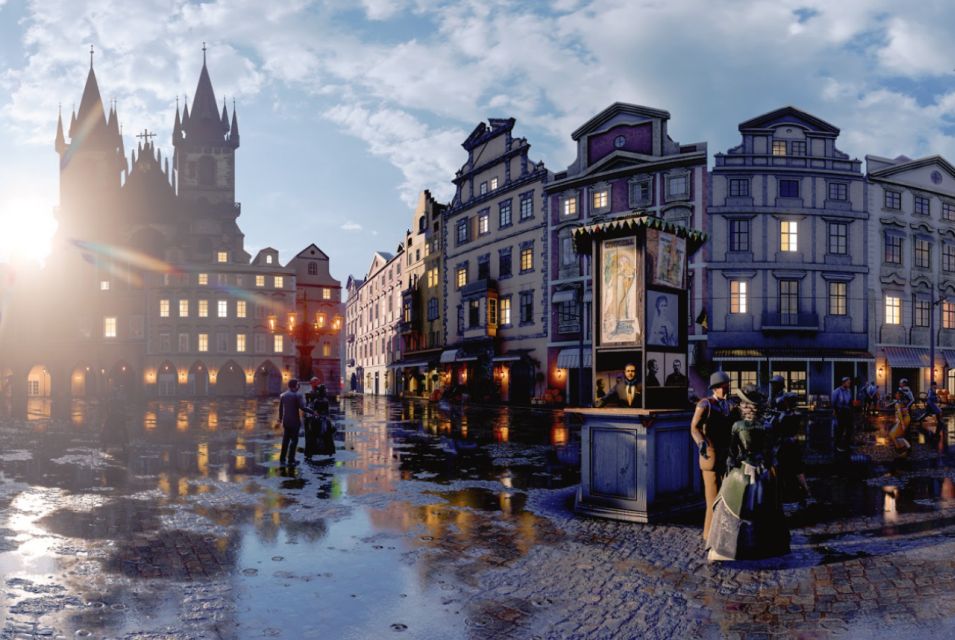
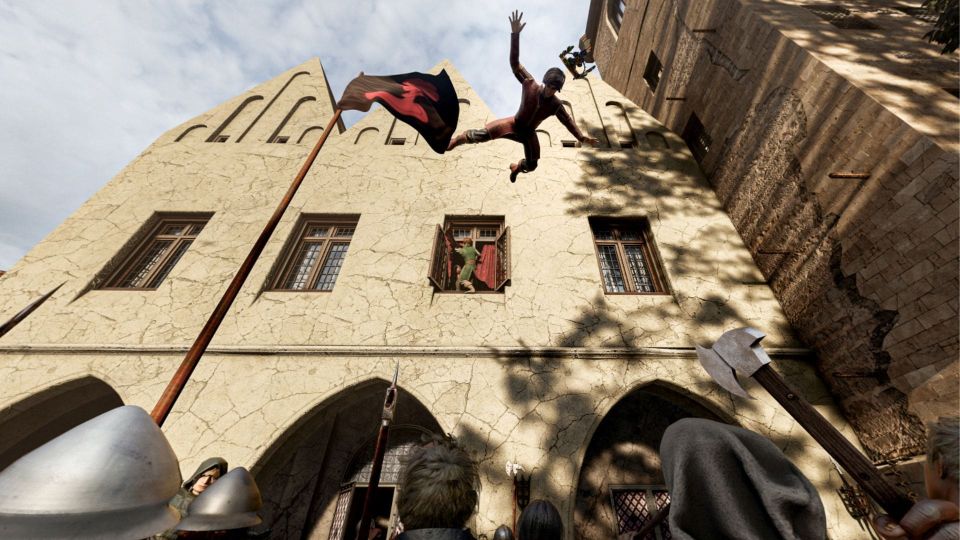
The VR scenes cover big turning points, from a view of Old Town about 120 years ago to moments tied to medieval conflict, the Prague Spring with Soviet tanks entering the city, and Operation Anthropoid. When you take the glasses off, you can compare what stands there now with what stood there before, then finish near the Dancing House by the Vltava River.
In This Review
- Quick reasons this VR walking tour is getting strong marks
- How the VR time jumps work on Prague’s walking route
- Old Town Square and Wenceslas Square: your first history switch
- Old Town Square: modern views, then the past version
- Wenceslas Square: shifting from old power to newer streets
- National Museum, New Town Hall, and Saints Cyril and Methodius Cathedral
- Prague National Museum: from everyday grandeur to the questions of the era
- New Town Hall: a classic civic counterpoint
- Saints Cyril and Methodius Cathedral: history that includes belief and community
- Ending at the Dancing House by the Vltava: a stylish final beat
- Price and logistics: is $33 really good value?
- Best fit: who will enjoy this VR walking tour most
- Practical tips to make your six VR scenes land well
- Should you book the Prague VR history walking tour and skip the rest?
- FAQ
- How long is the Prague Immersive History Walking Tour and VR?
- Where does the tour meet?
- Is the tour only in English?
- Can people who wear glasses use the VR headsets?
- Is the tour suitable for kids and families?
- What’s the route like, and where does it end?
Quick reasons this VR walking tour is getting strong marks
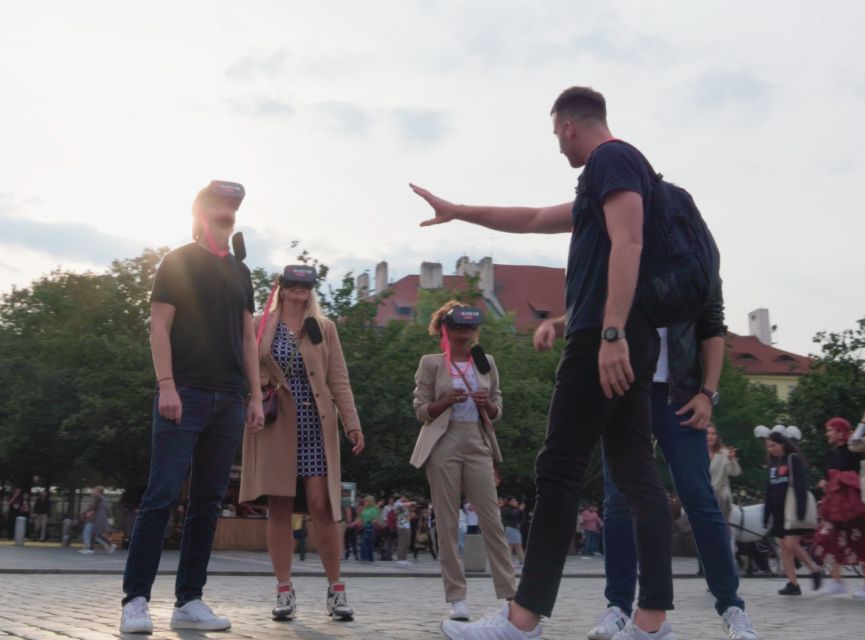
- Six VR stops, six time periods tied to the Old Town, New Town, and major landmarks along the route
- Major Czech history in scenes you stand inside including the Prague Spring and Operation Anthropoid
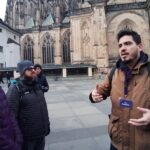
- Expert English-speaking guides who keep the story moving and make the locations feel connected
- Old Town and modern Prague side-by-side so you really see what changed in the streets and buildings
- Glasses-friendly VR and suitable for all ages
- A smart finish at the Dancing House near a beautiful stretch along the Vltava River
How the VR time jumps work on Prague’s walking route
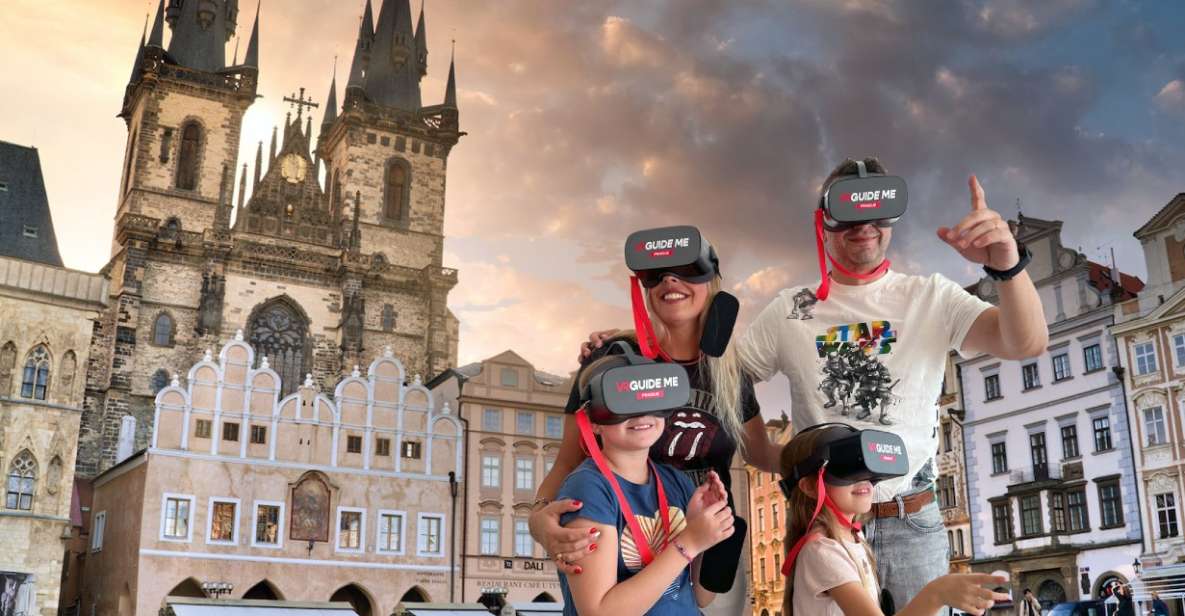
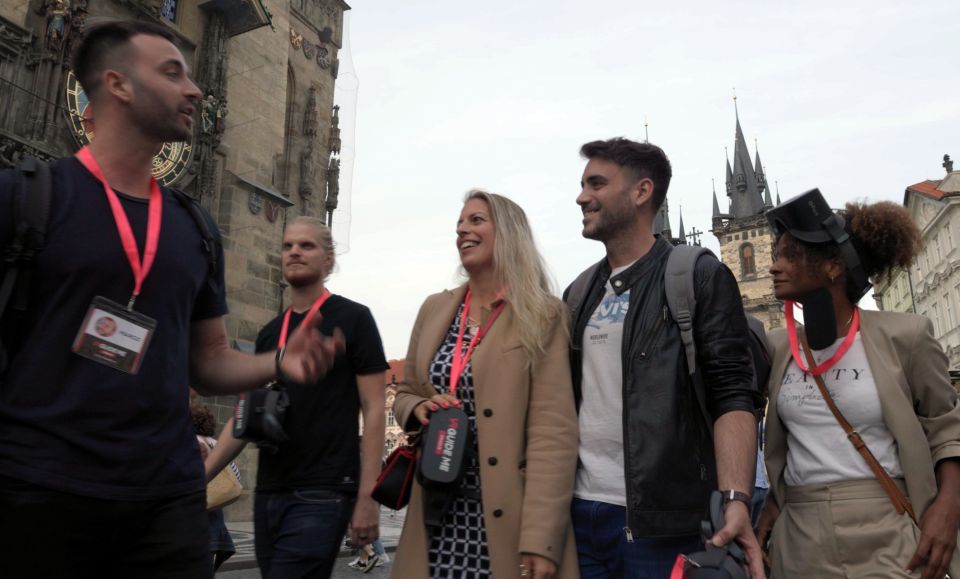
This tour works because it blends two things you usually do separately in Prague. You get a live guide walking you through the city’s most recognizable spots, and you add VR moments where history shows up in the exact place you’re standing. That combination is what turns photos and monuments into something you can actually picture.
I like that the VR is tied to real stops, not a generic video. As you move through the route, you pause at six locations and put on the headset for different scenes, then you remove it and look around at the modern buildings again. That take-the-glasses-off comparison is where the whole idea clicks. You stop thinking of history as a textbook page and start seeing how the city’s layout, scale, and architecture carried forward.
Tech note: VR can have limitations. One practical consideration is that the VR experience is more about what’s happening around you than about physically moving your body like a video game. If you’re the type who wants lots of action and motion, you might wish the scenes had more movement of people inside the VR world. Still, the focus on place-and-time is the point.
You can also read our reviews of more walking tours in Prague


Old Town Square and Wenceslas Square: your first history switch
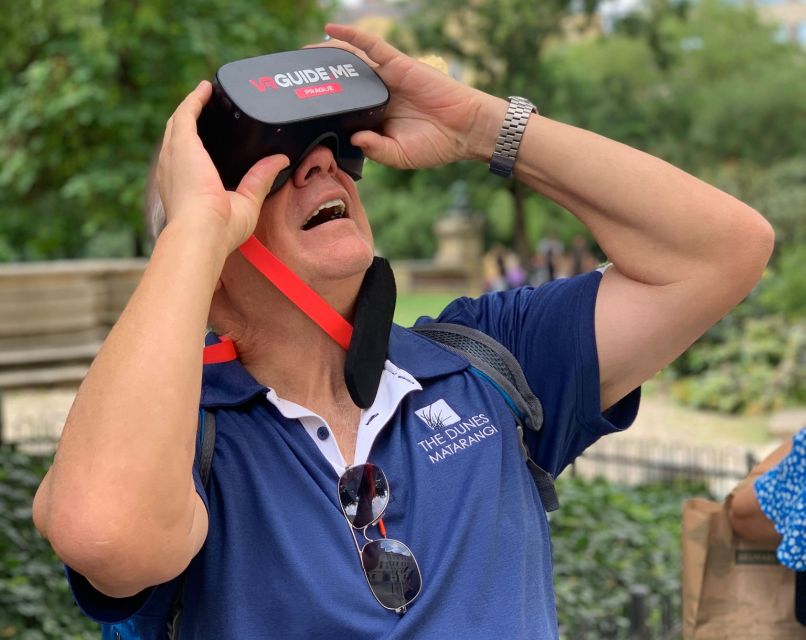
You start at Panská 1, with the tour info meeting point located next to Hamleys. From there, you head into the city’s core, where the guide uses the setting like a stage set.
Old Town Square: modern views, then the past version
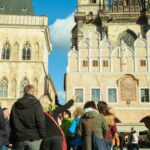
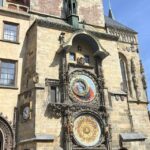
Old Town Square is the obvious draw. It’s also where the VR concept has the biggest payoff, because the square is recognizable even after centuries of change. One VR moment recreates how this area looked about 120 years ago, letting you compare the layout and feel of the space with today’s architecture.
What makes this stop work well is that you’re not just staring at a single building. You’re looking at a whole public space. Prague’s story is written through squares and streets, not just through museums, and this is a fast way to see that.
Wenceslas Square: shifting from old power to newer streets
Then you move to Wenceslas Square, another major name on Prague’s map. Here, you’re still in the world of civic life—processions, politics, public pressure—but with a different architectural tone than the Old Town. The guide ties what you see around you to historical forces that shaped Czech life over time.
If you’ve ever felt like Prague’s big squares blur together, this is where the VR helps you separate them in your mind. Different time periods, different moods, different reasons people used these spaces.
National Museum, New Town Hall, and Saints Cyril and Methodius Cathedral
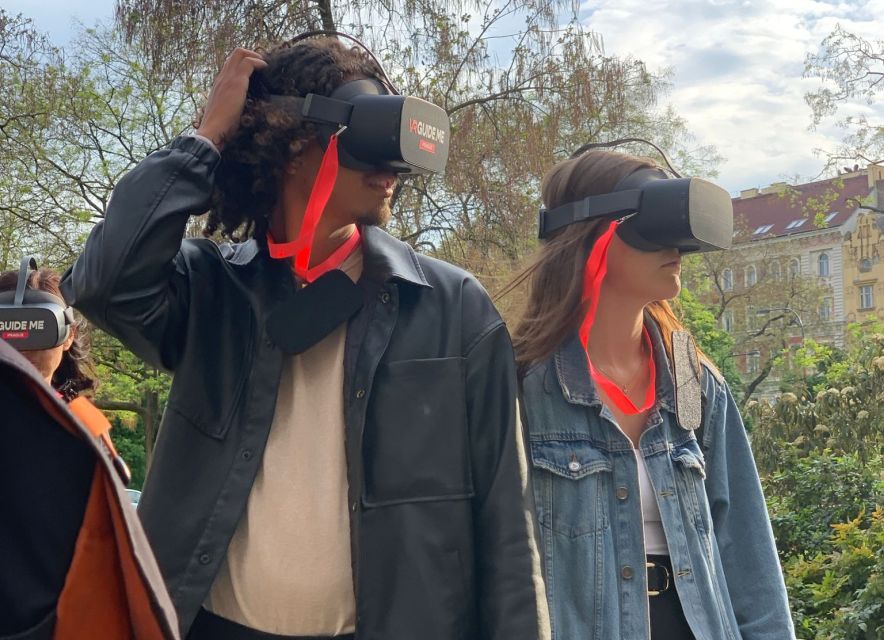
After the two big squares, the tour shifts into landmarks that feel like they’ve been built to last—and to project ideas.
You can also read our reviews of more historical tours in Prague





Prague National Museum: from everyday grandeur to the questions of the era
At Prague National Museum, the guide frames what you’re seeing against the Czech story across many centuries. This is where I’d expect the tour to feel most helpful if you want context beyond what’s obvious at street level. The museum stop gives you a big “institution” moment: a place people associate with culture, identity, and national life.
You’ll also get VR scenes that connect Prague to events that rippled far beyond its borders. The key benefit is perspective. Instead of treating Prague as a pretty backdrop, you get the sense that big historical events were happening while these streets and buildings were being used and watched.
New Town Hall: a classic civic counterpoint
Next comes New Town Hall. It’s a great contrast point after the Old Town atmosphere. This is where the guide can point out how civic architecture reflects changes in power, planning, and public life.
One of the smarter things about the format is that it keeps you from doing the typical checklist tour. You’re not just ticking off major sights. You’re standing at a civic landmark, then switching time through VR, then looking again at the present. That rhythm helps you build a mental map of Prague’s development.
Saints Cyril and Methodius Cathedral: history that includes belief and community
You finish the main land-mark stretch at Saints Cyril and Methodius Cathedral. A cathedral stop can turn into a quick photo moment if you’re rushing. On this tour, it doesn’t. The guide uses the setting to add another layer to the story—community life and the long reach of institutions in Czech history.
Also, this kind of stop works well for all ages. One reason the ratings are so high is that the VR makes the story visual, and the walking keeps it active enough that it doesn’t feel like a museum lecture.
Ending at the Dancing House by the Vltava: a stylish final beat
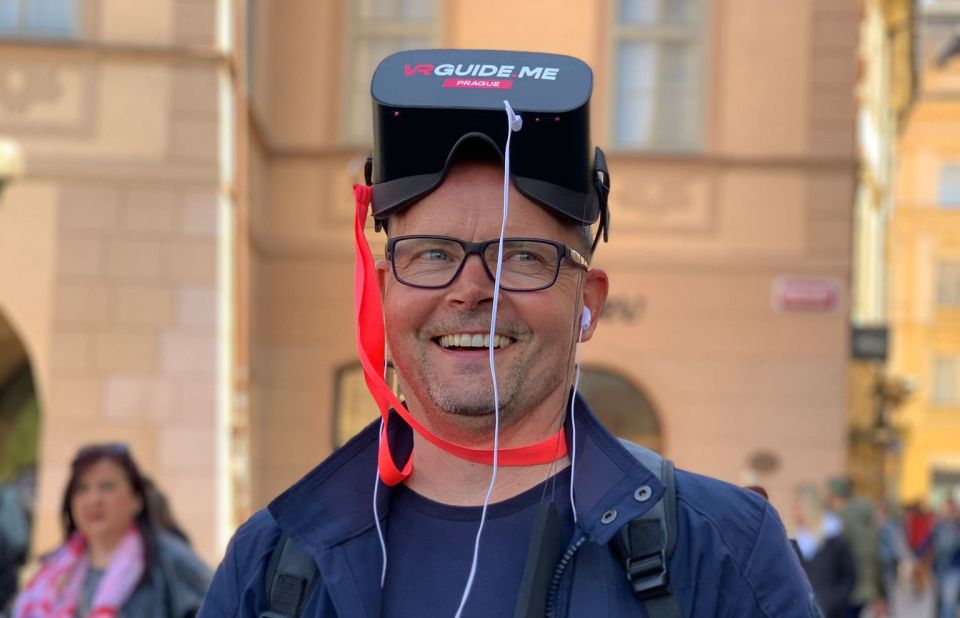
The tour ends near the Dancing House, beside one of the city’s best promenades along the Vltava River. This is a strong finish for two reasons.
First, it’s a clean emotional reset. You’ve spent time switching between past and present, and the Dancing House gives you a modern Prague “after” image that feels different from the older squares. Second, the Vltava promenade is a practical place to regroup. You can take a breather, look back at the route you walked, and decide what you want to do next.
The Dancing House is also one of those landmarks people recognize, even if they don’t know what it represents. Finishing here makes your history-focused tour feel connected to the living city, not stuck in the past.
Price and logistics: is $33 really good value?
At $33 per person for about 2 hours, the value here comes from mixing three things you’d otherwise pay for separately: a guided walking tour, a guided VR layer, and the time efficiency of hitting multiple major stops without getting lost.
If you only wanted a traditional history guide, you might find cheaper options. But the VR component changes the experience enough that it’s not just another talking tour. It’s also not a full-day museum marathon. You’re getting a concentrated “high points of Czech history in Prague” experience, delivered while you’re outside seeing the city.
I also like the language setup. The live guide speaks English, and you can add optional audio in multiple languages. That means you’re not stuck waiting for translations to catch up with the group. It’s a nice balance between a human storyteller and audio support if you prefer it.
Best fit: who will enjoy this VR walking tour most
This is the type of tour I recommend when you want more than facts on a page. It suits:
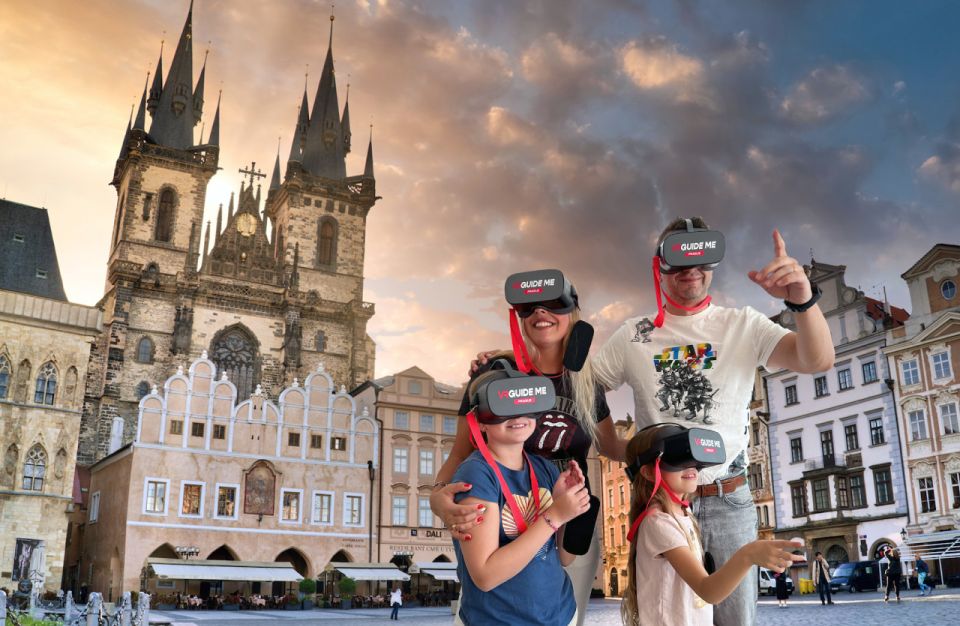
- Families who want something engaging for kids, not just adult lectures
- Solo travelers who like a story with structure (and the chance to ask questions)
- People who feel museums are great, but want a way to connect the city to the events
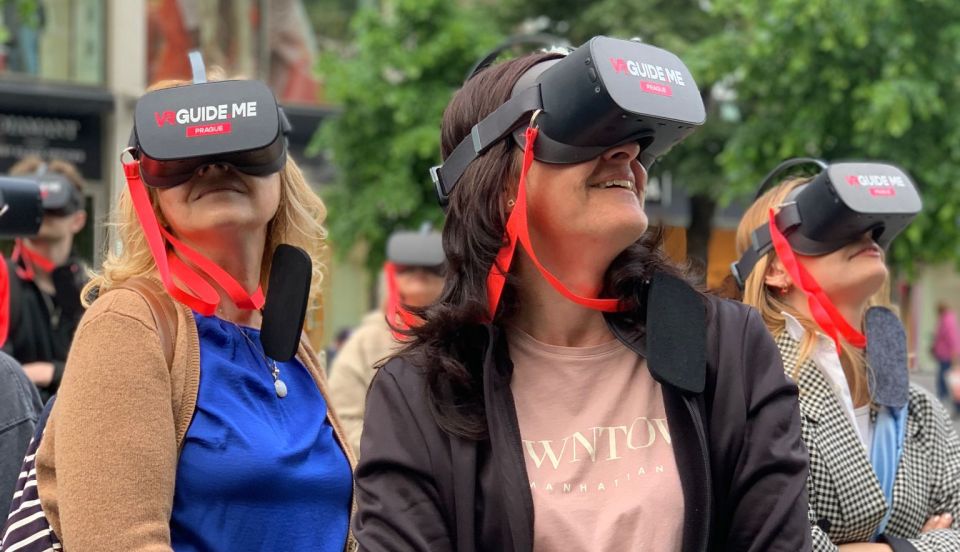
- Travelers who like hands-on learning and don’t mind wearing a headset for short stretches
One big plus: the info says it’s suitable for all ages, and people who wear glasses can also perform the activity. That matters because VR tours sometimes become annoying fast if you have trouble fitting headsets over eyewear.
On the flip side, if you hate wearing tech gear in public or you strongly prefer quiet sightseeing, you might find the headset moments distracting. It’s still a walking tour, but the VR is central to the concept.
Practical tips to make your six VR scenes land well
Here are a few things that will help you get the most out of the experience without slowing the group down.
- Keep your prescription glasses on if you need them; the tour is described as workable with glasses.
- Be ready for quick pauses. VR is short-burst. You’ll stand still long enough to see the scene clearly, then you’ll take the headset off and look back at the real street.
- If you’re bringing a friend who hates change, set expectations. This is a guided walk that includes tech, not just a standard “follow the guide” stroll.
A small, real-world comfort factor: several guests mention the sound design is strong and the VR is easy to use. That’s worth your attention because bad audio is the quickest way to lose the story.
Should you book the Prague VR history walking tour and skip the rest?
Yes, you should book it if you have limited time and want a way to understand Czech history that goes beyond monuments. This tour is a good fit when you like the idea of standing in the city and seeing it at different moments—especially if you’re the kind of traveler who remembers places better after seeing what used to be there.
I’d skip it only if you’re firmly on the camp of pure walking sightseeing with zero tech, or if you expect the VR to behave like a fully interactive video game. The VR is there to connect you to specific moments, not to turn Prague into a motion simulator.
Overall, the rating is very high, and the themes in the feedback are consistent: the guide storytelling, the structured route through major Prague stops, and the VR layer that makes the past feel readable right where you’re standing. If you’re curious about seeing Prague as a timeline, this is one of the more efficient and memorable ways to do it.
FAQ
How long is the Prague Immersive History Walking Tour and VR?
The tour lasts 2 hours.
Where does the tour meet?
You meet at Panská 1, where the tour info is located next to Hamleys.
Is the tour only in English?
The live guide speaks English, and you can also use optional audio guides in English, German, Czech, French, Spanish, Italian, and Russian.
Can people who wear glasses use the VR headsets?
Yes. The activity is described as suitable for people who wear glasses.
Is the tour suitable for kids and families?
Yes. The tour is described as suitable for all ages.
What’s the route like, and where does it end?
You visit major stops including Old Town Square, Wenceslas Square, Prague National Museum, New Town Hall, and Saints Cyril and Methodius Cathedral, and the tour ends near the Dancing House by the Vltava River.