REVIEW · PRAGUE
Walking tour of Prague in french: Old Town & Charles Bridge
Book on GetYourGuide →Operated by Prague Découverte · Bookable on GetYourGuide
History feels walkable in Prague. This French walking tour strings together the Old Town Square legends and the Charles Bridge viewpoints, with a licensed local guide explaining what you’re seeing and why it matters.
I like the way the tour turns famous landmarks into clear stories, especially the Prague clock and the Hus vs Marian column contrast in Old Town Square. I also like that the route isn’t just sightseeing: it connects 14th-century Bohemia, Charles IV’s legacy, and the Hussite era to big turning points like the defenestration that helped spark the Thirty Years’ War.
One possible drawback: it’s only 90 minutes, so you’ll have less time to linger inside churches or take detours. And since transport, food, and hotel pickup aren’t included, you’ll want to plan those on your own.
In This Review
- Key highlights to look for
- From Celetná to Charles Bridge: a tight 90-minute route
- Celetná Street, Týn Yard, and Ungelt: where the walk gains direction
- Old Town Square: the Prague you thought you knew, explained for real
- What to watch for while you’re there
- Malé Náměstí and Mariánské náměstí: small squares, big context
- Charles IV and the Hussite thread: Prague’s story behind the stones
- Church of Our Lady before Týn, plus the Hussite stronghold feeling
- Stone Bell House, Charles IV’s birthplace, and the palaces: Prague’s power addresses
- Clementinum and Saint Nicholas: religious Prague beyond one landmark
- Karlova and the last approach: getting ready for Charles Bridge
- Charles Bridge: views, perspective, and photo time
- Why this tour feels like value at $19
- Who should book this Prague tour in French
- Final call: should you book it
- FAQ
- Where is the meeting point?
- How long is the walking tour?
- Where does the tour finish?
- Is the tour in French?
- What’s included in the price?
- What is not included?
- How do I get to the meeting point by public transport?
- Can I cancel or reserve without paying right away?
Key highlights to look for
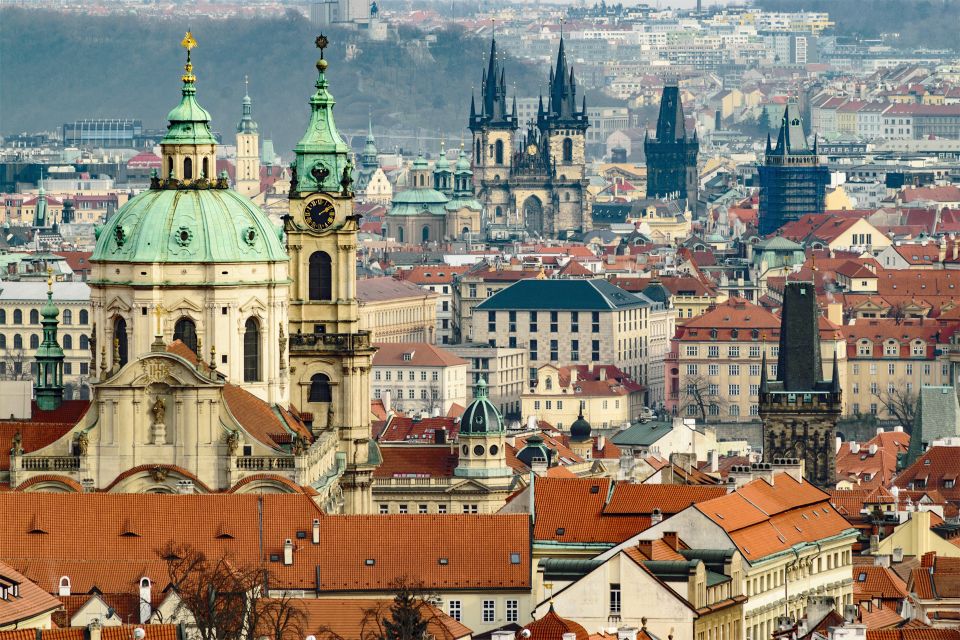
- A French guide licensed by the Czech Ministry of Tourism who keeps the story moving
- Old Town Square contrasts explained, including Jan Hus and the Marian column facing each other
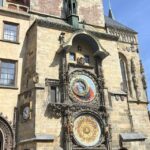
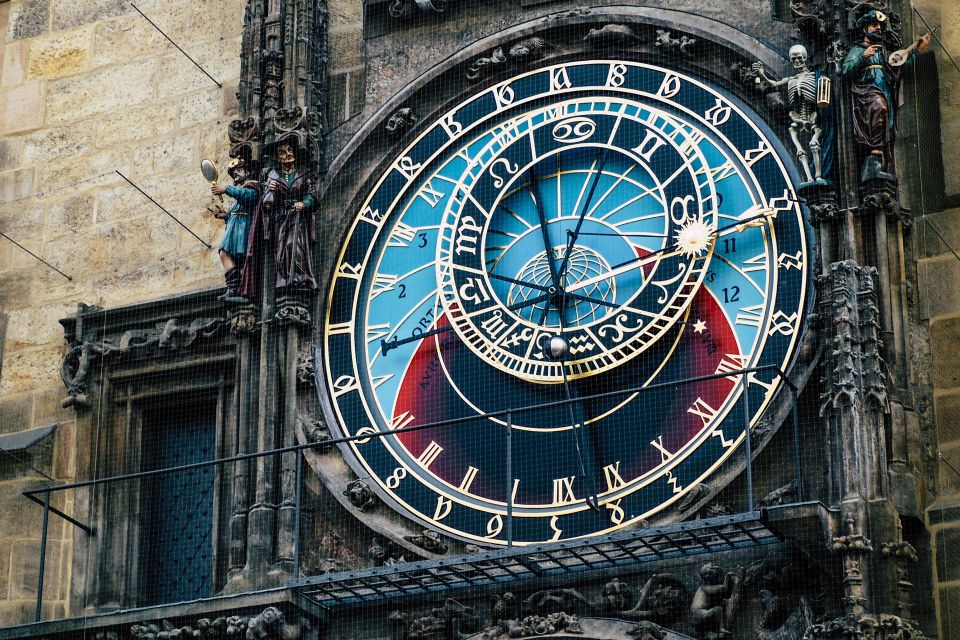
- Prague Astronomical Clock details plus the fact there were three time systems used in the Middle Ages
- Hussite Church context and events tied to the defenestration and the Thirty Years’ War
- Charles Bridge photo time with views over the city and the river
- Palaces and churches along the walk showing how Prague layers styles over time
From Celetná to Charles Bridge: a tight 90-minute route
This tour is built for people who want the big Prague hits without spending half the day in transit. You start at Celetná 601/5, in front of the Swarovski shop, and you finish at Karlův most (Charles Bridge) in the Malá Strana area. The duration is about 90 minutes, which means you’ll be walking at a steady pace from the Old Town core toward the bridge.
It’s also a great fit if you prefer structure. You get stops that flow logically: Old Town Square, smaller squares nearby, then key streets, and finally the bridge area. The guide’s job is to help you connect architecture, names, and historical events so the city stops feeling like a list of postcard spots.
Because this is a walking experience, the practical part matters. Wear comfortable shoes and bring a camera if you like photos, since there’s explicit emphasis on taking unique shots—especially once you’re on/near Charles Bridge.
You can also read our reviews of more walking tours in Prague

Celetná Street, Týn Yard, and Ungelt: where the walk gains direction
Right at the start, the tour nudges you into the rhythm of the Old Town. The first named stop is Týn Yard – Ungelt, with a short guided segment. Even in a small time window, this is useful because it sets expectations for what comes next: you’re not just walking from one famous building to another. You’re moving through a district where trade, power, and belief shaped the streets and the squares.
From here, the tour heads into the heart of Old Town. If you’re arriving in Prague for the first time, this early context helps you understand why Prague’s historic center feels like it has layers. When a guide connects a street or yard to the wider story, you get a mental map, not just a memory of photos.
Old Town Square: the Prague you thought you knew, explained for real
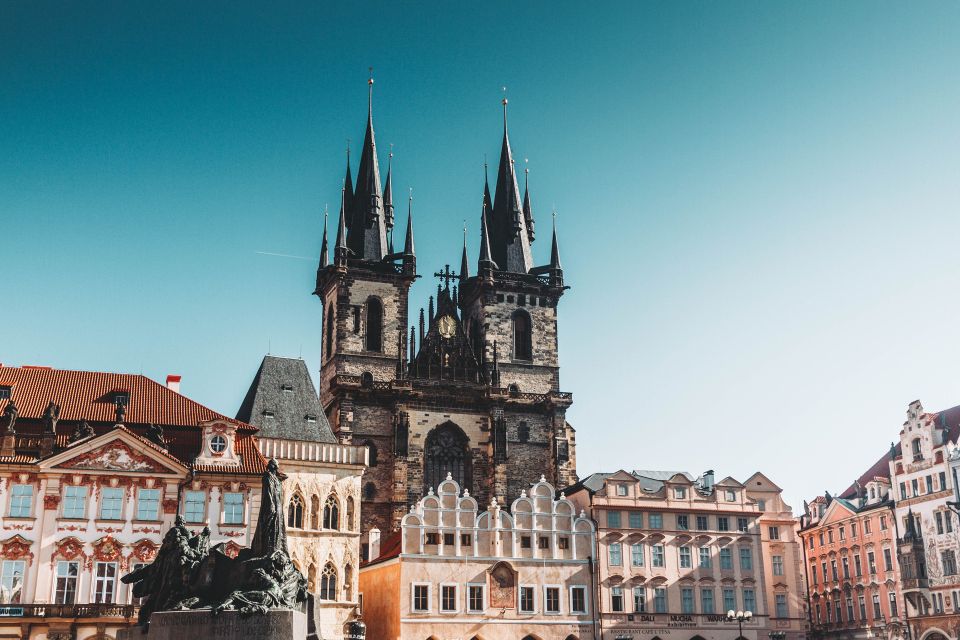
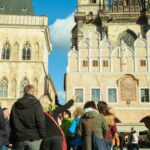
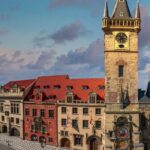
Old Town Square is the centerpiece, and the guide spends about 35 minutes there for a reason. This is where Prague’s identity shows up in stone, sculpture, and symbolism, not just in a few “pretty buildings.”
Two things make this stop especially valuable. First, you’ll get an explanation of the two monuments on the square that face each other: the monument to Jan Hus and the Marian column. That pairing is intentionally contradictory in message, and the guide helps you understand why the contrast matters. You’ll stop seeing them as just separate landmarks and start reading the square like an argument.
Second, you’ll get a guided walkthrough of the Prague clock—including details and a key historical twist. The tour explains that three time measurement systems were used in the Middle Ages. That detail alone changes the way you look at the clock. Instead of treating it like a single “cool medieval gadget,” you understand it as a window into how people organized time when modern conventions didn’t exist yet.
What to watch for while you’re there
If you want to make this moment count, stand so you can see the clock and then turn your attention back toward the monuments opposite it. The guide’s explanation helps you spot what connects the square’s message to the larger story of Prague and Bohemia.
Malé Náměstí and Mariánské náměstí: small squares, big context
After Old Town Square, the tour slips into nearby space: Malé Náměstí and then Mariánské náměstí. These stops are shorter—just a few minutes each—but that’s part of the point. Prague’s center isn’t one giant “theme park.” It’s a set of connected public spaces, each with its own role.
This is where you’ll start to appreciate architectural diversity, one of the tour’s stated highlights. You’ll see how styles and functions shift from block to block, even when the area feels close enough to be one continuous scene. For me, that’s one of the best ways to understand Prague: don’t just follow the tallest headline building—notice the surrounding spaces that make the city feel lived-in, even centuries later.
The guide’s job here is to keep you oriented so the walk doesn’t feel like drifting. If you’ve ever wandered Old Town on your own, you’ll probably find that these “in-between” stops reduce the feeling of being lost.


Charles IV and the Hussite thread: Prague’s story behind the stones
A big part of why this tour is worth doing is how it ties landmarks to events. The tour focuses on the destiny of the Czechs and their fight to break free from the domination of the Habsburg dynasty and the Catholic Church. It also points you toward the development of one of the first Protestant churches in Europe: the Hussite Church.
Then comes the event that connects personal drama to world history. The tour explains how one of Prague’s famous defenestrations sparked the Thirty Years’ War, and what that meant for the people of Bohemia. Even if you’ve heard the word defenestration before, hearing how it fits into the broader political and religious conflict makes it feel less like a trivia fact and more like a turning point.
And Charles IV isn’t treated as a name dropped for effect. The tour connects his 14th-century achievements—during Prague’s Golden Age—to what you’re actually seeing in the city. When a guide explains that these buildings and monuments aren’t just decoration, you start noticing how Prague broadcasts power, faith, and memory in public spaces.
Church of Our Lady before Týn, plus the Hussite stronghold feeling
One of the major church stops on the way is the Church of Our Lady before Týn. The tour frames it as the stronghold of the Hussite Church, which gives you a lens for looking at religious architecture. Even if you don’t know the detailed theology, you can understand the key takeaway: these were not passive buildings. They were part of how belief and identity took shape in the streets.
If you’re the kind of person who likes to connect architecture to the human story behind it, this is where the tour tends to “click.” You stop seeing church exteriors as generic Gothic or historic backdrops and start recognizing them as statements in a long debate over authority.
Stone Bell House, Charles IV’s birthplace, and the palaces: Prague’s power addresses
As you continue through the route, the tour names a sequence of sites linked to leadership, civic life, and style shifts. You’ll hear about the Stone Bell House, the birthplace of Charles IV, and the Town hall with its successive extensions. The point isn’t just to memorize names. It’s to show that Prague’s civic core kept expanding and reshaping over time.
You’ll also pass by palaces, including the Kinsky palace and the Granovsky palace, described as an Italian Renaissance masterpiece. That’s a strong reminder that Prague wasn’t isolated. Its elite culture absorbed outside influences, and you see those influences in the look of the buildings.
If you’re photographing, treat the palaces as your “texture stops.” Get a shot that includes architectural details rather than just the facade. The guide’s framing helps you know what details are worth capturing.
Clementinum and Saint Nicholas: religious Prague beyond one landmark
The tour also includes the Clementinum and the Church of Saint Nicolas (Staré Město). These stops broaden the religious picture so you’re not stuck with a single “Hussite only” viewpoint. Instead, you get a sense that Prague’s spiritual life changed over time and showed up through different institutions.
This part matters because it helps you avoid a common travel mistake: flattening history into a single theme. Prague is full of competing narratives, and the tour’s selection of religious sites reflects that. You end the walk with more than one lens for understanding what you saw.
Karlova and the last approach: getting ready for Charles Bridge
On Karlova, the tour tightens the pace toward the finishing area. This short segment is useful because it prepares you for the final payoff: the bridge views and the overall city perspective.
If you’ve done day trips before, you know the danger of the final section: you arrive tired, and the best moment is wasted. Here, you can aim to save your energy for the last stretch. If you want the unique photo opportunities promised on the tour, this is the time to do it—because the next stop is where the city opens up.
Charles Bridge: views, perspective, and photo time
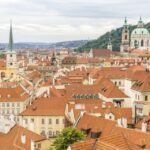
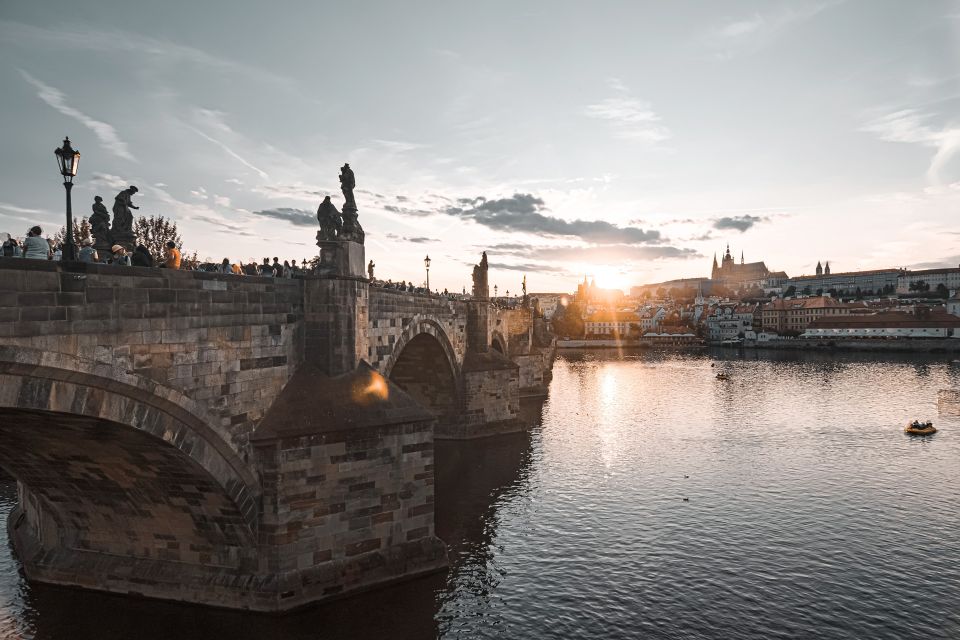
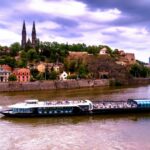
The last guided segment is about 25 minutes at Charles Bridge, with the official finish at Karlův most. This is the part where the route earns its keep. Instead of feeling like you’ve walked from monument to monument, you see how Prague looks from the river corridor—how the Old Town and the bridge area connect visually.
The guide’s storytelling likely continues here, but even without that, Charles Bridge is a strong visual ending. The highlight specifically calls out unique photo opportunities and views of the city from the bridge, so plan to give yourself space for photos rather than trying to “speed through” the finish.
Why this tour feels like value at $19
At $19 per person for roughly 90 minutes in French, you’re paying for something more than walking. You’re paying for interpretation. That matters in Prague, because the city rewards people who understand what they’re looking at: why monuments face each other, why the clock’s details matter, and why religious and political conflicts left marks you can still see.
You also get a guide licensed by the Czech Ministry of Tourism. That’s a practical quality signal. In a paid walking tour, the difference between a generic commentary and a focused explanation is often what separates a forgettable stroll from a memorable one.
The main tradeoff is scope. This doesn’t include transport tickets, food and drinks, or hotel pickup. So if you need a seamless door-to-door service, you’ll pay extra for that elsewhere. But if you can meet the group and walk a bit, this price-to-time ratio is strong.
Who should book this Prague tour in French
This tour suits you if:
- you want a structured French-speaking overview of Prague’s Old Town to Charles Bridge corridor
- you like history that’s tied to specific places, not abstract dates
- you want help interpreting contrasts like Jan Hus vs the Marian column and the story behind the defenestration
- you enjoy taking photos but need guidance on what to photograph and why
It may not be the best fit if:
- you dislike walking (it’s a guided walk across multiple squares and streets)
- you want lots of free time to linger inside buildings
- you’re hoping for hotel pickup or included transport
And since the guide matters so much, it’s good to know that recent participants praised the energy and attentiveness of guides such as Alexandre, including how well he handled the group and shared his depth of knowledge in a way that kept the visit fluid.
Final call: should you book it
I’d book it if you’re aiming for an efficient, place-based understanding of Prague in French. The combination of Old Town Square symbolism, the clock’s Middle Ages time detail, and the Hussite-to–Thirty Years’ War connection is exactly the kind of context that makes Prague feel less like a maze of sights and more like a coherent story.
I’d skip it only if you want a long, slow exploration with lots of unstructured downtime, or if your travel style depends on included transport and pickup. For most first-timers and many return visitors who want the narrative spine, this is a solid use of 90 minutes.
FAQ
Where is the meeting point?
You meet at Celetná 601/5, in front of the Swarovski shop.
How long is the walking tour?
The tour lasts about 90 minutes (approximately 1.5 hours).
Where does the tour finish?
The tour finishes at Karlův most (Charles Bridge), Praha 1-Malá Strana.
Is the tour in French?
Yes. The tour and live guide are in French.
What’s included in the price?
Included: a local guide licensed by the Czech Ministry of Tourism, plus a walking guided tour of about 1.5 hours in French.
What is not included?
Not included: pick-up and return to the hotel, transport tickets, and food and drinks.
How do I get to the meeting point by public transport?
You can take the metro and get off at Staroměstská, Mustek, or Náměstí Republiky (lines A and B). You can also take the tram to Jindřišská (lines 3, 5, 6, 9, 14, 24). From the station exit, it’s about 10 minutes on foot.
Can I cancel or reserve without paying right away?
Yes. You can cancel up to 24 hours in advance for a full refund, and there is a reserve now & pay later option.