REVIEW · PRAGUE
Prague Old Town and Jewish Quarter Walking Tour
Book on Viator →Operated by McGee's Trips & Tickets · Bookable on Viator
Prague makes more sense on foot. This 2-hour walk strings together Old Town sights and Jewish Quarter stops with a real guide instead of a guidebook scroll.
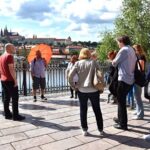
I especially like the small-group feel (max 30, and it often stays easy to hear) and the way the guide turns famous facades into clear context. I also like that you get your bearings fast: big-name landmarks show up, but so do the lesser-known corners that help the city click.
One watch-out: you’ll mostly be seeing exteriors from the street, and interior access (like the Spanish Synagogue) can be limited depending on Jewish holidays.
In This Review
- Key points to know before you go
- Why this 2-hour walk is such a good first move
- Meeting at Týnská 627/7: simple start, no hotel chaos
- Staroměstské náměstí and the landmarks that set the whole tone
- Church facades, Charles IV connections, and the Gothic-to-gothic feel
- The route’s “different Prague” stop: Karolinum and Theatre Des États
- Cubism, a fiery legend, and St. James after the burn
- Týn Yard and Ungelt: the courtyard that makes Prague feel secret
- Maisel Synagogue to the Old Jewish Cemetery: layers of a different kind of Prague
- Klausen Synagogue and the Old-New Synagogue: why these buildings are still alive
- Spanish Synagogue, the Moorish interior idea, and Kafka nearby
- What the guides do well: stories that make the street readable
- Value for $24.19: what you’re really paying for
- Pace and comfort: what to expect on cobblestones
- Who this Prague Old Town and Jewish Quarter tour suits best
- Should you book this walk?
- FAQ
- How long is the Prague Old Town and Jewish Quarter walking tour?
- Where does the tour start, and where does it end?
- What time does the tour begin?
- Is the tour offered in English?
- Is the Old Jewish Cemetery included in the ticket price?
- Are children allowed, and do they pay?
Key points to know before you go
- Start smart at Týnská 627/7 so you don’t waste time hunting for the group.
- Pace is first-timer friendly, about 2 hours, with quick stops that keep momentum.
- Landmark mix feels balanced, from the Astronomical Clock area to the Jewish Quarter synagogues.
- You’ll learn more than dates, including reform-era history like Jan Hus and why the Jewish Quarter looks the way it does.
- It’s built for photos, with lots of striking facades along the route.
- It can be lightly physical, since a few stops involve stairs and uneven old-city walking.
Why this 2-hour walk is such a good first move
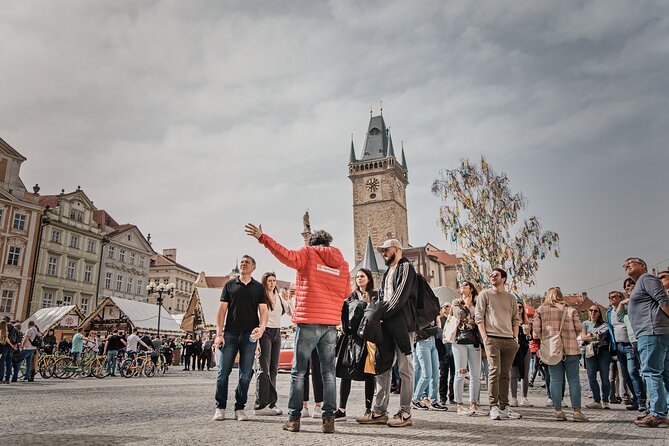
Prague’s center can feel like a highlight reel that moves too fast. This tour is designed to fix that problem. In about 2 hours, you get a guided pathway through the Old Town core and then into the Jewish Quarter area, with each stop connected to the next.
What I like is the focus on orientation and meaning. You’re not just ticking off postcard sights; you’re learning what they were for and how they shaped the city. Guides such as Allen, Richard, Radek, Martin, and Vojta are repeatedly praised for making the stories land—mixing solid history with small human details that keep you paying attention.
The timing also matters. If you’ve only got a morning or you want one easy activity before dinner, this fits. If you want to go deeper later (Prague Castle, museum time, synagogue interior visits), this walk gives you the map in your head first.
You can also read our reviews of more walking tours in Prague

Meeting at Týnská 627/7: simple start, no hotel chaos
The meeting point is clearly defined at Týnská 627/7, Staré Město (Old Town), Prague 1, right in front of McGee’s Trips & Tickets. The tour starts at 10:30 am, and it ends back at the same meeting spot, so you don’t need a transportation plan afterward.
This matters because Prague streets can be a maze when you’re jet-lagged. Being able to start and finish at the same exact place makes your day smoother. Plus, the tour is in English, so you won’t be stuck guessing at signage or relying on half-translated audio.
You also get a mobile ticket. That’s one less thing to print and lose while you’re juggling cameras, water, and snack runs.
Staroměstské náměstí and the landmarks that set the whole tone
You kick things off near the heart of the city at Staroměstské náměstí (Old Town Square). This is the kind of place where your brain wants to label everything as pretty, then move on. The guide helps you do the more useful thing: understand what you’re actually looking at.
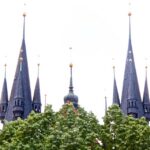
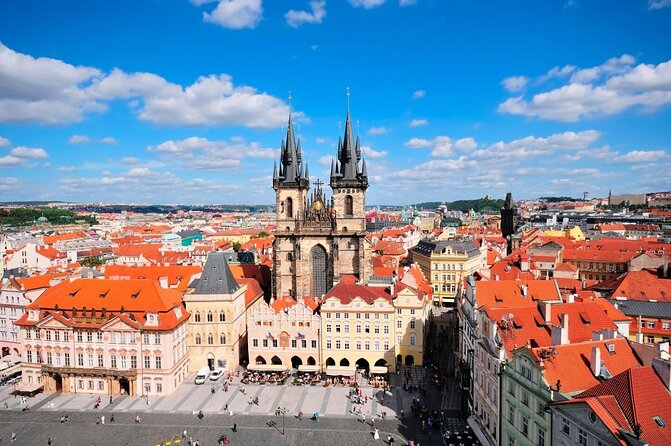
From there, you’ll get quick orientation stops around the square area, including Church of Our Lady before Týn. Even in a short look, this helps you connect Prague’s skyline to the bigger religious and cultural currents that shaped the city.
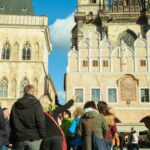
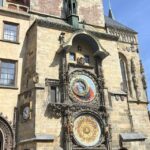
A highlight is the stop at Old Town Hall and the Astronomical Clock. This clock is famous for a reason, and the best part of a guided explanation is that it turns the clock face into a story you can hold onto. You’ll learn why it’s considered a medieval miracle and how its multiple measurement systems work at the same time. Once you understand what’s being shown, you can look up at the clock later and actually see it.
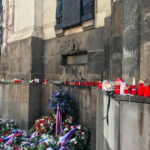
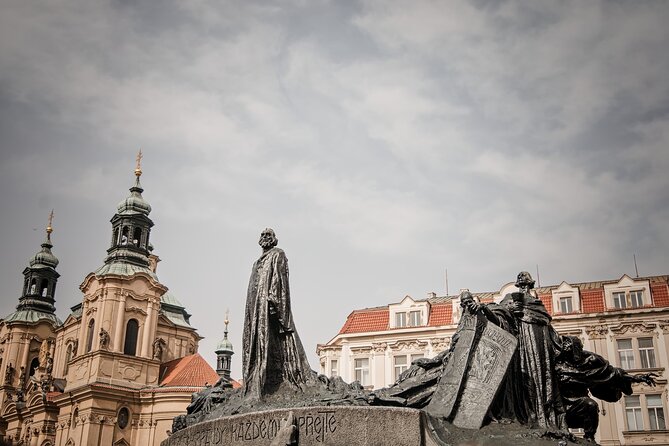
You also pass key touchpoints tied to Czech identity and reform history—such as the Jan Hus Monument. It’s a small stop, but it carries weight. If you’ve only ever heard Hus as a footnote in textbooks, the guide gives you a human reason his name keeps echoing through Czech history.
Church facades, Charles IV connections, and the Gothic-to-gothic feel
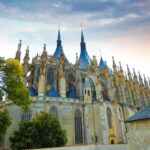
Prague’s Old Town can blur together unless you’re paying attention. The route helps you stay oriented by placing contrast next to contrast: churches, civic buildings, and distinctive Gothic details.
One quick exterior stop is the Stone Bell House, described as one of Prague’s important Gothic buildings. You’ll hear a mention of its connection to Charles IV, which adds a layer of meaning when you spot the building from street level.
There’s also a stop at an exterior view of a palace in the square area, tied into the bigger story of the city’s rulers. Again, this is fast, but it’s helpful. Prague is full of buildings that look similar until you learn the one detail that makes each one distinct.
If you like architecture but get impatient when tours slow down too much, this section is a sweet spot. It keeps you moving while still giving you enough context to feel like you’re walking with a local who knows what to point out.
The route’s “different Prague” stop: Karolinum and Theatre Des États
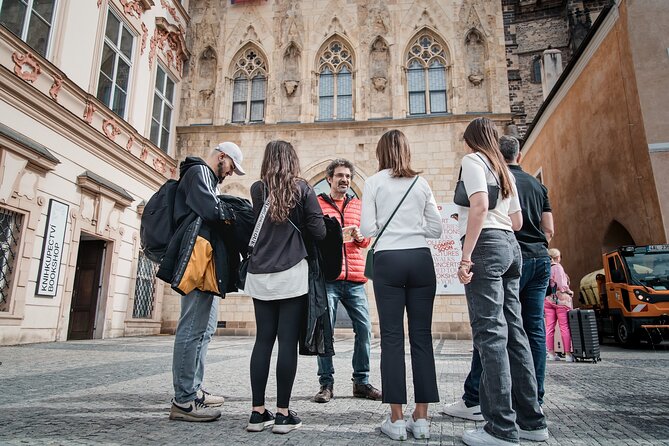
Not every Prague walk stays stuck in medieval lanes. Here you’ll get a couple of quick stops that widen the story.
At Karolinum, you’ll admire the exterior of the historic university building, noted as the first in Central Europe. Even without going inside, this is a great reminder that Prague wasn’t just about kings and churches. It was also about learning and institutions.
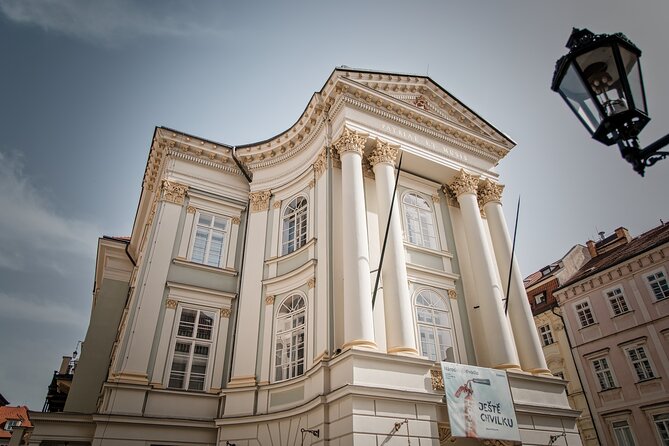
Then comes Theatre Des États. This stop is short, but memorable if you care about European arts history. You’ll hear that Mozart’s Don Giovanni was premiered here, which is a fun fact that makes the building feel alive rather than static.
These two stops help you see Prague as layered, not stuck in one era.




Cubism, a fiery legend, and St. James after the burn
The walk turns more characterful as you move toward buildings with strong style signatures.
You’ll see the House of the Black Madonna, described as the only pure cubist building in Prague. Cubism usually gets linked with specific art museums, not street corners—so seeing it here changes the way you think about what Prague can contain.
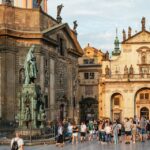
Then there’s Church of St. James. The big idea is the building’s transformation: founded in Gothic style, it was later burned out and rebuilt in the Baroque style. That’s the kind of timeline you can often miss unless someone narrates it for you.
There’s also mention of a legend tied to a hand-hung element near the main entrance. It’s the sort of small story that makes you look harder when you come back later. Even if you don’t remember every historical name, you’ll remember the detail and the feeling it creates.
Týn Yard and Ungelt: the courtyard that makes Prague feel secret
One of the best parts of walking tours is stumbling into a “how did I miss this?” moment. Here, that’s the Týn Yard – Ungelt, a medieval courtyard tucked inside the city center.
You’ll learn it was tied to trade customs—merchants from foreign countries paid customs on goods brought to Prague. That’s a strong reminder that Prague’s economy was never just local. This city had international pull, and trade left architectural fingerprints behind.
This courtyard also gives you a visual break from the main streets. It’s a small pause that makes the whole route feel more like exploring and less like marching.
Maisel Synagogue to the Old Jewish Cemetery: layers of a different kind of Prague
Crossing into the Jewish Quarter area shifts the atmosphere. The architecture changes, and so do the kinds of stories you’re hearing.
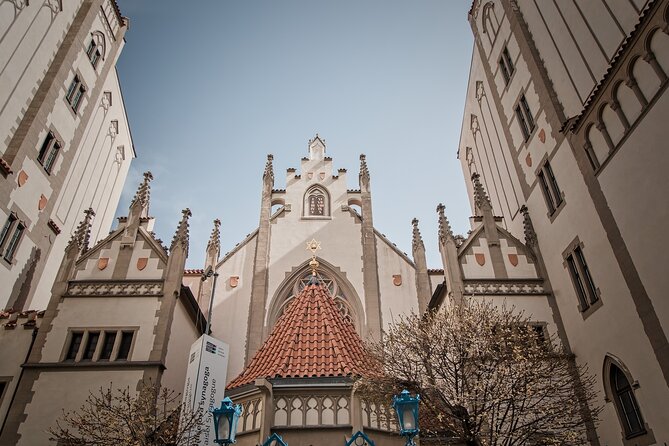
At Maisel Synagogue, you’ll get an exterior view of a neo-Gothic synagogue and learn about Jewish history in Czech lands. Even with quick stops, the guide’s job is to show you why these buildings matter beyond beauty.
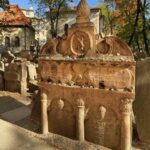
Then comes the Old Jewish Cemetery. This is important because it’s not a facade—it’s part of how communities remember and mark time. You’ll be surprised by the layering of gravestones.
One key practical note: admission for the Old Jewish Cemetery is not included. If you want to spend time there and not feel rushed, plan to pay that separate entry on your own.
Klausen Synagogue and the Old-New Synagogue: why these buildings are still alive
Next is Klausen Synagogue, described as the largest synagogue in the former Prague Jewish ghetto. The focus here is on Jewish customs and burial ceremonies—so instead of treating the site like a photo spot, you understand what it represents.
You’ll then reach the Old-New Synagogue, noted as one of the first Gothic buildings in Prague and described as the oldest surviving medieval synagogue with a twin-nave design. The exterior connection to the story of stones from Solomon Temple in Jerusalem is the kind of myth-and-meaning detail that makes the building feel like it carries generations of belief.
Even if you’re not the type who reads plaques, this part of the walk tends to stick. The guide’s explanations give you a “why it exists” framework, so the architecture reads like a message, not just old stone.
Spanish Synagogue, the Moorish interior idea, and Kafka nearby
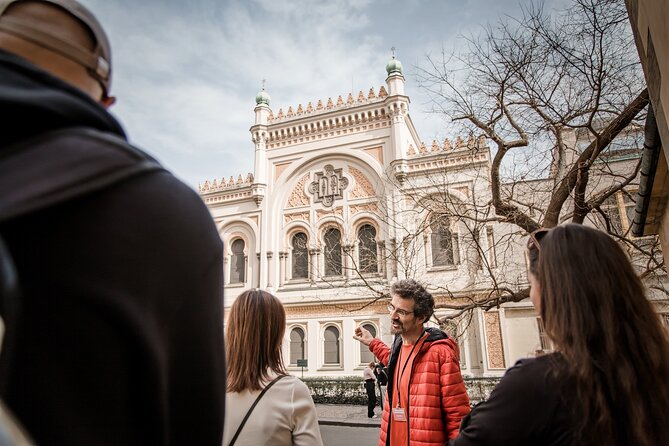
The stop at the Spanish Synagogue (Jewish Museum in Prague) is one of those Prague moments where the architecture feels like it’s been imported from somewhere else. You’ll hear about its Moorish interior design, influenced by the Alhambra.
Important reality check: interior access can be affected by Jewish holidays. One guide-led experience even came with a closed-door disappointment about getting inside. So if your priority is seeing interiors, treat the Spanish Synagogue as a “best case” bonus rather than a guaranteed.
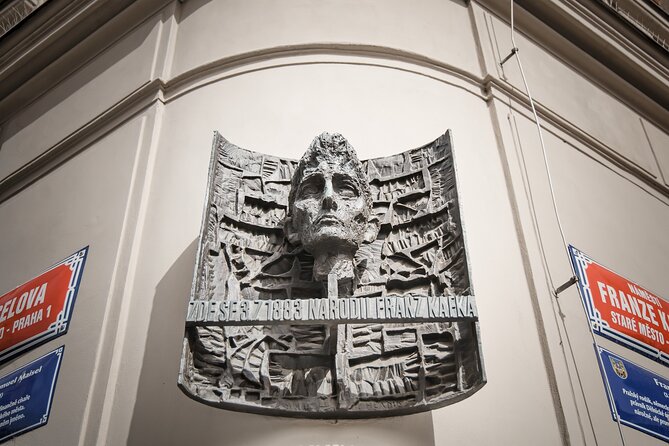
Then you finish with the Franz Kafka statue by Jaroslav Rona. It’s a playful capstone. Kafka can feel heavy on the page, but seeing the monument in daylight helps him sit in context—Prague as the city that shaped the writer, not just the writer who shaped literature.
What the guides do well: stories that make the street readable
The most consistent praise across different departures is about the guide’s delivery. People name instructors like Allen, Richard, Maxim, Vojta, Radek, Martin, Markus, Mark, Vojtech, and Barbara—and the common thread is that they explain the city with confidence and easy-to-follow pacing.
A big plus is how they blend history with humor and small legends. That combination keeps you from tuning out during the quick exterior stops. It also means the tour doesn’t become a list of dates. Instead, it becomes a set of cause-and-effect ideas: why the clock works the way it does, why reform history matters in Czech identity, and why Jewish buildings and cemeteries look like they do.
Another practical strength is question time. With fewer people in some departures, it’s easier to ask what you’re curious about—whether that’s architecture, symbols, or just how to make sense of what you’re seeing.
Value for $24.19: what you’re really paying for
At $24.19 per person for about 2 hours, the value is in focus. You’re not paying for museum tickets across multiple indoor attractions. You’re paying for a local guide to connect the dots across the Old Town and Jewish Quarter streets—so you don’t wander in a fog.
Also, most stops are free by default because you’re viewing exterior landmarks, not stacking admissions. That helps keep the budget predictable. Your likely extra cost is the Old Jewish Cemetery, since that admission isn’t included.
If you’re the kind of traveler who enjoys short, structured walks and then prefers to explore on your own afterward, this price makes sense. You’re buying time saved and context earned.
If you want deep interior access at each stop, you’ll need to plan other visits too. This tour is built for orientation and understanding, not an all-access pass.
Pace and comfort: what to expect on cobblestones
Most travelers can participate, and the meeting point is near public transportation. That’s helpful in a city where walking is inevitable.
But do plan for real streets. One participant flagged the number of steps (around 82 steps) as a concern due to a heart condition. Even if your route varies slightly day to day, treat this as walking with uneven ground and some stairs—bring comfortable shoes and take breaks when you need them.
The weather can also change how the walk feels. If you’re going on a rainy day, bring a light rain layer. You’ll still get your tour, just with extra slip-and-slide caution on older cobblestones.
Who this Prague Old Town and Jewish Quarter tour suits best
This is a strong pick if:
- You want a first-day or first-full-day orientation walk.
- You like seeing lots of important buildings without committing to a long day.
- You want Jewish Quarter context that goes beyond a single museum visit.
It may be less ideal if:
- You’re set on seeing multiple synagogue interiors during the tour window.
- You have limited mobility and stairs are a hard stop for you.
If you’re traveling solo or as a couple, it also works well. The max group size is 30, and some departures are reported as very small—so you get a more personal experience than the large-bus crowd.
Should you book this walk?
I’d book it if you want Prague to feel understandable by the end of the morning. This tour is priced fairly for what it delivers: a guided route that hits major Old Town anchors like the Astronomical Clock area, then shifts into the Jewish Quarter for synagogue and cemetery context you can’t easily assemble on your own.
The big deciding factor for me is your expectations about interiors. Go in knowing you’ll get excellent street-level meaning and likely mostly exterior views, with interior access possibly depending on holiday timing at places like the Spanish Synagogue.
One more tip: if you’re booking close to your travel dates, keep an eye on the minimum-participant requirement. If the tour can’t run with enough people, you may be offered an alternative date or a refund.
If that sounds like your style, this is an efficient, memorable way to start learning Prague the right way.
FAQ
How long is the Prague Old Town and Jewish Quarter walking tour?
The tour lasts about 2 hours.
Where does the tour start, and where does it end?
It starts at Týnská 627/7, Staré Město, 110 00 Prague 1, and it ends back at the same meeting point.
What time does the tour begin?
The start time is 10:30 am.
Is the tour offered in English?
Yes, the tour is offered in English.
Is the Old Jewish Cemetery included in the ticket price?
No. The Old Jewish Cemetery has admission that is not included.
Are children allowed, and do they pay?
Children up to 6 years old are free. Children must be accompanied by an adult.