REVIEW · PRAGUE
Prague: Communists and World War II Tour
Book on GetYourGuide →Operated by Fun in Prague · Bookable on GetYourGuide
Prague turns political fast. This Prague Communists and World War II Tour follows the city’s darker chapters in a compact 2 hours, from the road to WWII to the Cold War symbols still visible today.
What I love most is how you get street-by-street context, not just dates in a textbook, and how the tour brings Communism to life with concrete sights like the massive Stalin monument. You also walk through areas tied to the Nazi era, including streets associated with the Gestapo’s rule.
One drawback: the tone is heavy. It is a thinking tour about war, occupation, censorship, and protest—so bring comfy shoes and a bit of emotional stamina.
In This Review
- Key things I’d circle before you go
- Starting at Křižovnické náměstí: find the orange umbrella
- Národní and the New Town: where the Nazi era gets explained in real space
- Wenceslas Square and Republic Square: Prague’s politics in public space
- The 30-meter Stalin statue: Communism as a physical presence
- Jan Palach, burned books, and the Velvet Revolution’s street-level impact
- Price, duration, and who this Prague WWII and Communism tour fits best
- Should you book the Prague Communists and World War II Tour?
- FAQ
- FAQ
- Where does the tour start?
- How long is the tour?
- How much does it cost?
- What can I expect to see on the tour?
- Are museum tickets included?
- What languages are available?
- What should I bring?
- Is anything not allowed during the tour?
- Can I cancel for a refund?
- Do I need to pay right away?
Key things I’d circle before you go
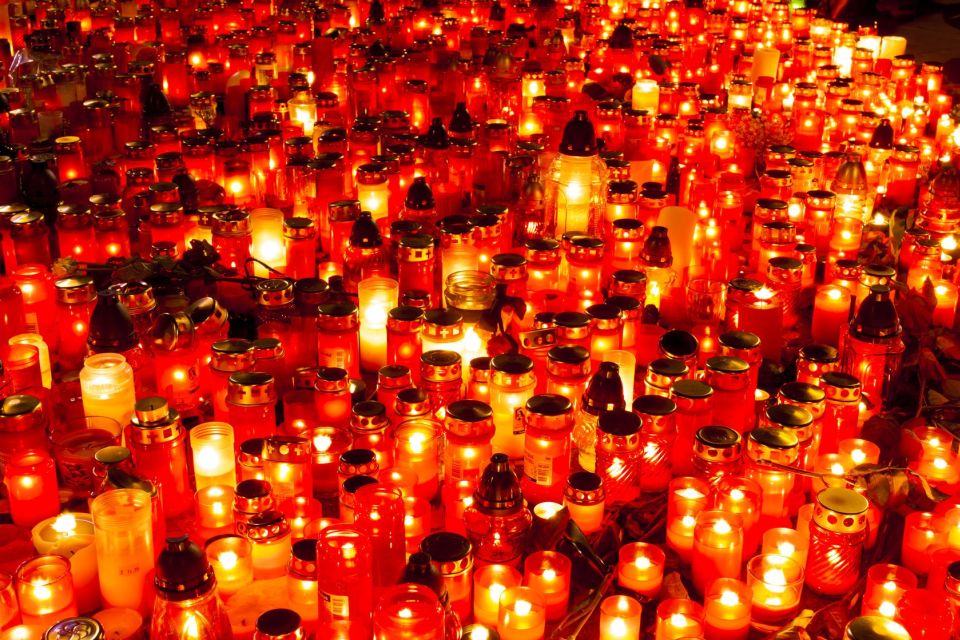
- You connect WWII to post-war Communist control across the same city blocks and public squares.
- 30-meter Stalin statue time: the Cold War isn’t abstract here; it’s a towering landmark.
- WWI-to-WWII cause and effect: you’ll hear how earlier crises fed what came next.
- You follow Czech resistance stories tied to censorship and political courage, including Jan Palach and the Velvet Revolution.
- You walk major public spaces from Národní and Wenceslas Square to Republic Square, not just side streets.
- Local guides bring it to life in English, German, or Russian, and you can ask questions if you want more detail.
Starting at Křižovnické náměstí: find the orange umbrella
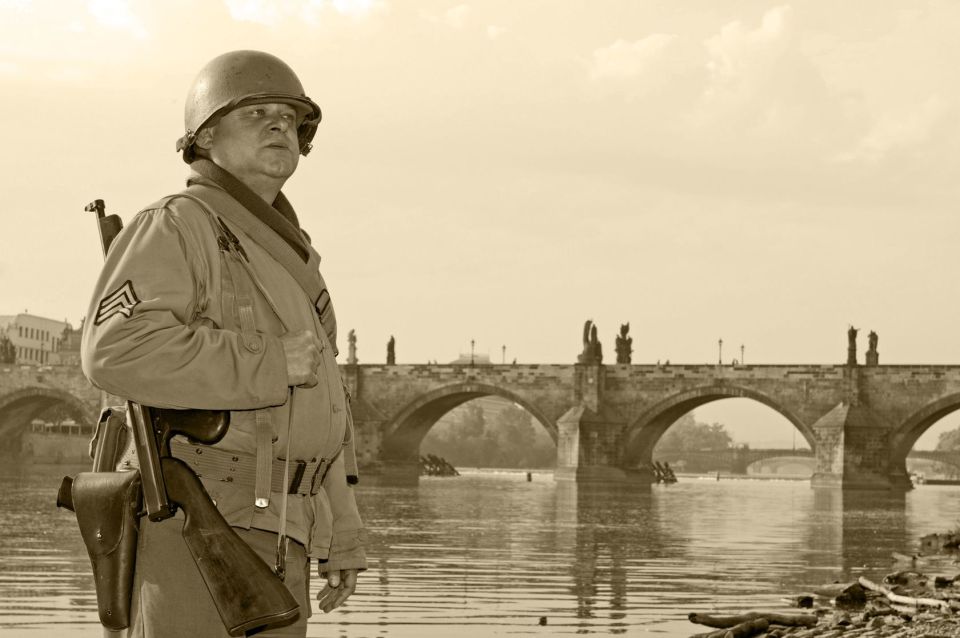
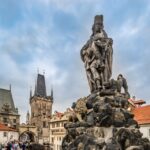
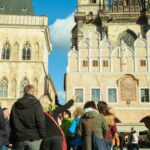
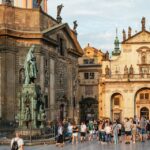
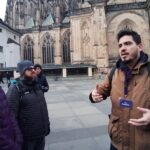
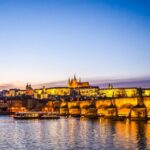
The tour starts near the Charles Bridge area at Křižovnické námesti, right in front of the bridge area next to the Statue Charles IV. The guide holds an orange umbrella, and that’s your main visual anchor.
I like this meeting setup because it puts you in the heart of Prague’s historic core before you start walking. The closest transit stop is Staroměstská, which is handy if you’re arriving from elsewhere in the city. Also, since the total walk is only 2 hours, you don’t need to plan an all-day history marathon—this is built as a tight hit.
Small practical tip: if you arrive and see multiple groups, don’t just grab the first umbrella you see. One past participant pointed out it can get confusing when several guides use the same orange umbrella, so watch for the correct tour group and pay attention to the guide’s details.
Overall, the start makes sense. It gives you a simple way to orient fast, then you jump into the 20th century story immediately.
You can also read our reviews of more tours and experiences in Prague.
Národní and the New Town: where the Nazi era gets explained in real space
One reason this tour works is that it doesn’t treat Nazi occupation as a distant chapter. You move along major thoroughfares—starting toward Národní and continuing through New Town—where your guide can point out how power reshapes everyday life.
You’ll hear how the political shocks of the early 20th century set up the crisis that became WWII. The route helps that message land because you’re standing in the kind of urban space where governments, propaganda, and policing concentrate. The tour also references streets where Nazi rule and Gestapo activity once operated, which changes the feeling of a stroll. It becomes less about pretty buildings and more about how control works.
Another detail I appreciate: the tour doesn’t only focus on the worst moments. It also helps you understand why ordinary people got pulled into extreme choices—acceptance, survival, resistance, or escape. Even if you already know the big WWII facts, you’re still likely to pick up connections you missed, especially around the timeline and how events escalated.
This portion is about setting the stage. If you want a historical spine for everything you’ll see later in Prague—memorials, plaques, political posters—you get it here.
Wenceslas Square and Republic Square: Prague’s politics in public space
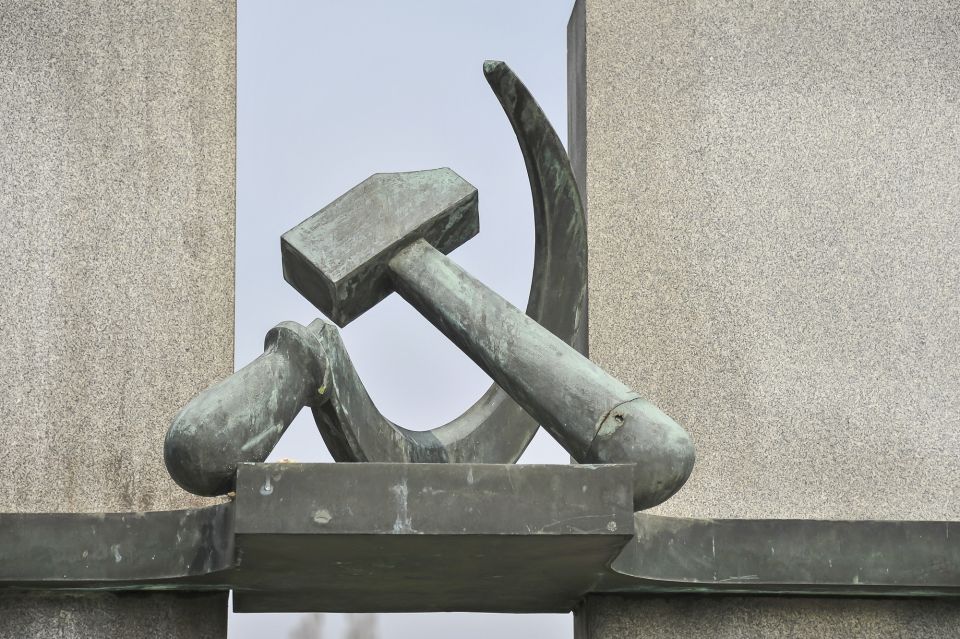
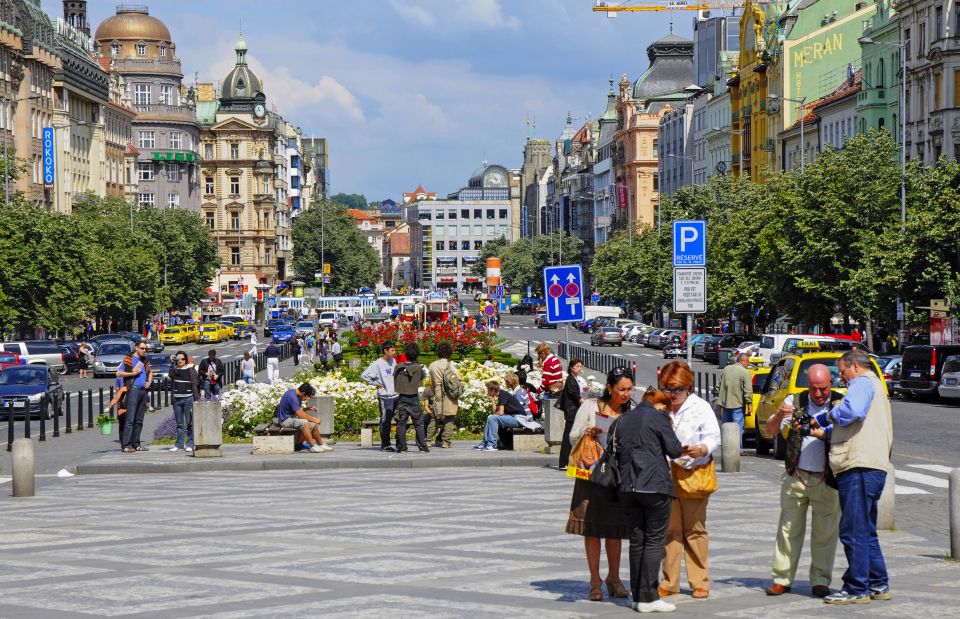
By the time you reach Wenceslas Square and then Republic Square, the story turns from invasion and occupation to what happens after. These are not quiet squares. They’re built for crowds and visibility, and that matters for a 20th-century political narrative.
On this tour, those spaces are used like a timeline you can walk through. You get to see how symbols, public messaging, and state power played out in daylight, not in secret archives. That’s a big part of why I think this works for first-timers. Prague’s famous architecture can make it tempting to stick to aesthetics, but here the squares steer you back to the people and decisions that shaped the country.
You’ll also hear how the creation of Czechoslovakia came about—why it formed, and why that mattered later. This is one of those topics that sounds abstract until a guide connects it to what the city did afterward: shifts in control, new institutions, and the next big conflict waiting in the wings.
If you’re the type who likes understanding why something is there, not just what it looks like, this is the part you’ll remember. You’ll start seeing Prague’s public spaces as political stages, not postcard backdrops.
The 30-meter Stalin statue: Communism as a physical presence
The highlight everyone talks about is the 30-meter tall statue of Stalin. Even if you don’t know the history in detail, that size does the teaching for you. It’s impossible to miss, and that’s the point: Cold War ideology was meant to be seen.
Here’s what I like about how this tour uses the statue. It doesn’t stop at naming a monument. You get context for what Communism meant in daily life after WWII and how control became part of the public environment. The guide explains the ups and downs of political life, so the statue becomes an entry point into a larger system rather than a one-off photo moment.
You’ll also hear about Russian occupation and how censorship hit real people. The tour specifically mentions black-listed books being burned, which is one of the clearest ways to understand how regimes try to reshape thought, not just governments.
When a guide connects these ideas to what you’re seeing on the street, you stop viewing monuments as static objects. They become evidence—of fear, propaganda, and the ongoing battle over whose story gets told.
Jan Palach, burned books, and the Velvet Revolution’s street-level impact
After the WWII and occupation chapters, the tour moves into the Cold War era and the resistance that finally broke through. This is where the emotional weight shows up more directly.
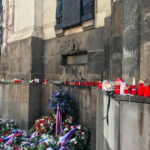
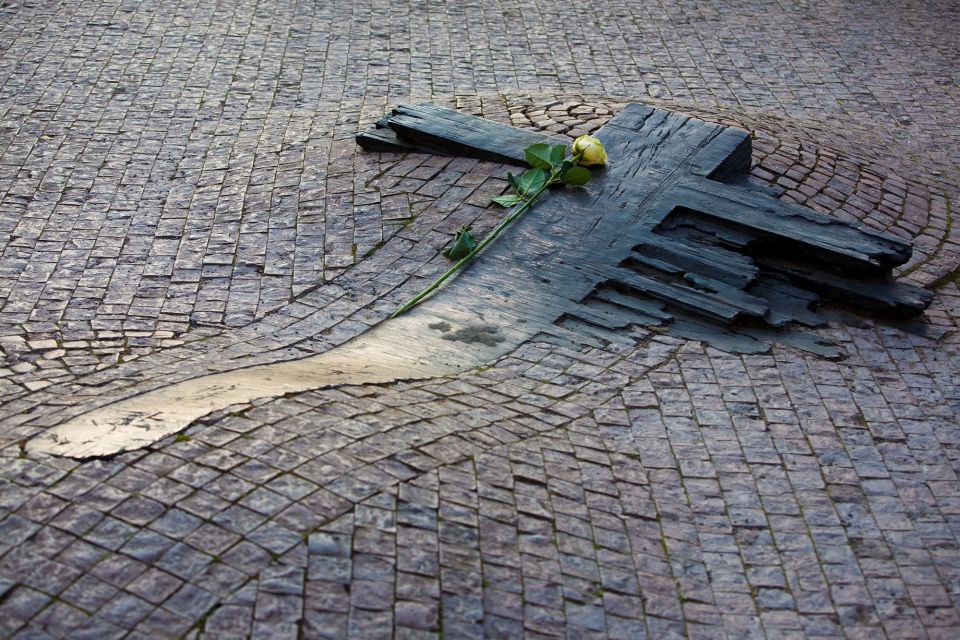
You’ll hear about Jan Palach, including why he set himself on fire, and you’ll connect that act to wider student and public unrest. You also get the link to the Velvet Revolution, which explains how political change came about without the kind of mass violence that scares people away from history tours.
This part matters because it turns Czech history into something personal. It’s not just who won wars. It’s what people risked to demand dignity and freedom. And since Prague is dense with symbols—statues, plaques, named squares—this tour helps you read them with intent.
Also, this tour isn’t only about despair. The arc goes toward change. You end up understanding why the country moved from one controlling system to another kind of political future, and why the last century’s decisions still shape how Prague thinks of itself today.
If you tend to skim history, don’t. Stay with the story. This is the segment that makes the earlier occupation and censorship feel like one continuous line, not disconnected events.

Price, duration, and who this Prague WWII and Communism tour fits best
At $29 per person for a 2-hour walking tour, the value is in the focus. You’re paying for a guided connection between key political turning points and the exact streets and squares where the power dynamics played out. With history like this, the guide’s ability to link scenes is what you’re really buying.
It can be a plus that the tour offers options for the Museum of Communism: you get a 10% discount coupon, and if you select it, museum entry is included. That pairing helps if you want more detail after the walk, especially for the censorship and daily-life side of the Communist era.
This is also a good tour if you like asking questions. Guides have been praised for staying sharp, answering lots of queries, and making the history feel organized. Names you might encounter include Barbara, Martin, Otakar, Inna, Illene, Geoff, and Dana—and each of them has been described as engaging and clear in different ways.
Who should book it?
- You want a first-timer framework for Prague’s 20th-century story.
- You like tours that prioritize meaning over pure sight-seeing.
- You’re okay with difficult topics and want the context.
Who might skip it?
- If you’re only in Prague for a quick photo stop and prefer light themes, this one can feel heavy.
Should you book the Prague Communists and World War II Tour?

I think you should book it if you want to understand Prague beyond the Old Town postcard. This Prague Communists and World War II Tour gives you a clear timeline—from WWII’s setup through Communism and on to the Velvet Revolution—using street corners, squares, and one unforgettable landmark: the 30-meter Stalin statue.
Book it especially if you enjoy guides who can explain why events happened, not just what happened. And if you’re the type who likes to connect history to what you’re physically seeing, this tour will make Prague feel like a living document, not a museum with good lighting.
FAQ
FAQ
Where does the tour start?
The tour starts at Křižovnické námesti, in front of Charles Bridge near the Statue Charles IV. The guide will be holding an orange umbrella.
How long is the tour?
It’s a 2-hour walking tour.
How much does it cost?
The price is listed as $29 per person.
What can I expect to see on the tour?
You’ll learn about events leading to WWII, life under Communism after WWII, and Czech political change in the Cold War era. You’ll also see the 30-meter tall statue of Stalin and walk through areas tied to WWII-era occupation.
Are museum tickets included?
A Museum of Communism entry ticket is included only if you select that option. You also get a 10% discount coupon for the Museum of Communism.
What languages are available?
The live tour guide is offered in German, Russian, and English.
What should I bring?
Bring comfortable shoes since it’s a walking tour.
Is anything not allowed during the tour?
Yes. Alcohol and drugs are not allowed.
Can I cancel for a refund?
You can cancel up to 24 hours in advance for a full refund.
Do I need to pay right away?
The listing offers a reserve now, pay later option, so you can book your spot and pay nothing today.