REVIEW · PRAGUE
Moriarty’s Phantom Trap Escape Game in Prague
Book on Viator →Operated by Questerland · Bookable on Viator
A ticking ghost trap in Prague. Moriarty’s Phantom Trap at Questerland mixes a spooky story, fast pacing, and real teamwork in about an hour. You’ll step into Moriarty’s world of fear and timing, where the feeling is less escape-hallway and more a living trap. It’s offered in English, and you get a private setup just for your group.
What I like most is the way the game leans into atmosphere: the timer pressure, the live guidance style, and the theatrical effects. I also appreciate how you can get help without killing the challenge; operators can feed hints through speakers when you truly stall, which keeps the game moving. In practice, that means you’re solving puzzles with your team, not waiting for someone to do it for you.
One consideration: this is not a throwaway puzzle hour. Reviews point to harder puzzles, and it can feel scary in a creepy-but-funny way. If you’re bringing very young kids or anyone who hates being unsettled, you’ll want to think twice and keep expectations realistic.
In This Review
- Key points before you book
- Moriarty’s Phantom Trap at Questerland: what the hour really feels like
- The story pressure: timer, fear, and the “trap” vibe
- Puzzles, props, and why the difficulty doesn’t feel random
- How help works when your team hits a wall
- Your stop at Questerland: arrival and the flow of the experience
- Price and value: is $47.18 worth it?
- Who Moriarty’s Phantom Trap is best for
- Staff and guidance: named operators make it feel human
- Should you book this escape game in Prague?
- FAQ
- How long is Moriarty’s Phantom Trap Escape Game?
- Is the experience offered in English?
- Is this game private or shared with other groups?
- Where do I meet, and where does it end?
- Do I need to bring anything like tickets?
- What’s the cancellation policy?
Key points before you book
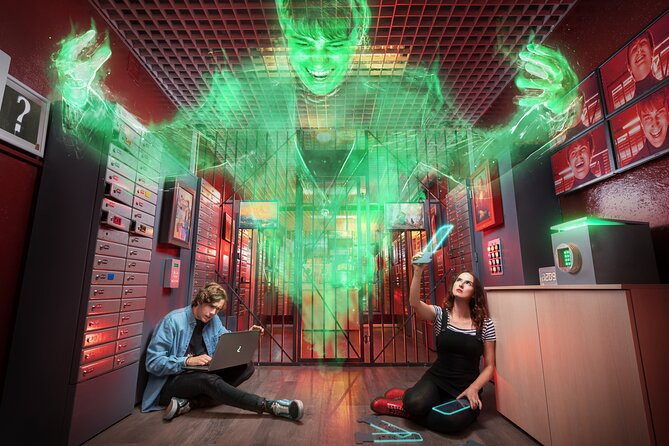
- English-language ghost story with a timer pressure that keeps you focused from start to finish
- Private group play so you’re not sharing the room or storyline with strangers
- Effects and props that add tension and make the puzzles feel more physical
- Operator hints through speakers when you get stuck, so you’re not left totally stranded
- A real team challenge where solving feels satisfying, not just plugging numbers into a screen
Moriarty’s Phantom Trap at Questerland: what the hour really feels like
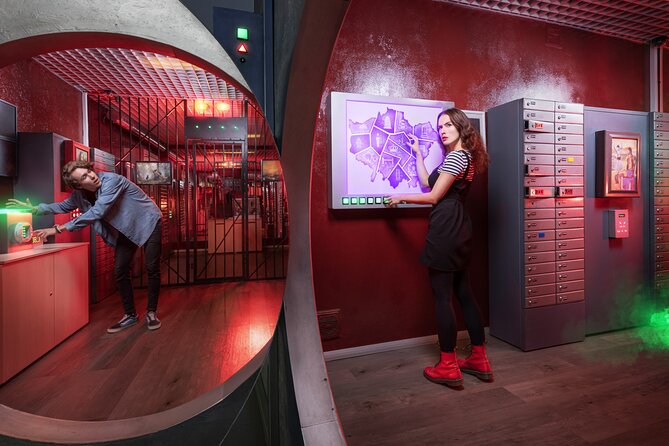
Prague has escape rooms. This one aims for something closer to a live scenario. At Questerland, you meet at Mánesova 1613/54 in Prague 2, right in Vinohrady, and then your group heads into the game world tied to Moriarty—Sherlock’s longtime nemesis. The premise is straightforward: years after Sherlock’s dealings, Moriarty’s spirit keeps playing. If you fall into the trap, the story frames it as serious stakes, with the clock running and no time to overthink whether it’s real.
That pacing matters more than you’d expect. When the timer is loud in your head, you work differently. You split tasks, you test ideas quickly, and you stop second-guessing your first clue. In an hour-long room, that’s the whole game. The goal becomes: figure it out, then act on it fast.
You also get the benefit of it being a team game. You’ll be working with your group, talking constantly, and comparing notes the way you do on a good walking tour—only here, the city sounds are replaced by puzzle cues and a spooky setup. Even if you’re not a puzzle person, the format tends to pull you in because someone in your group usually notices something clever: a pattern, a symbol, a mechanical detail, or a prop that looks too intentional to ignore.
You can also read our reviews of more tours and experiences in Prague.



The story pressure: timer, fear, and the “trap” vibe
The game’s concept leans hard on emotion and fear. The framing is that Moriarty’s spirit feeds off prisoners’ feelings—your anxiety, your uncertainty, your hesitation. That’s not just Halloween theater for show. It affects how you play, because you’ll keep feeling watched and rushed.
The timer is the mechanic you feel immediately. The moment you start, it’s tick-tock energy. There’s no slow ramp. Instead, you’re placed in a scenario where turning back isn’t really a thing. The experience is designed so you push forward through puzzles while the clock keeps tightening.
Here’s the practical part: that pressure works best if your team has a plan. Before you start, take five seconds to decide who looks for clues, who tries combinations, and who watches for changes. If you let everyone free-roam, you’ll waste time. If you coordinate, you’ll feel like you’re sprinting together—still frantic, but focused.
One small thing to note from the way the game is described: you may hear that you shouldn’t expect hints. But in real life, the help system is there. In fact, multiple people mention operators—like Šimon and Tom—sending hints through speakers when you’re stuck. So expect a system that tries to keep the immersion, not a system that abandons you.
Puzzles, props, and why the difficulty doesn’t feel random
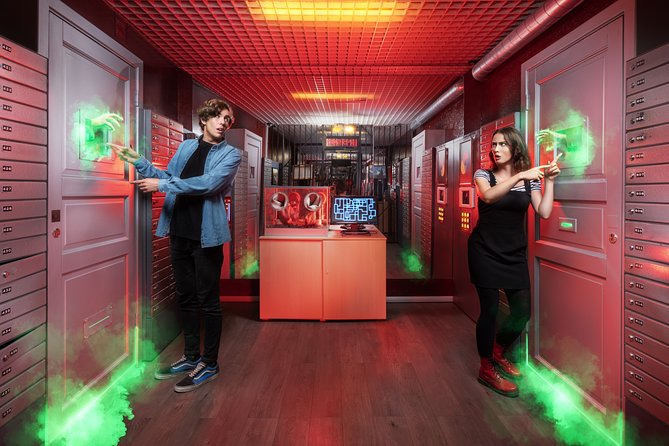
A big part of the draw is that this isn’t just word puzzles on a screen. The room uses props and effects that grab your attention and make you interact instead of just read. Reviews mention the satisfaction of solving puzzles one by one. That matters because the game is built so progress feels earned.
Difficulty is part of the design. Some puzzles are described as hard, but they’re also said to make sense—meaning you usually feel, once you crack it, that the clue was fair. That’s what separates a frustrating hard room from a memorable one. When the room’s logic is consistent, you stop feeling cheated and start feeling clever.
You’ll also likely experience a mix of clue types. Even when reviews call things easy to understand, they also say you’ll need good friends and teamwork. That usually translates to: the clues are readable, but you still need to connect dots across the room and time. It’s less about being a genius and more about being methodical under pressure.
Effects can add a bit of scare, but there’s also humor in how people describe it. One review even calls it little scary but very funny. So the vibe is spooky-playful rather than horror-movie terrifying, but if you’re sensitive to sudden surprises, keep that in mind.
How help works when your team hits a wall
Escape rooms can go two ways: either you get stuck and the fun drains, or the operator rescues you too early and the puzzles stop feeling satisfying. Moriarty’s Phantom Trap seems to aim for the middle.
I like that help is described as coming through speakers when you get stuck. Reviews specifically thank staff members—Šimon and Tom are named—for giving hints this way. That’s a smart style because it preserves the ghostly atmosphere. You’re not pulled out of the room by a bored staff member opening doors. Instead, the interaction feels in-character: like the trap is responding.
Still, remember the earlier warning about hints. The room is designed to keep you moving, not to spoon-feed you. If you want to maximize your odds, treat any hint as a last-mile assist, not a plan.
Practical tip: if you receive a hint, don’t just acknowledge it. Immediately assign someone to test the new idea. In timed games, hesitation is expensive.
Your stop at Questerland: arrival and the flow of the experience
There’s one main stop: Questerland. That simplicity is a plus. You’re not hopping across town. You’re going to one address, getting oriented, and then running the full experience in the same place—no confusing transfers, no extra waiting around.
The meeting point is Mánesova 1613/54, Prague 2-Vinohrady. The activity ends back at the meeting point, which makes your day easier. You can slot this into an afternoon without worrying about where you’ll land.
Questerland is also described as near public transportation, which matters in Prague. You don’t want to spend your puzzle hour thinking about how to cross one more busy street. The good part of being near transit is you can show up calmer, which helps in a timed game.
And yes, you’ll likely appreciate the mobile ticket. Less paper, fewer things to lose. Confirmation happens within 48 hours of booking (when available), so you won’t be guessing right up until the start.






Price and value: is $47.18 worth it?
At $47.18 per person for about 1 hour, this sits in the mid-to-upper range you’ll see for quality escape rooms in major European cities. Is it a good deal? For me, the value question comes down to what’s included and how you’ll use it.
Here’s what you get: a team escape game, plus live entertainment, with local and professional guidance. The big value driver is the private activity aspect—your group plays, rather than being mixed with strangers. That privacy usually makes the game more comfortable, especially if you’re celebrating something or you just don’t want your puzzle-solving interrupted by someone else’s questions.
Also, the group tends to feel like it’s designed to last the full hour. One review mentions finishing in 58 minutes and still not feeling rushed. That suggests the pacing is built to fill the time without dragging.
Is it worth it if you’re a casual player? If you mostly want a relaxing activity, maybe not. But if you like problem-solving, enjoy spooky storytelling, and want a structured challenge you can share with friends or family, this price can make sense. You’re paying for time, set design, effects, and a live operator system that keeps you moving.
Who Moriarty’s Phantom Trap is best for
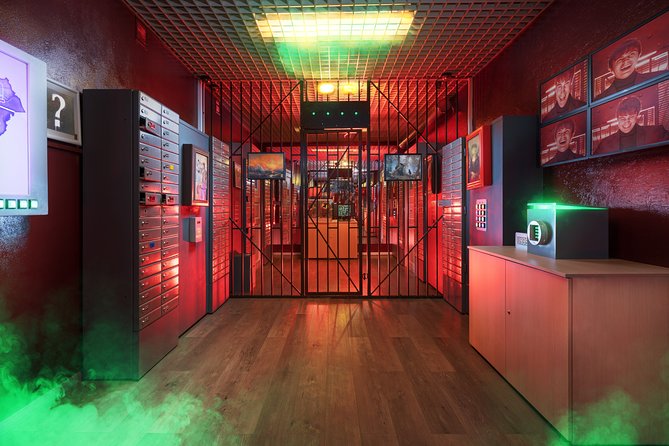
This game is a strong match for groups who enjoy working together. Reviews emphasize the satisfaction of solving puzzles, and they directly suggest doing it with friends or family.
It also seems to work well for celebration-type visits. One review calls it a great birthday party for a child, with staff named Šimon mentioned in that context. Another review notes a family visit where no one felt stupid, which tells me the game has more than one path to contribution. In team puzzles, that’s a big deal: everyone should be able to participate.
Age-wise, the safe advice from what’s shared is: I would not take very young children. The game is interactive, uses effects, and can be a bit scary. So if your group includes kids, pick the ones who can handle creepy atmosphere and follow directions quickly.
Language-wise, you’re covered with English. If your English level is fine for casual conversation, you should be able to follow the game prompts and work on clues.
Staff and guidance: named operators make it feel human
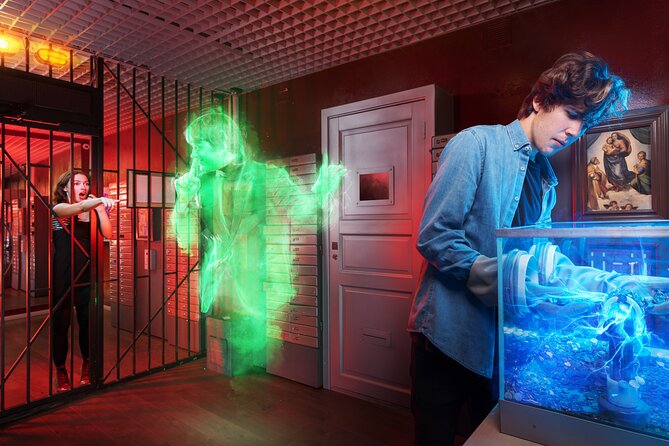
One reason this room gets love is the way staff involvement shows up in the reviews. People don’t just praise the puzzles; they praise specific guides.
Šimon comes up multiple times—praised as sweet, praised for guidance, and credited with providing help. Tom is also mentioned as someone who gives hints through the speakers. Sylvie is named as a host described as fantastic, sweet, and kind. Julia appears in one review that thanks multiple staff members for a great experience.
That matters to you because escape rooms can succeed or fail based on how operators manage stuck points. Here, the pattern is that operators help without ruining the experience, and they do it with a friendly, positive attitude. It can make the difference between leaving annoyed and leaving thrilled—even if the room is difficult.
Should you book this escape game in Prague?
Book it if you want a one-hour, English escape experience with a strong story theme and effects that support the puzzles. Book it if you like that timer-pressure feeling and you’re bringing a team ready to talk, test ideas, and stay calm when things get tense.
I’d skip it (or choose a different room) if you or your group hates spooky vibes or gets overwhelmed by hard puzzles. It’s described as challenging, and it can be a little scary, even if it’s also funny.
If you’re deciding between doing something casual and doing something memorable, this is the kind of activity that leaves you talking about it on your walk afterward. The puzzles feel designed, not random, and the combination of live guidance plus private group play is exactly where the value shows.
If Moriarty sounds like your kind of mischief, go. Bring good friends, assign roles early, and treat the timer as part of the fun.
FAQ
How long is Moriarty’s Phantom Trap Escape Game?
It lasts about 1 hour.
Is the experience offered in English?
Yes, it’s offered in English.
Is this game private or shared with other groups?
It’s a private activity. Only your group participates.
Where do I meet, and where does it end?
Meet at Mánesova 1613/54, 120 00 Praha 2-Vinohrady. The activity ends back at the meeting point.
Do I need to bring anything like tickets?
You’ll receive a mobile ticket.
What’s the cancellation policy?
Cancellation is free if you cancel up to 24 hours in advance of the experience start time for a full refund.