REVIEW · OLD TOWN PRAGUE
Prague: Highlights Walking Tour to the German embassy 1989
Book on GetYourGuide →Operated by David Klaus Travel Manager Service Prag · Bookable on GetYourGuide
Prague’s Cold War story is walkable. This 150-minute walk mixes Charles Bridge photo-worthy views with the real 1989 refugee drama tied to the German embassy balcony, and I like how you’ll connect big landmarks like John Lennon Wall with personal stories of 20th-century Prague. The main thing to consider is that it’s not suitable for mobility impairments, since you’ll be moving through city streets and short walking sections.
I found the focus refreshingly specific: you’re not doing a general Old Town loop. You’re getting a guided path through Old Town, Lesser Town (Malá Strana), and the former Jewish ghetto while the guide explains how communism fell apart in Central Europe.
One more heads-up: the German embassy interior isn’t open to the public on this tour, so your time there is about seeing the building from the outside and standing by the balcony viewpoint where Hans-Dietrich Genscher made his famous speech.
In This Review
- Key Highlights to Focus On
- Why the German Embassy Balcony Is the Star of This Walk
- Meeting at Charles University Without Stress
- Charles Bridge, Old Jewish Cemetery, and Josefov: Prague’s Layers in Motion
- Jan Palach Square and the Prague Spring That Still Echoes
- The John Lennon Wall: Protest Art as Public Memory
- Wenceslas Square and Prague National Museum: Where Public Life Turns Into Politics
- Malá Strana Squares and the Walk Toward the Embassy
- Reaching the German Embassy: Outside Views, Real Context, No Indoor Detours
- Pace, Comfort, and Who This Walk Fits Best
- Price and Value: Does $32 Make Sense for 150 Minutes?
- Should You Book This 1989 German Embassy Walking Tour?
- FAQ
- What’s the duration of the Prague 1989 highlights walking tour?
- Where do I meet the guide?
- Do I get to go inside the German embassy?
- What language is the guide?
- Is hotel pickup included?
- Is the tour suitable for people with mobility impairments?
Key Highlights to Focus On
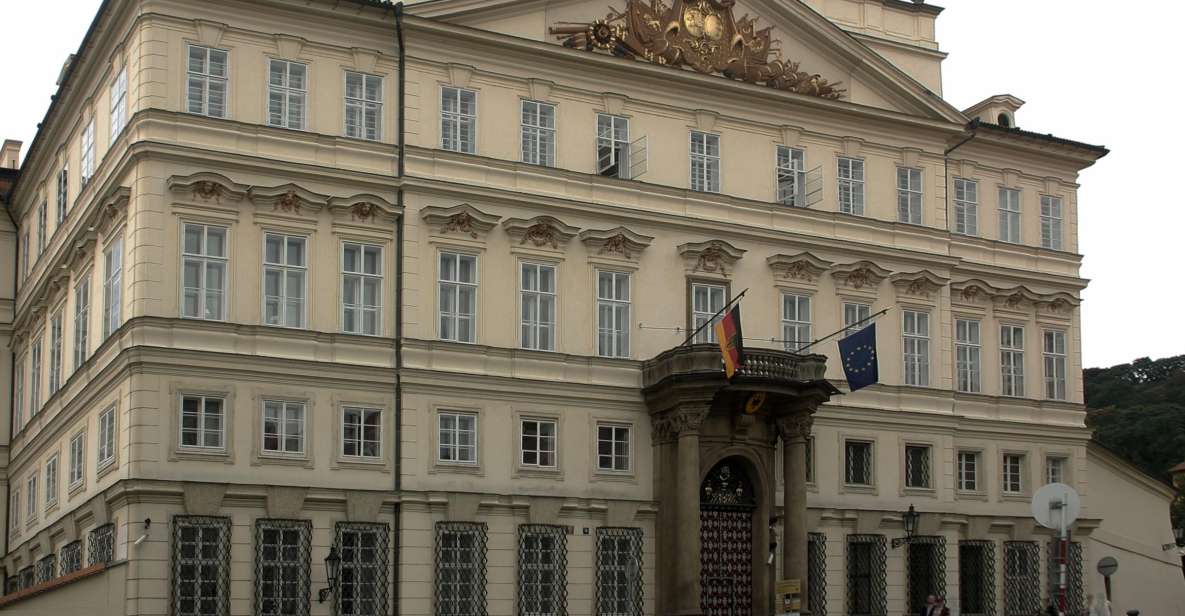
- Hans-Dietrich Genscher balcony viewpoint at the German embassy during the 1989 moment refugees reached West German protection
- Charles Bridge + embassy exterior photo stop in the same walk, so the history has a street-level setting
- Jan Palach Square and the Prague Spring context tied to a student from the Faculty of Philosophy
- John Lennon Wall + protest-era atmosphere as a counterpoint to political speeches and official events
- Velvet Revolution Memorial stop to connect 1968 tensions with 1989 change
Why the German Embassy Balcony Is the Star of This Walk
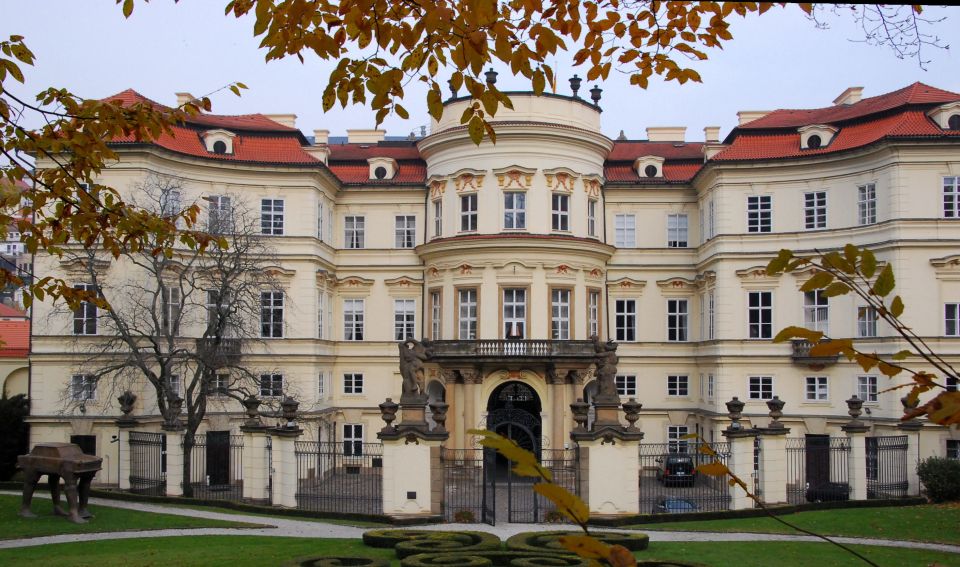
If you only remember one thing from 1989 in Prague, make it this: the West German embassy became a destination for East German citizens fleeing communism. This tour builds toward that idea step by step, so when you finally reach the German embassy area, it lands with weight instead of just being another photo stop.
The emotional center is the balcony where Hans-Dietrich Genscher made his famous speech. You don’t need to be a history nerd to feel why it mattered. The guide sets up the cause (rising pressure across the Eastern Bloc) and the effect (refugees making their way toward West German protection), including the route details that East German citizens fled through Poland and Hungary to reach Prague.
And yes, you’ll still get the classic Prague visuals—because Prague is the stage. Standing on the bridge and walking toward Lesser Town helps you understand how people physically moved through the city when news and politics were moving fast too.
Meeting at Charles University Without Stress
You meet in front of the Faculty of Law (Charles University) at nám. Curieových 7 in the Old Town area. If you’re using the metro, get off at Staroměstská (about 550 meters away). If you prefer trams, take tram 17 and hop off at Pravnicka Fakulta.
This is a practical meeting point. It’s close enough to central connections that you won’t feel lost, and it’s near the historic core, so the first part of the walk starts quickly.
The tour ends at Malostranské náměstí, so you also get an easy finish in Lesser Town. That’s handy if you want to keep wandering afterward, grabbing coffee or dinner without backtracking.
Charles Bridge, Old Jewish Cemetery, and Josefov: Prague’s Layers in Motion
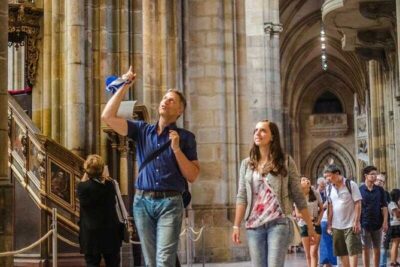
The walk begins with a stop by Charles Bridge (short photo stop plus guided sightseeing). Even if you’ve seen it from photos, Charles Bridge works better when you hear what it symbolizes in Prague’s movement—from trade and travel to moments where people gathered, protested, or simply crossed between worlds of the city.
From there, you head toward the Jewish quarter area. You’ll make a photo stop at the Old Jewish Cemetery, then continue with a stop in Josefov. These are short segments, but they matter because they remind you Prague wasn’t only a 20th-century political stage. It’s layered, and the city’s neighborhoods carried identities that communist-era life didn’t erase.
What I like here is the contrast. You’re about to get into Cold War pressure and public protest culture, but first you ground your eyes on a different kind of history—one that’s quieter, stone-and-memory rather than slogans and speeches.
Jan Palach Square and the Prague Spring That Still Echoes
Jan Palach’s story is one of those moments that changes how you read the term resistance. He was a student at the Faculty of Philosophy, and 1968’s Prague Spring events shaped how people understood the limits of hope under communist control.
On this walk, you’ll stop at Jan Palach Square for a guided explanation (with a photo stop). The guide’s job is to connect you to what happened in 1968 without turning it into a classroom lecture. You get the essentials: how the Prague Spring unfolded, how it became dangerous, and how Palach’s fate became part of Prague’s later political language.
After that comes the Velvet Revolution Memorial stop. This is the bridge between decades. It helps you see how 1968’s trauma fed the anger and urgency that later made 1989 possible.
A small consideration: these moments are heavier than the fun postcard stops. If you want a strictly light outing, this probably isn’t that. But if you want meaningful context in a short time, it’s exactly the right length.
The John Lennon Wall: Protest Art as Public Memory
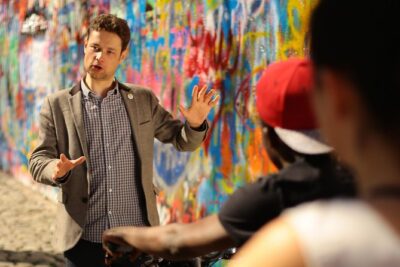
Then the tour shifts gears toward something you can actually see with your own eyes: the John Lennon Wall. You’ll pause here for a guided stop and sightseeing, including time to admire the homage displayed at the wall.
This site is valuable for one simple reason: it shows how dissent doesn’t always come in speeches or official statements. Protest can be street-level, creative, and persistent. It gives you a different lens for understanding the same political pressures—especially in a city where public expression mattered.
If you’ve ever wondered why 1989 felt different across Europe, the wall helps. It reminds you that people were already testing the edges of control with symbols, words, and public messages.
Wenceslas Square and Prague National Museum: Where Public Life Turns Into Politics
Next up is Wenceslas Square, where you’ll have a stop that includes guided sightseeing and time to visit. The square is one of those places where the city’s public energy becomes obvious, and the history becomes easier to grasp because you can picture crowds.
You’ll also get a quick photo stop near the Prague National Museum, which adds a classic Prague landmark feel without pulling focus away from the politics the guide is explaining.
What’s good about this portion is the pacing. It keeps the story moving while still letting you stop and look around. You’re not just “marching through” history—you’re being shown why these spaces matter.
Malá Strana Squares and the Walk Toward the Embassy
As you move toward Malostranské Square, the feel of the walk shifts with the neighborhood. You’ll have another short photo stop and sightseeing here, then a bit of walking on foot to keep the route fluid.
This matters because the story you’re hearing isn’t floating in a museum. It’s built around how people moved through streets and squares. Ending in Malá Strana also gives you a natural transition point to keep exploring after the guided portion.
Reaching the German Embassy: Outside Views, Real Context, No Indoor Detours
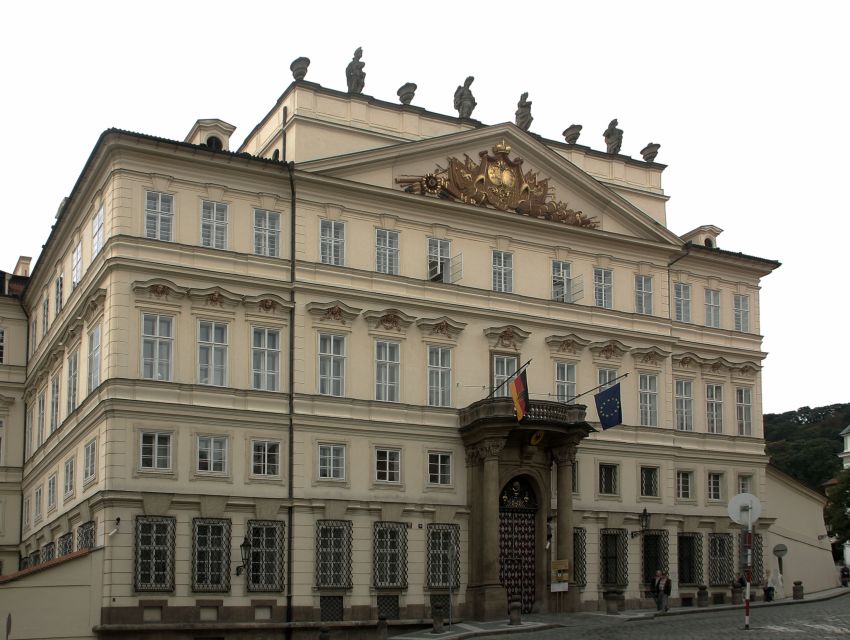
Now you’re at the moment you came for: the Embassy of Germany, Prague. You’ll get a photo stop and sightseeing, focusing on what you can see from the outside.
A key detail: the interior of the embassy isn’t open to the public on this tour. That’s not a disappointment so much as a design choice. The value is in the street-level context—standing where the story connects to refugees, diplomacy, and the balcony speech.
The guide will point out the spot associated with Hans-Dietrich Genscher’s famous speech. You’ll also get the building’s exterior setting and the surrounding embassy grounds area from outside. One highlight shared by a recent German group member was returning to the place where, years earlier, family memories were tied to that same balcony moment—proof that for many people, this stop isn’t just informative. It’s personal.
If you want to photograph, bring a bit of patience. There’s a good chance you’ll be sharing space and angles with other on-foot visitors. The good news: the tour is short and focused, so you’re not trapped waiting for long.
Pace, Comfort, and Who This Walk Fits Best
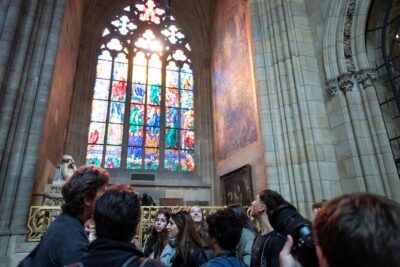
This is a walking tour of about 150 minutes, with multiple short photo stops and guided segments. You’re looking at a mix of standing, walking, and quick breaks in between sights. That structure works well if you like your history with location anchors, not in one long speech.
Shoes matter. Prague streets can be uneven, and you’ll be on foot enough that comfort counts. Also, the tour is not suitable for people with mobility impairments, so plan accordingly.
Best fit: couples, solo travelers, and friends who want to see major Prague sights while getting a focused explanation of 1968 to 1989—especially the refugee story that led people to the West German embassy in Prague.
If you’re traveling with kids, it can still work, but expect the political topics to be more adult. You might choose a shorter or more family-friendly approach if your group prefers lighter material.
Price and Value: Does $32 Make Sense for 150 Minutes?
At $32 per person for a 150-minute guided walk, the value comes from two things: access to a licensed German-speaking guide and a route that combines iconic Prague locations with a very specific historical thread.
A self-guided walk might get you to Charles Bridge and the Lennon Wall. But this tour adds the connecting tissue—Jan Palach’s fate during the Prague Spring, the Velvet Revolution context, and the 1989 refugee crisis tied to Hans-Dietrich Genscher’s balcony speech.
You’re paying mostly for interpretation, not just transportation. In that sense, it’s a good deal if you enjoy hearing how places relate to events, not just checking them off your list.
Should You Book This 1989 German Embassy Walking Tour?
Book it if you want Prague history with direction. You’ll see major sites in a tight timeframe, but the real payoff is how the guide ties them to 1968 and 1989—the shift from the Prague Spring’s pain to the Velvet Revolution’s momentum and the embassy moment that offered refugees a way out.
Don’t book it if you need a low-walking, mobility-friendly tour, or if you want a purely scenic highlights loop. This is city sightseeing with political and emotional content, and the walk makes no attempt to hide that.
If you already know Prague’s basics and want a deeper lens in about two and a half hours, this is a strong match. Just go in with good shoes, a bit of patience at the stops, and an open mind for the human side of the Cold War.
FAQ
What’s the duration of the Prague 1989 highlights walking tour?
The tour lasts 150 minutes.
Where do I meet the guide?
Meet in front of the Faculty of Law (Charles University) at nám. Curieových 7, 116 40 Old Town. If you arrive by metro, get off at Staroměstská. By tram, take number 17 and get off at Pravnicka Fakulta.
Do I get to go inside the German embassy?
No. The embassy interior isn’t open to the public, so you only view the embassy area from the outside.
What language is the guide?
The tour is guided in German.
Is hotel pickup included?
Hotel pickup and drop-off are not included. Pickup is listed as optional in Prague 1, 2, 3 or in the city center near Můstek, or at the Faculty of Law area.
Is the tour suitable for people with mobility impairments?
No. It’s not suitable for people with mobility impairments.